A Veteran Owned Business
A Veteran Owned Business
A Veteran Owned Business

People begin judging an organization as soon as they enter its space. The reception desk, lobby walls, glass offices, hallways, meeting rooms, and shared areas all influence how visitors understand the brand. A Chapel Hill healthcare practice may need to create reassurance and trust. A university department may want to celebrate research, faculty, students, and institutional history. A professional office may need privacy on glass partitions without blocking natural light. When these features are planned together, the interior feels cohesive, purposeful, and connected to the organization’s identity.
Heritage Signs & Displays serves businesses and institutions throughout Chapel Hill, Carrboro, Durham, Hillsborough, Research Triangle Park, Raleigh, and surrounding Triangle communities. We are an award-winning, veteran-owned, family-led commercial interior sign company founded in 1977. Since 2009, our primary focus has been custom interior signs, workplace branding, environmental graphics, and institutional displays. Chapel Hill clients receive responsive project support backed by experienced designers, project managers, production specialists, fabricators, and professional installers.
We work best with organizations that view their interiors as an extension of their mission and brand. Our team considers how visitors enter, find their destinations, interact with information, and remember the space after leaving. The right solution may include dimensional lettering, acrylic panels, frosted window films, lobby signs, wall wraps, wayfinding signs, recognition displays, interpretive graphics, or historical timelines. Each component should serve a clear purpose while complementing the architecture around it.
Our clients include corporate offices, healthcare providers, universities, independent schools, manufacturers, professional service firms, associations, nonprofits, government agencies, museums, cultural organizations, and growing businesses. Some projects concentrate on one lobby or conference room. Others extend across multiple departments, floors, buildings, campuses, or regional locations. A dedicated project manager coordinates communication, site information, design, material selection, approvals, production, and installation for every engagement.
Successful commercial signage depends on careful preparation. Measurements must be confirmed at the site rather than assumed from plans. Materials must be compatible with the wall, glass, or architectural surface where they will be installed. Colors, finishes, and proportions must remain consistent with brand standards and perform well at the intended viewing distance. Installation teams also need clear instructions regarding mounting, access, alignment, building restrictions, and scheduling.
Heritage brings these responsibilities together within one coordinated process. Clients do not have to manage separate designers, printers, fabricators, and installers. This integrated structure is particularly valuable when a Chapel Hill facility must remain open during installation, an opening date is fixed, or several locations need to present a consistent identity.
The completed environment is important, but the experience of creating it matters too. We begin by listening, recommend practical solutions, produce projects through our own departments, and install them with full-time Heritage employees. We remain accountable through completion and follow-up service. Our purpose is to honor God by serving our clients and communities with excellence. That purpose guides how we communicate, manage resources, respond to unexpected site conditions, and care for each finished space.
A qualified Chapel Hill sign company should help people understand the space while expressing the identity of the organization inside it. Effective planning starts with the people who use each area. First-time visitors need confidence and clear direction. Employees benefit from surroundings that reinforce culture, values, and shared achievements. Patients, students, faculty, donors, members, inspectors, and community guests need information presented clearly and respectfully.
We translate those audience needs into practical recommendations for signs, graphics, displays, materials, and installation. Brand guidelines, architectural details, wall and glass conditions, lighting, circulation patterns, viewing distance, accessibility, and building limitations all affect the final plan. Considering these factors together allows every element to support a unified visual system instead of competing with graphics and signs purchased separately over time.
For organizations in Chapel Hill and across the Research Triangle, the result might be a renovated reception area, a branded office, a mission and values wall, a donor recognition feature, a campus wayfinding system, an interpretive exhibit, or an educational environment designed to encourage engagement. The project succeeds when people can navigate the space easily and understand what the organization represents.
Organizations choose Heritage when they want one team to remain responsible from the first conversation through final installation. Your project manager collects goals, site details, content, schedules, and brand files before coordinating estimates, design approvals, materials, production requirements, and field logistics. A single point of contact reduces the confusion and missed information that often affect projects divided among several vendors.
Our environmental graphic designers, project managers, production teams, fabricators, and installers collaborate throughout the process. Complex and highly visible projects may receive a formal pre-production review. During that review, our specialists examine field measurements, substrates, color approvals, material transitions, mounting hardware, access restrictions, and installation sequencing before fabrication starts. Resolving concerns during planning is more efficient than discovering them during installation.
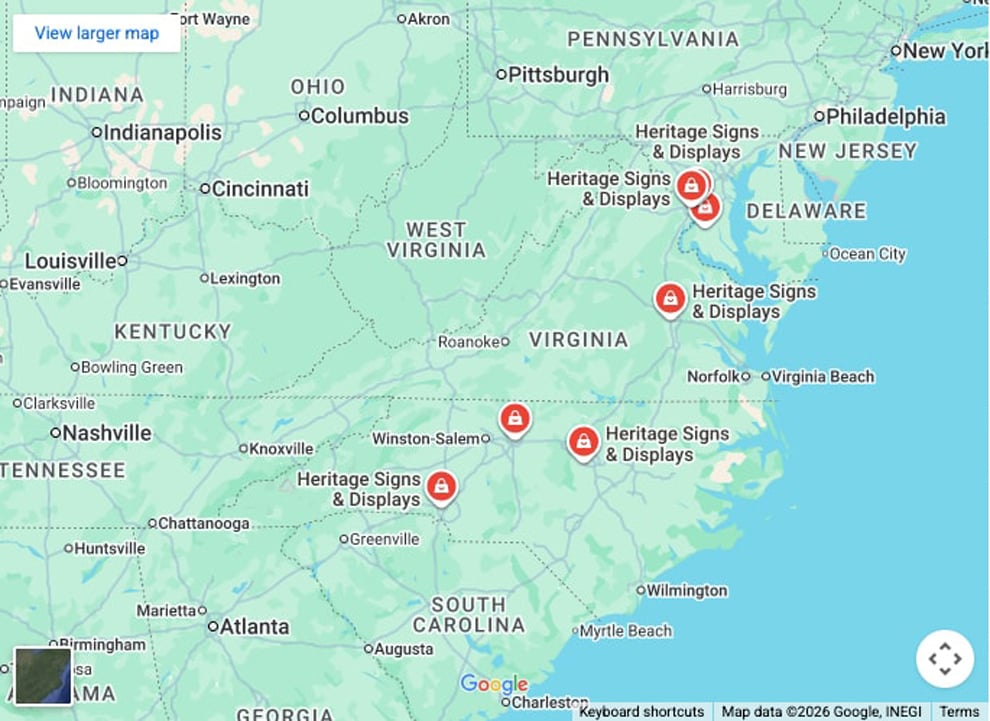
Heritage is veteran-owned, family-led, and approaching five decades in business. Our Chapel Hill service is supported by a seven-location regional network, in-house production capabilities, and installation by full-time Heritage employees. This structure combines attentive project management with the capacity needed for detailed, phased, and multi-location programs.
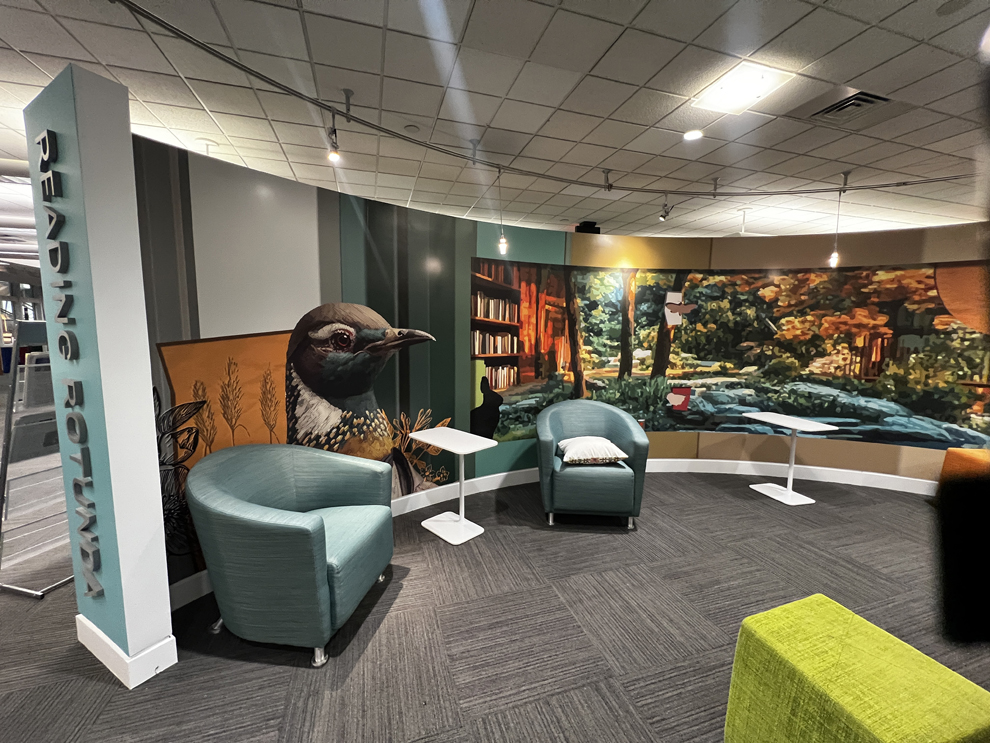
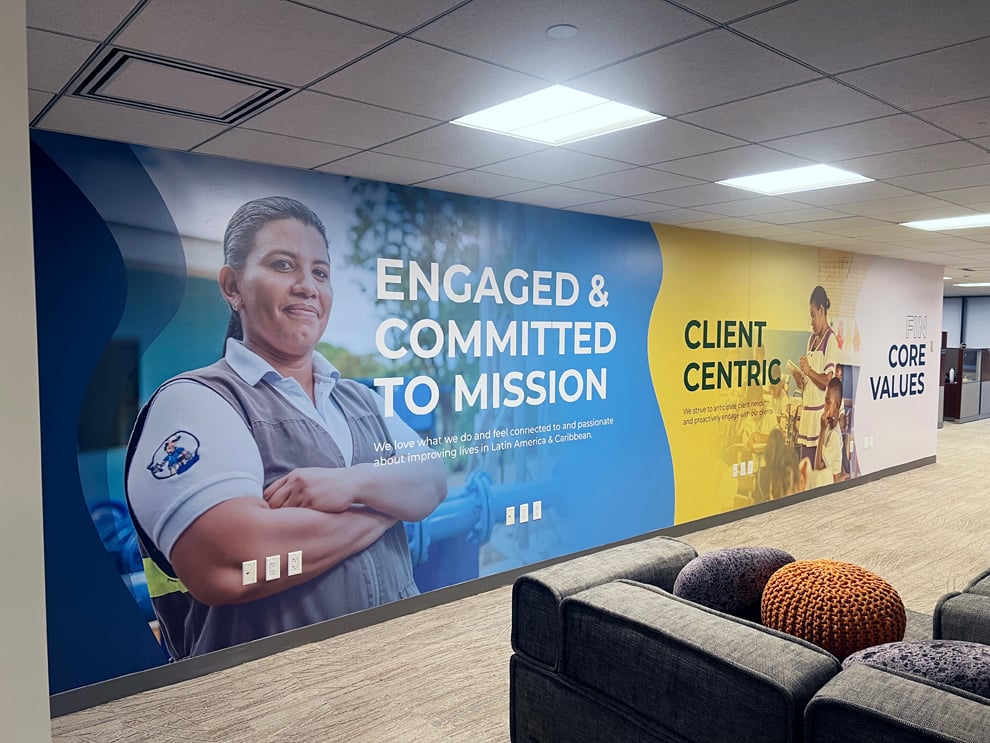
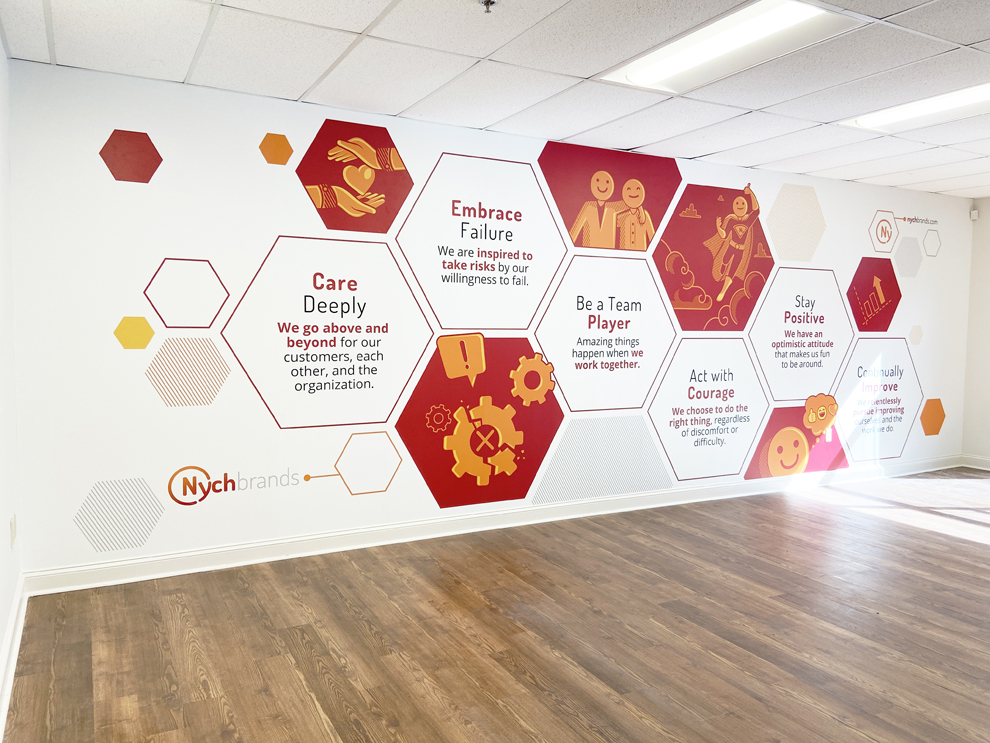
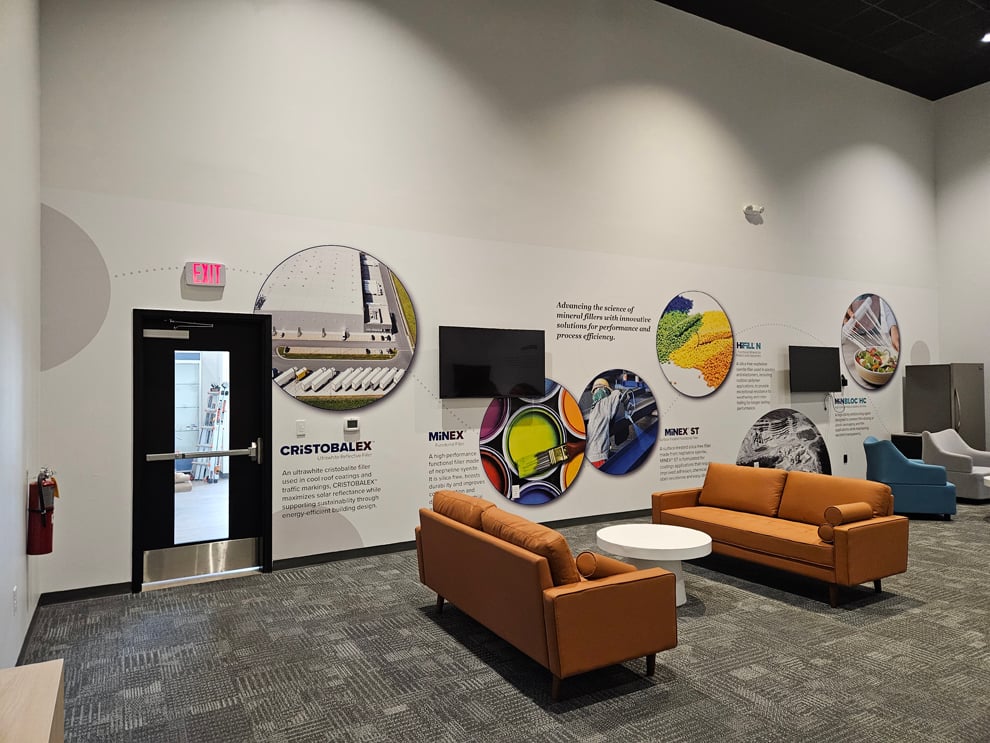
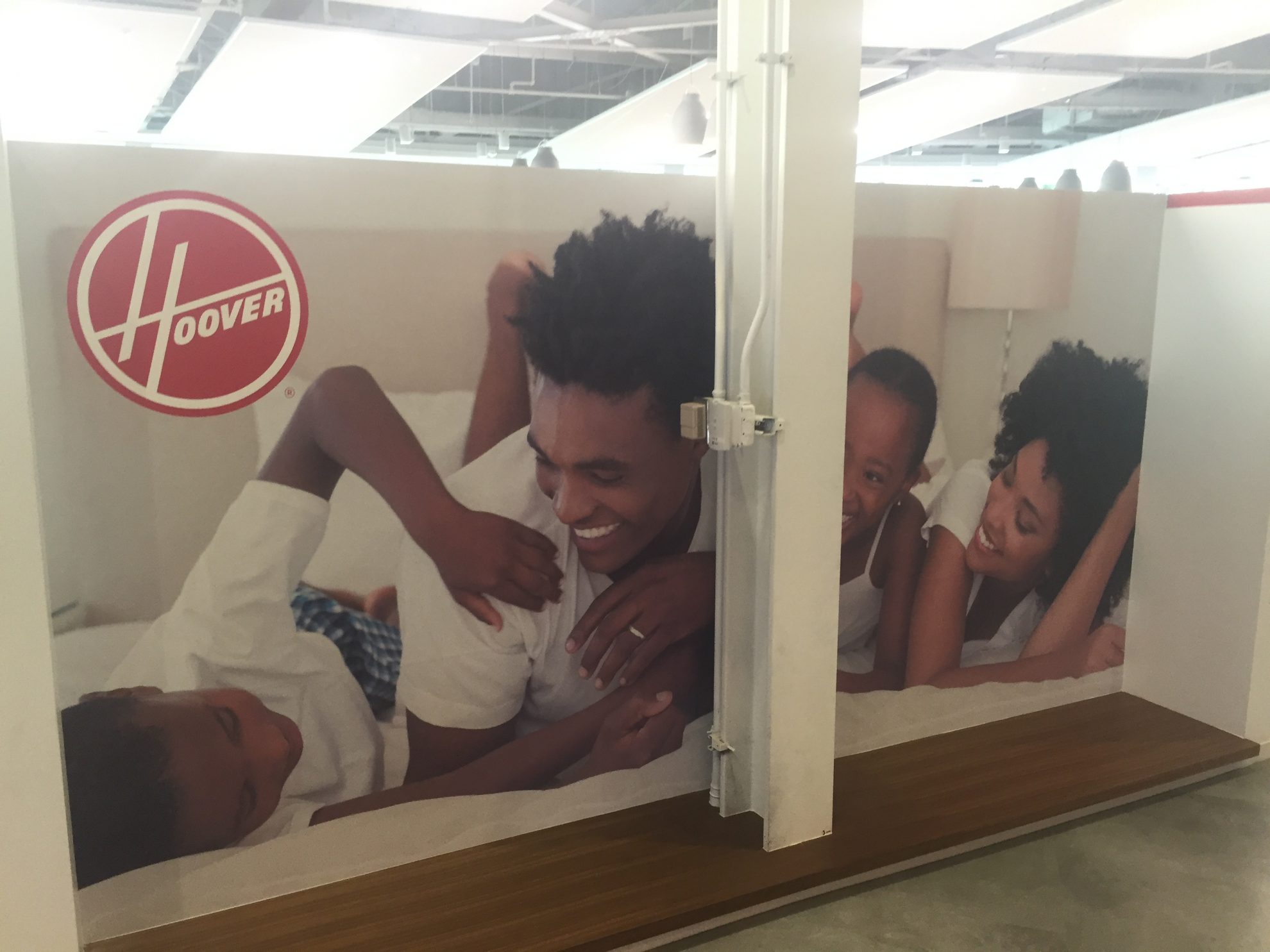
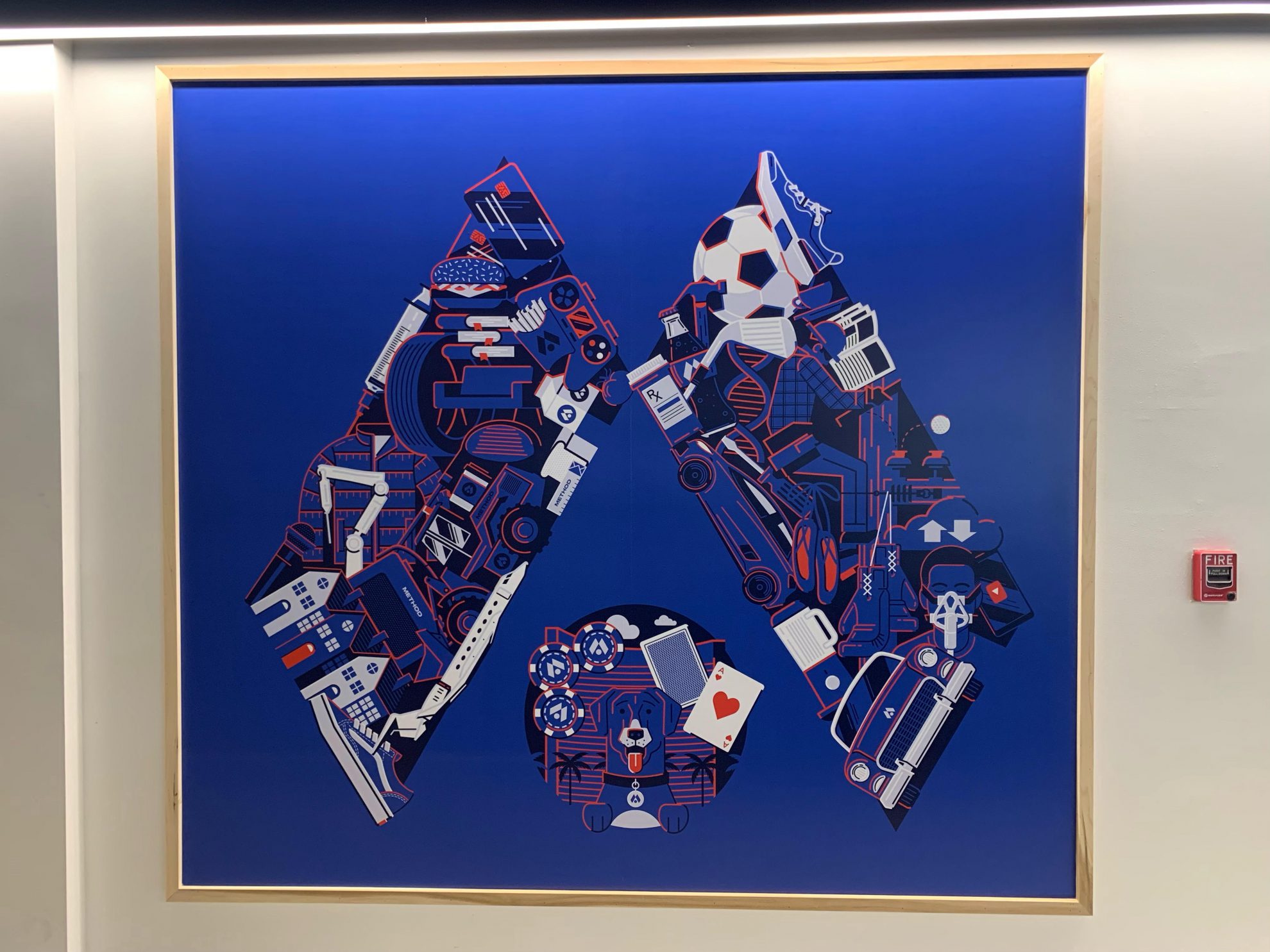
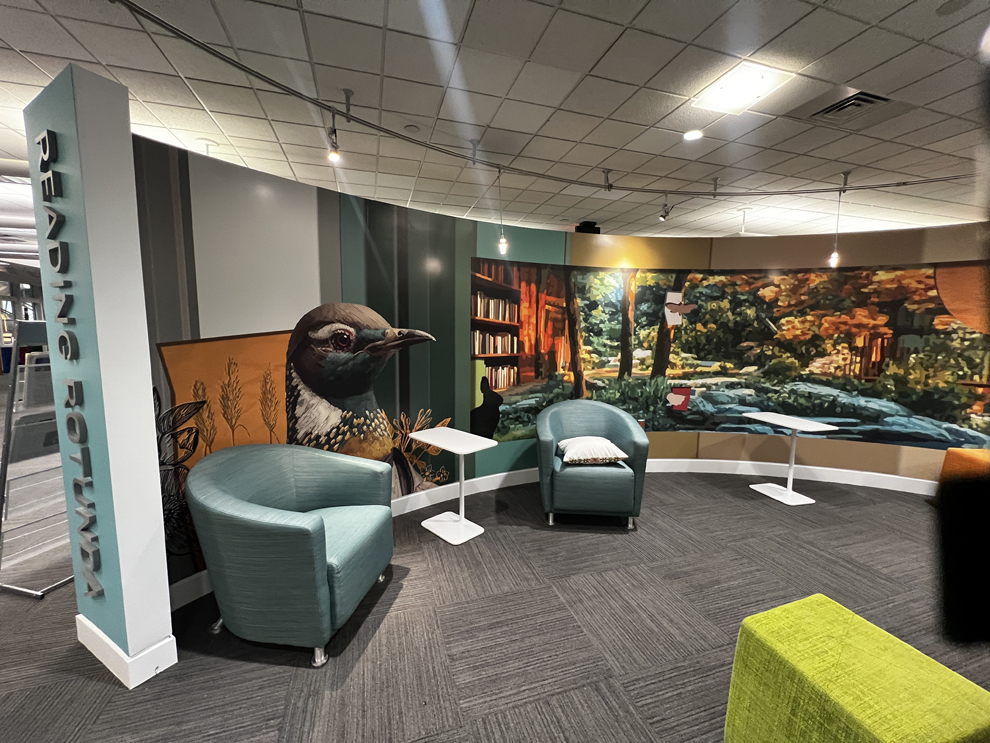
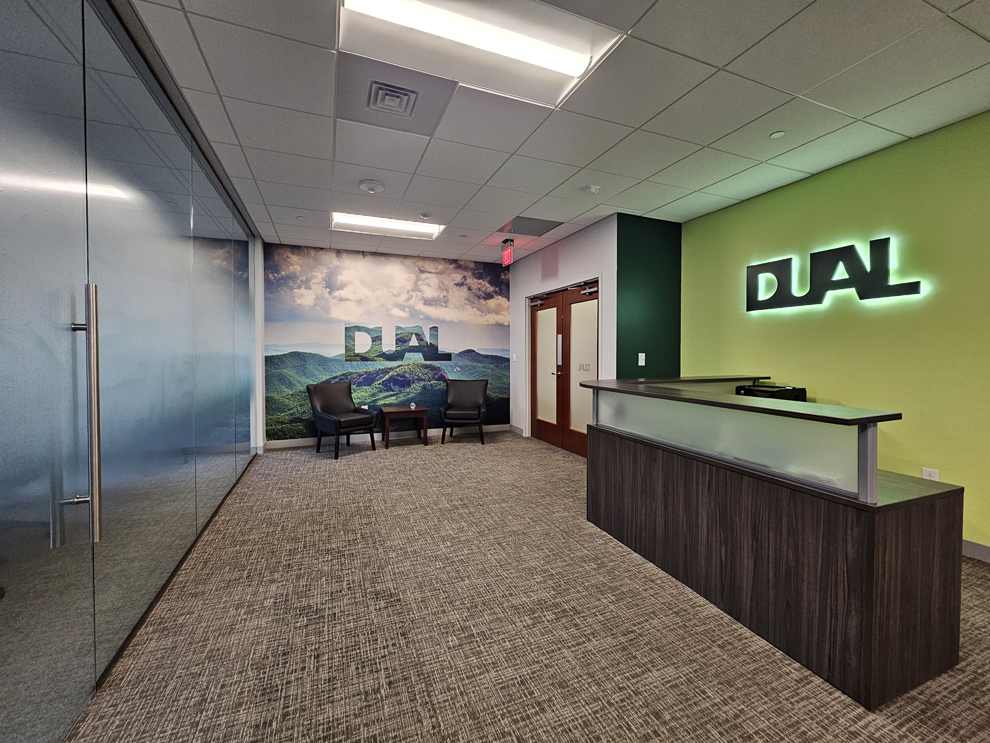
Wall wraps transform blank or overlooked surfaces into large-scale branded features. They can communicate company culture, institutional history, academic achievements, research, services, or community impact.
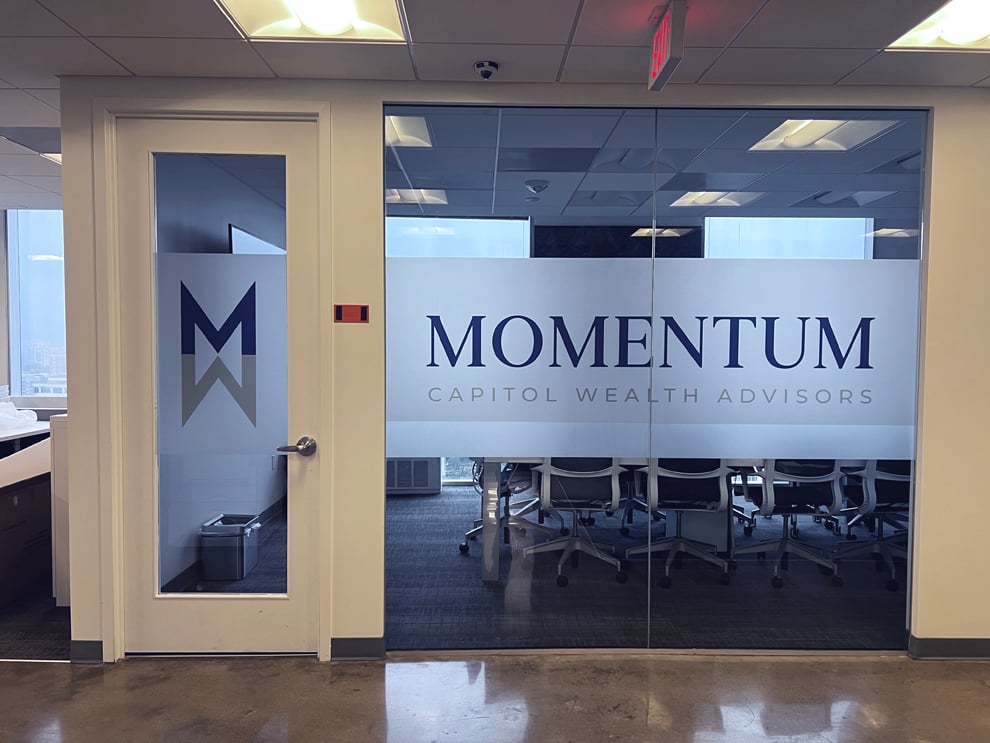
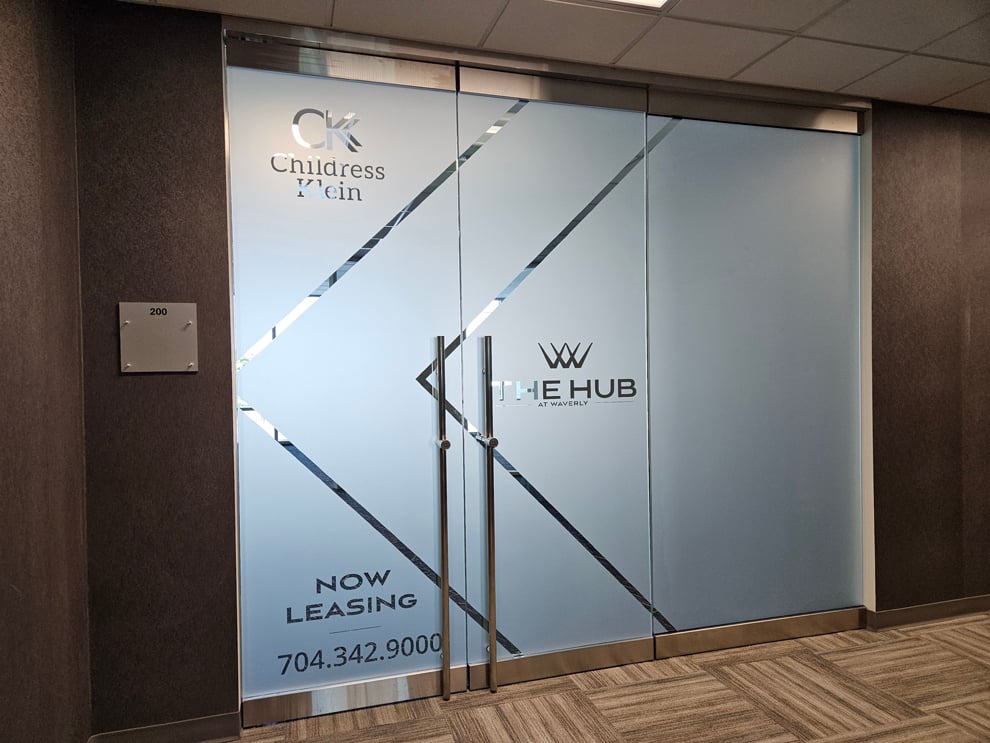
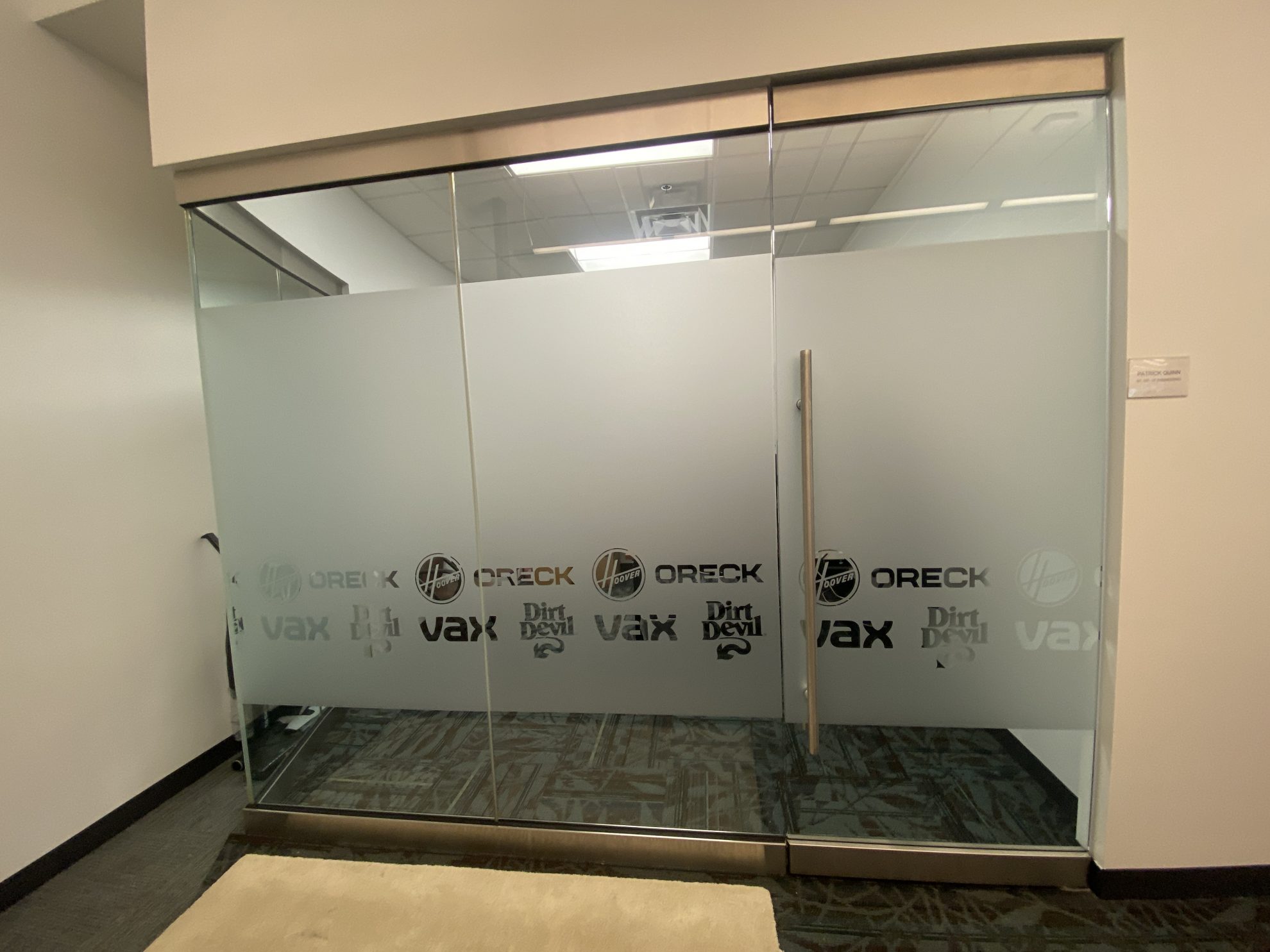
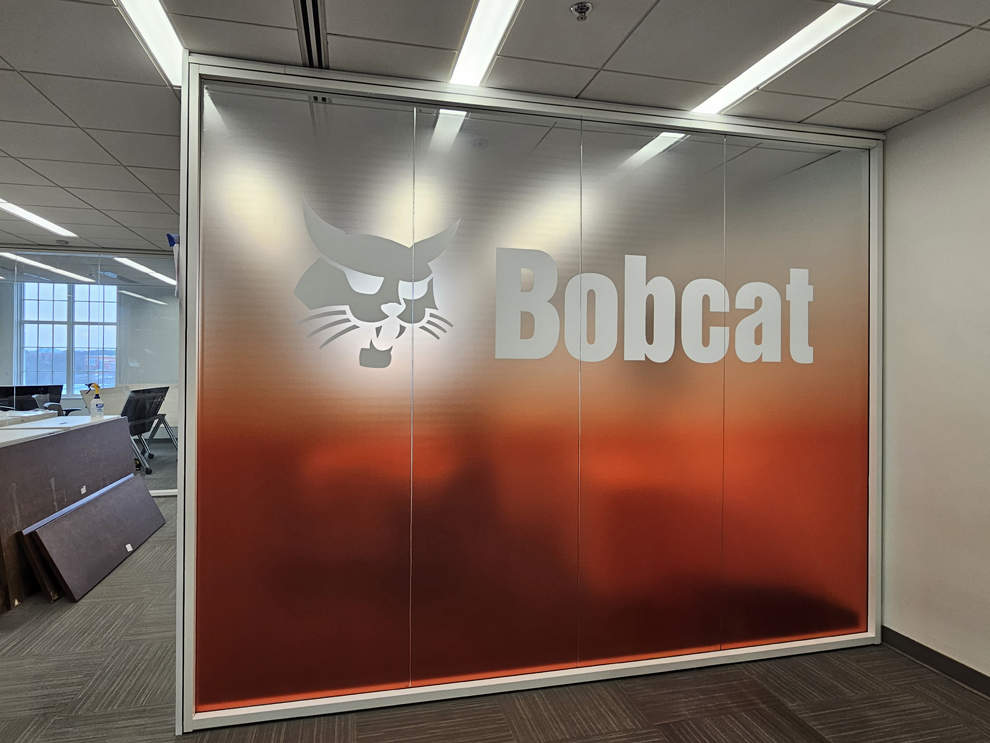
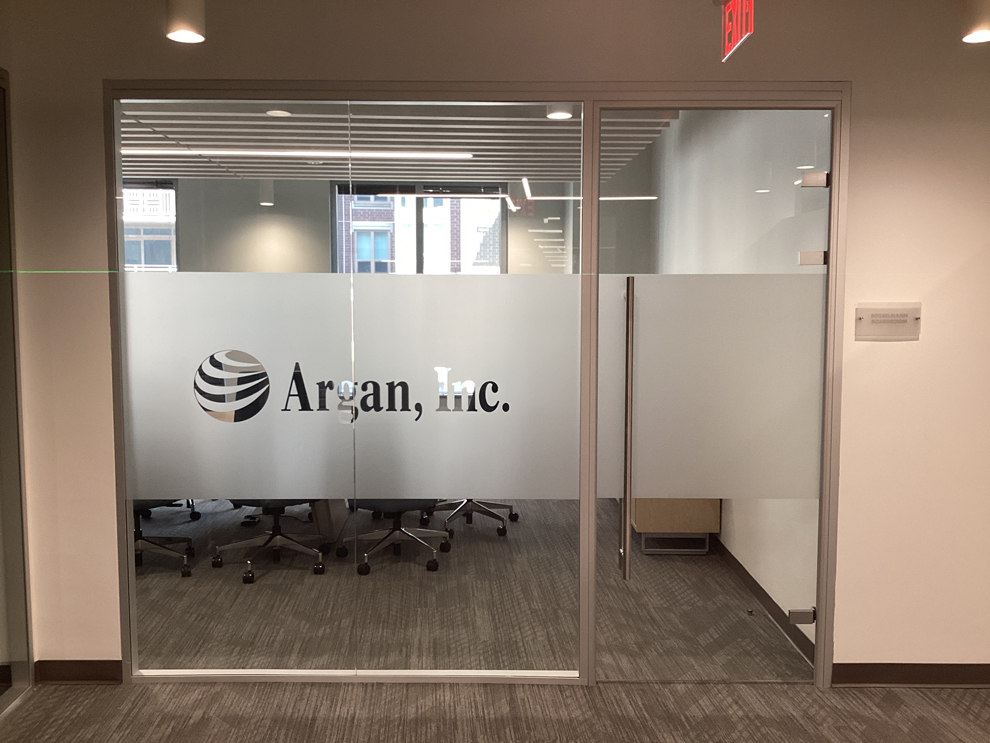
Decorative and frosted films add branding, visual interest, privacy, or directional information to interior glass. They can define a space while allowing natural light to continue moving through it.
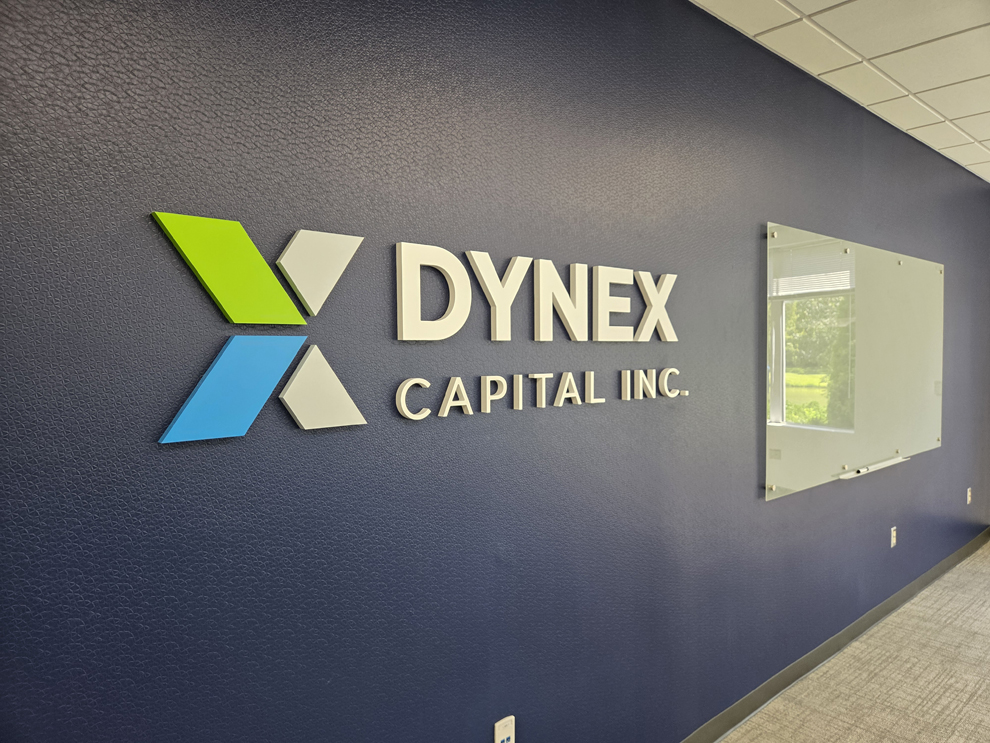
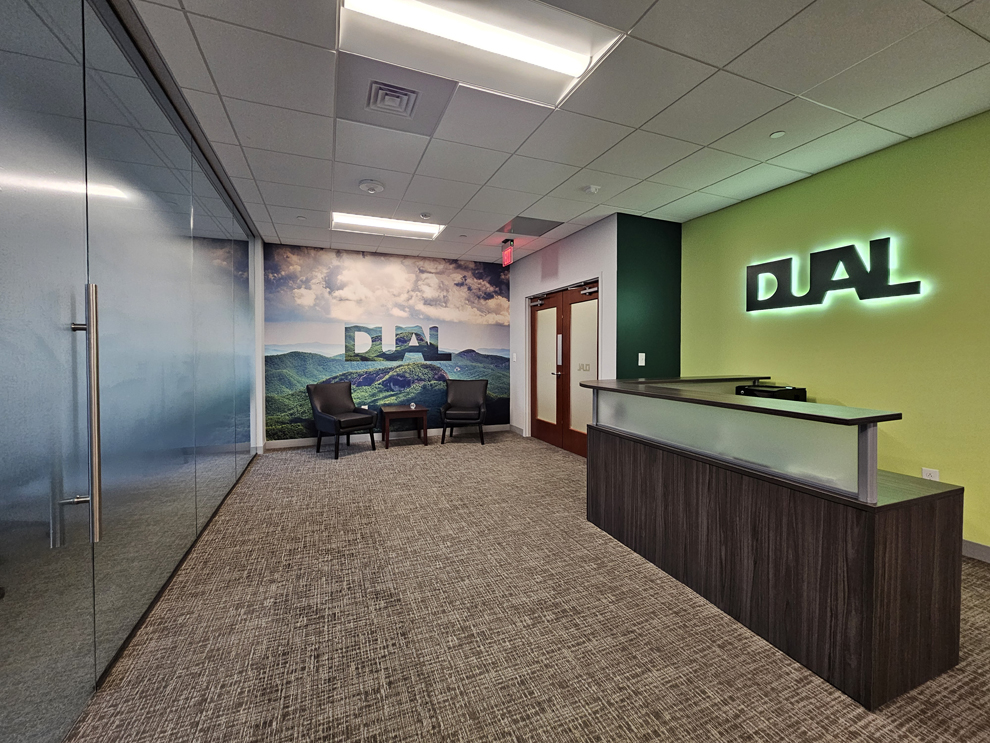
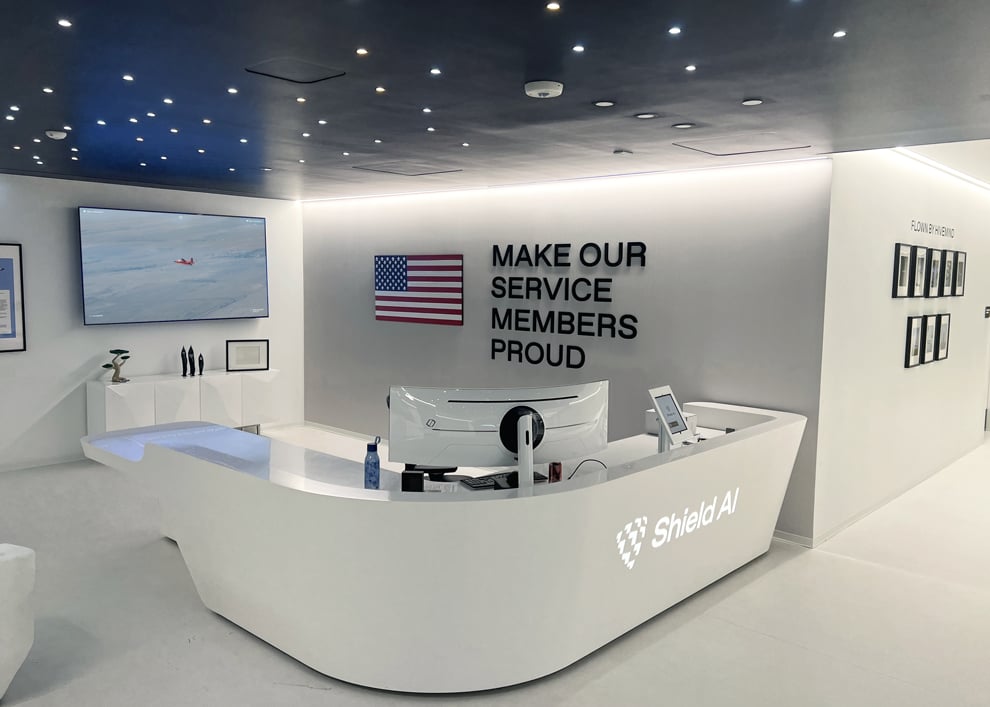
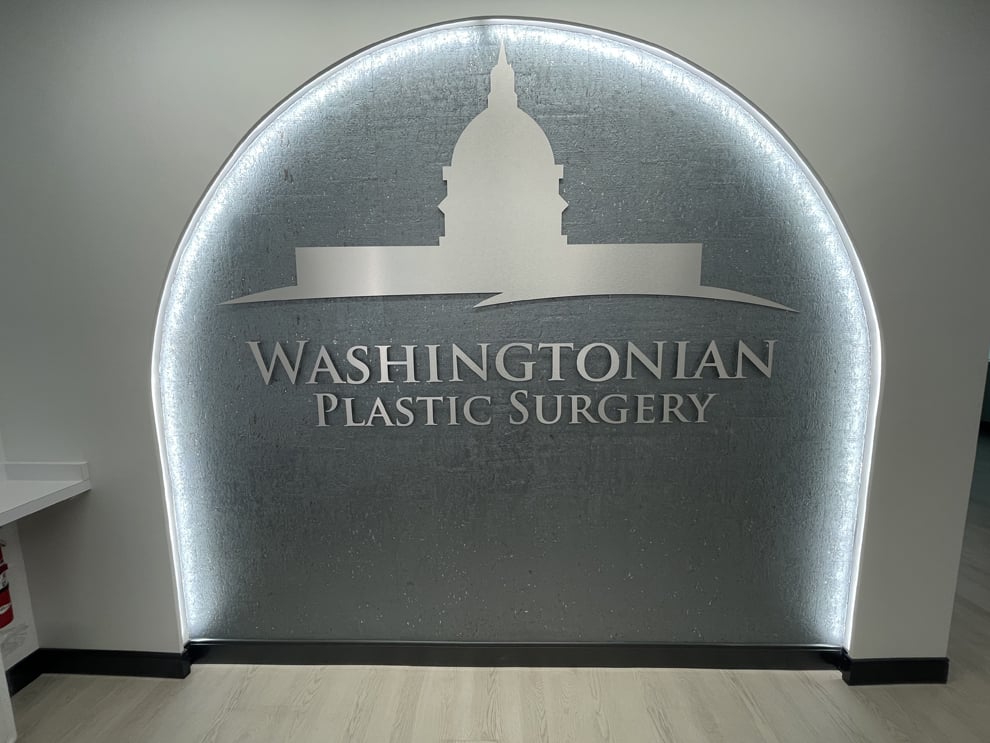
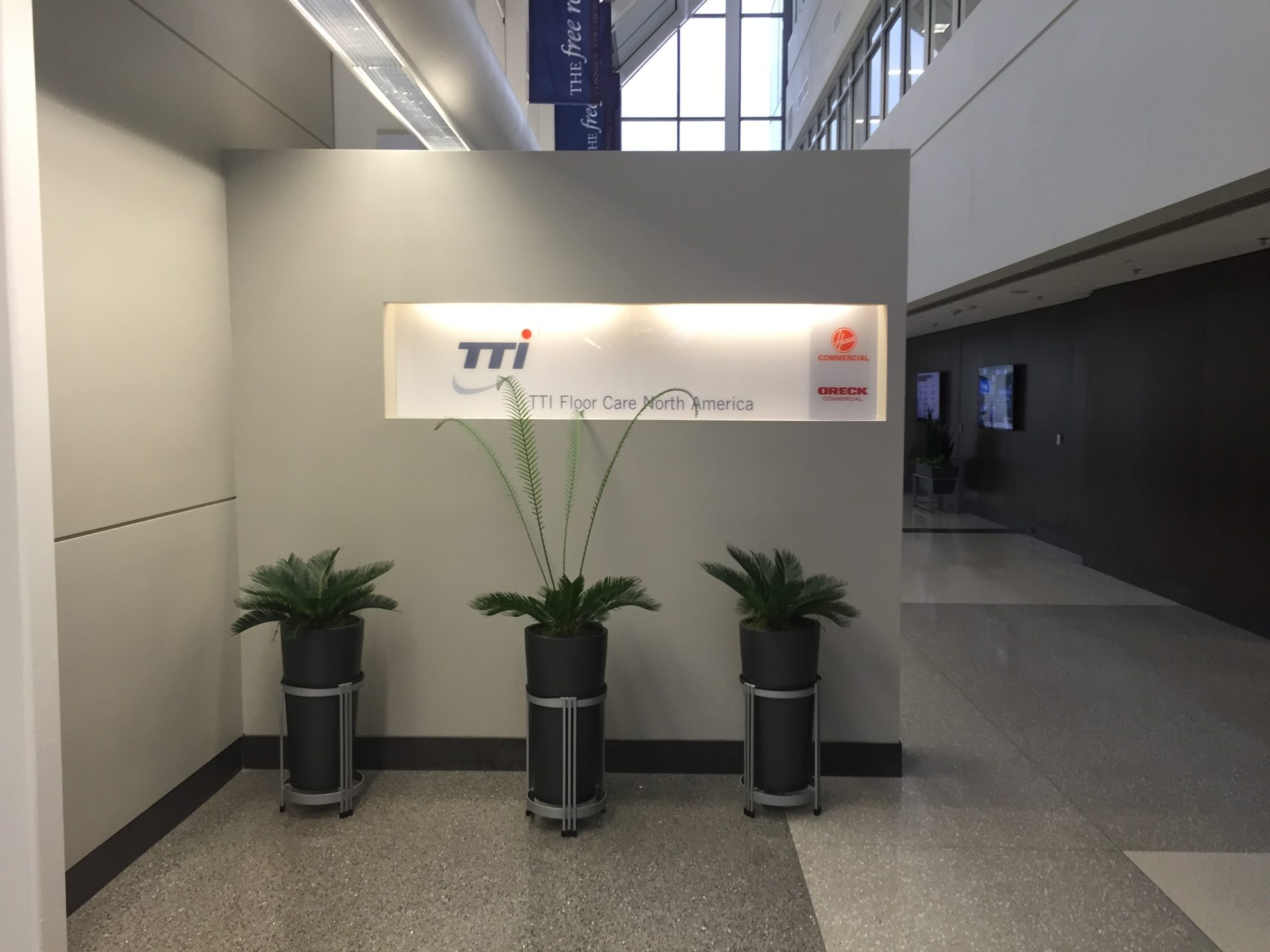
A professionally designed lobby sign helps establish credibility at the point of arrival. Options include dimensional letters, acrylic panels, illuminated elements, custom finishes, and coordinated wall graphics.
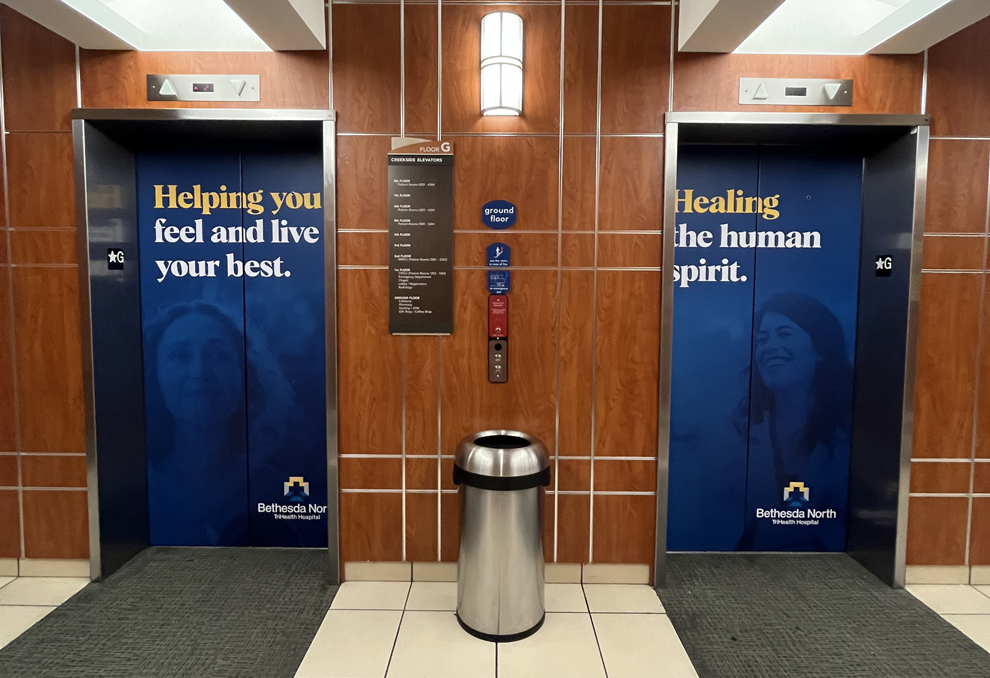
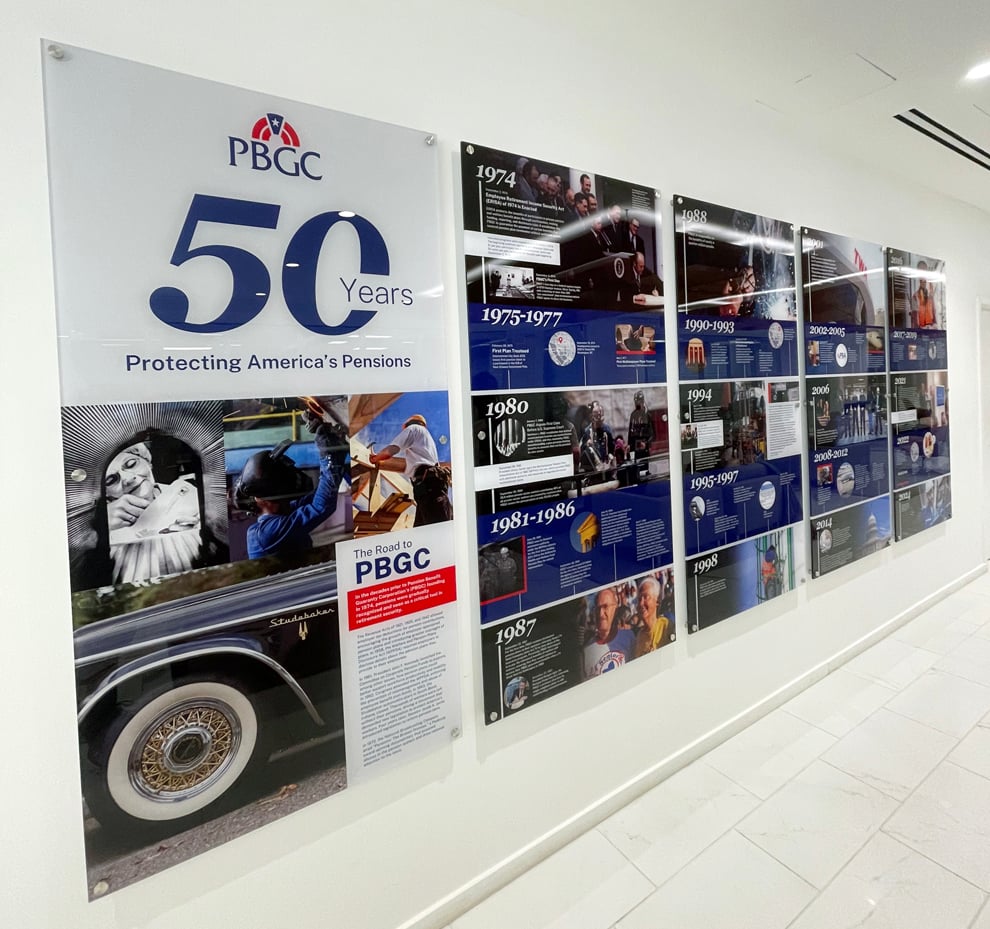
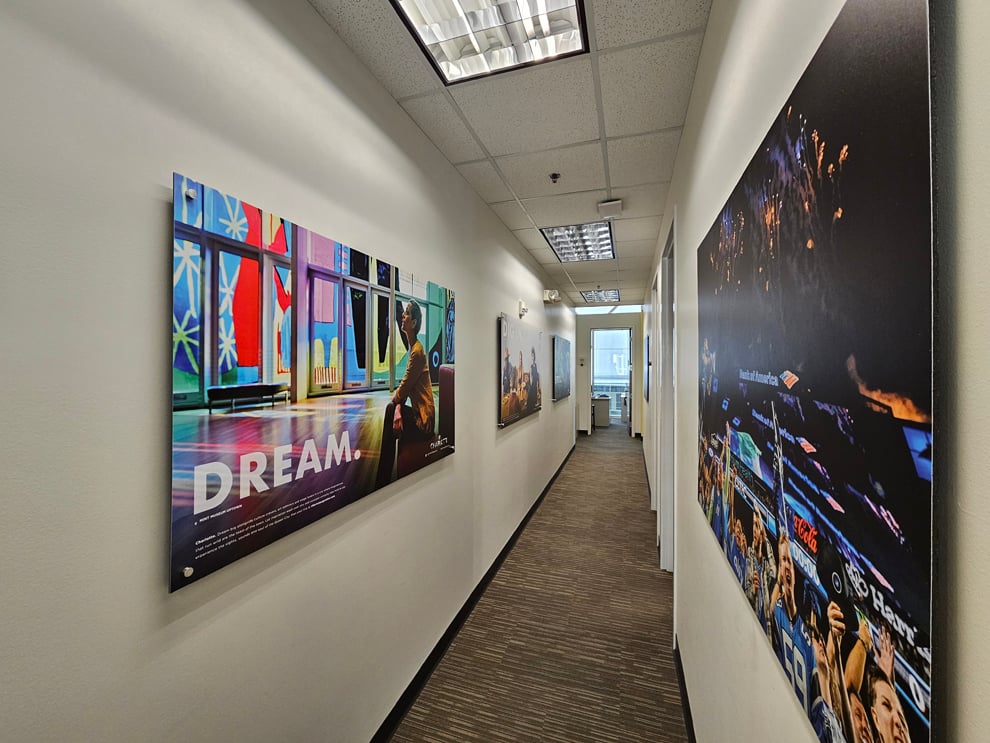
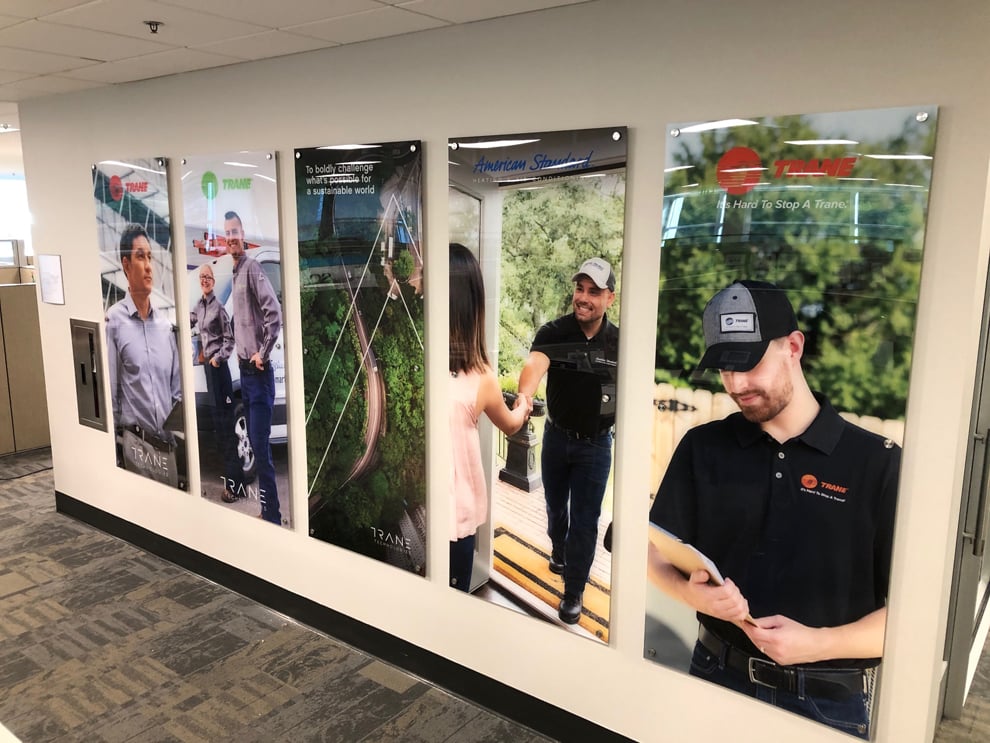
Panels installed with architectural standoffs create dimension and a refined finished appearance. They work well for directories, identification, recognition programs, informational content, and organizational storytelling.
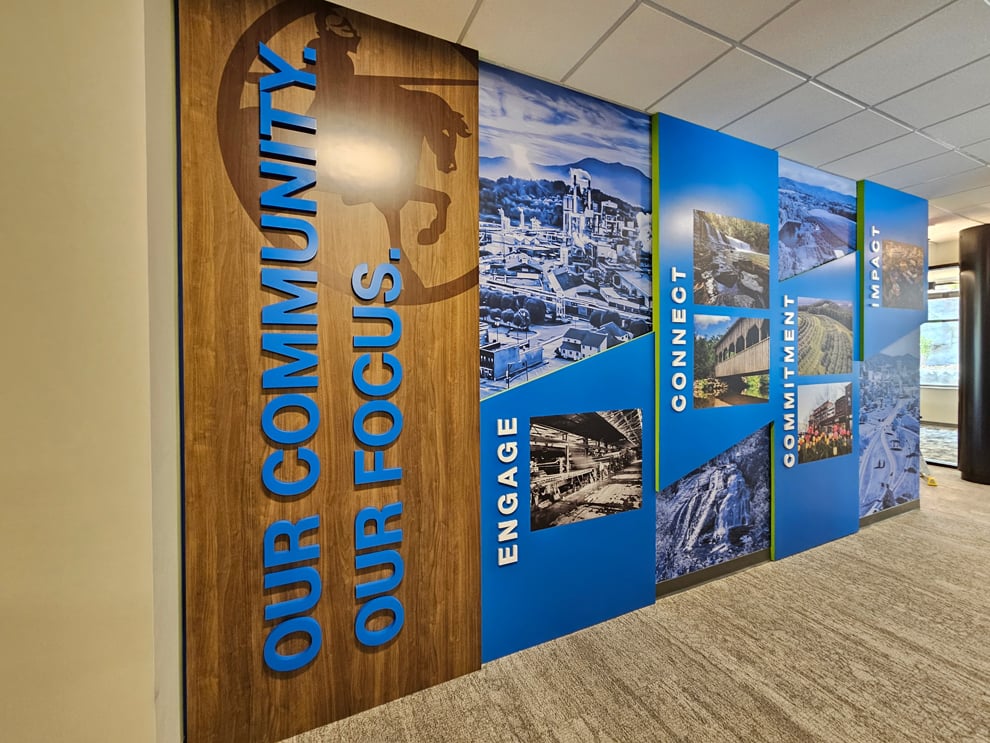
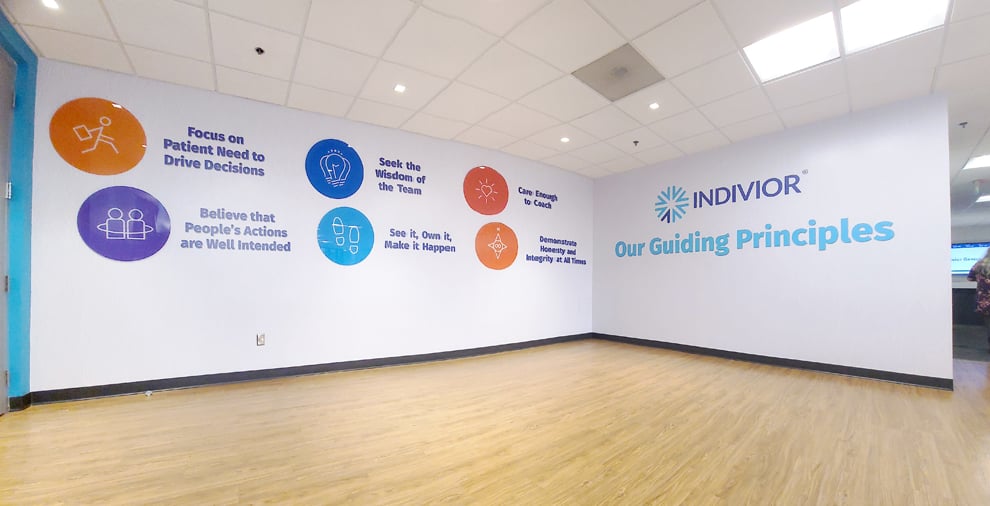
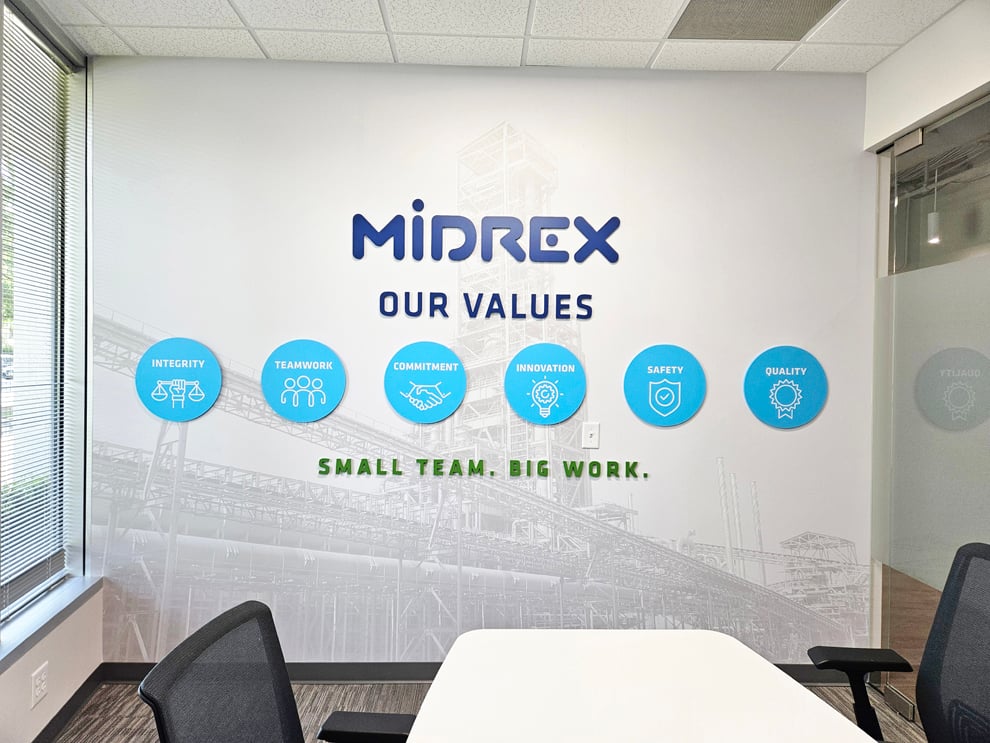
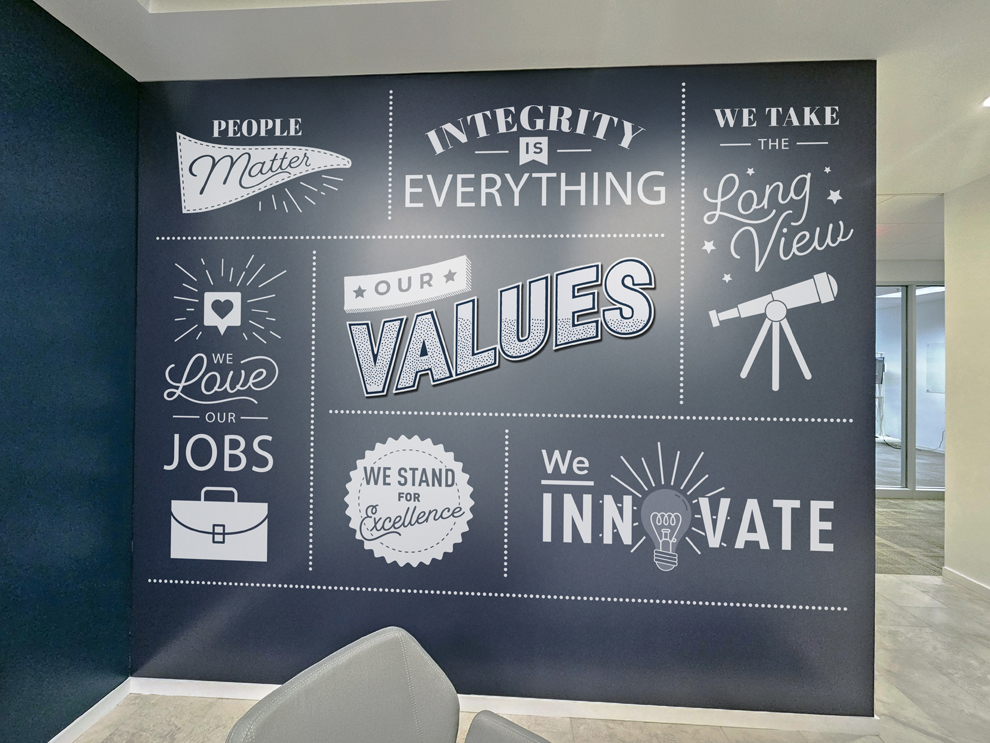
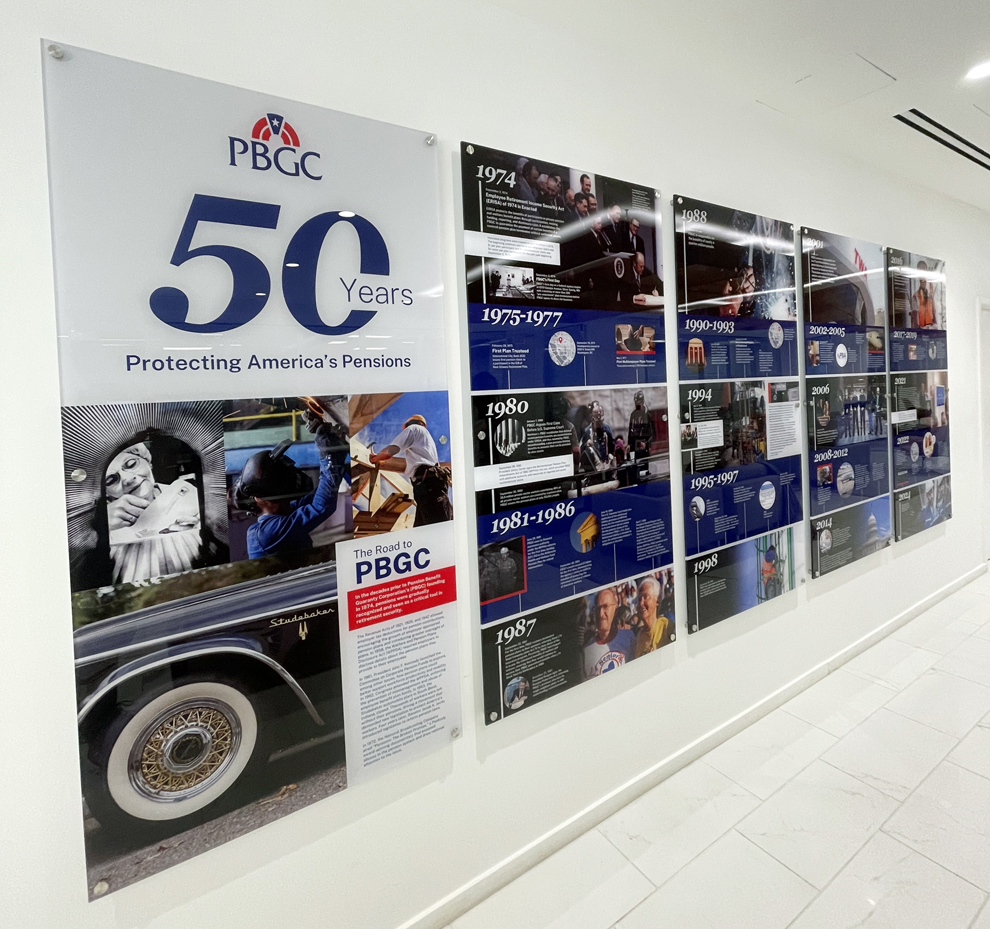
Wall displays combine imagery, typography, printed graphics, dimensional elements, and panels into one organized composition. They are commonly used for milestones, core values, donor recognition, employee achievements, and historical content.
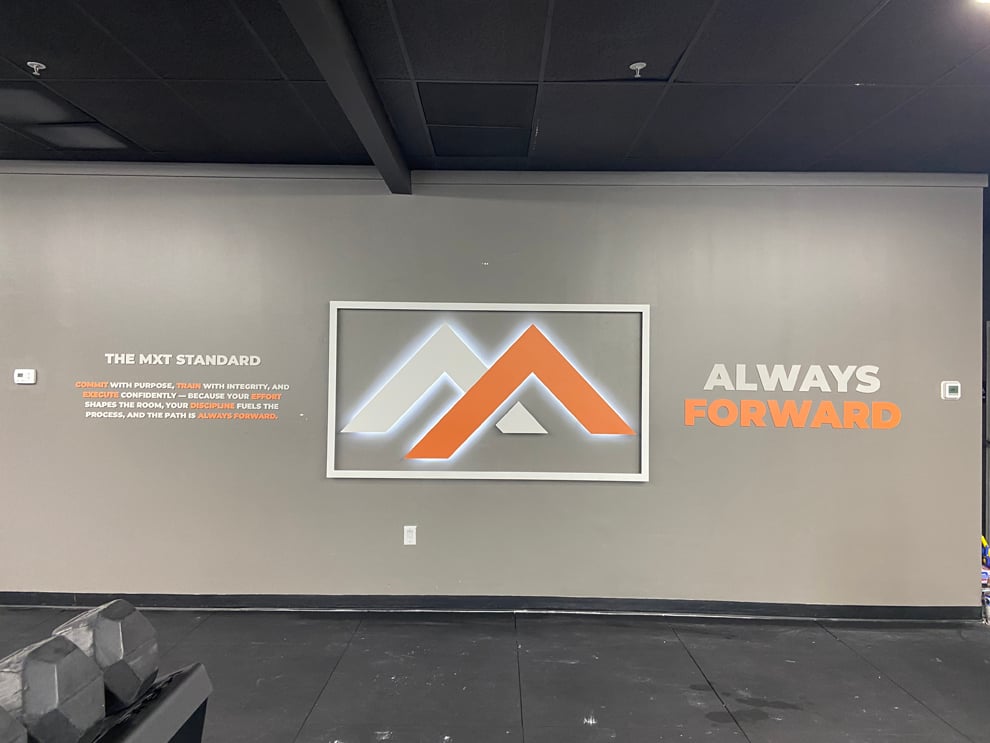
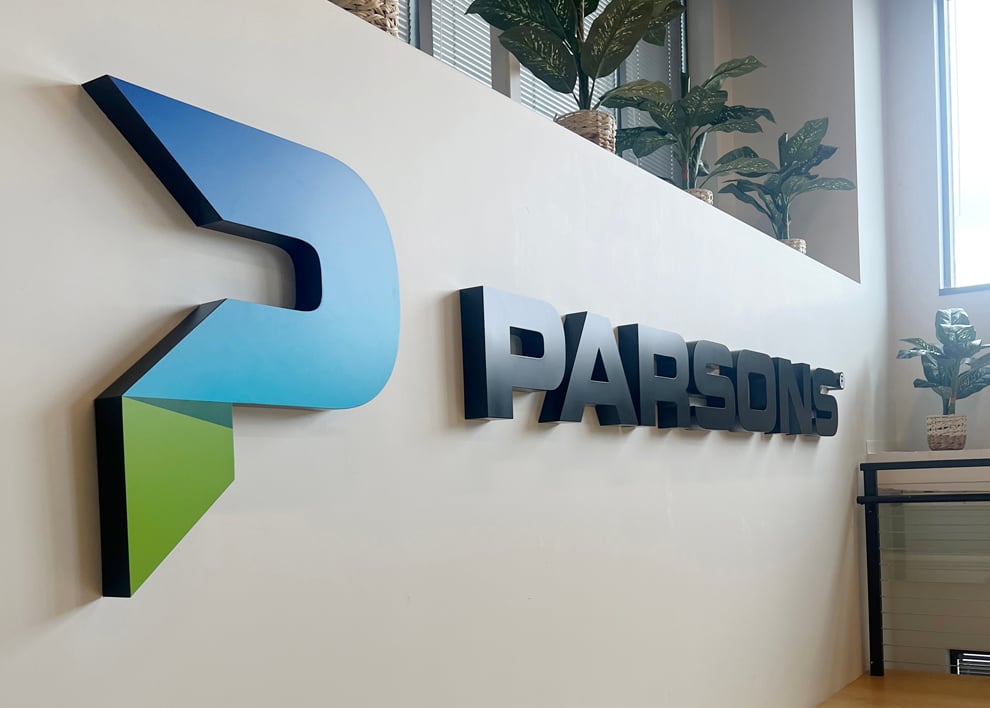
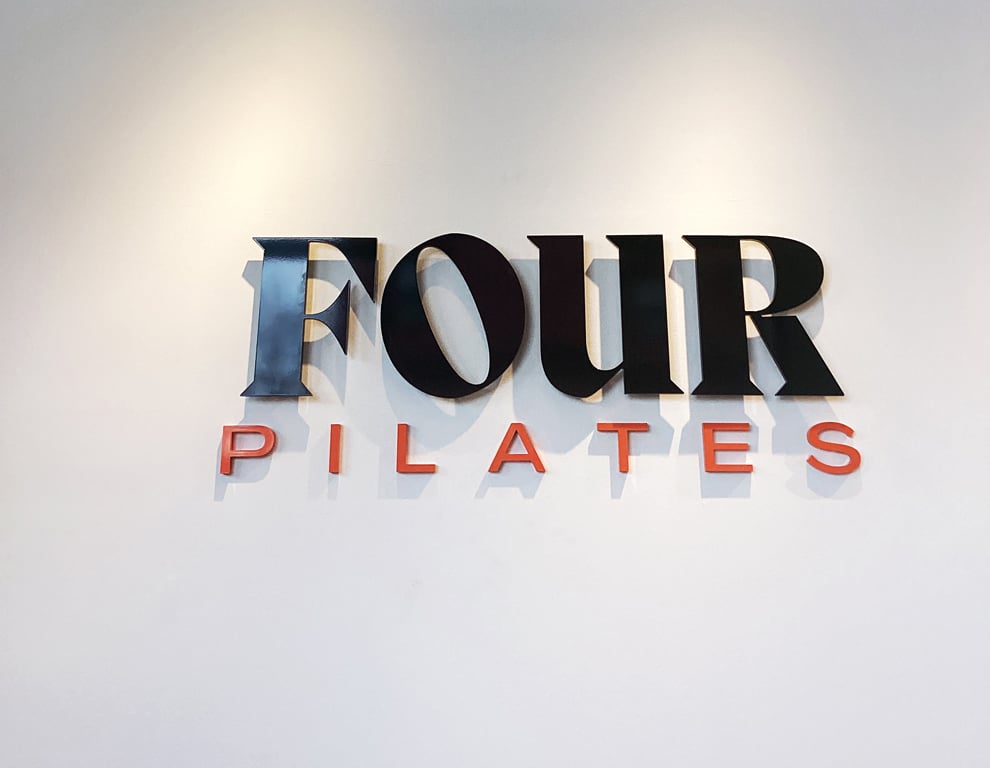
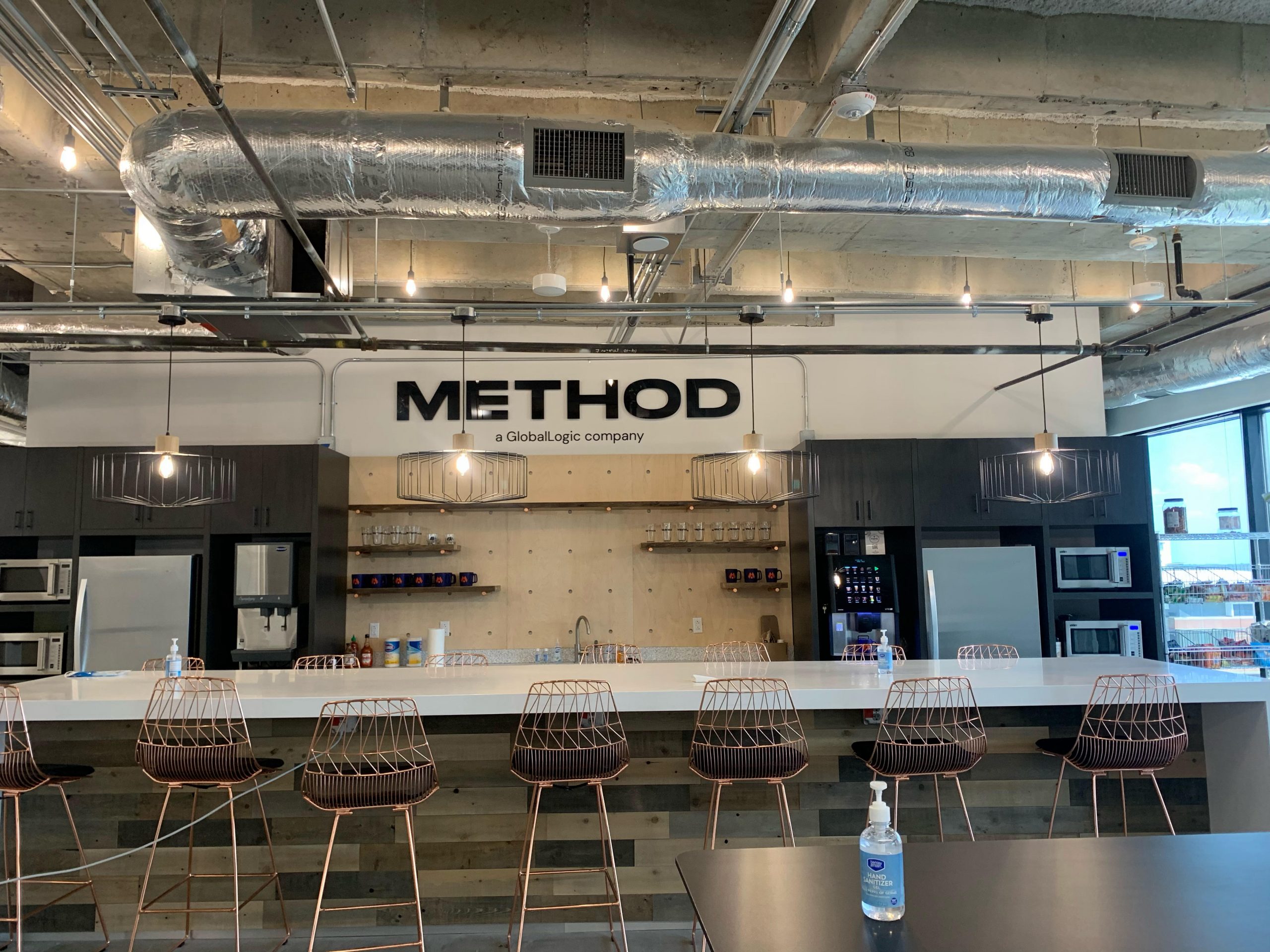
Dimensional letters and logos provide depth that flat graphics cannot achieve on their own. They are effective in lobbies, corridors, conference rooms, employee areas, and other prominent branded spaces.
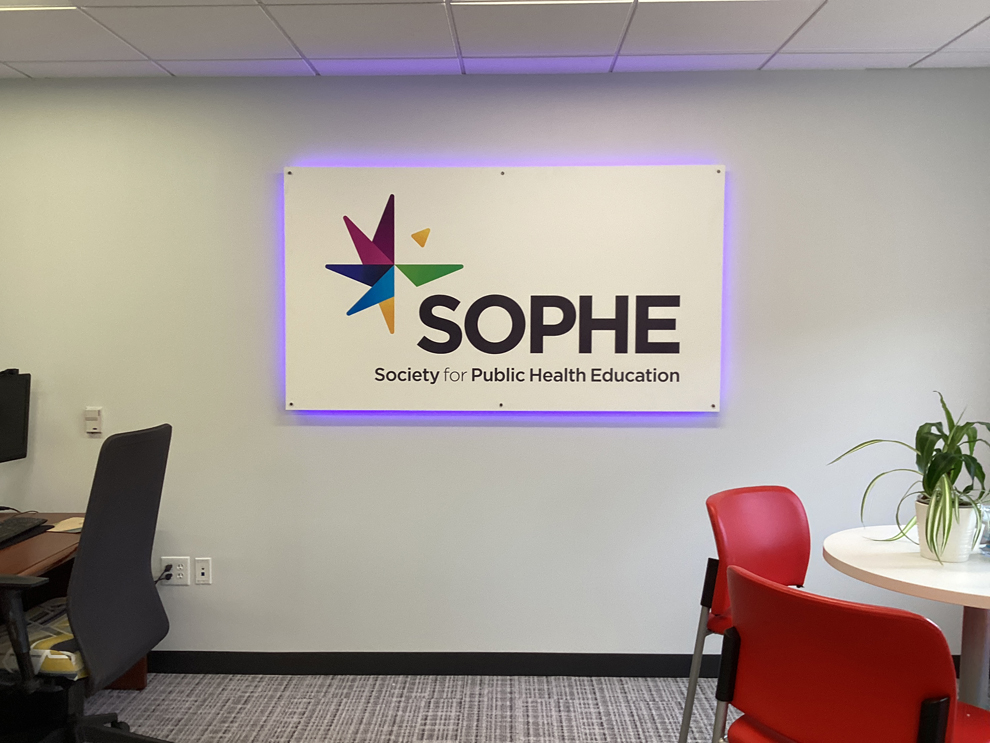
Environmental graphic design coordinates messaging, identity, architecture, scale, materials, and placement. The goal is to make every sign and graphic function as part of a consistent interior experience.
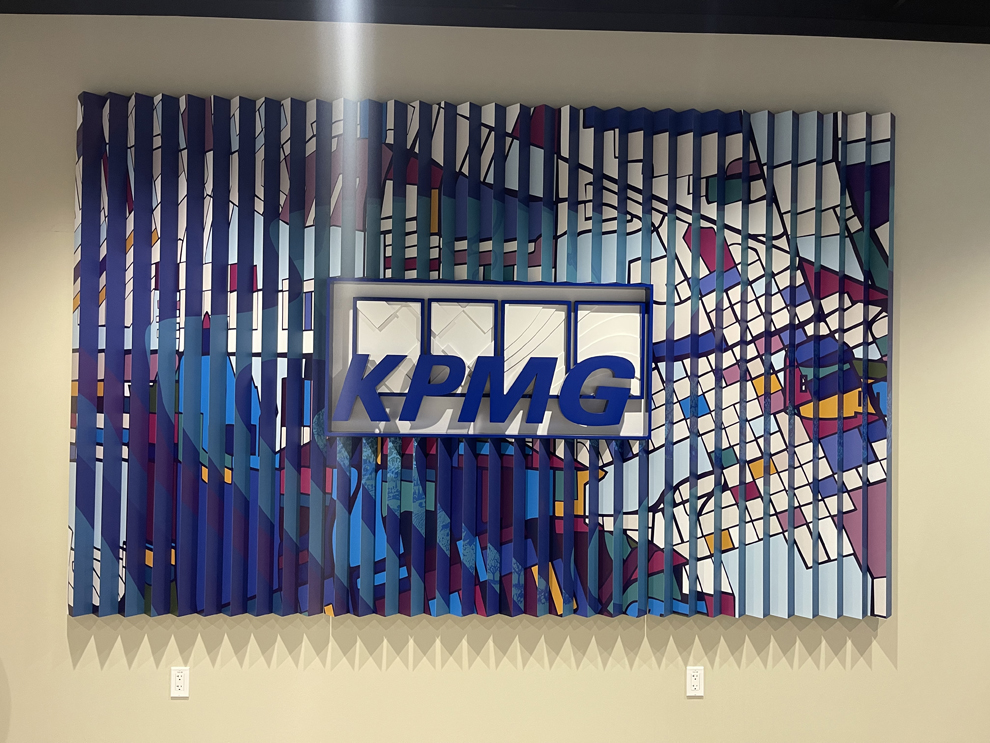
Wayfinding systems help patients, students, employees, and visitors reach their destinations efficiently. Clear directories, room identification, floor information, and directional signs can reduce confusion and limit routine interruptions for staff.
If you are planning a lobby renovation, branded workplace, donor recognition display, campus graphics program, educational environment, museum exhibit, or rollout across multiple facilities, we are ready to discuss your goals.
Complete the Get Started Now form and provide the Chapel Hill project address, desired timeline, photographs, drawings, brand guidelines, available content, and any fixed opening or installation dates. A Heritage team member will review the information, confirm whether the project fits our services, and recommend the next step.
Heritage maintains an active project presence in Chapel Hill. Our team travels to client locations for consultations, site surveys, field verification, installation planning, and coordination with facilities teams, contractors, property managers, and other stakeholders. Seeing the space firsthand allows us to compare project goals with actual wall conditions, traffic patterns, lighting, and access requirements.
Chapel Hill and the surrounding Triangle are home to universities, healthcare systems, research organizations, technology companies, life sciences firms, independent schools, nonprofits, cultural institutions, government offices, and professional service organizations. These clients have different audiences, security requirements, brand standards, and building conditions. Our recommendations are based on the specific facility and the people who use it, not a generic package.
Larger projects can draw on Heritage resources throughout our regional network. In-house production and fabrication, coordinated project management, and installation by Heritage employees allow us to assist organizations with offices, clinics, campuses, branches, or facilities in Chapel Hill and other markets. Clients receive personal accountability without sacrificing production capacity.
Environmental graphic design uses visual communication to shape how people experience a physical setting. In a Chapel Hill workplace, campus, clinic, or public facility, it may coordinate brand identity, organizational messaging, architecture, circulation, accessibility, materials, scale, and sightlines. Signs and displays are planned as parts of one system rather than unrelated additions. Installation considerations are addressed early instead of being postponed until artwork is approved.
Clients come to us at different stages of development. Some provide complete brand guidelines, architectural drawings, photographs, measurements, and finalized content. Others have a general concept and a space they want to improve. Our designers can turn either starting point into practical layouts, message hierarchies, material recommendations, privacy treatments, dimensional features, wayfinding plans, and coordinated placements across multiple rooms or floors.
We also identify conditions that may affect feasibility, cost, or installation before designs move too far forward. These conditions can include textured walls, low-energy glass, recently painted surfaces, restricted mounting areas, limited access, or conflicts with existing architectural features.
The purpose of design development is not to create unnecessary steps. Detailed planning helps reduce rework, delays, and conflicting expectations. Developed drawings allow stakeholders to visualize the result, support accurate estimating and fabrication, and provide installers with clear instructions for positioning and mounting every component.
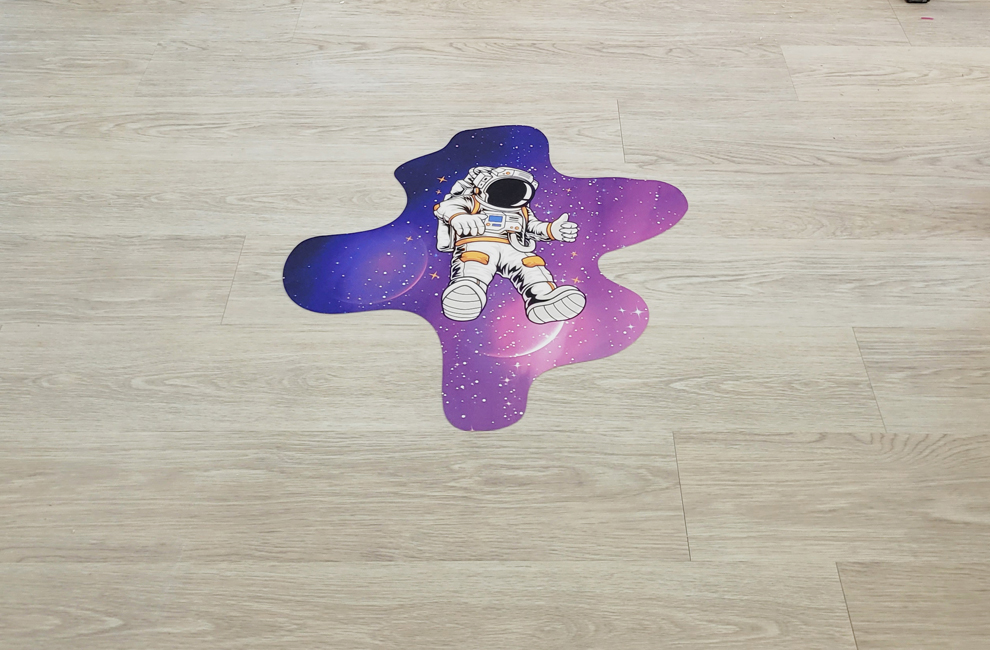
Installation is the stage where the approved design, manufactured components, and physical building come together. Even a well-made sign can fall short if measurements are inaccurate, mounting methods are unsuitable, alignment is inconsistent, or installation conflicts with other trades. We treat installation as part of the complete project rather than a separate service added at the end.
Heritage-managed installations begin with a site survey. Our team records dimensions, wall finishes, substrates, obstructions, lighting, sightlines, traffic patterns, and access conditions. The visit also gives us an opportunity to discuss priorities and potential concerns directly with the client.
Chapel Hill installations may involve occupied offices, active healthcare environments, university buildings, security procedures, loading restrictions, elevator reservations, after-hours work, and phased construction schedules. These requirements must be documented and coordinated before installation begins.
Our full-time installers communicate with project managers, designers, production specialists, and fabricators. As a result, the installation crew arrives with a clear understanding of the approved drawings, materials, placement, and mounting requirements. Heritage installs signs, graphics, and displays that we have produced, fabricated, procured, or managed as part of a complete project. We do not provide installation-only service for products purchased from another supplier.
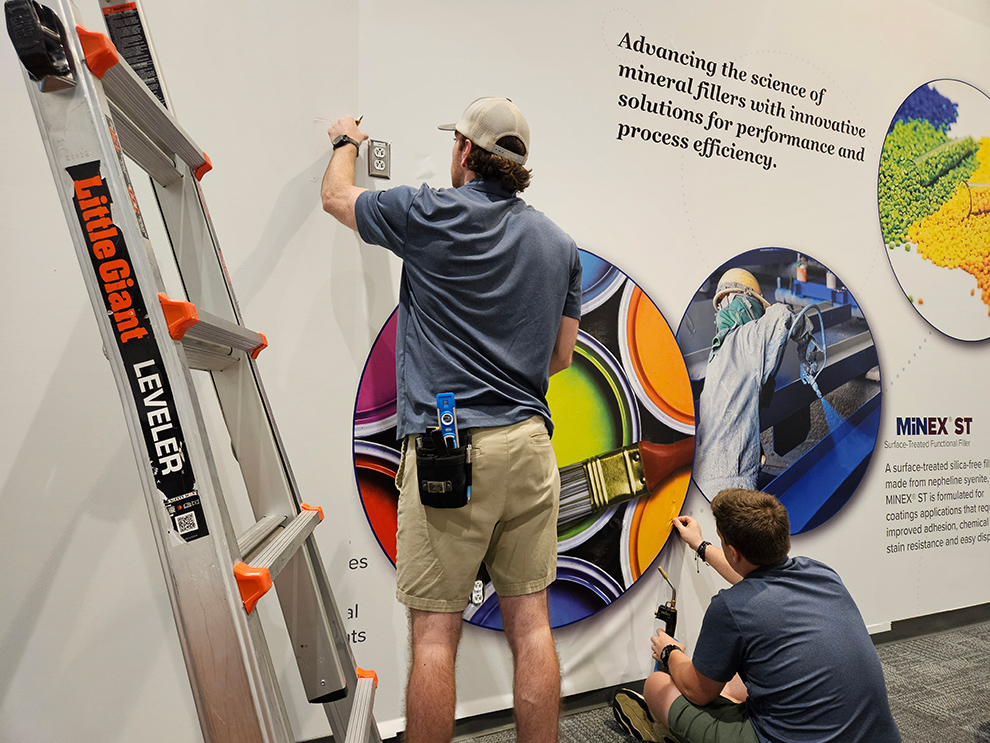
Effective planning begins with what an organization wants people to understand, feel, or do within the space. We then evaluate the audience, site, content, schedule, and expected investment to determine an appropriate scope. Floor plans, photographs, brand standards, finalized copy, and confirmed installation addresses help us assess the project efficiently. If important information is still missing, your project manager will explain what must be verified before the project advances.
Chapel Hill clients should plan for a minimum total Heritage engagement of $4,000. This amount applies to the complete managed project, which may include design development, production, project management, and professional installation. It does not represent the price of one individual sign or graphic. Many projects that include production and installation range from $10,000 to more than $200,000 based on quantities, materials, project complexity, square footage, site conditions, number of locations, access requirements, and phasing.
Commercial and institutional interiors are our primary focus. Certain exterior elements may be incorporated when Heritage is also responsible for the interior program. These additions may include non-illuminated exterior signs, exterior dimensional letters, and exterior window or wall graphics.
We do not specialize in standalone exterior sign programs, monument signs, pylon signs, channel letters, fleet graphics, or repairs to failed sign components and LED systems. Other sign providers in Chapel Hill and the Triangle are better suited to those categories.
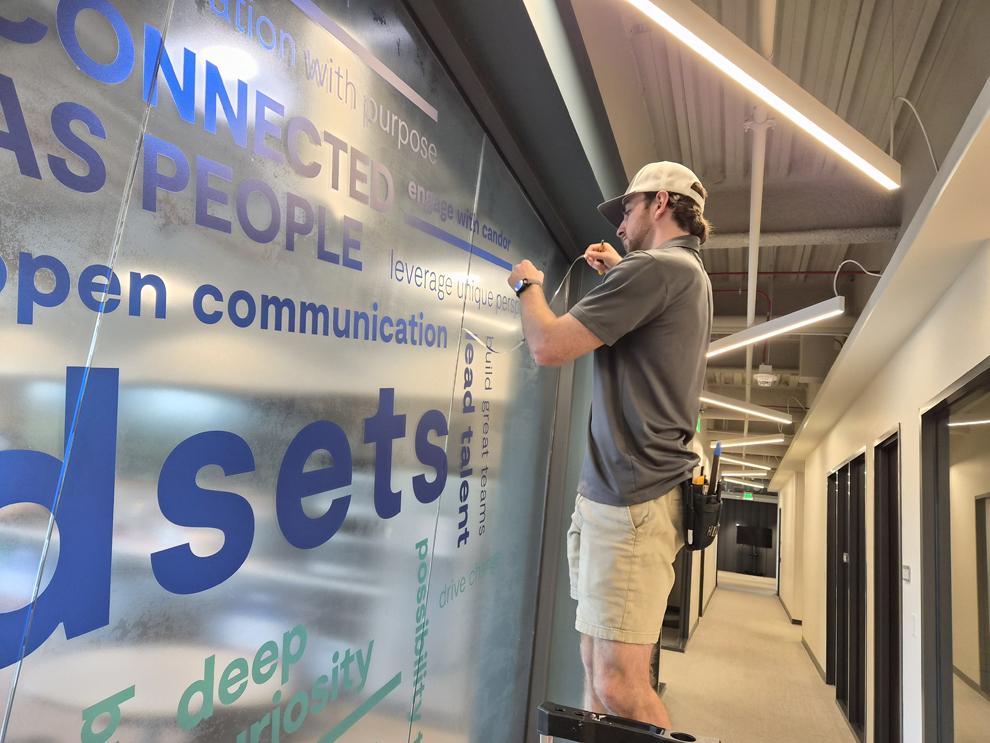
Mission statements, core values features, historical timelines, donor walls, and employee recognition displays are among the most common interior projects we manage. These installations can combine printed graphics, photography, dimensional lettering, acrylic panels, standoff hardware, custom finishes, and lighting.
Design typically begins with the content. The amount and importance of the information determine the hierarchy, scale, sequence, and materials. Displays can also be designed for future updates when clients expect to add donors, dates, names, milestones, or achievements.
Heritage serves Chapel Hill, Carrboro, Durham, Hillsborough, Research Triangle Park, Raleigh, Cary, and surrounding North Carolina communities. We also assist organizations with additional locations throughout the Carolinas and the Mid-Atlantic.
Our seven-location network, production resources, and full-time installation teams allow one project manager to coordinate projects in multiple markets while maintaining consistent brand standards.
No. We do not offer installation-only services for signs or graphics supplied by a client or another vendor. Our installers work with components that Heritage has produced, fabricated, procured, or managed within a complete engagement.
This policy allows us to remain accountable for material compatibility, production quality, substrate preparation, mounting, fit, and scheduling.
Chapel Hill organizations should plan for a minimum total engagement of $4,000. This represents the managed project rather than the cost of one individual item. Many projects that include production and professional installation range from $10,000 to more than $200,000.
Pricing depends on design requirements, material selections, finishes, quantities, printed square footage, the number of rooms or buildings, site conditions, access restrictions, after-hours work, and project phases. Estimates become more precise after a site survey confirms measurements and installation conditions.
Yes. We frequently collaborate with architects, interior designers, general contractors, facilities departments, marketing teams, exhibit planners, and outside brand agencies.
Our responsibilities may include evaluating concepts for production feasibility, recommending materials and mounting systems, developing fabrication-ready artwork, producing project components, and coordinating installation around construction schedules and building access requirements.
Heritage produces and installs lobby signs, dimensional lettering, acrylic signs, standoff mounted panels, wall wraps, window graphics, frosted vinyl, wall displays, directories, room identification, wayfinding signs, donor recognition features, historical timelines, and museum or interpretive graphics.
We recommend materials and fabrication methods based on the surface, viewing distance, expected wear, cleaning practices, brand requirements, and accessibility standards that apply to the location.
One dedicated Heritage project manager serves as the client’s primary contact. This person leads discovery, prepares estimates, gathers site information, coordinates design development, confirms materials and finishes, tracks approvals, schedules production, plans installation logistics, and manages project closeout.
Clients do not have to repeat the same information to separate designers, estimators, production coordinators, and installation crews.
Interior branding is our main specialty, but certain exterior components may be added when Heritage is already managing the interior program. Common additions include non-illuminated exterior signs, exterior dimensional letters, and graphics installed on exterior windows or walls.
Before accepting exterior work, we assess the substrate, attachment method, surface condition, weather exposure, code requirements, and expected lifespan. Standalone exterior sign programs, monument signs, pylon signs, channel letters, and fleet graphics are outside our scope.
Project schedules can range from several days to several months. A focused graphics installation may move quickly, while a coordinated workplace or campus program may require several weeks. Phased, multi-floor, or multi-location projects can extend across a longer construction schedule.
The process may include a site survey, design development, approvals, production, fabrication, site preparation, and installation. Technical conditions also affect timing. For example, newly primed and painted walls typically need about four weeks to cure and release trapped moisture or gases before certain adhesive graphics can be installed reliably. We identify these dependencies early and establish approval dates to help protect the schedule.
Heritage combines attentive Chapel Hill service with nearly 50 years of company experience, in-house production, environmental graphic design expertise, and installation by full-time employees. Clients receive one project manager, clearly defined services, and a coordinated team familiar with occupied facilities, firm opening dates, campus environments, and multi-location programs.
We are an award-winning, veteran-owned, family-led company. Our purpose is to honor God by serving our clients and communities with excellence. That commitment is reflected in our preparation, communication, workmanship, accountability, and respect for every space we enter.
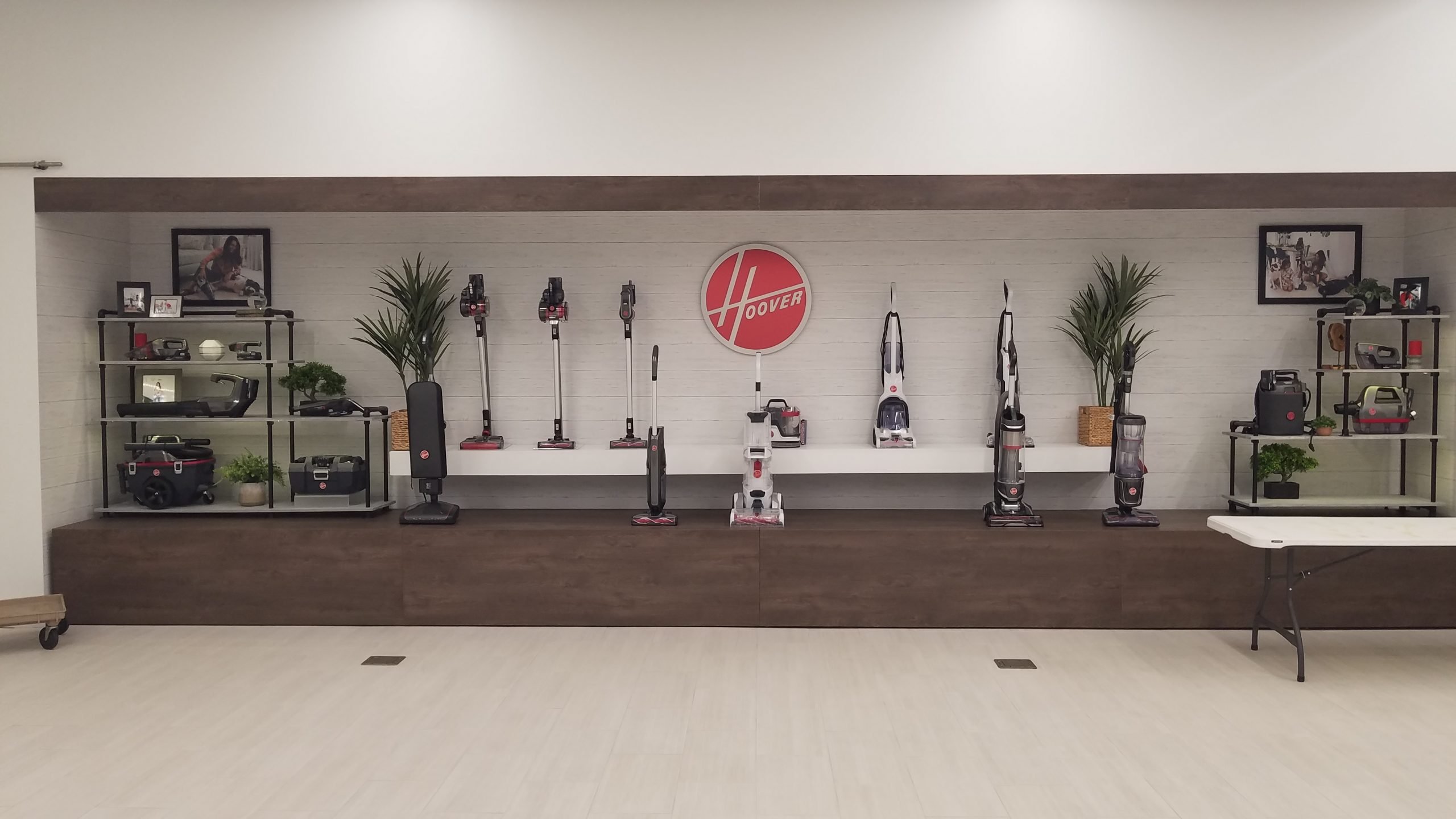
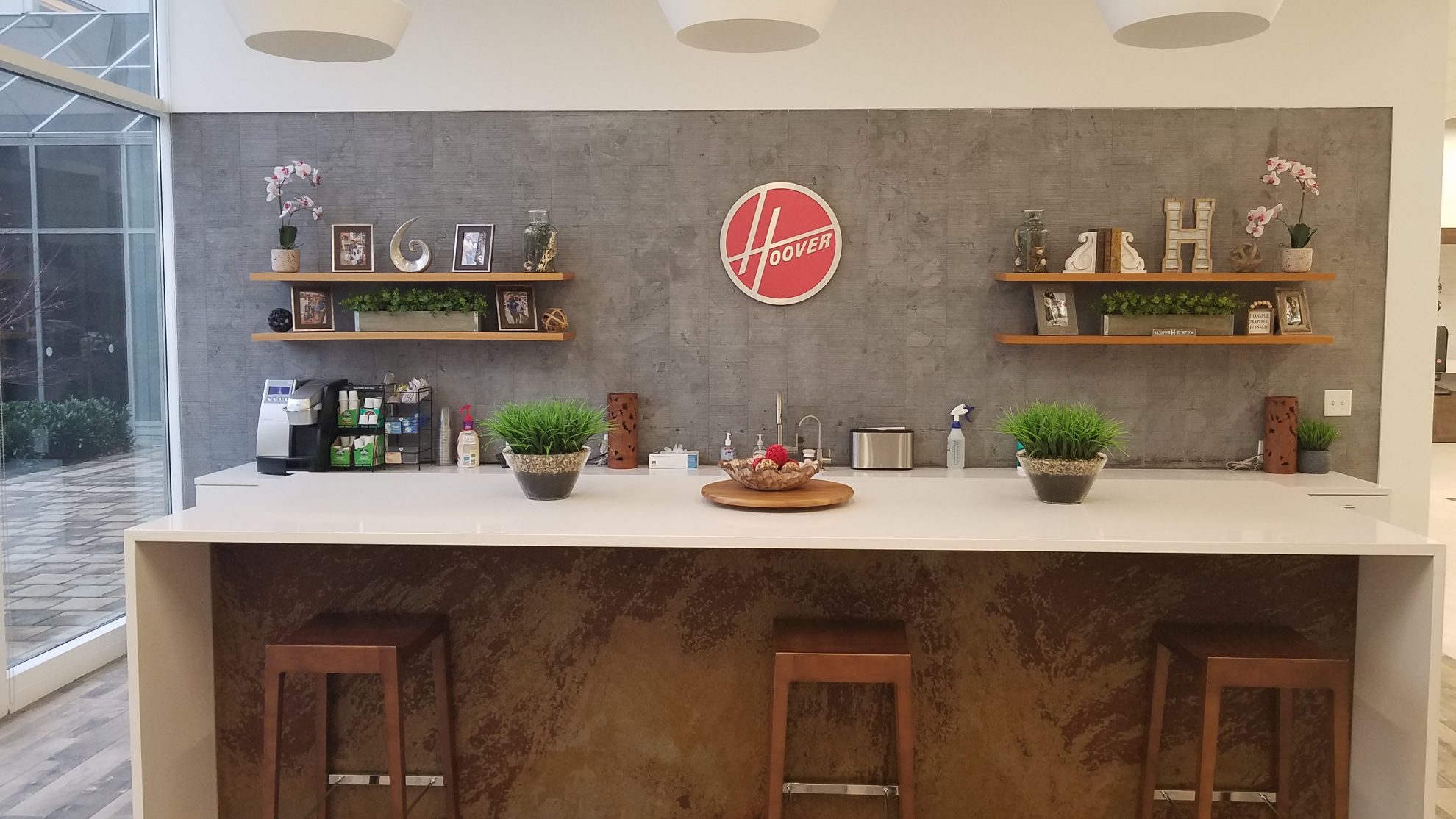
Heritage Signs & Displays collaborated with TTI Floor Care North America to enhance their corporate office. The project included custom frosted vinyl graphics, acrylic signs, dimensional lettering, and LED backlit signs, showcasing the brands Dirt Devil, Hoover, and Oreck. The signage improved office branding, privacy, and aesthetics. Heritage collaborated closely with TTI, ensuring efficient execution and high-quality results, creating an immersive and professional environment that reflects TTI's brand values.
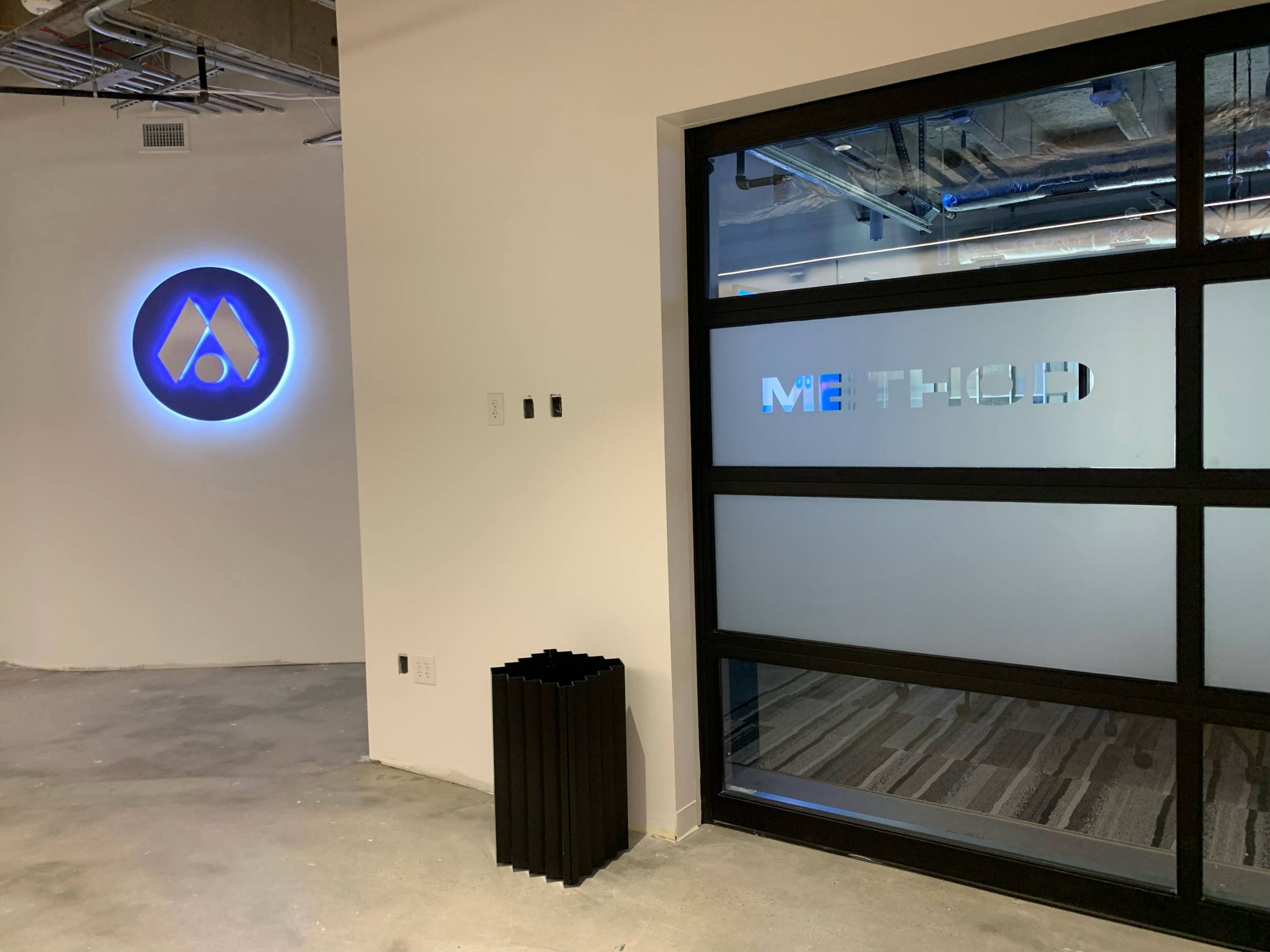
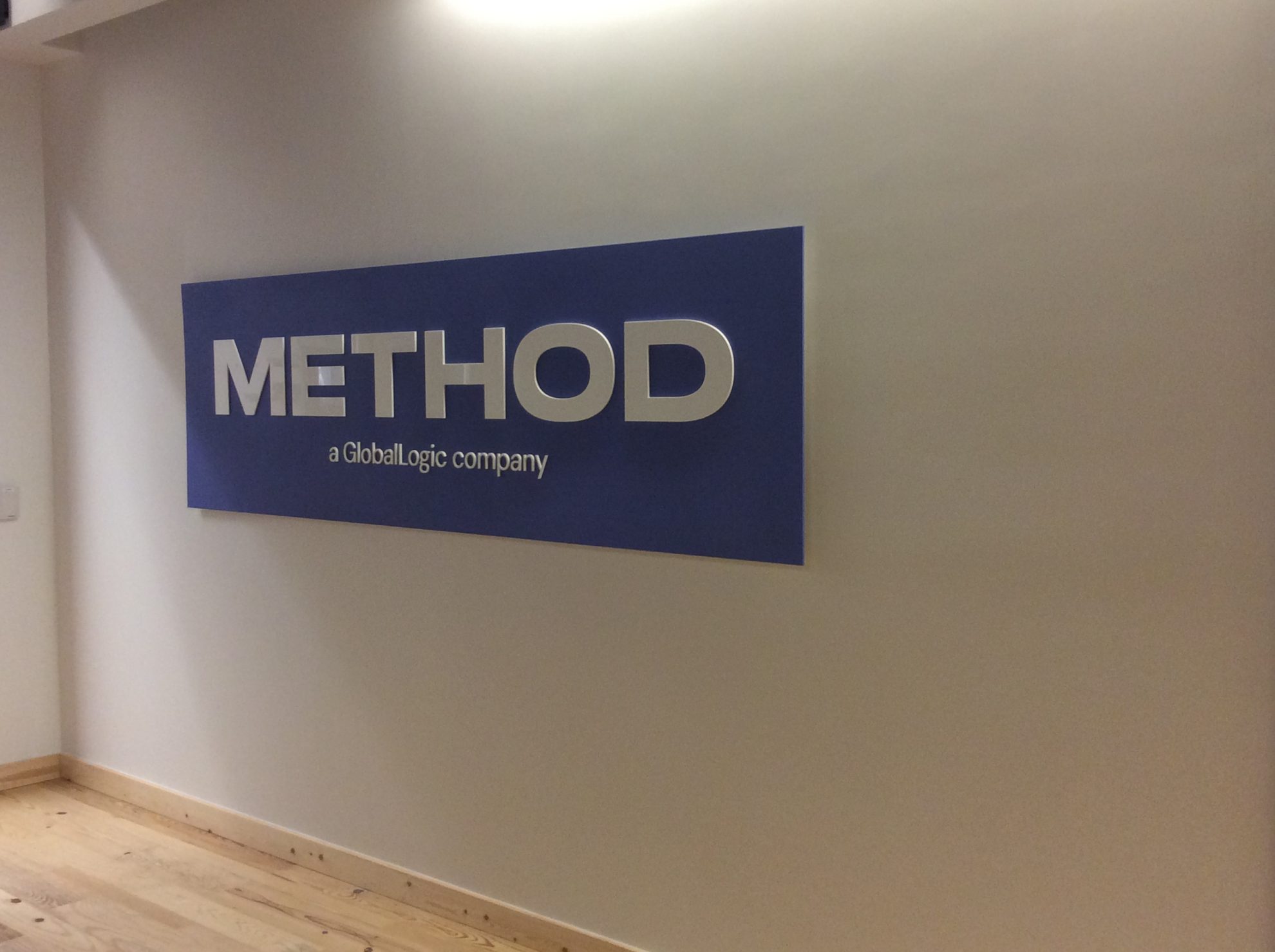
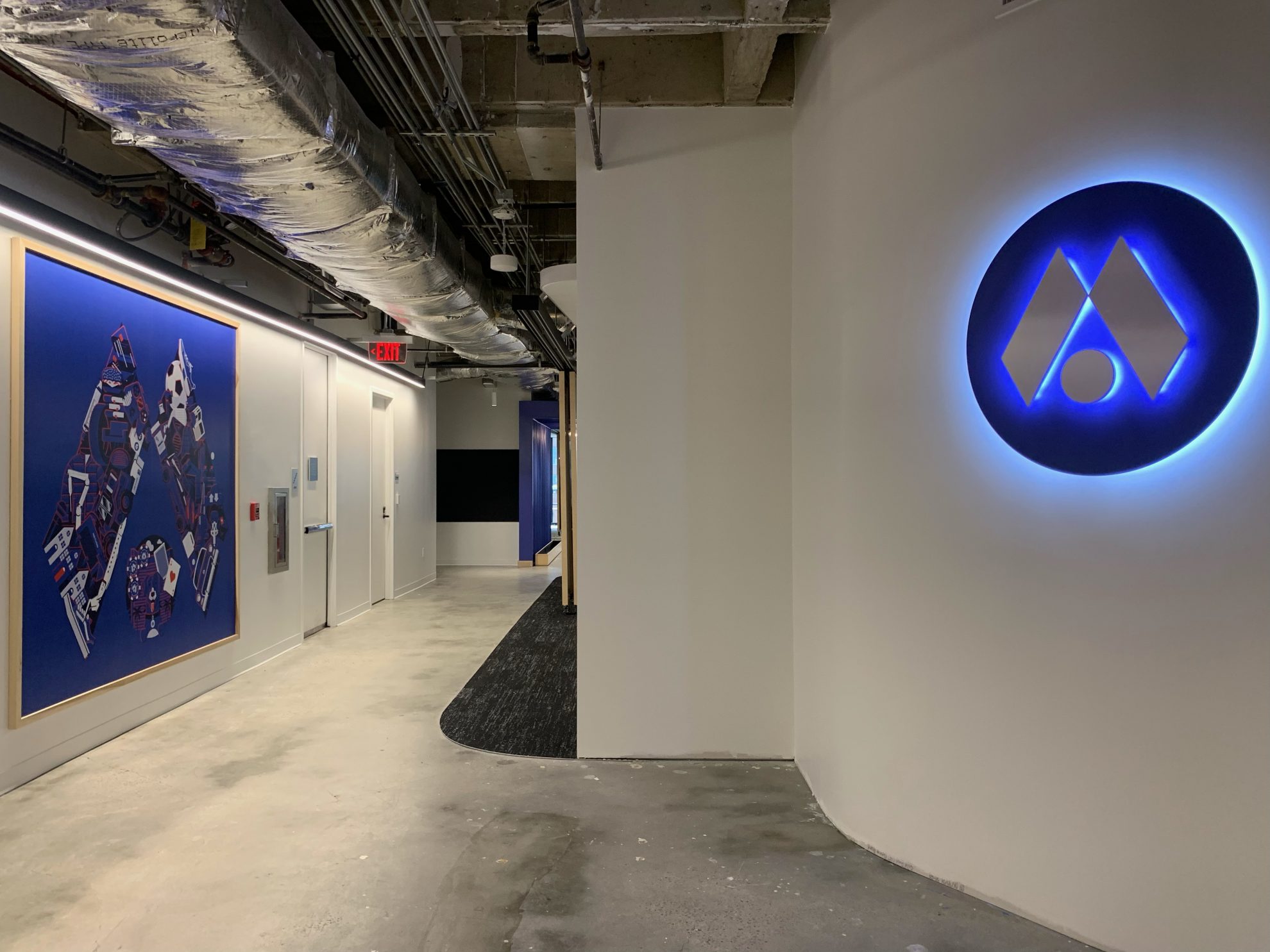
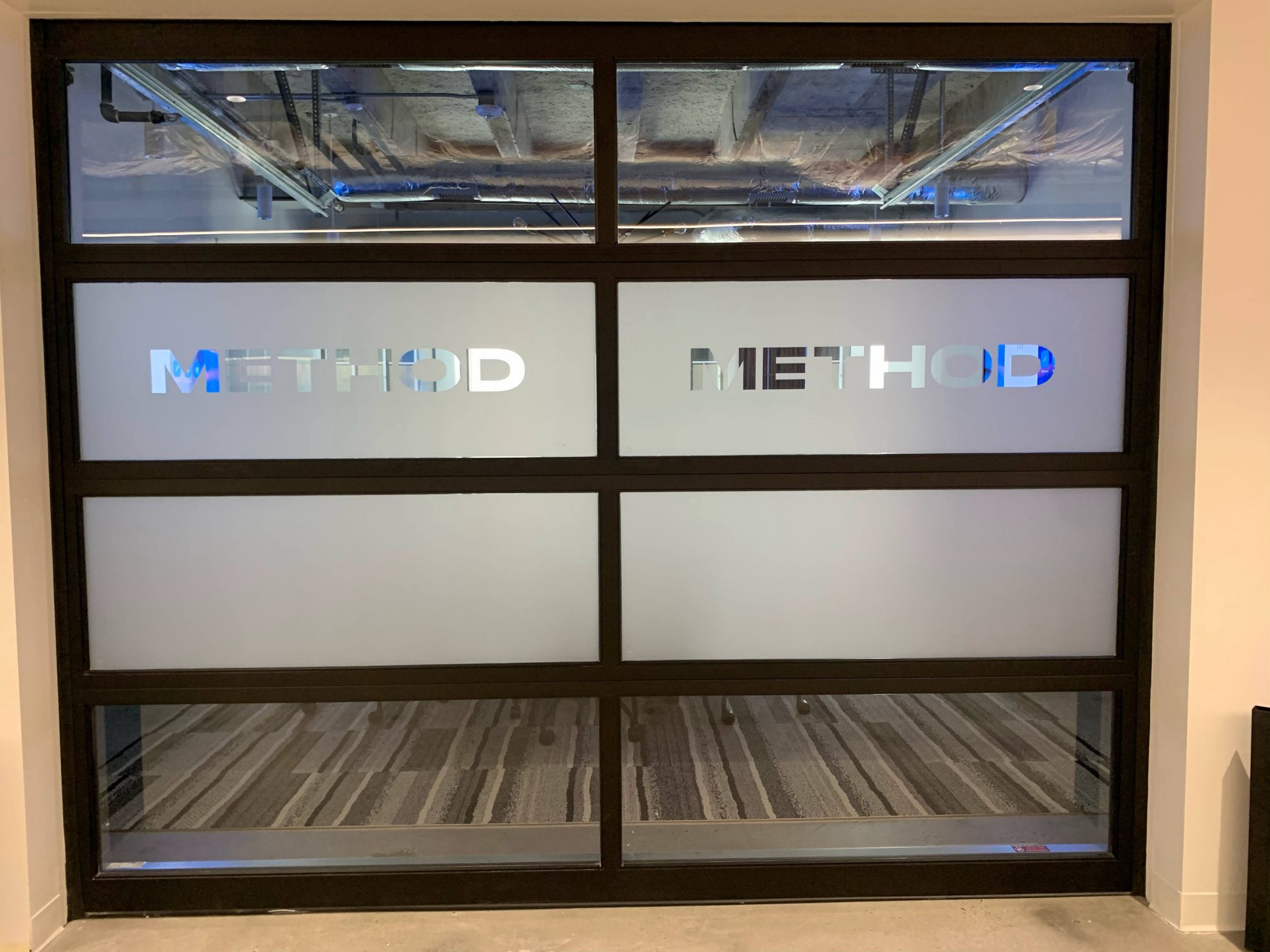
Heritage Signs & Displays' collaboration with Method (formerly Skookum) to rebrand their corporate headquarters. The project included dimensional lettering, wall displays, LED-lit signage, wall wraps, and frosted vinyl, creating an immersive and branded environment. Heritage worked closely with Method's team, ensuring accurate execution and timely delivery. The transformation was completed in August 2021, with Method's employees moving into the revamped space in September. The project reflects Heritage's commitment to quality and collaboration.