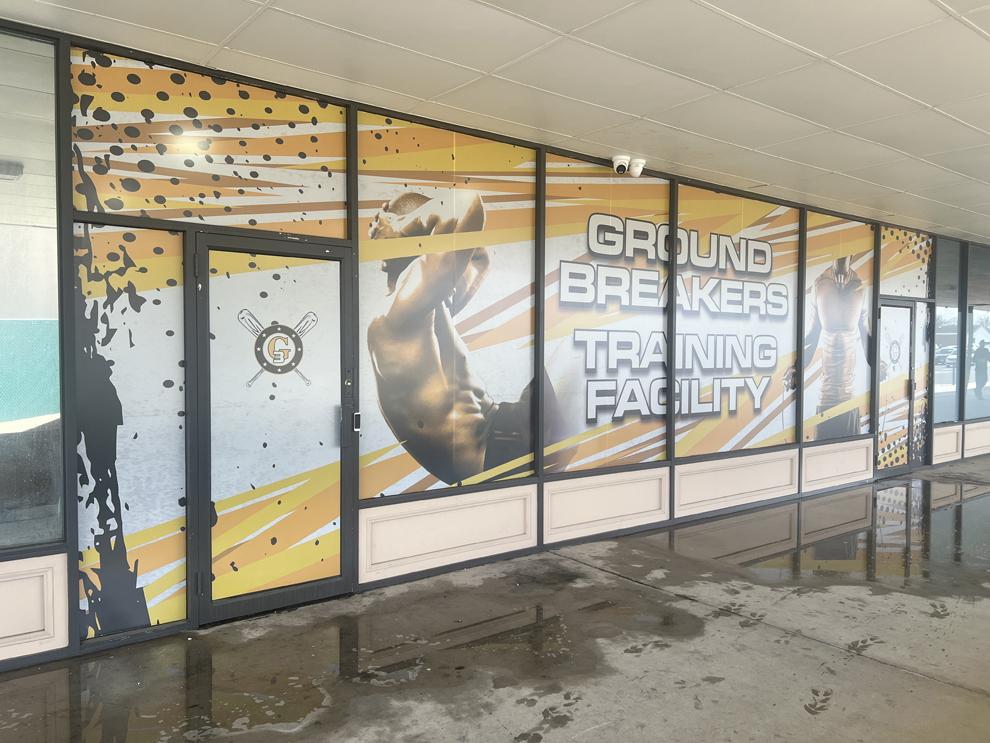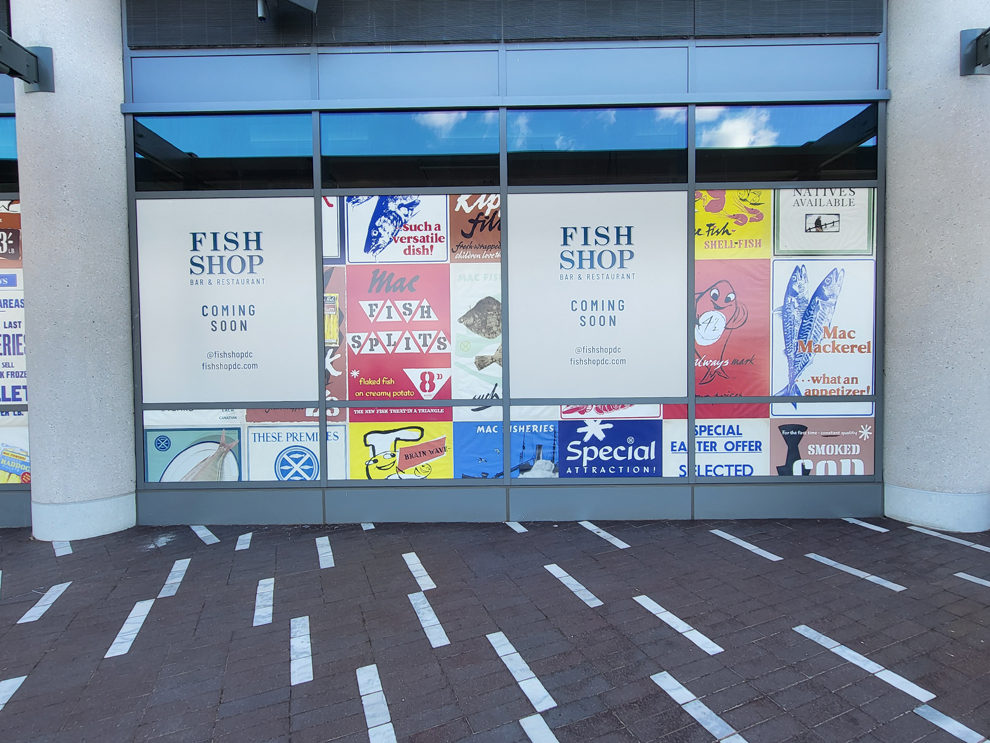
Your entrance should help people recognize the organization and understand where to go. Storefront graphics can provide that clarity through purposeful identification, visual awareness, and privacy on doors, windows, and adjacent surfaces. Rather than placing every message at the threshold, a well-planned treatment establishes the right first impression and prepares employees, visitors, and customers for the commercial interior beyond it.
The amount and placement of graphics should reflect how the entrance functions. Some properties need prominent identification from a parking area or pedestrian approach. Others need a restrained glass treatment for a shared lobby, vestibule, office corridor, or customer-facing suite. Privacy may be important across selected windows without eliminating useful daylight or views. These decisions shape how the entrance introduces the organization without becoming crowded or disconnected from the workplace.
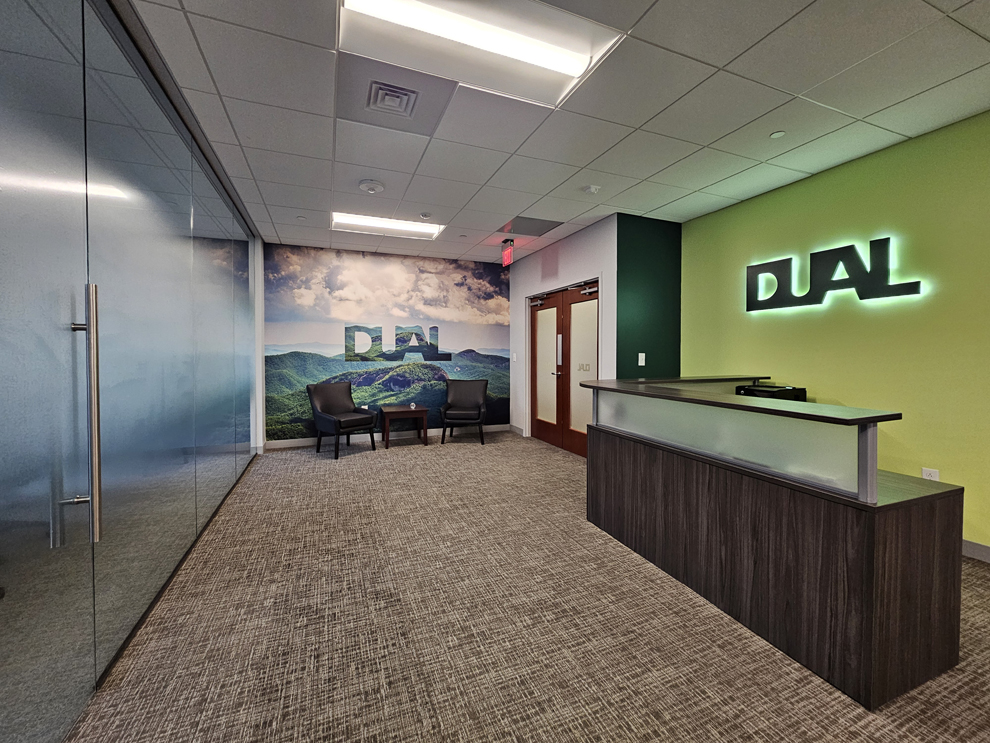
Heritage Signs & Displays plans Storefront Graphics as the principal bridge between exterior-facing identification and interior branding. Once someone enters, a lobby sign, dimensional logo, wall graphic, recognition display, or other branded feature can provide greater depth. The entrance establishes identity and direction. The interior then has room to communicate the organization’s culture, history, mission statement, values, or customer experience with appropriate emphasis.
Heritage begins by learning what the client wants people to recognize, understand, and feel as they approach the property. Environmental graphic design translates those objectives into a practical direction informed by brand standards, architecture, visibility, privacy, scale, and site conditions. One dedicated Project Manager preserves that knowledge as the project moves through discovery, design development, production, fabrication, and professional installation. This continuity reduces unnecessary handoffs, maintains accountability, and helps protect approved design intent through completion.
Heritage began in 1977 as a commercial printing company. Signs, interior graphics, workplace branding, and event environment solutions became a defining focus beginning in 2009. Heritage is an award-winning, veteran-owned, family-led company approaching its 50th anniversary. That experience supports a disciplined process in which material selection, production requirements, access planning, and installation conditions are considered as connected project decisions rather than separate transactions.
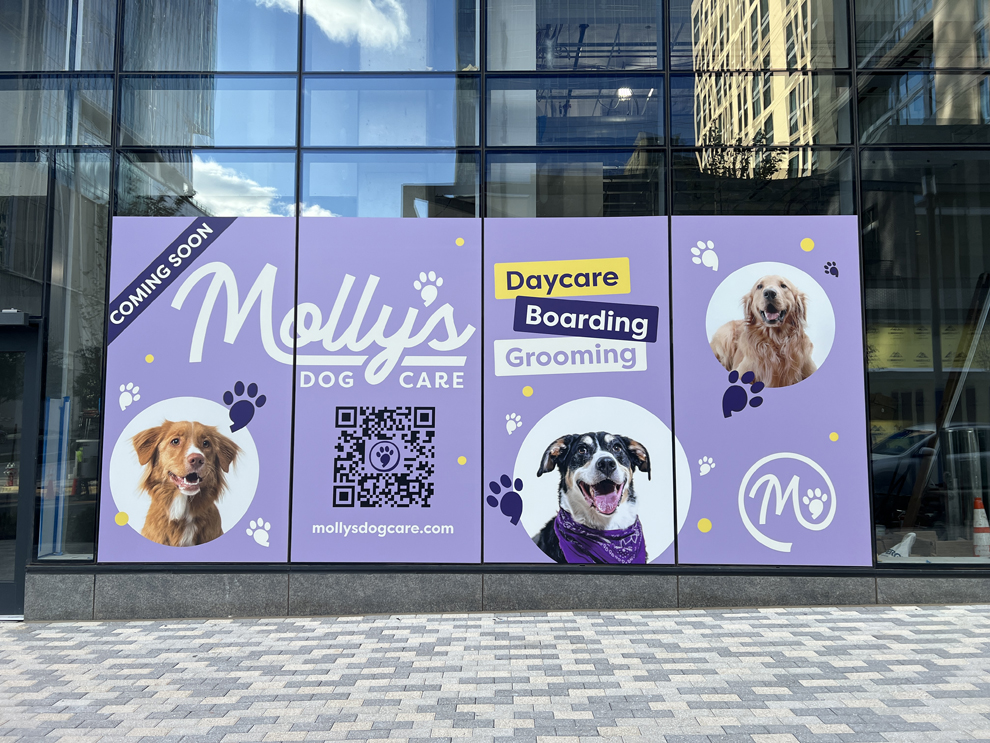
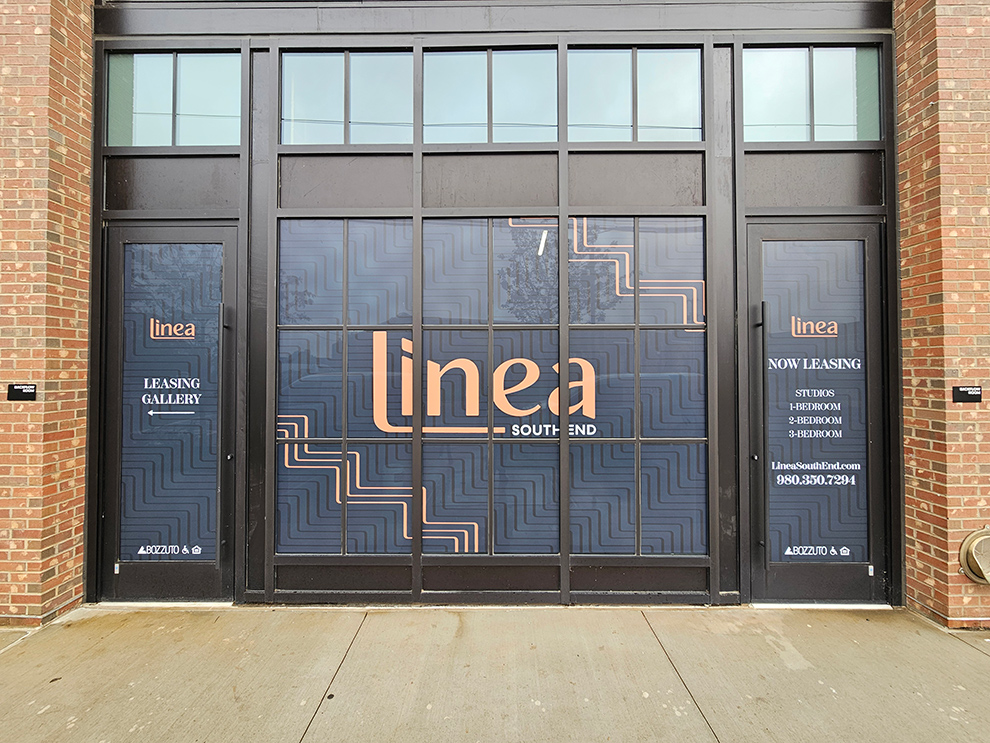
Storefront projects can also include coordinated non-illuminated exterior signs and graphics within Heritage’s approved scope. Exterior window graphics, dimensional lettering, sign panels, and exterior wall graphics can establish identity before entry, while entrance glass and interior features continue the visual system. Storefront Graphics remain the gateway product that connects these elements into one planned arrival.
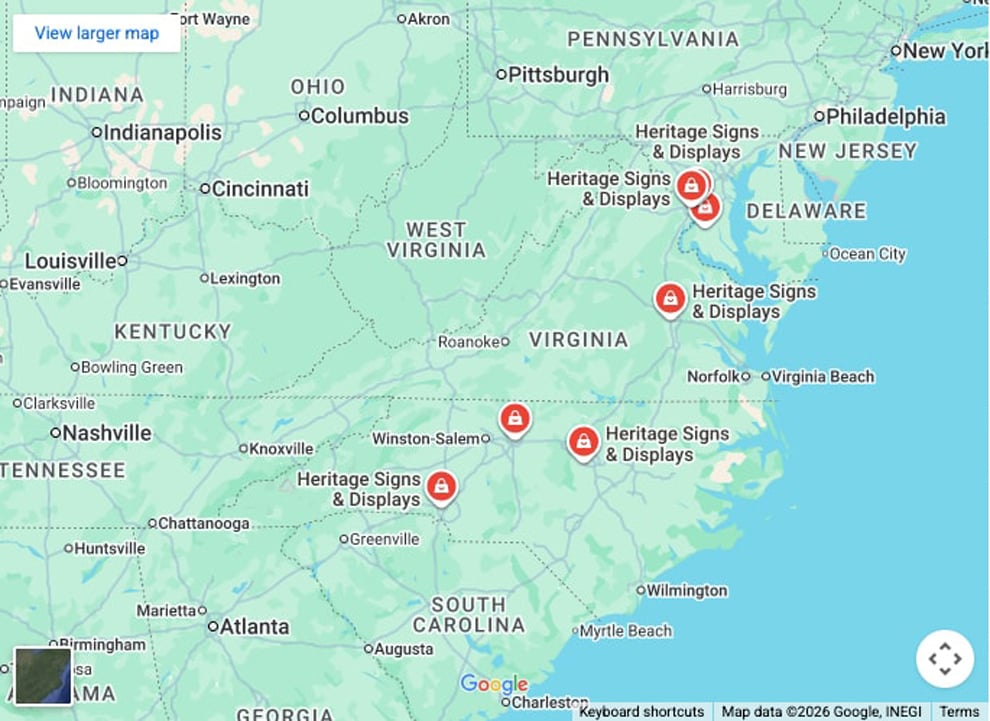
Organizations in Cary and the Research Triangle can access client-facing support for discovery, site surveys, installation planning, professional installation, and follow-through. One accountable Heritage relationship connects that local support with broader production and project resources. Heritage seeks to honor God by serving clients and communities with excellence, expressed through responsible recommendations, clear communication, thoughtful stewardship, and dependable follow-through.
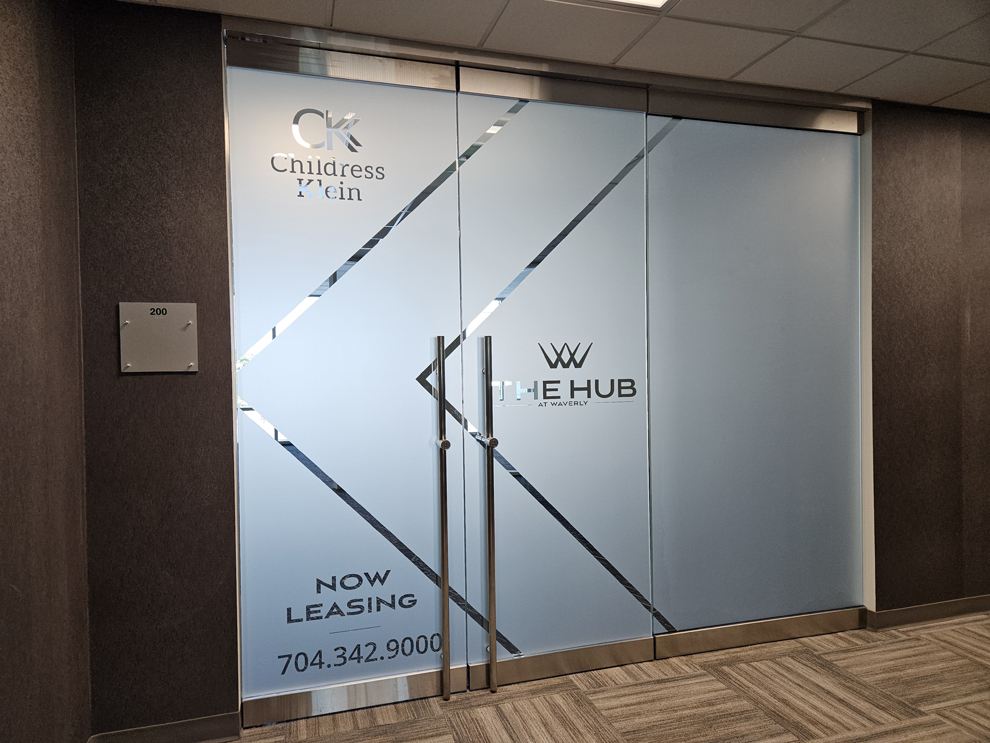
Recognition at the entrance is the beginning of the experience, not its entire purpose. Door lettering or window graphics can confirm identity and help people approach with confidence. Clear glass may also need distraction markers, which are decorative or branded vinyl graphics applied to clear glass to make the surface easier to notice. Their design can contribute to privacy or branding without implying code certification.
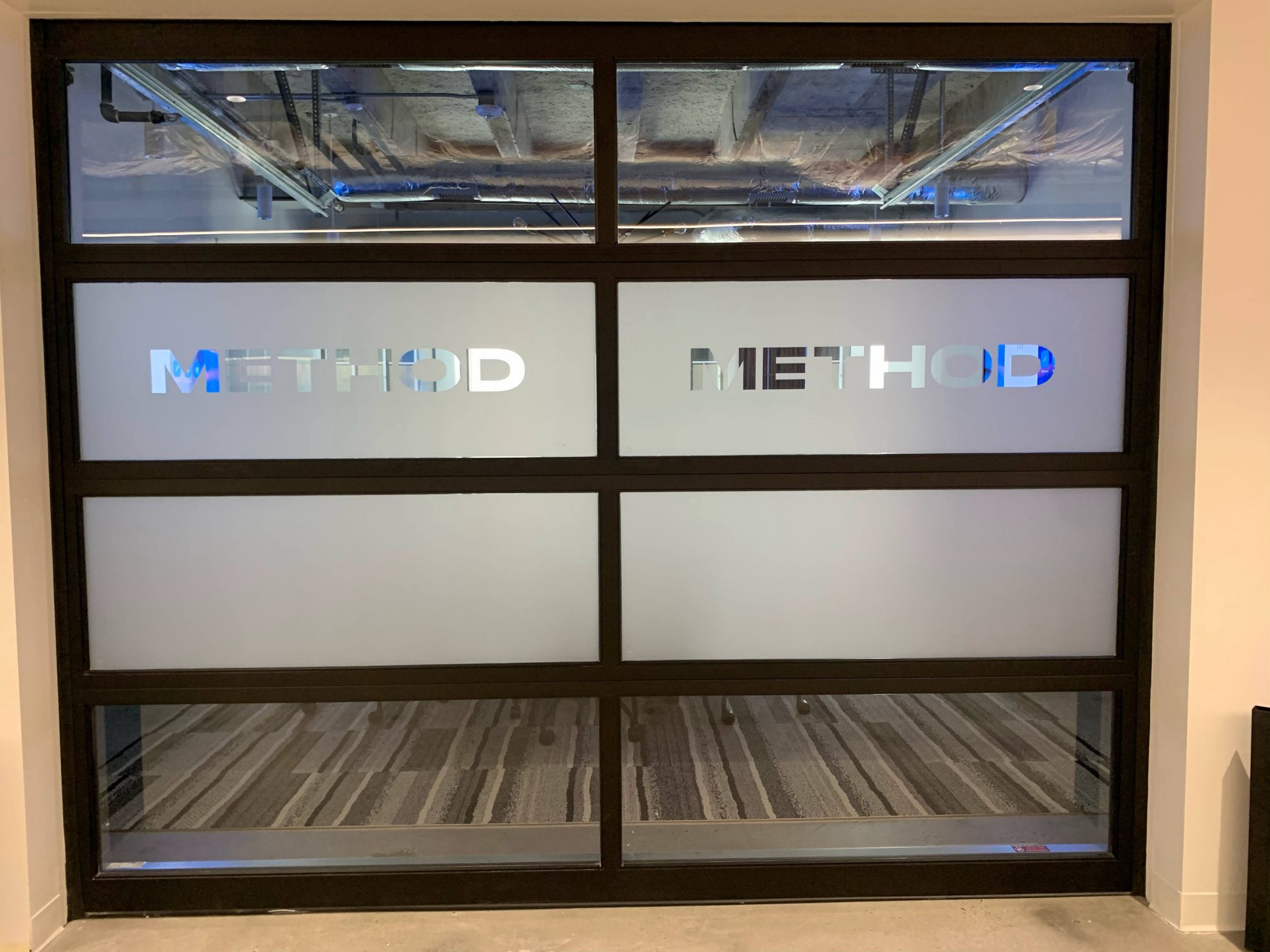
Coverage decisions should reflect how the space operates. Frosted vinyl may screen conference rooms or work areas while preserving daylight. Printed or cut vinyl can identify the organization while leaving selected views open. Once inside, a lobby sign or dimensional feature can become the primary focal point, with wall graphics and displays developing the message further.
Planning the door, windows, lobby, and interior walls as related parts of one environment prevents competing graphics and inconsistent finishes. Heritage helps determine which information belongs at the entrance, what should remain visible through the glass, and which ideas deserve greater emphasis inside. Storefront Graphics therefore introduce a coordinated progression rather than functioning as an isolated purchase.
Heritage is structured for clients who need coordinated decisions and accountable execution. Heritage’s One Dedicated Project Manager System gives each accepted project a consistent point of responsibility from discovery through professional installation. The Project Manager retains client objectives, site information, approvals, and production decisions, helping questions get resolved before they become field problems.
Environmental graphic designers collaborate with client stakeholders and, when involved, architects, interior designers, branding agencies, general contractors, and property teams. Production, fabrication, and full-time professional installation remain connected to the approved direction. This shared project history reduces avoidable handoffs and helps preserve brand standards, schedules, and installation requirements.
Heritage is veteran-owned and family-led. Cary clients receive local discovery, field verification, installation planning, and professional installation support backed by production and project resources across the Heritage network. This operating model can support a substantial one-time project, phased workplace improvements, or coordinated multi-location programs. Each property can respond to its own architecture and operating conditions while one Project Manager maintains consistent information and accountable follow-through.
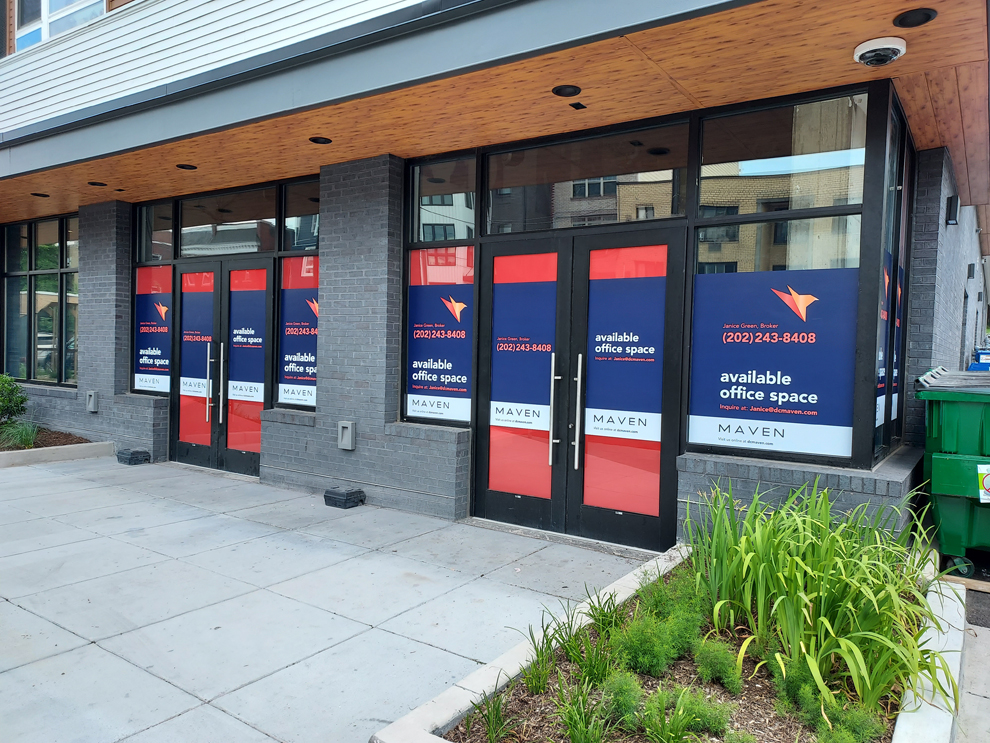
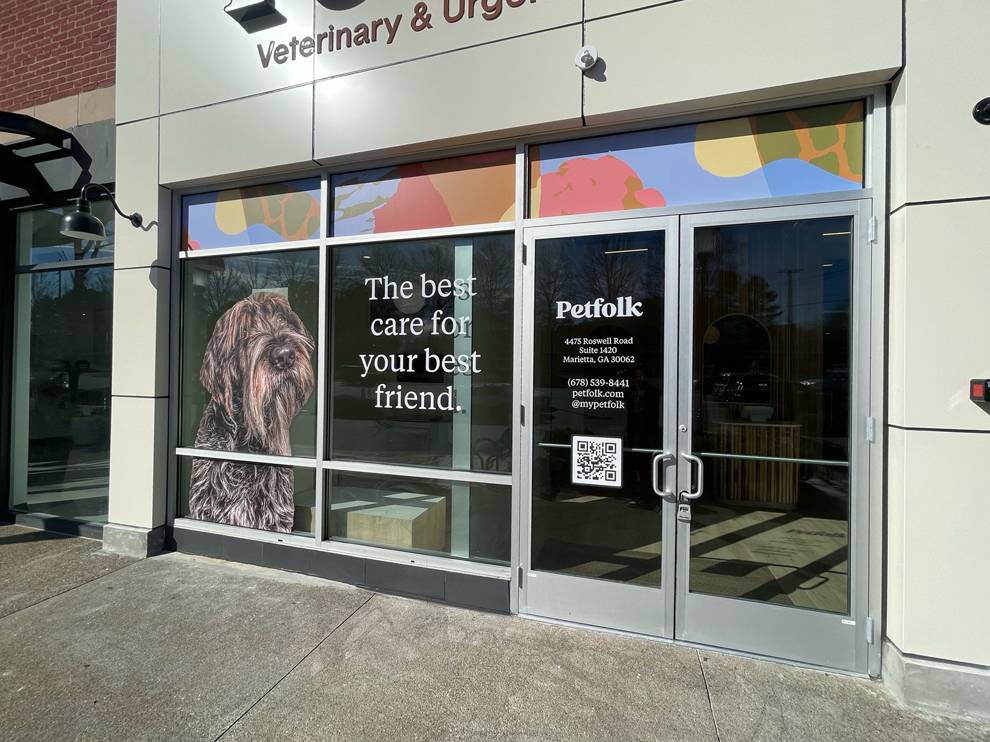
Window and glass graphics establish identification, manage visual awareness, and make purposeful use of transparent surfaces. Coverage can be adjusted around privacy, daylight, visibility, and selected views so the entrance communicates clearly without making the workplace feel unnecessarily closed.
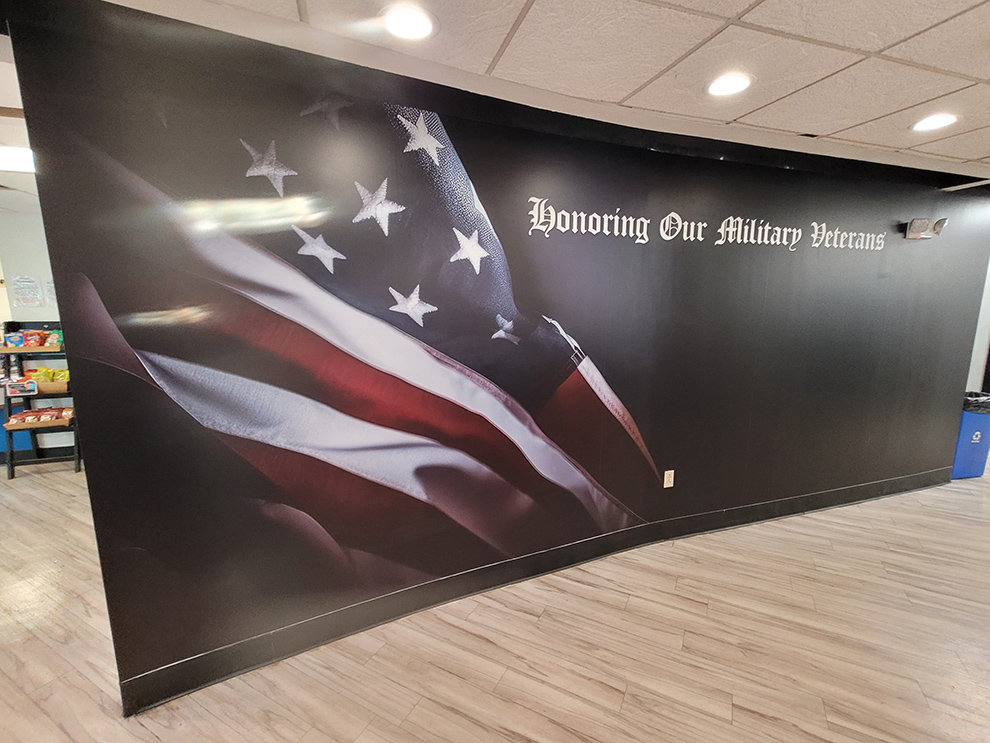
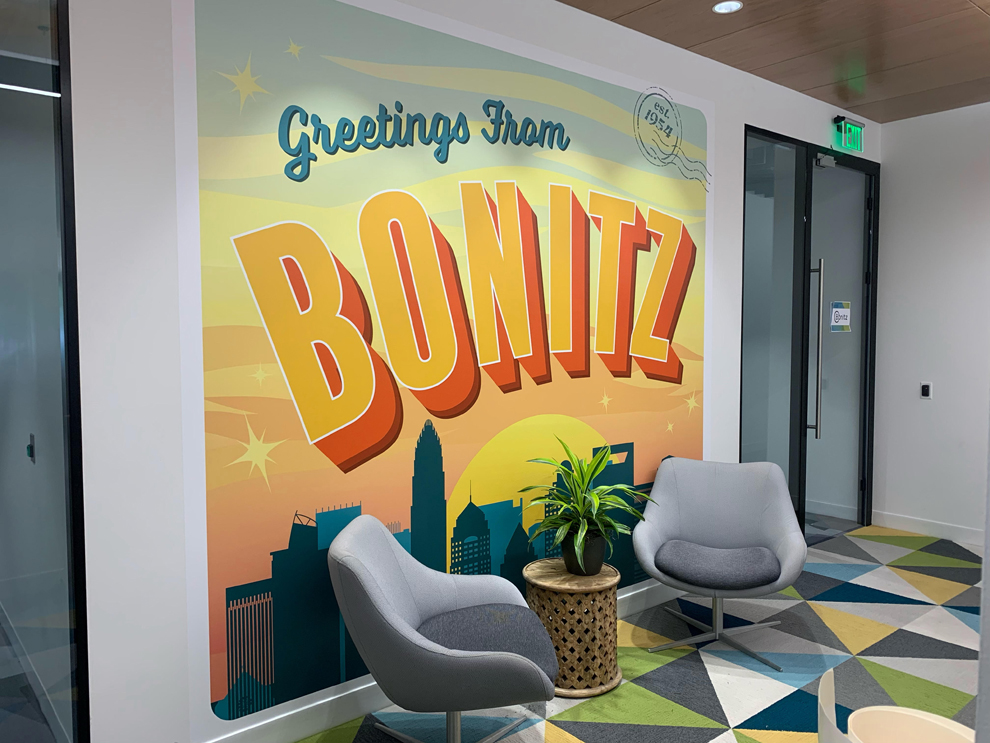
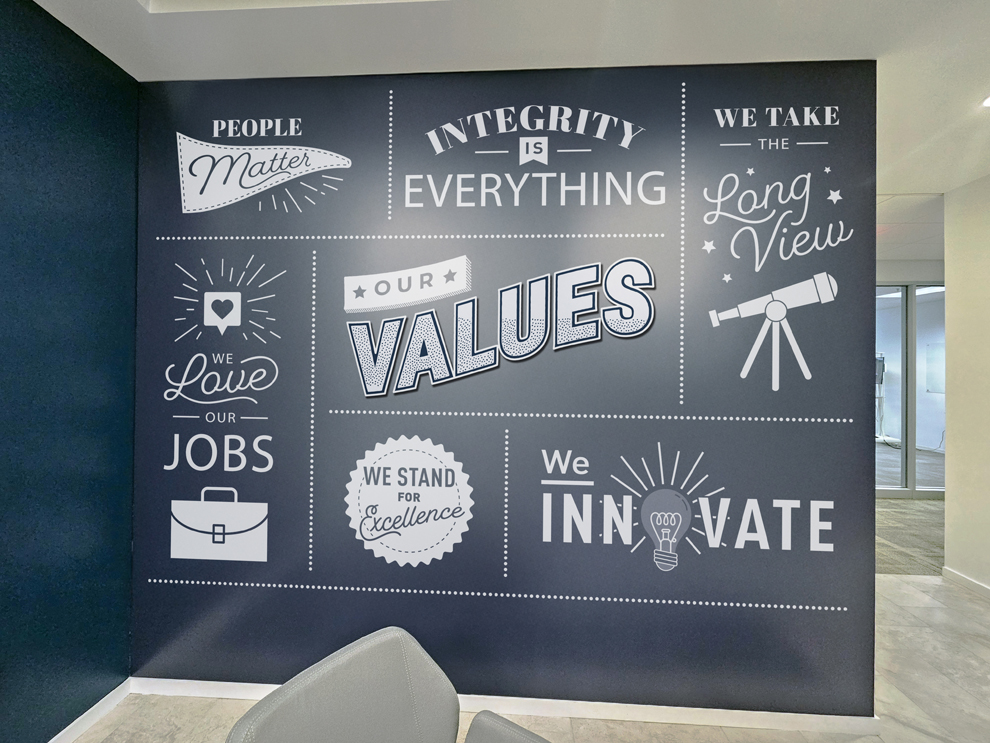
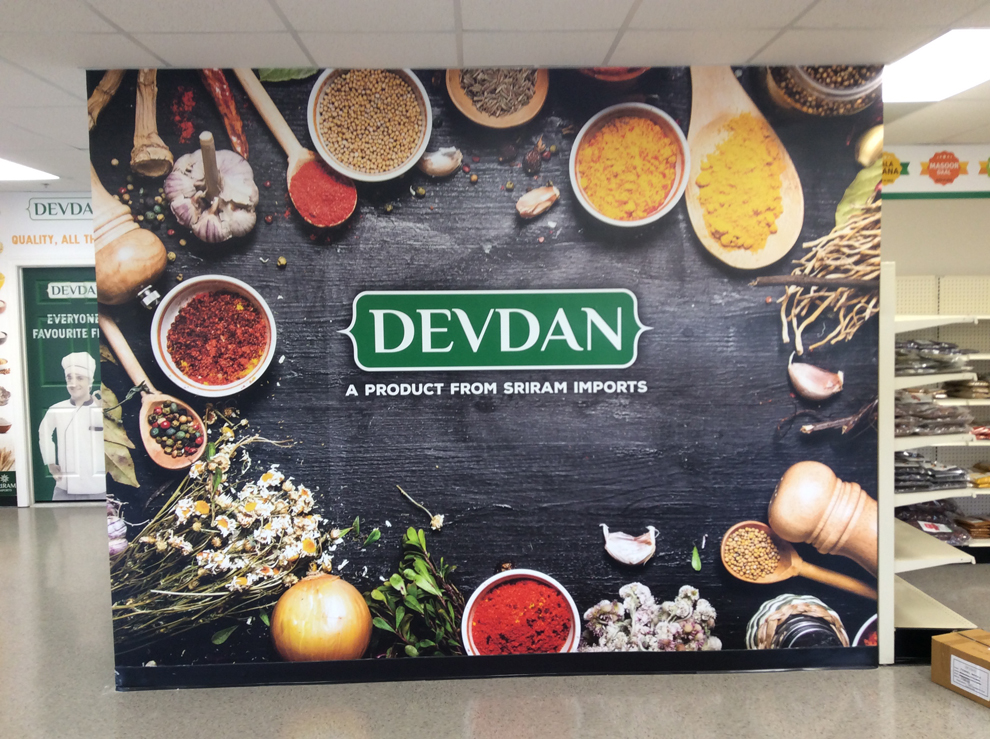
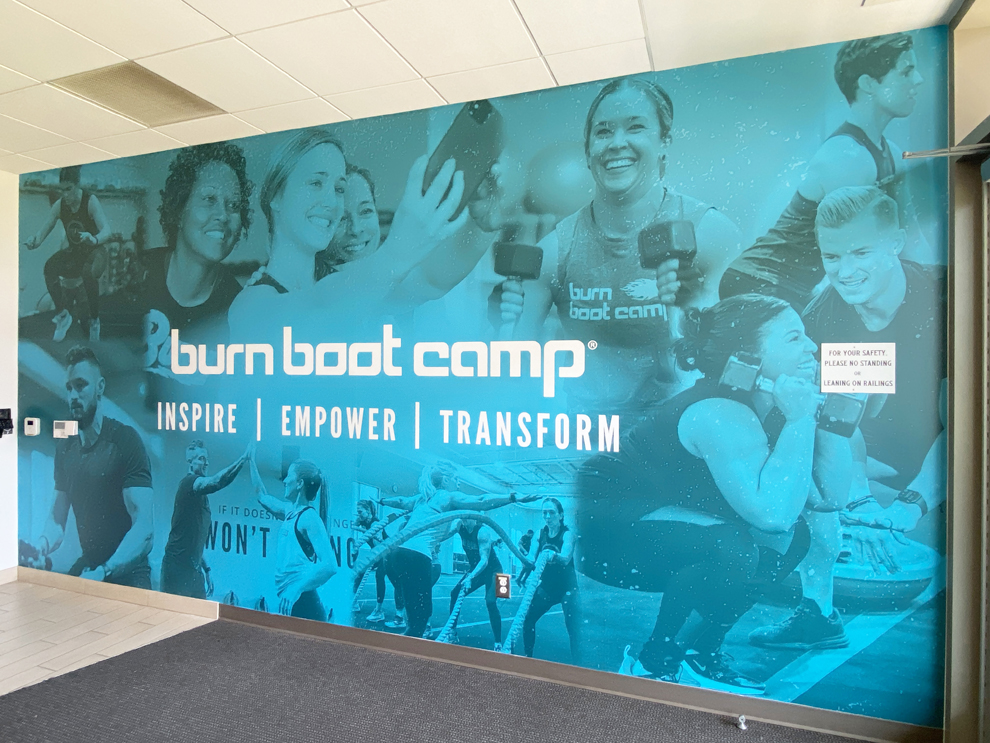
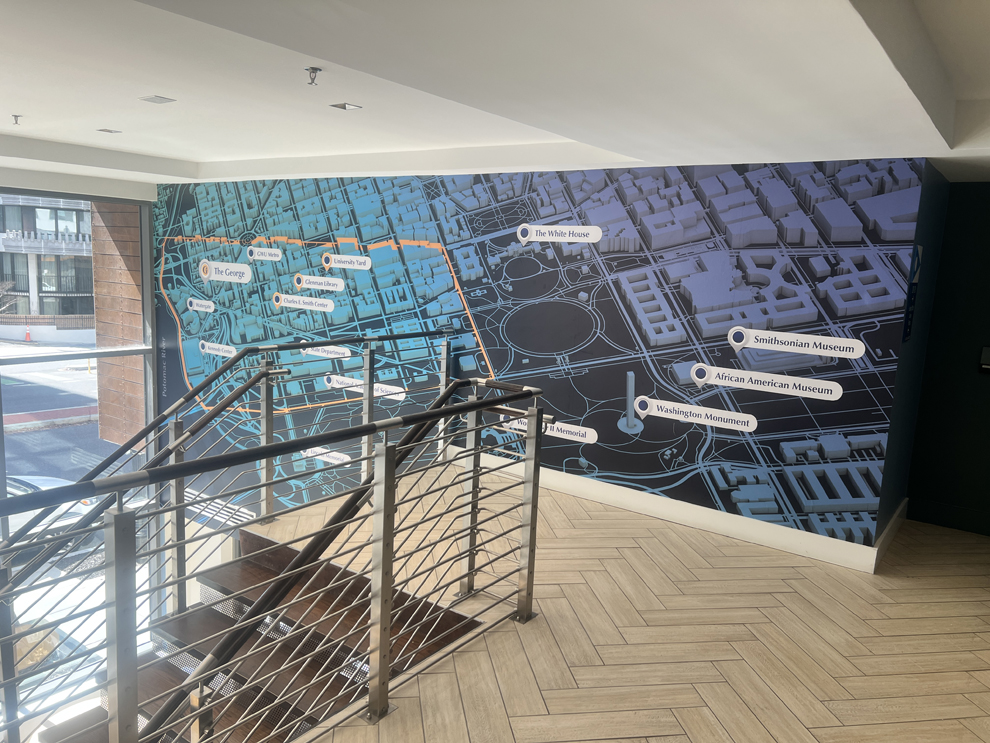
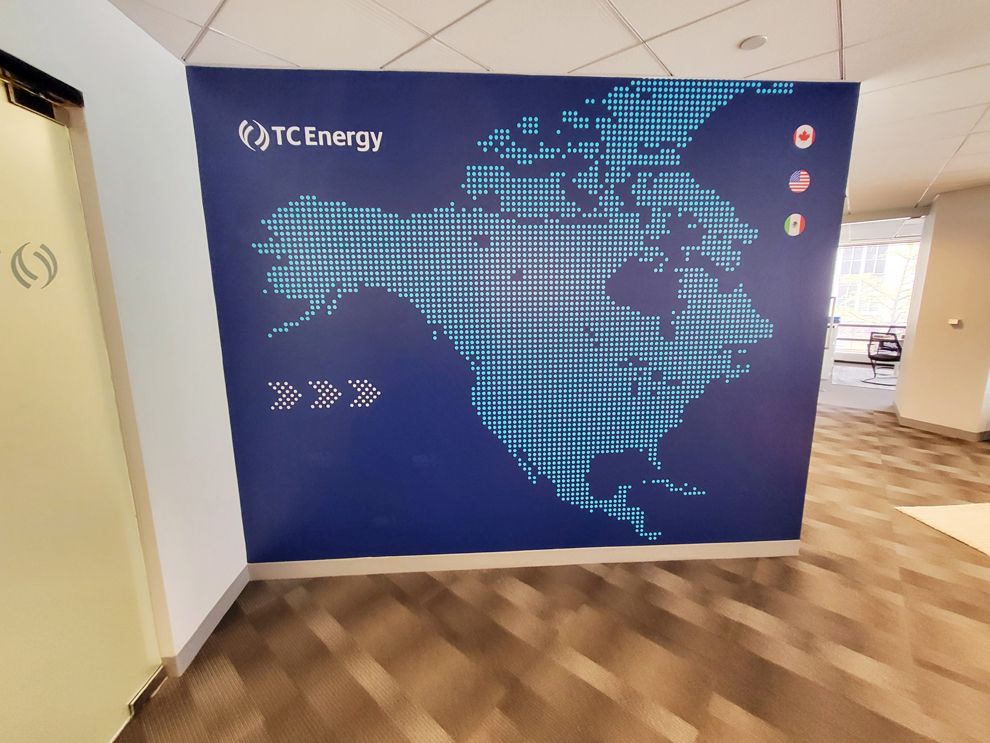
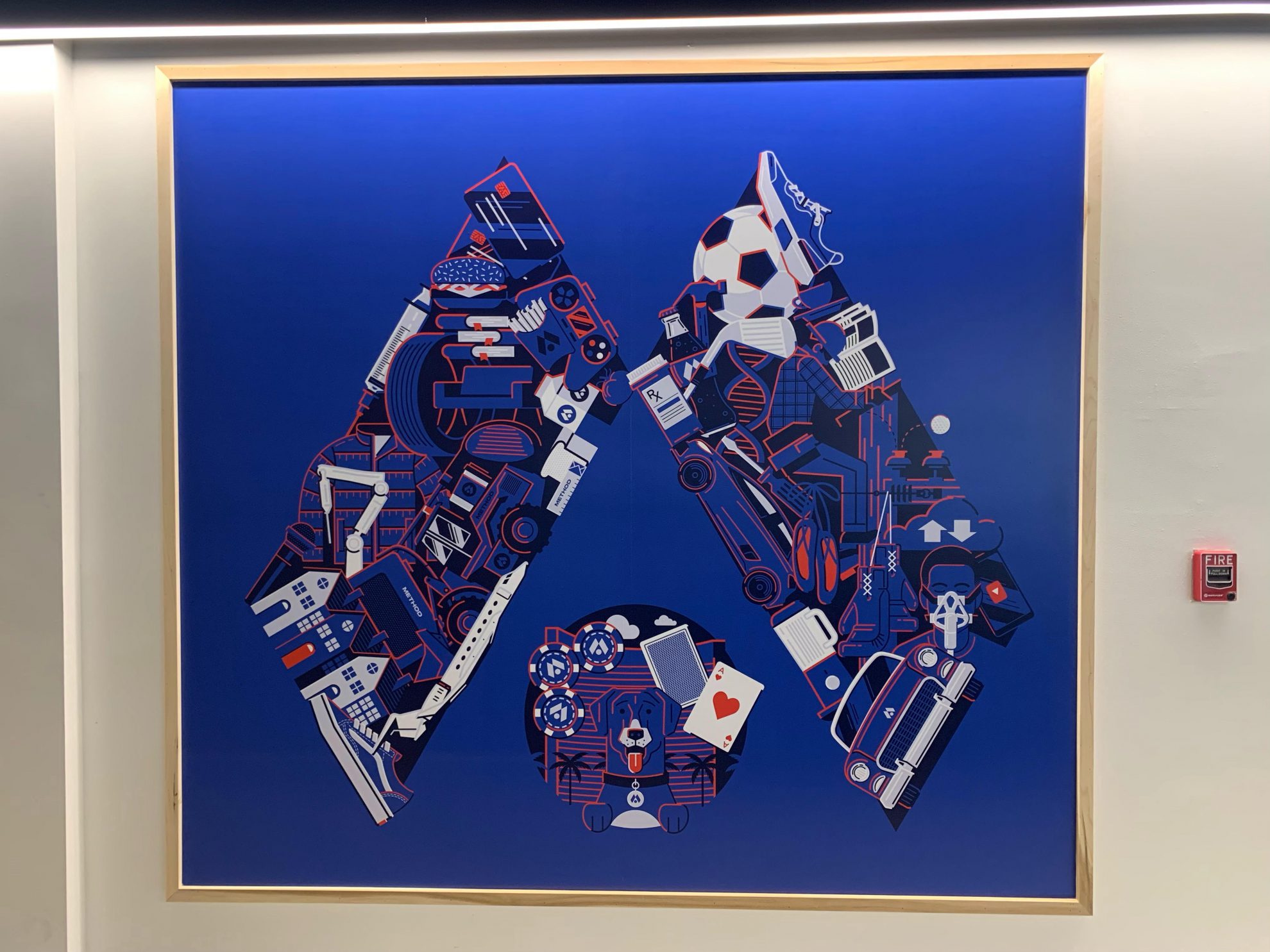
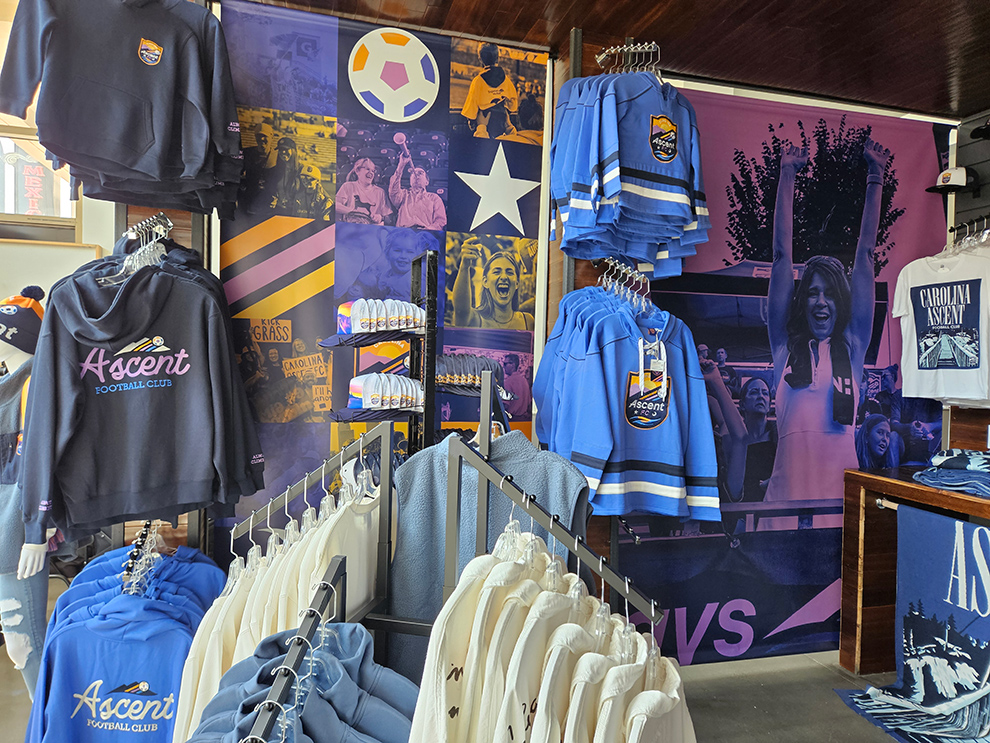
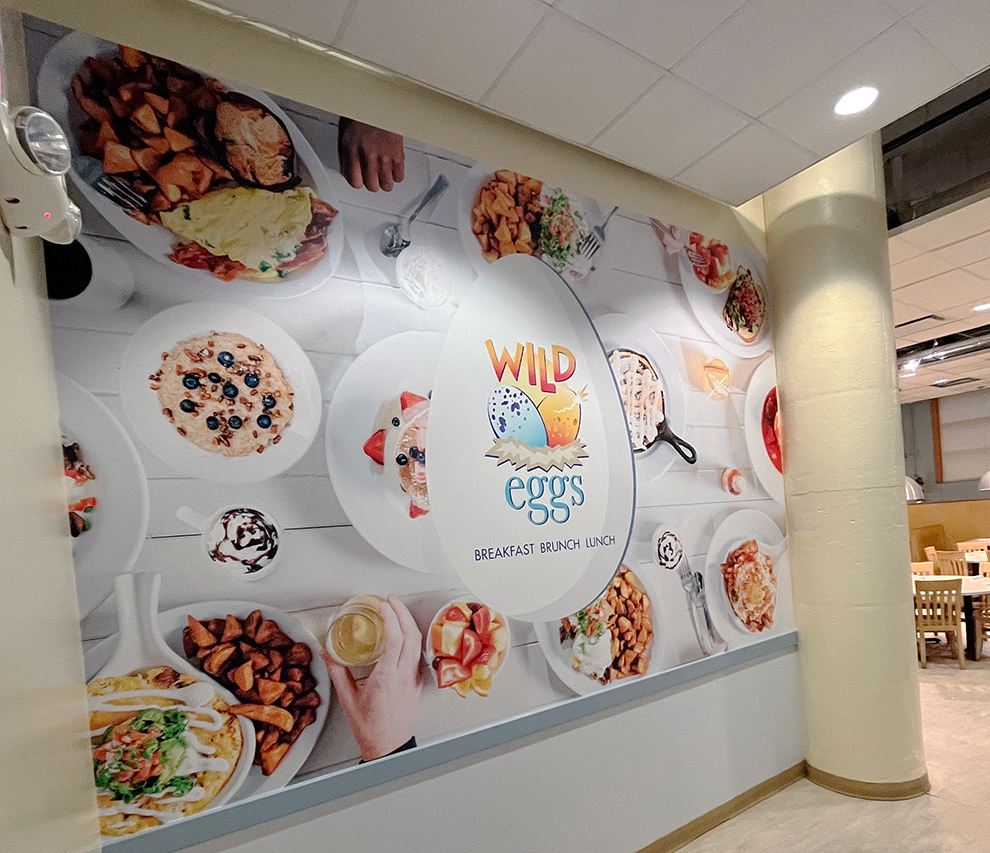
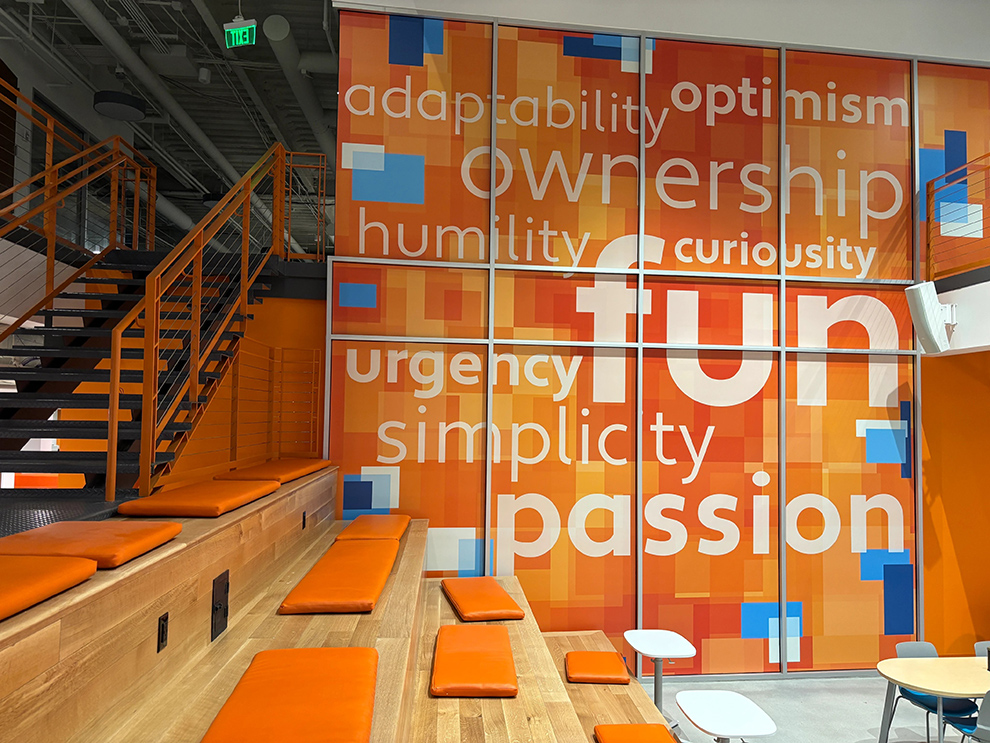
Wall wraps extend the visual language introduced at the entrance onto larger interior surfaces. Brand imagery, color, or messaging can guide people into reception areas, corridors, meeting spaces, and other environments where the organization has more room to communicate.
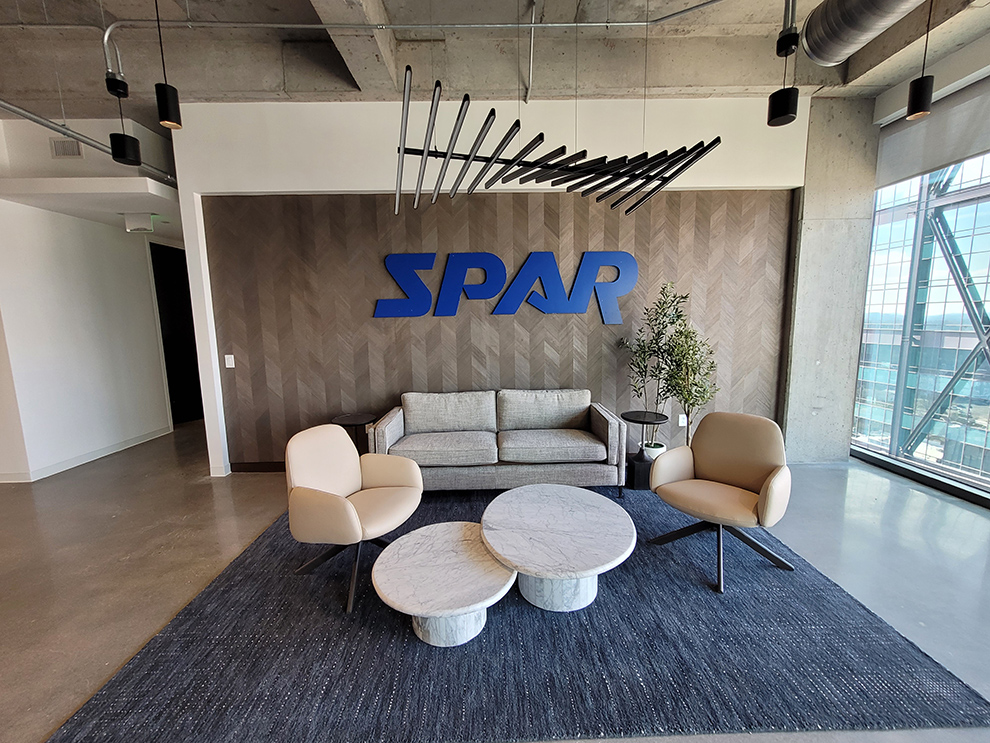
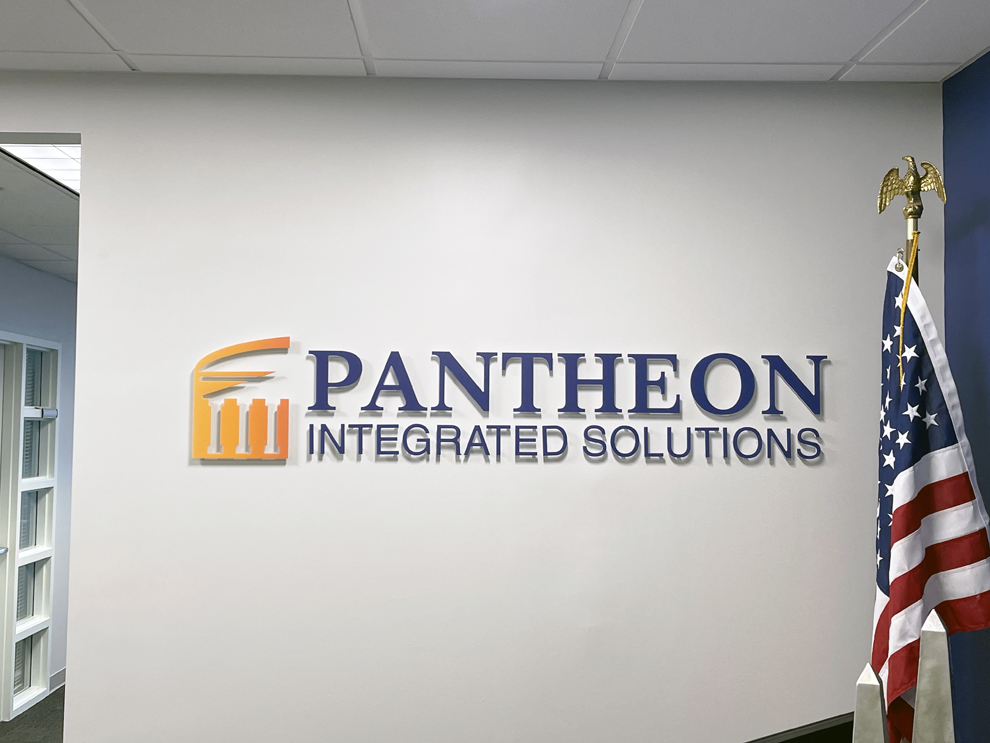
A lobby sign can provide the primary interior focal point after Storefront Graphics establish recognition outside or at the door. Heritage coordinates scale, placement, materials, and surrounding graphics so the reception area continues the arrival experience with appropriate emphasis.
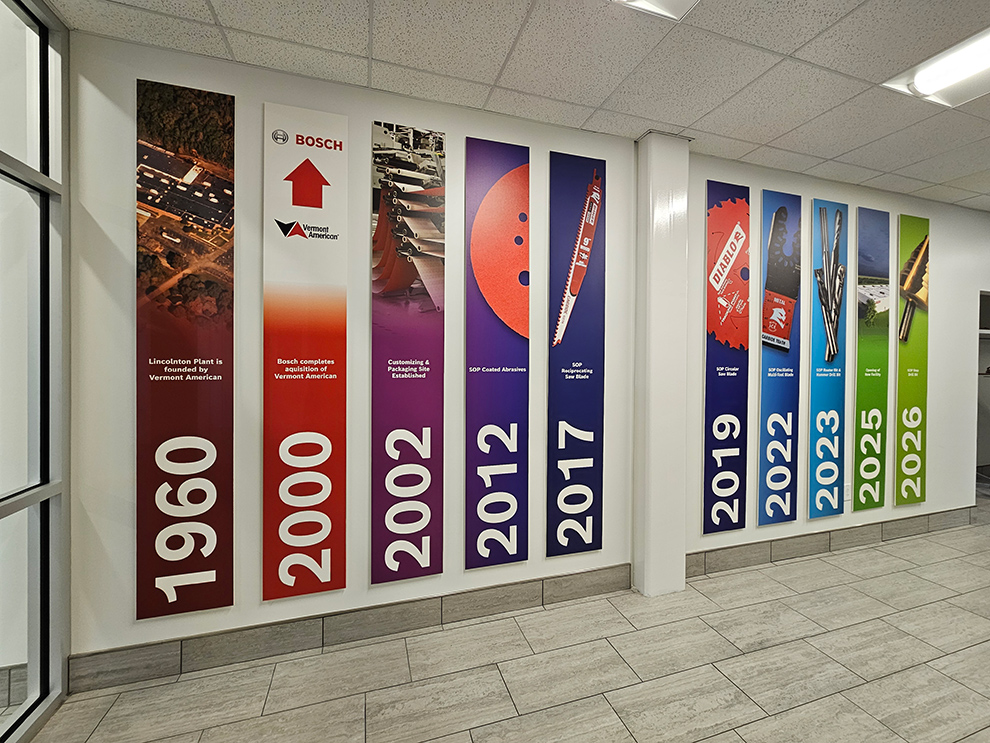
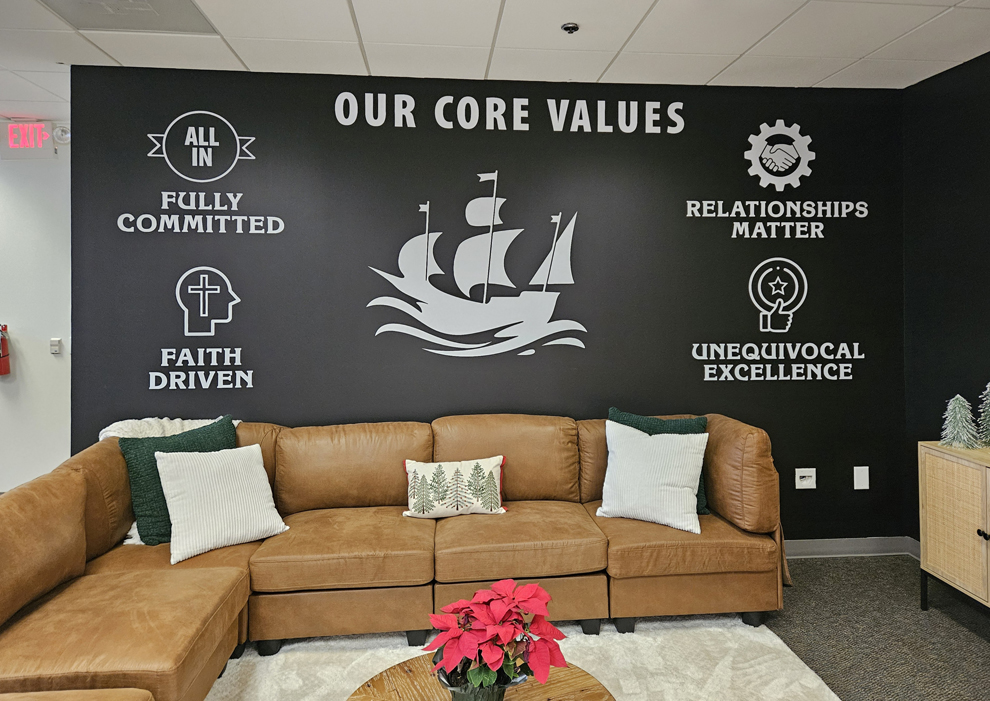
Wall displays organize history, recognition, community impact, or organizational priorities into a structured interior feature. Printed graphics, dimensional components, and mounted elements can work together to continue the brand narrative beyond the entrance without overloading the storefront glass.
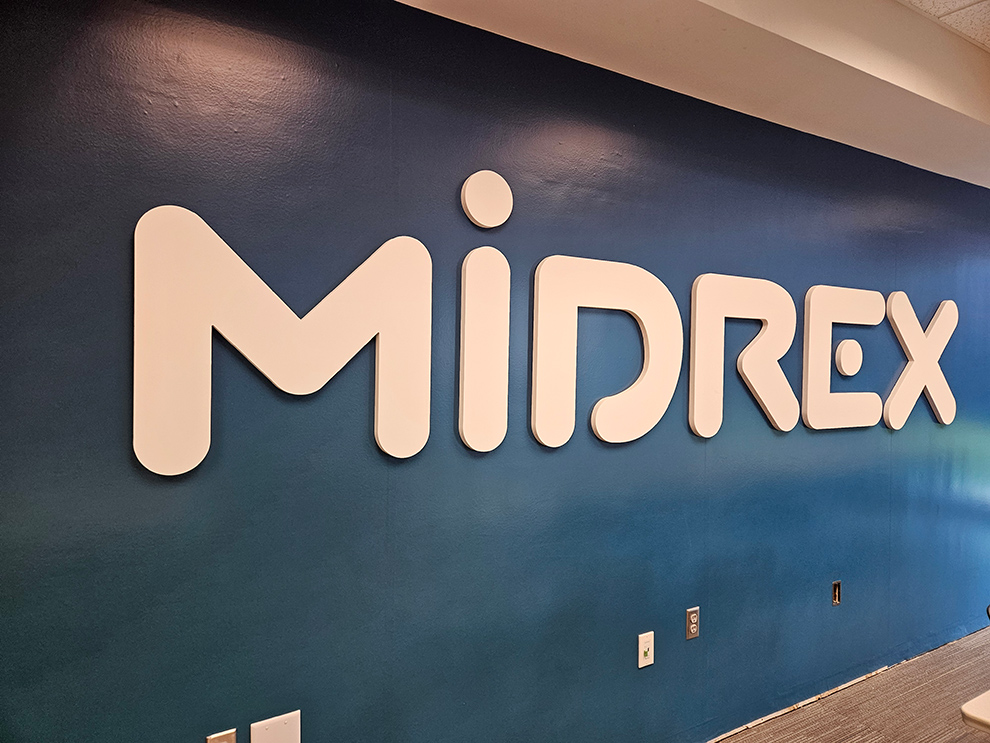
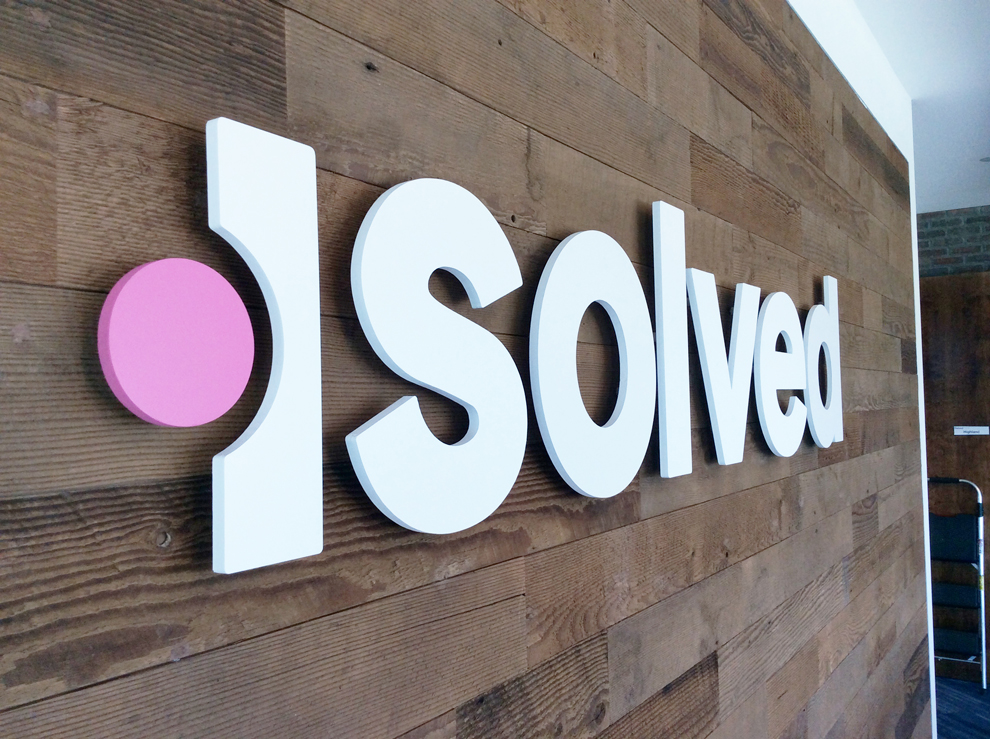
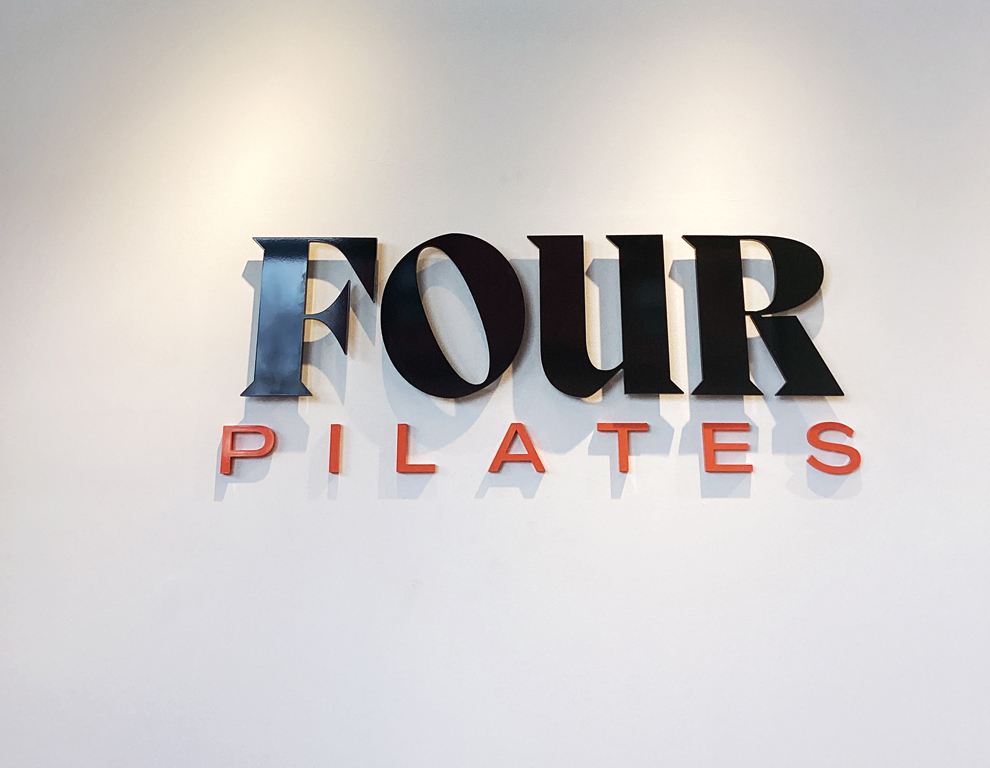
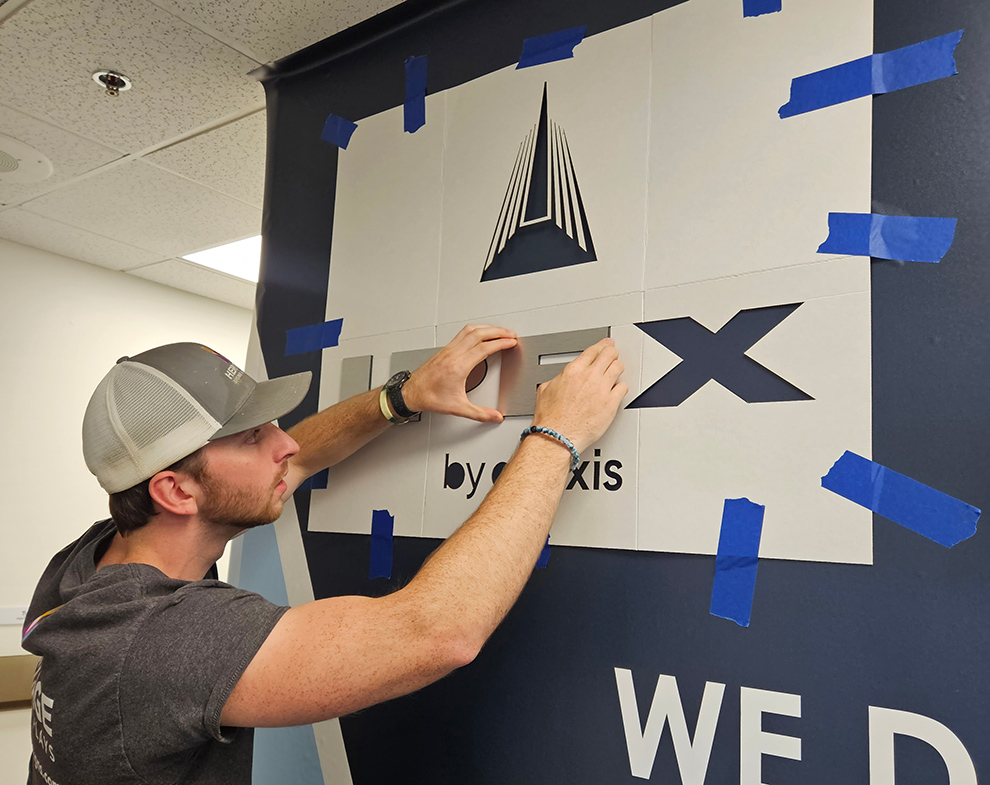
Dimensional letters add depth to logos, names, and selected messages within lobbies and other prominent spaces. Heritage plans their size, finish, mounting, and relationship to nearby graphics so they strengthen the interior destination established by the storefront treatment.
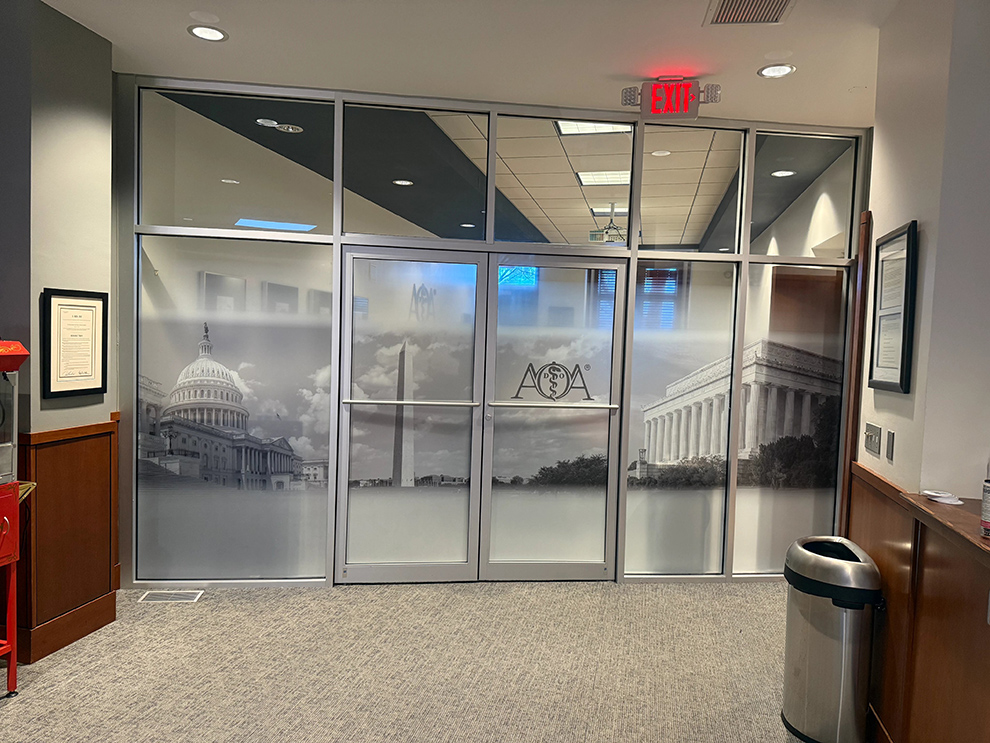
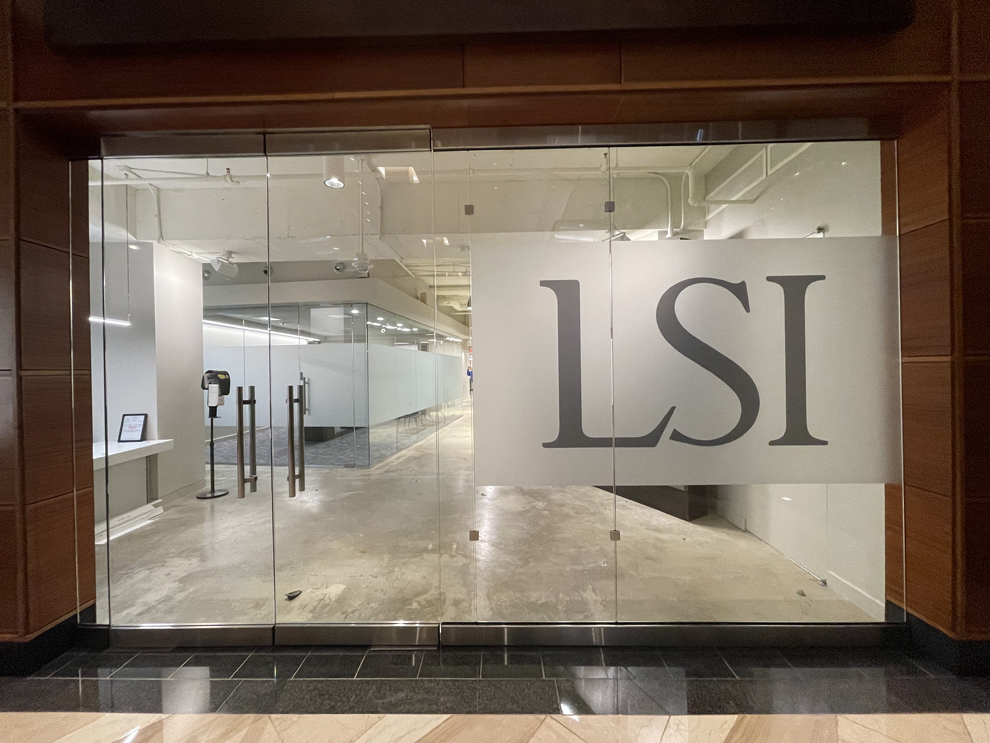
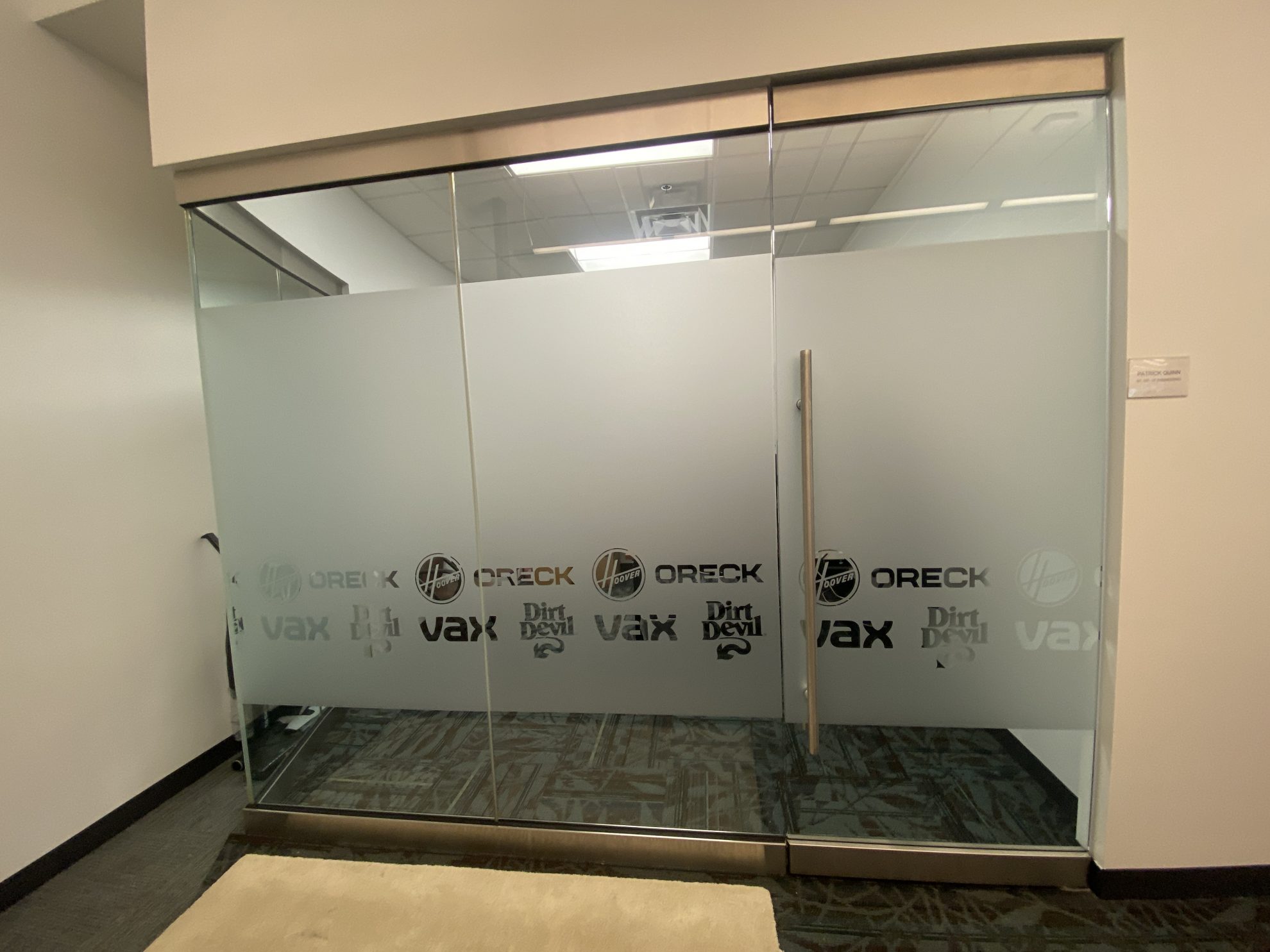
Frosted vinyl and etched-look privacy film can reduce direct views into conference rooms, offices, and work areas while allowing daylight to remain useful. Custom patterns or brand elements help the treatment relate to the entrance and surrounding workplace.
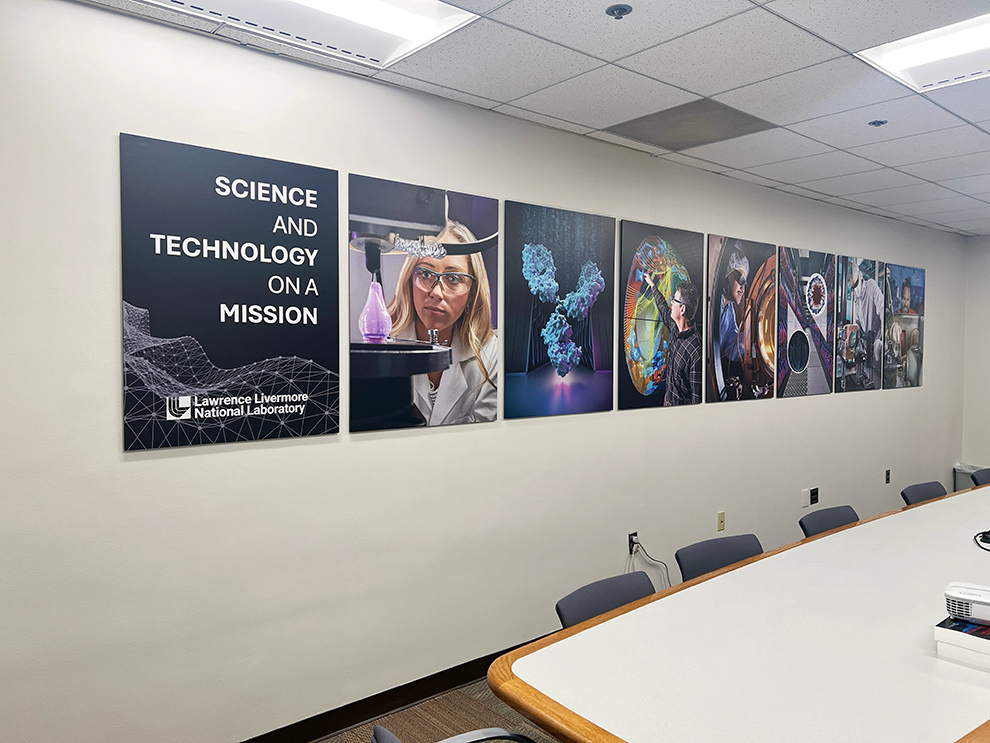
SEG fabric graphics place tensioned fabric within a slim frame for a clean interior presentation. They can support prominent imagery or messaging that may change over time while preserving the surrounding frame and the broader storefront-to-interior design system.
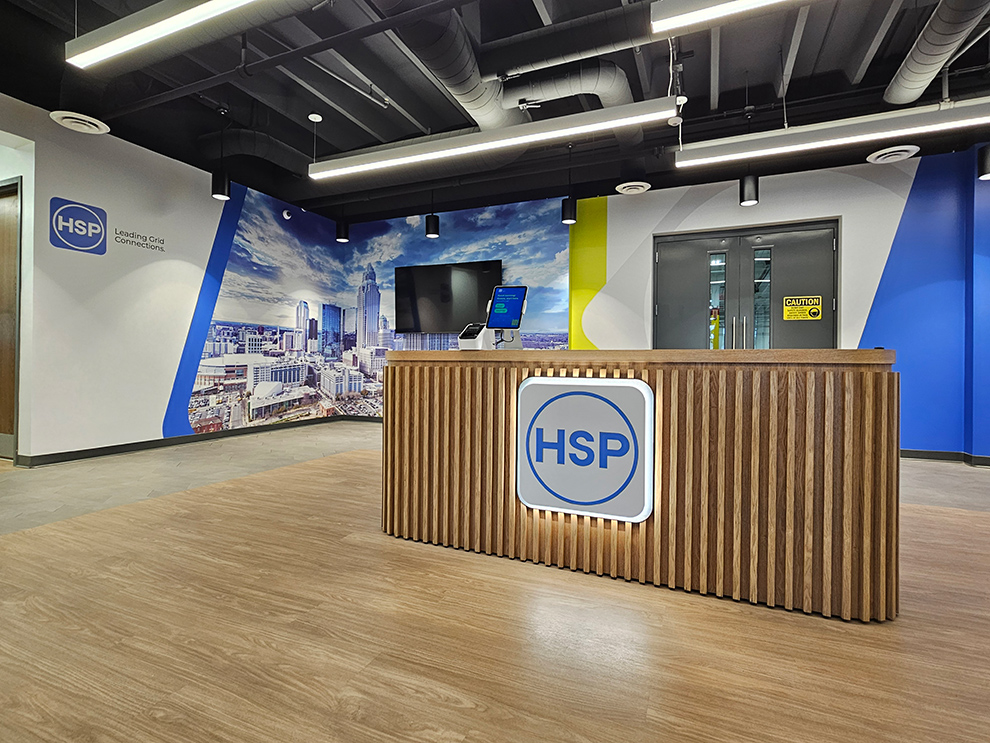
Backlit signs can create a stronger interior destination in a lobby, showroom, or customer-facing space. Heritage considers their scale, illumination, existing room lighting, and nearby graphics so the feature supports the branded environment without competing with the entrance treatment.
If your Cary or Research Triangle organization is planning Storefront Graphics as part of a professionally managed commercial interior project, use Get Started Now to share the project location, desired result, target completion date, anticipated investment, photographs, available measurements, plans, artwork, brand standards, and other information already available. One dedicated Project Manager will review the details, identify the next planning decisions, and coordinate the appropriate Heritage resources for environmental graphic design, production, fabrication, site verification, and professional installation.
Cary clients can access a client-facing Heritage office and local field support for discovery, site surveys, installation planning, professional installation, and follow-through. This support helps Heritage evaluate how an entrance is approached, where identification must be visible, how glass is used, and which access conditions could affect execution.
The immediate Research Triangle includes varied workplaces, customer-facing properties, healthcare environments, educational facilities, nonprofit spaces, and commercial interiors. Entrances may face parking areas, sidewalks, shared lobbies, interior corridors, or multi-tenant common areas. Those conditions influence privacy, viewing distance, property coordination, installation access, and the relationship between exterior identification and interior focal points.
One dedicated Project Manager connects local observations with Heritage’s environmental graphic design, production, and fabrication resources. Regional capability supports projects in Cary, Winston-Salem, High Point, and the surrounding market, while the wider Heritage network can coordinate client locations across the Carolinas and Mid-Atlantic. Common brand standards and project knowledge remain connected, but each property receives a solution shaped by its dimensions, architecture, surfaces, schedule, and operating requirements.
Environmental graphic design begins with the result the organization needs, such as clearer recognition, appropriate privacy, a stronger lobby, improved direction, or a cohesive workplace experience. It helps determine what belongs at the entrance and how interior elements should continue the identity without duplicating every message.
Some clients provide established brand standards, approved concepts, and finished artwork. Others need concept development based on business objectives, available materials, photographs, plans, or early ideas. Heritage can work directly with client stakeholders or collaborate with architects, interior designers, branding agencies, environmental graphic designers, property teams, and general contractors.
Heritage develops environmental graphic design within its service scope and carries the approved direction through production, fabrication, and professional installation. Decisions may consider visibility, privacy, scale, existing lighting, viewing distance, surfaces, attachment methods, and site access. The resulting environment may include Storefront Graphics, a branded lobby, timeline or history wall, core values display, mission statement feature, recognition element, or directional graphics. Heritage does not provide licensed architecture, engineering, general commercial interior design, lighting design, or code consulting.
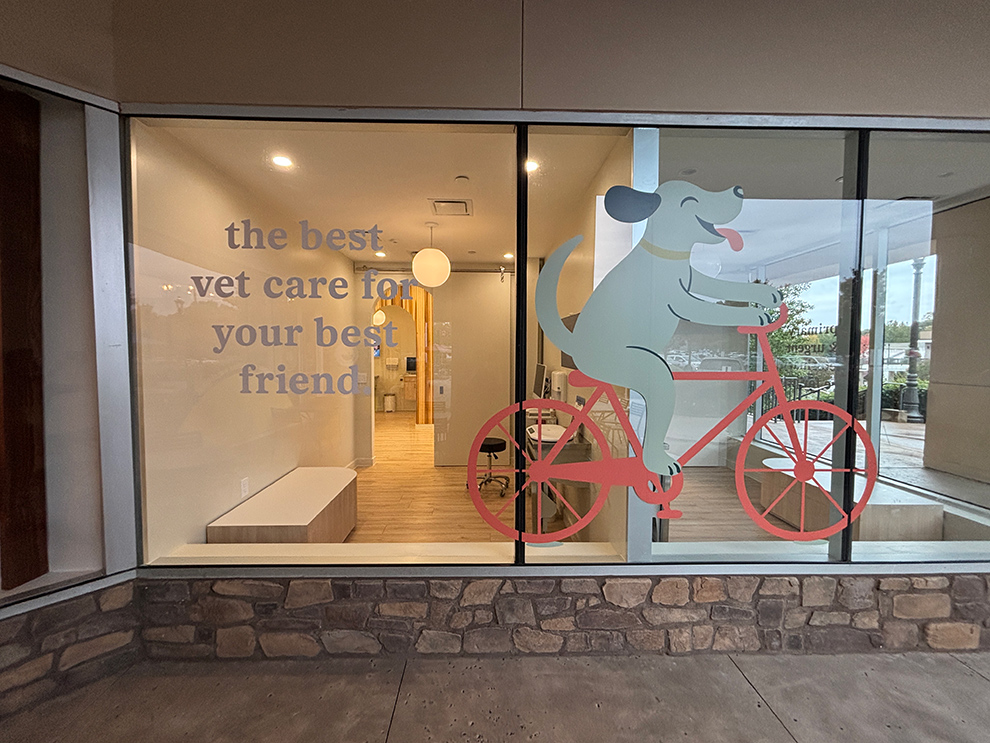
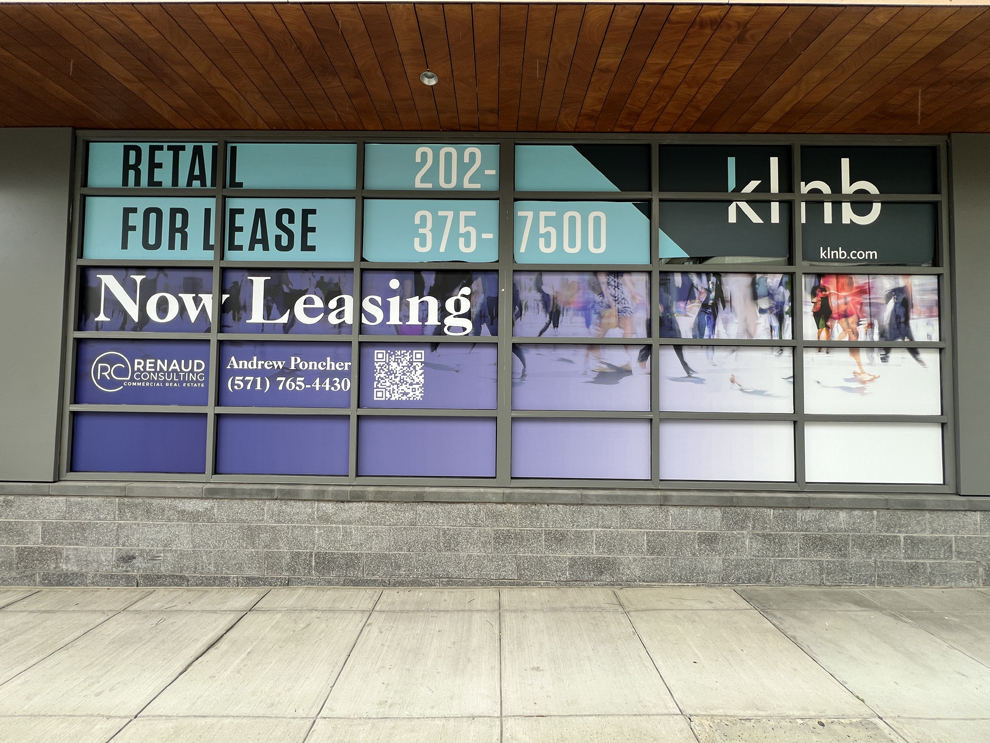
Heritage produces and installs non-illuminated exterior elements as part of coordinated storefront and workplace branding projects. Approved scope can include exterior window graphics, exterior wall graphics or wraps, dimensional lettering, dimensional signs, custom sign panels, and related non-illuminated storefront elements. These features can identify the organization before entry and connect with entrance glass, lobby signs, wall graphics, and displays inside.
Printed exterior wall graphics receive protective film laminate as standard practice for added UV and weather protection. Heritage reviews the intended surface, exposure, attachment approach, access, and site conditions when determining whether an exterior application fits the project.
Heritage does not produce or install channel letters, monument signs, pylon signs, or illuminated exterior signs. Heritage does not determine whether a sign permit is required, prepare permit documents, submit applications, communicate with permitting authorities, pay permit fees, or pursue approvals. The client, property owner or property manager, or general contractor is responsible for confirming and securing all required sign permits and property approvals. Heritage’s review of materials, surfaces, and installation conditions is not permitting or code consulting.
Every Heritage Storefront Graphics project requires a site survey connecting the client’s objectives with measurements, surfaces, access, and installation conditions. Field verification provides information needed to finalize the design, prepare production requirements, coordinate installation methods, and establish a responsible schedule.
The dedicated Project Manager connects environmental graphic design, production, fabrication, and Heritage’s full-time professional installers. Site information, approved design intent, material decisions, access requirements, property instructions, and scheduling details remain within one shared project history. This continuity reduces unnecessary handoffs and helps questions get resolved before they become field problems.
Professional installation also requires care for the occupied environment. Heritage coordinates access, communicates scheduling requirements, protects surrounding client property, and plans the work to limit avoidable disruption. Conditions may differ among entrance glass, exterior walls, interior partitions, and dimensional sign locations, so the installation approach reflects the approved application and verified site. Keeping responsibility within one Heritage process provides clearer accountability for accurate placement, workmanship, communication, and the finished result.
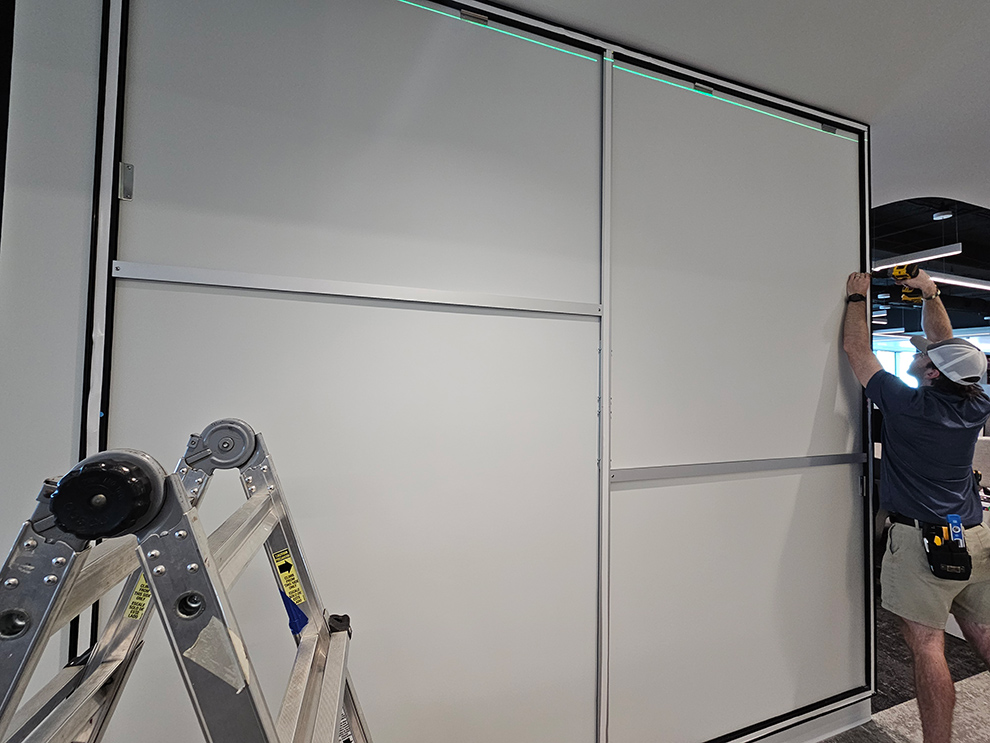
Painted walls receiving adhesive graphics should have sound, smooth drywall with required repairs completed. Primer and paint must be properly applied, and finish paint must be fully cured. Dry paint is not necessarily cured paint. Approximately four weeks is a useful planning allowance for many paints, although the paint manufacturer’s requirements and actual site conditions determine readiness.
Washable, scrubbable, stain-resistant, low-VOC, zero-VOC, and other challenging paints may require cleaning, adhesion testing, or a compatible vinyl and adhesive approach. Not every low-VOC or zero-VOC paint requires high-tack vinyl. Testing can indicate how adhesive vinyl performs on the painted surface, but it cannot prove how well the paint and primer are bonded to the drywall underneath.
If paint peels or pulls away during testing or normal installation repositioning, Heritage stops rather than making the wall worse. The client or property owner arranges and pays for repair, proper priming, repainting, full cure time, restoration, and related surface costs.
Later removal is a separate condition. Heritage uses slow, careful methods to limit avoidable damage, but damage-free removal cannot be guaranteed. Possible outcomes include paint loss, primer loss, or drywall-facing damage. Removable describes the adhesive system or intended use, not a promise of damage-free removal. Existing wall graphics should be removed early enough to reveal restoration needs before replacement installation is scheduled.
Planning should align the desired result, audience, scope, phasing, schedule, site conditions, readiness, stakeholders, approvals, anticipated investment, and information still needed. Photographs, measurements, plans, artwork, brand standards, and property information provide useful inputs, but each must support the larger project decisions.
Heritage is best suited for professionally managed projects that benefit from environmental graphic design, production, fabrication, and professional installation. Many Heritage projects involving production and professional installation range from $10,000 to more than $200,000. Actual investment depends on the number and complexity of elements, material and fabrication requirements, site access, installation conditions, phasing, and location count.
A project may focus on one substantial entrance and interior destination, extend through several workplace areas, or support multiple properties. One dedicated Project Manager keeps responsibilities, site information, approvals, schedule, and next decisions connected. This approach is intended for clients seeking coordinated execution rather than an isolated commodity graphic. Current regional qualification information, when applicable, should be confirmed through Heritage’s centrally managed investment source.
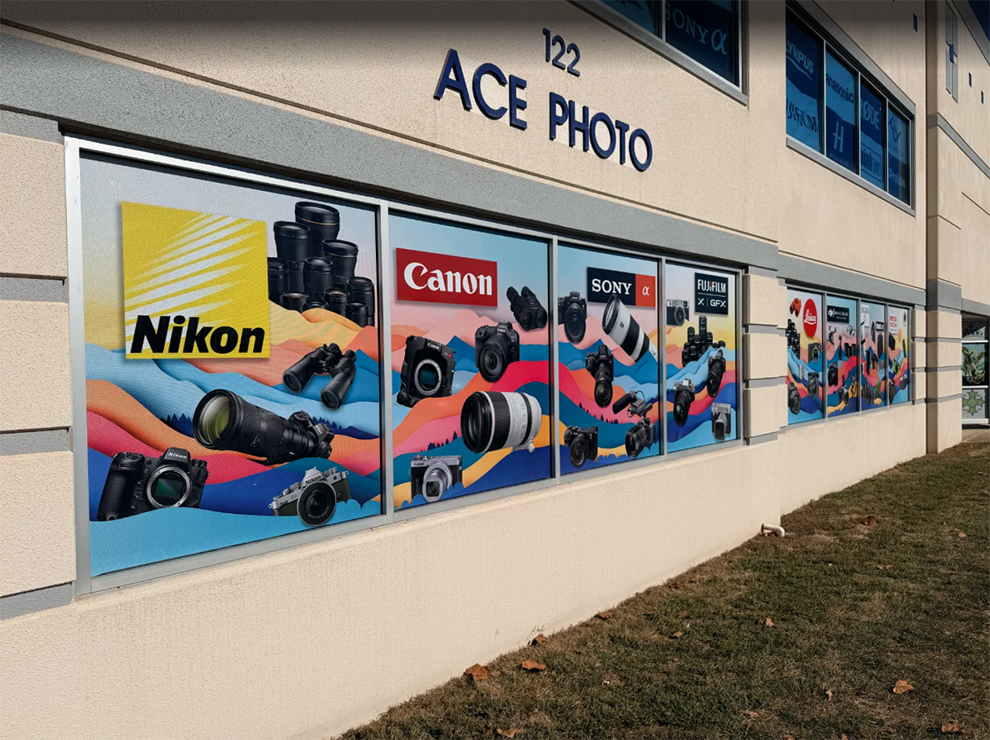
Storefront graphics establish identity, improve recognition, and support privacy or visual awareness at a commercial entrance. They can include graphics on doors, windows, nearby walls, and selected sign surfaces. Heritage plans them as the threshold between exterior-facing identification and the branded interior.
Yes. Frosted vinyl, etched-look privacy film, printed patterns, and strategically placed graphics can reduce direct views while preserving useful daylight. The appropriate coverage depends on the desired privacy, viewing angles, glass location, interior activity, and views the client wants to retain.
Yes. Every Heritage Storefront Graphics project requires a site survey connecting the client’s objectives with verified measurements, surfaces, access, and installation conditions. The findings inform environmental graphic design, production, fabrication, scheduling, and the installation plan.
Distraction markers are decorative or branded vinyl graphics applied to clear glass to make the surface easier to notice. They may use bands, dots, patterns, logos, or other visual elements and can also support privacy or branding. Applied vinyl does not establish building-code compliance, safety-glazing compliance, certification, or approval.
Yes. Heritage can coordinate multi-location storefront and interior branding while one dedicated Project Manager preserves project knowledge, approvals, and brand standards. Individual properties may require different dimensions, materials, access plans, or physical solutions based on their architecture and operating conditions.
The wall should have sound, smooth drywall, completed repairs, properly applied primer and paint, and fully cured finish paint. Approximately four weeks is useful for planning with many paints, but manufacturer requirements and site conditions control readiness. Dry paint is not necessarily fully cured.
Washable, scrubbable, stain-resistant, low-VOC, zero-VOC, or otherwise challenging paints may require cleaning, testing, or another compatible adhesive approach. Testing shows how vinyl performs at the painted surface but cannot prove how securely the paint and primer are bonded to the drywall.
If paint peels or pulls away during testing or normal repositioning, Heritage stops. The client or property owner must arrange and pay for repair, priming, repainting, full cure, restoration, and related surface costs before installation can be rescheduled.
Yes. Heritage produces and installs exterior window graphics, exterior wall graphics or wraps, dimensional lettering, dimensional signs, custom sign panels, and related non-illuminated storefront elements within coordinated storefront and interior branding projects. Printed exterior wall graphics receive protective film laminate for added UV and weather protection.
Heritage does not produce or install channel letters, monument signs, pylon signs, or illuminated exterior signs. Heritage does not determine permit requirements or manage permit applications. The client, property owner or property manager, or general contractor confirms and secures required sign permits and property approvals.
Yes. Heritage removes adhesive graphics slowly and carefully to limit avoidable damage, but damage-free removal cannot be guaranteed. Paint, primer, or drywall facing may pull away during removal. Removable describes the adhesive system or intended use and does not promise that the underlying wall will remain unchanged.
The client or property owner is responsible for arranging and paying for wall repair, proper priming, repainting, full cure time, restoration, and related surface costs. Heritage does not perform or pay for that repair or restoration.
Yes. Heritage can collaborate with architects, interior designers, branding agencies, environmental graphic designers, property teams, general contractors, and client stakeholders. Heritage develops environmental graphic design within its scope and carries the approved direction through production, fabrication, and professional installation. Heritage does not provide licensed architecture, engineering, general commercial interior design, lighting design, or code consulting.
Material selection follows the design objective, surface, exposure, attachment method, and intended service period. Options may include adhesive vinyl, acrylic, dimensional materials, and aluminum composite material, or ACM after first reference. ACM offers a metal-like appearance at less weight than solid metal. Heritage does not print on or cut solid aluminum or solid steel as sign substrates.
Yes, when removal is included in a new Heritage production and installation project. Existing wall graphics should be removed early enough to reveal paint loss, primer failure, drywall-facing damage, or other restoration needs before replacement installation is scheduled.
Heritage uses careful removal methods, but the client or property owner arranges and pays for repairs, priming, repainting, restoration, and full cure. Approximately four weeks may be useful for planning with many paints, although manufacturer requirements and actual conditions determine readiness. Heritage does not provide graphics removal as a separate service.
Heritage’s full-time professional installers complete Storefront Graphics installations produced and managed through Heritage. The installers receive verified site information, approved design intent, material decisions, access requirements, and scheduling details through the dedicated Project Manager, reducing handoffs and supporting accountable execution.
Timing depends on design development, stakeholder approvals, material and fabrication requirements, site readiness, property access, production scheduling, and installation conditions. Heritage establishes a responsible schedule after these factors are understood rather than promising a universal completion period.
Maintenance should follow the material, laminate, placement, exposure, and cleaning conditions of the installed application. Graphics should generally be cleaned gently using methods appropriate for the selected system. Heritage can provide project-specific care guidance after the final materials and finishes are established.
Cary organizations can access local discovery, site surveys, installation planning, professional installation, and follow-through connected to broader Heritage resources. One dedicated Project Manager coordinates environmental graphic design, production, fabrication, and installation through one accountable Heritage relationship. This structure supports clear communication, preserved project knowledge, and dependable execution for substantial one-time, phased, and multi-location work.
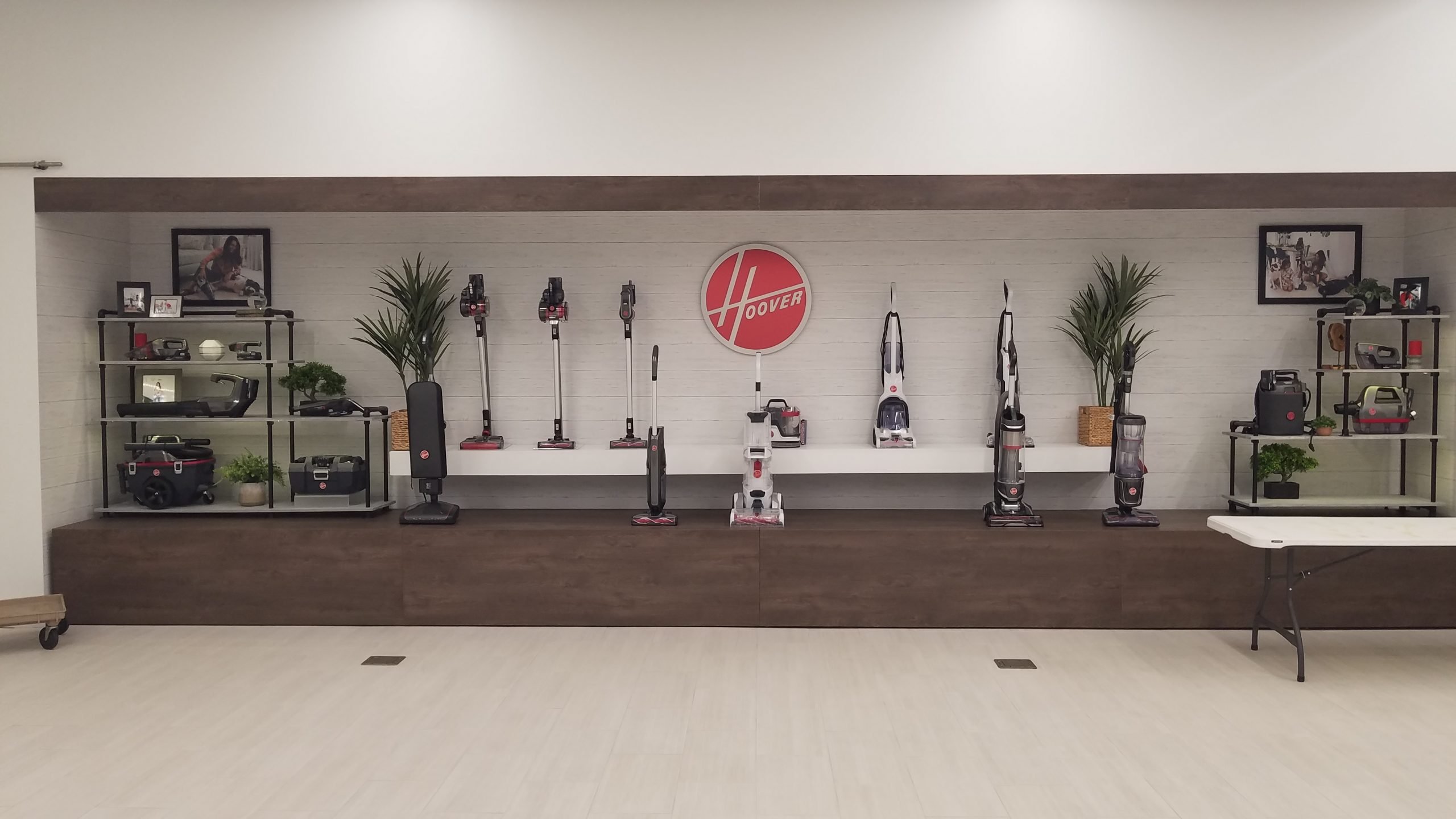
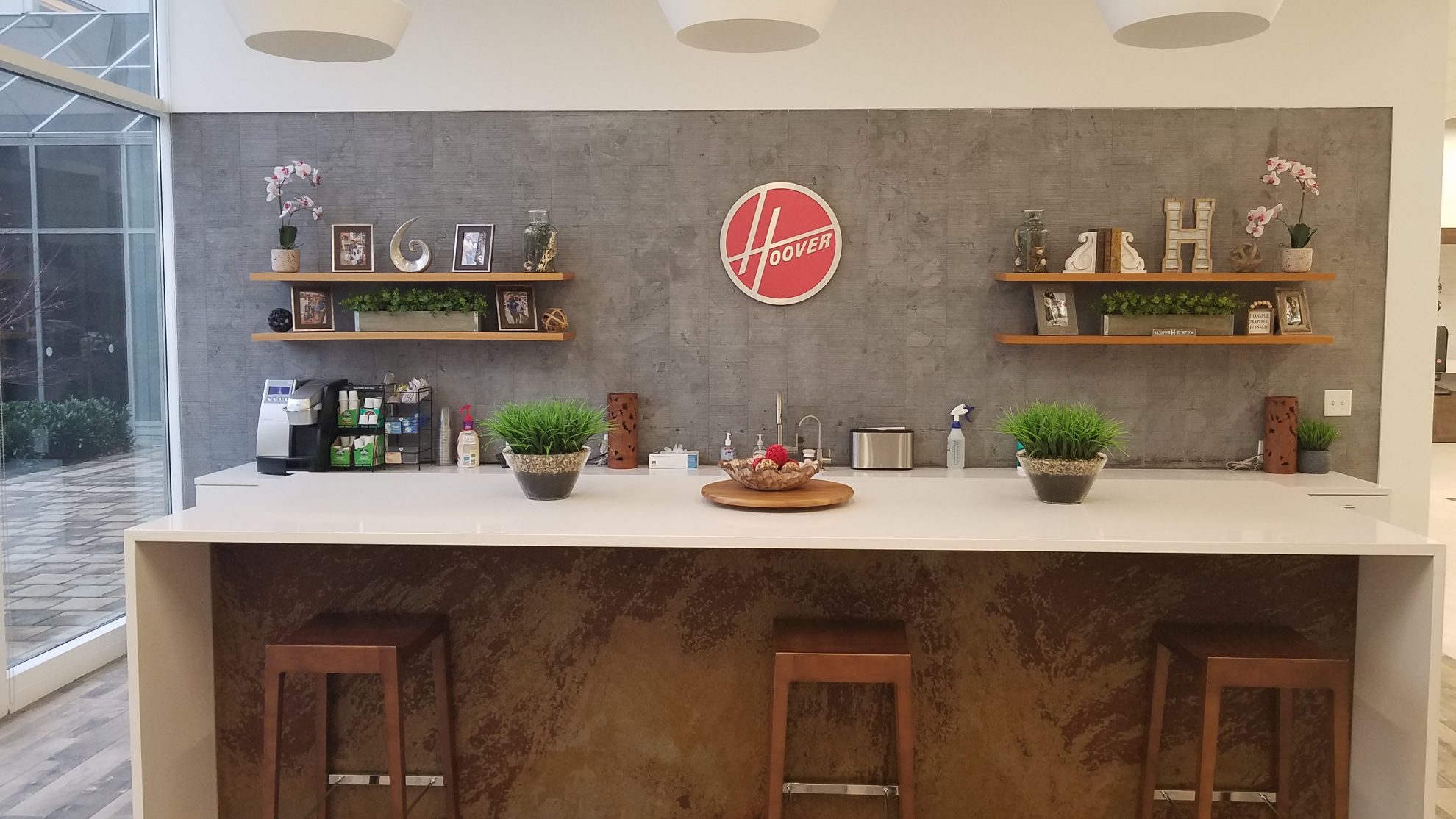
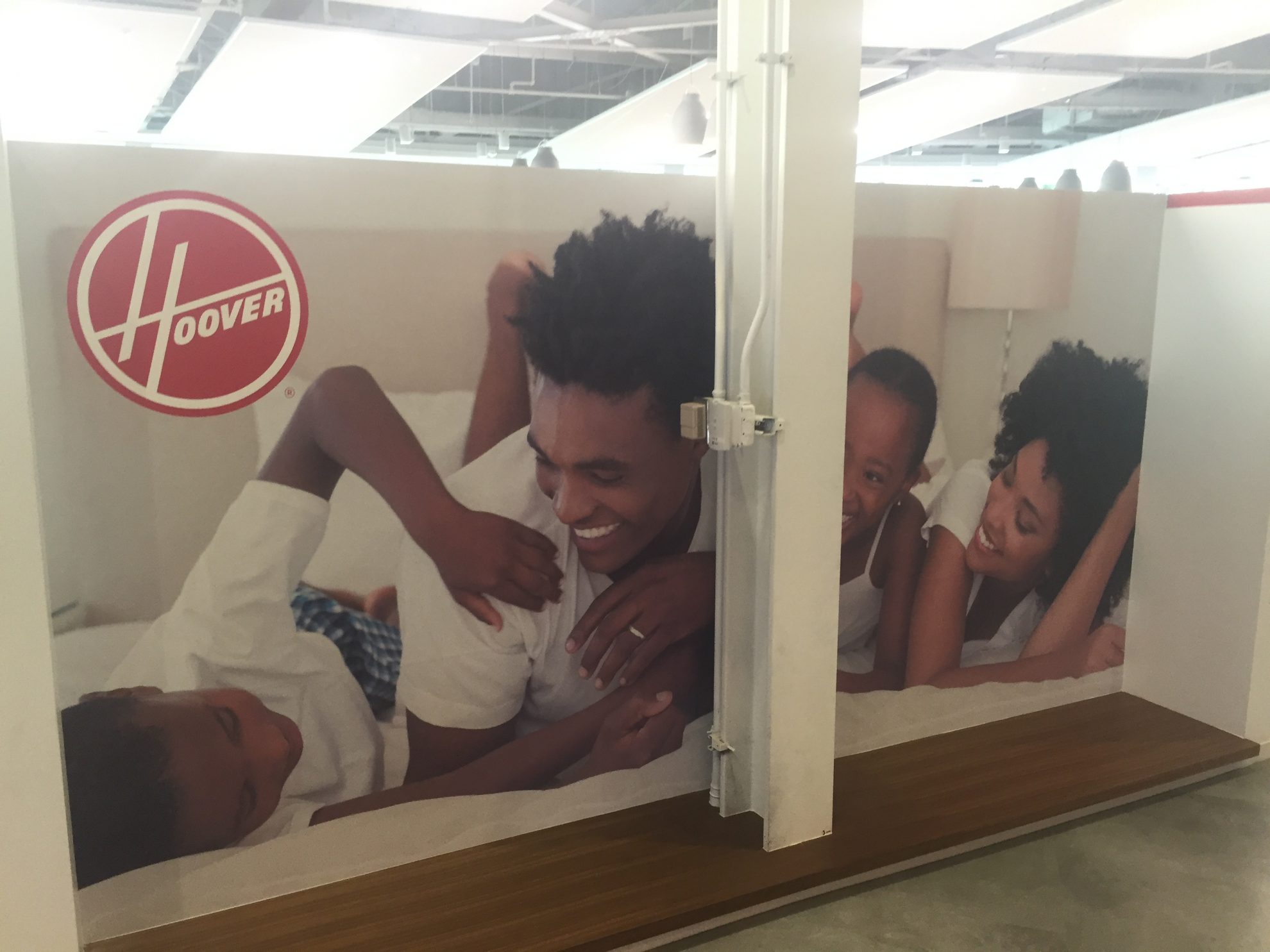
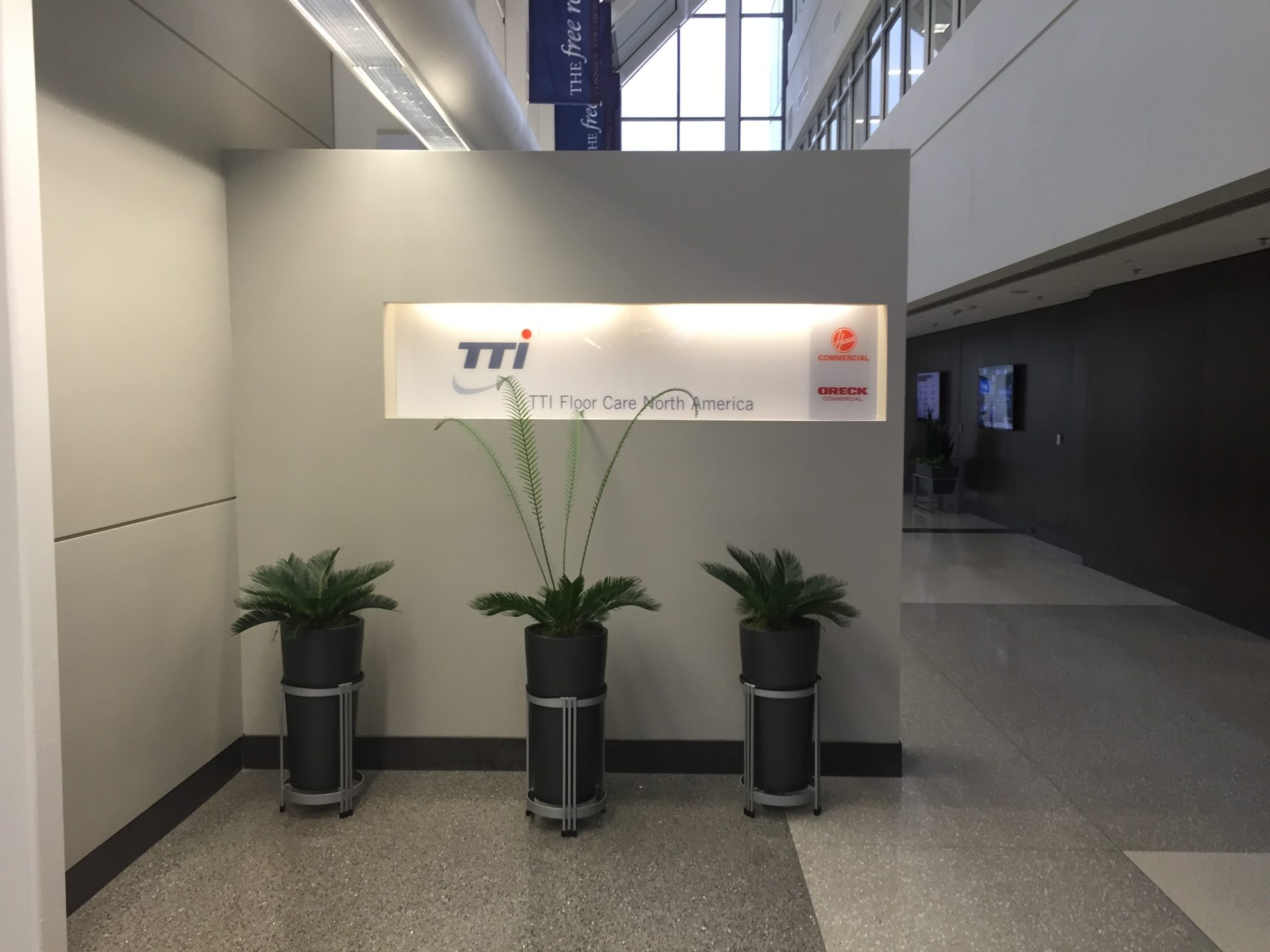
Heritage Signs & Displays collaborated with TTI Floor Care North America to enhance their corporate office. The project included custom frosted vinyl graphics, acrylic signs, dimensional lettering, and LED backlit signs, showcasing the brands Dirt Devil, Hoover, and Oreck. The signage improved office branding, privacy, and aesthetics. Heritage collaborated closely with TTI, ensuring efficient execution and high-quality results, creating an immersive and professional environment that reflects TTI's brand values.
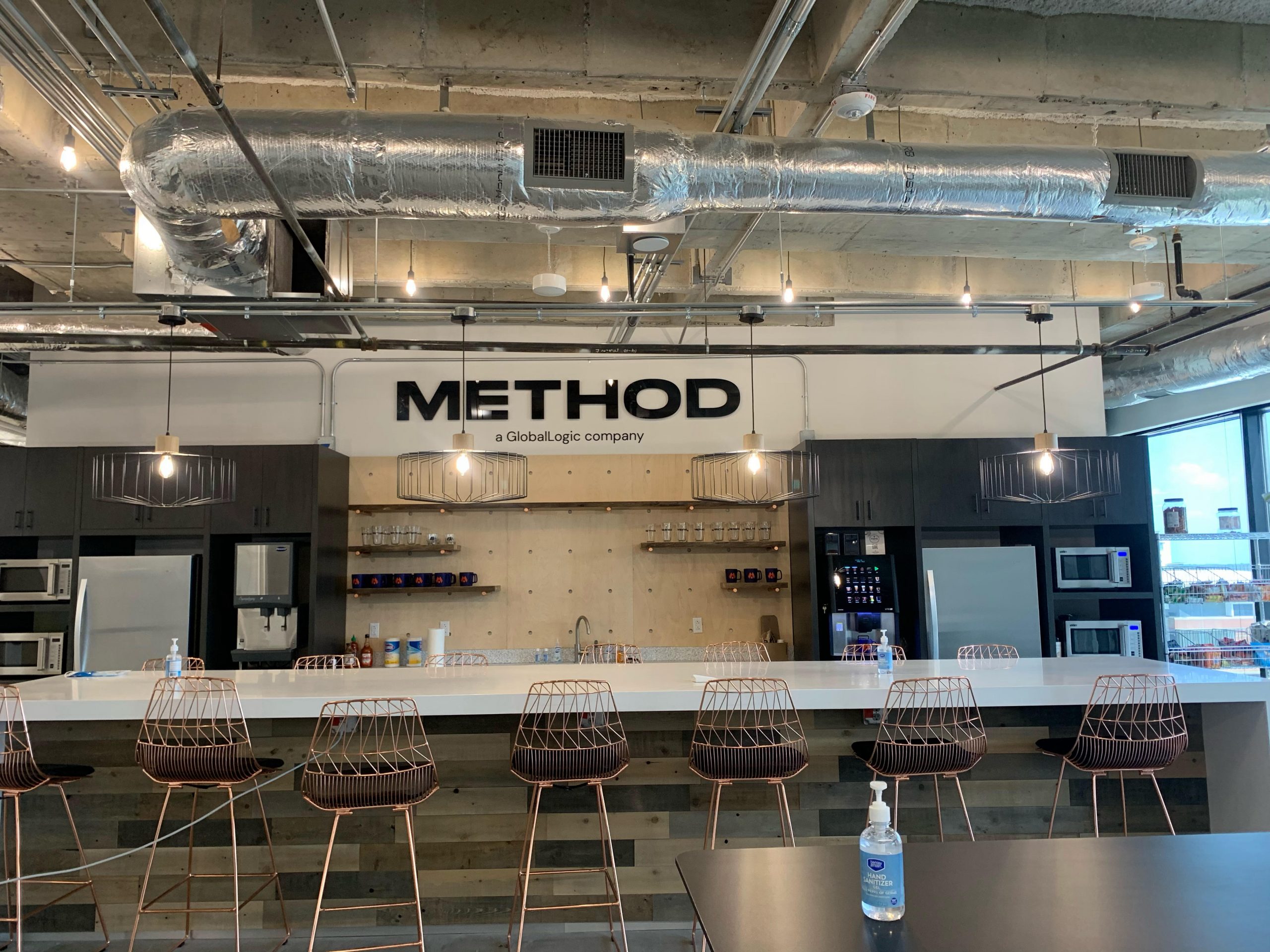
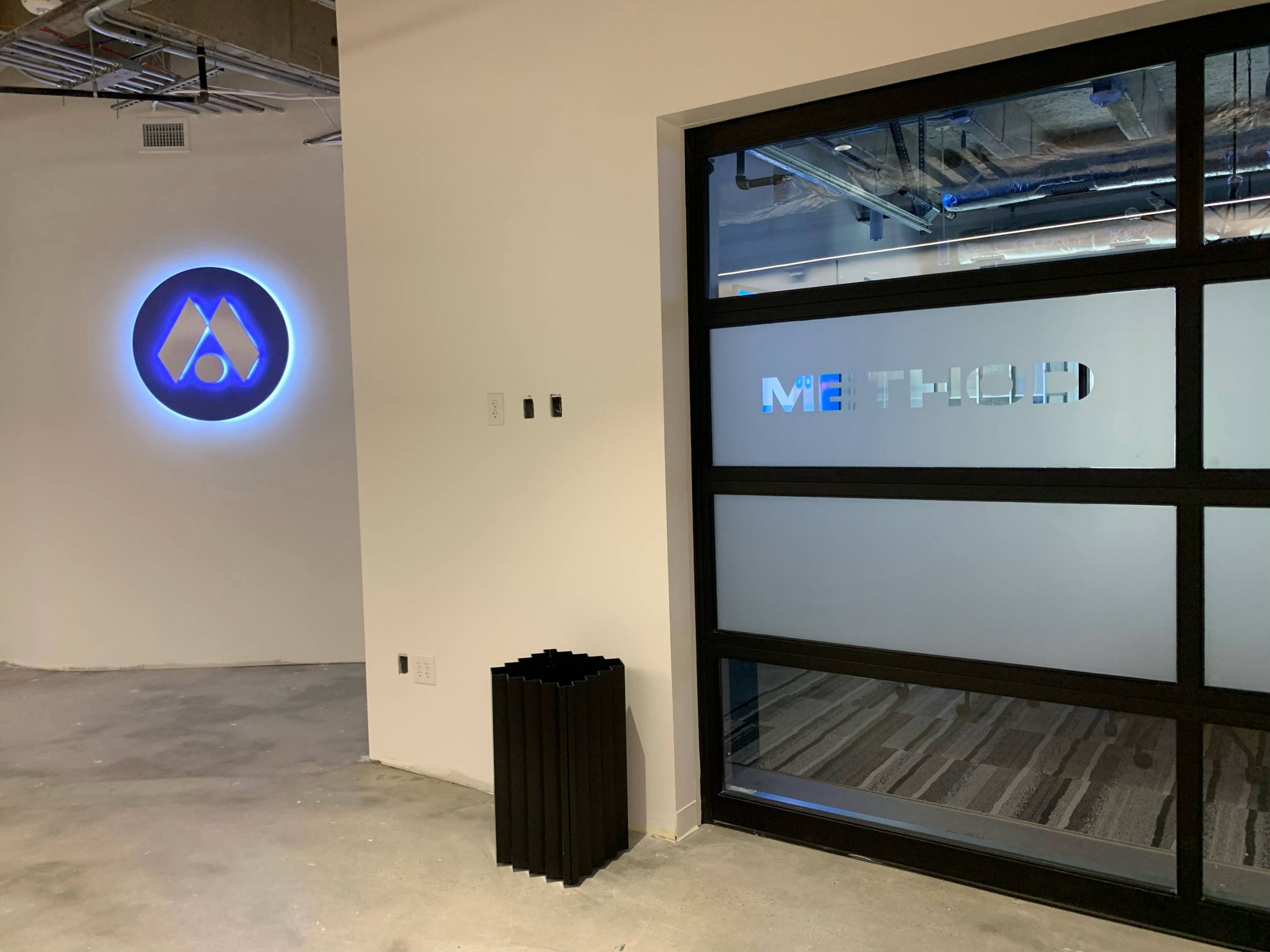
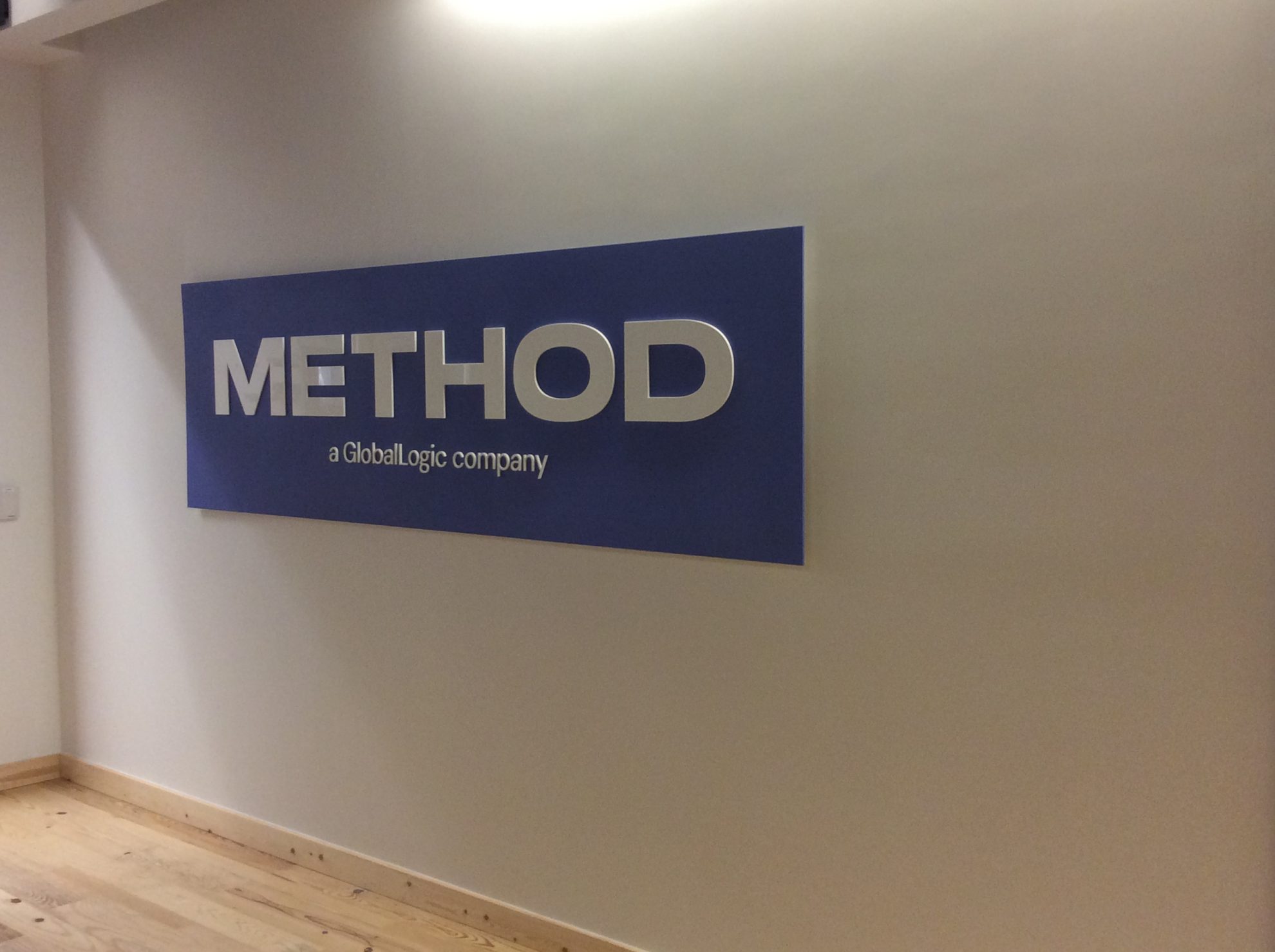
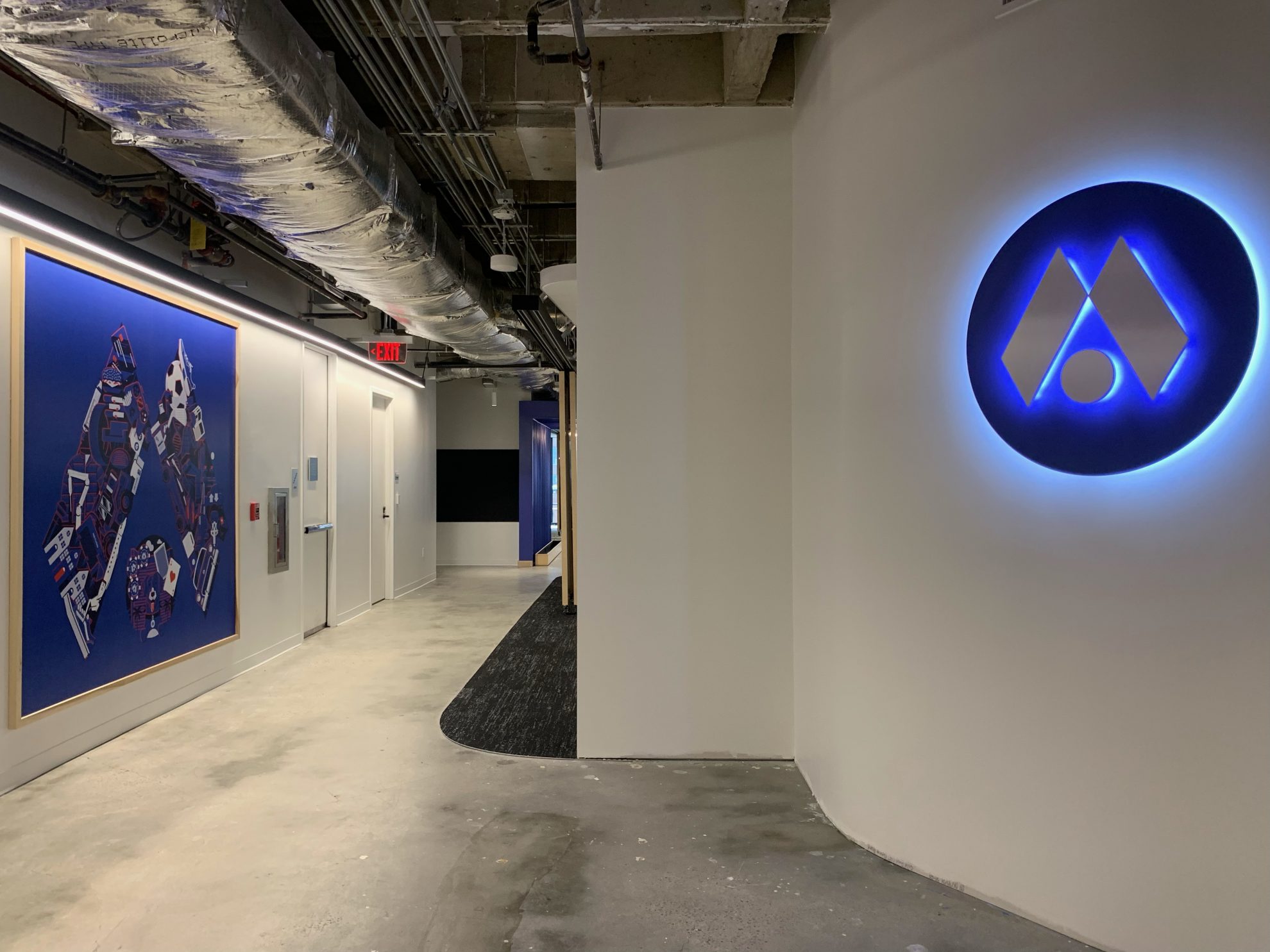
Heritage Signs & Displays' collaboration with Method (formerly Skookum) to rebrand their corporate headquarters. The project included dimensional lettering, wall displays, LED-lit signage, wall wraps, and frosted vinyl, creating an immersive and branded environment. Heritage worked closely with Method's team, ensuring accurate execution and timely delivery. The transformation was completed in August 2021, with Method's employees moving into the revamped space in September. The project reflects Heritage's commitment to quality and collaboration.