A workplace can have strong individual signs and graphics and still feel visually disconnected. The problem is usually not the quality of one piece. It is that identity, culture, privacy, recognition, and information have been handled as separate decisions. Commercial Interior Graphics gives Raleigh and Research Triangle organizations a way to plan those branded visual elements together so each feature has a clear job and the finished workplace feels intentional rather than assembled one purchase at a time.
Heritage Signs & Displays is a veteran-owned, family-led sign company founded in 1977. We help organizations turn what they want people to understand and experience into physical signs, graphics, displays, and branded features that can be produced and installed successfully. The objective is not to cover every available surface or force several products into one project. It is to decide where the brand needs a strong focal point, where a story deserves more room, where privacy or recognition matters, and which elements should remain flexible enough to change later.
That approach reduces a burden many clients feel early in a workplace project. The people responsible for the brand, the facility, and the larger workplace experience may know what the organization wants to communicate without knowing which physical solution should carry each message. Heritage helps sort those decisions around visual priority, brand standards, site conditions, long-term use, anticipated investment, and installation realities. A client can evaluate one clear direction instead of trying to reconcile unrelated product choices after each decision has already been made. That shared direction can also make internal approvals easier because stakeholders are reviewing one connected plan.
The same discipline becomes especially useful during a rebrand, relocation, renovation, headquarters refresh, or other major workplace initiative. These projects often involve several spaces and decision-makers at the same time. What happens at reception may influence nearby corridors, conference rooms, glass areas, employee spaces, or future locations. Planning the branded visual program as a system makes it easier to preserve hierarchy and brand standards while adapting the physical solution to each part of the workplace.
Environmental graphic design provides the planning discipline. One dedicated Project Manager keeps the approved direction, site information, key decisions, production requirements, schedule, and installation planning connected as the project advances. That continuity matters because a change in one feature can affect another element nearby. Fewer handoffs help preserve what the client approved and give the people producing and installing the work better context for the decisions they make.
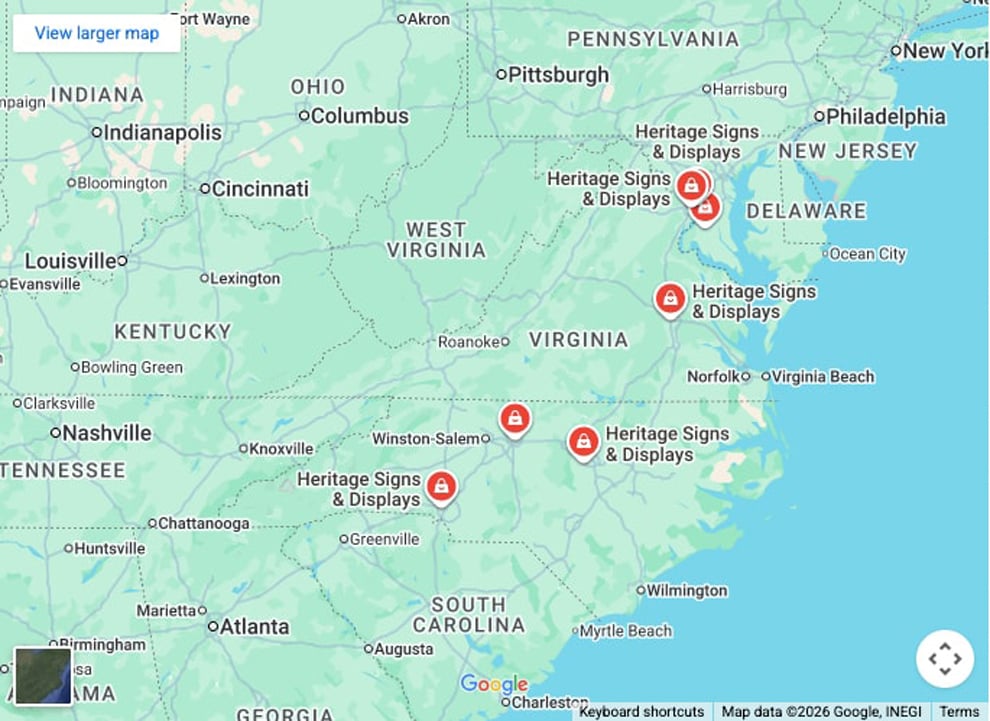
For Raleigh and Research Triangle organizations, Heritage combines local discovery, site surveys, field verification, installation planning, and professional installation with broader Carolinas production and fabrication resources. Local knowledge helps the team understand how the branded elements will relate to the actual property before production begins. The result is a practical way to move from a workplace communication goal to a visual program whose individual elements support one another and whose execution remains accountable from the first conversation through installation.
Commercial Interior Graphics becomes especially useful when a project has more than one important message, surface, stakeholder, or physical feature to resolve. A company moving into a new office may need identity at reception, privacy on glass, culture and history in employee areas, recognition in a shared space, and information that can change over time. A renovation or rebrand may require new elements to work with existing architecture rather than treating every area as a blank slate.
Coordination also becomes important when several people share responsibility for the project. Marketing may own brand standards, human resources may shape culture content, facilities may control access and site conditions, leadership may approve priorities, and an architect or designer may guide the interior. Heritage helps those decisions meet in one workable visual plan.
Not every project needs a broad Commercial Interior Graphics program. A single wall wrap, window graphic, or lobby sign may be the right answer when the need is focused. The broader program makes sense when several branded features must relate to one another and the client benefits from resolving those choices before production begins.
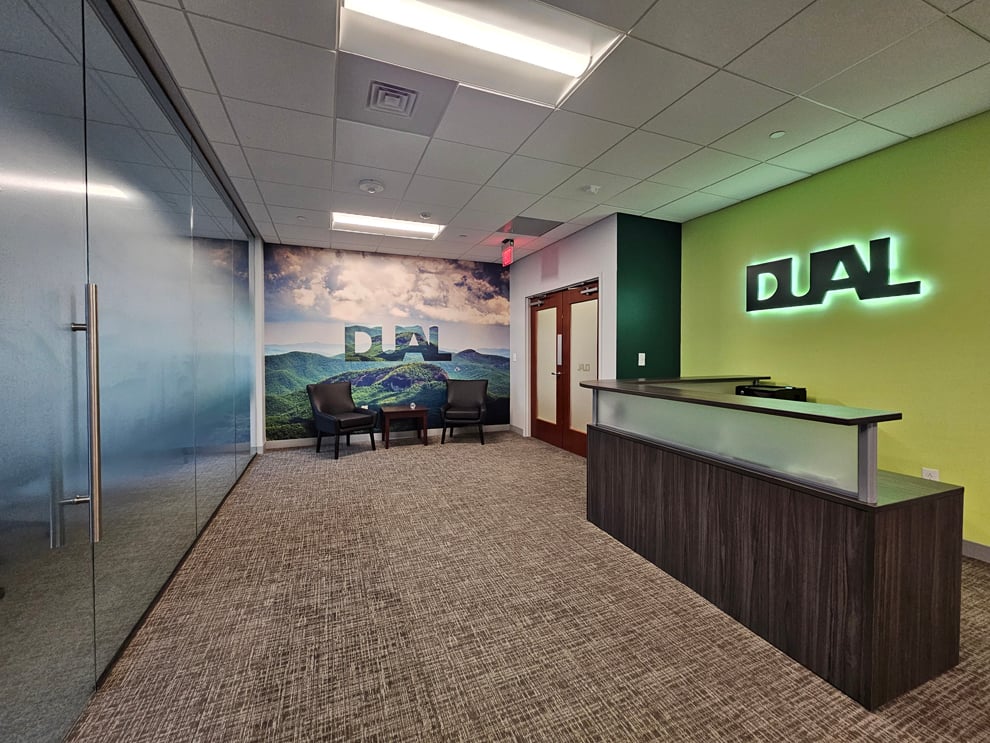
A complex interior graphics project is easier to manage when responsibility stays clear from the first discussion through installation. Heritage's One Dedicated Project Manager System gives the client one point of coordination while approvals, site information, production decisions, schedule, and installation planning remain connected.
That continuity matters because elements in a Commercial Interior Graphics program can affect one another. A mounting decision can change artwork dimensions. A wall condition can influence material selection. A stakeholder revision may affect more than one feature. Heritage's integrated team can resolve those relationships before they become separate problems.
Heritage manages the complete turnkey solution through one accountable Heritage team, connecting environmental graphic design, one dedicated Project Manager, production, fabrication, and professional installation from discovery through the completed installation. The client is not left coordinating separate providers or repeatedly translating decisions between companies.
Heritage seeks to honor God by serving clients and communities with excellence. We express that purpose through careful listening, responsible recommendations, respect for the client's approved direction, craftsmanship, communication, and follow-through. That commitment supports an accountable approach focused on the finished result.
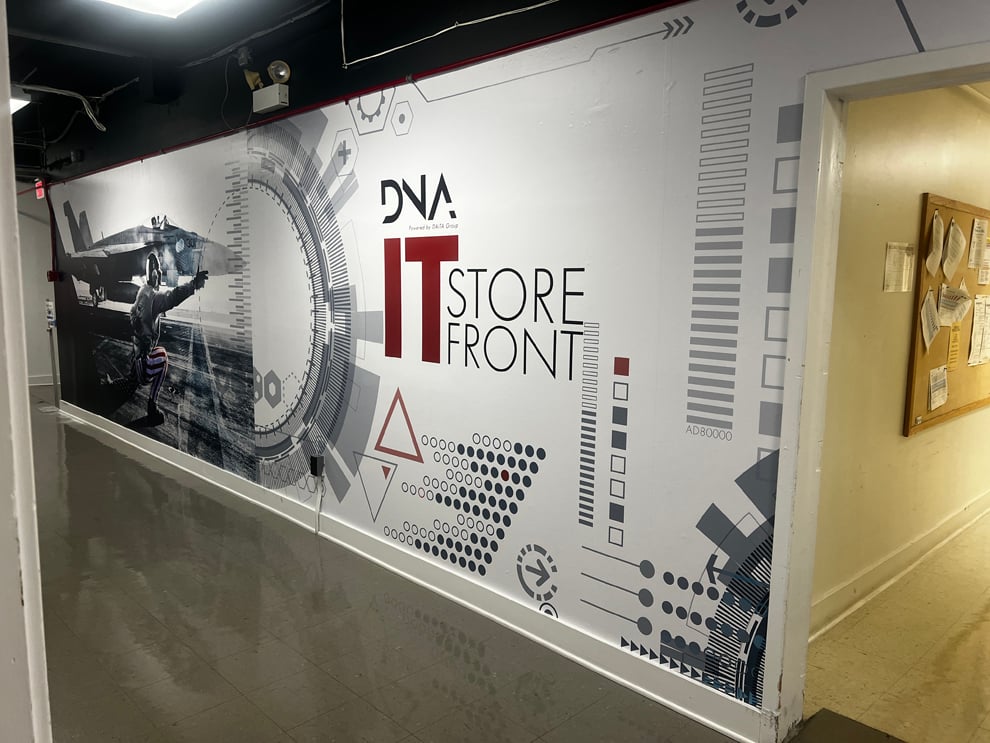
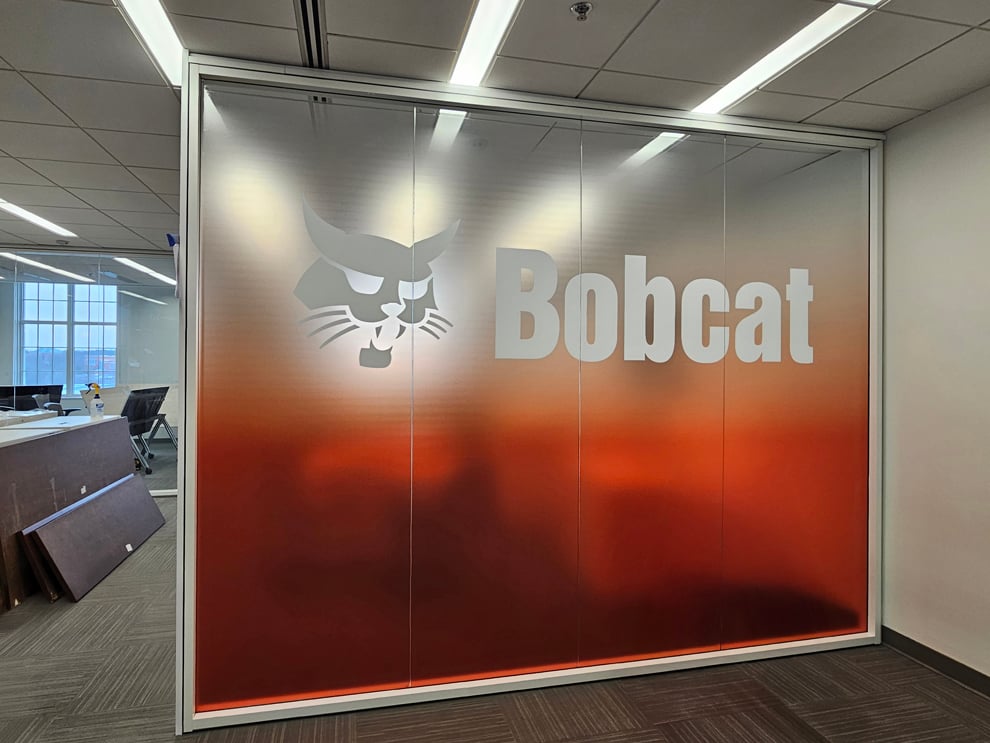
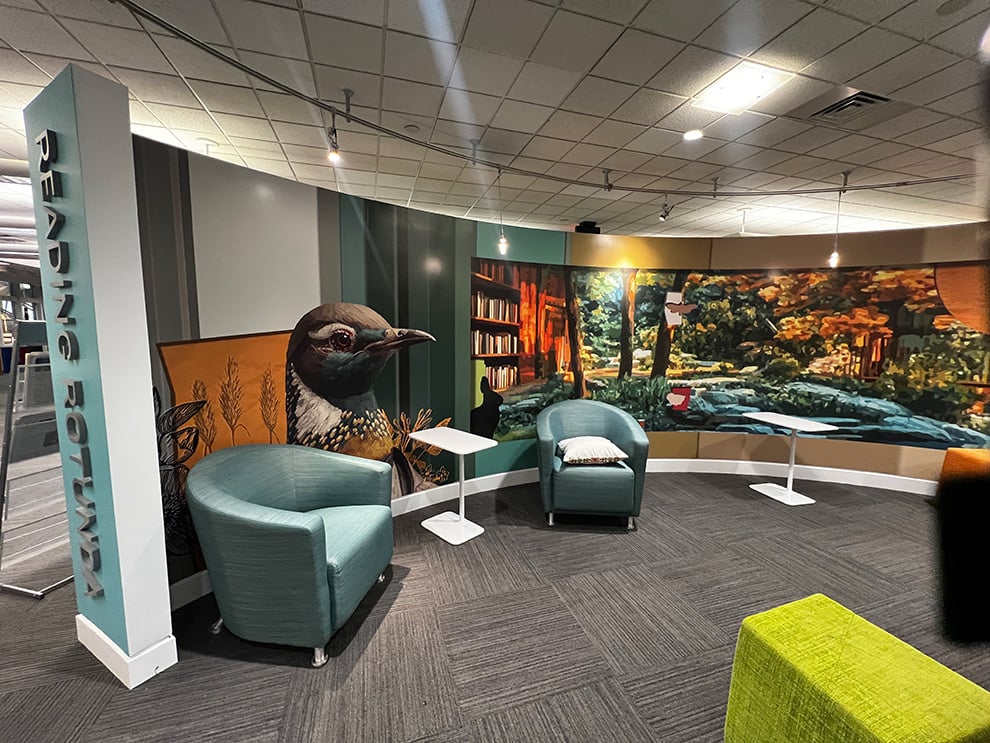
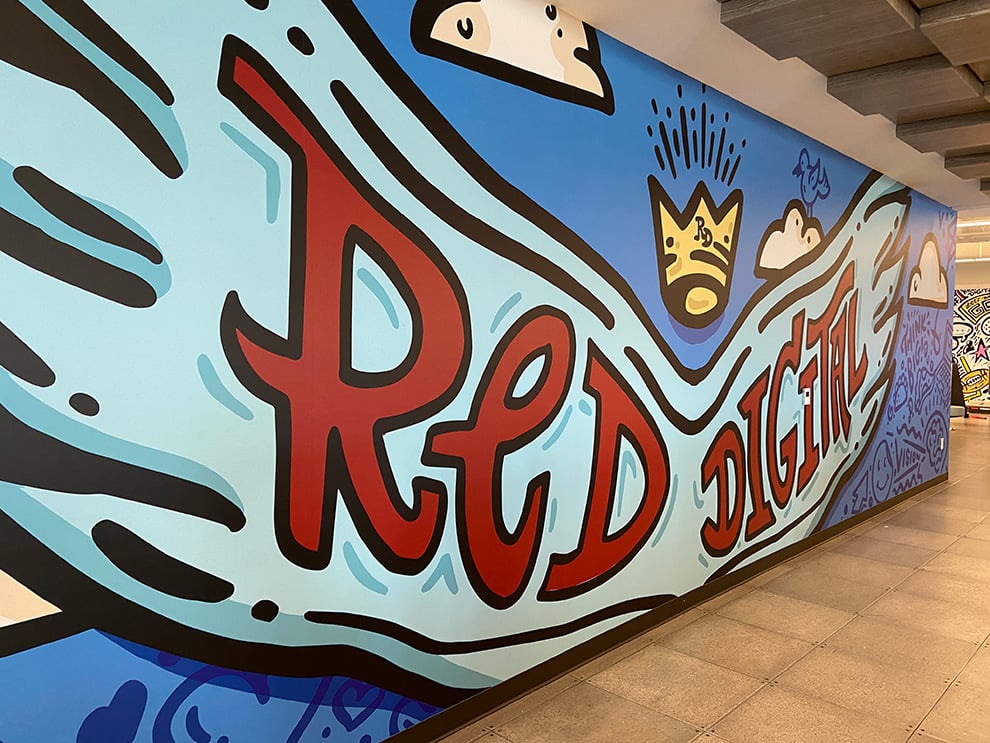
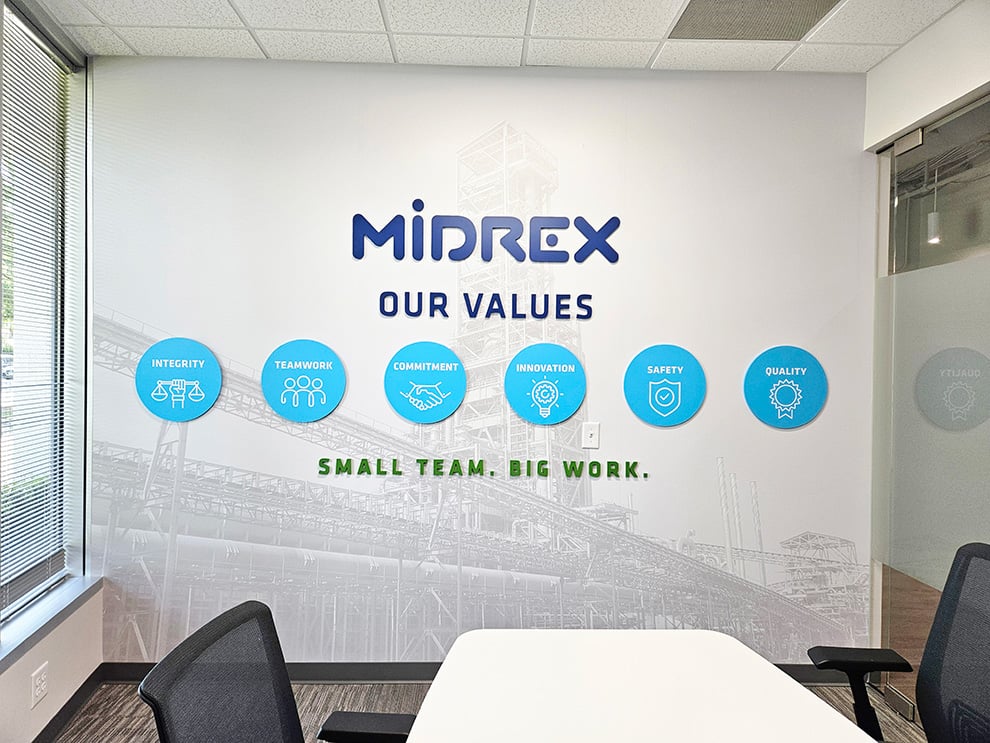
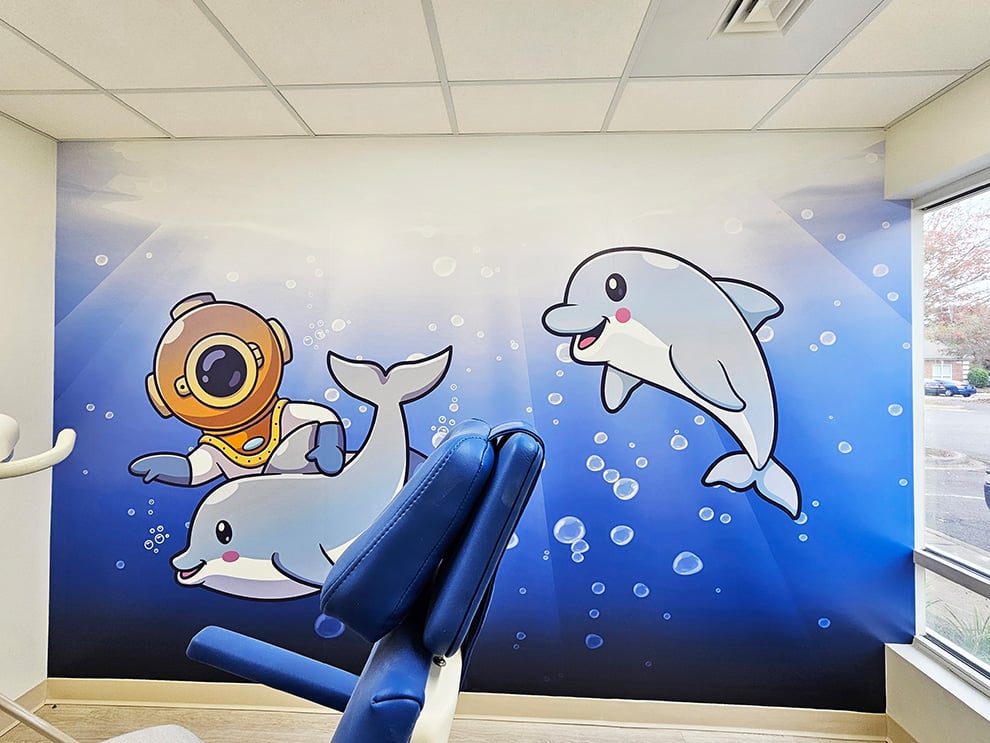
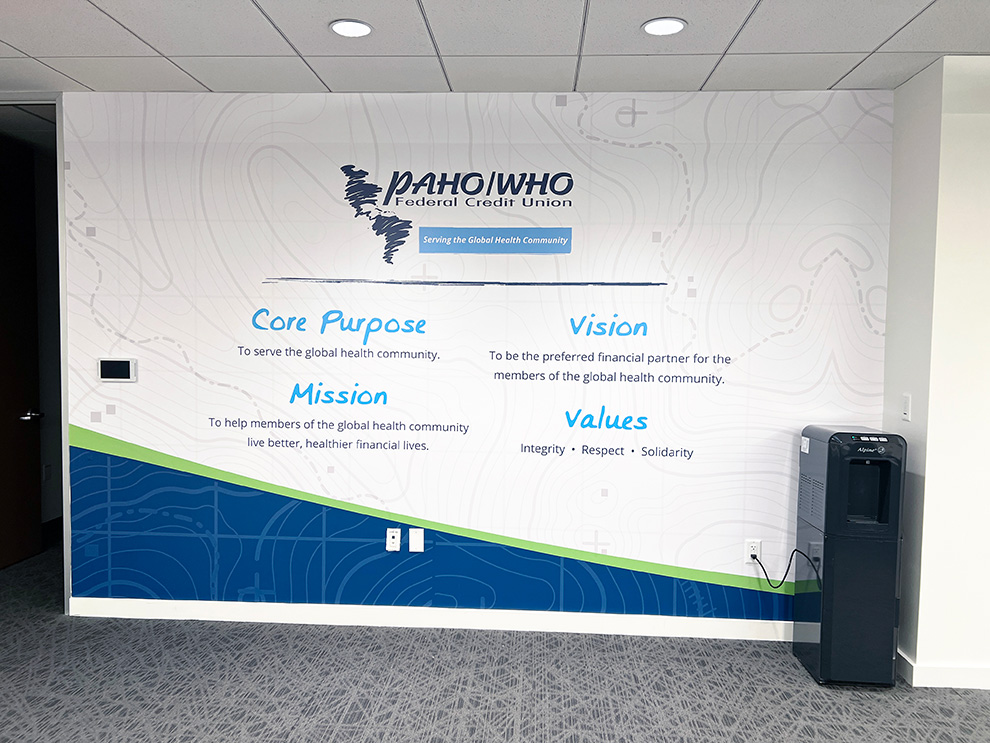
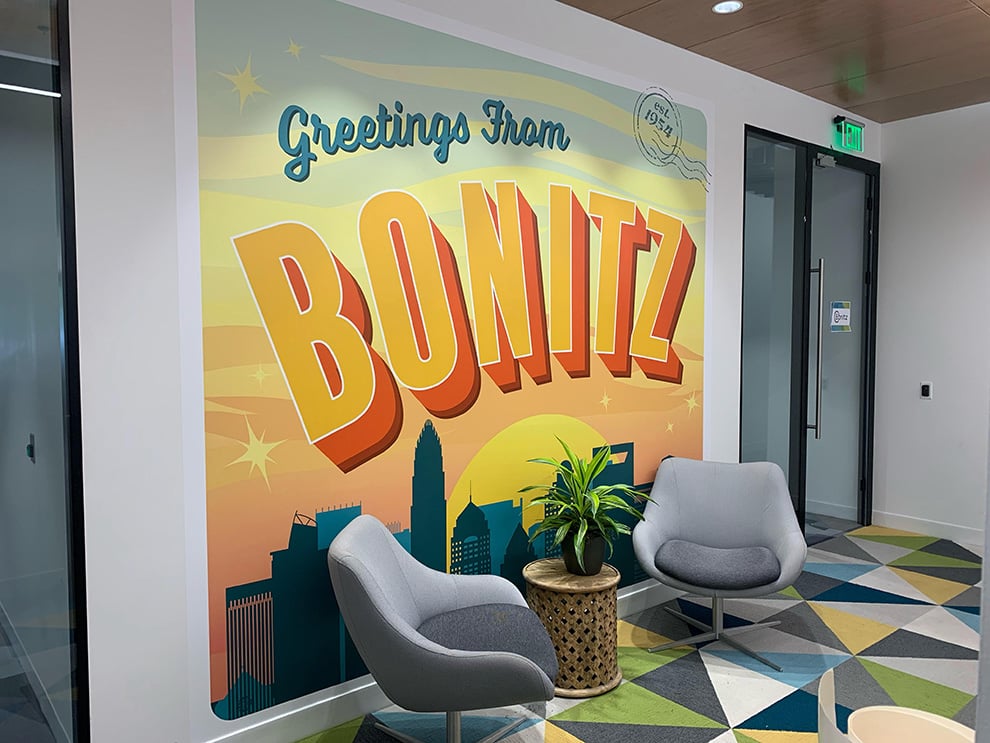
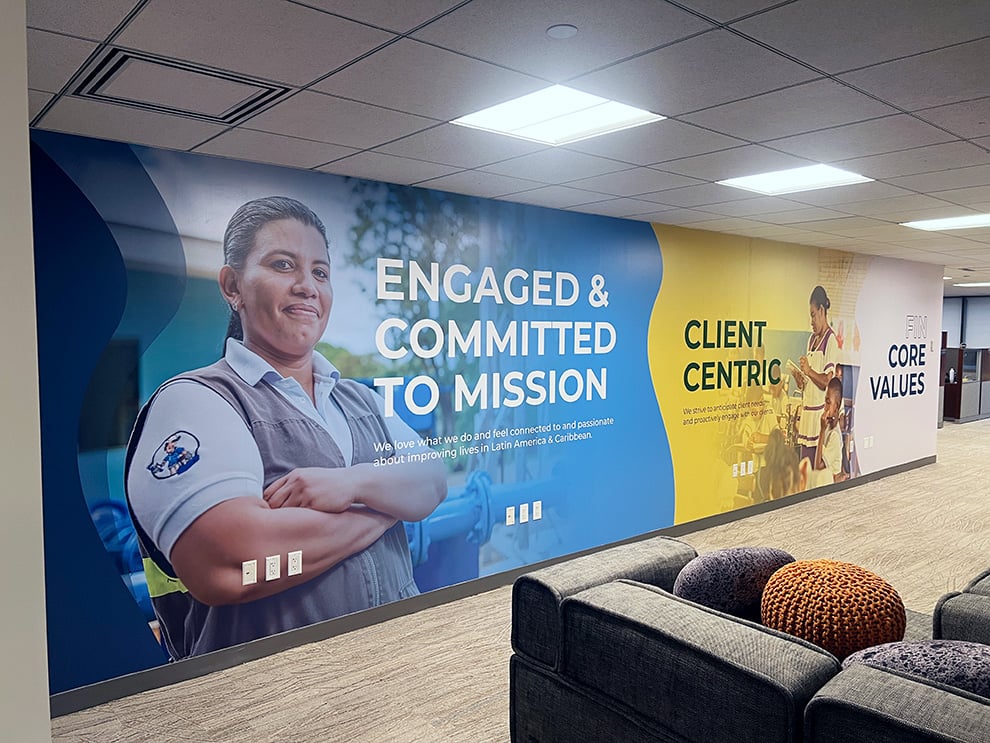
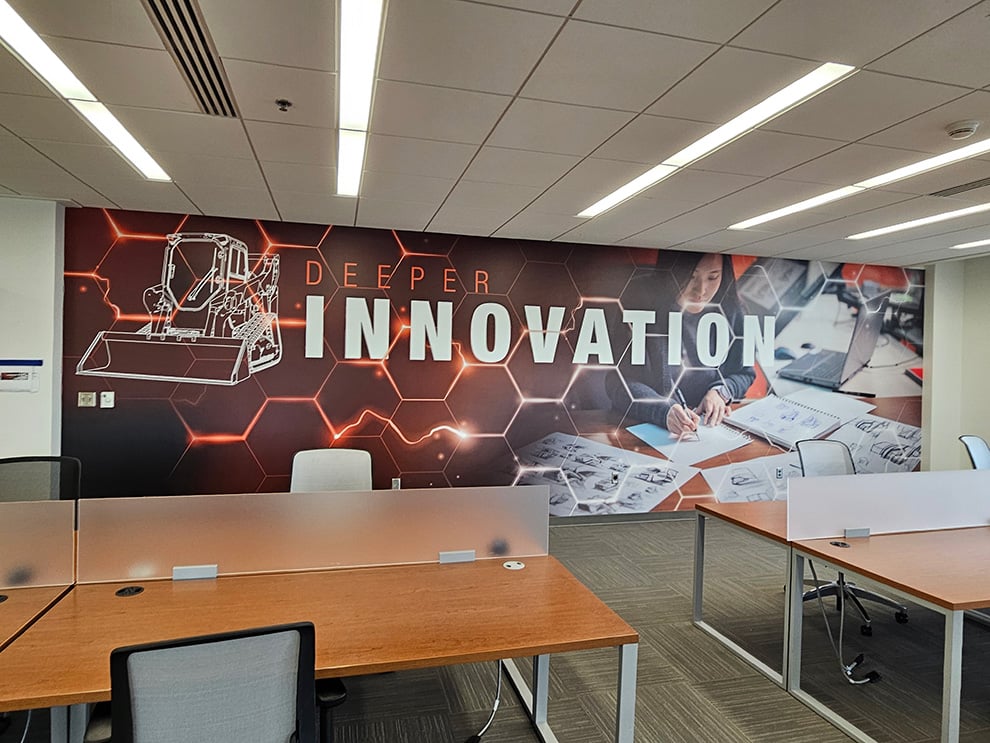
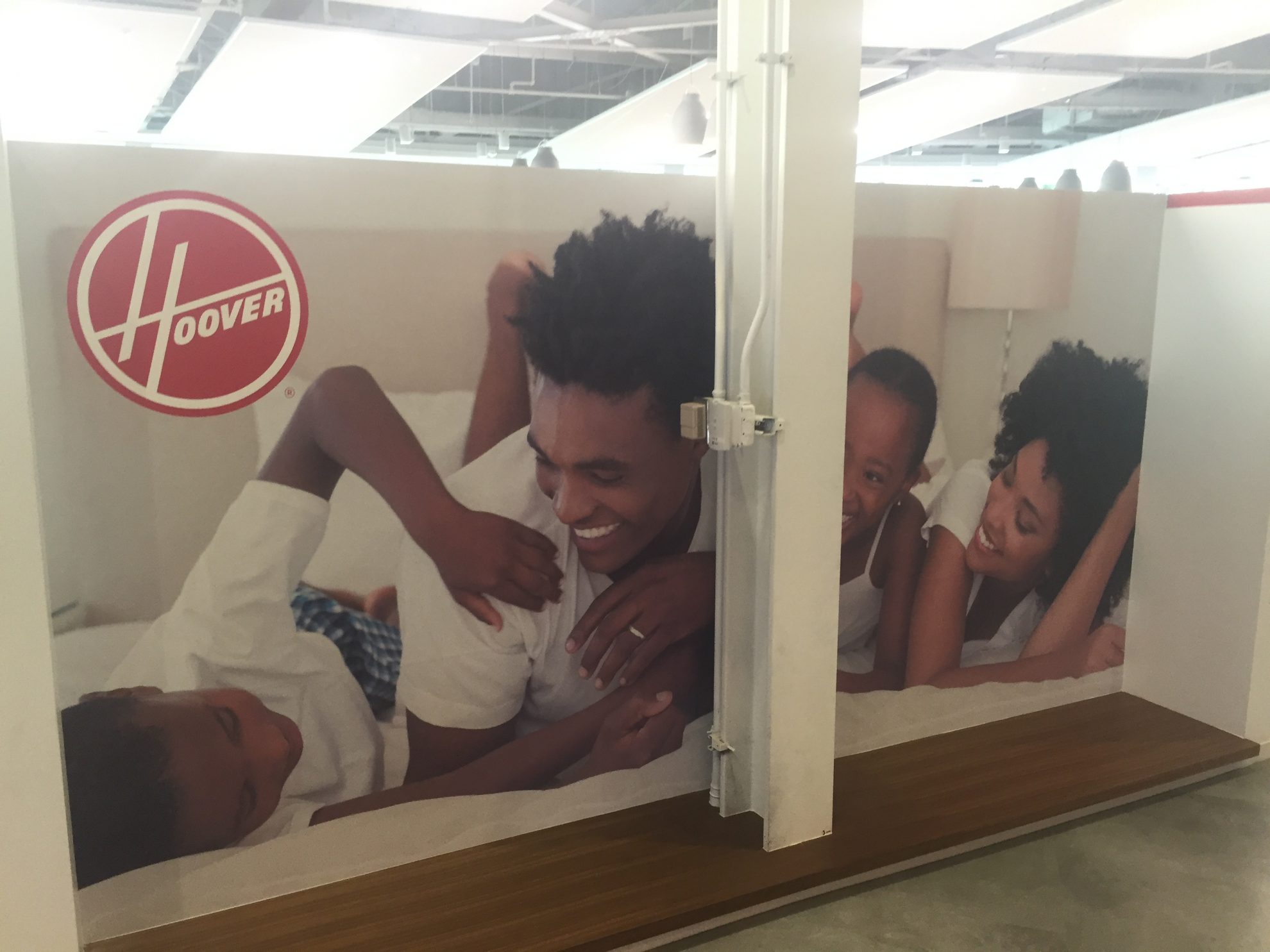
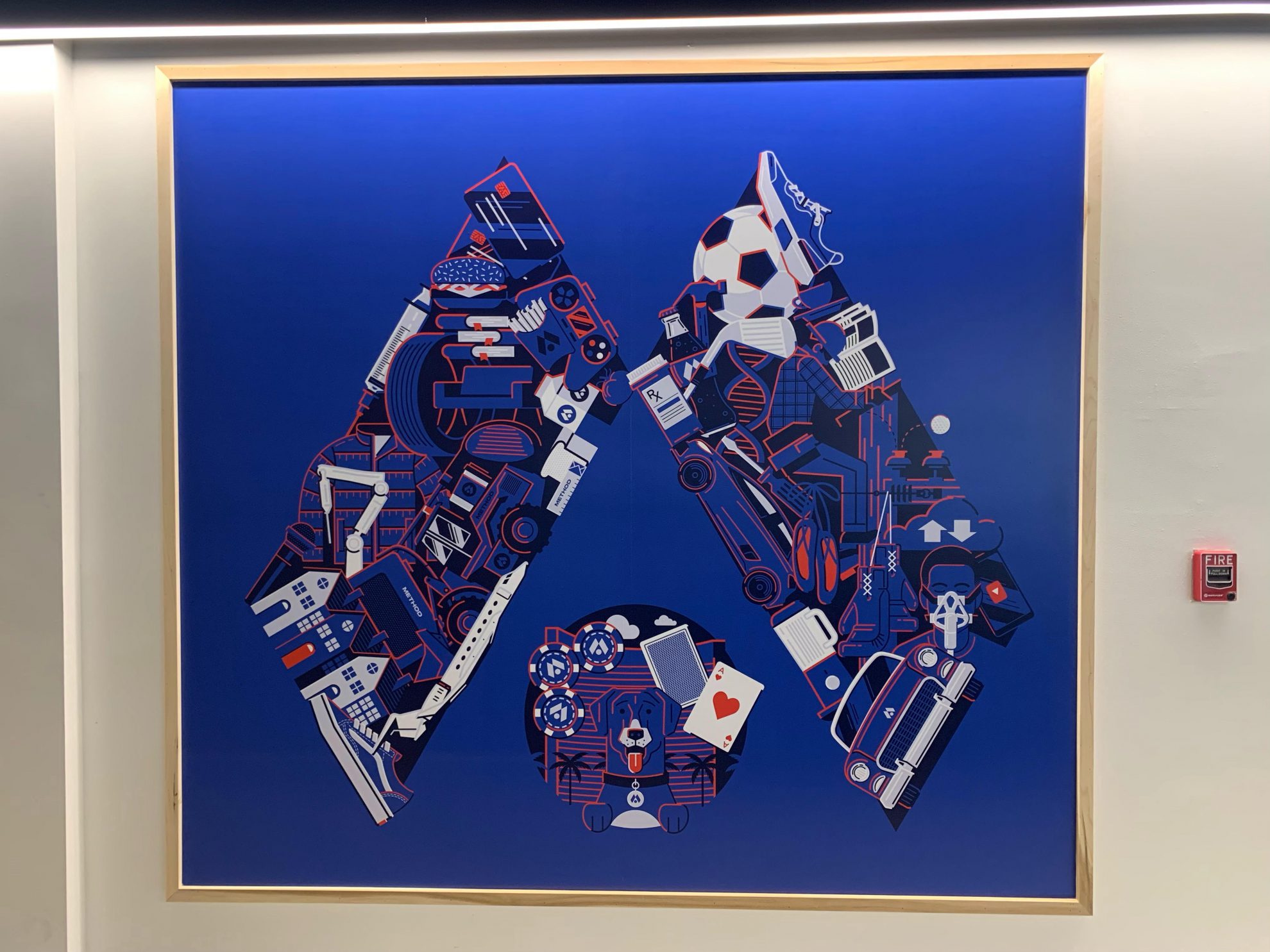
When a large wall needs to carry culture, history, imagery, recognition, or a major visual story, Wall Wraps can establish an architectural-scale feature that other interior signs, displays, and dimensional elements support rather than compete with.
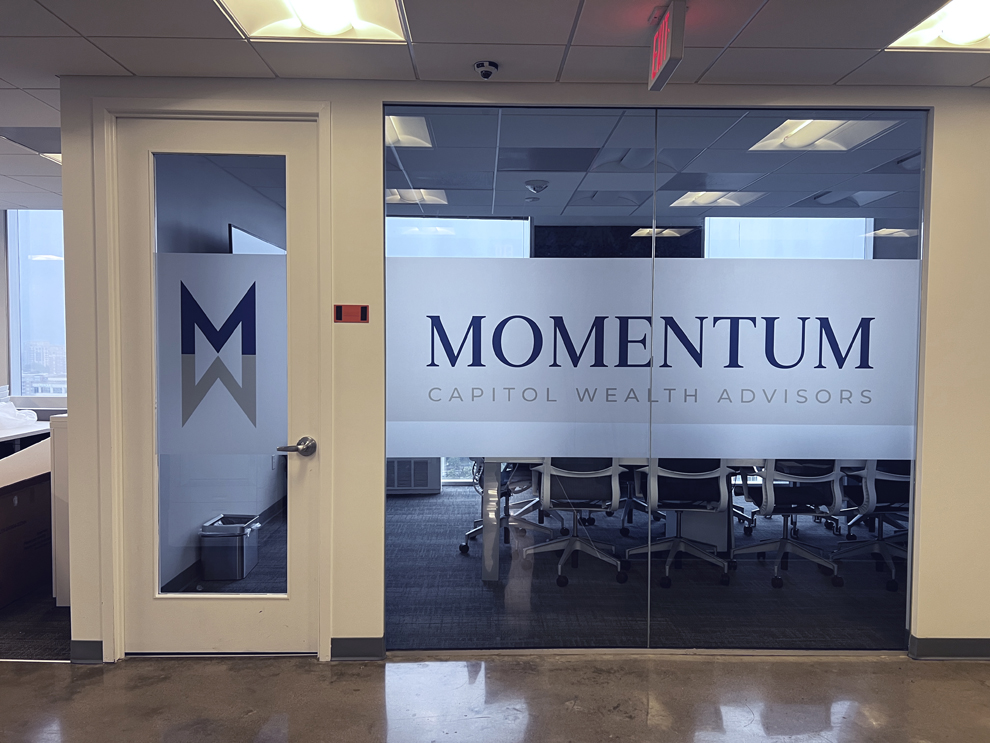
Use glass for identity, messaging, selected visibility, or other communication needs without treating windows as separate from the rest of the workplace. Window Graphics can extend the visual direction into conference rooms, entrances, offices, and shared spaces.
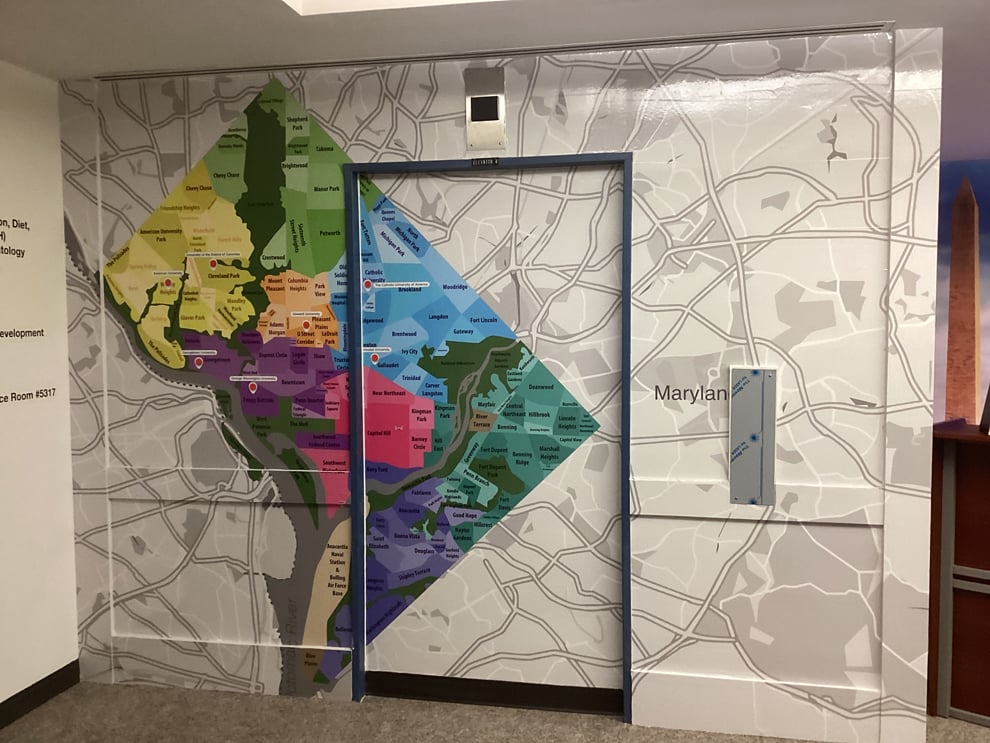
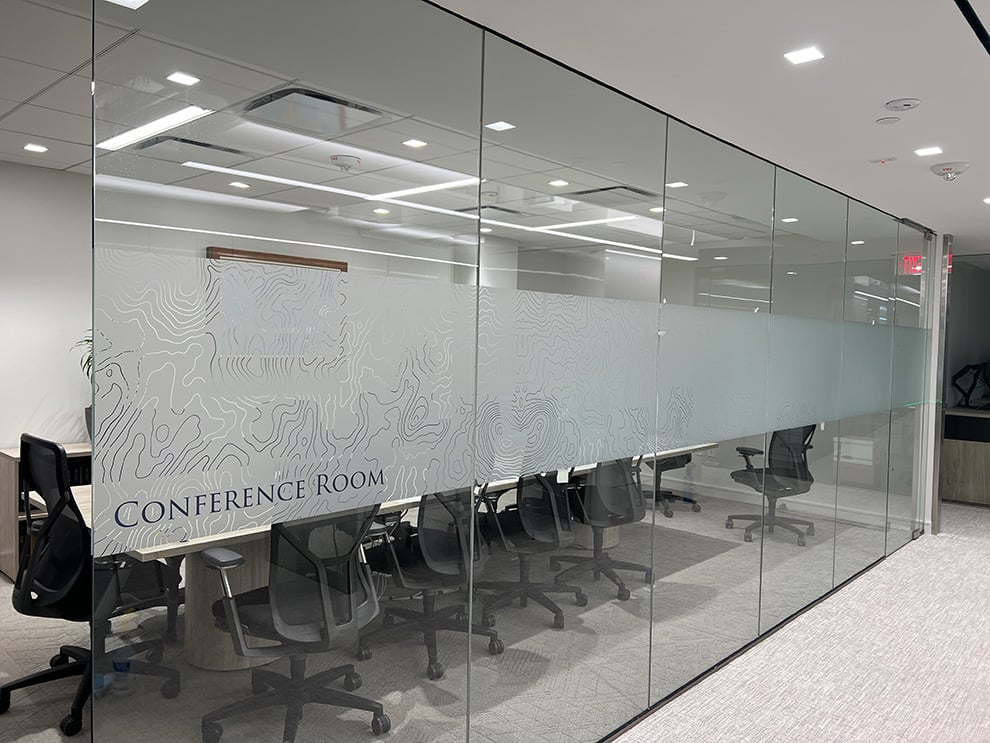
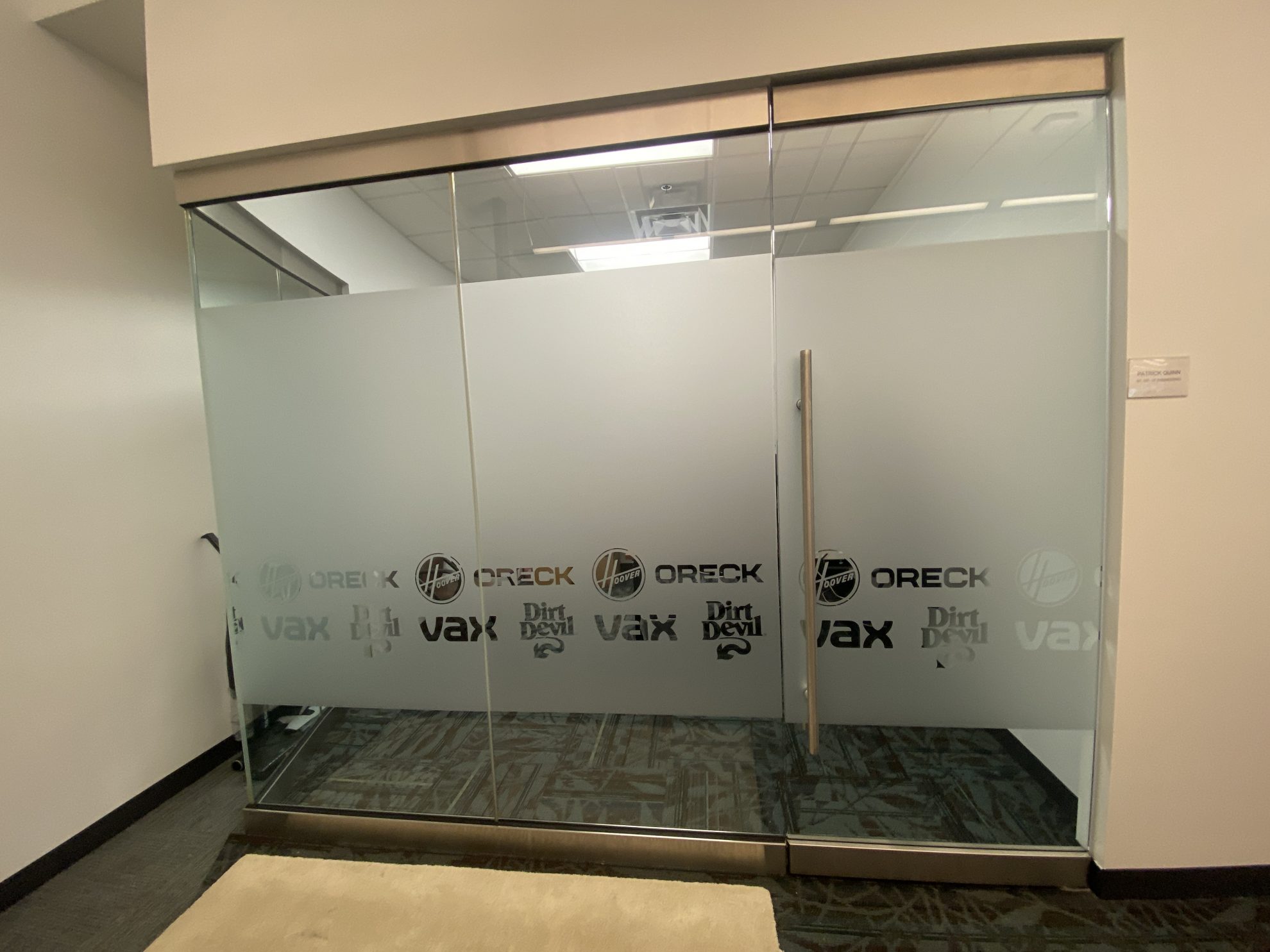
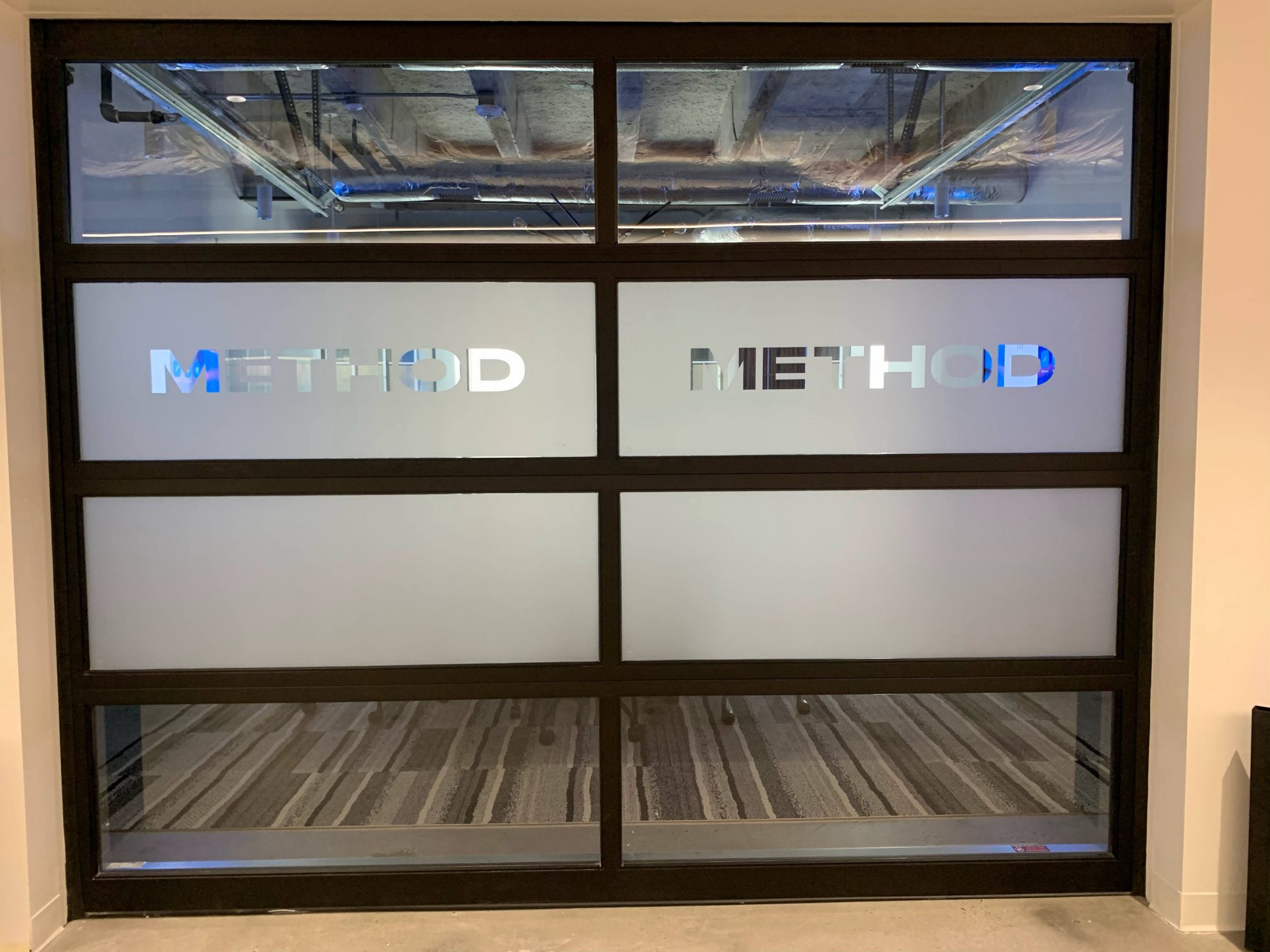
Add privacy to glass while preserving light and supporting the workplace's visual character. Frosted Vinyl and privacy treatments are especially useful where conference rooms, offices, doors, or partitions need greater separation without becoming disconnected from surrounding branding.
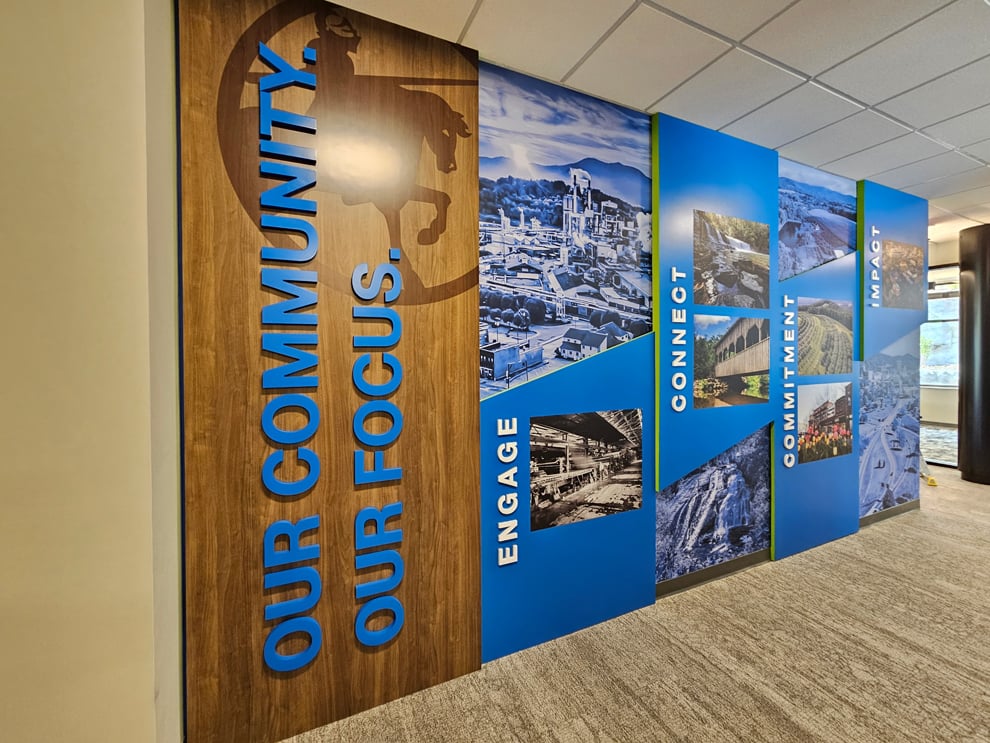
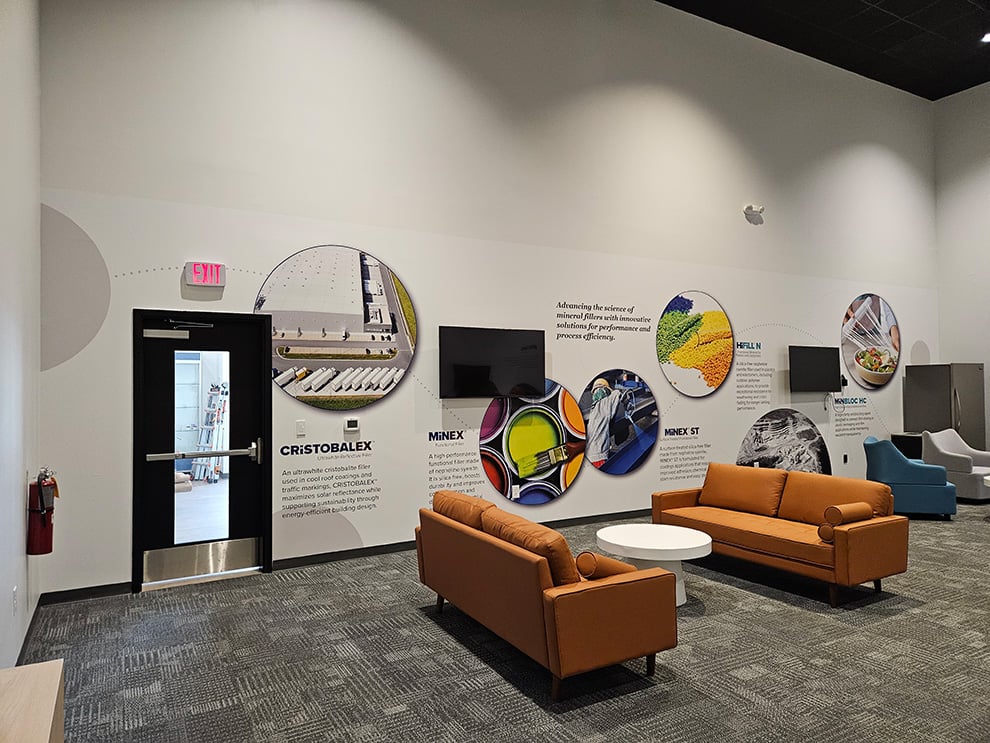
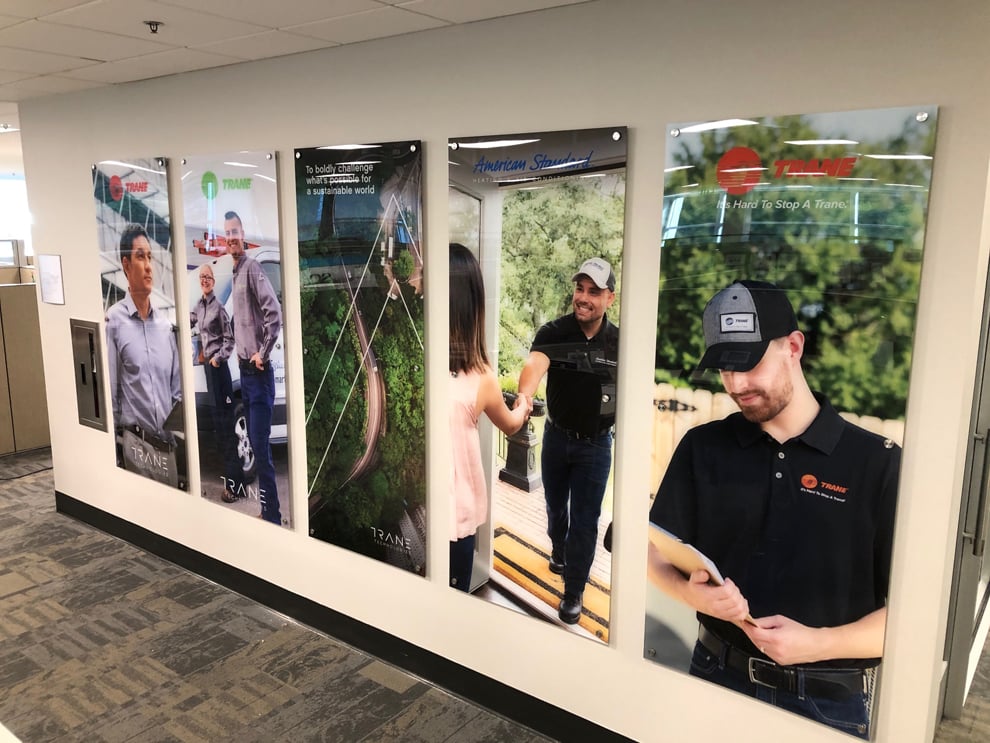
Organize photography, recognition, timelines, company history, printed content, dimensional components, or information into a deliberate wall feature. Wall Displays can carry more detailed stories than a simple sign while relating visually to surrounding workplace branding.
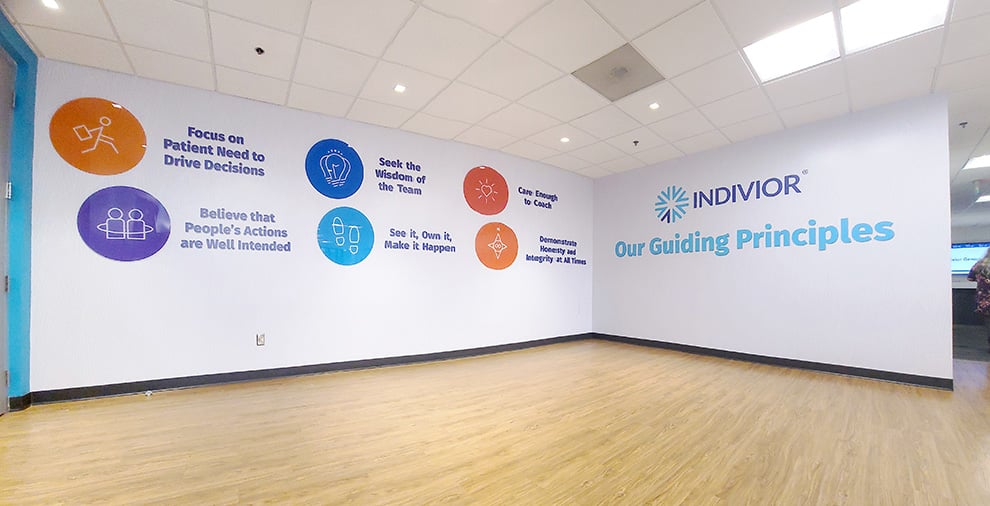
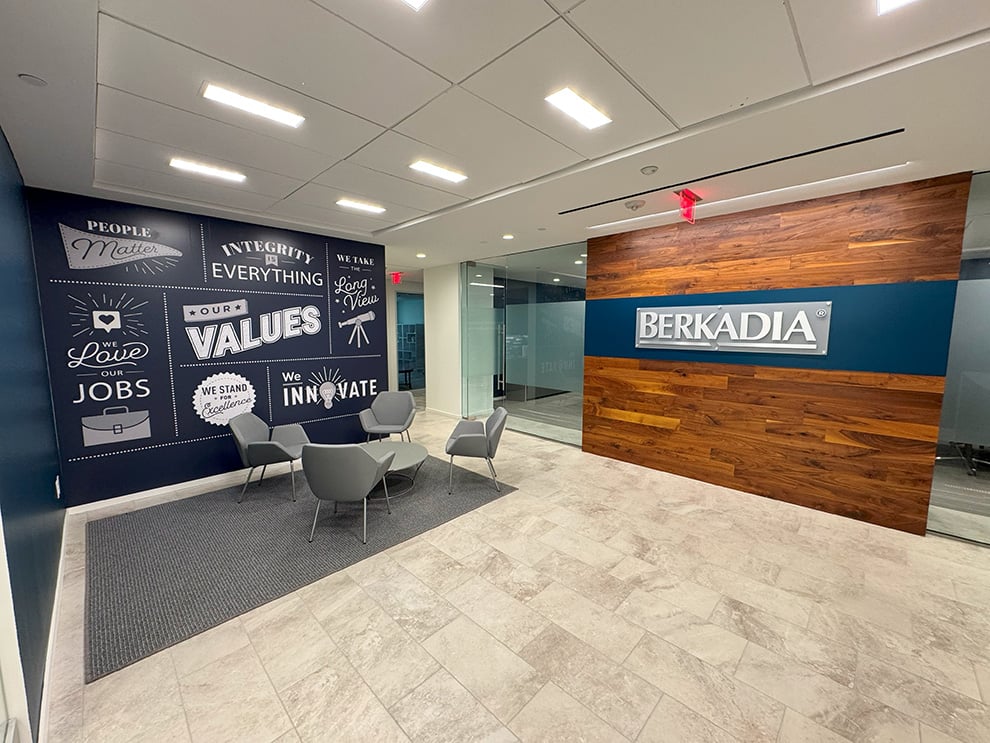
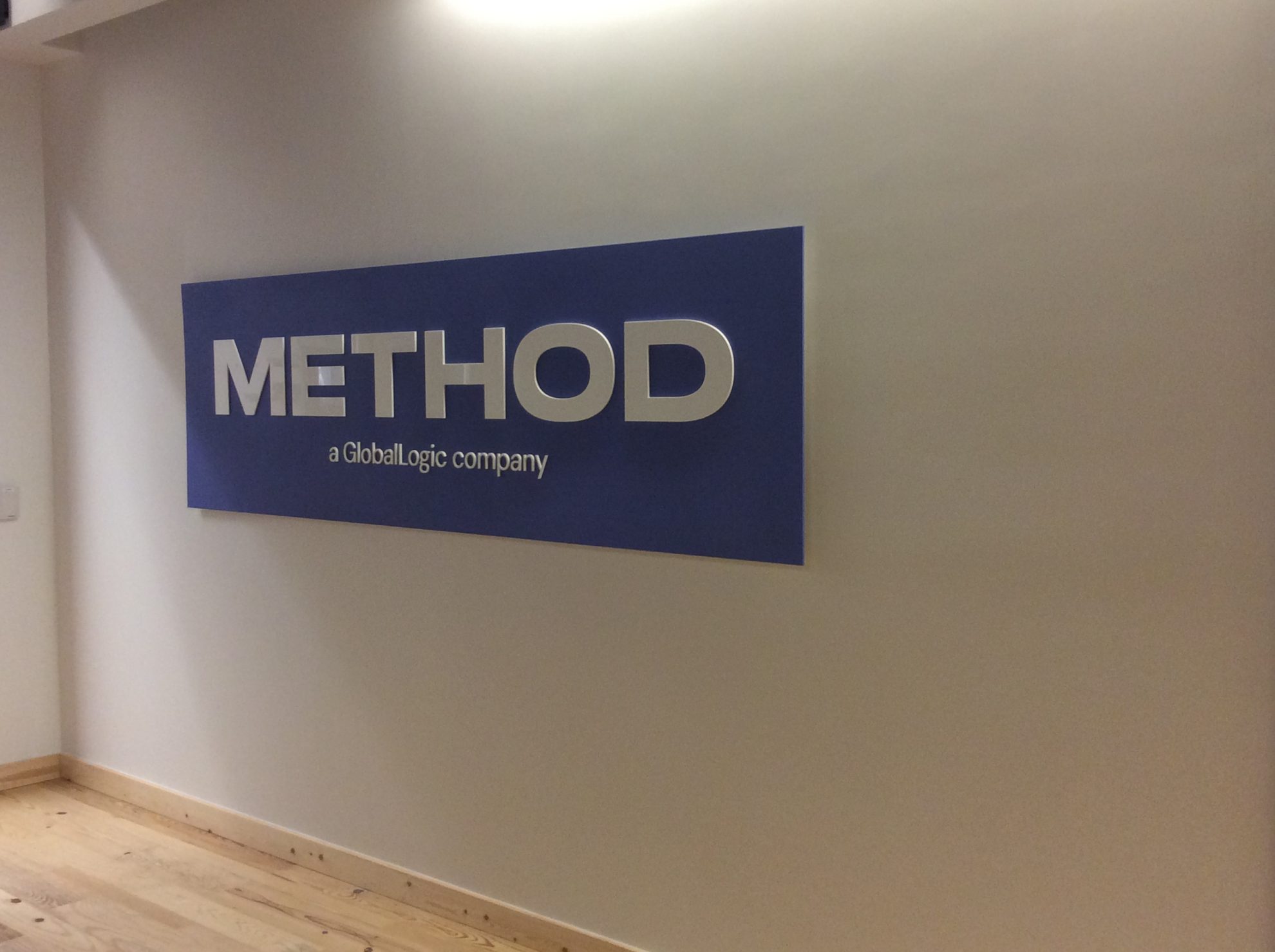
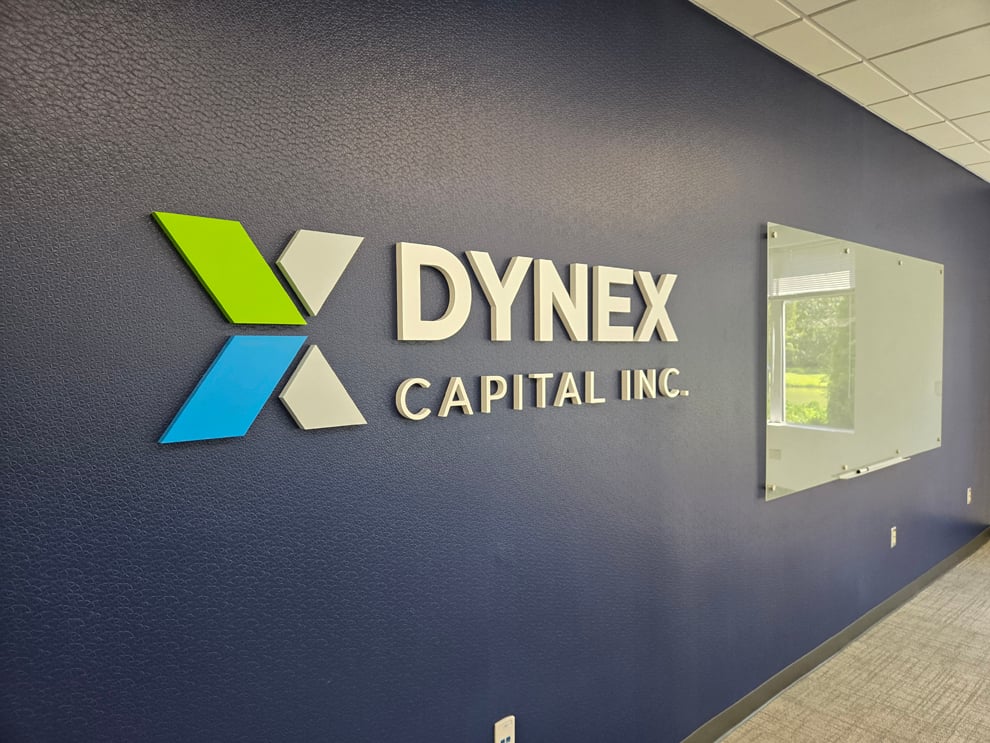
Create physical depth and emphasis for an organization name, logo, values, or other important message. Dimensional Letters work especially well when a focal point needs stronger presence than a flat graphic can provide.
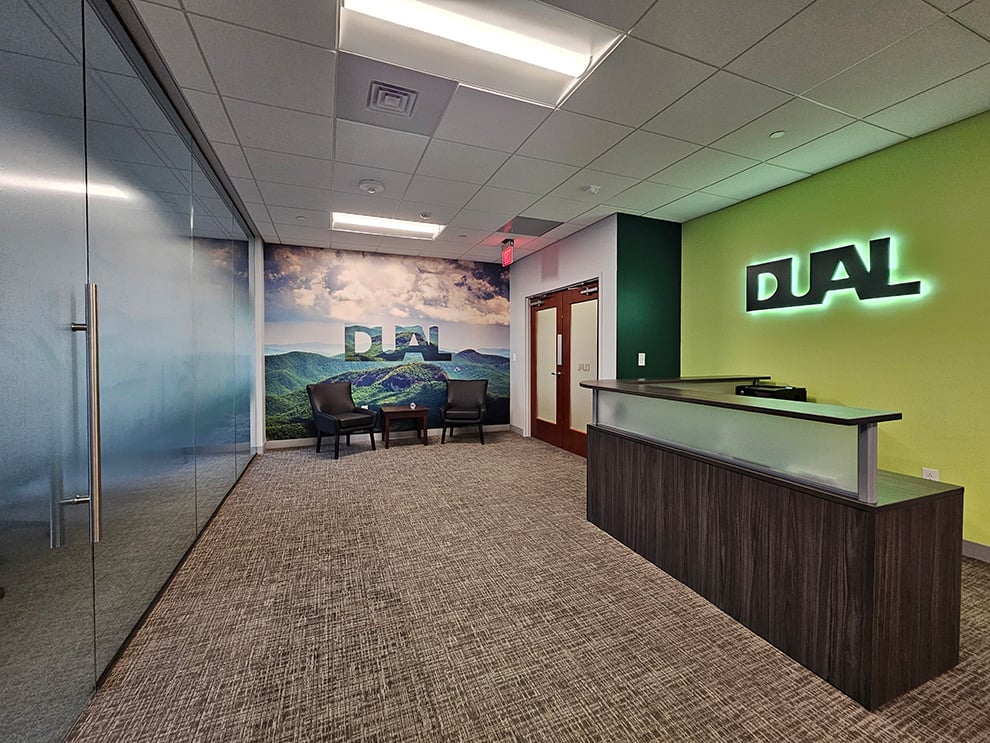
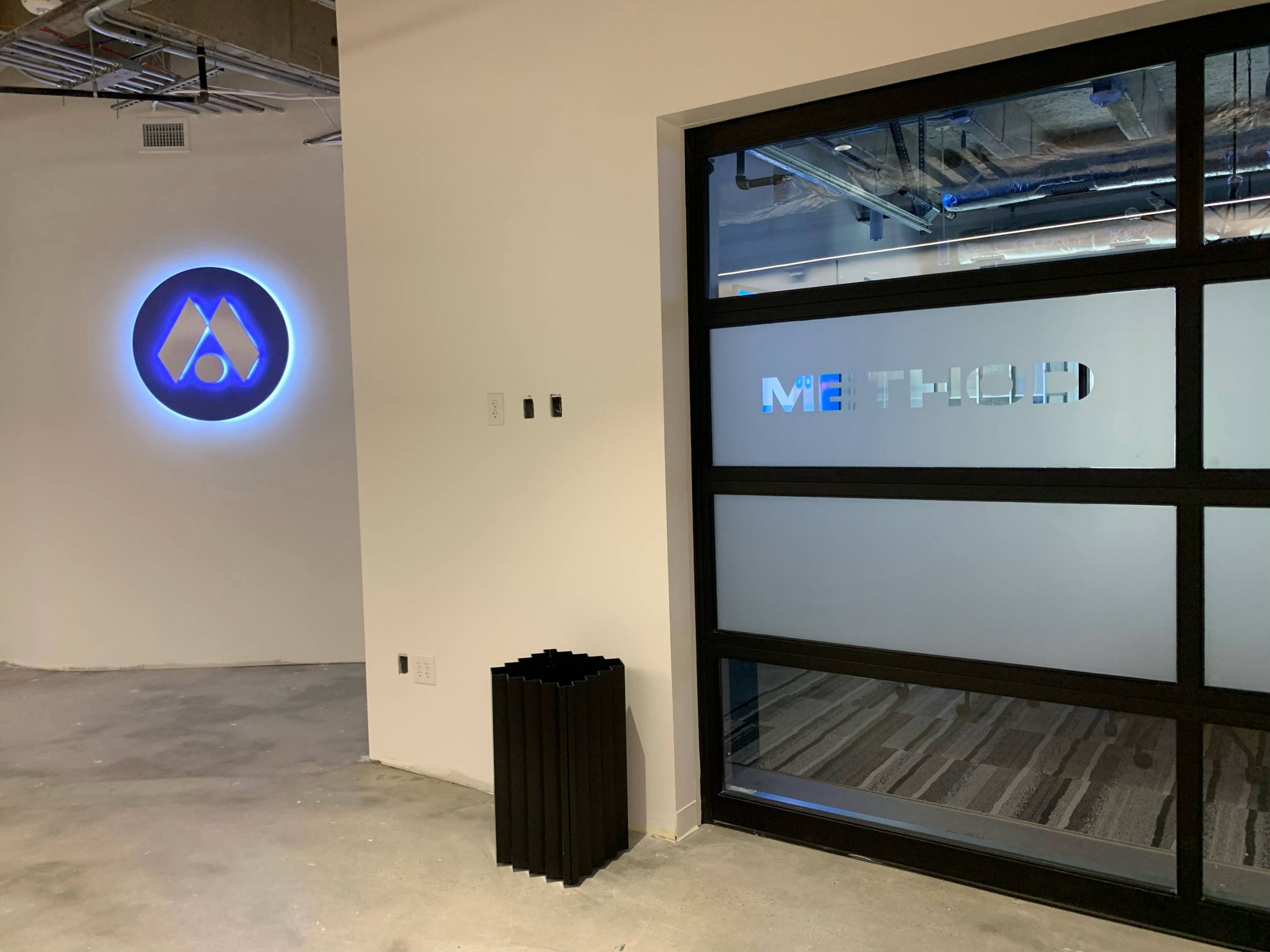
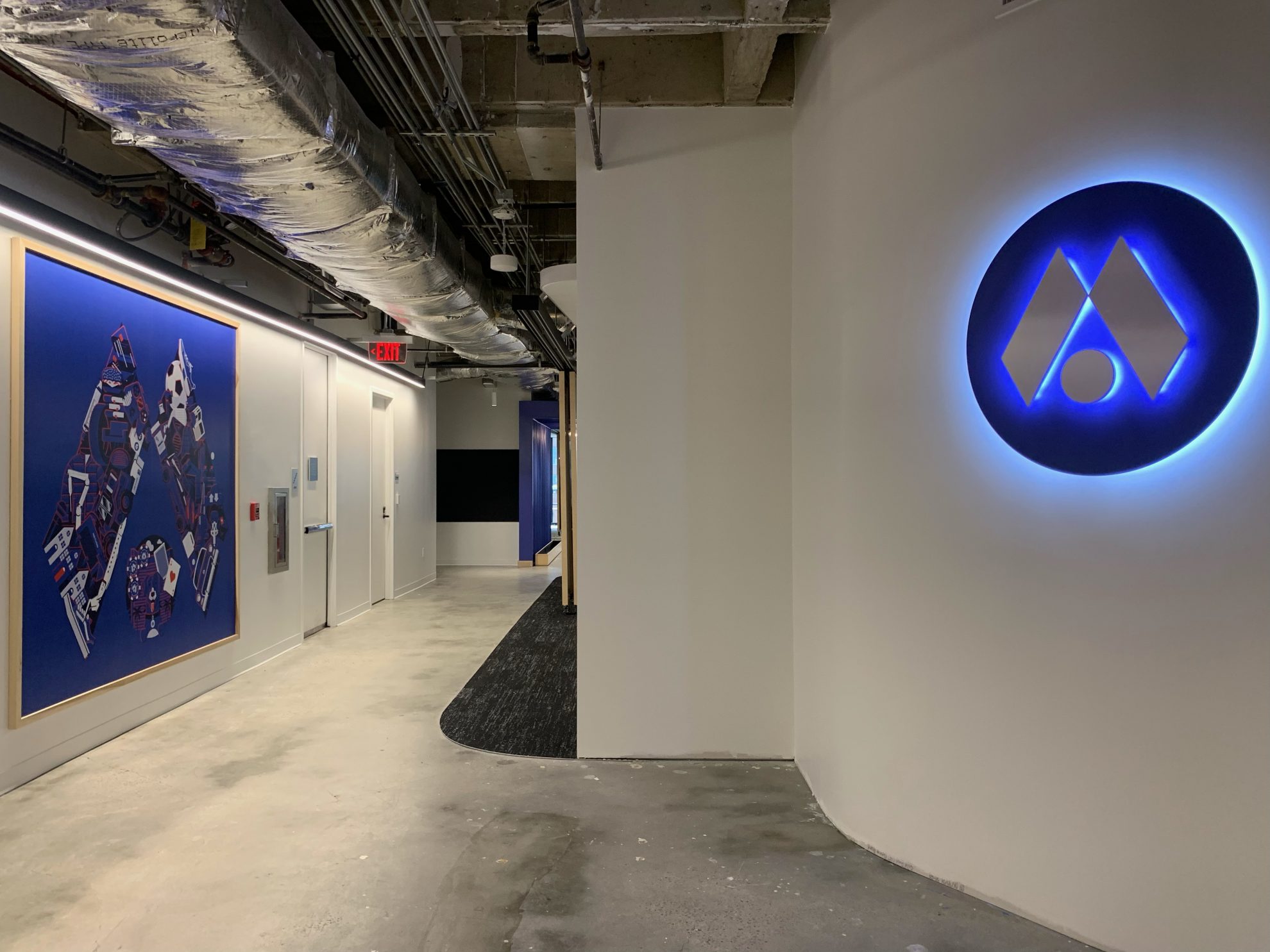
Use illumination to create a clear focal feature where identity or another important message deserves additional visual emphasis. Backlit Signs can anchor a branded area while surrounding graphics and displays handle supporting communication.
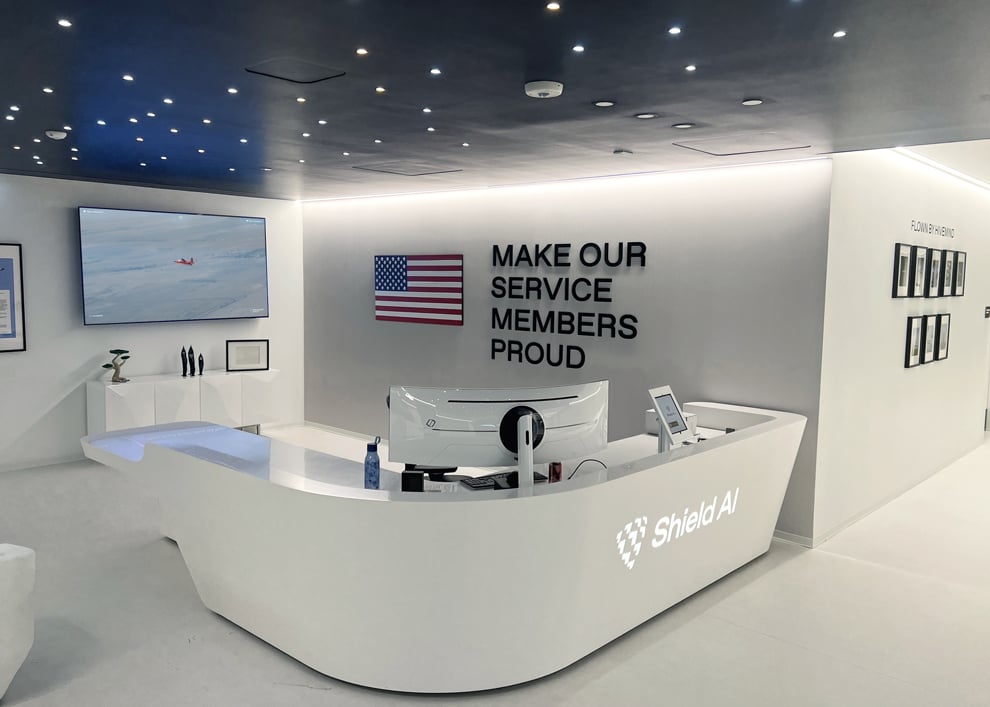
Add depth, layering, and architectural presence with panels or graphics mounted away from the wall. Standoff Mounted Signs can combine printed content, photographs, lettering, or recognition information without forcing the entire presentation into one flat surface.
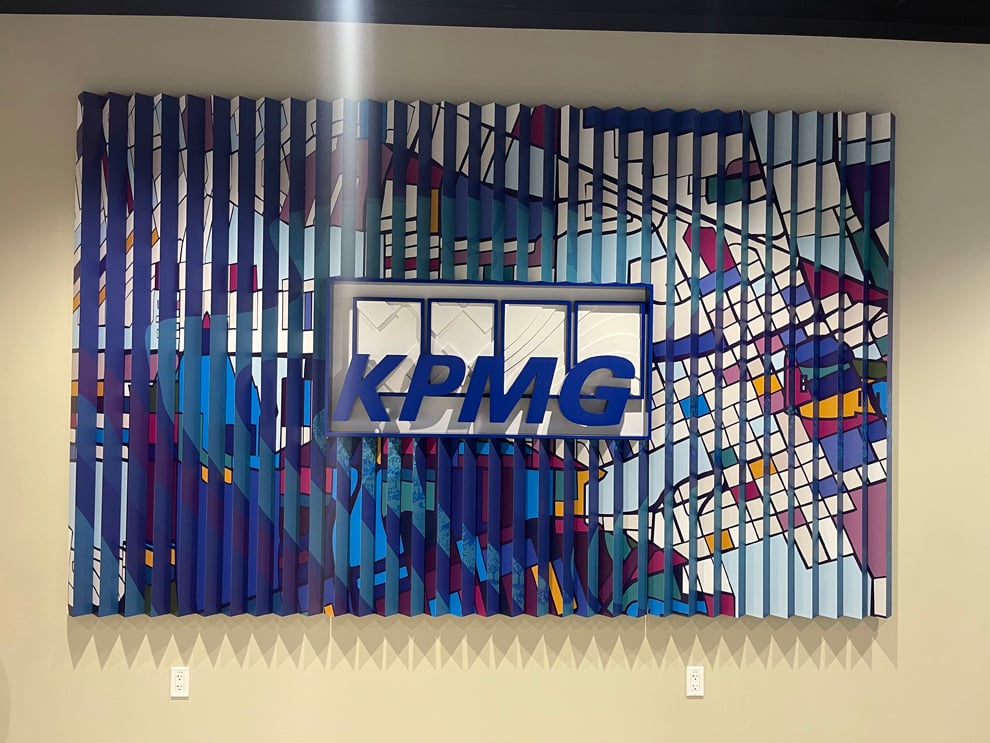
Establish identity at one of the most important arrival points in the workplace. A Lobby Sign can create the primary brand moment at reception while the rest of the Commercial Interior Graphics program extends that identity deeper into the space.
If your Raleigh or Research Triangle workplace has several branding, communication, privacy, recognition, or visual priorities that need to work together, Heritage can help you organize the next decisions. Use Get Started Now to share the location, goals, target date, anticipated investment, and any available plans, photographs, brand standards, or reference materials. You do not need to select every product before contacting us. Heritage can review what you want the space to accomplish, identify the site information still needed, and explain the next practical step toward environmental graphic design, production, fabrication, and professional installation.
A strong Commercial Interior Graphics program does not ask every feature to say the same thing. One element may establish identity the moment someone enters. A large wall can carry culture, history, or a visual story that deserves more space. Glass can provide privacy while reinforcing the brand. Recognition displays can celebrate people or achievements, while changeable components make room for information that will evolve. Dimensional or illuminated features can create emphasis where a message needs greater visual priority.
Heritage helps determine which job belongs to which part of the interior. That means considering what people will see first, how long they will view it, whether the content should change, how nearby features relate, and what the architecture can support. Materials, scale, mounting, lighting, fabrication, and installation are selected to serve those decisions.
Not every workplace needs every type of feature. The value is in choosing the right combination and giving each component a reason to be there. When the roles are clear, the individual pieces can reinforce one another without making the interior feel crowded or repetitive.
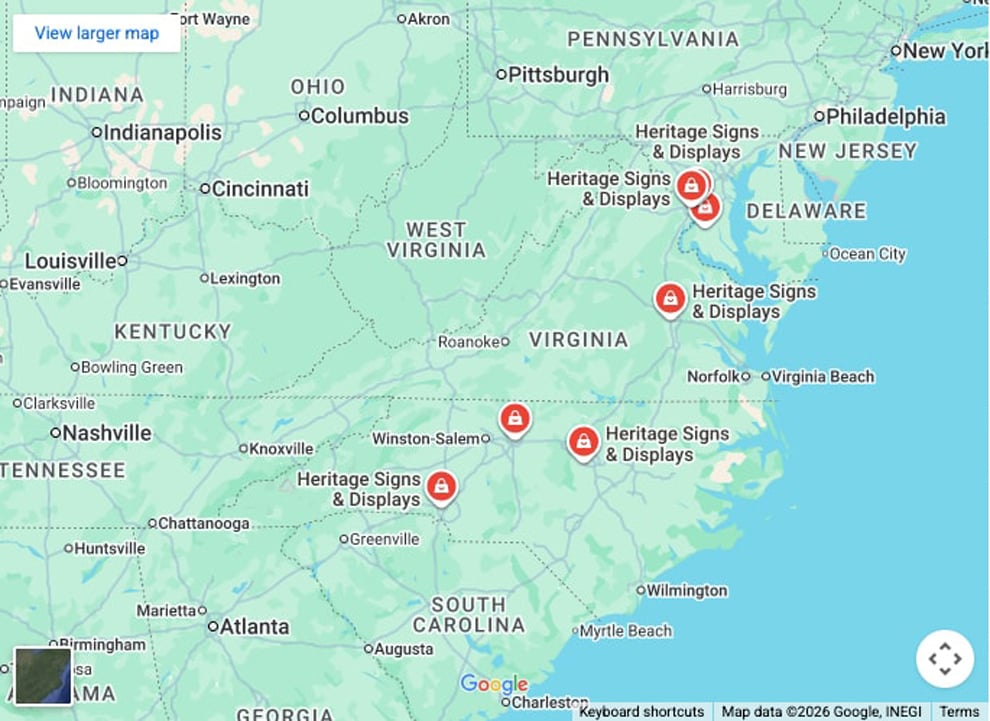
Heritage's Raleigh office gives Research Triangle clients local access to the people who help turn a complex interior graphics plan into a workable site-specific project. The Raleigh team supports client meetings, discovery, required site surveys, field verification, installation planning, professional installation, follow-through, and nearby support across Raleigh, Durham, Chapel Hill, Cary, Morrisville, Research Triangle Park, and the surrounding market.
That local field knowledge matters on Commercial Interior Graphics projects because several features may need to relate to the same walls, glass areas, focal points, circulation paths, mounting conditions, or occupied work zones. Seeing the property helps Heritage understand those relationships before production and gives the Project Manager better information for materials, dimensions, sequencing, and installation planning.
Raleigh support connects with Heritage's broader Carolinas production and fabrication resources, including the Charlotte headquarters and primary specialty production facility. For organizations with locations beyond the Research Triangle, Heritage can coordinate work across the Carolinas and Mid-Atlantic and draw on the broader Heritage network while adapting the physical solution to the architecture, access, conditions, and requirements of each site.
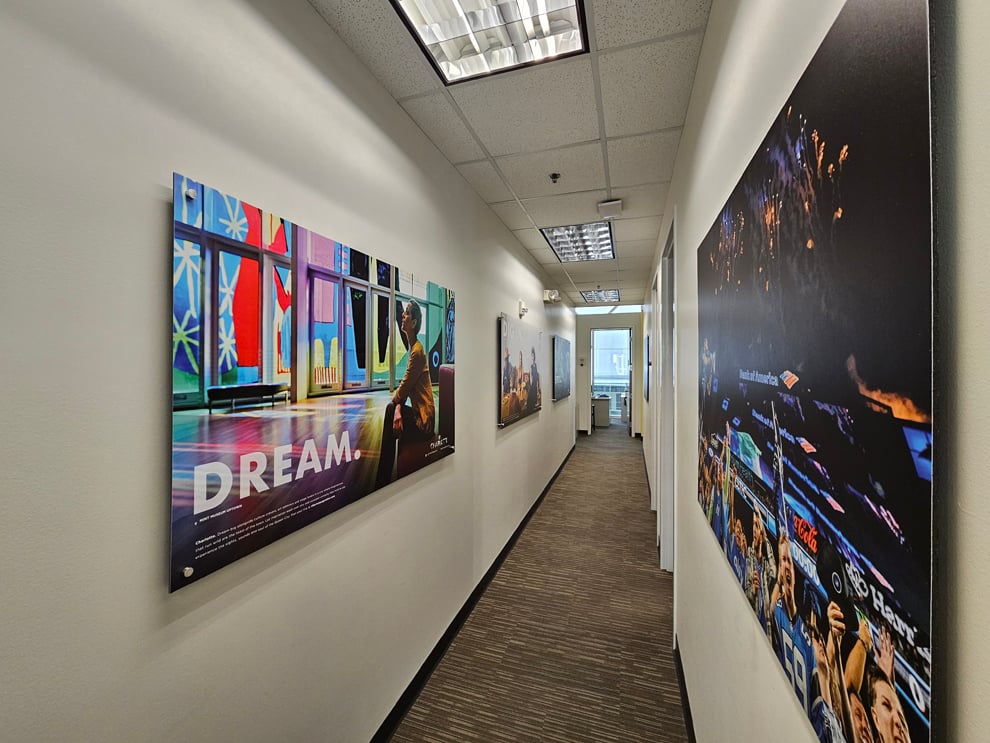
Environmental graphic design helps turn a client's communication goals into decisions about what should appear where and how people will encounter it. Heritage starts with the audiences, messages, priorities, and experiences the workplace needs to support. From there, we help determine where identity should lead, where culture or history deserves more space, where privacy or direction is needed, and where recognition or changing information should become part of the interior.
The discipline connects those communication goals to scale, sightlines, architecture, materials, color, fabrication, placement, and installation realities. Those technical factors matter because they determine whether an idea can become a clear, durable, and appropriately placed physical feature. They support the message rather than replacing it.
Heritage can develop environmental graphic design concepts directly with client stakeholders or collaborate with architects, interior designers, branding agencies, and other professional partners. When another team controls the broader architectural or interior direction, Heritage focuses on protecting that approved intent as it moves into production, fabrication, project management, and professional installation.
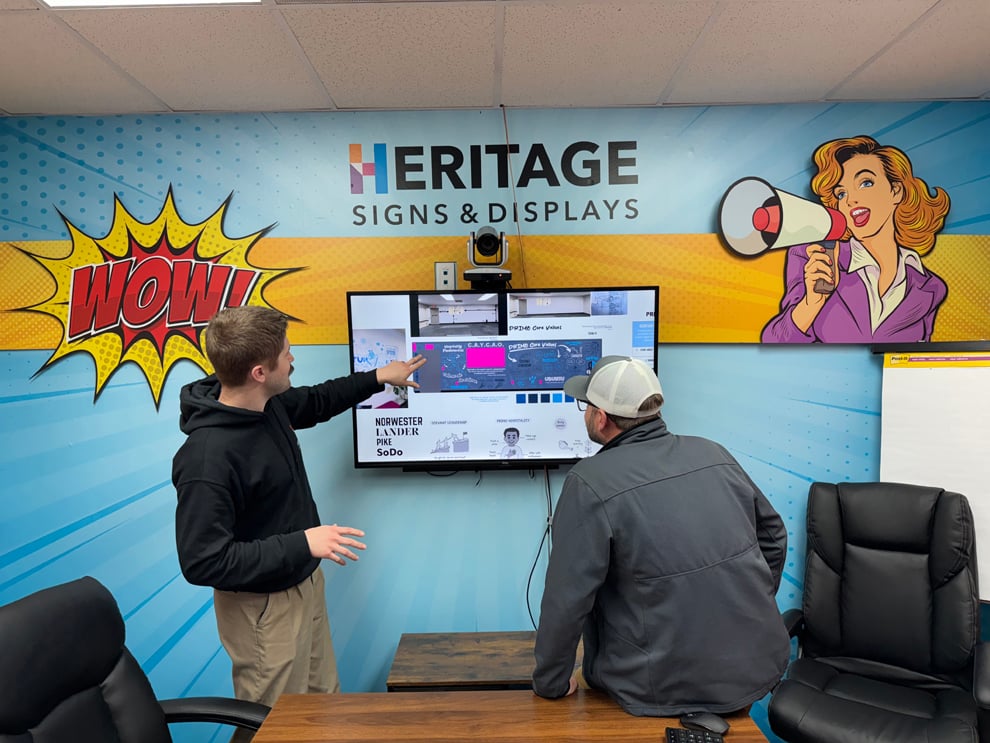
Installation day should not be the first time the installation team encounters the project. Heritage's own full-time professional installers are Heritage team members, trained and led by Heritage, who carry forward the site, design, production, fabrication, access, sequencing, and schedule knowledge developed earlier. For Raleigh and Research Triangle work, Heritage's local field and installation resources connect that project knowledge to the actual site.
That context matters when several components must align with the architecture and with one another. Wall graphics may need to align precisely around architectural features. Dimensional or standoff mounted elements require accurate placement and secure mounting. Glass graphics depend on precise positioning. Displays or illuminated features may involve sequencing, access, and coordination with surrounding finishes. Heritage prepares for those conditions before installation and communicates when field conditions differ from what was expected.
Our installers work carefully in occupied workplaces, protect nearby surfaces, and focus on fit, alignment, finish, and orderly execution. Heritage installs signs, graphics, and displays that Heritage produces, fabricates, procures, or manages. Keeping installation within the same accountable Heritage team helps protect the approved result through final installation.
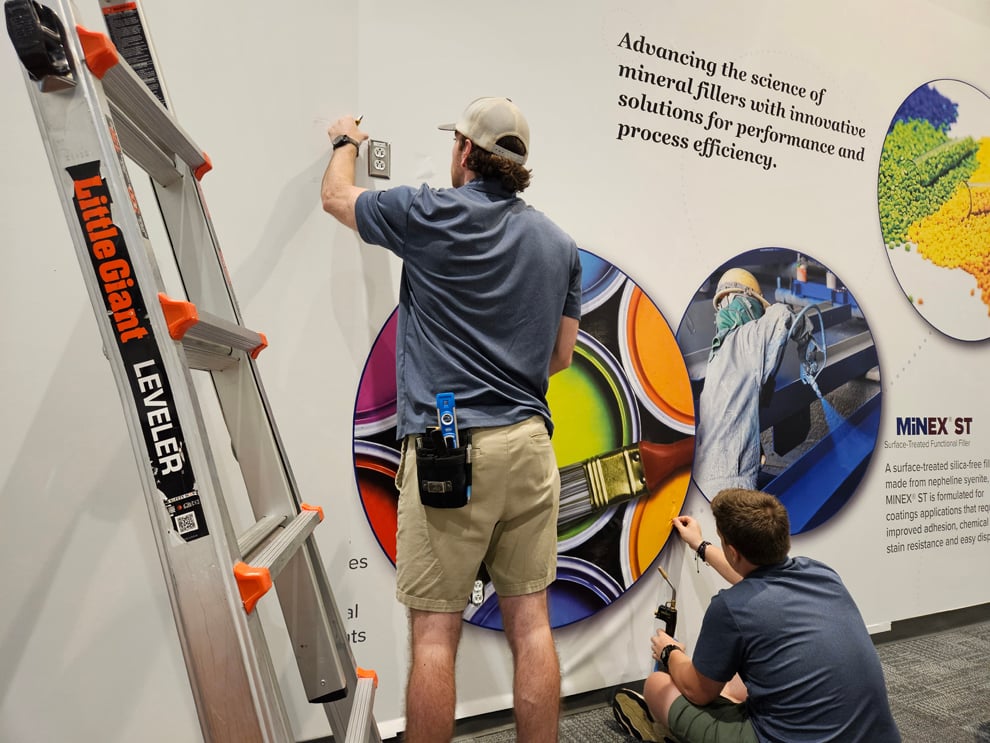
Commercial Interior Graphics planning should resolve results, approvals, site conditions, timing, and investment before production. For Heritage-installed work, the required site survey combines client discovery with field verification.
When adhesive wall graphics are included, painted walls must be properly prepared and fully cured. About four weeks is useful planning guidance for many paints, but manufacturer cure requirements and site conditions control readiness. Paint may outgas during curing, and vinyl installed too soon can contribute to bubbles, blisters, lifting, or premature adhesion failure. Testing cannot prove the hidden bond among paint, primer, and drywall, and normal lifting or repositioning of the vinyl can reveal a weak condition. If paint or primer peels, pulls away, or otherwise releases during testing, positioning, repositioning, or installation, Heritage stops. The client or property owner arranges and pays for repair, priming, repainting, full cure, and restoration before Heritage returns.
Later removal is separate. For replacements, remove existing graphics early enough for the client or property owner to arrange and pay for restoration, repainting, and full cure.
Many Heritage projects involving production and professional installation range from $10,000 to more than $200,000.
Commercial Interior Graphics bring multiple visual branding elements together inside a workplace so they function as a planned system rather than unrelated purchases. A program may include graphics, dimensional signs, displays, photographs, recognition features, illuminated elements, privacy treatments, or content designed to change over time. The defining value is how the pieces divide the communication work and support one another across the interior.
A coordinated Commercial Interior Graphics program keeps the workplace from becoming a collection of individually good signs and graphics that do not work together. Heritage starts with the organization's brand, culture, communication goals, and the experience it wants employees and visitors to have. We then help determine which physical elements can communicate those ideas effectively and how they should relate throughout the workplace.
Heritage also provides the turnkey execution behind that plan. One dedicated Project Manager connects environmental graphic design, production, fabrication, and professional installation through one accountable Heritage team. The client is not left managing separate providers for different parts of the project, and the approved brand and communication direction is less likely to become fragmented through repeated handoffs.
The combination depends on what the workplace needs to communicate effectively, how people use the space, and which messages deserve the greatest emphasis. Wall graphics may carry culture or storytelling while dimensional lettering anchors identity, glass graphics provide privacy, a wall display handles recognition, or a backlit feature creates emphasis. Heritage recommends the combination around the communication goal, architecture, available surfaces, visual hierarchy, long-term use, and installation conditions rather than assuming every project needs the same components.
Yes. Heritage uses environmental graphic design concepts to determine what people need to notice, understand, or experience and which part of the interior can carry that message effectively. We consider audience, viewing distance, sightlines, privacy, architectural context, brand standards, future updates, fabrication, and installation conditions so the recommendation begins with the communication need instead of asking the client to choose products without context.
A Heritage site survey is required when the project will ultimately include Heritage professional installation. It combines client discovery with field verification of actual dimensions, surfaces, access, existing conditions, mounting requirements, and installation logistics. That information helps the Project Manager, designers, production team, fabricators, and installers make decisions from the same site record instead of relying only on plans, photographs, or assumptions.
One dedicated Project Manager serves as the client's consistent Heritage point of coordination. The Project Manager keeps project goals, approvals, site information, brand standards, production expectations, schedule, and installation planning connected as the work advances. That continuity becomes especially useful when several stakeholders or physical elements are involved because the client does not need to repeatedly rebuild project knowledge through unnecessary handoffs.
Heritage's own full-time professional installers install our Commercial Interior Graphics projects. They are Heritage team members who are trained and led by Heritage, and they receive the site survey, design, production, fabrication, access, sequencing, and schedule information developed earlier in the project. Raleigh and Research Triangle projects are supported by Heritage's local field and installation resources.
One dedicated Project Manager carries that project knowledge into the installation plan so our installers understand not only what they are installing, but why the components were designed, produced, and sequenced the way they were. Keeping professional installation within the Heritage team preserves accountability for fit, finish, property protection, communication, schedule, and the completed result.
Yes. Heritage can develop environmental graphic design concepts directly with client stakeholders or collaborate with the professional team already guiding the broader project. Architects, interior designers, branding partners, and internal marketing or workplace teams can establish the wider direction while Heritage helps translate approved visual intent into producible, fabricated, and professionally installed signs, graphics, displays, and related interior features.
Yes. Heritage can support client locations across the Carolinas and Mid-Atlantic while one dedicated Project Manager preserves project knowledge, brand standards, production expectations, communication history, and installation planning. The physical solution can still adapt to each property's architecture, dimensions, surfaces, access, audience, and schedule. Heritage coordinates the appropriate offices, field resources, production capabilities, and installation support according to the needs and location of each project.
For new Raleigh and Research Triangle workplace interior opportunities generated through the website, Heritage currently plans around an anticipated overall project investment of at least $5,000. That is a new-project planning threshold used to evaluate fit, not a target project size. Many Heritage projects involving production and professional installation range from $10,000 to more than $200,000, depending on scope, design development, materials, fabrication, locations, access, site conditions, schedule, and installation requirements. Use Get Started Now to share the project you are considering and confirm the current regional investment level.
Painted walls must be sound, properly prepared, properly primed and painted, and fully cured before adhesive graphics are installed. About four weeks is useful planning guidance for many paints, although manufacturer cure requirements and actual site conditions determine readiness. During curing, paint may outgas, and vinyl installed too soon can contribute to bubbles, blisters, lifting, or premature adhesion failure.
Testing can show how vinyl performs on the visible painted surface but cannot prove the hidden bond among paint, primer, and drywall. Normal lifting or repositioning of the vinyl can reveal a weak underlying condition. If paint or primer peels, pulls away, or otherwise releases during testing, positioning, repositioning, or installation, Heritage stops rather than making the wall worse. The client or property owner arranges and pays for repair, proper priming, repainting, full cure, and related restoration before Heritage returns.
Adhesive Vinyl Graphics is Heritage's broad family of adhesive-applied graphics used across compatible walls, glass, doors, floors, elevators, displays, and other surfaces. Commercial Interior Graphics has a wider coordination role. Adhesive graphics may be one part of the program, but they can work alongside dimensional signs, backlit features, photographs, recognition systems, standoff mounted displays, and other fabricated elements that perform different jobs within the workplace.
Wall Wraps focus on architectural-scale wall transformation through substantial wall coverage, murals, imagery, storytelling, culture, history, or recognition. Commercial Interior Graphics considers how several branded visual elements work together throughout an interior. A Wall Wrap can become one major feature within that broader program while glass graphics, dimensional signs, displays, photographs, illuminated features, or other elements perform different communication roles elsewhere in the workplace.
Yes. Changeable content can be planned into the program when names, achievements, campaigns, schedules, photographs, donor information, milestones, or other messages will evolve. Heritage can help distinguish the features that should remain permanent from the parts designed for future updates. Making that decision early can reduce unnecessary replacement and keep temporary information from controlling the construction of long-term branded elements.
Yes. Privacy graphics can be an important part of a coordinated interior branding program because they solve a functional need without treating the glass as separate from the rest of the workplace. Heritage can use frosted vinyl, privacy film, patterns, bands, logos, or other appropriate treatments to create the level of visual separation the space needs while preserving daylight and supporting the brand.
Conference rooms, private offices, glass partitions, and doors can therefore contribute to the same visual program as wall graphics, dimensional signs, displays, and other interior features. Heritage helps determine where privacy is needed, how much visual separation is appropriate, and how the glass treatment should relate to the surrounding branded environment.
Some frosted vinyl and privacy film products use wet installation. Residual application moisture can temporarily create haze, cloudiness, streaking, small pockets, or an uneven appearance while the material dries. That dry-out period may take from days to several weeks depending on the product, glass, temperature, humidity, sunlight, and site conditions.
Not every glass graphic is wet-applied. If the finished appearance matters for an opening, photography session, executive meeting, presentation, or another important date, tell Heritage early so the installation schedule can account for the expected dry-out period.
Yes. Even careful removal can reveal or pull away weak paint, primer, or drywall facing. Heritage handles removal deliberately to limit avoidable damage, but damage-free removal cannot be guaranteed. When replacement graphics are planned, early removal gives the client or property owner time to arrange and pay for any needed repair, proper priming, repainting, and full cure before Heritage returns with the new graphics.
Durability depends on the individual component and how it will be used. A dimensional lobby feature, adhesive wall graphic, glass treatment, recognition display, and changeable panel do not experience the same contact, cleaning, exposure, or mounting conditions. Heritage evaluates the intended application and recommends materials, finishes, protective systems, construction methods, and installation approaches suited to that feature rather than applying one durability claim to the entire program.
No. Heritage does not provide installation-only service for customer-provided signs or graphics. Measurements, material selection, production accuracy, fit, mounting requirements, replacement responsiveness, and installation planning all affect the quality and schedule of the finished result. By installing elements Heritage produces, fabricates, procures, or manages, Heritage can maintain accountability for the work rather than assuming responsibility for products whose specifications and production history it did not control.
Yes, when the complete scope can be accomplished responsibly within the available time. Heritage evaluates approvals, materials, site readiness, production and fabrication requirements, access, and installation capacity before committing to the schedule. If the original scope cannot realistically fit the date, Heritage communicates that early and works with the client on the strongest practical alternative, such as phasing, resequencing, prioritizing critical areas, or selecting another suitable material or application.
Yes. Phasing can be useful when a workplace remains occupied, construction reaches areas at different times, approvals happen in stages, or a multi-location program follows a controlled rollout. Heritage can help determine what should be completed first and how later work should relate to the established visual direction. Planning the phases together helps keep short-term scheduling decisions from producing inconsistent materials, messaging, or installation choices later.
Heritage's Raleigh location is a client-facing office and local field and installation hub. It supports Raleigh, Durham, Chapel Hill, Cary, Morrisville, Research Triangle Park, and the surrounding Research Triangle through client meetings, discovery, site surveys, field verification, installation planning, professional installation, follow-through, and nearby support. Those local resources connect with Heritage's broader Carolinas production and fabrication capabilities as the project requires.
Look first at the places where people need to recognize the organization, understand its story, experience its culture, gain privacy, navigate the workplace, or interact with information. That can include reception areas, corridors, conference rooms, glass-enclosed offices, employee spaces, recognition zones, training areas, and other high-value touchpoints. Heritage begins with the communication purpose rather than assuming every available wall or surface needs branding.
It is especially useful when several visual decisions need to work together, such as during a rebrand, relocation, renovation, headquarters refresh, culture initiative, recognition program, workplace expansion, or multi-location rollout. These projects often involve multiple stakeholders, messages, spaces, and physical elements. Coordinated planning helps the client establish priorities early and reduces the risk of solving one area in a way that creates problems or visual conflicts elsewhere.
Yes. Heritage can coordinate branded directional signs, room identification, zone graphics, and visual cues with the surrounding interior program when wayfinding is part of the project. Heritage does not independently establish architectural, ADA, accessibility, code, or compliance requirements. When regulated requirements apply, the client and the appropriate responsible professional establish those requirements, and Heritage can produce and install the approved physical elements within its scope.
Start with the outcome you want from the space and whatever information is already available. Helpful materials can include brand standards, logos, floor plans, photographs, drawings, content, reference examples, desired timing, installation location, anticipated investment, and the people involved in approvals. You do not need to select every sign or graphic first. Heritage can use discovery and, for installed work, the required site survey to identify the remaining decisions and field information.
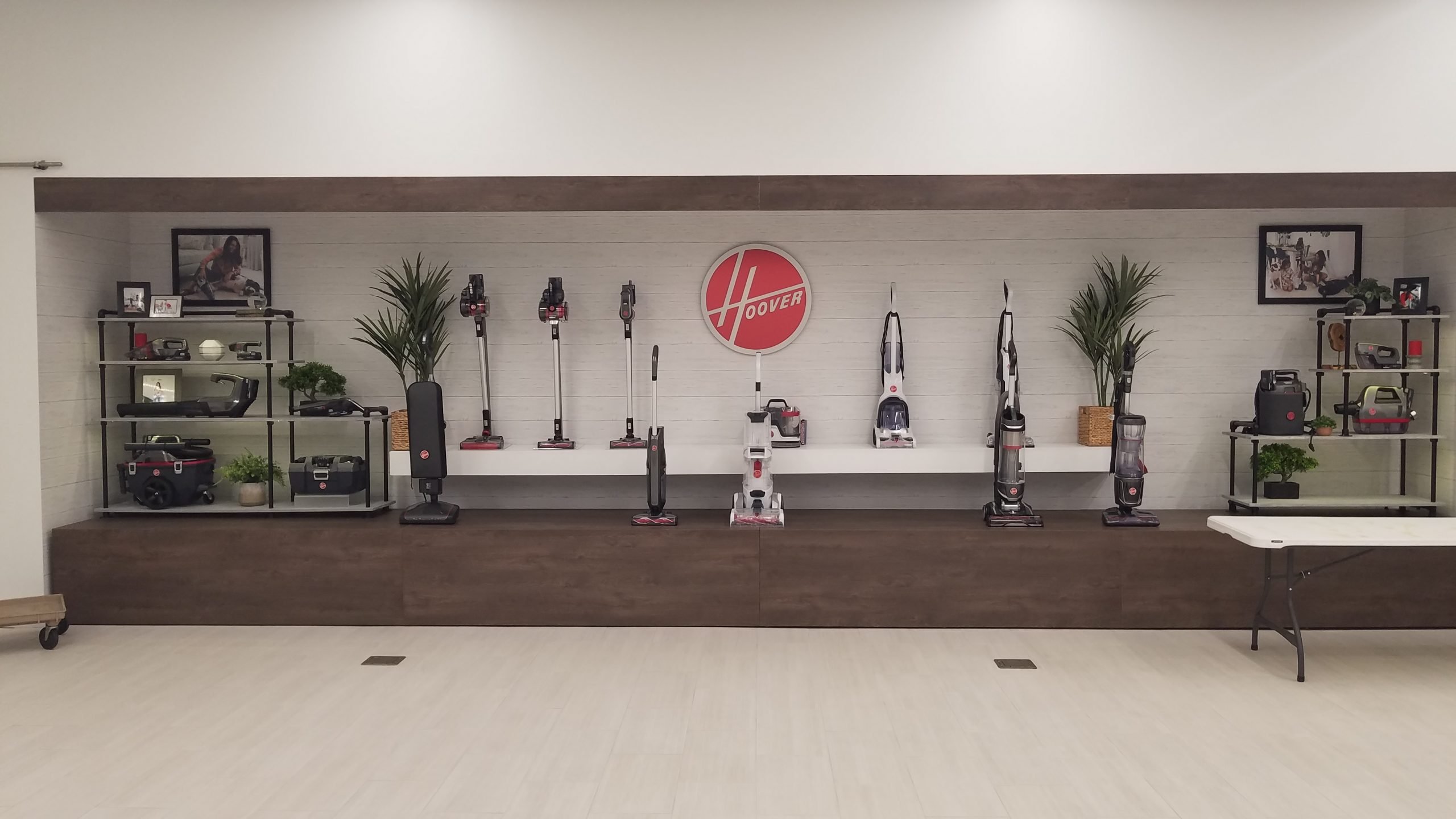
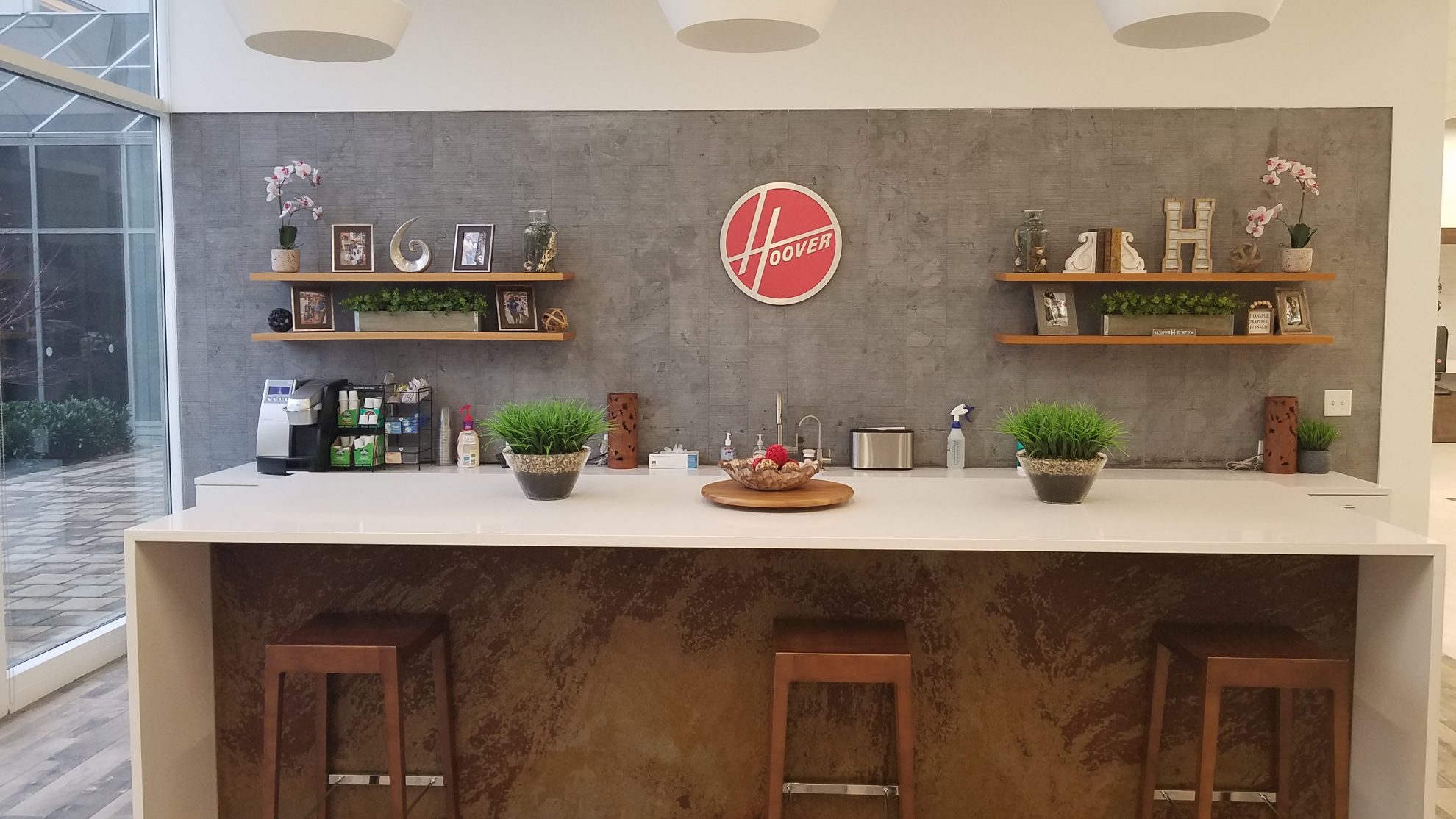
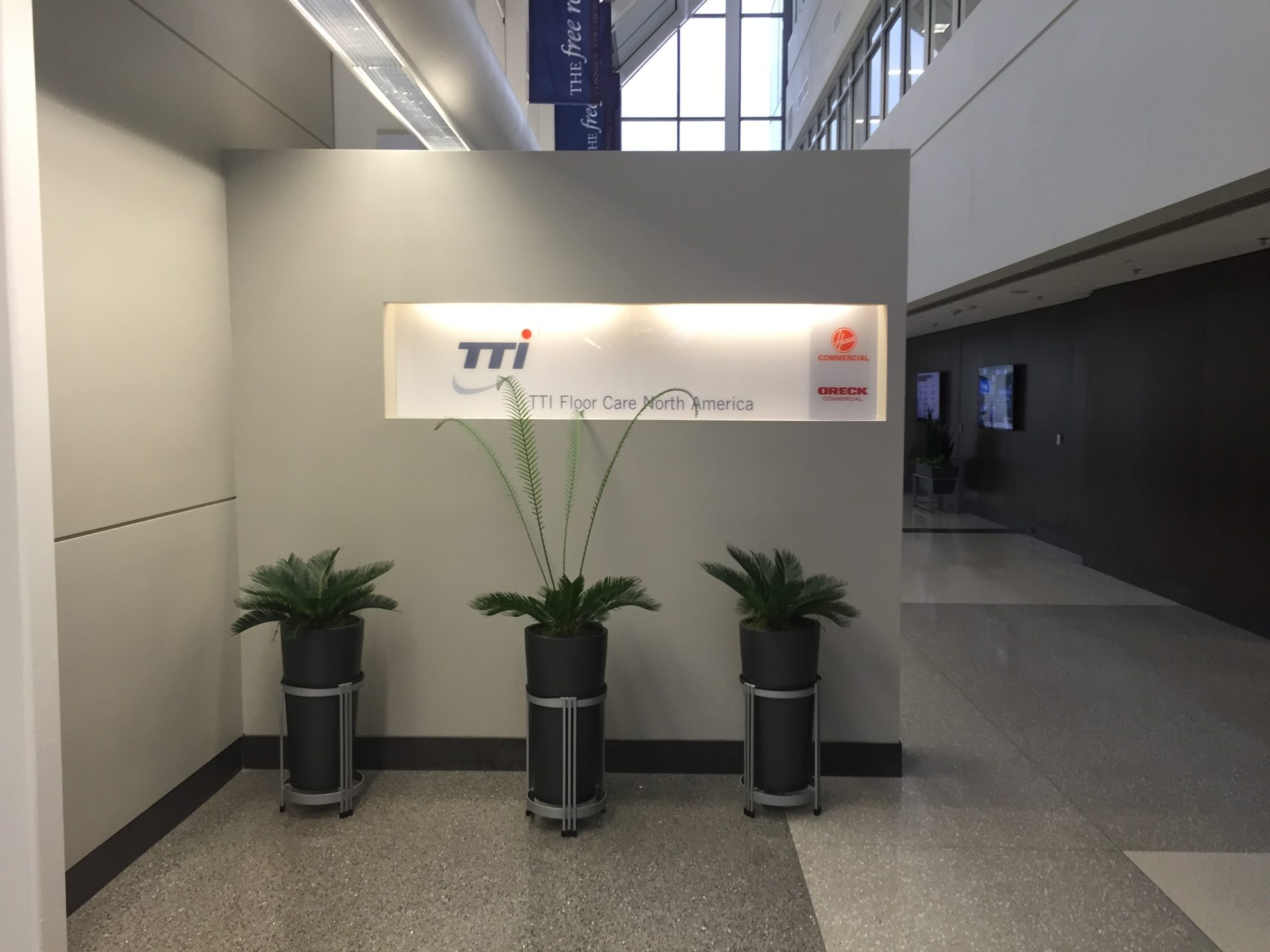
Heritage Signs & Displays collaborated with TTI Floor Care North America to enhance their corporate office. The project included custom frosted vinyl graphics, acrylic signs, dimensional lettering, and LED backlit signs, showcasing the brands Dirt Devil, Hoover, and Oreck. The signage improved office branding, privacy, and aesthetics. Heritage collaborated closely with TTI, ensuring efficient execution and high-quality results, creating an immersive and professional environment that reflects TTI's brand values.
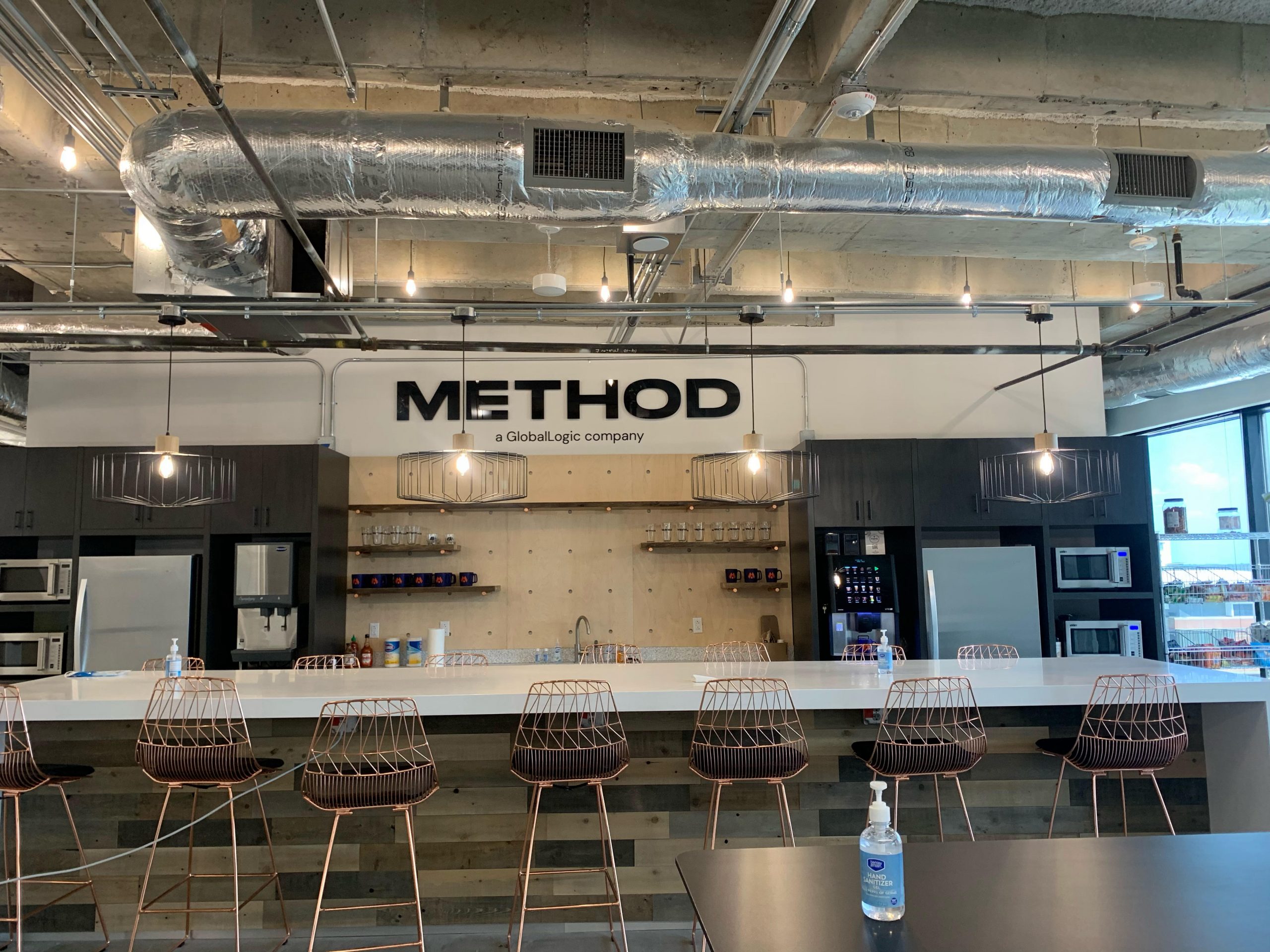
Heritage Signs & Displays' collaboration with Method (formerly Skookum) to rebrand their corporate headquarters. The project included dimensional lettering, wall displays, LED-lit signage, wall wraps, and frosted vinyl, creating an immersive and branded environment. Heritage worked closely with Method's team, ensuring accurate execution and timely delivery. The transformation was completed in August 2021, with Method's employees moving into the revamped space in September. The project reflects Heritage's commitment to quality and collaboration.