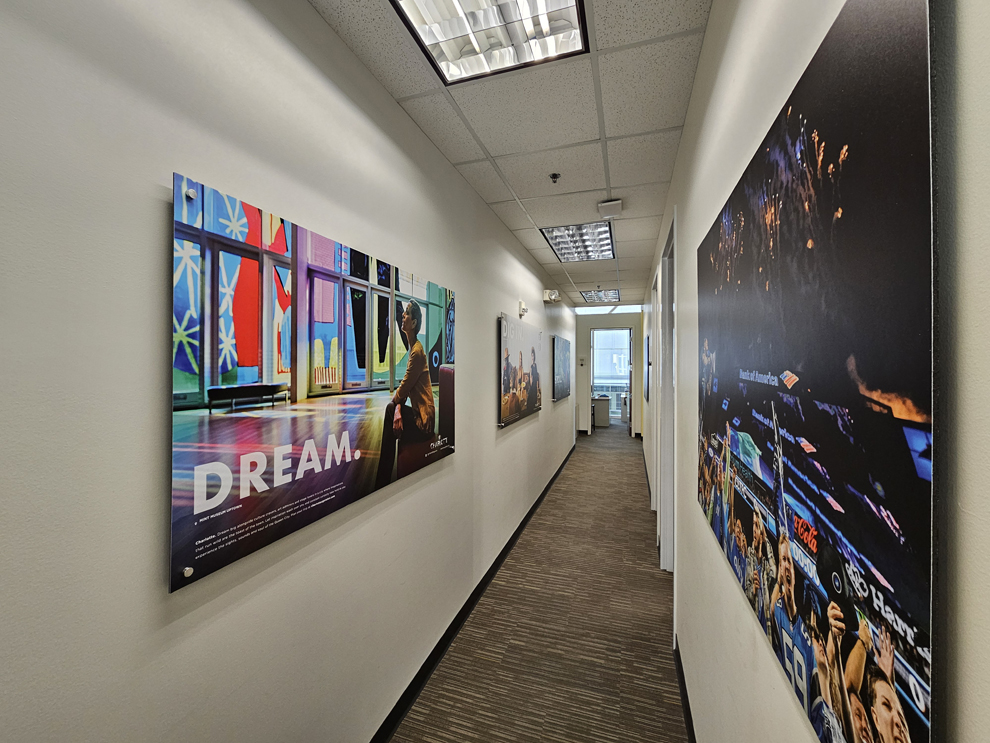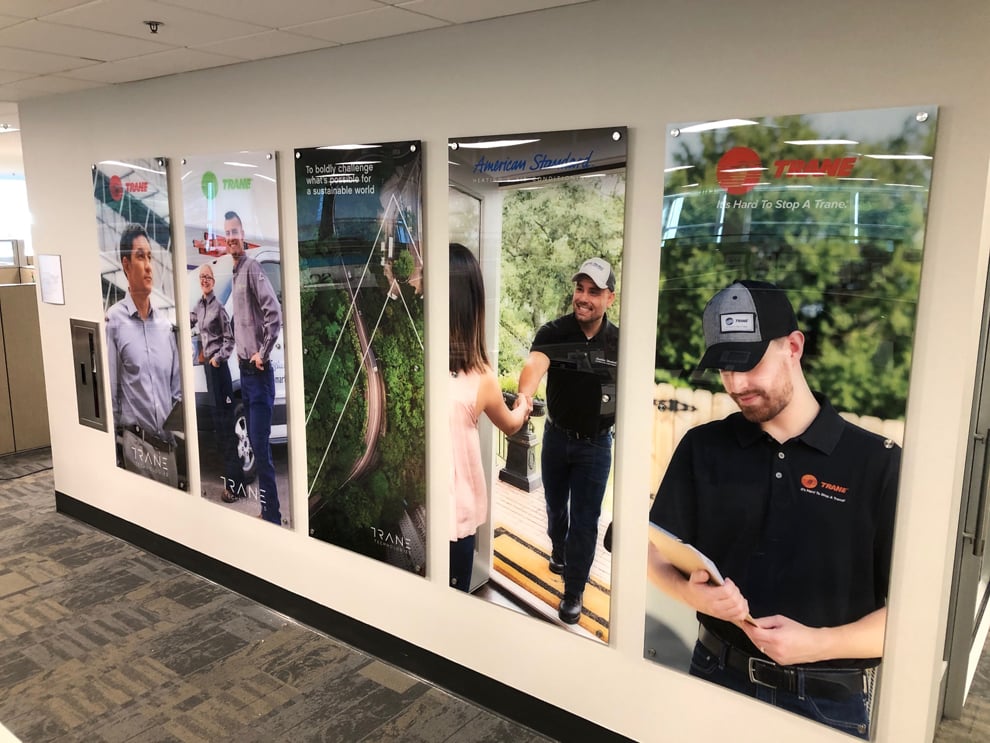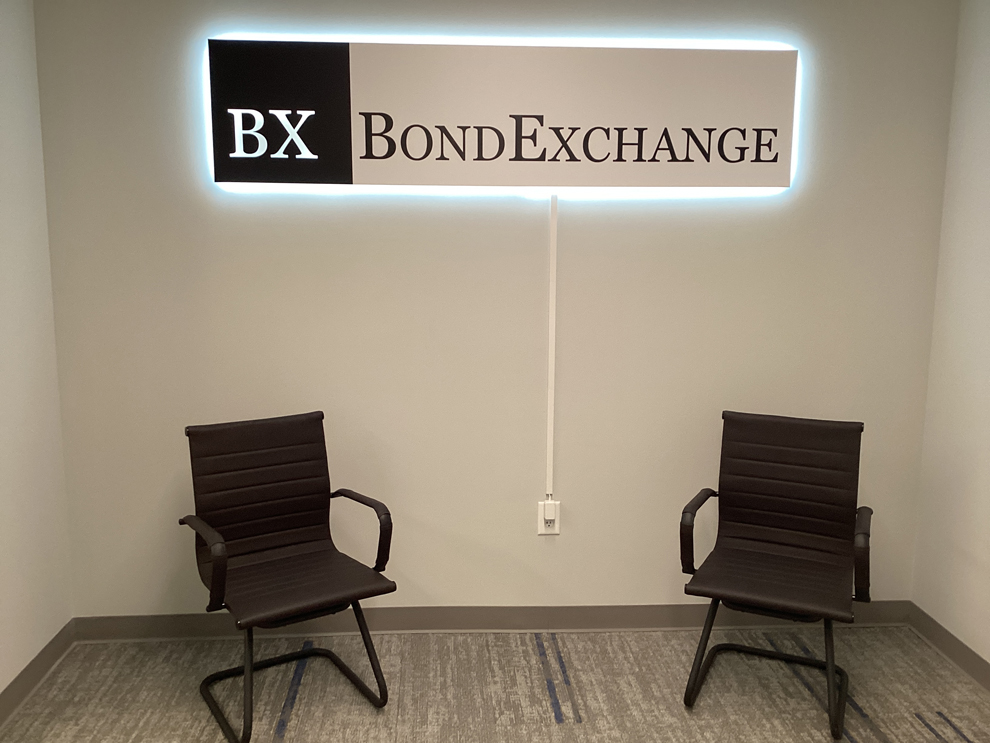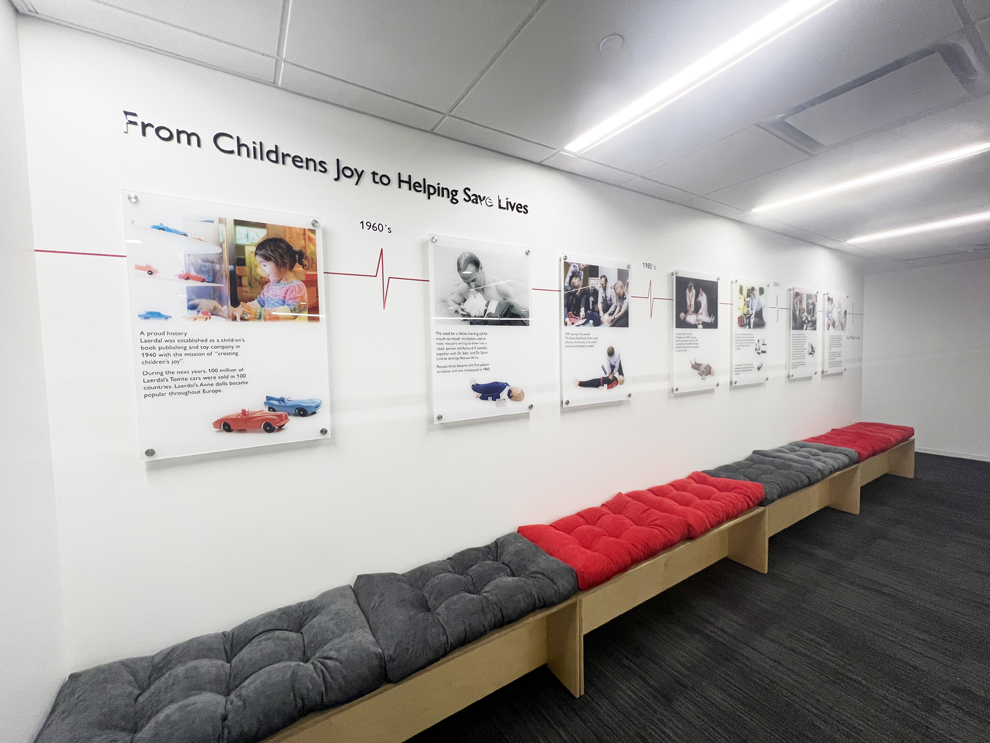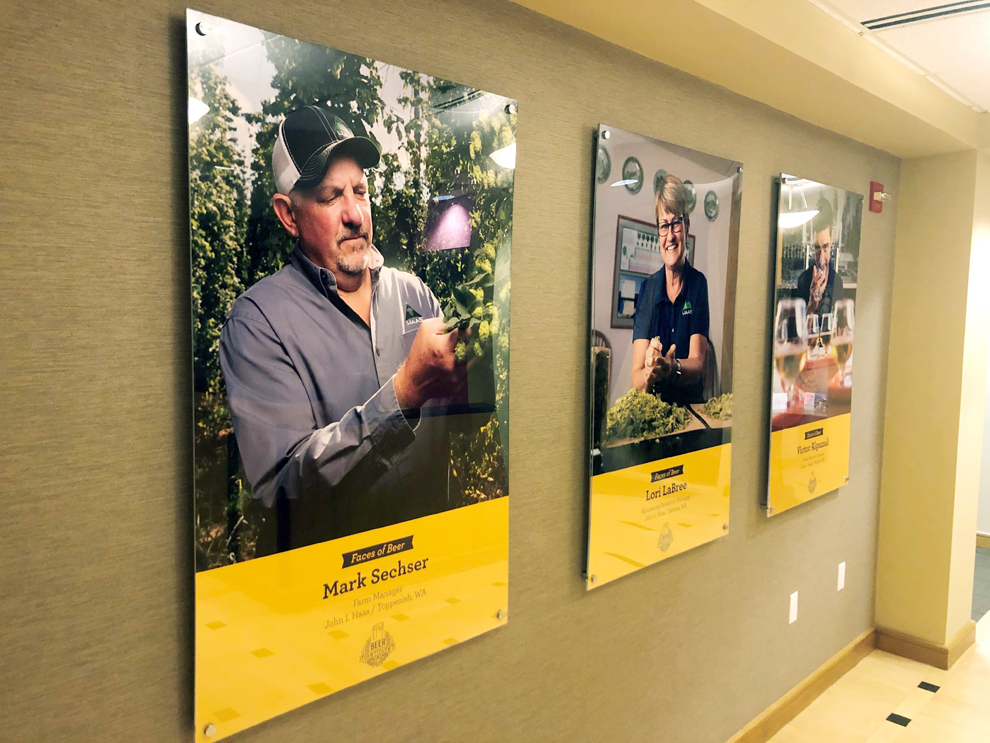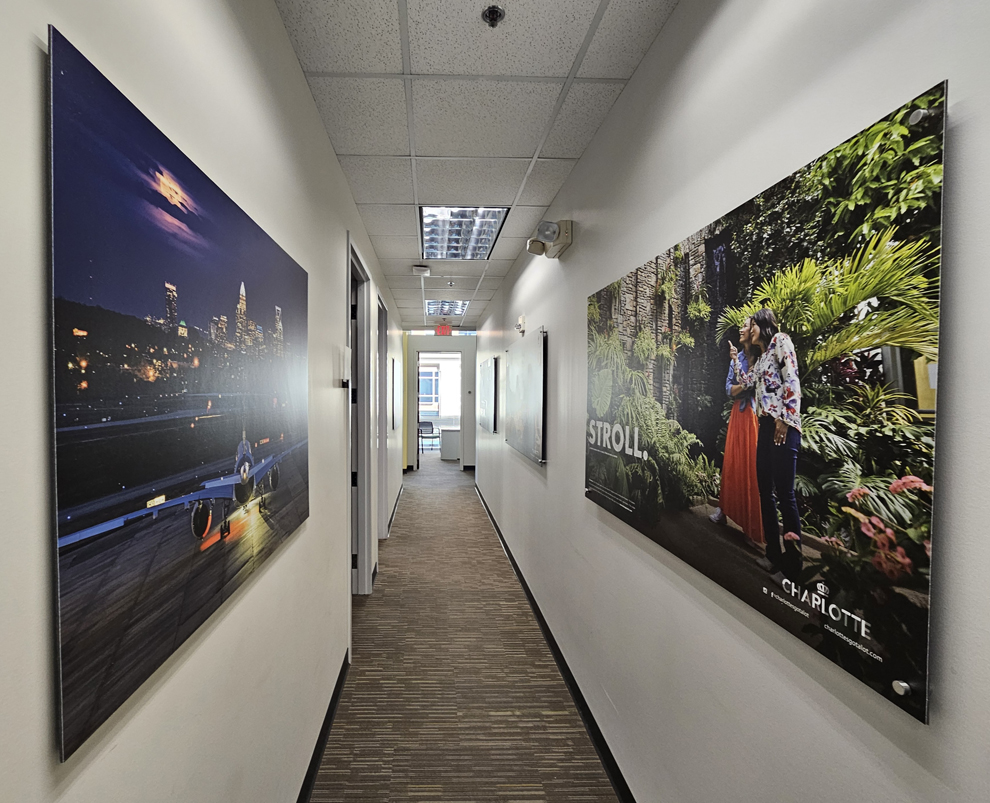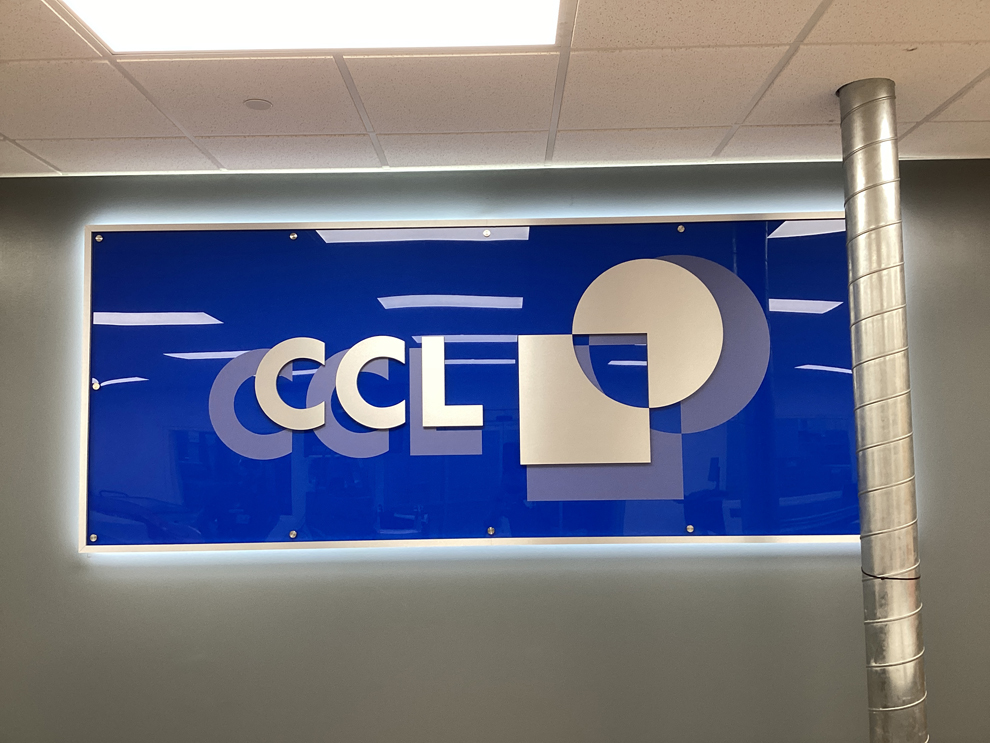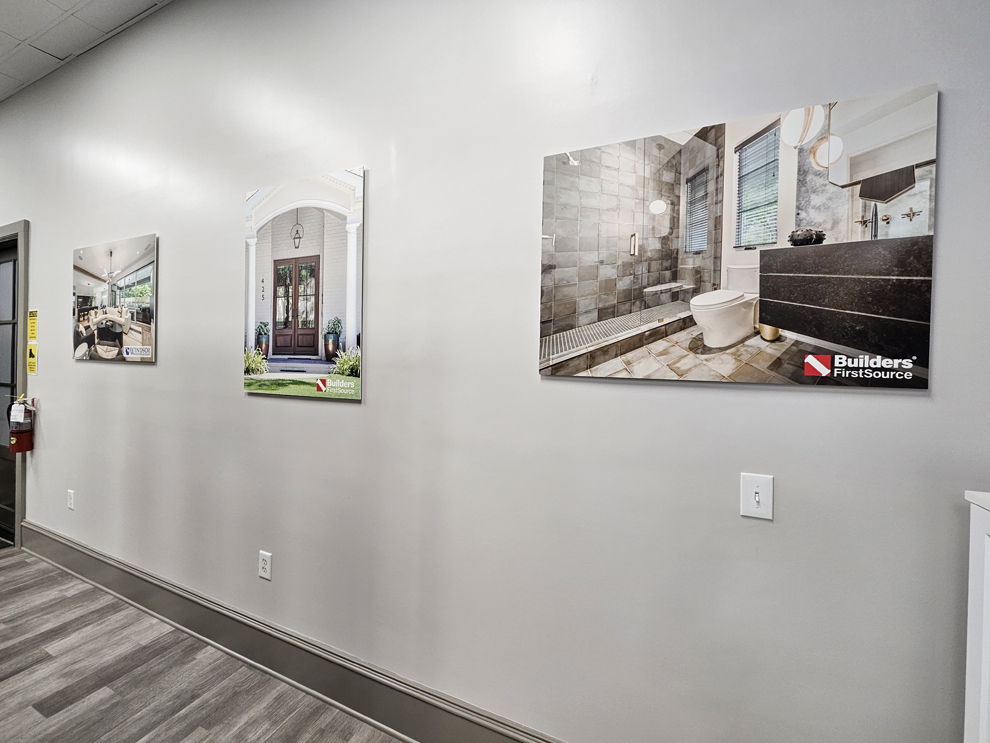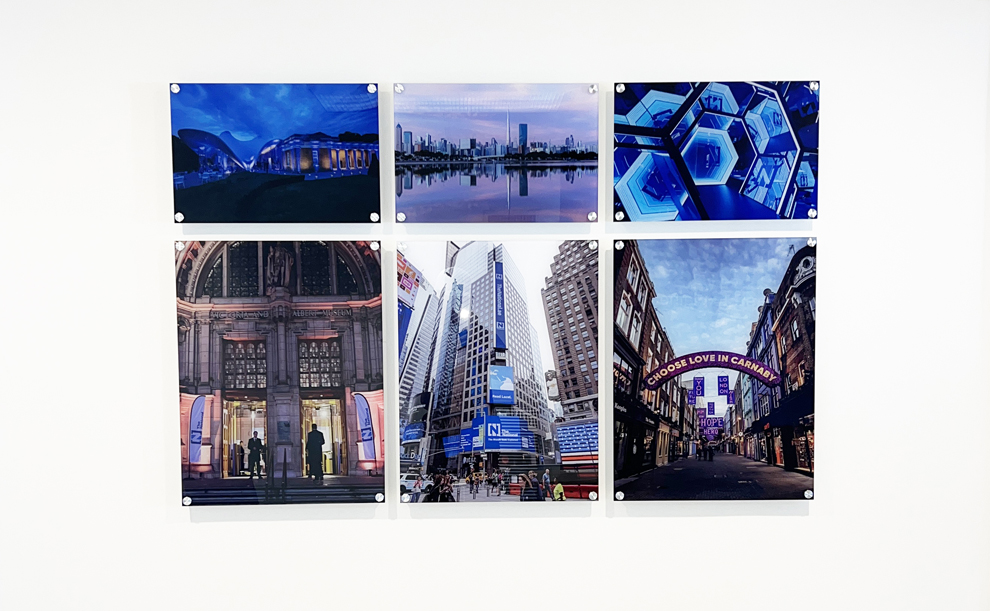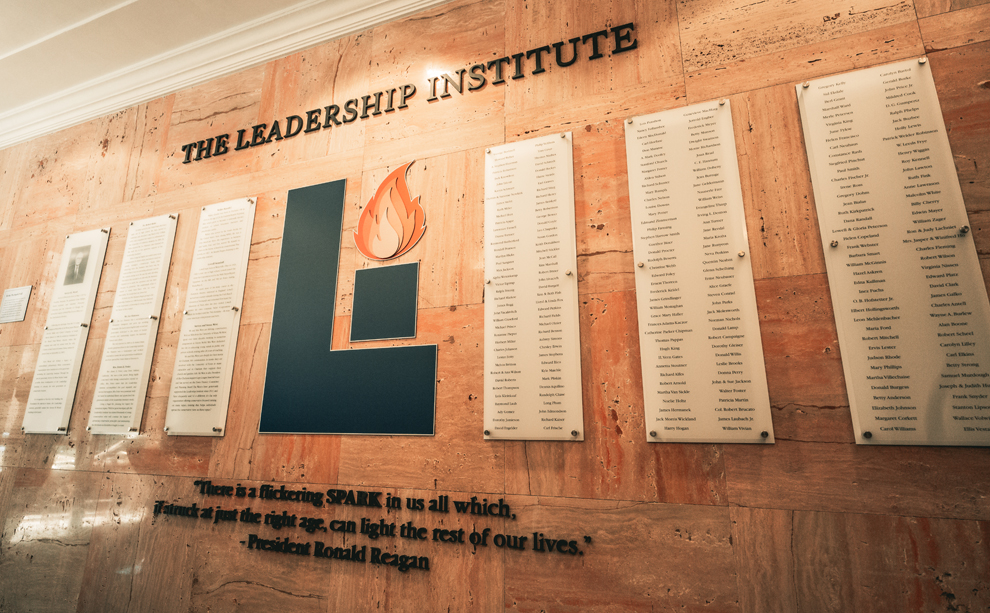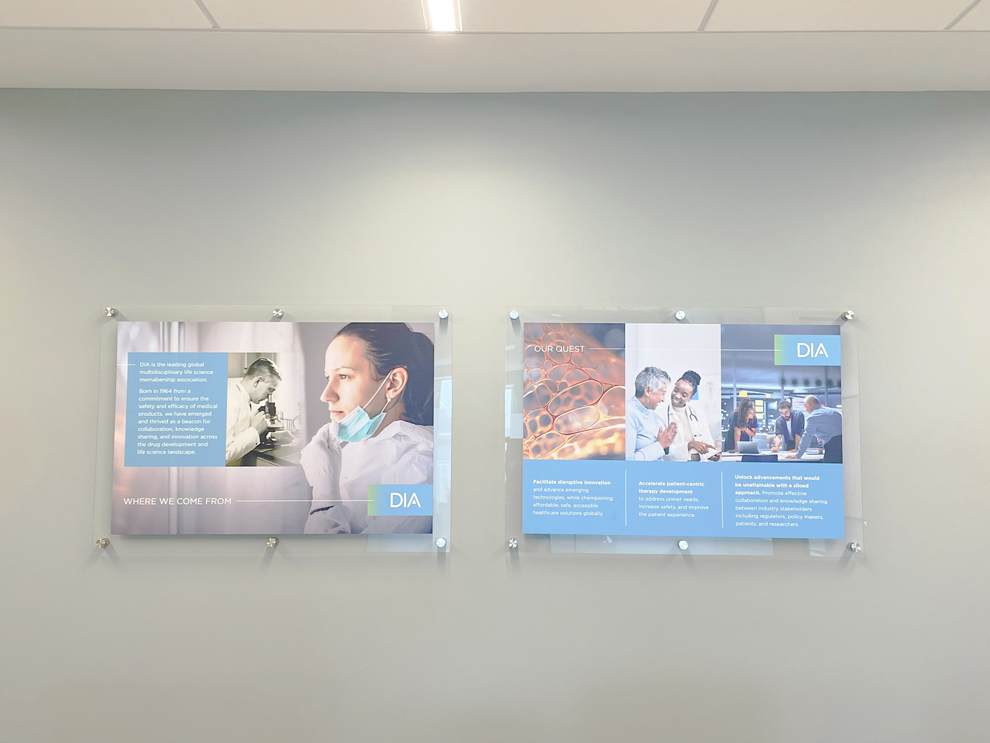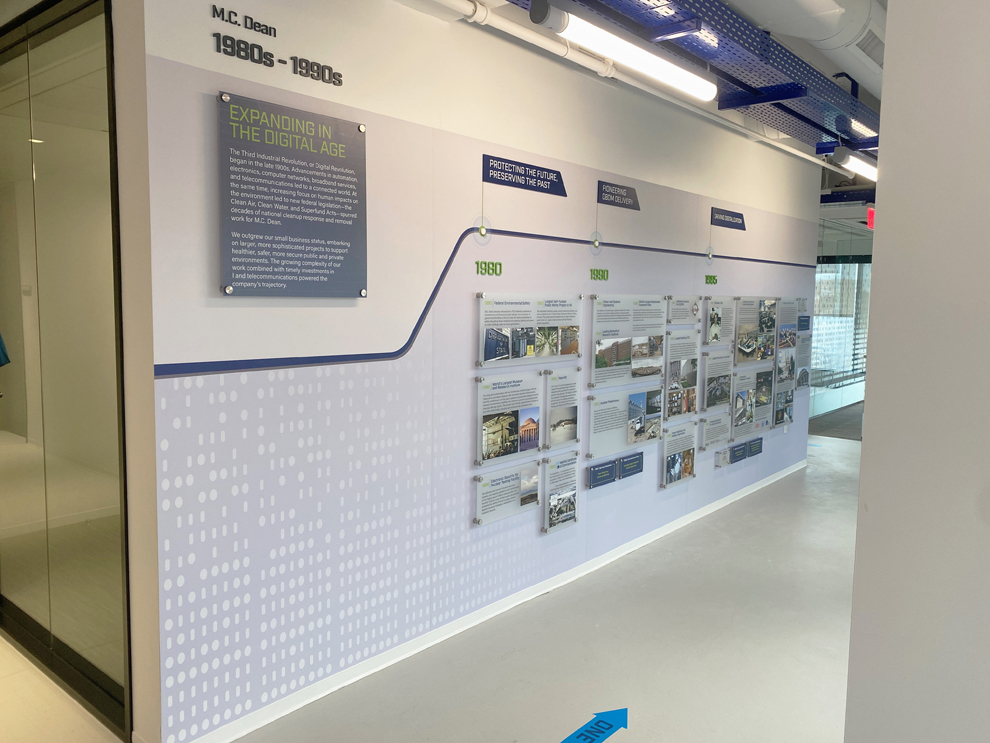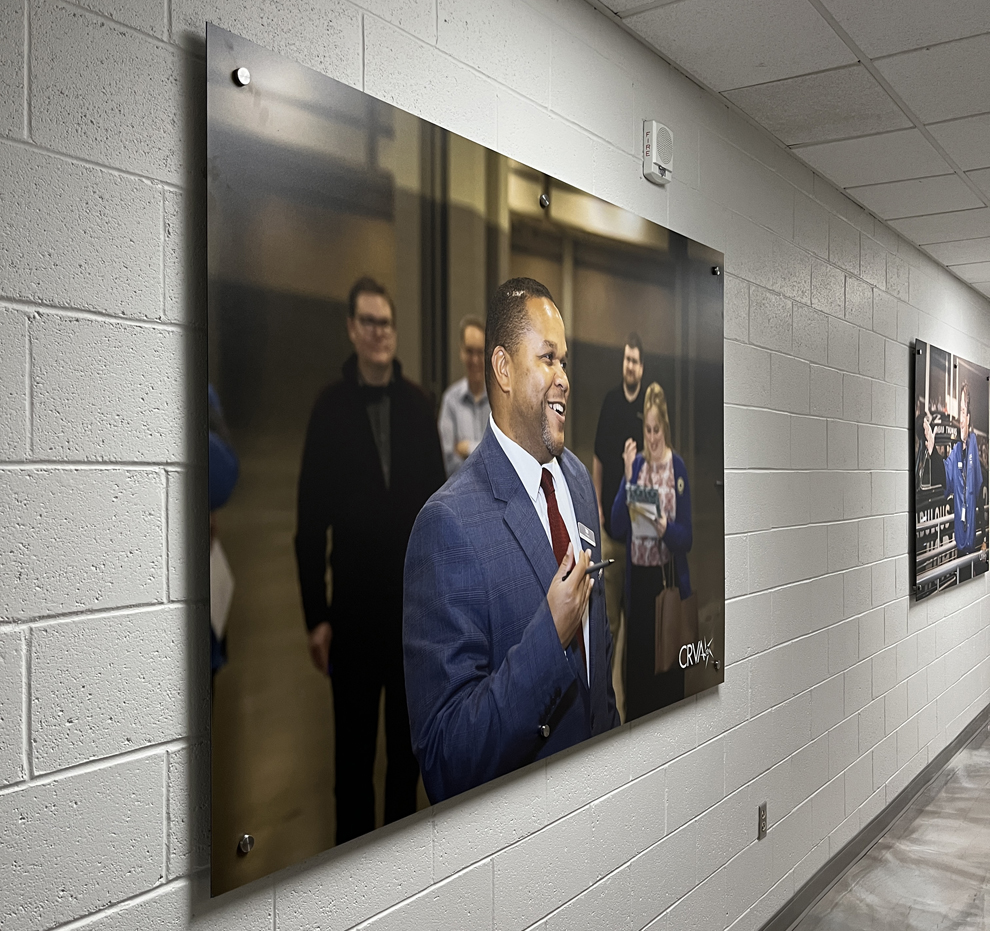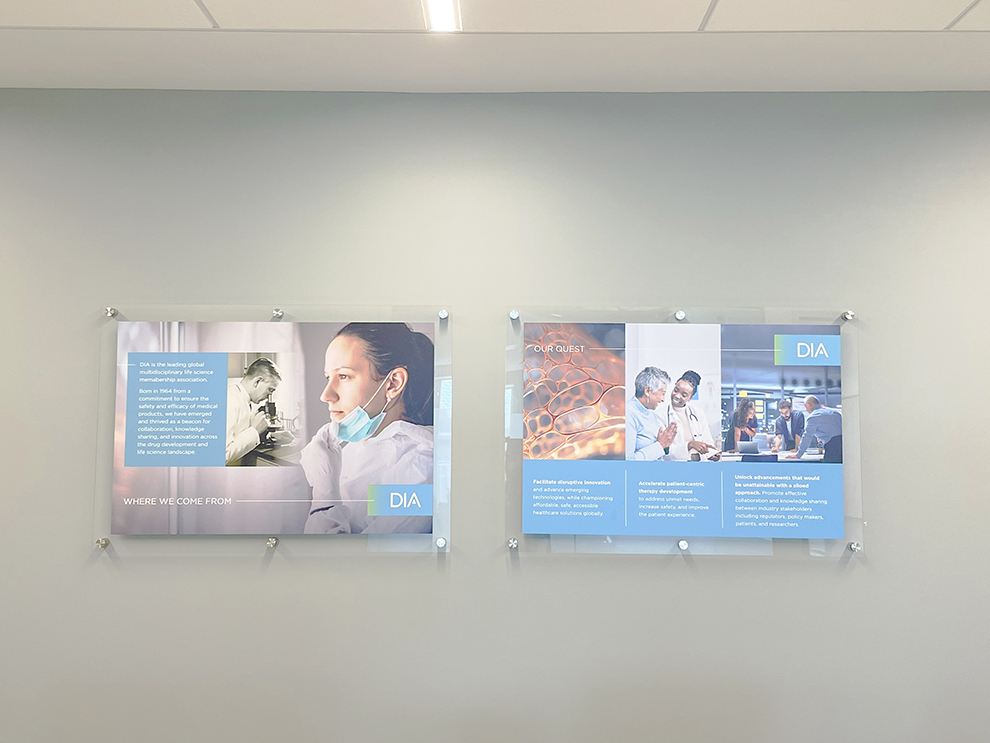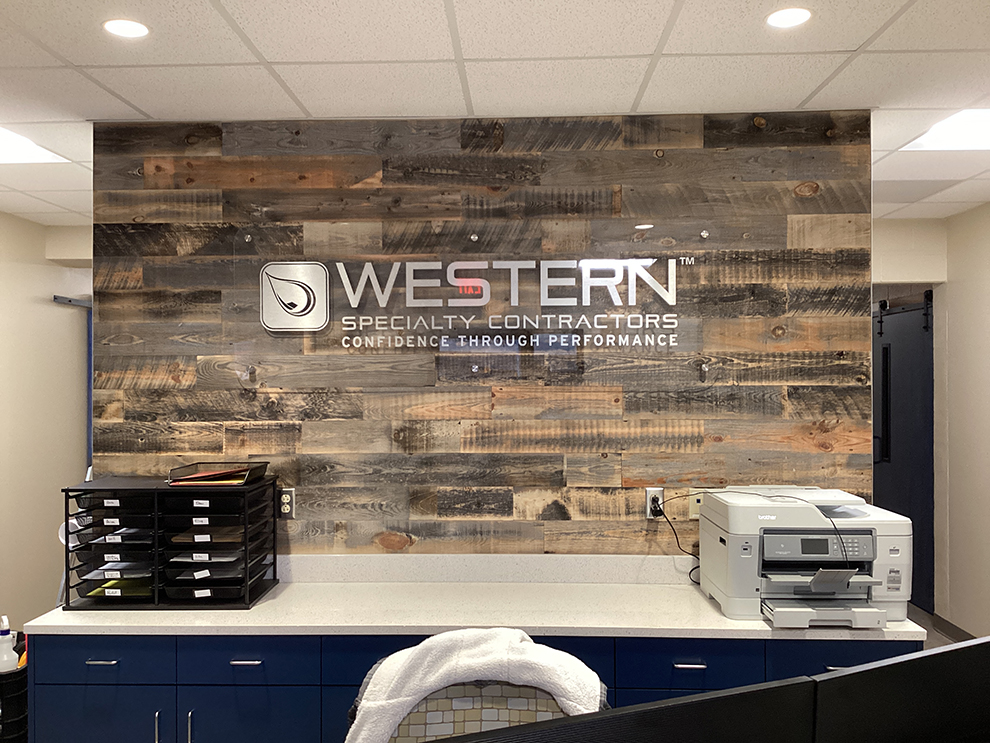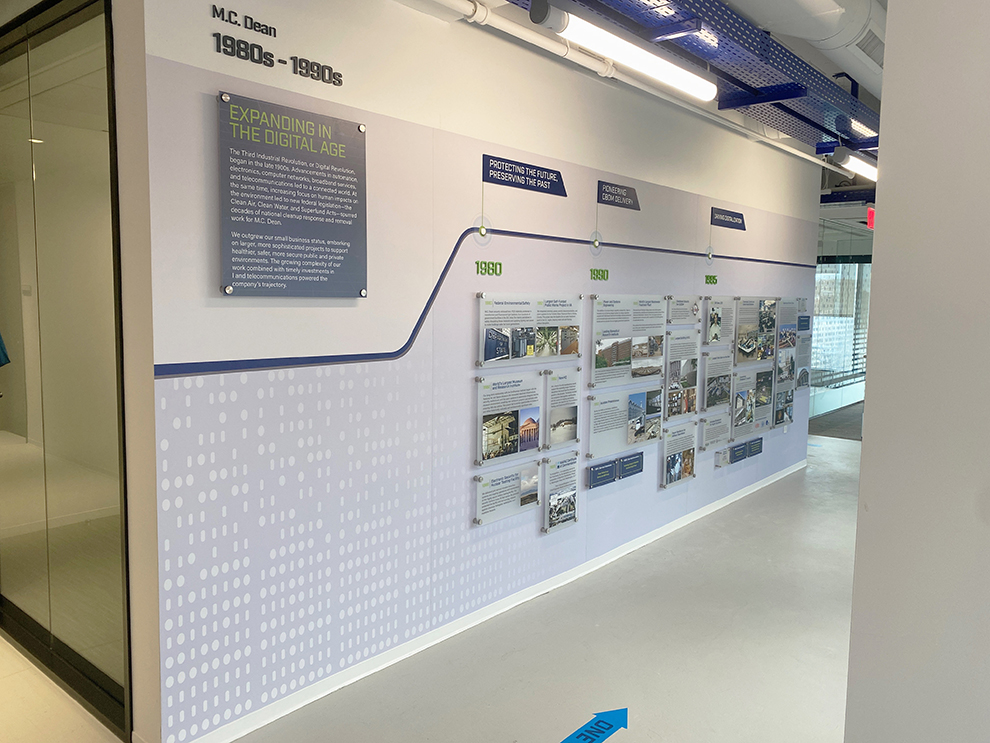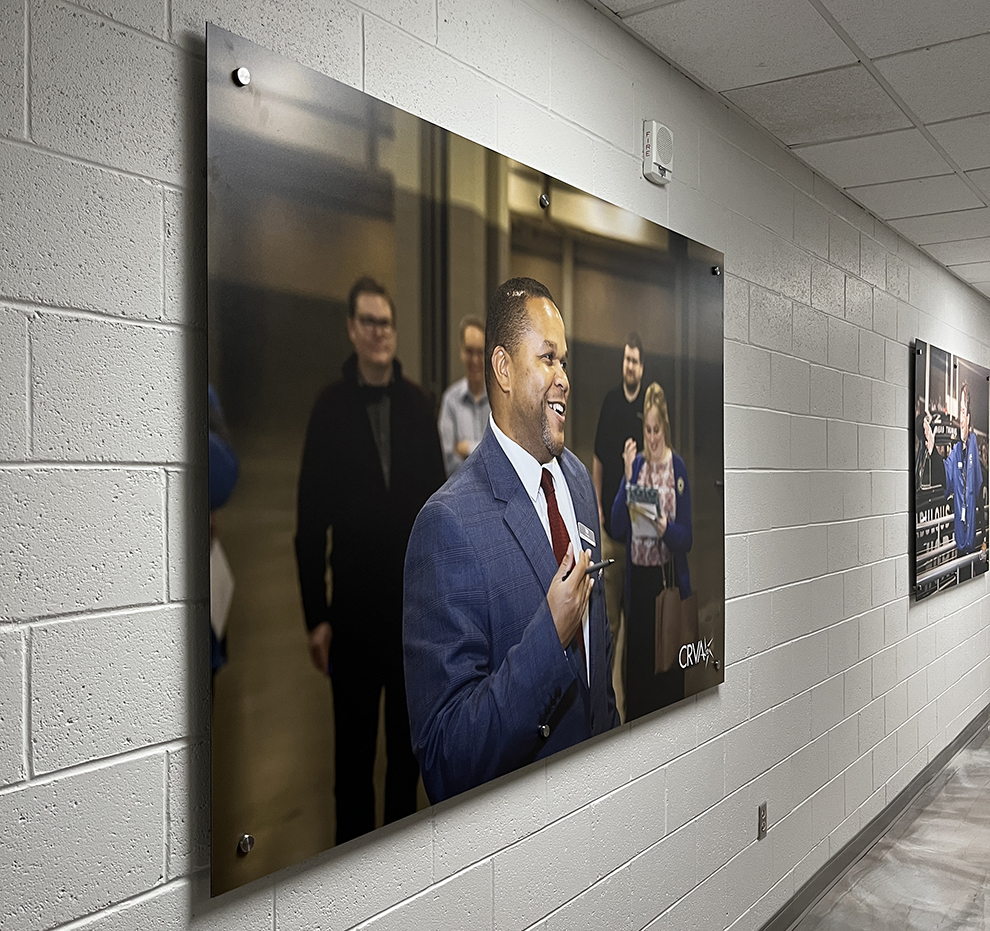
Standoff mounted signs give workplace interiors a refined, architectural way to present branding, recognition, mission statements, culture, history, and directional information. Instead of sitting flat against the wall, a sign panel is secured with visible standoff hardware that projects it from the surface. The resulting depth, shadow, and dimensional presence can make an important message feel established, intentional, and connected to the surrounding interior.
Across Raleigh and the Research Triangle, organizations often need permanent interior displays that communicate credibility without overwhelming the space. Heritage Signs & Displays is a veteran-owned, family-led commercial interior sign company serving clients since 1977. We help universities, healthcare providers, nonprofits, ministries, research organizations, professional firms, and growing companies create standoff mounted displays that feel appropriate to their message, audience, architecture, and daily use.
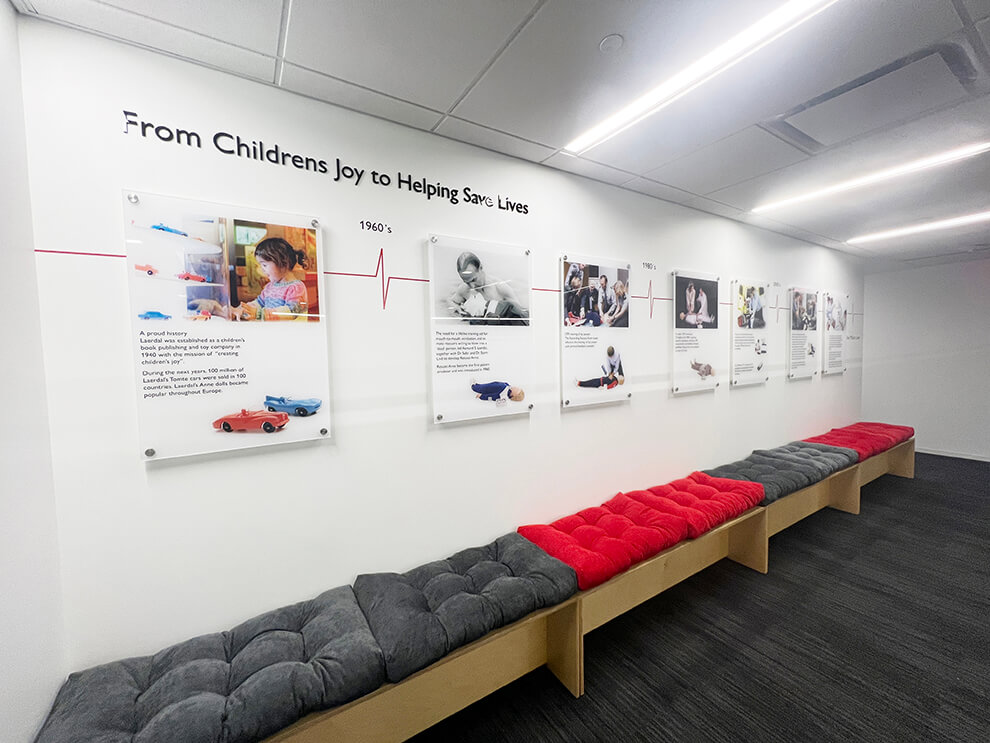
These projects often begin during a relocation, renovation, workplace refresh, donor campaign, culture initiative, rebrand, or new-office opening. A lobby sign can strengthen the arrival experience. A donor recognition display can honor generosity with dignity. A mission statement wall can keep an organization’s purpose visible. A timeline wall can help an organization present its story with structure and permanence. Standoff mounted panels can also identify departments, recognize achievements, support wayfinding, or organize complex information into a clear visual sequence.
Heritage supports these projects through environmental graphic design, project management, production, fabrication, and professional installation as one coordinated Heritage-managed process. One dedicated project manager helps organize discovery, site information, approvals, material choices, hardware details, production timing, access requirements, and installation planning. Keeping those responsibilities connected helps protect design intent and gives Raleigh-area clients clearer accountability from the first conversation through installation.
Standoff mounted signs are defined by their mounting system rather than one required face material. Acrylic, aluminum composite material (ACM), printed panels, layered graphics, dimensional letters, and replaceable inserts may all be incorporated when the design and site conditions support them. This distinction matters because an acrylic sign can use several mounting methods, while a true standoff mounted sign is identified by visible hardware and measured projection from the wall. Clear terminology helps buyers compare options accurately and preserves a distinct role for both Standoff Mounted Signs and Acrylic Signs pages.
Because standoff hardware is mechanically secured through carefully planned wall penetrations, these displays should be treated as permanent or semi-permanent wall-mounted features. Removing or relocating them will ordinarily require patching and refinishing. Wall construction, panel weight, mounting depth, lighting, viewing distance, future update needs, and installation access all affect the finished result. Heritage evaluates those conditions before fabrication so the sign can be aligned accurately, mounted securely, and integrated with the surrounding interior.
As a veteran owned business, Heritage strives to be a valued resource that honors God by serving our clients and communities with excellence. For Raleigh and Research Triangle clients, that purpose appears through careful listening, responsible recommendations, precise production, respectful installation, and follow-through that helps the finished interior serve people well every day.
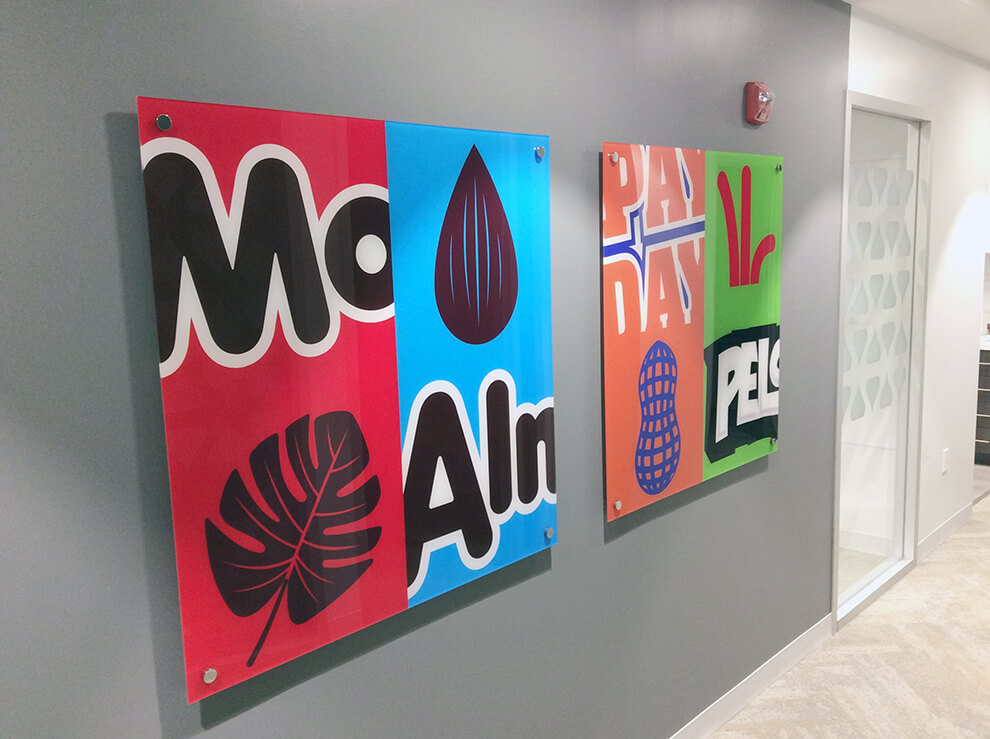
Buyers sometimes assume that standoff mounted signs are simply acrylic signs with decorative hardware. Acrylic is a common face material, but the defining feature is the complete mounting system. Visible barrels, caps, fasteners, and measured projection hold the finished panel away from the wall and make the hardware part of the architectural presentation. The panel may incorporate acrylic, aluminum composite material (ACM), printed graphics, dimensional lettering, layered components, or replaceable information.
Every properly installed wall-mounted standoff sign requires drilled mounting points and fasteners or anchors appropriate to the wall substrate and panel load. Removing the display will ordinarily leave holes that require repair. This makes standoff construction best suited for permanent or semi-permanent features rather than temporary graphics or portable event signage.
Heritage's environmental graphic designers, fabricators, and installers plan the hardware pattern, mounting template, projection depth, panel alignment, edge clearances, sightlines, cleaning access, and future update strategy before fabrication. Those decisions distinguish standoff systems from flush-mounted acrylic signs, direct-mounted dimensional letters, adhesive wall graphics, and removable displays while helping the final installation feel intentional, secure, and integrated with the Raleigh workplace interior.
Raleigh and Research Triangle organizations choose Heritage when standoff mounted signs need to support a larger workplace, campus, healthcare, nonprofit, ministry, recognition, or culture objective. These displays often carry high-visibility messages, so scale, panel material, hardware finish, wall condition, lighting, spacing, typography, brand color, and mounting method all influence how the final installation appears in the real space.
Heritage combines environmental graphic design capabilities with practical execution. Our team helps clients determine what the sign should communicate, where it should be placed, how large it should be, which materials fit the interior, and how fabrication and installation should be coordinated before production begins. This approach is valuable for Triangle offices, universities, healthcare facilities, nonprofits, ministries, research-focused organizations, and professional firms that need interior displays to feel polished, durable, and aligned with their identity.
Discovery, site evaluation, project management, production, fabrication, and installation remain connected through one organized process. That coordination protects brand standards, reduces unnecessary handoffs, improves accountability, and supports a finished display that feels appropriate to the audience, architecture, message, and long-term use of the space.
The related-product gallery should help Raleigh buyers understand the closest choices without turning this focused page into a general catalog. These four products connect directly to standoff mounted signs through face material, application, dimensional construction, or the larger wall presentation.
Wall wraps transform plain surfaces into bold branded features that bring company identity to life across offices, campuses, and event settings.
Window graphics introduce branding, color, and added privacy while giving office spaces, storefronts, and event venues a more unified, professional appearance.
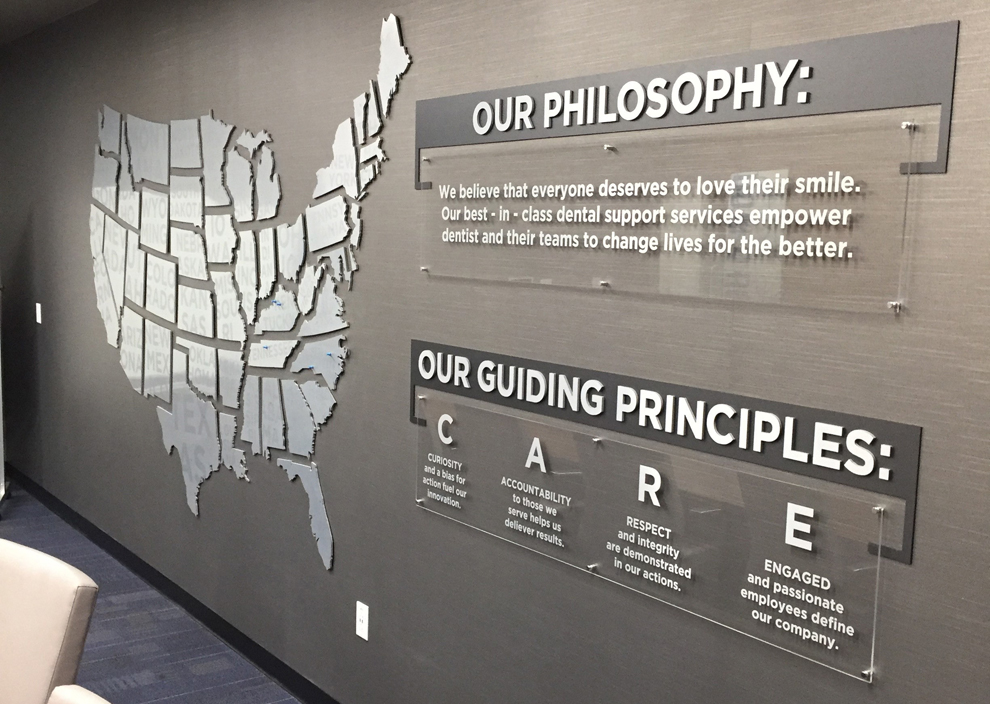
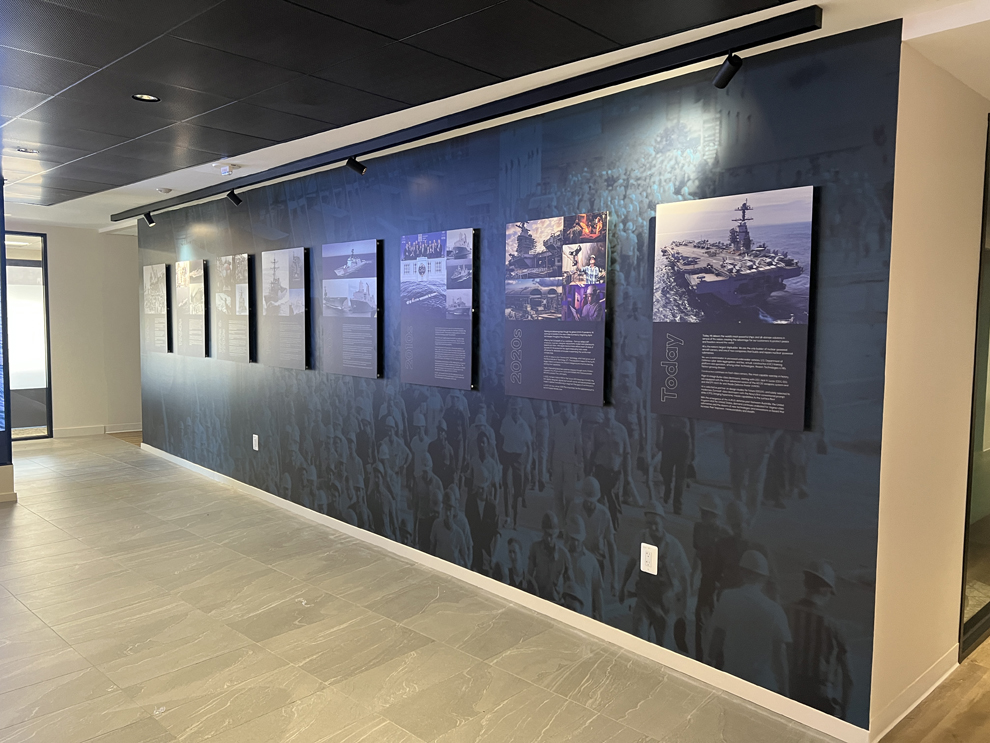
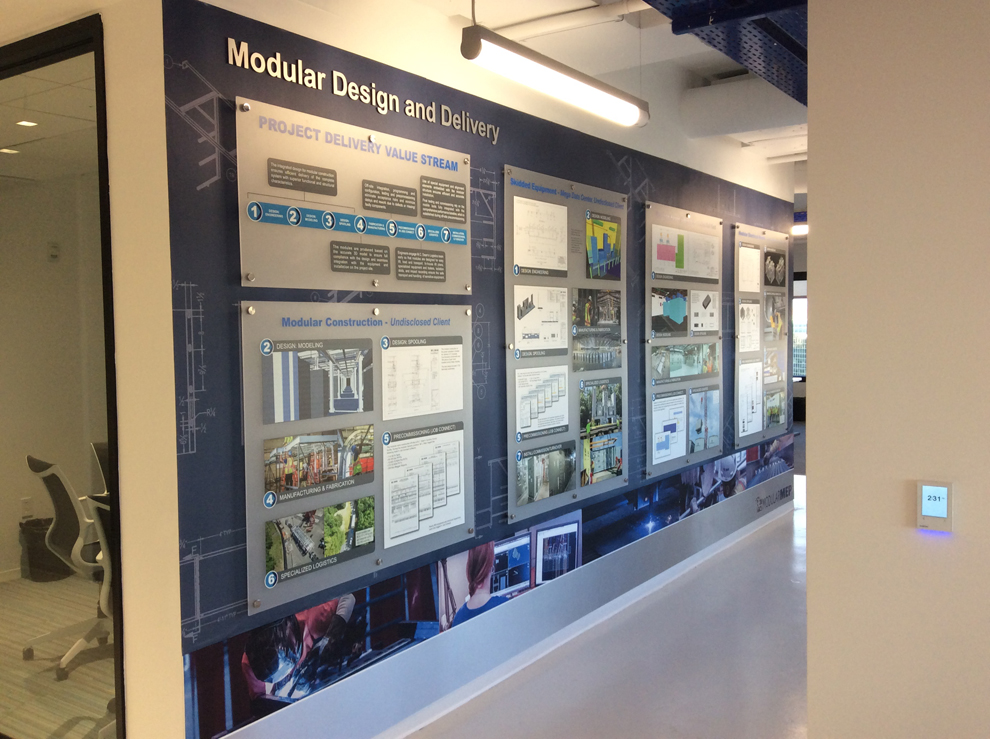
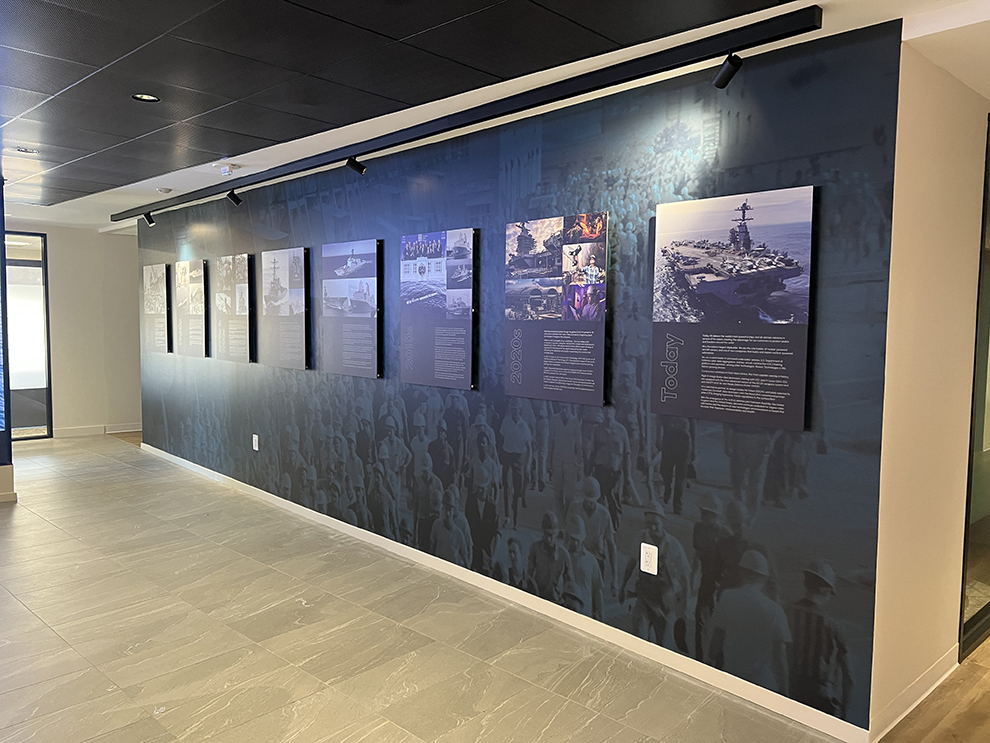
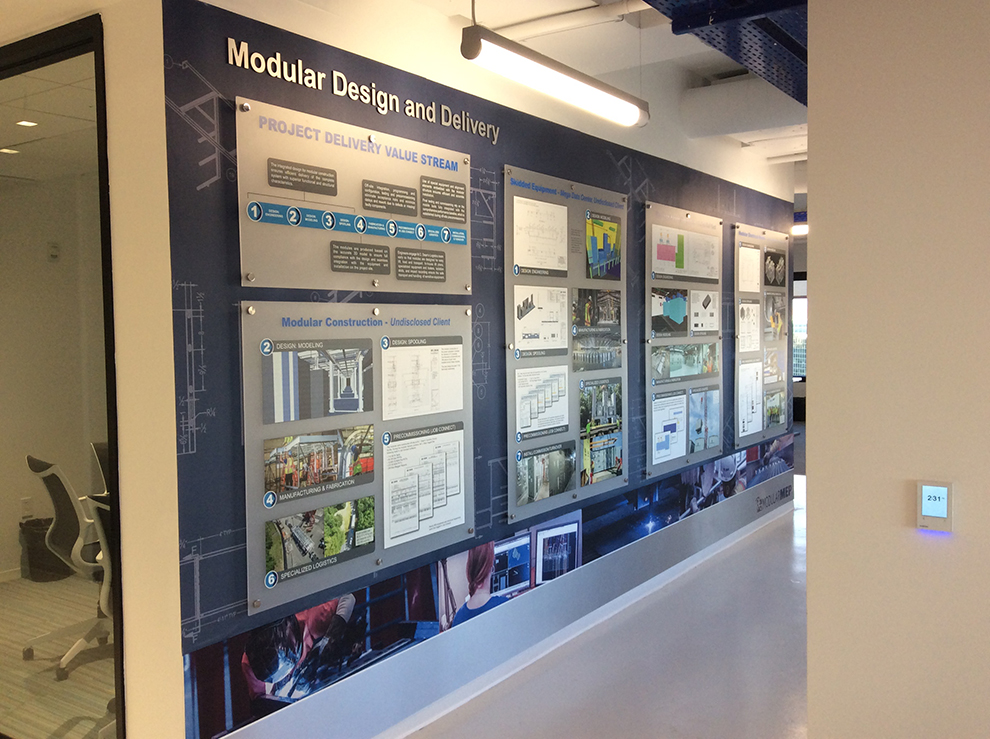
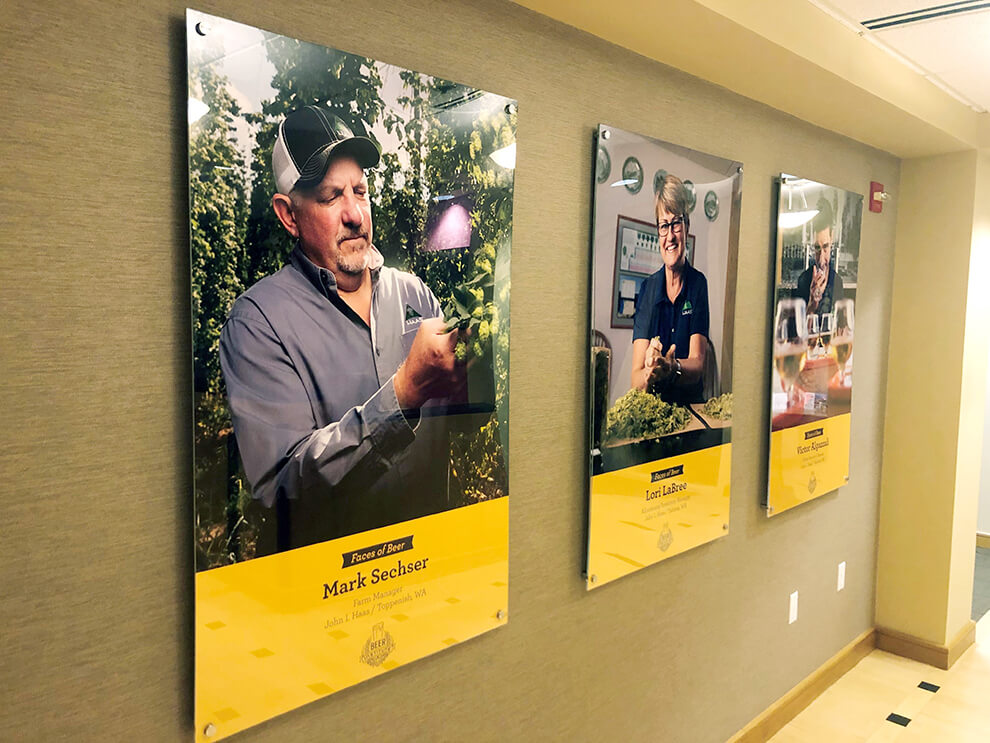
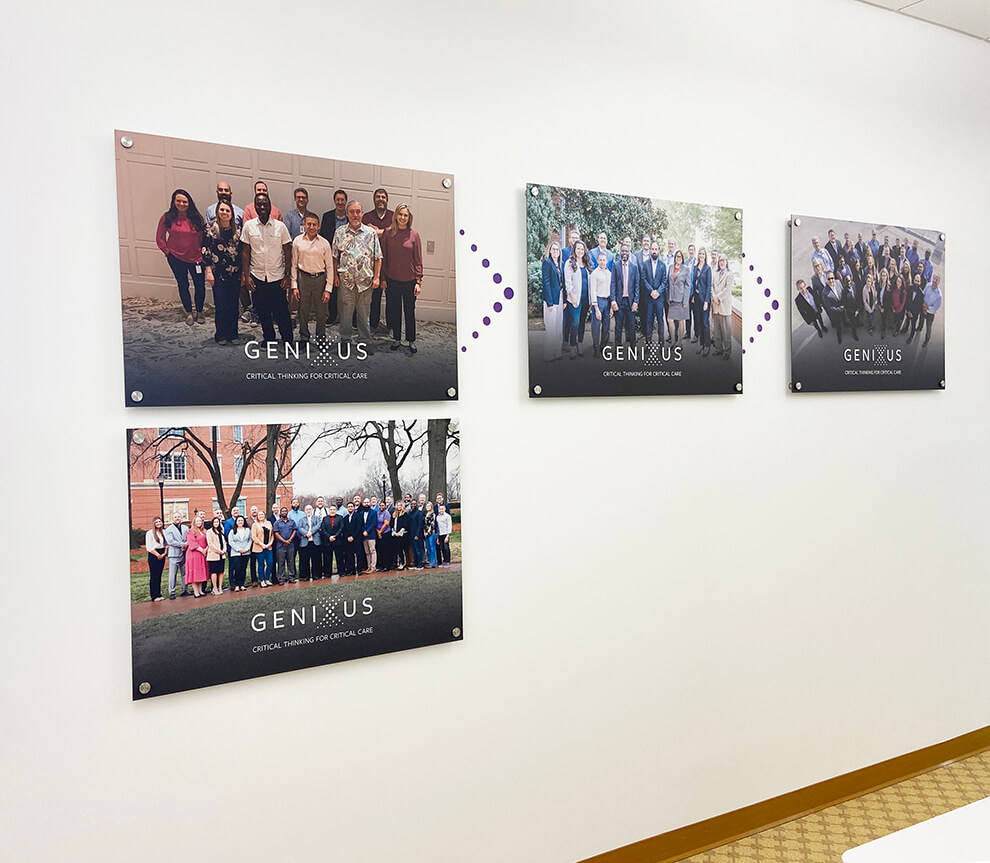
Wall displays organize mission statements, core values, inspiration, history, recognition, and storytelling across a larger surface. Standoff-mounted panels can provide depth, hierarchy, or replaceable sections.
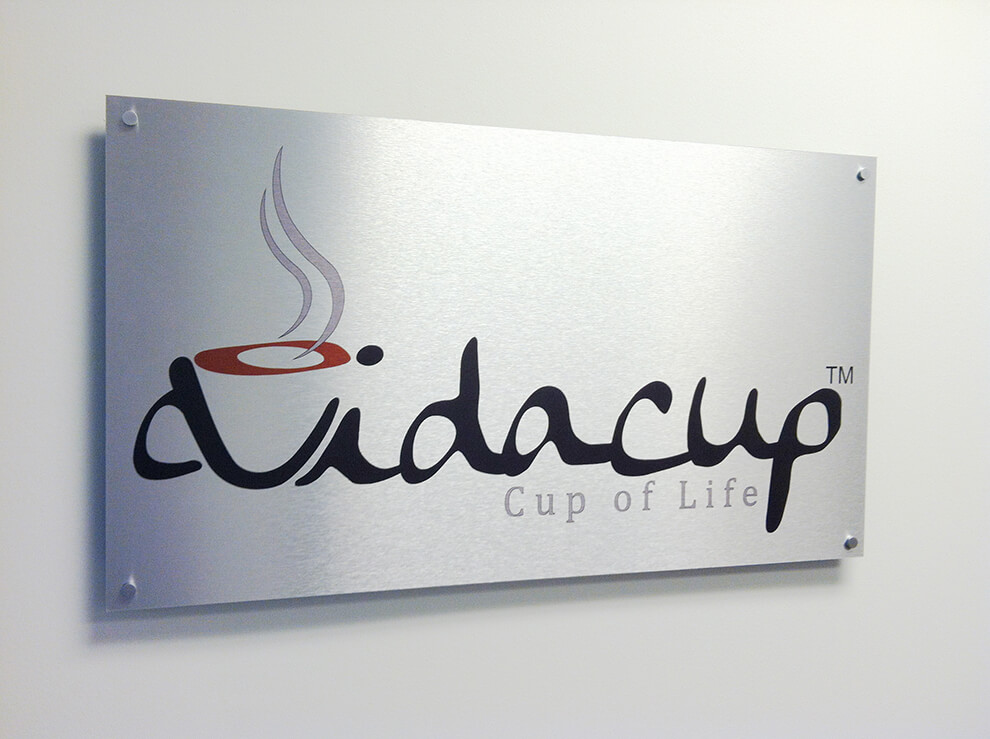
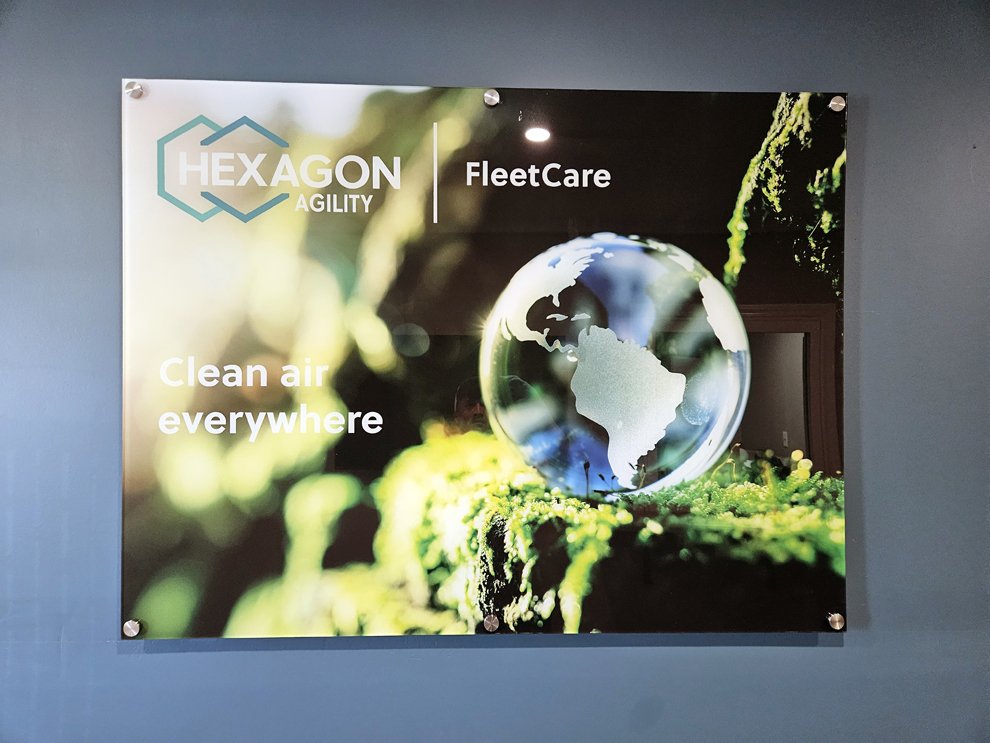
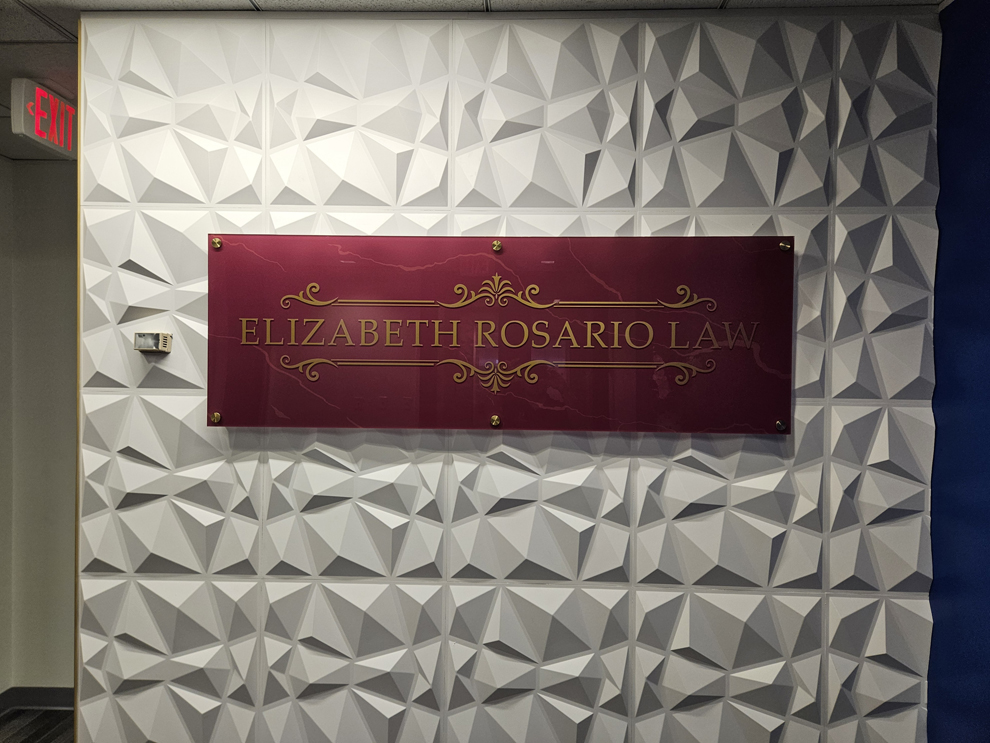
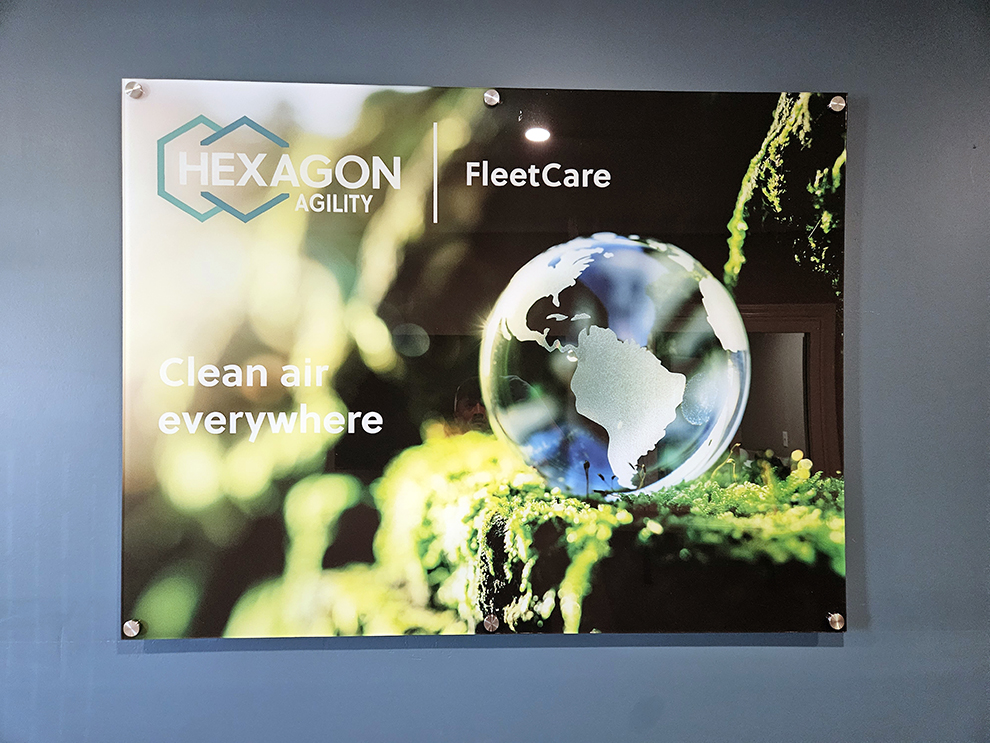
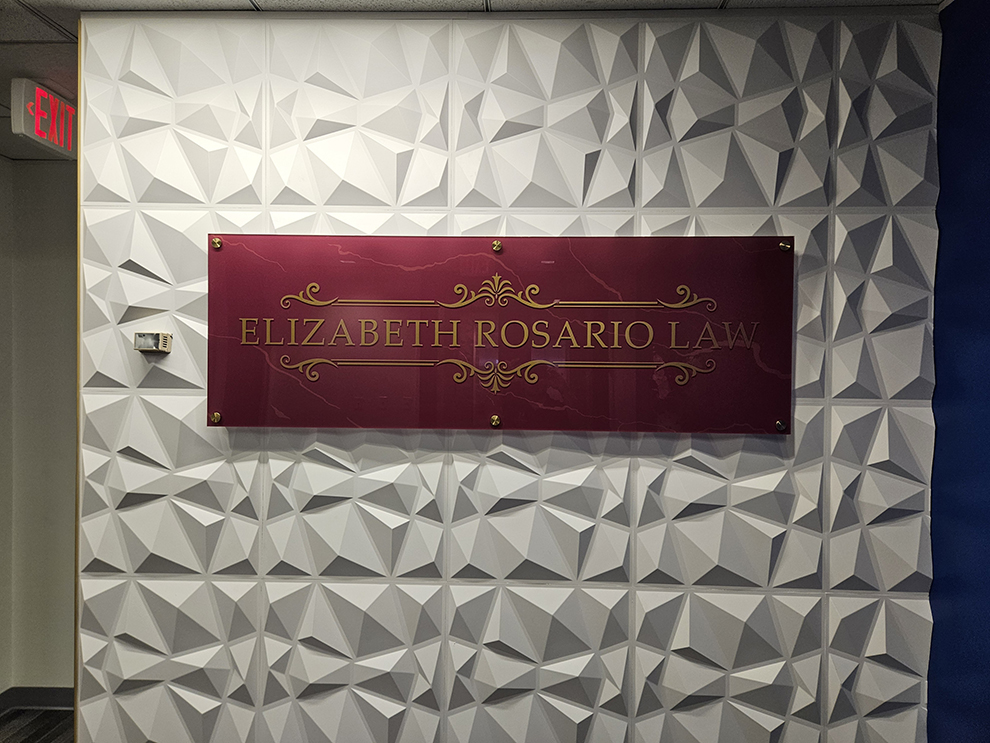
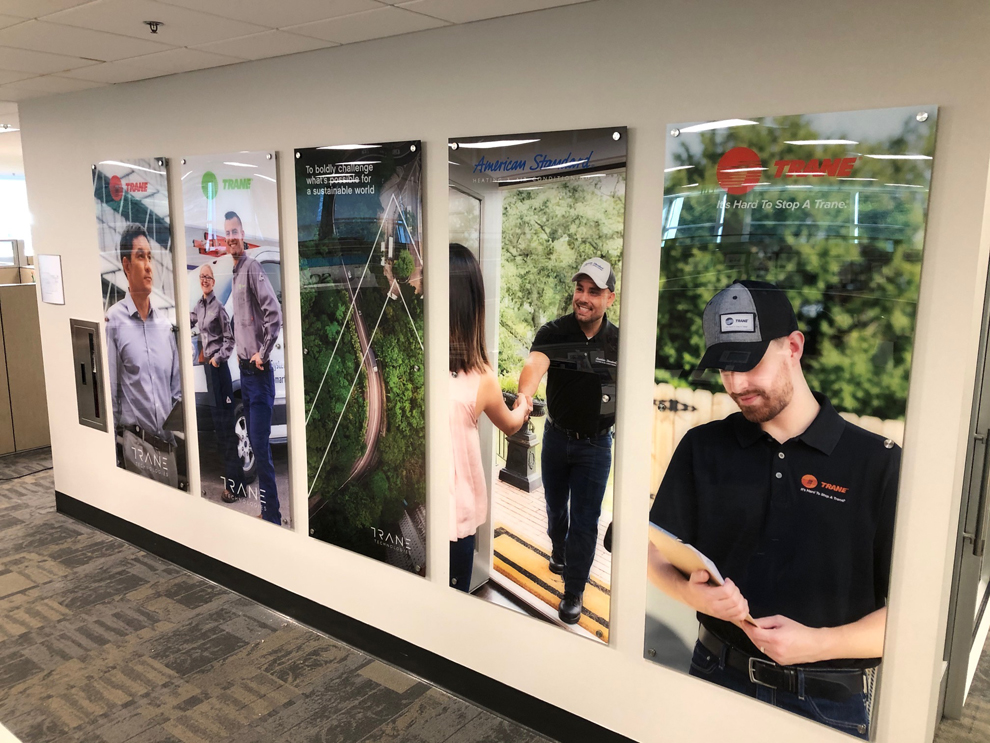
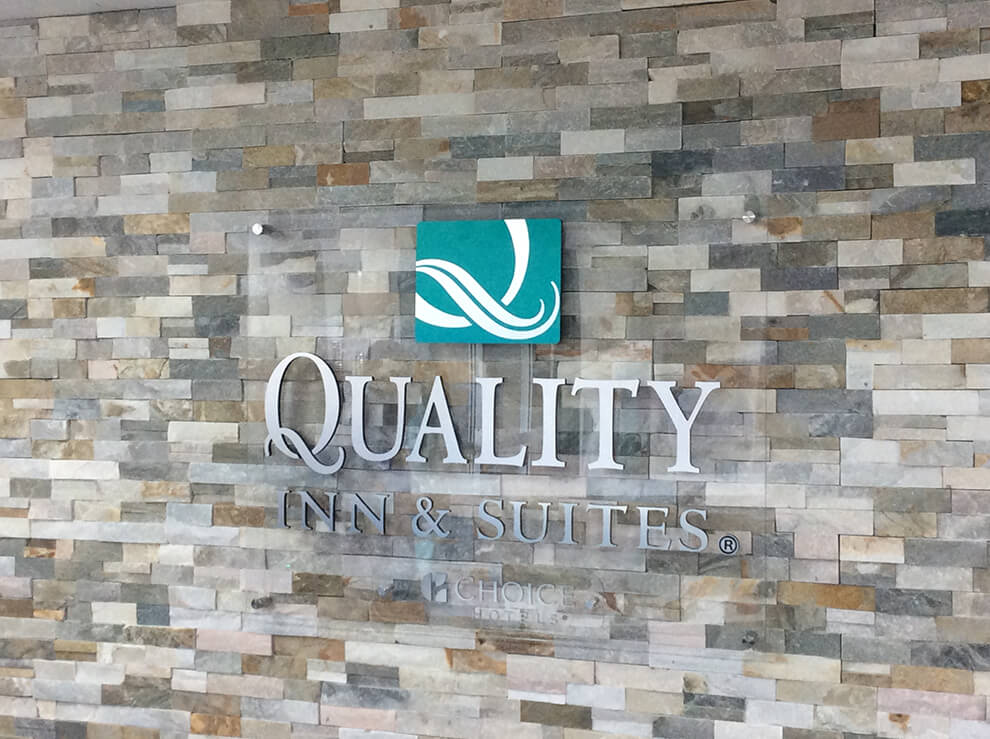
Lobby signs establish identity and confidence at arrival. A projected acrylic or ACM panel may support a polished reception feature when visible hardware suits the architecture.
Frosted vinyl improves privacy and gives glass areas a crisp branded appearance in offices, conference rooms, and event spaces.
Elevator wraps carry branding into busy shared spaces and turn often ignored surfaces into memorable brand moments.
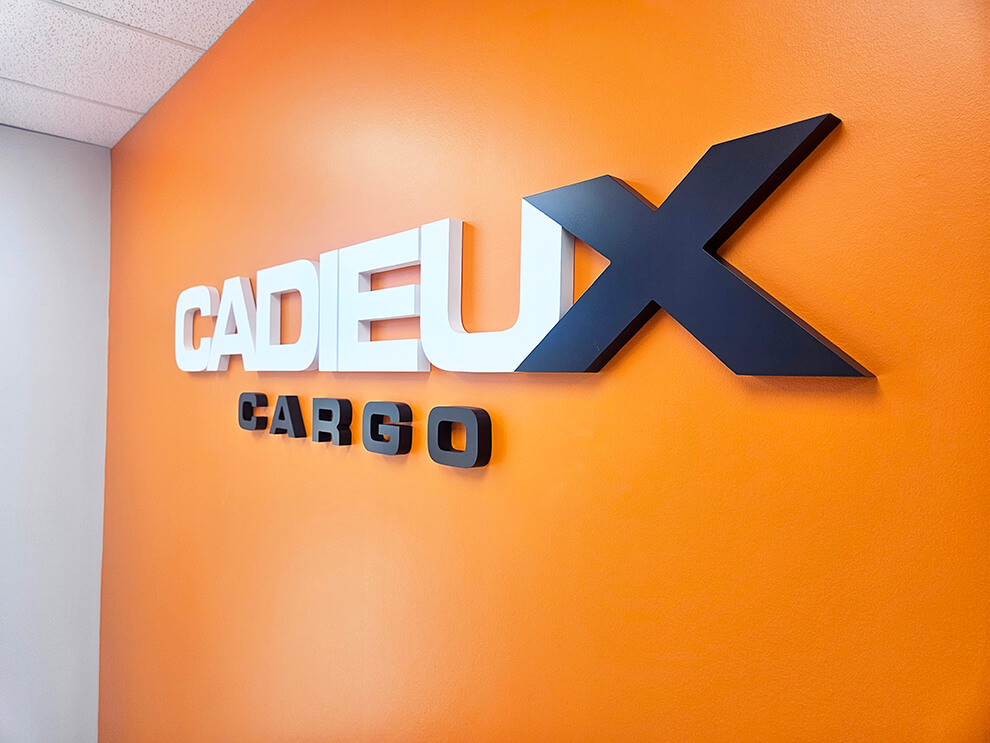
Dimensional letters give names, logos, values, and messages physical presence. They may mount directly to the wall or coordinate with a standoff panel.
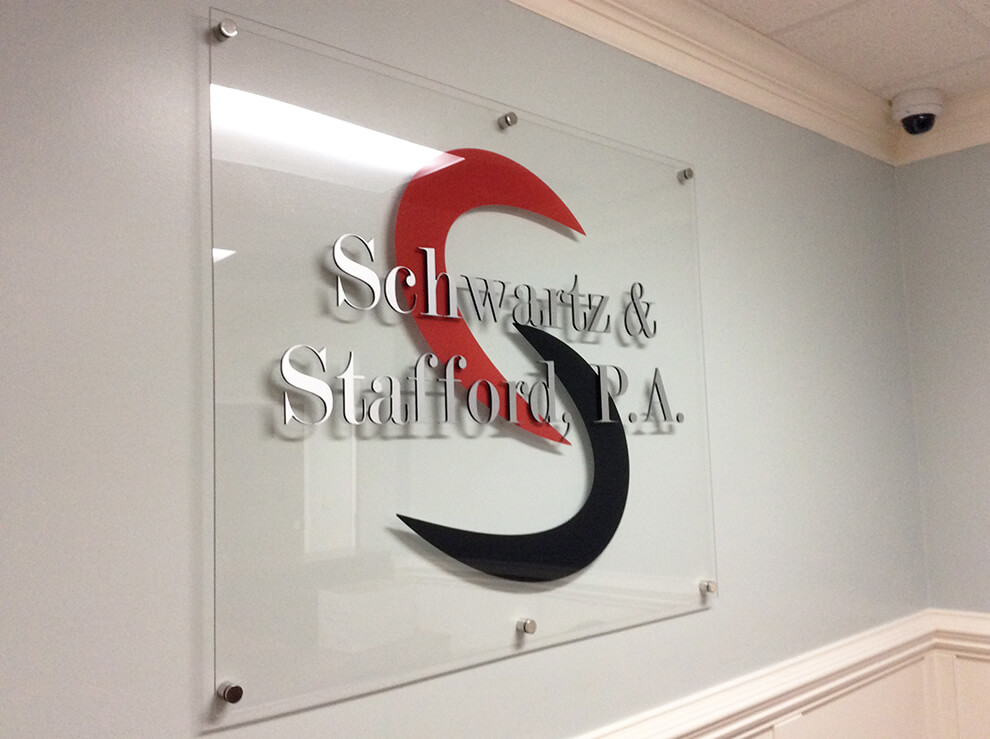
Acrylic signs offer clear, frosted, colored, printed, or layered face options. They may use standoff hardware or another mounting method selected for the design.
Ready to give an important message a permanent, architectural presence? Heritage Signs & Displays can help your Raleigh or Research Triangle organization develop standoff mounted signs for workplace identity, donor recognition, mission statements, core values, timelines, directories, and branded storytelling walls. On the Get Started Now form, tell us what the display should accomplish and provide the address, desired completion date, brand files, wall photographs, approximate dimensions, and anticipated overall scope. Our team will assess the application, identify needed site information, and explain the next step in Heritage's coordinated design-through-installation process.
Heritage supports Raleigh and Research Triangle organizations that need standoff mounted signs, recognition displays, mission statement and core values features, timeline walls, and other permanent interior branding elements. Our work often serves professional offices, universities, healthcare facilities, nonprofits, ministries, corporate interiors, research-focused workplaces, and technology or life sciences organizations across Raleigh, Cary, Durham, Chapel Hill, Morrisville, Apex, Wake Forest, Garner, Knightdale, Holly Springs, Research Triangle Park, and nearby Triangle communities.
The Triangle’s mix of higher education, healthcare, research, technology, professional services, nonprofits, and growing companies creates varied interior communication needs. Some clients need one carefully executed lobby sign or donor display. Others need coordinated panels, recognition features, department identification, and branded wall elements across several buildings, departments, campuses, or offices.
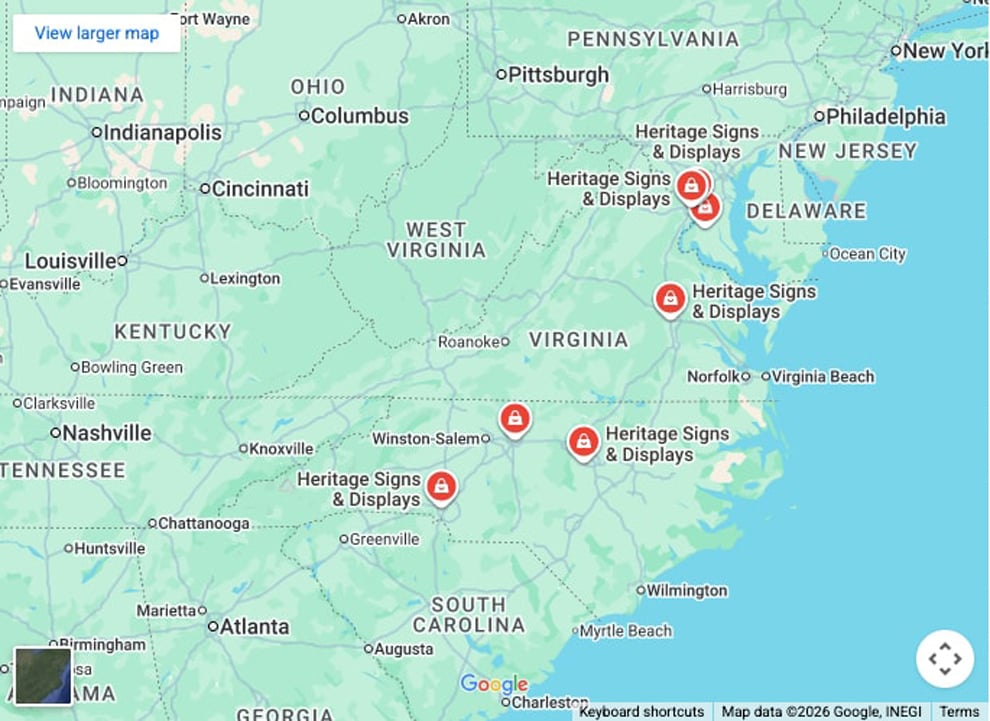
For organizations with locations across North Carolina, South Carolina, Virginia, Maryland, and Washington, DC, Heritage can coordinate site information, materials, hardware standards, production expectations, installation planning, and communication through one project-managed process. The value is not simply geographic reach. It is clearer accountability and greater consistency while allowing each location’s wall conditions, dimensions, access, and audience to shape the final installation.
Standoff mounted signs become more valuable when the message, mounting system, and surrounding interior are planned together. Heritage's environmental graphic designers begin with what people should notice, understand, or remember. They consider how employees and visitors approach the wall, how long they are likely to view it, and how the content should relate to the organization's identity, culture, and architecture.
For Raleigh-area workplaces, this process can shape a lobby identity, mission statement, core values presentation, donor recognition feature, history display, directory, or branded storytelling wall. Scale, typography, contrast, panel divisions, materials, hardware finish, projection depth, lighting, and future update needs are evaluated as parts of one communication system. The goal is not simply to decorate a wall, but to make important information clear, credible, and appropriate to the people who use the space.
Because Heritage connects design with project management, production, fabrication, and installation, practical questions can be resolved before they compromise the concept. Panel tolerances, mounting locations, wall conditions, sightlines, brand colors, cleaning access, and installation requirements can influence the approved design while changes are still manageable.
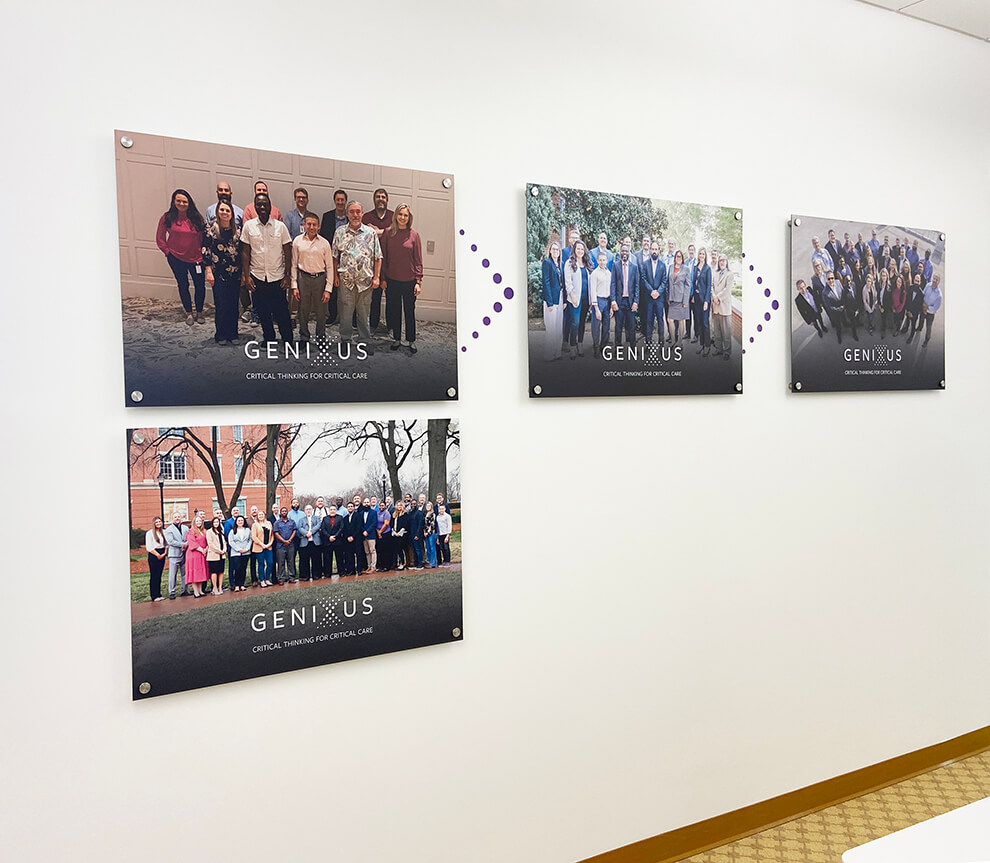
Professional installation is essential because every wall-mounted standoff sign requires drilled mounting points and mechanically secured hardware. The panel must be level, the spacing between caps must remain consistent, and the anchors must be appropriate for the wall construction and total load. Small layout errors are highly visible when polished hardware repeats across a large panel or multi-part display.
Heritage plans installation while the sign is being designed and fabricated. Available drawings, photographs, field dimensions, wall finishes, backing, hidden utilities, nearby fixtures, lighting, access routes, occupied-space protection, building procedures, and work-hour limitations may all affect the mounting plan. A site survey can verify conditions that cannot be established reliably from client-supplied information, especially for larger displays, specialty surfaces, controlled facilities, and installations requiring precise alignment with architectural features.
Heritage's full-time installation team installs standoff mounted signs and displays produced, fabricated, or procured within a Heritage-managed project. We do not offer installation-only service for products supplied by other companies. Keeping responsibility for the approved design, materials, hardware, templates, fabrication, and installation connected gives Raleigh and Research Triangle clients clearer accountability for the completed presentation.
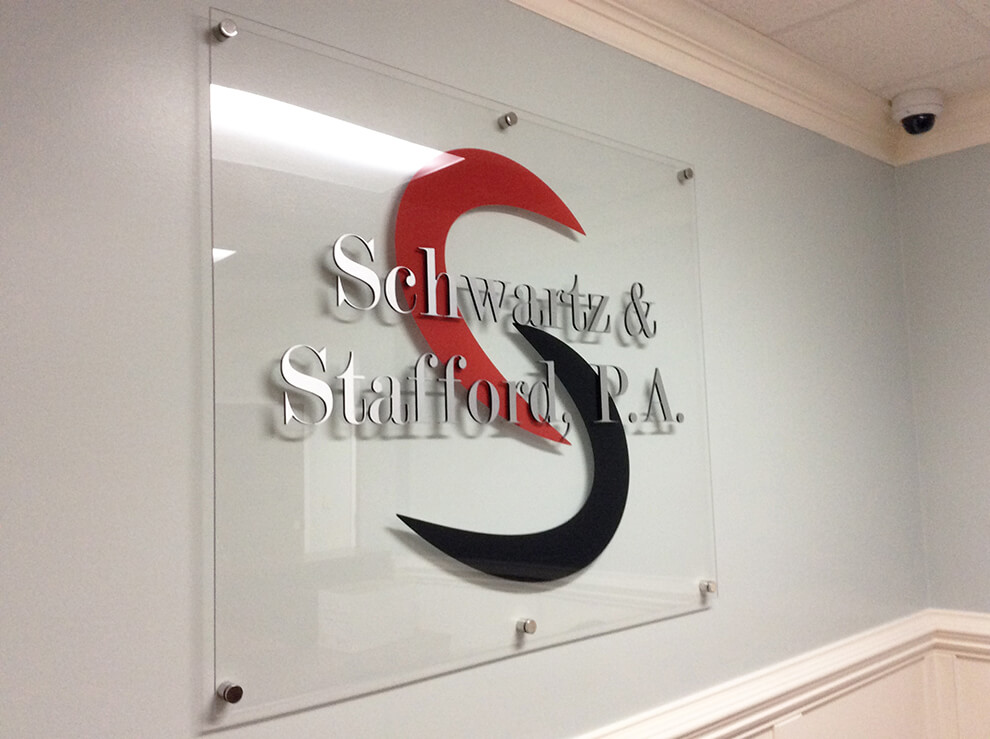
Heritage is best suited for organizations that want standoff mounted signs to contribute to a larger, professionally managed branding, recognition, culture, or wayfinding project. Our team focuses on permanent and semi-permanent wall installations where consultation, site evaluation, production, fabrication, project management, and professional installation can remain connected from planning through completion.
Heritage-managed projects for Raleigh and Research Triangle clients begin with an overall project investment of $4,000. This amount applies to the complete project, not automatically to each individual panel or sign. A qualifying project may involve one substantial lobby, donor, mission statement, core values, timeline, or recognition display, or several coordinated interior sign elements across one or more spaces.
Heritage does not provide channel letters, monument signs, pylon signs, standard exterior sign programs, or installation-only service for products made elsewhere. Exterior wall-mounted standoff signs can be appropriate when substrates, graphics, hardware, anchors, wall construction, weather exposure, and local requirements suit the application. Because all standoff signs require drilled mounting points, they should not be treated as temporary displays. These boundaries help Heritage maintain accountability for the finished result.
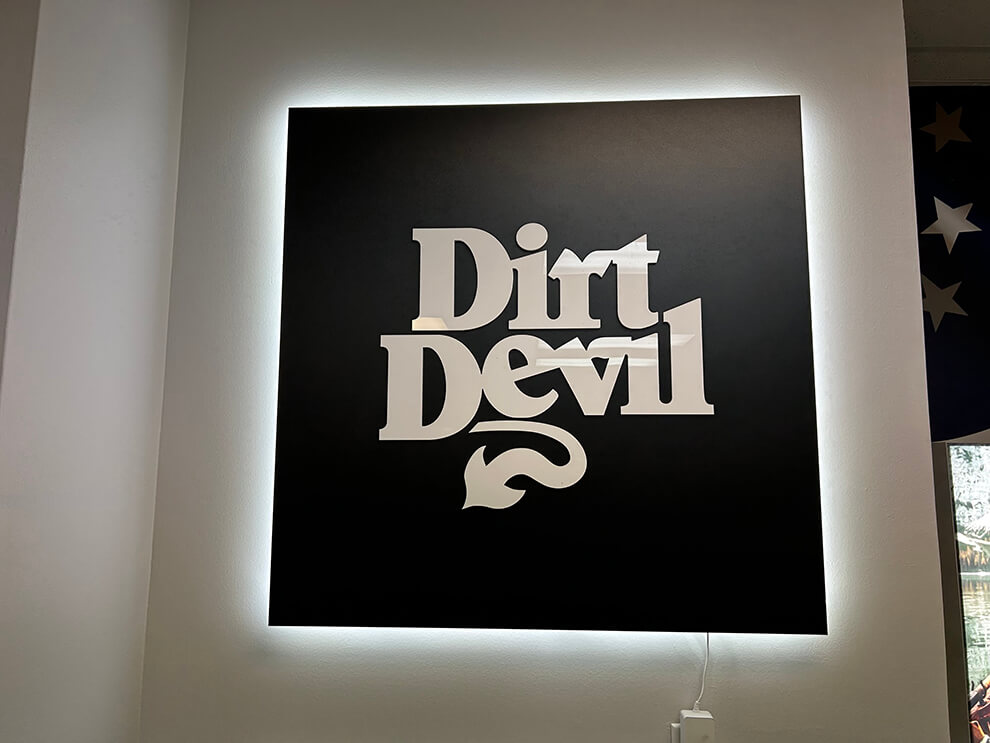
Standoff mounted signs are wall-mounted signs or displays that use visible architectural hardware to hold a panel or dimensional element away from the wall. The measured projection creates depth, shadow, and a polished dimensional appearance. They are commonly used for logos, mission statements, donor recognition, timelines, directories, values displays, office identification, and other permanent interior applications.
Standoff mounted describes the installation system, while acrylic describes a material. An acrylic panel may be mounted with standoffs, flush hardware, concealed fasteners, direct mounting, or another method. A true standoff mounted sign is identified by visible hardware, projection from the wall, drilled mounting points, and mechanical anchors. This page focuses on the mounting system rather than acrylic as a material category.
Yes. Every properly installed wall-mounted standoff sign requires drilled mounting points and substrate-appropriate mechanical anchors or fasteners. The hardware must be secured so the panel remains aligned, stable, and safely projected from the wall. Heritage evaluates wall construction, panel weight, hardware spacing, anchor requirements, and access conditions before fabrication and installation.
Yes. Because standoff mounted signs require drilled mounting points and anchors, removing the hardware will ordinarily leave holes that require wall repair. These displays should be planned as permanent or semi-permanent wall-mounted features. Organizations expecting frequent relocation or removal should discuss alternative mounting systems or removable graphic solutions before selecting standoffs.
Standoff mounted signs may incorporate acrylic, aluminum composite material (ACM), printed graphics, dimensional letters, vinyl graphics, layered materials, replaceable inserts, or other approved substrates. ACM can provide a durable, professional metal-surface appearance while weighing substantially less than solid metal, making it well suited to polished interior displays. The right combination depends on the message, visual effect, panel weight, wall construction, viewing distance, lighting, update needs, brand standards, and the desired relationship between the sign and the surrounding interior.
Heritage's environmental graphic design and production teams evaluate those factors together so the selected materials support both the intended appearance and the realities of fabrication and installation.
Projection depth depends on the barrel length, hardware diameter, cap proportions, finish, panel thickness, wall conditions, and desired dimensional emphasis. Some installations use a subtle separation, while others use deeper hardware to create stronger shadow and visual depth. Sightlines, lighting, panel stability, cleaning access, and surrounding architectural features should be considered so the hardware supports the display rather than appearing as an unrelated decorative choice.
Common locations include lobbies, reception areas, corridors, conference rooms, donor recognition areas, office interiors, training spaces, university buildings, healthcare facilities, nonprofit offices, ministry interiors, research workplaces, and guest-facing spaces. They work best where an organization wants an important message or identity element to feel established, durable, and integrated with the architecture.
Yes. Standoff mounted lobby signs can display an organization’s name, logo, tagline, mission statement, or branded graphics in a refined architectural format. The best design depends on wall size, viewing distance, lighting, brand standards, panel material, hardware finish, and the desired arrival experience. Those factors should be evaluated together before the final construction and placement are approved.
Yes. Standoff mounted panels are well suited for donor recognition because they can combine names, giving levels, plaques, printed graphics, dimensional elements, and replaceable components. Planning should address donor hierarchy, readability, future updates, materials, hardware layout, and the relationship between the recognition display and the surrounding lobby, corridor, campus, healthcare, or nonprofit interior.
Yes. Multiple standoff mounted displays can function as one coordinated wall presentation for a lobby, hallway, conference room, breakroom, common area, or permanent venue space. Panels may organize an organization’s purpose, mission statement, vision statement, core values, inspirational messages, history, recognition, or culture into readable sections. Dimensional letters or logos may be applied to a panel face or mounted independently above, beside, or among grouped panels, while wall graphics can unify the complete composition. Message hierarchy, viewing distance, panel arrangement, hardware placement, and future updates should be planned as one system.
Yes. Timeline walls may use standoff mounted panels, photographs, printed graphics, dimensional elements, and layered materials to present founding moments, milestones, achievements, leadership changes, community impact, and future direction. The story should be organized clearly, scaled for the wall, and positioned where employees, visitors, donors, students, patients, or guests can engage with it naturally.
Yes, when updateability is planned from the beginning. A display may use replaceable panels, modular sections, removable inserts, or hardware layouts that support future additions. This is useful for donor recognition, employee recognition, timeline updates, department changes, campaign progress, and evolving messages. Update needs affect panel design, material selection, hardware placement, and production planning.
Yes. Standoff mounted signs can support directories, department identification, destination signs, floor information, and selected directional features when a permanent architectural presentation fits the space. Effective wayfinding also depends on placement, viewing distance, typography, contrast, accessibility needs, decision points, and the way people move through the building. Heritage evaluates those factors during planning.
The requirements depend on whether the display is decorative, informational, directional, or used for regulated identification. Mounting height, projection from the wall, contrast, typography, tactile information, clear floor space, and the relationship to circulation routes may all matter. Heritage evaluates the intended function during environmental graphic design and site planning so an architectural standoff feature does not unintentionally conflict with accessibility needs. Applicable requirements should be identified and confirmed before the final design is produced.
Environmental graphic design considers how the message, sign, architecture, materials, surfaces, lighting, movement, and user experience work together. For standoff mounted signs, this affects placement, scale, projection depth, hardware finish, typography, color, sightlines, and the relationship between the display and nearby interior elements. Applying this thinking early helps the sign feel integrated rather than added afterward.
A site survey helps document wall dimensions, construction, surface materials, lighting, viewing angles, mounting conditions, access, security procedures, and installation limitations. These details influence panel size, anchor selection, hardware spacing, projection depth, fabrication templates, scheduling, and final alignment. Site surveys are especially valuable for large lobby signs, donor walls, timeline walls, campuses, healthcare facilities, and multi-floor workplaces.
A dedicated Heritage project manager uses the verified information to keep design decisions, production requirements, site access, and installation planning connected.
Heritage keeps discovery, site evaluation, environmental graphic design, project management, production, fabrication, and installation connected through one dedicated project manager. Our veteran-owned, family-led company has served clients since 1977, giving the team practical experience translating approved brand standards into materials, fabrication details, and installation plans. This coordination reduces the risk that a concept looks strong on screen but performs poorly on the wall.
Heritage Signs & Displays brings nearly five decades of experience to permanent interior sign projects. Our veteran-owned, family-led company connects environmental graphic design, project management, production, fabrication, and professional installation rather than asking clients to coordinate disconnected providers. One dedicated project manager helps Raleigh and Research Triangle organizations manage site information, content, approvals, materials, schedules, and installation requirements. Heritage also approaches the work with a service-centered purpose: to honor God by serving clients and communities with excellence. That combination of technical knowledge, accountability, regional capability, and care helps protect both the finished display and the client experience.
Yes. One dedicated Heritage project manager can coordinate panel materials, hardware finishes, color standards, typography, mounting details, recognition systems, and installation expectations across offices, campuses, departments, or regional facilities. Each site still requires review because dimensions, wall construction, lighting, access, and audience needs vary. The goal is consistent brand expression without forcing identical solutions onto different physical conditions.
Yes. Phased work may be appropriate when construction schedules, approvals, budgets, donor updates, campus needs, or organizational priorities develop over time. A project may begin with a lobby sign and later add donor recognition, mission statement and core values displays, timeline panels, directories, or related interior elements. A Heritage project manager can help establish materials, hardware, design rules, and production records that keep later phases visually and technically coordinated.
No. Heritage installs signs and displays that we produce, fabricate, or procure as part of a Heritage-managed project. We do not provide installation-only service for products supplied by others because final quality depends on design intent, materials, production standards, hardware, wall conditions, templates, access, alignment, and final placement.
Yes. Heritage can create and install standoff mounted signs for suitable exterior wall applications. Exterior projects require substrates, graphics, hardware, anchors, fasteners, finishes, and fabrication methods selected for moisture, sunlight, temperature changes, wind loads, wall construction, code, and expected service life. Heritage evaluates each location before recommending a system. This capability does not extend to traditional exterior sign programs such as channel letters, monument signs, or pylon signs.
Heritage-managed projects for Raleigh and Research Triangle clients begin with an overall project investment of $4,000. The amount applies to the complete project, not automatically to each individual sign or panel. A qualifying project may involve one substantial lobby, donor, mission statement, core values, timeline, or recognition display, or several coordinated interior sign elements across one or more spaces.
Maintenance depends on the panel material, printed or applied graphics, hardware finish, and conditions inside the space. Most displays benefit from gentle dusting and cleaning with a soft, nonabrasive cloth and a product appropriate for the finished surface. Avoid harsh solvents, abrasive pads, excessive moisture, or pressure that could damage graphics, finishes, edges, or alignment. Material-specific care guidance should follow the approved construction.
Standoff mounted signs are intended as long-term permanent or semi-permanent features. Their useful life depends on panel materials, hardware, wall conditions, sunlight, moisture, temperature changes, contact, cleaning practices, graphic construction, and whether information must change over time. Planning replaceable panels or inserts can extend the usefulness of donor, recognition, directory, and timeline displays without requiring the entire mounting system to be replaced.
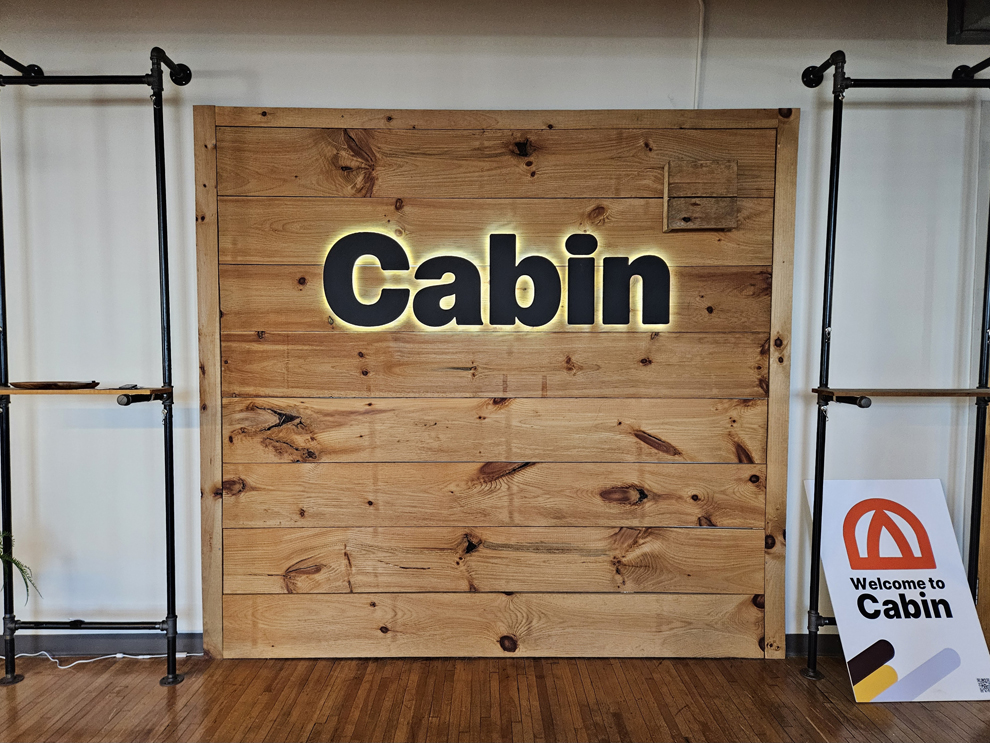
Yes, some standoff mounted displays can incorporate backlighting, halo lighting, illuminated lettering, or related lighting elements when the design, wall construction, electrical access, depth, ventilation, service access, and installation conditions support them. Heritage's design, production, and installation teams evaluate illumination from the beginning so wiring, depth, serviceability, and mounting requirements are not treated as afterthoughts. When lighting becomes the primary product feature, Heritage may recommend reviewing Backlit Signs as a related solution.
Timing depends on discovery, site-survey requirements, design development, content readiness, material availability, hardware, client approvals, fabrication complexity, building access, and installation scheduling. A single sign with approved artwork may move differently from a donor wall, timeline display, illuminated feature, or multi-location program. Sharing the desired completion date early allows a dedicated Heritage project manager to identify decision points, approval needs, and practical scheduling considerations before production begins.
Helpful information includes the project address, desired timing, photos or drawings, brand standards, logo files, approximate dimensions, wall construction when known, preferred materials, desired message, update needs, installation concerns, and overall project scope. Heritage will review the information, ask practical follow-up questions, and help determine whether the project fits our coordinated planning, production, and installation process.
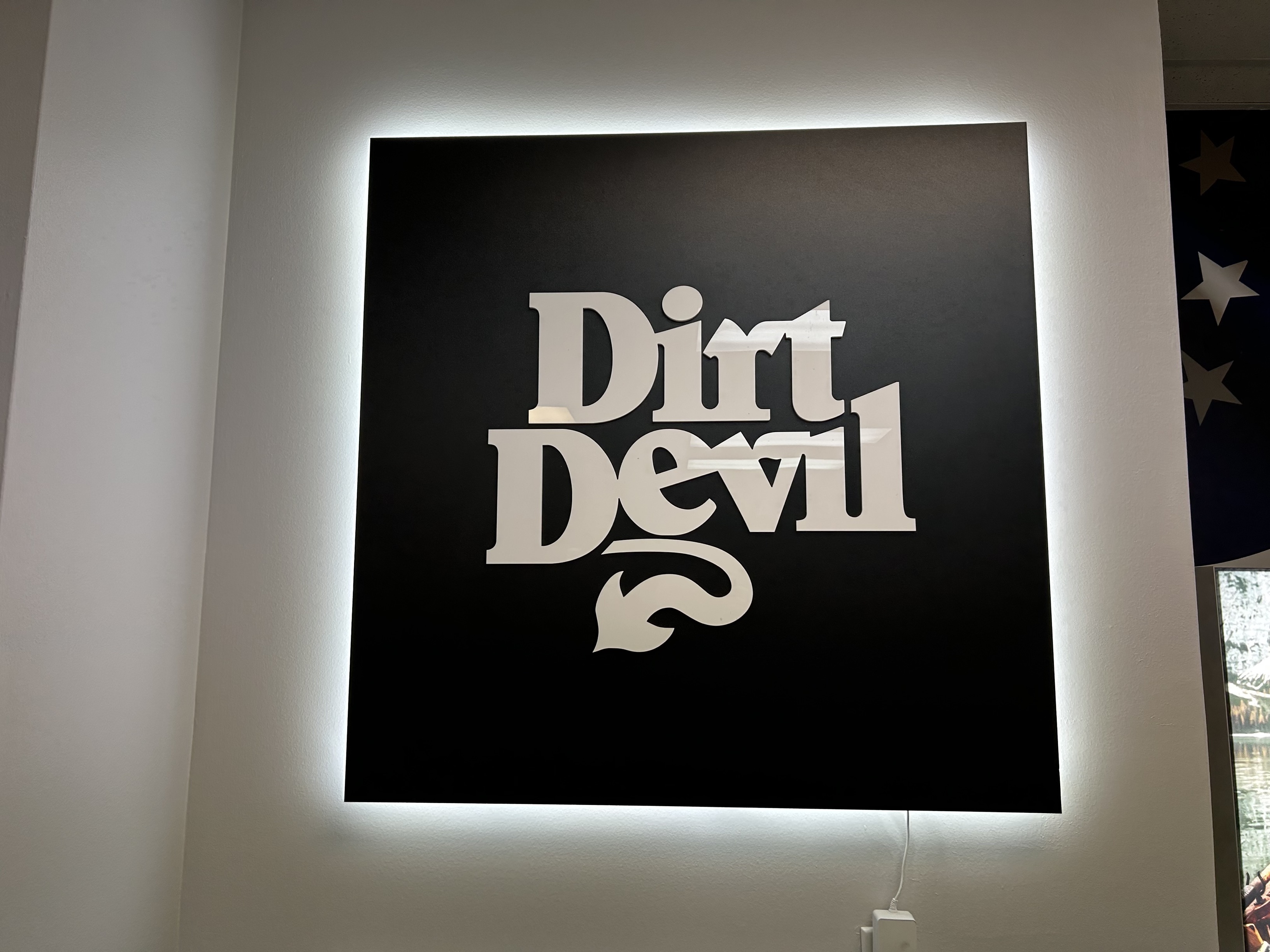
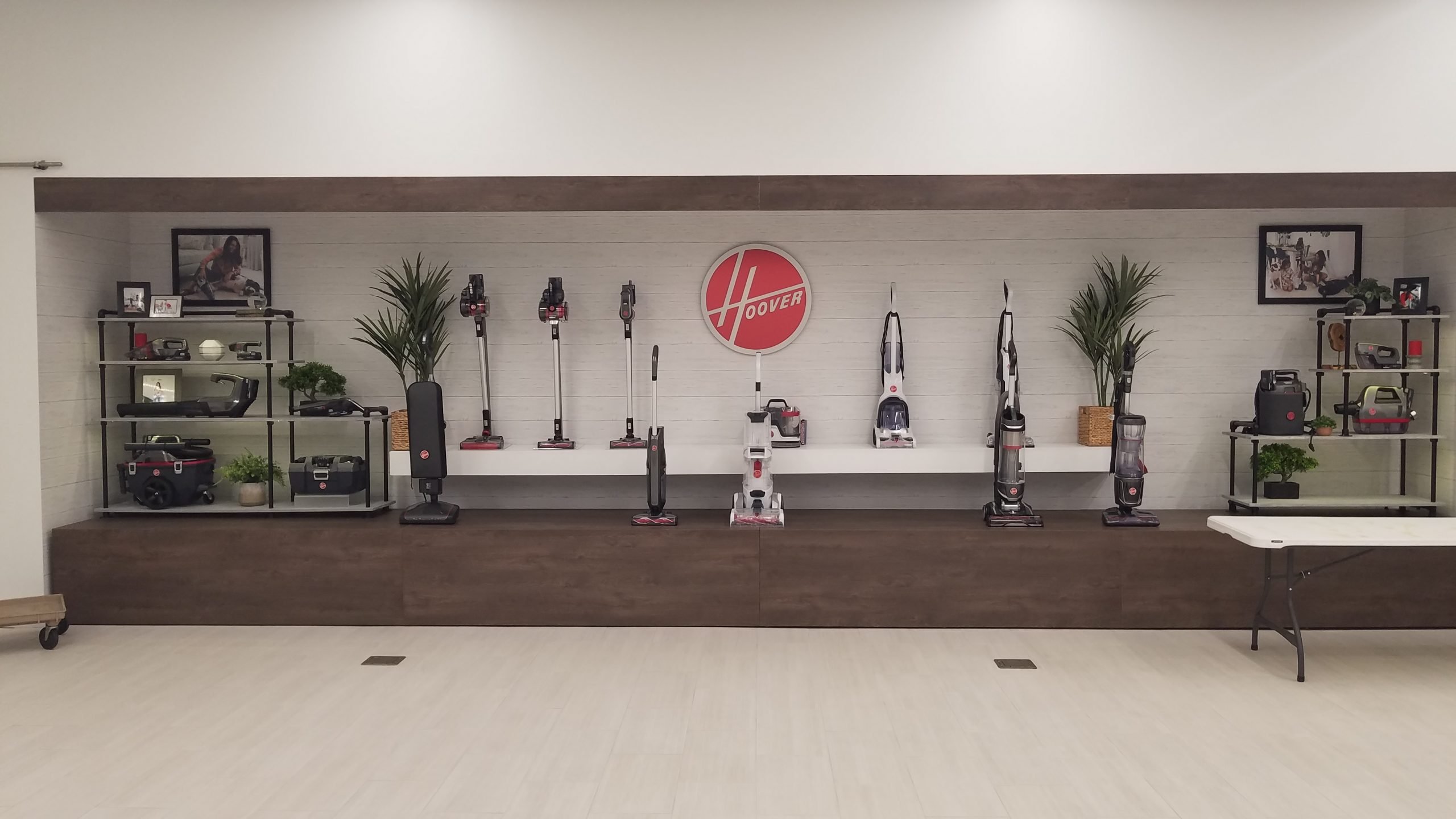
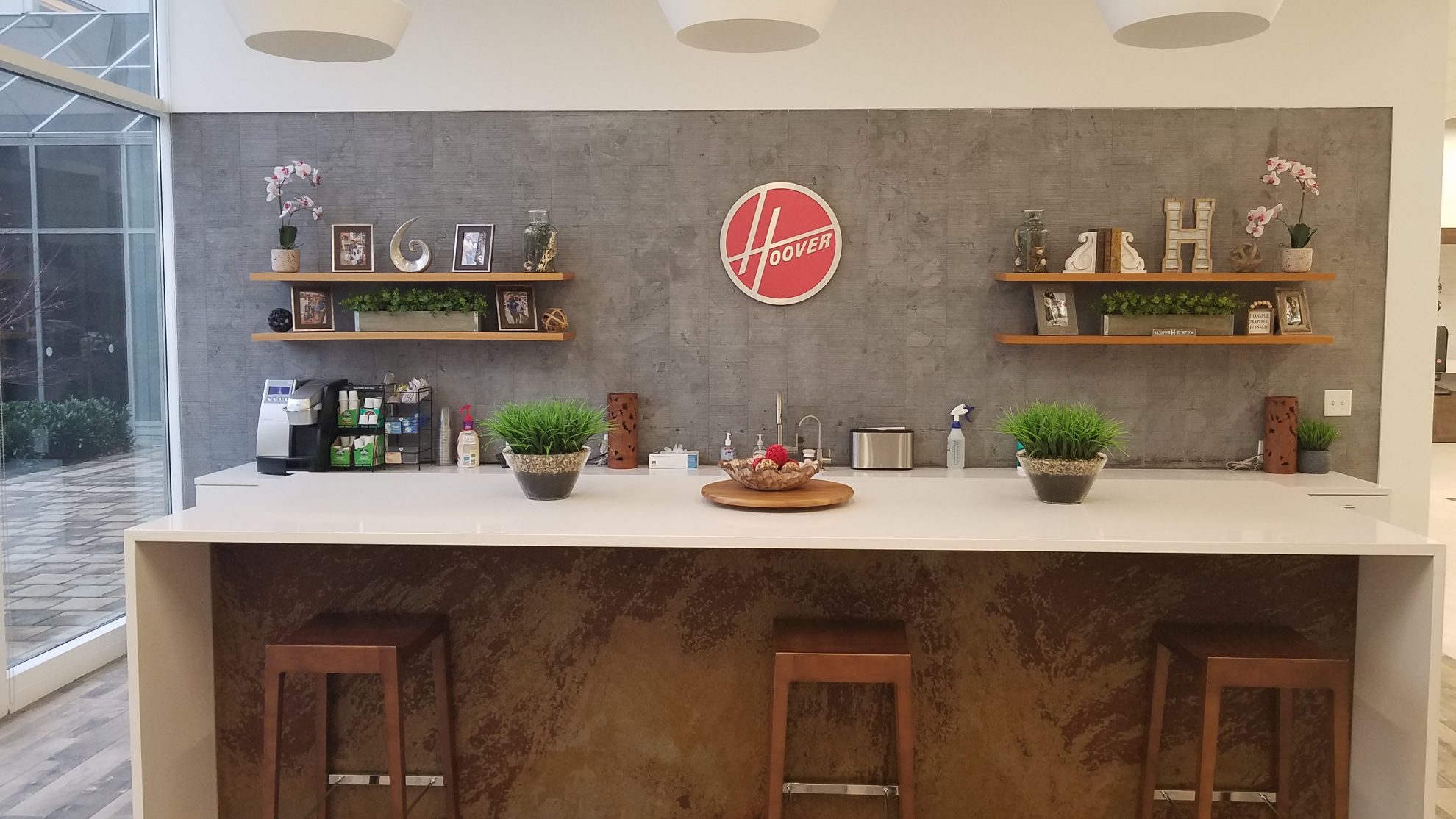
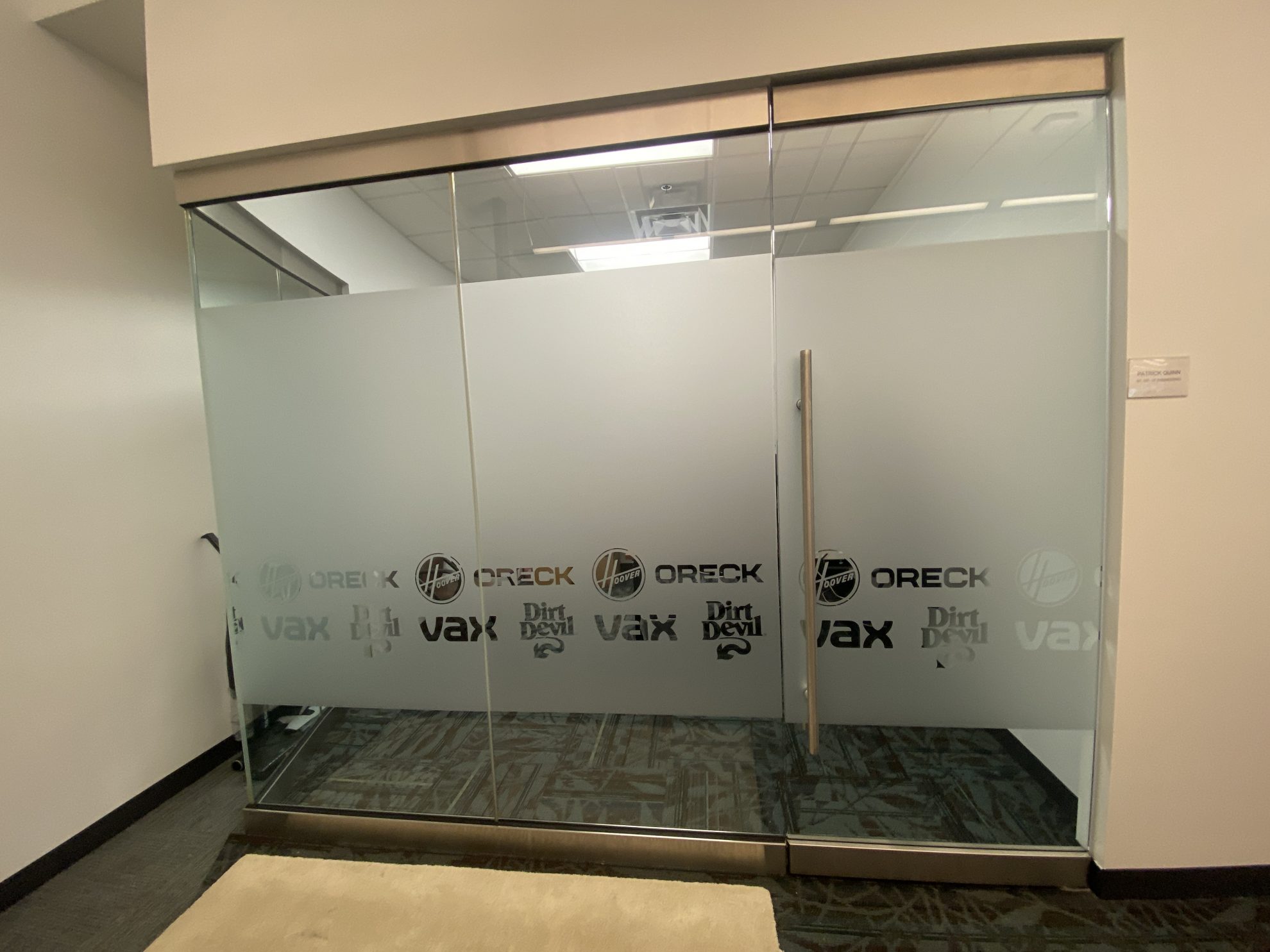
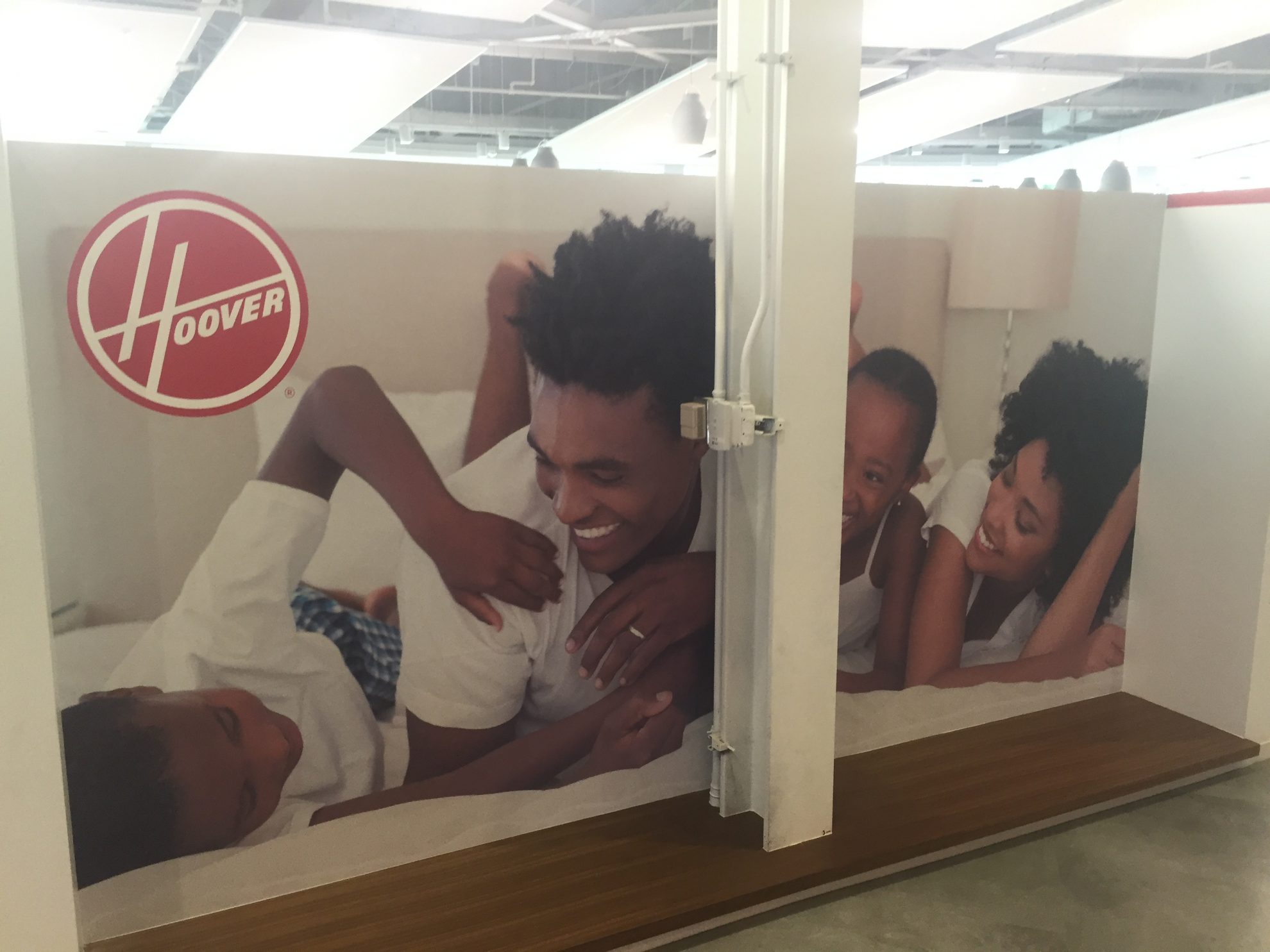
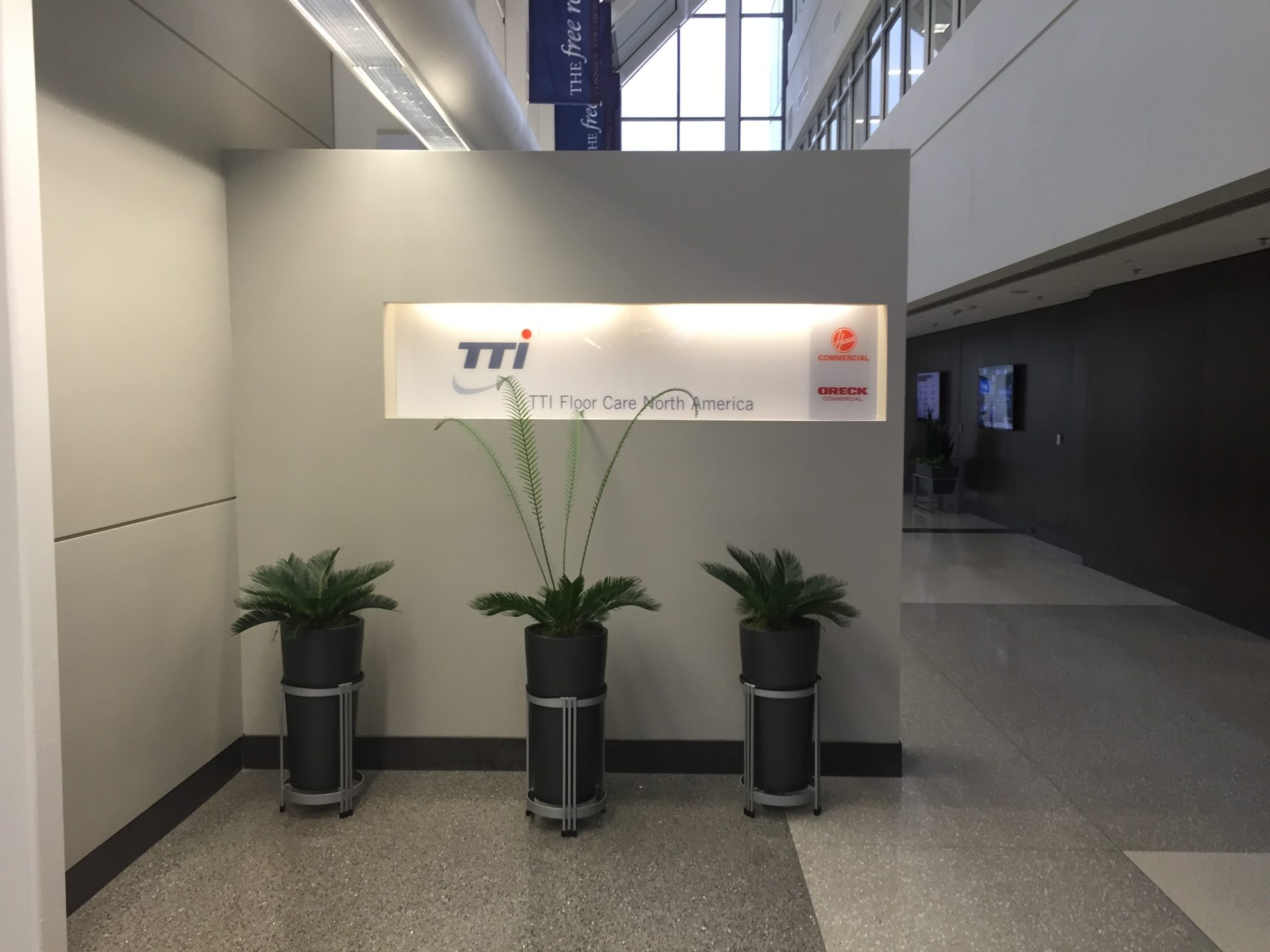
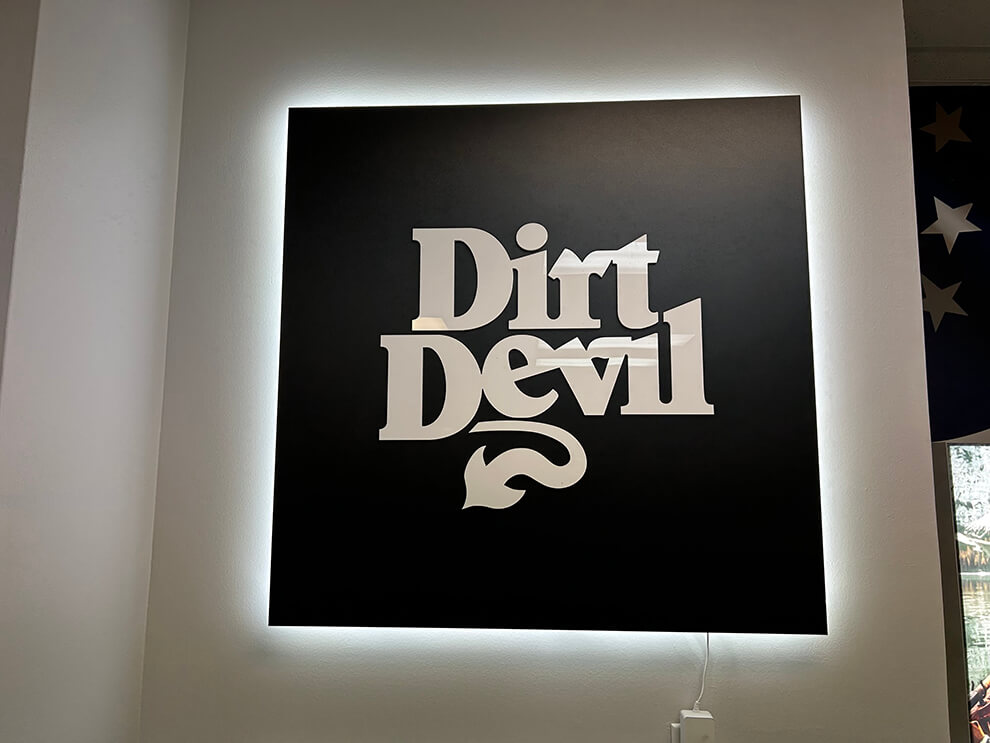
Heritage Signs & Displays collaborated with TTI Floor Care North America to enhance their corporate office. The project included custom frosted vinyl graphics, acrylic signs, dimensional lettering, and LED backlit signs, showcasing the brands Dirt Devil, Hoover, and Oreck. The signage improved office branding, privacy, and aesthetics. Heritage collaborated closely with TTI, ensuring efficient execution and high-quality results, creating an immersive and professional environment that reflects TTI's brand values.
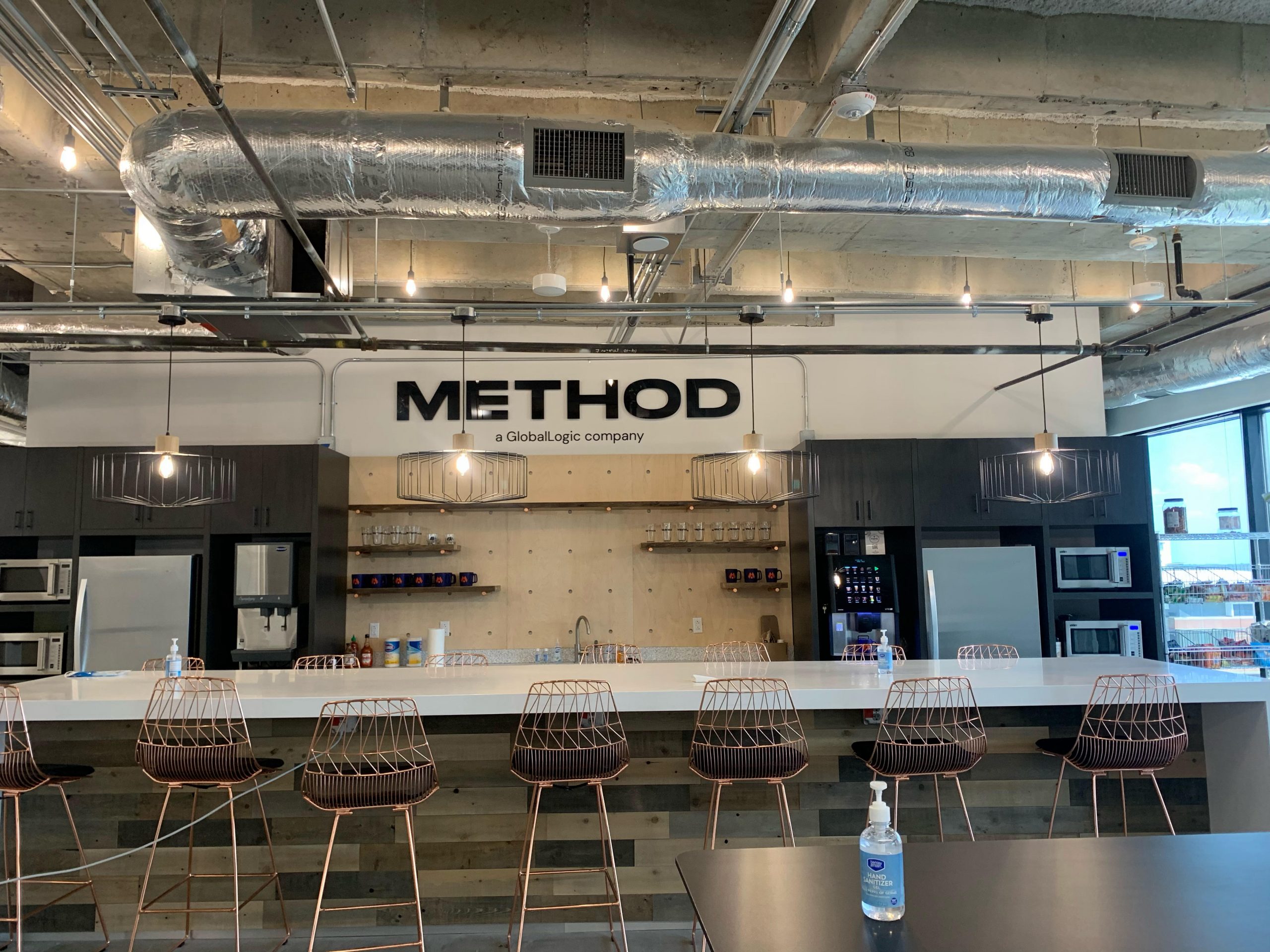
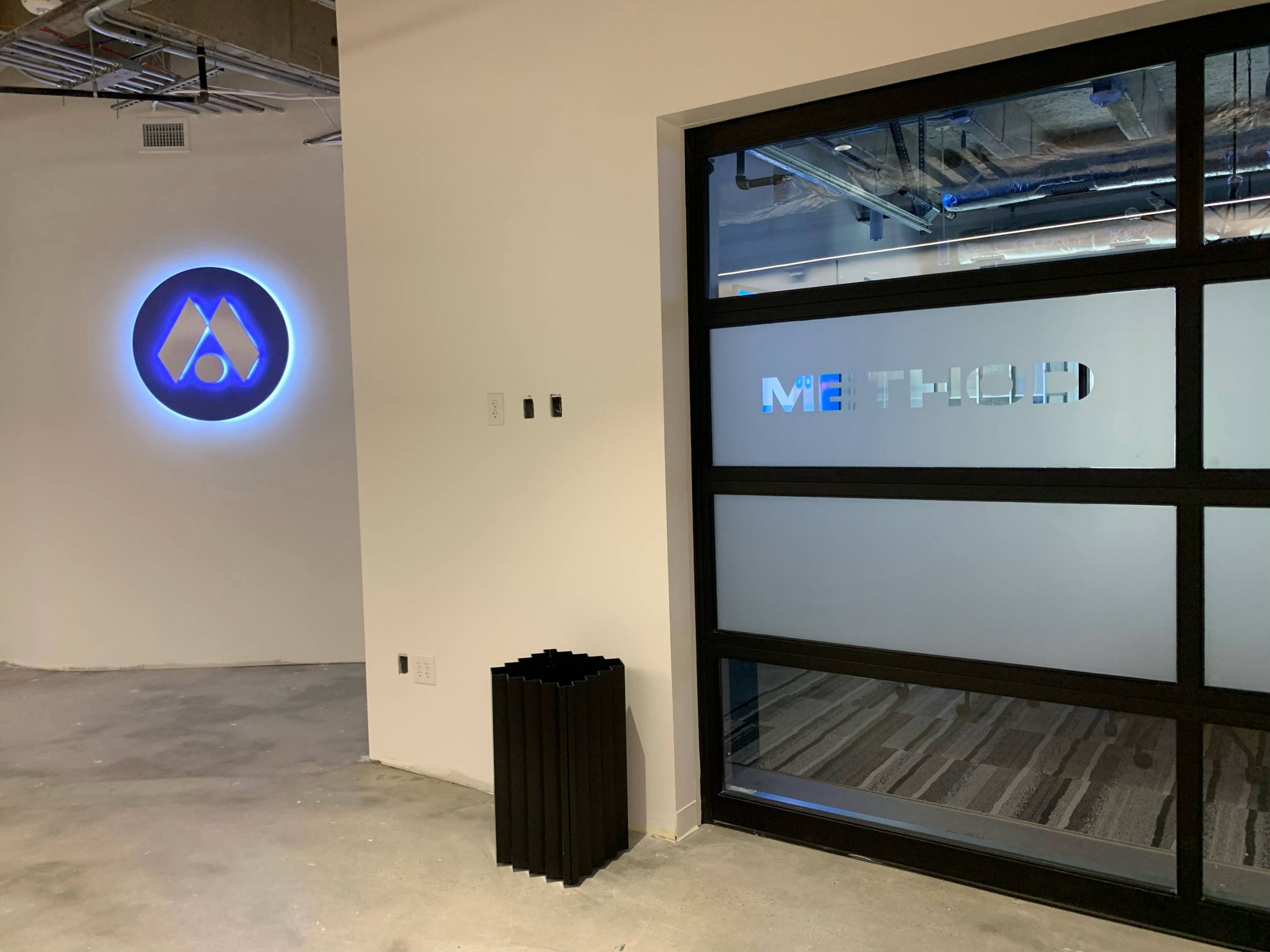
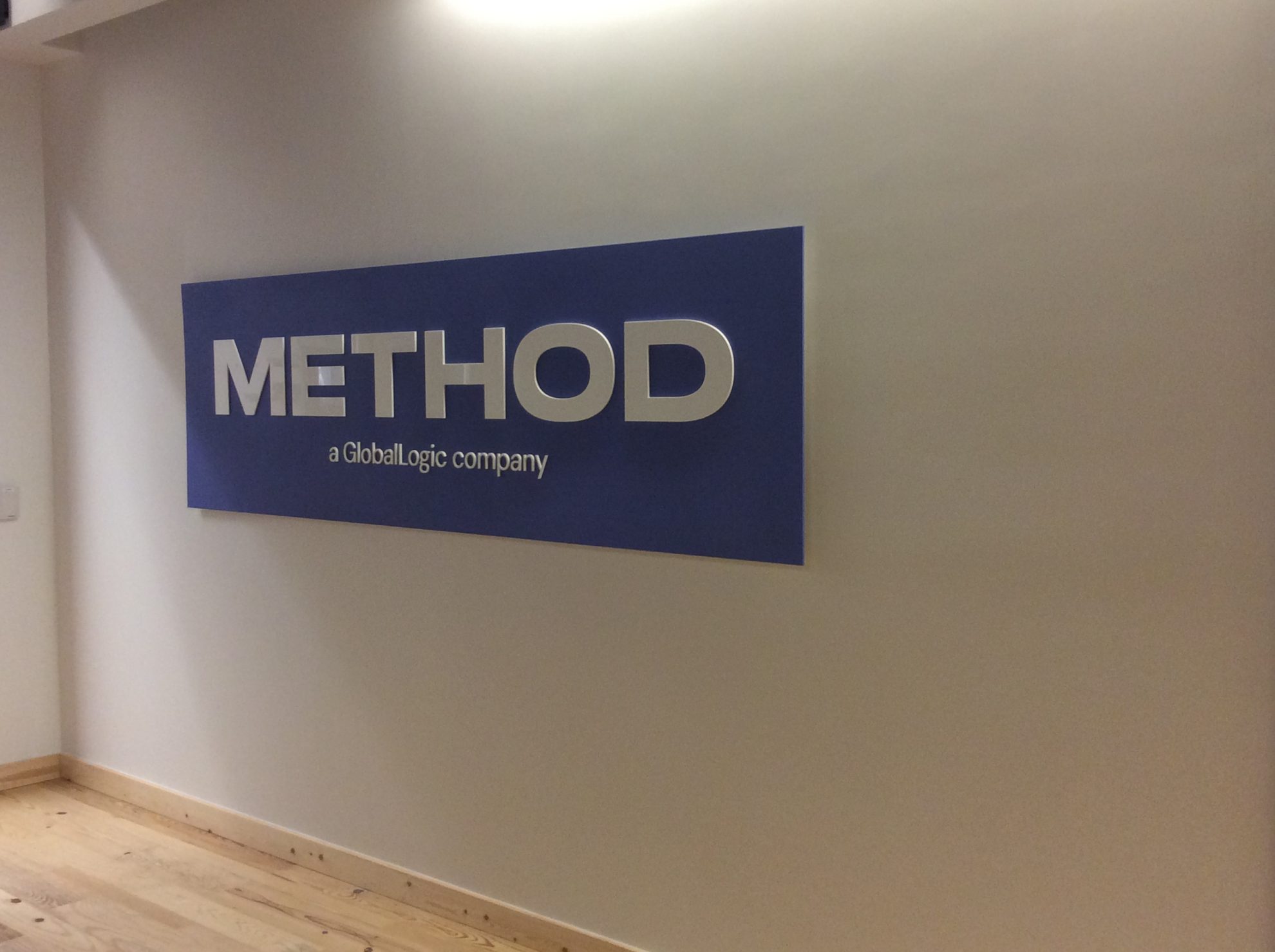
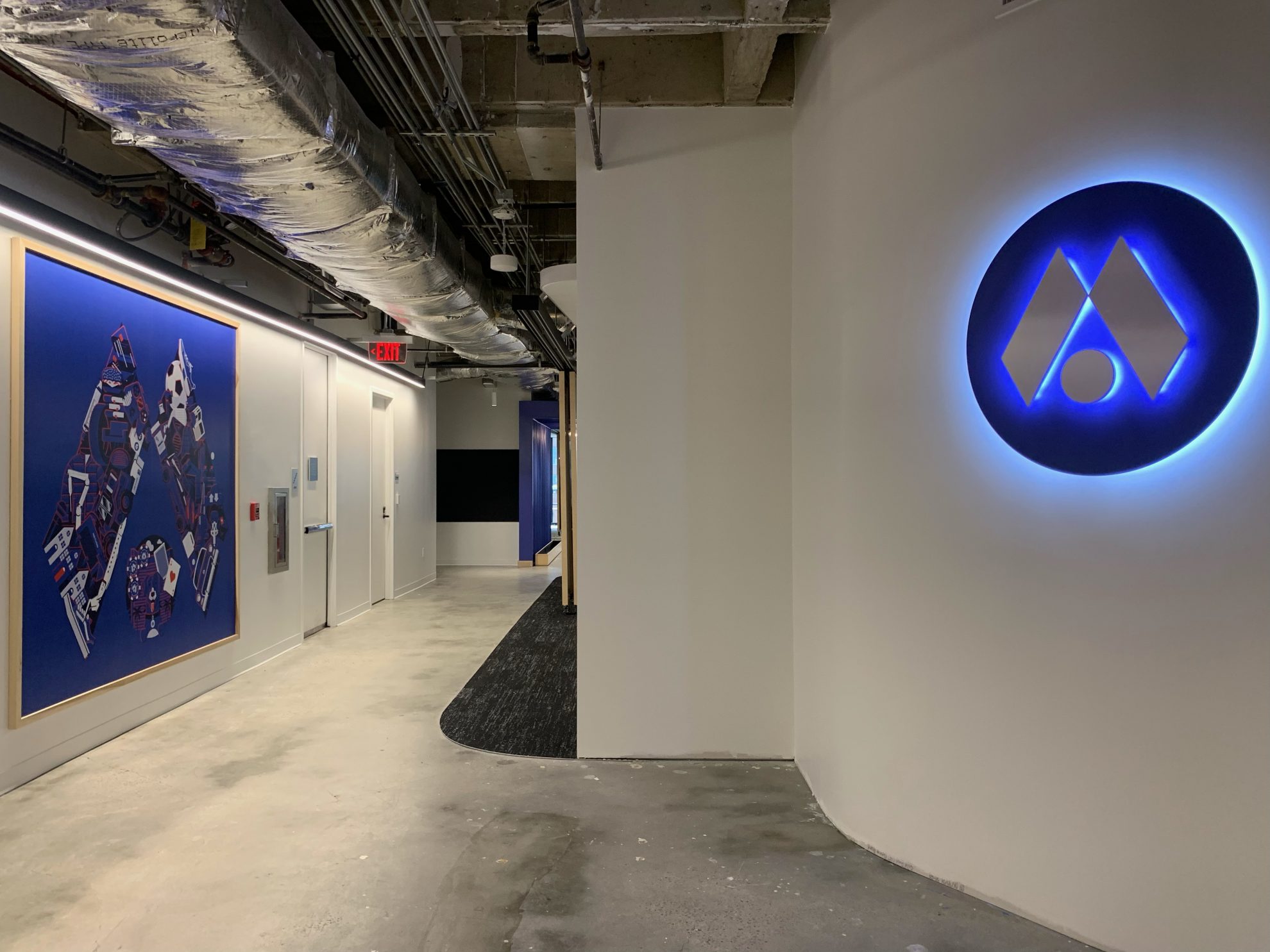
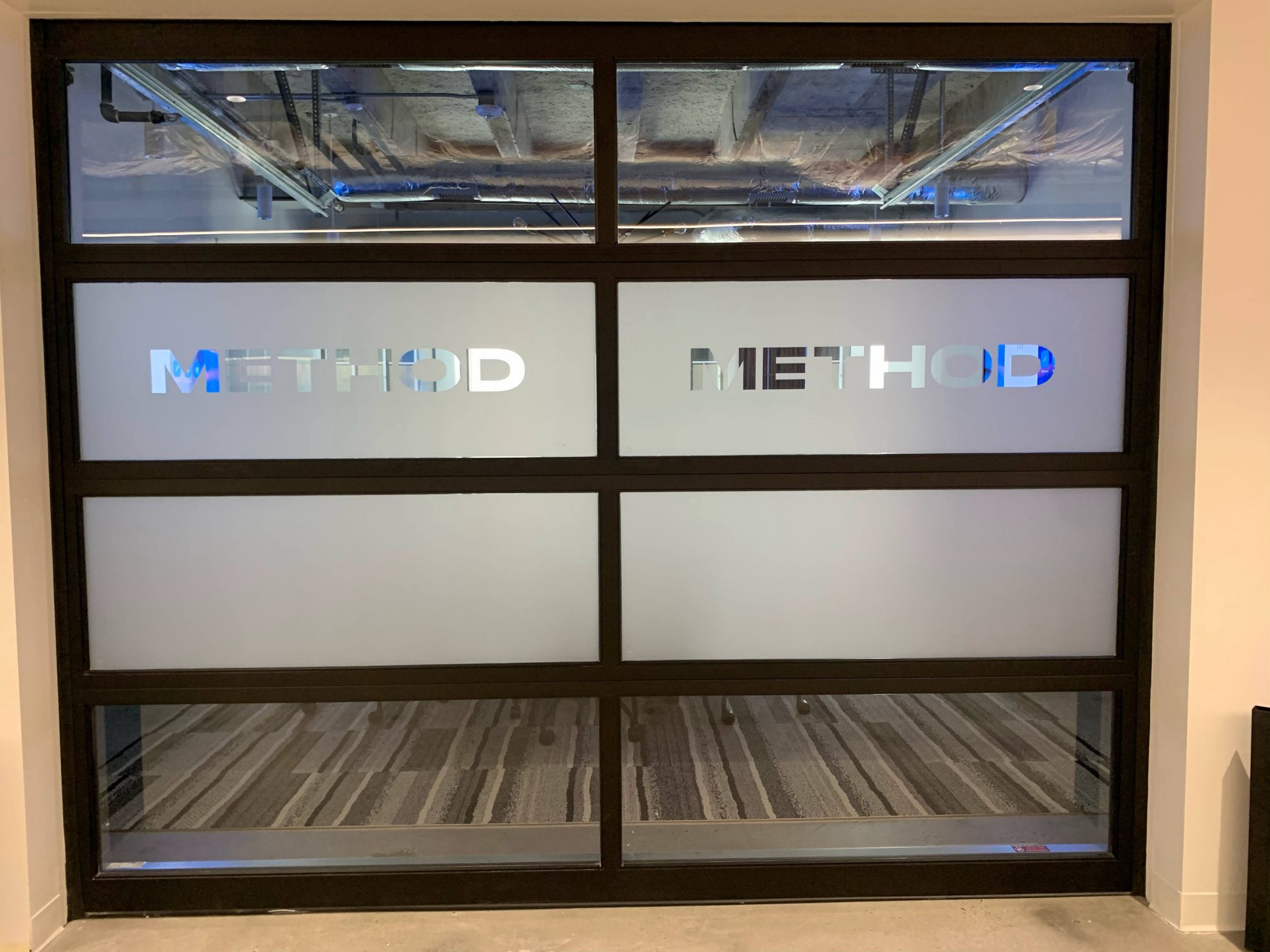
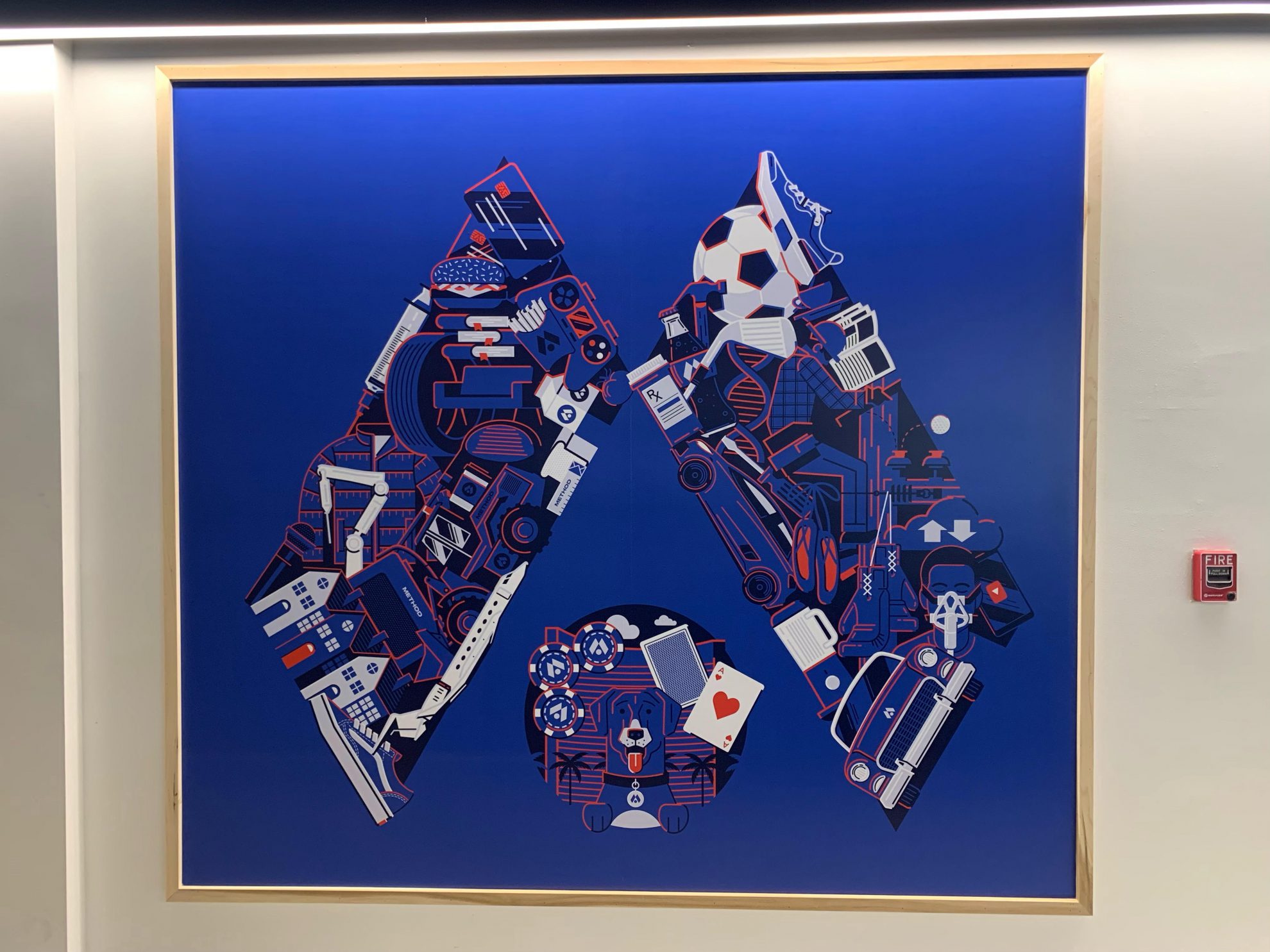
Heritage Signs & Displays' collaboration with Method (formerly Skookum) to rebrand their corporate headquarters. The project included dimensional lettering, wall displays, LED-lit signage, wall wraps, and frosted vinyl, creating an immersive and branded environment. Heritage worked closely with Method's team, ensuring accurate execution and timely delivery. The transformation was completed in August 2021, with Method's employees moving into the revamped space in September. The project reflects Heritage's commitment to quality and collaboration.