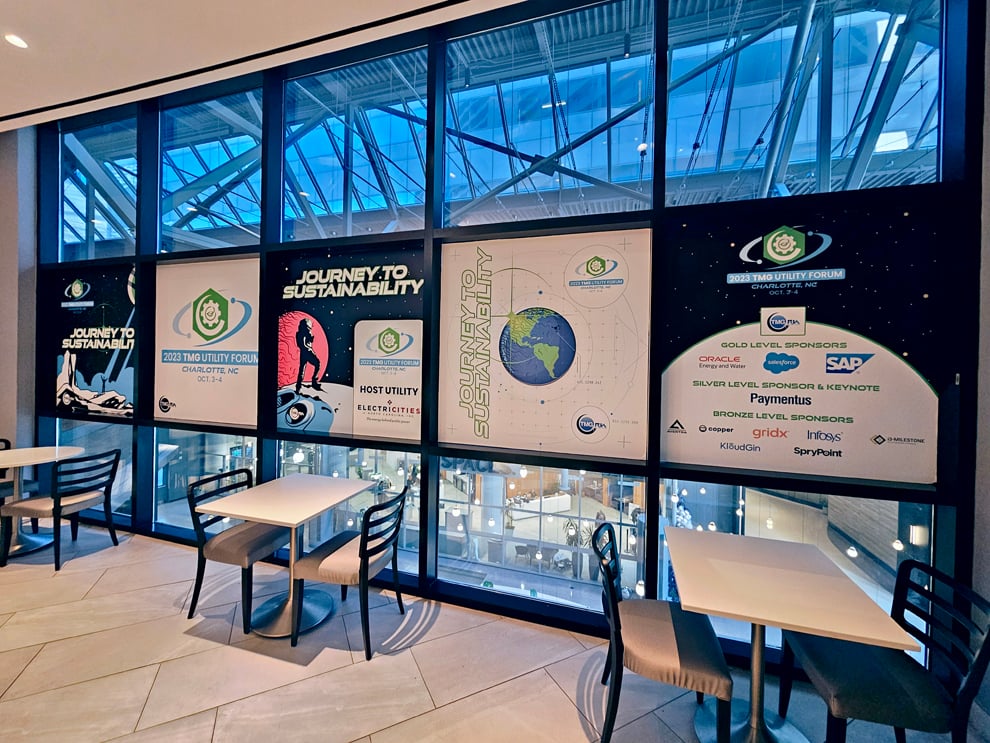
Adhesive vinyl graphics let Greensboro, NC organizations put walls, glass, doors, floors, elevators, and display panels to work without demolition, millwork, or a full build-out. A glass huddle room may need privacy. A long corridor may need direction. A lobby may need identity. A break room wall may need a hiring or culture message that only has to last one quarter. The productive question is almost never "which vinyl should we order." It is "what should this surface accomplish," followed by "which material, design, and installation method will deliver that on this exact substrate."
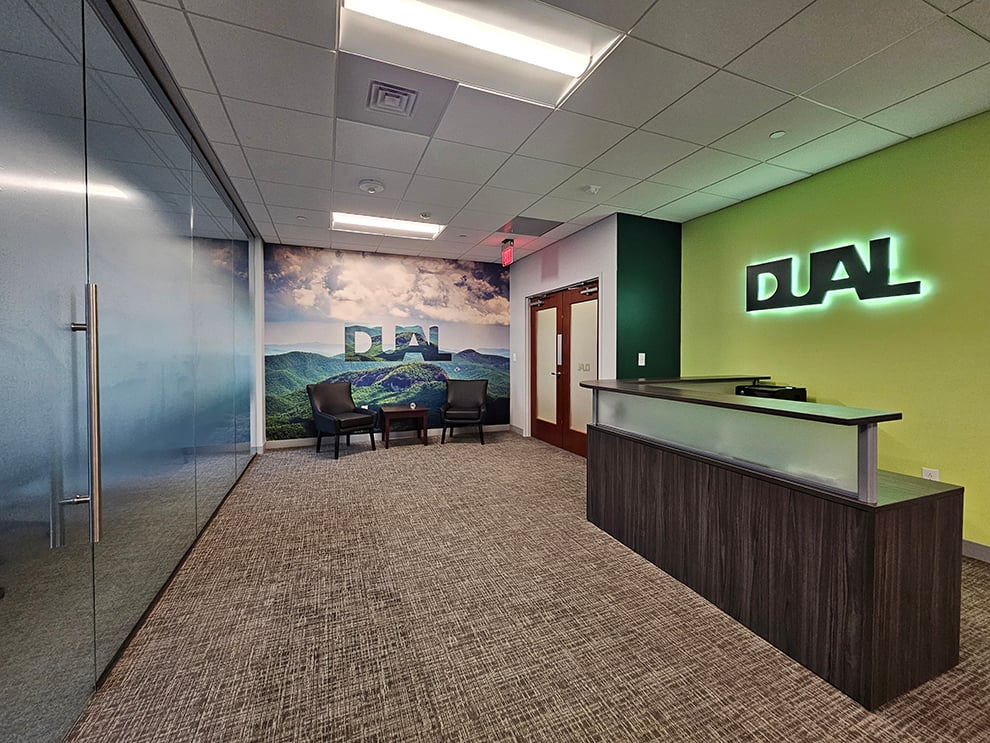
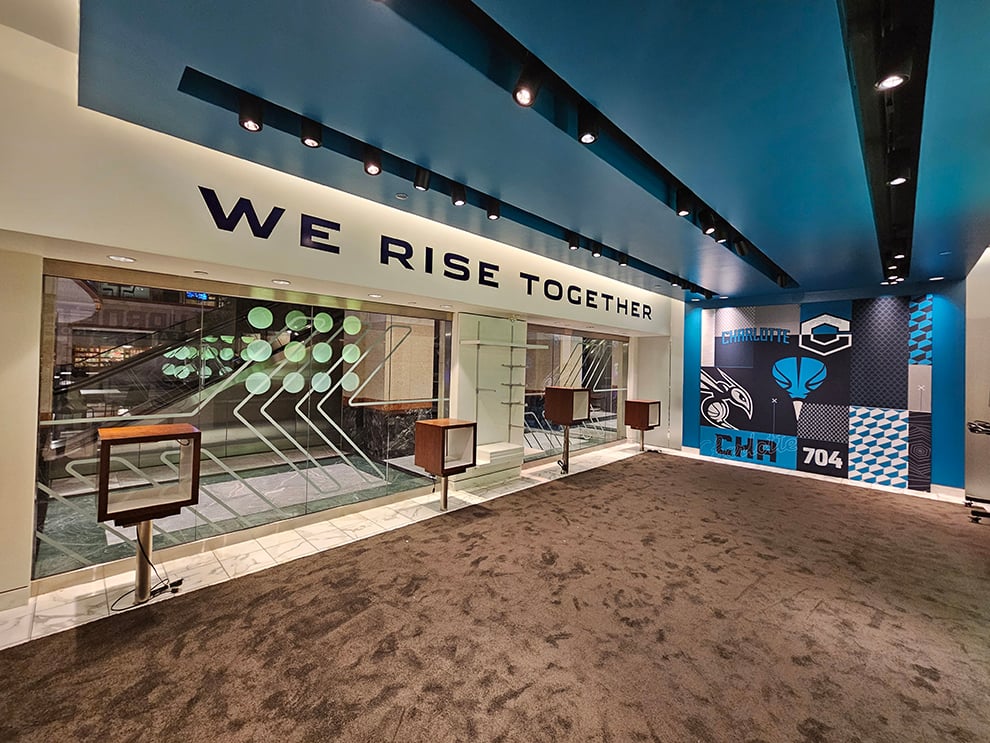
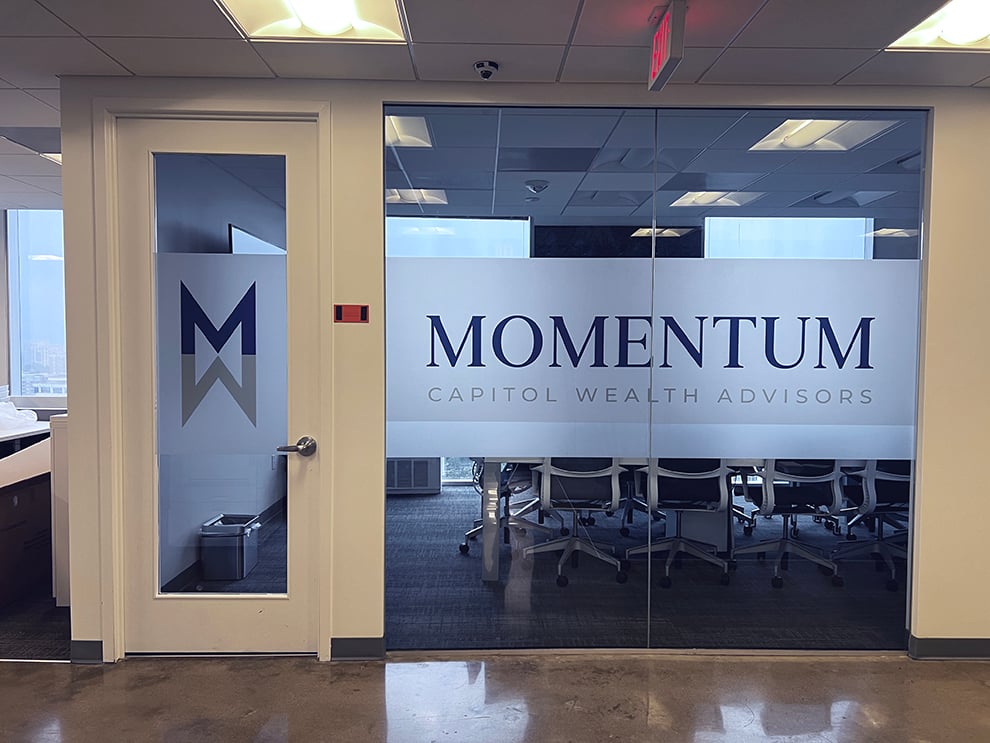
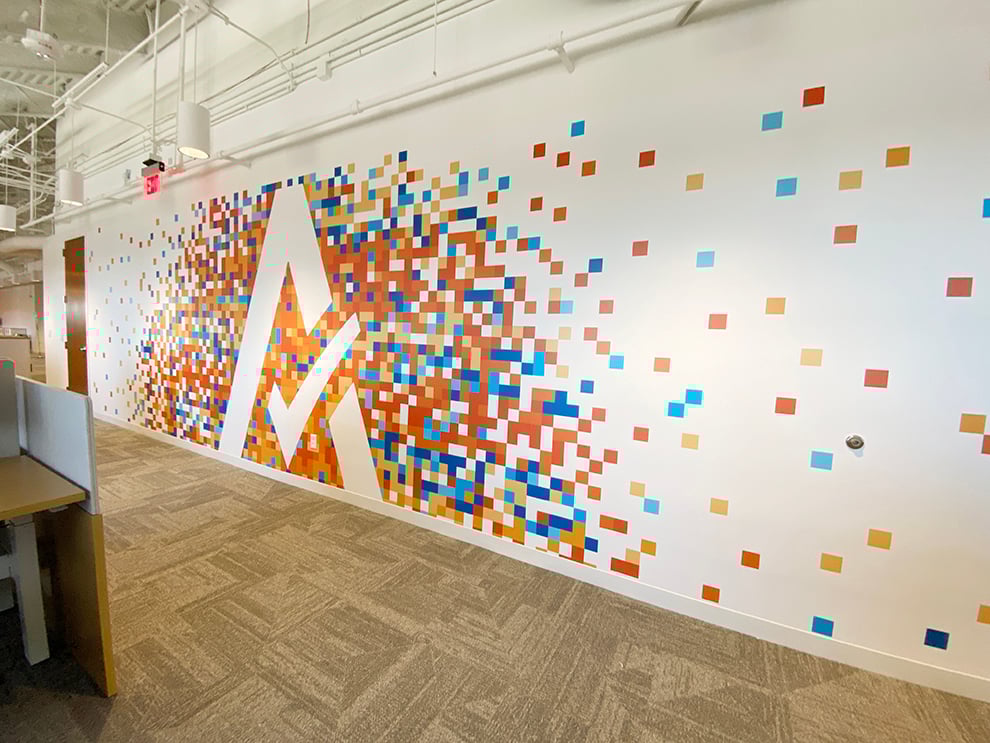
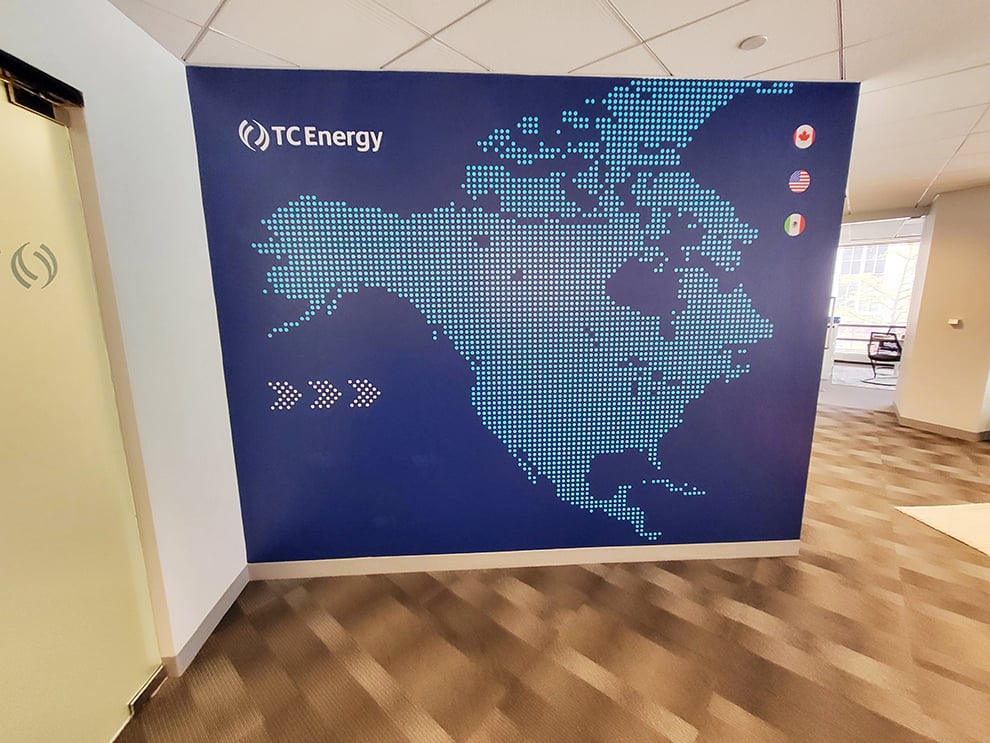
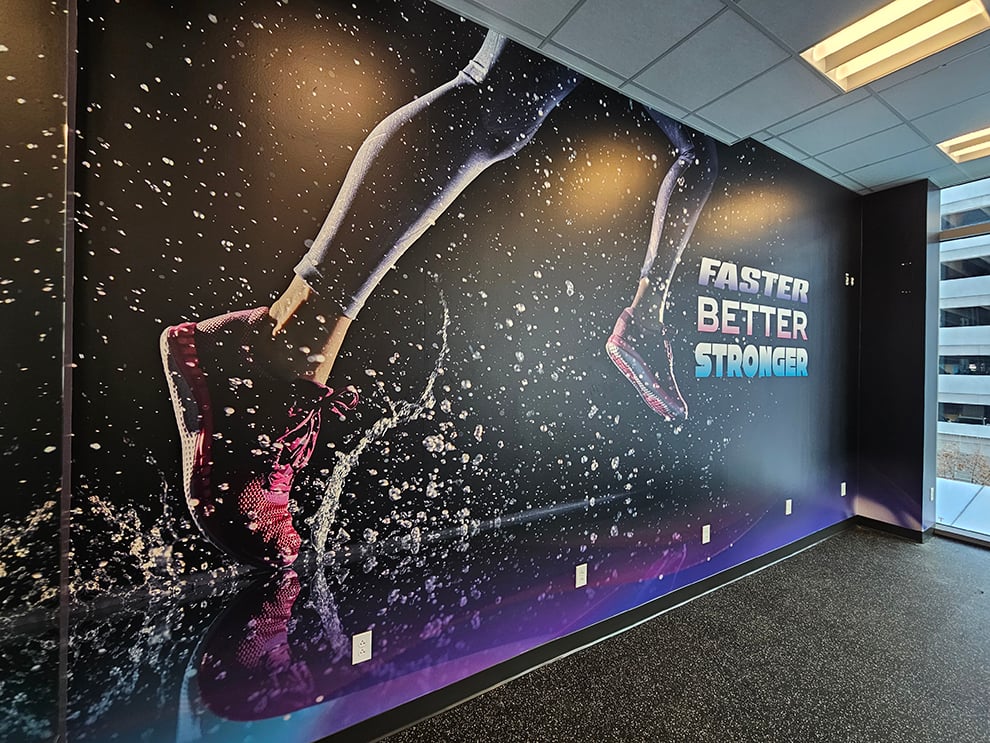
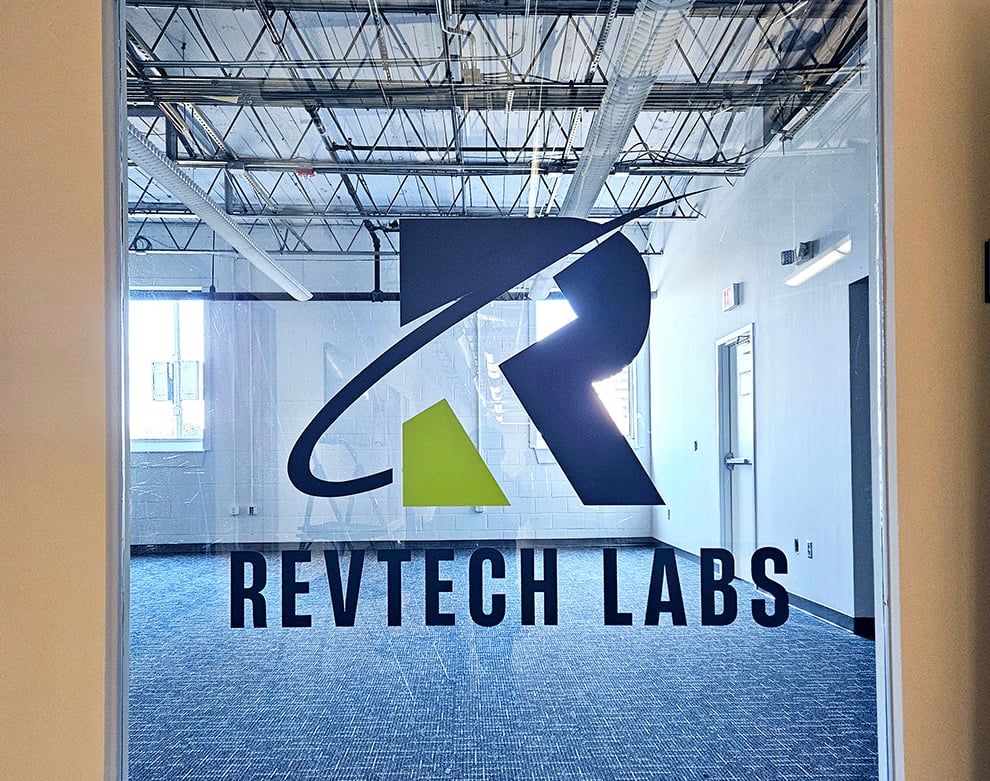
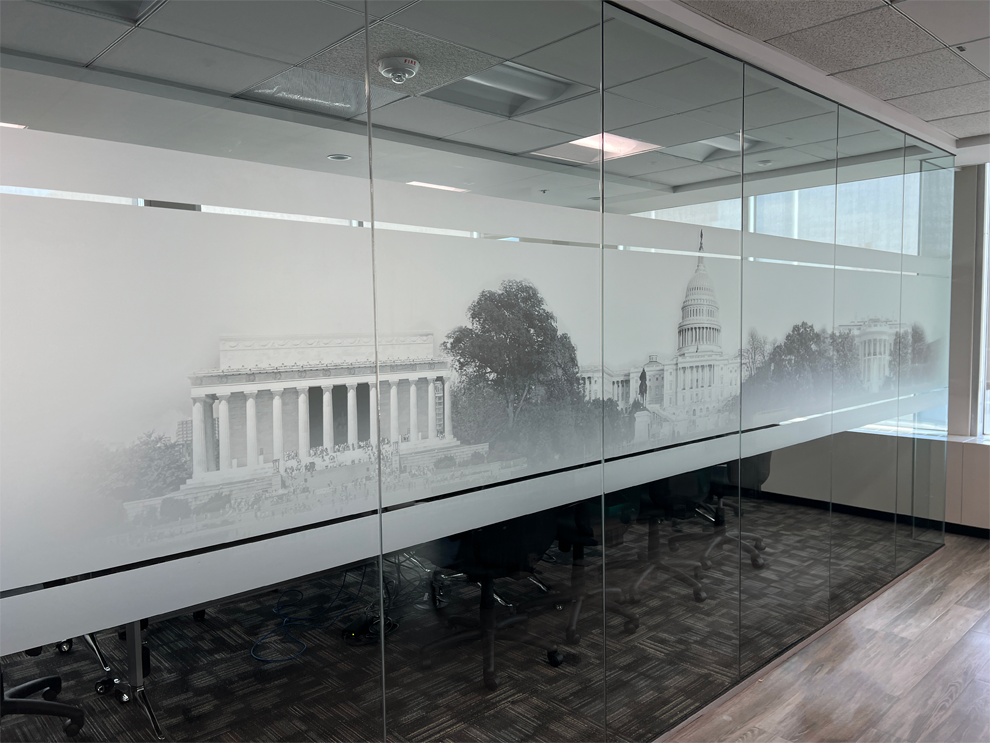
Heritage Signs & Displays is veteran-owned and family-led, and we design, produce, and install adhesive vinyl across Guilford County and the wider Piedmont Triad. A project can be a single application or a coordinated program spanning dozens of surfaces. Frosted vinyl and privacy film give offices and meeting rooms separation while daylight still reaches interior desks. Cut vinyl covers lettering, logos, room numbers, and short instructions. Window graphics give entrance glass a defined job. Floor graphics and elevator wraps put direction, branding, or campaign messaging where people already walk and wait. When the wall itself is supposed to carry the dominant visual experience through full coverage, mural-scale imagery, or storytelling, Wall Wraps is the architectural-scale member of this same adhesive vinyl family.
Good outcomes start with audience behavior, not material spec sheets. Our environmental graphic designers begin with what employees, patients, students, visitors, or attendees should notice, understand, or do, then translate that into scale, placement, coverage, sightlines, and the relationship between the vinyl and the signs or displays around it. Clear glass often benefits from distraction markers, which are decorative or branded vinyl elements applied to glazing so the surface reads as a surface. They can deliver privacy and identity at the same time, though we never present applied vinyl as evidence of building-code or safety-glazing compliance.
Greensboro projects usually carry more approvals than the graphics suggest on their own. Healthcare systems, insurance and financial firms, logistics and manufacturing operations, university departments, nonprofits, and professional service offices frequently occupy multi-tenant buildings where internal leadership, a landlord, and a property manager each shape what gets installed and when. One dedicated Project Manager holds approved direction, field notes, production requirements, scheduling, and installation planning in one place, so you are never repeating the same details to three separate vendors. The required site survey gives us firsthand knowledge of the property before we finalize production.
That continuity earns its keep when multiple graphics share a single deadline or when an occupied office has to keep operating during installation. Instead of treating each surface as a standalone order, we sequence the work so privacy, identification, direction, and brand messaging all serve one objective while each application keeps the material and method that its substrate actually requires. Production and fabrication for Heritage projects are supported by our Waldorf, Maryland facility. Founded in 1977, we approach every accepted project with practical judgment, craftsmanship, and follow-through you can plan around.
Adhesive vinyl is a family of engineered material systems, not a single product that behaves identically everywhere. Substrate, desired appearance, intended service period, traffic, cleaning routine, exposure, and the eventual removal plan all narrow the options before artwork is locked.
Painted walls raise questions about drywall condition, texture, primer, paint chemistry, and cure status, because a graphic can only perform as well as the finish holding it up. Glass brings a different set of decisions: privacy level, retained views, daylight, low-e or reflective coatings, viewing direction, and whether the product is installed dry or wet. Floors need materials and protective systems rated for the specific flooring type and the foot traffic they will absorb. Elevators demand attention to moving panels, seams, edges, clearances, constant hand contact, and aggressive cleaning schedules.
We use those differences to specify rather than to generalize. The goal is an application suited to the real surface, producing the intended look, with honest expectations for installation, maintenance, service life, and removal. Two graphics inside one branded program may legitimately call for two different vinyl systems and two different installation methods, and that is a sign of good planning rather than inconsistency.
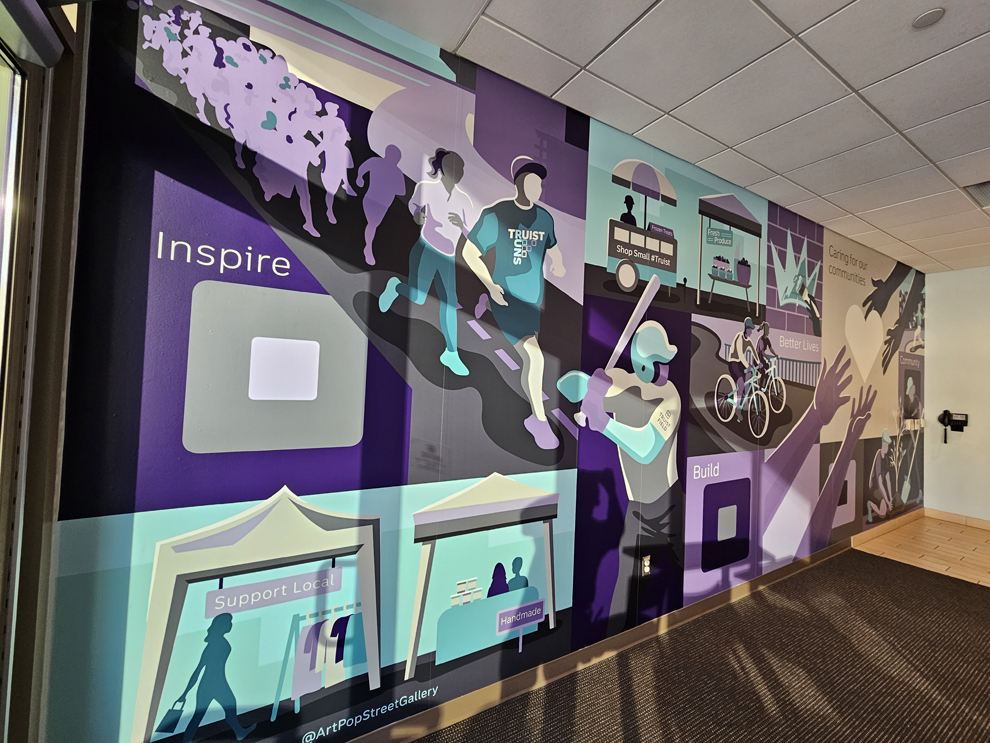
A finished vinyl application can look effortless, which conceals how many variables had to line up. Dimensions, substrate condition, material selection, color accuracy, production tolerances, building access, timing, and installation technique all determine what you eventually see on the wall or the glass.
Our One Dedicated Project Manager System keeps environmental graphic design, field verification, production, fabrication, scheduling, and full-time Heritage installers connected through shared project knowledge. You work with one point of coordination who already knows the approved direction, the property conditions, the stakeholder list, and the reasoning behind every decision made so far. Fewer handoffs mean fewer translated instructions and clearer accountability when something needs to change.
Deadlines get the same honesty. When a requested date is genuinely achievable, your Project Manager drives toward it. When the full scope cannot responsibly be produced and installed by then, you hear that early, along with the strongest workable alternative, whether that means phasing the installation, reordering the sequence, adjusting an application, substituting a material, or completing the highest-priority areas first.
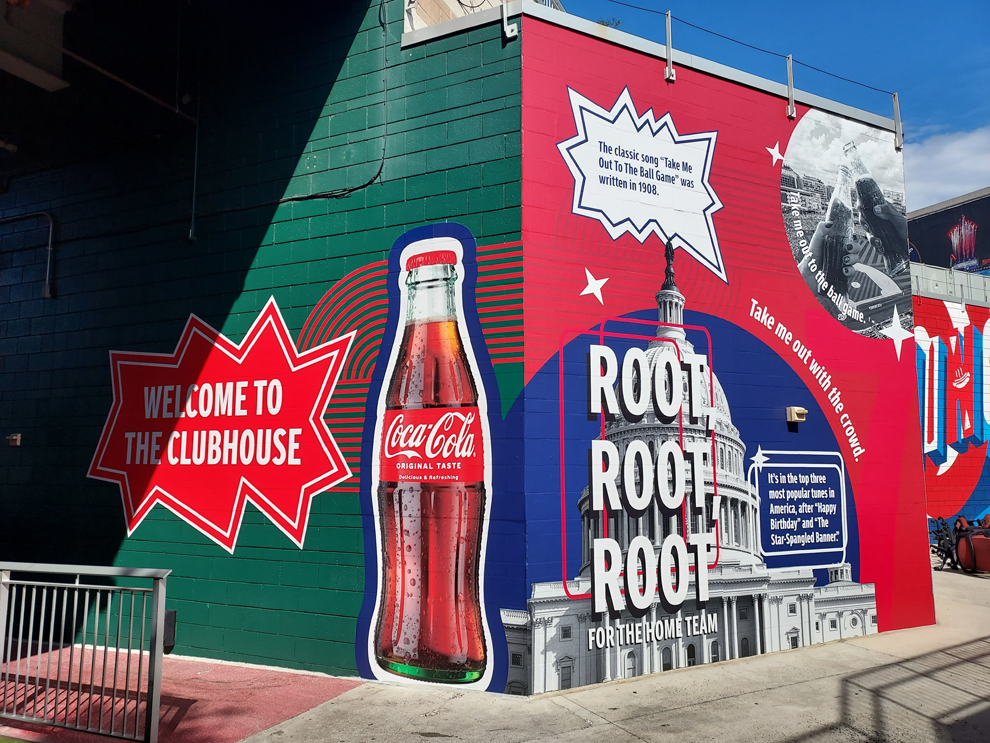
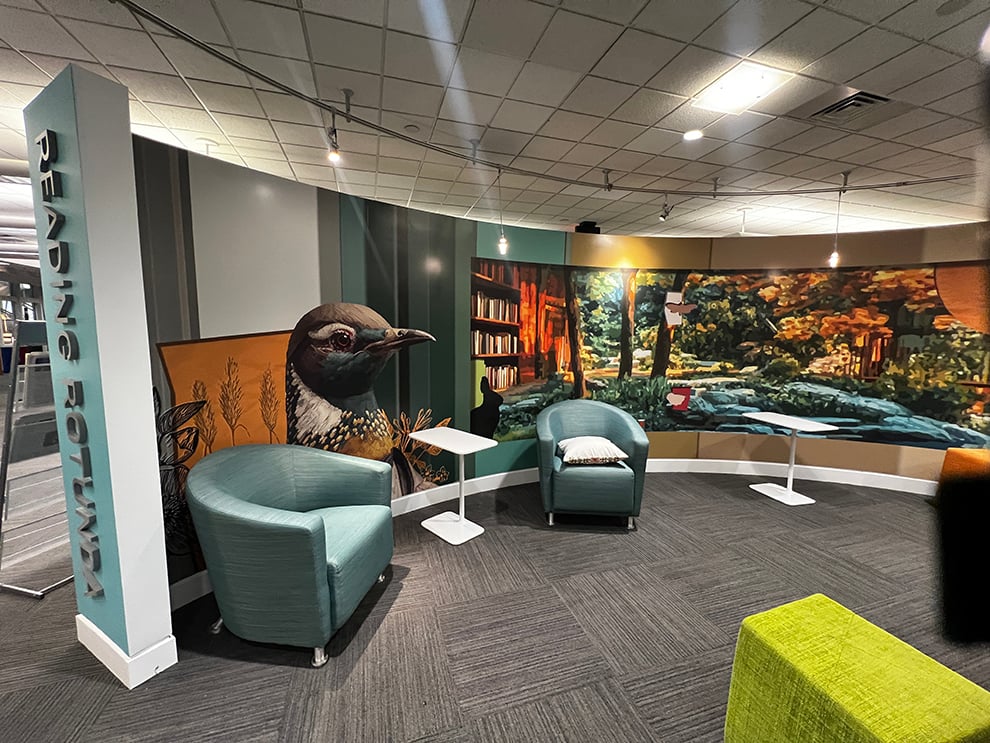
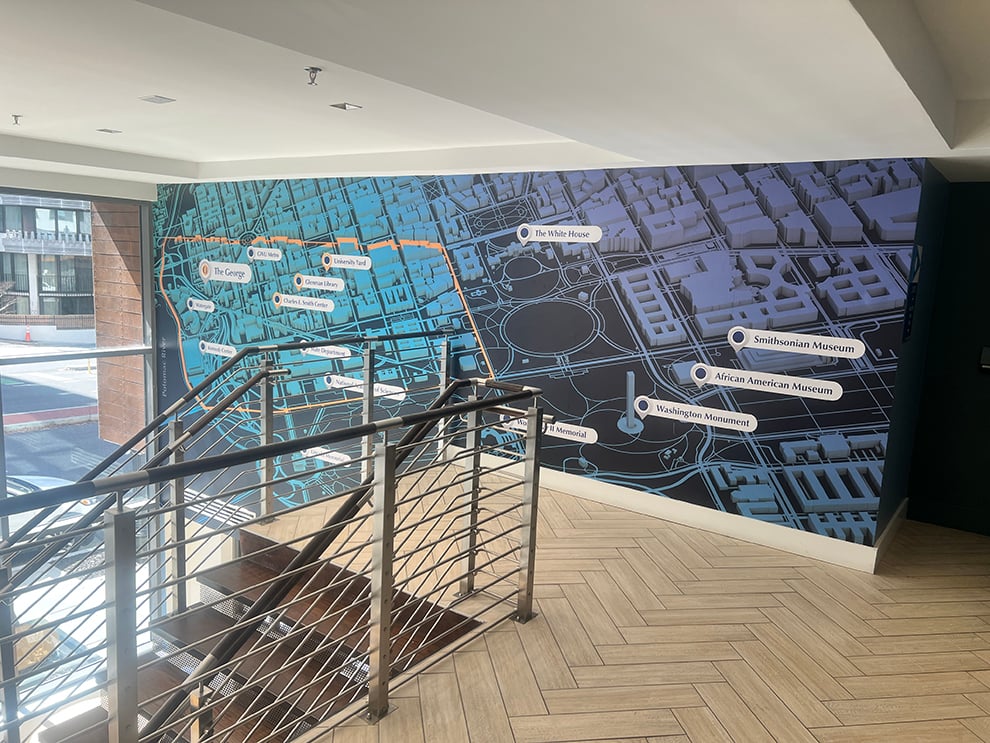
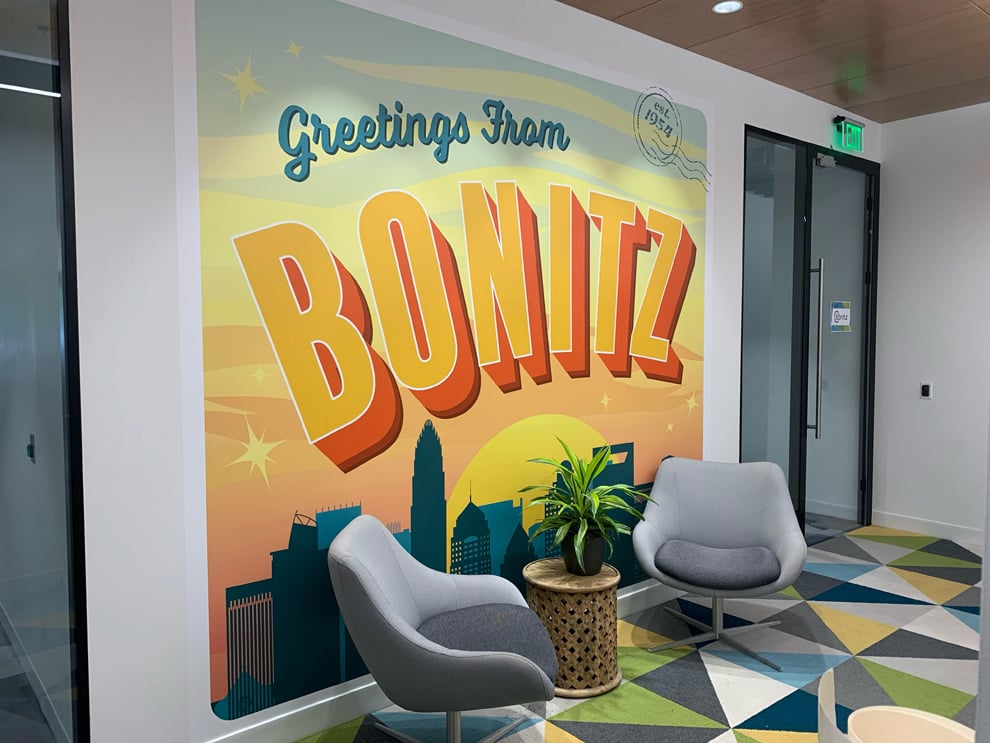
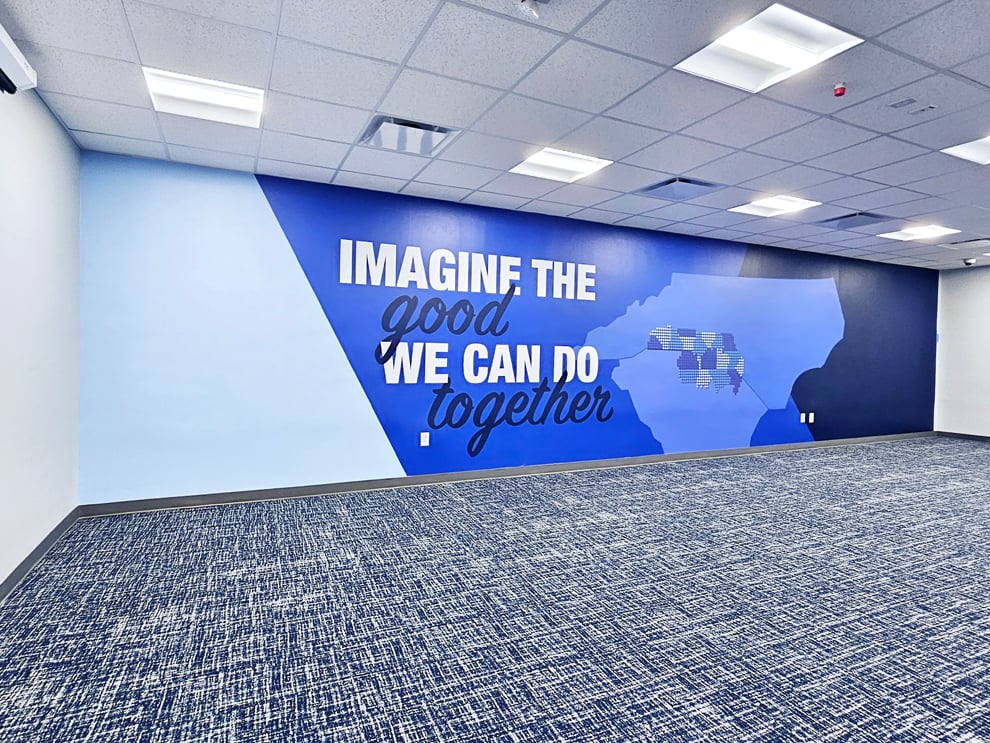
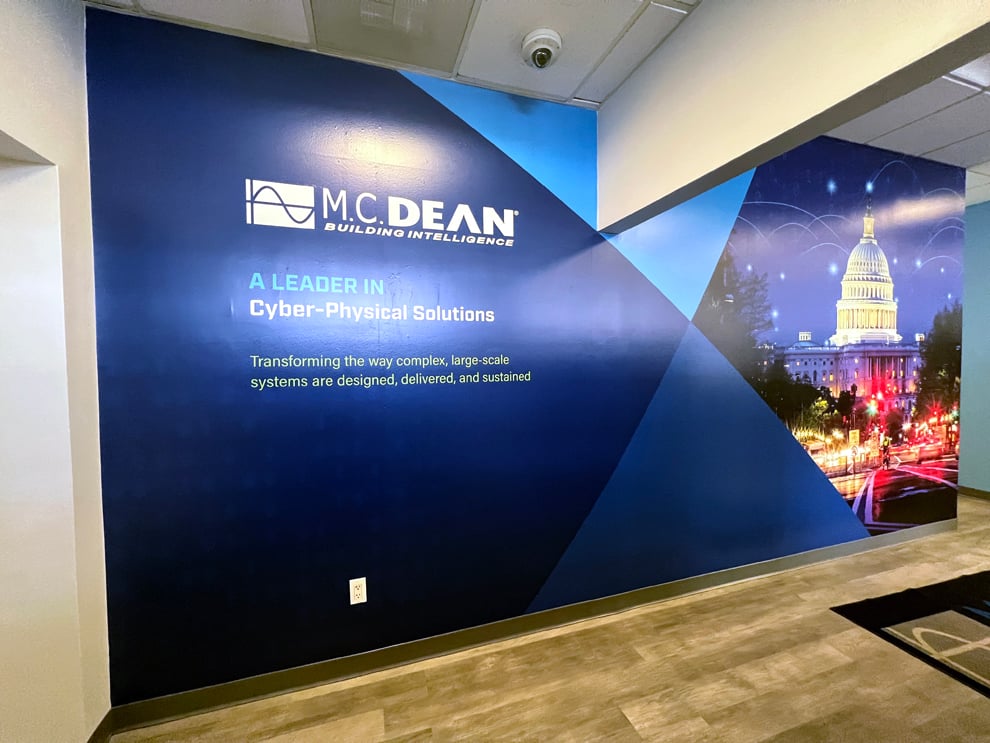
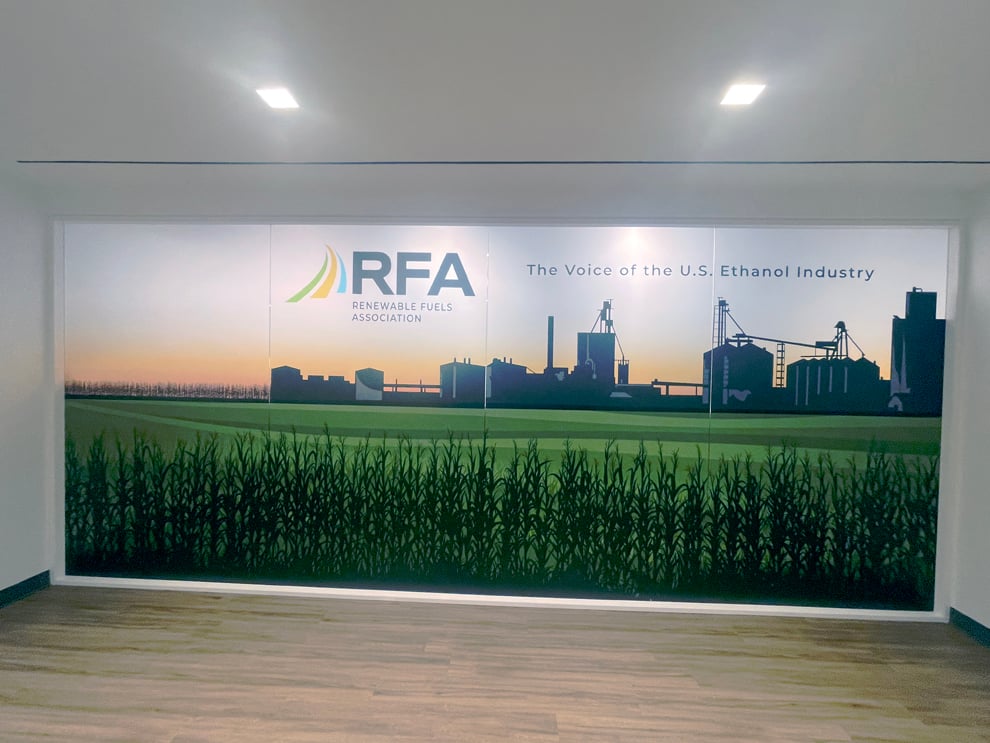
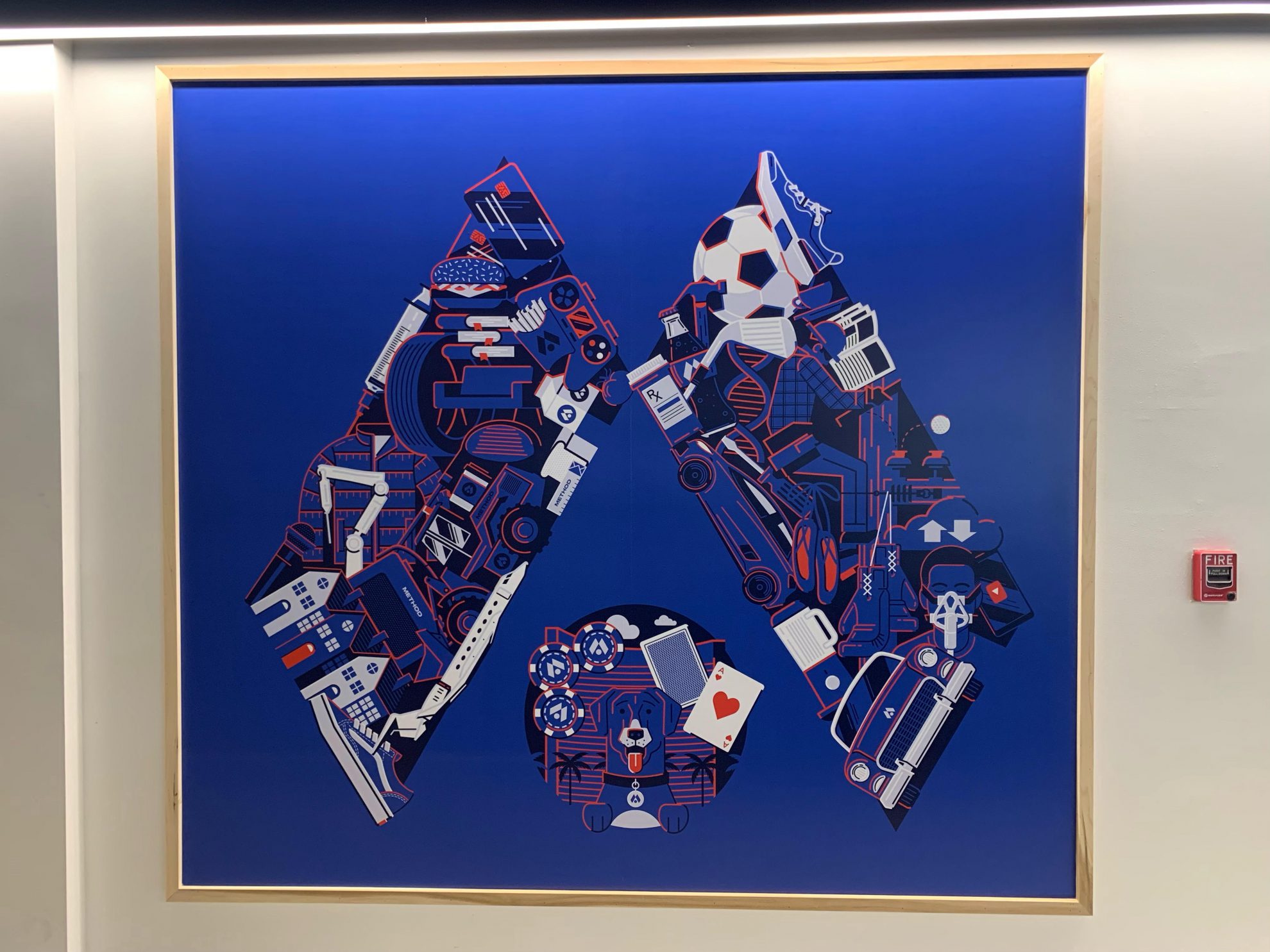
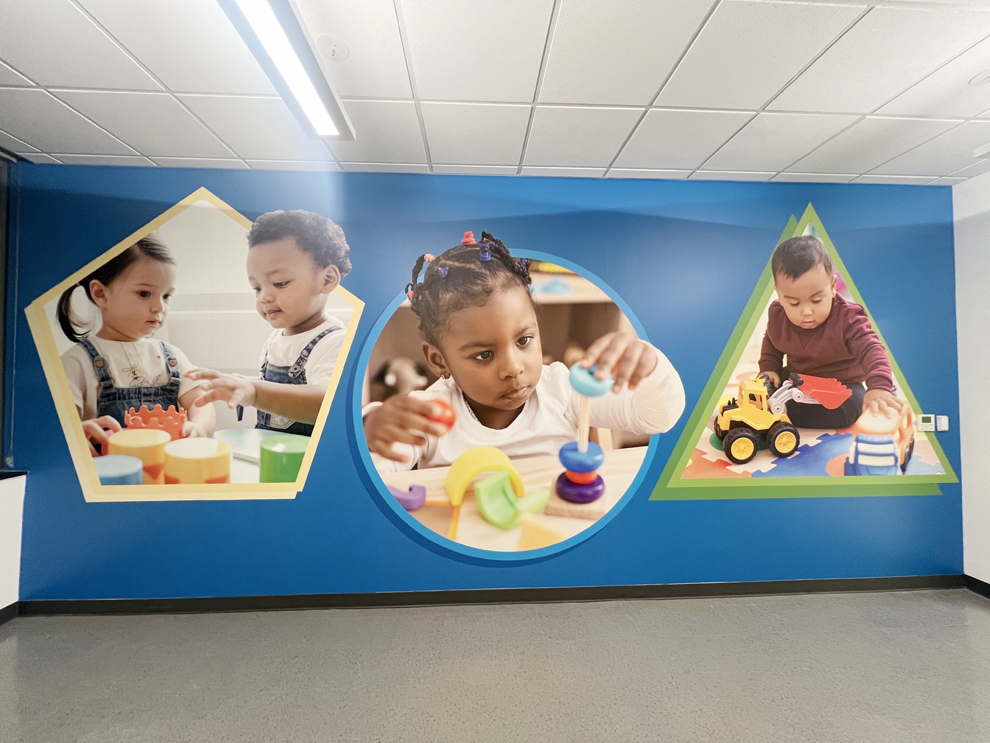
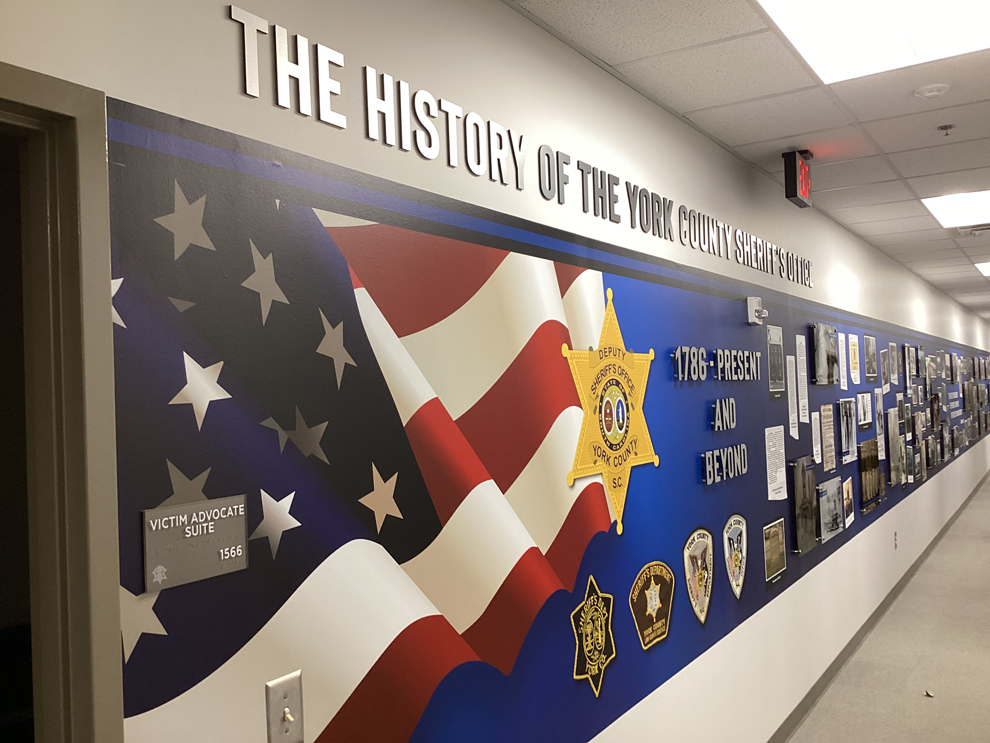
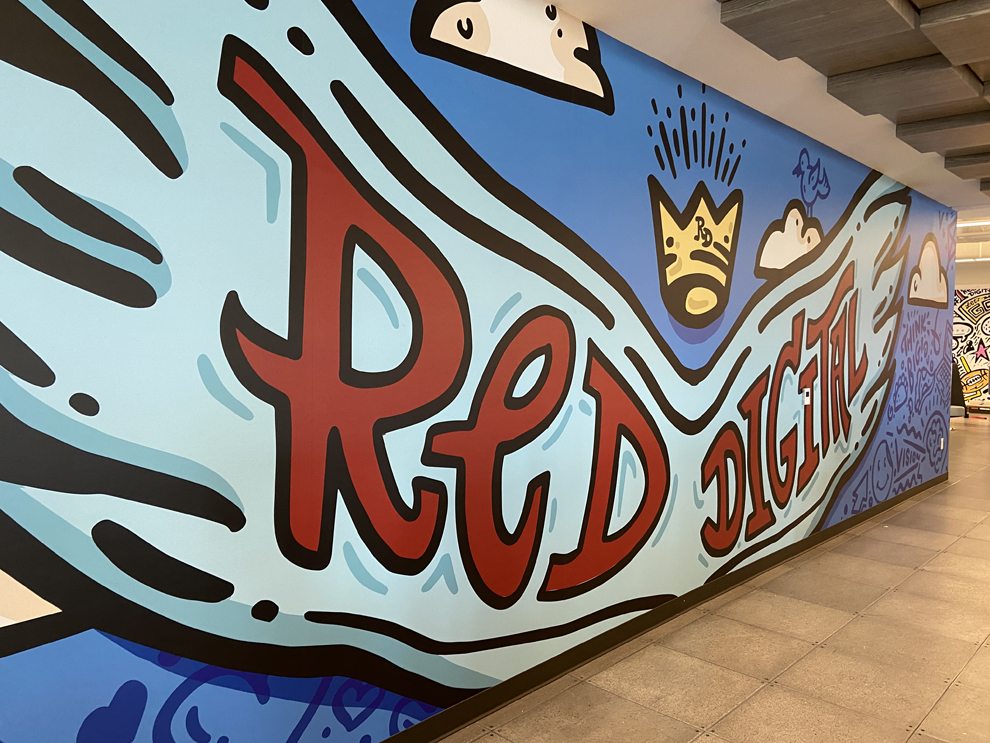
Wall Wraps is the better fit when the wall is meant to carry the primary story instead of a smaller applied message. Broad coverage, mural-scale imagery, timelines, culture walls, and recognition content introduce their own decisions about panel layout, seams, image resolution, and wall preparation.
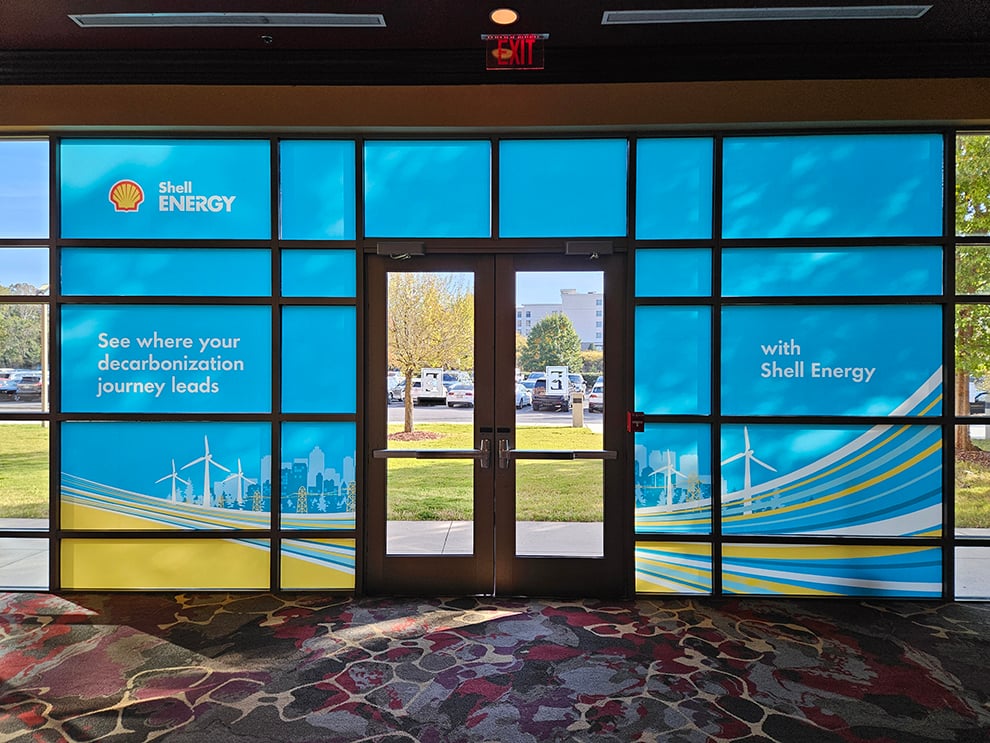
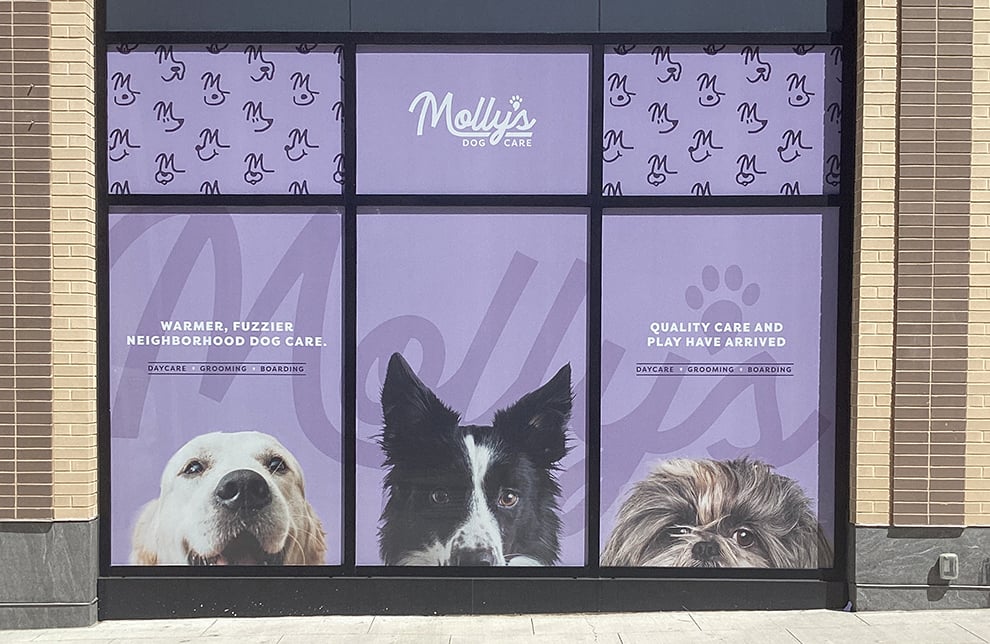
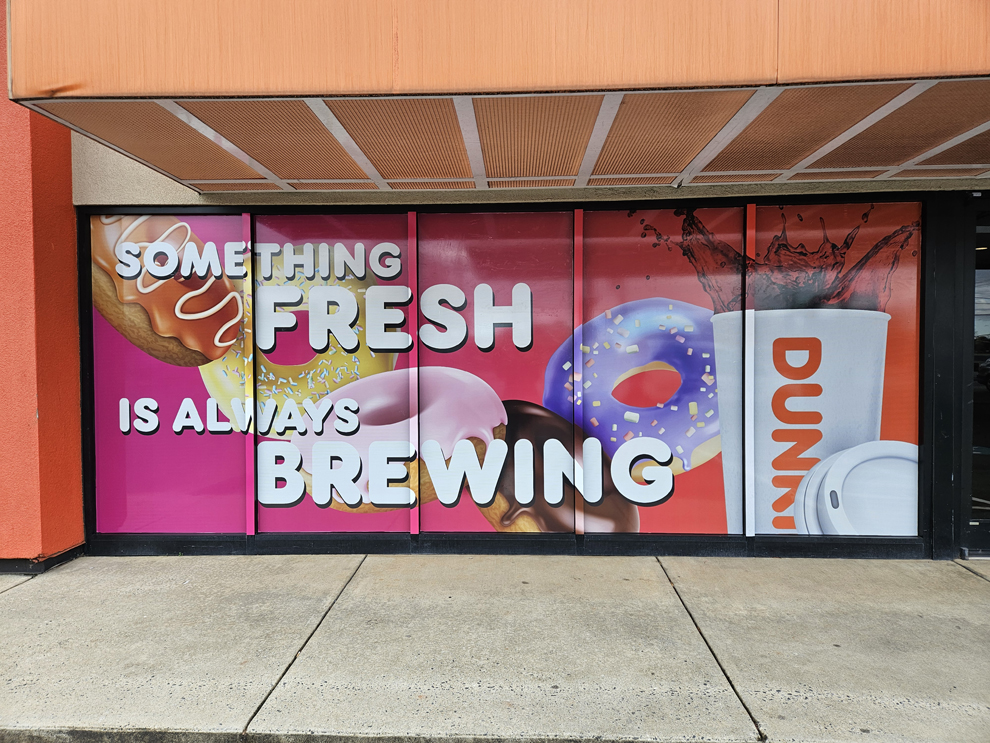
Window Graphics gives glass a defined role in identity, messaging, visibility, and controlled views. Coverage percentage, viewing direction, interior and exterior lighting, glass coatings, and installation method influence the recommendation more than the artwork does.
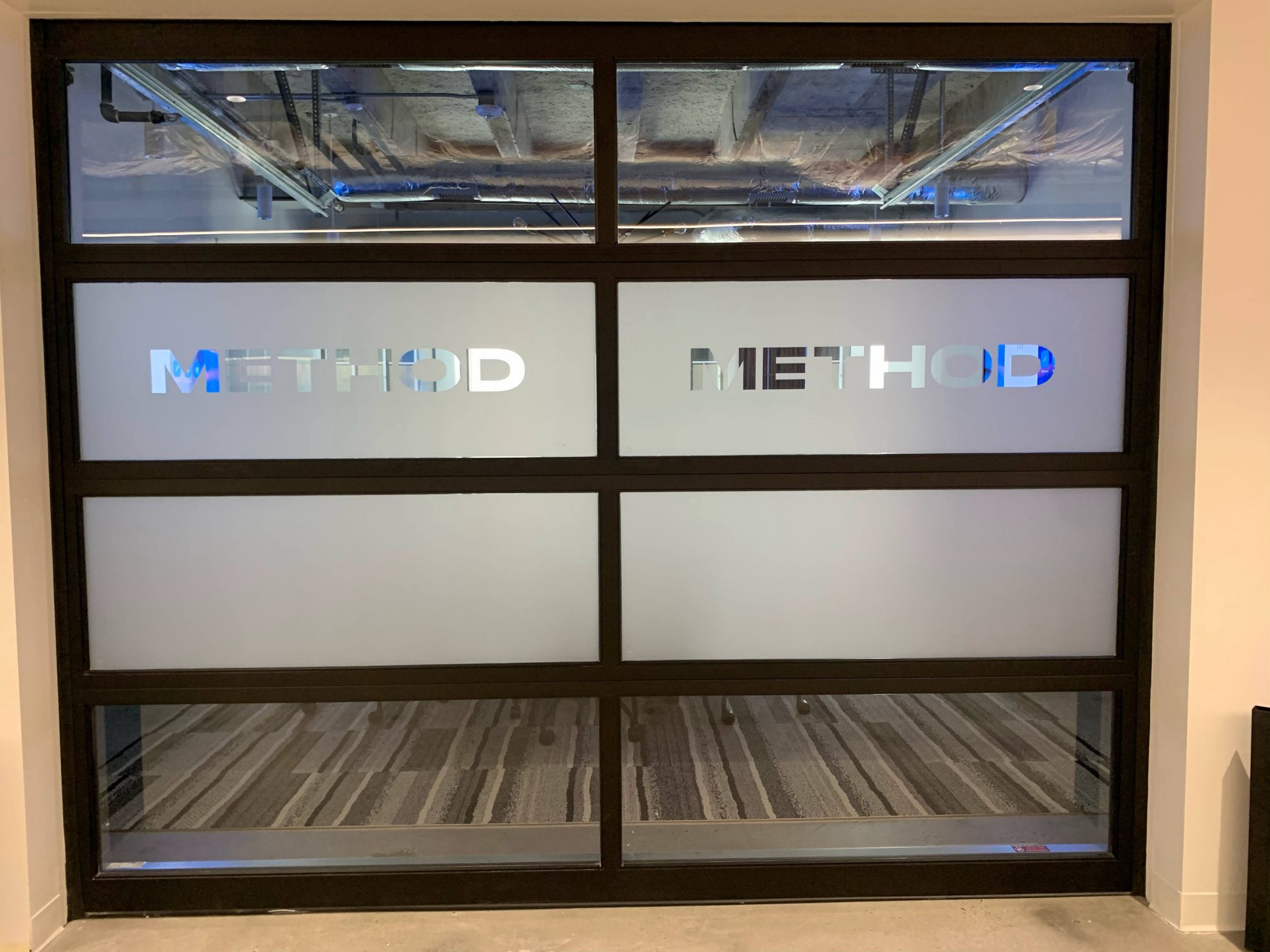
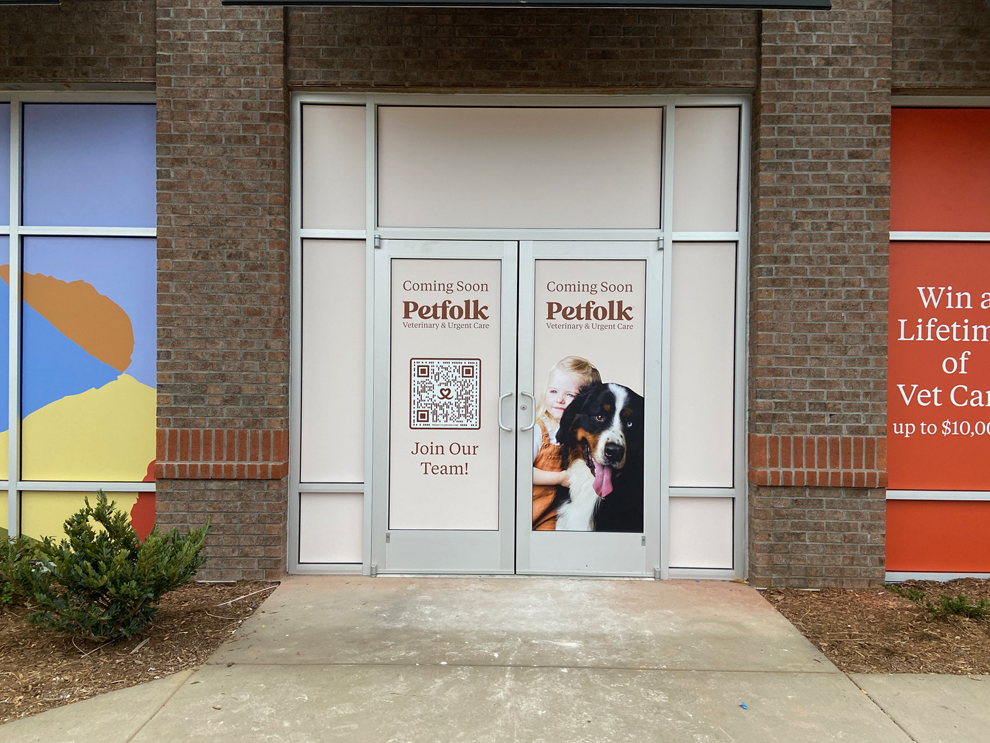
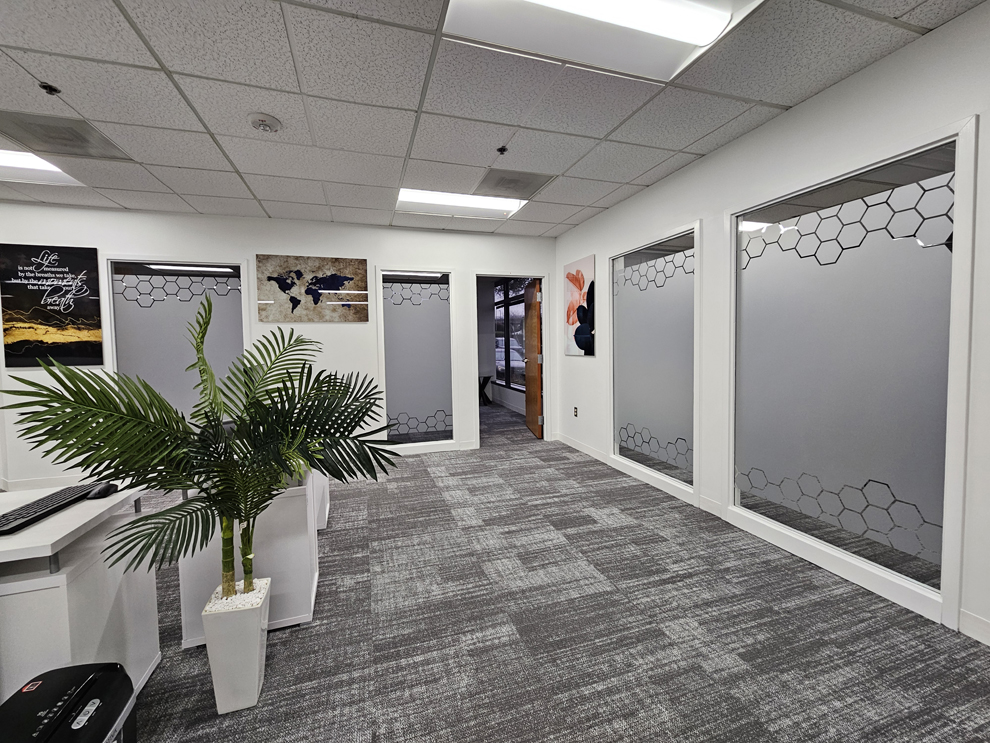
Frosted vinyl and privacy film work well for Greensboro offices that want separation without surrendering daylight or an open feel. Seated and standing sightlines, band height, pattern density, cleaning routines, and glass condition determine how much coverage you actually need.
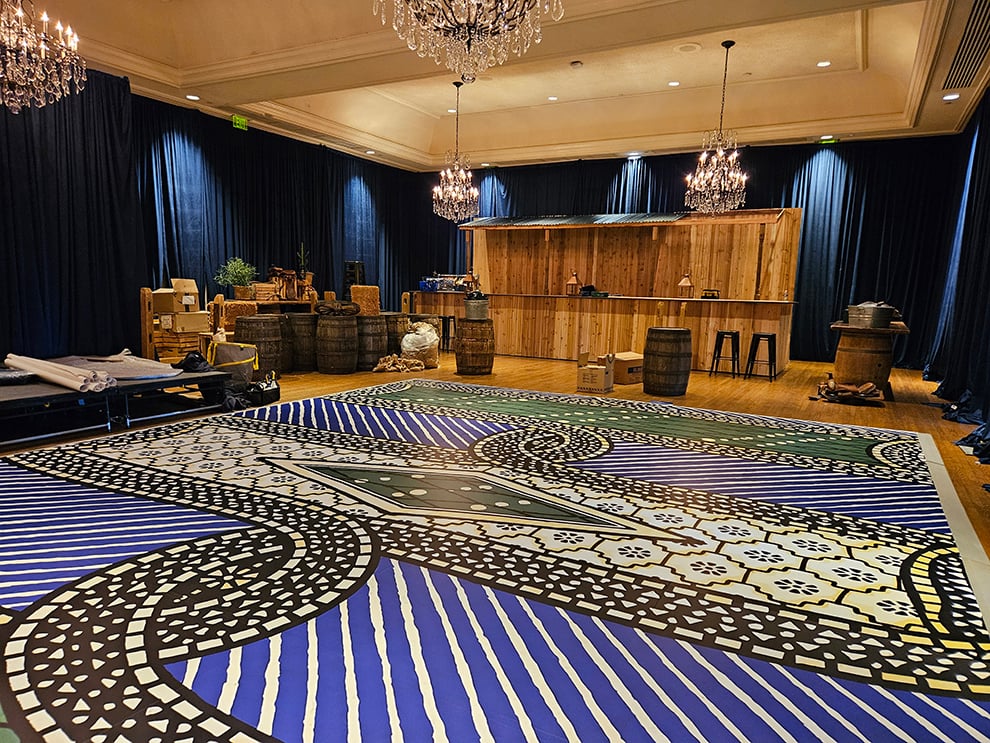
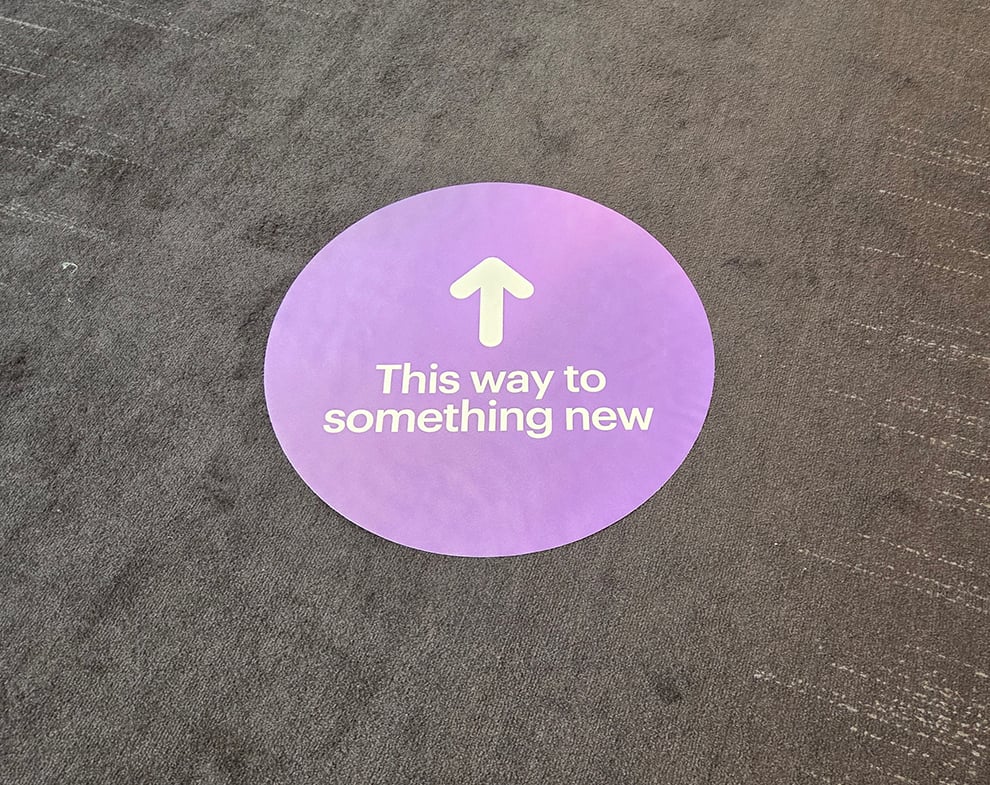
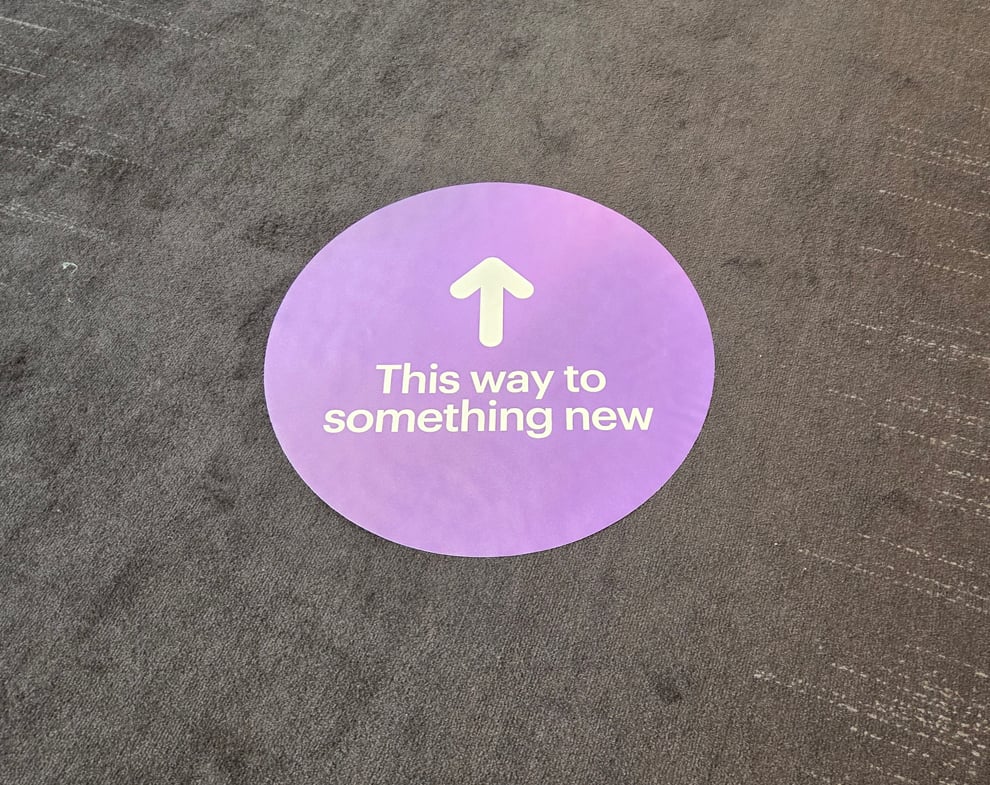
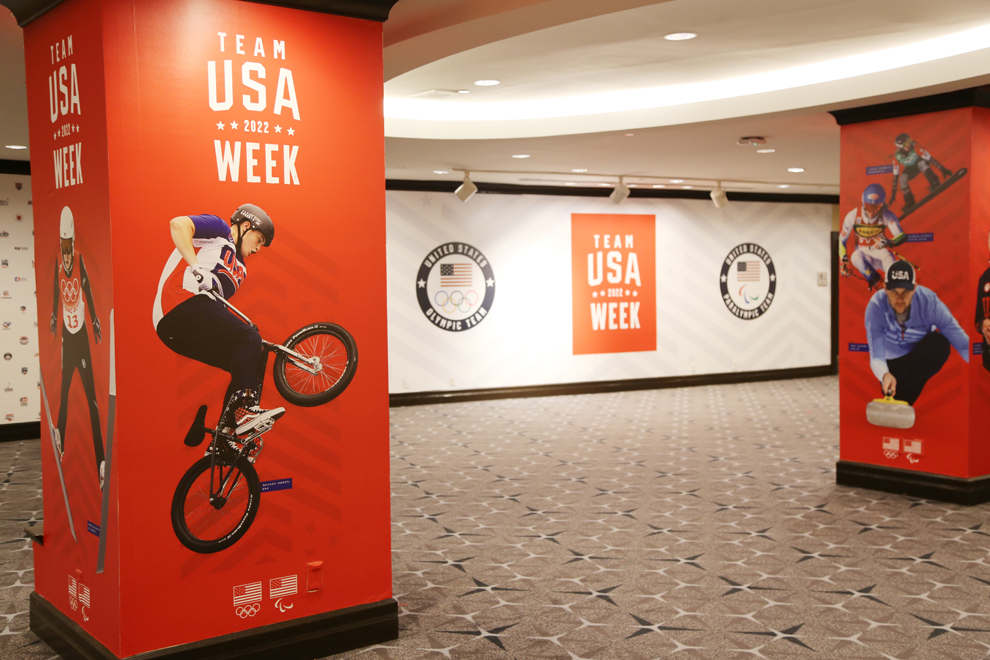
Floor Graphics makes sense when direction, branding, sponsor recognition, or event messaging belongs directly in the path of travel. Flooring type, traffic volume, cleaning equipment, protective laminate, service period, and slip considerations decide whether a floor application is appropriate.
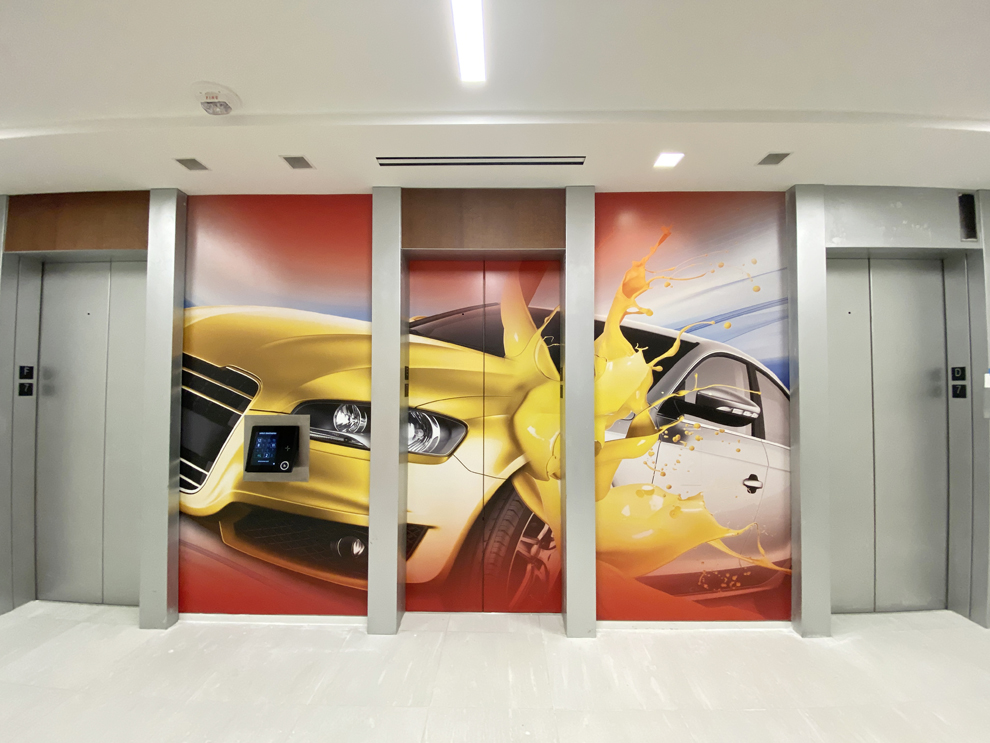
Elevator Wraps convert doors, selected cab surfaces, and nearby transition areas into a branded moment during an unavoidable pause. Panel movement, seams, clearances, edge treatment, repeated contact, cleaning frequency, and building access windows all shape the design and the schedule.
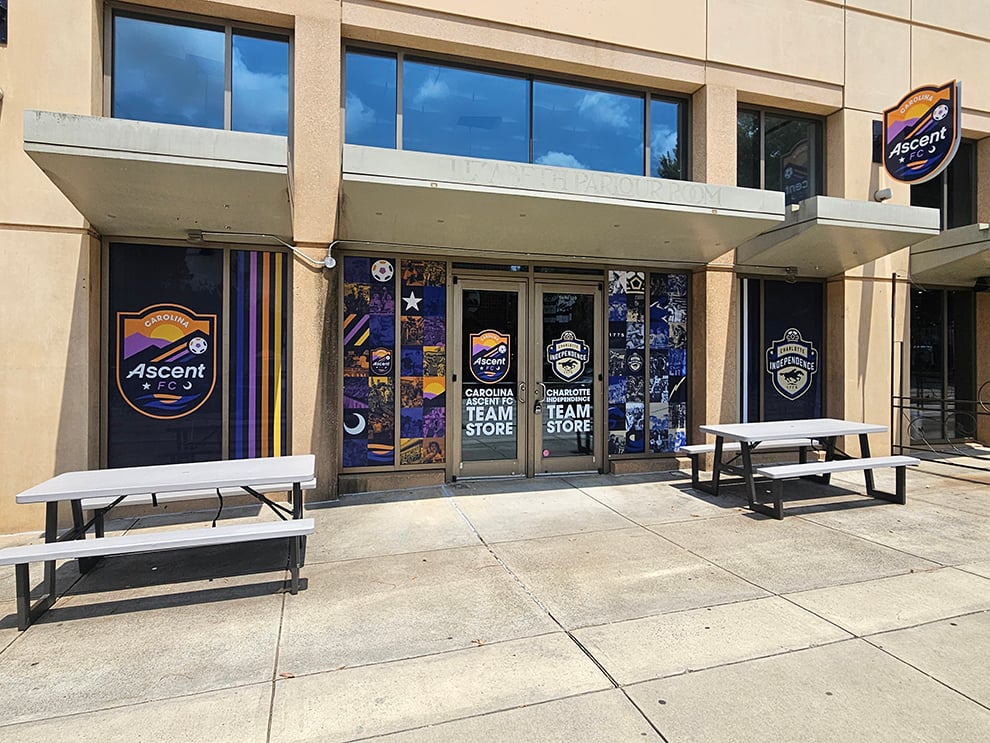
Storefront Graphics is the stronger choice when entrance glass, doors, exterior-facing surfaces, and nearby signs should read as one arrival experience. Exterior exposure, protective laminate, property approvals, and required sign permits enter the conversation at that point.
Event Signs & Graphics places adhesive vinyl inside a larger temporary system that may include sponsor recognition, directional signs, displays, and backdrops. Venue rules, load-in windows, installation labor, surface permissions, and removal timing matter as much as the printed design.
Greensboro clients are supported by Heritage client-facing field and installation resources, which makes discovery meetings, site surveys, field verification, installation planning, professional installation, and follow-through real parts of the project instead of remote scheduling exercises.
That matters because Triad properties come with genuine operating conditions. Downtown offices along Elm Street, buildings near Friendly Center and Wendover Avenue, corporate space off Gate City Boulevard, medical suites, university facilities, and distribution and manufacturing sites near Piedmont Triad International Airport each carry their own badge procedures, escort requirements, freight elevator reservations, work-hour limits, and tenant improvement schedules. A site survey lets us confirm dimensions, evaluate surfaces, review access routes, note existing graphics, and understand how people actually move through the space before production begins. Planning then reflects the building itself rather than a drawing or a phone photo.
Production and fabrication are supported by our Waldorf, Maryland facility, which is staffed by production team members only and is not a sales office or showroom. Organizations with several locations can keep one dedicated Project Manager while each property receives graphics adapted to its own glass, wall conditions, and circulation patterns.
Environmental graphic design turns a communication need into something physical that belongs in the space. The first question is behavioral: what should people notice, understand, or do here. A conference room may need privacy without feeling sealed off. A corridor may need clearer direction for visitors arriving without an escort. A lobby may need a stronger identity statement. A member event may need visibility for a set number of weeks without fighting the permanent workplace elements around it.
Some Greensboro organizations arrive with approved artwork and mature brand standards. Others want us to develop the graphic approach alongside marketing, facilities, and leadership stakeholders. We also collaborate with architects, interior designers, branding agencies, environmental graphic designers, and experiential design firms when those partners own the broader creative direction.
From there, the design has to survive contact with the physical world. We resolve scale, image resolution, sightlines, coverage heights, cut and panel layout, surface transitions, and installation constraints before anything goes into production, so the approved graphic reads clearly on the actual wall, window, or floor. Our focus stays where it belongs: environmental graphic design and the physical elements we produce and install to bring it to life.
Every adhesive vinyl project we install professionally starts with a site survey, and that visit does double duty. The discovery side clarifies what the graphics need to accomplish, who will see them, and which priorities matter most. The field verification side confirms dimensions, substrates, access routes, existing conditions, and installation requirements. One dedicated Project Manager carries all of it forward, so our installers show up already familiar with the approved artwork, the material, the sequence, and the building access plan.
Good field craft shows up in the details a client notices half a year later. Our crews work toward precise placement, clean alignment and registration from panel to panel, controlled seams and edges where the application calls for them, protected adjacent finishes, and tidy work areas in offices that are still occupied. Install windows in Greensboro office buildings, medical facilities, and downtown spaces are often tight, so staging and sequencing get settled long before the van is loaded.
When conditions in the field do not match what was documented, we stop, tell you what we found, and determine the right next step instead of forcing an application that no longer makes sense. What you should expect: a clean install, minimal interruption to the workday, careful treatment of your property, and clear accountability from the survey through the final walkthrough.
Performance on a painted wall depends almost entirely on the wall beneath the graphic. The drywall needs to be sound, smooth, clean, dry, and properly patched, with primer and paint applied correctly and the topcoat fully cured before we install. Paint can feel dry hours after it goes on and still be curing for weeks. During that stretch it may outgas, and those gases or vapors get trapped under vinyl applied too soon, which leads to bubbles, lifting edges, or early adhesion failure. Four weeks is a reasonable planning assumption for many paint systems, but the manufacturer's cure requirements and the conditions on site are what actually determine readiness. That matters in the Piedmont, where summer humidity can stretch cure times well past expectations.
Adhesion testing tells us how a given vinyl behaves on the visible painted surface. It cannot see the hidden bond between paint, primer, and drywall. Installation sometimes requires lifting and repositioning material, and a weak bond underneath tends to reveal itself right at that moment. If paint or primer starts to release, our installer stops and calls the Project Manager rather than making the wall worse. Repair, priming, repainting, and full cure are arranged and paid for by the client or property owner before we return to finish.
Adhesive vinyl is a dependable wall graphics solution when the surface is prepared correctly and the project is managed with that preparation built into the schedule.
Planning brings together decisions that are easy to handle in isolation and expensive to handle that way: the outcome you want, the audience, scope, priorities, phasing, target date, site readiness, stakeholder sign-off, surface conditions, and anticipated overall project investment. Your Project Manager sorts out what is already settled and what still needs answers before production can be scheduled.
Scale and timing get weighed together. Many of our projects that include production and professional installation land between $10,000 and more than $200,000, driven by environmental graphic design, materials, production, fabrication, surface conditions, building access, and installation complexity. When the date is aggressive, we review approvals, materials, access, site readiness, and our current production and installation capacity before we tell you what can realistically be delivered.
Fit includes budget. To protect the responsiveness, communication, and coordinated support our clients count on, we are accepting new workplace interior and event environment projects in Greensboro and across North Carolina with an anticipated overall project investment of at least $5,000. Select exterior-facing window or wall graphics can be evaluated for physical suitability, while sign permits and property approvals remain the responsibility of the client, property owner or manager, or general contractor.
Tell us what the graphics need to do and when they need to be finished. Use Get Started Now to share your Greensboro project location, anticipated overall investment, photos, rough dimensions, artwork or brand standards, intended duration, and any building or access requirements you already know about. If the work supports a grand opening, a conference, an office move, a board meeting, or a visit from leadership, name that date up front. You do not need to have every material or field decision figured out. One dedicated Project Manager will review the request, assess fit and timing, and lay out next steps.
The survey trades assumptions for verified facts. We measure, inspect the substrates, review access routes and permitted work hours, document any existing graphics, and talk through what the graphics should accomplish for the people who use the space. Those notes stay with one Project Manager, the production team, and the install crew, which cuts down on costly changes after production is locked.
Properly prepared painted walls, glass partitions and doors, select floors, elevator interiors, display panels, and other compatible substrates are all candidates. Suitability is never automatic. Paint condition, wall texture, glass coatings, moisture, panel movement, foot traffic, cleaning chemicals, sun exposure, and how long the graphic needs to last all affect whether a specific vinyl and adhesive system is the right call.
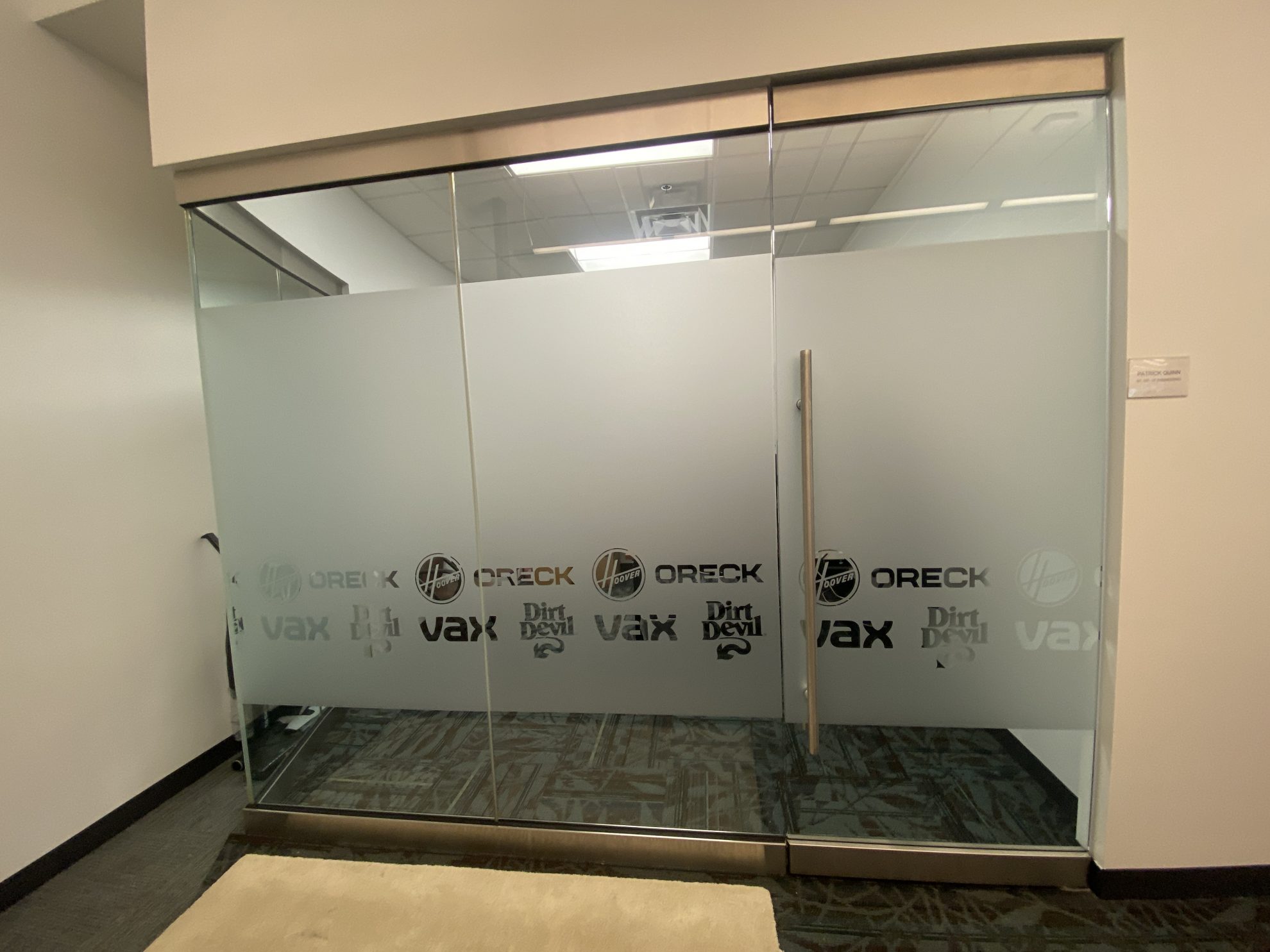
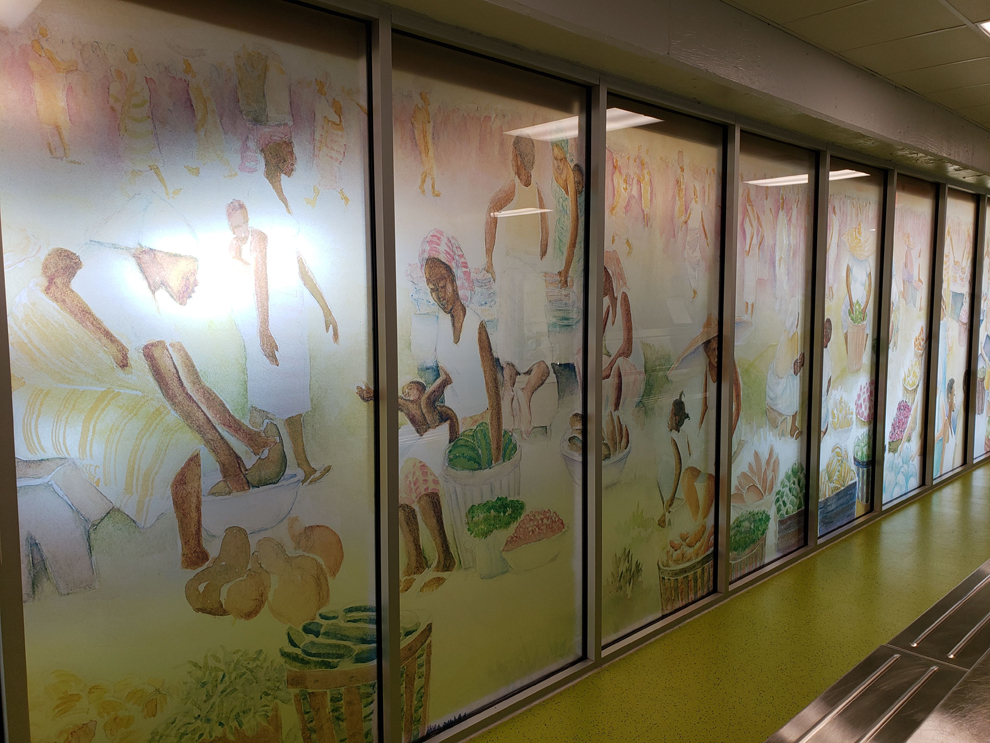
Frosted vinyl and privacy film create separation while daylight keeps moving through the glass. Full coverage is rarely necessary. Bands, patterns, gradients, logos, or partial coverage can be placed exactly where seated and standing sightlines matter. We consider how the room is used, how open it should feel, entrance visibility, cleaning routines, and brand character before recommending a coverage approach.
Because paint that feels dry is often still curing. During that window the finish can outgas, and those vapors get trapped under adhesive vinyl, producing bubbles, blisters, lifting, or early adhesion failure. We schedule installation around the paint manufacturer's full-cure requirement, not surface dryness. Roughly four weeks is a workable planning assumption for many paints, though the paint system, application method, temperature, humidity, wall prep, and site conditions decide the real answer.
No. A test shows how the proposed vinyl interacts with the painted surface you can see. It cannot evaluate the bond hidden beneath that paint, so it cannot promise paint or primer will stay put during repositioning, installation, or later removal. Testing lowers uncertainty and sharpens material selection. It does not turn an unknown wall condition into a guarantee.
Distraction markers are visible vinyl elements applied to clear glass so people notice the surface is there. They can be bands, dots, patterns, logos, or other branded shapes, and they often add privacy and brand presence at the same time. We can coordinate them with the surrounding graphics, though applied vinyl is never presented as proof of building-code or safety-glazing compliance.
Yes. Event branding, seasonal messaging, sponsor recognition, recruiting campaigns, temporary wayfinding, window graphics, and floor graphics are all standard uses. We choose the material and adhesive based on the surface, intended duration, appearance, traffic, exposure, and removal plan, so the application matches how long it actually needs to perform. Painted walls still need proper prep and a realistic removal plan.
No. We do not offer installation-only service for customer-supplied graphics. Install quality is determined long before the crew arrives, through measurement accuracy, material selection, production tolerances, fit, and the ability to reprint quickly if something needs correcting. Keeping those pieces inside one engagement is what allows us to stand behind the schedule and the finished result.
New workplace interior and event environment projects in Greensboro and across North Carolina currently begin at an anticipated overall project investment of at least $5,000. That number covers the complete scope we manage, not the price of one graphic. It is a starting threshold rather than a typical project size, since many of our production and installation projects range from $10,000 to more than $200,000 depending on design, materials, fabrication, surfaces, access, and installation requirements.
That deserves a real conversation instead of a guess. We start by separating what absolutely has to be ready from what can follow, then review approvals, artwork status, materials, building access, site readiness, and our available production and installation capacity. One Project Manager connects design, production, fabrication, scheduling, and installation so the remaining time gets used well.
If the full scope cannot responsibly be finished by your date, your Project Manager will propose the strongest achievable plan. That might mean phasing the work, reordering the sequence, simplifying an application, substituting a material, or completing the most visible areas first. We would rather build a solution that actually works than promise something we cannot deliver.
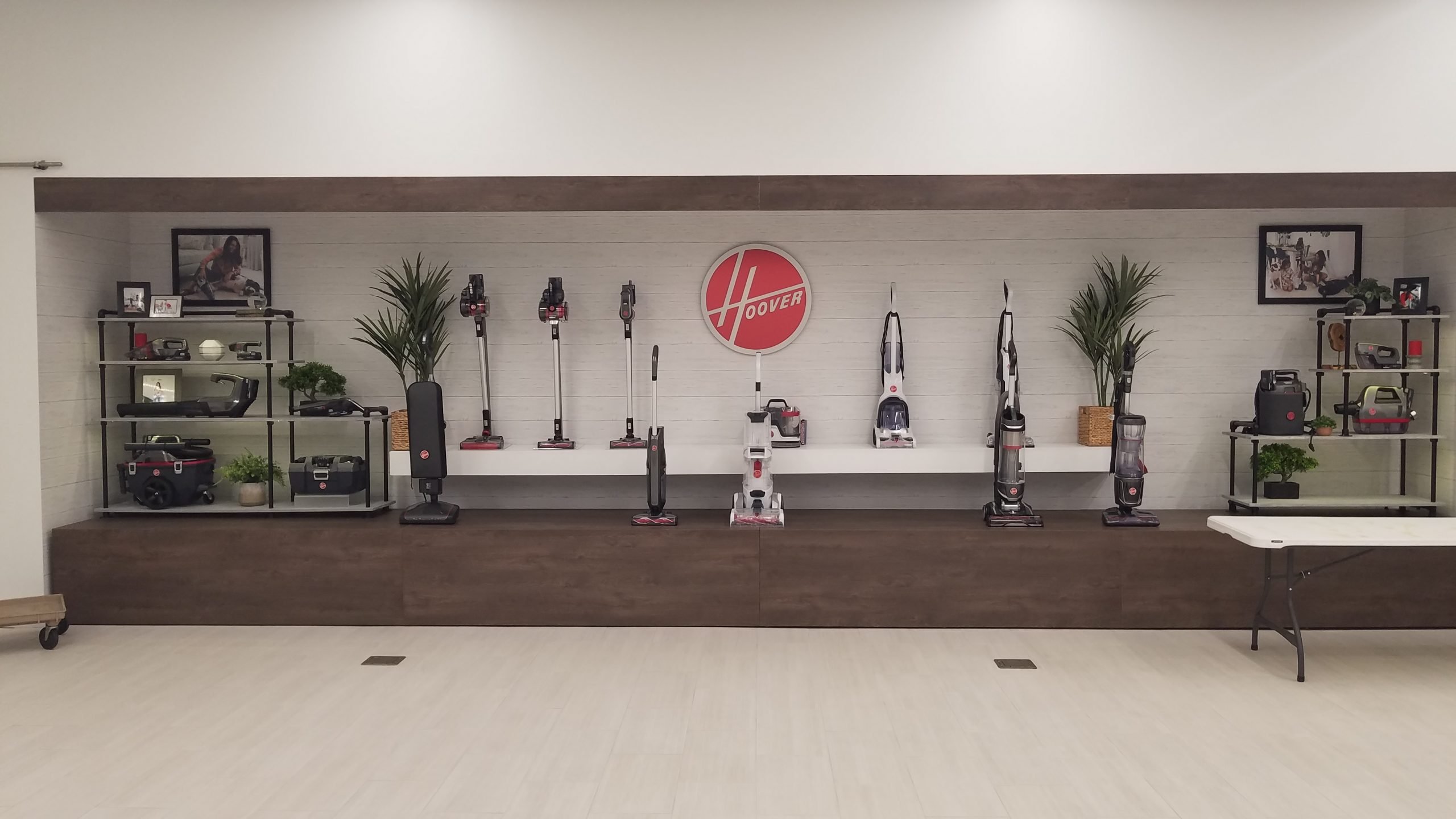
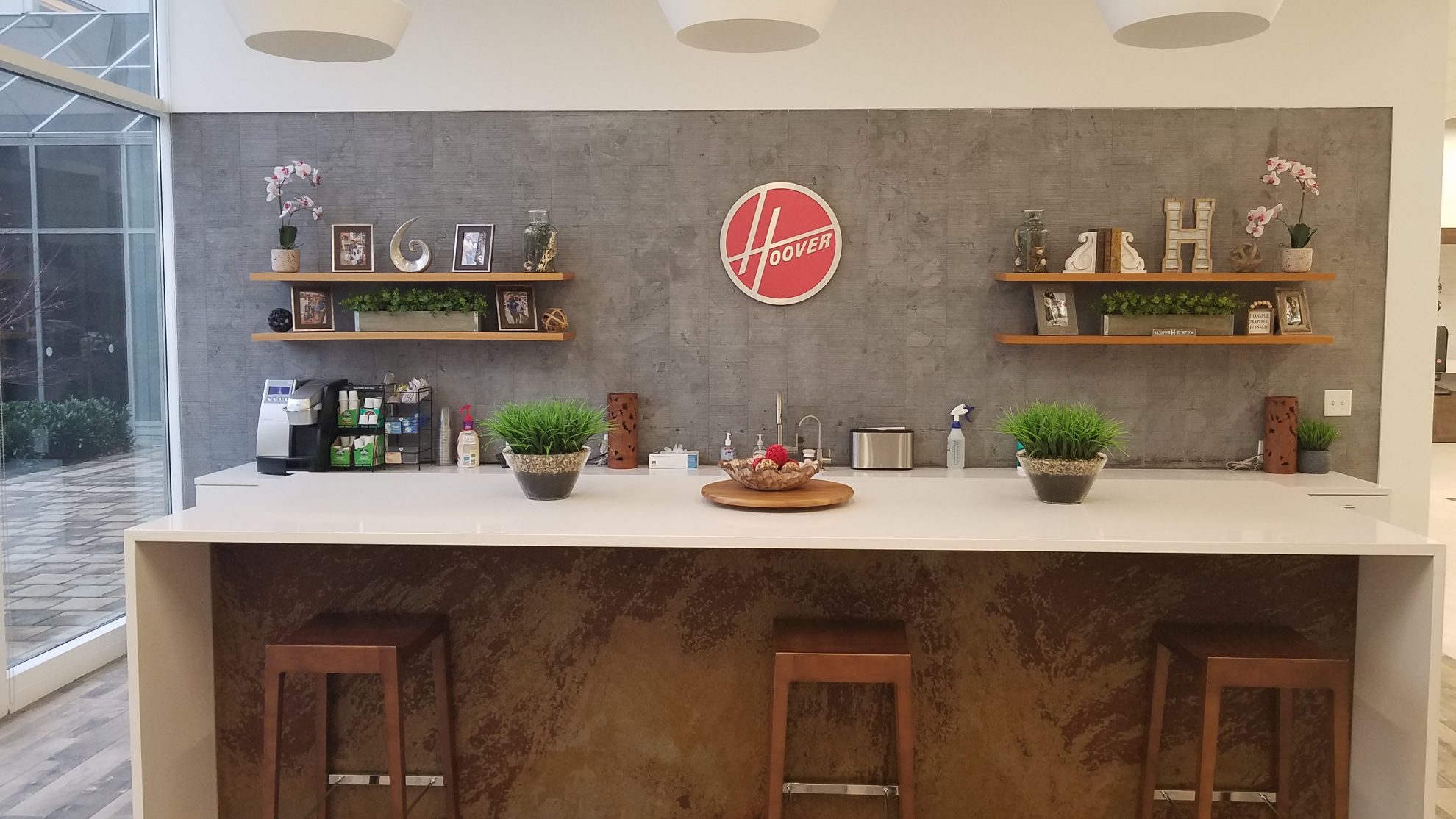
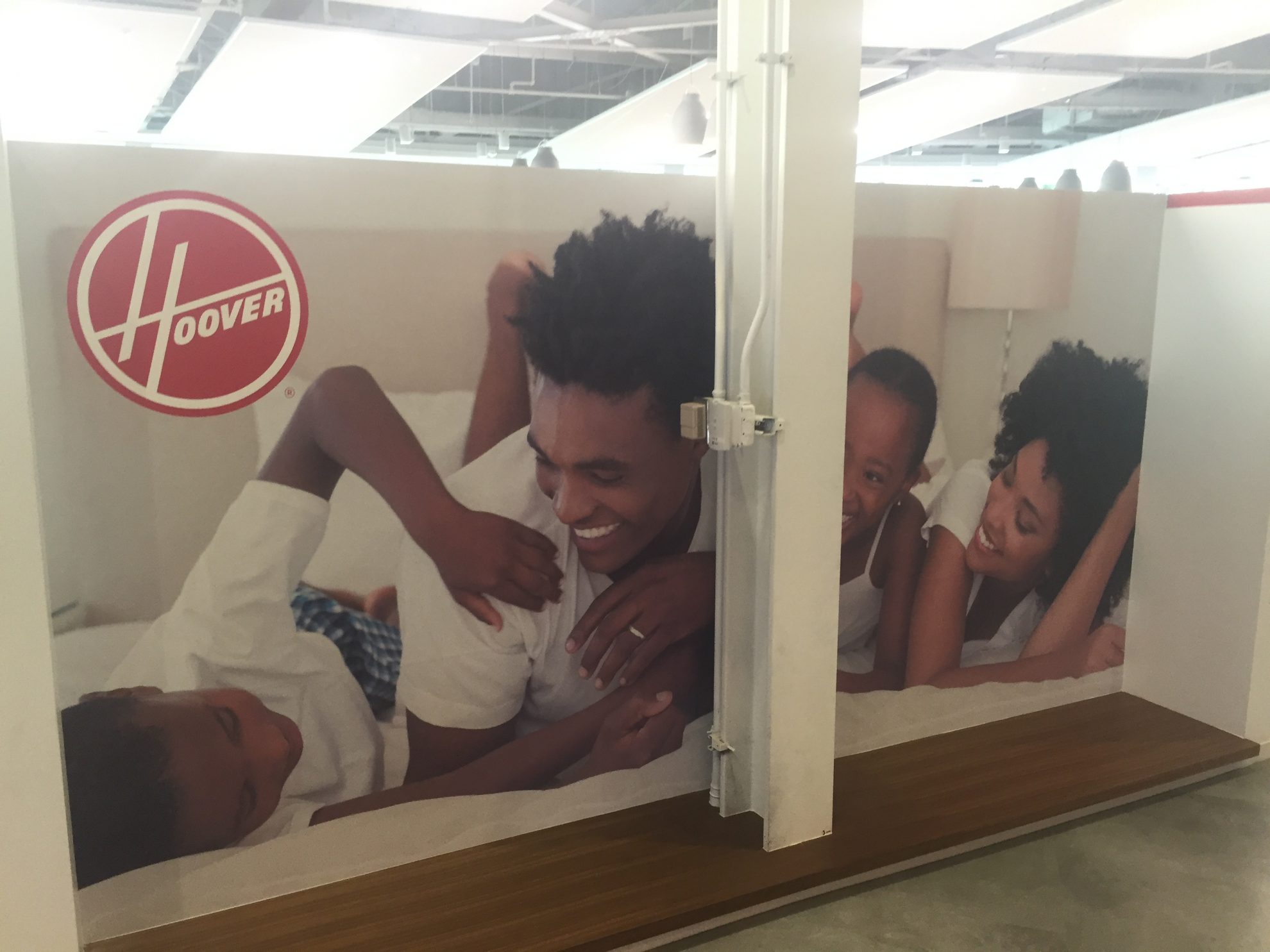
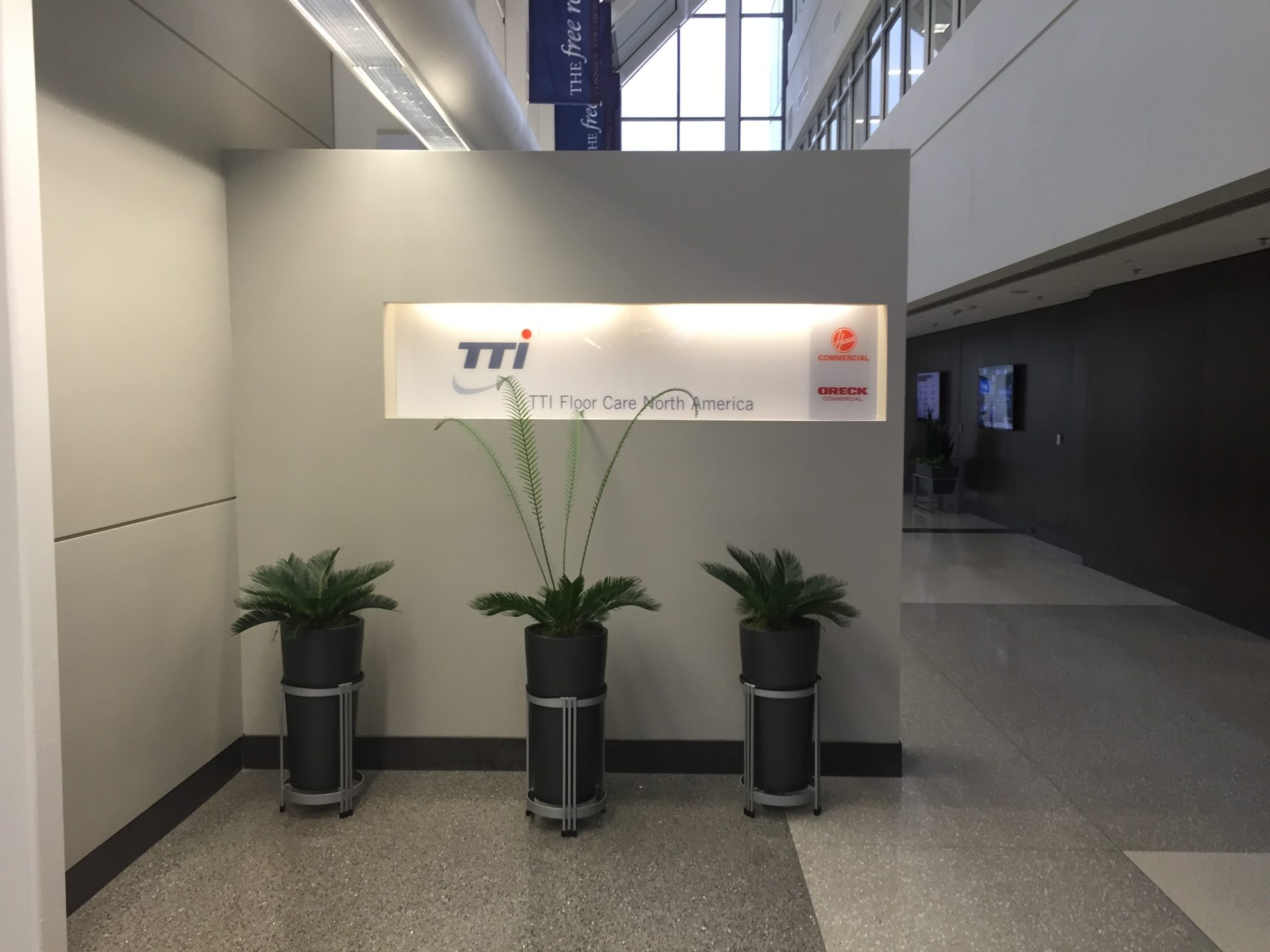
Heritage Signs & Displays collaborated with TTI Floor Care North America to enhance their corporate office. The project included custom frosted vinyl graphics, acrylic signs, dimensional lettering, and LED backlit signs, showcasing the brands Dirt Devil, Hoover, and Oreck. The signage improved office branding, privacy, and aesthetics. Heritage collaborated closely with TTI, ensuring efficient execution and high-quality results, creating an immersive and professional environment that reflects TTI's brand values.
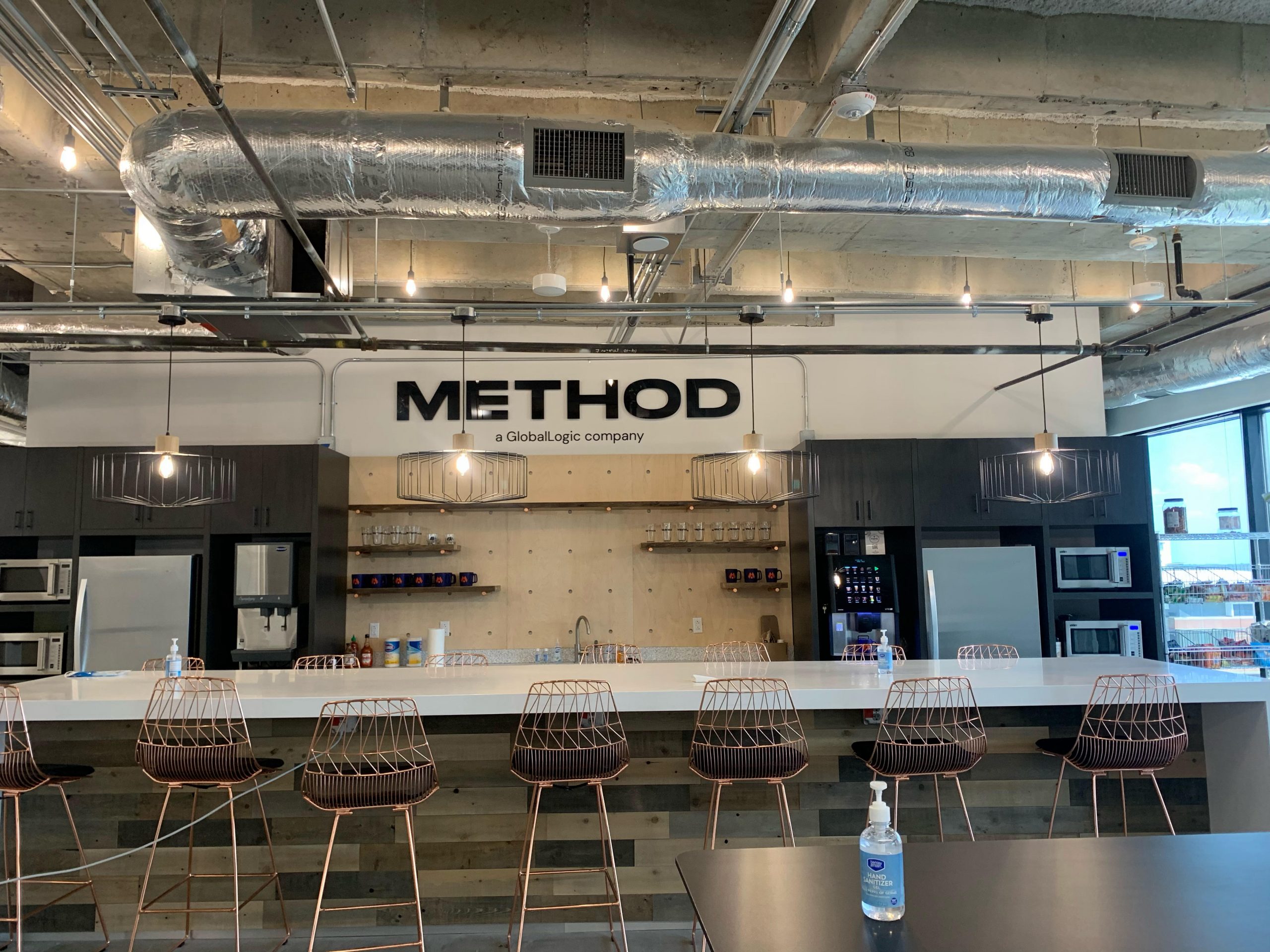
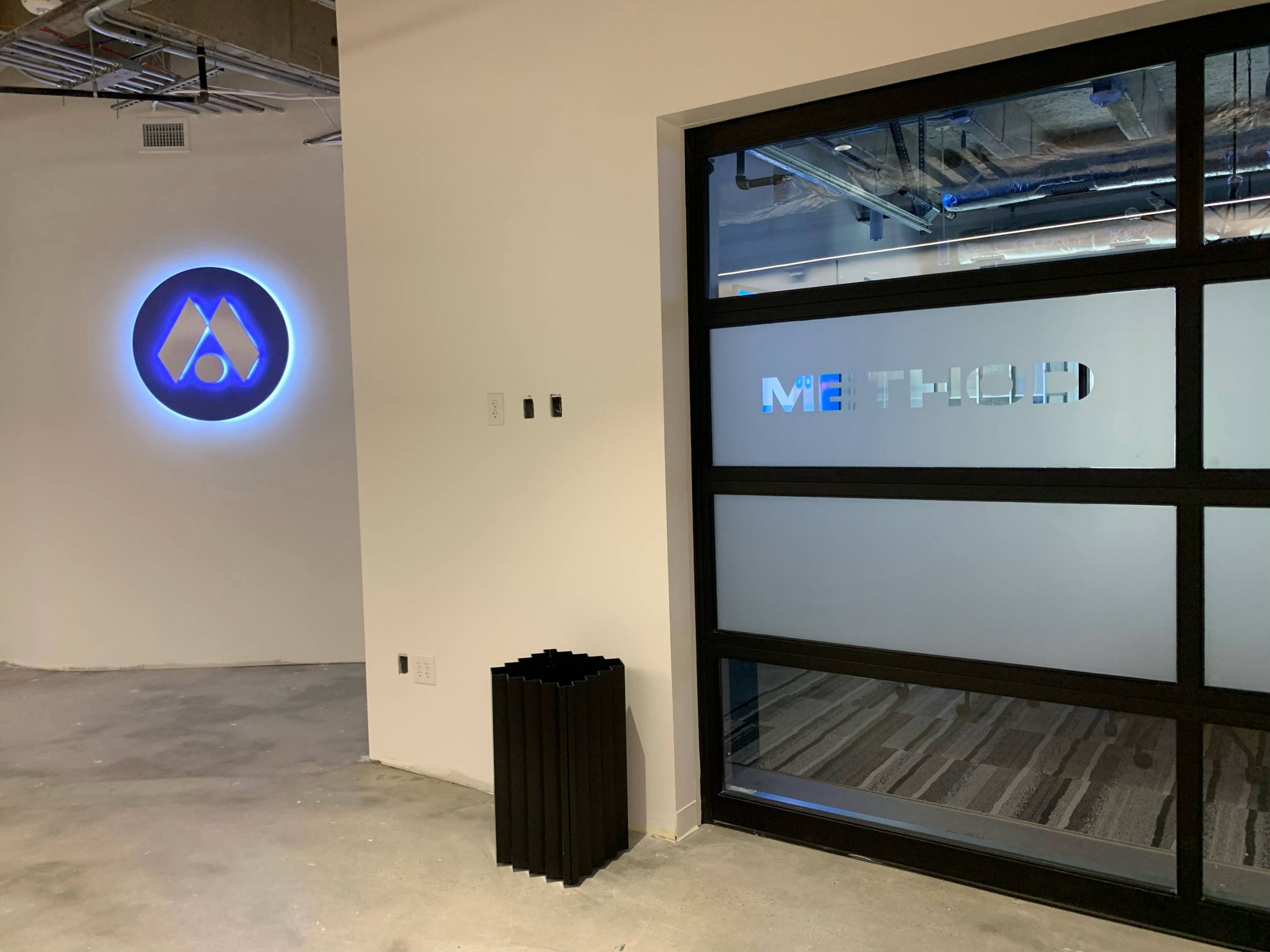
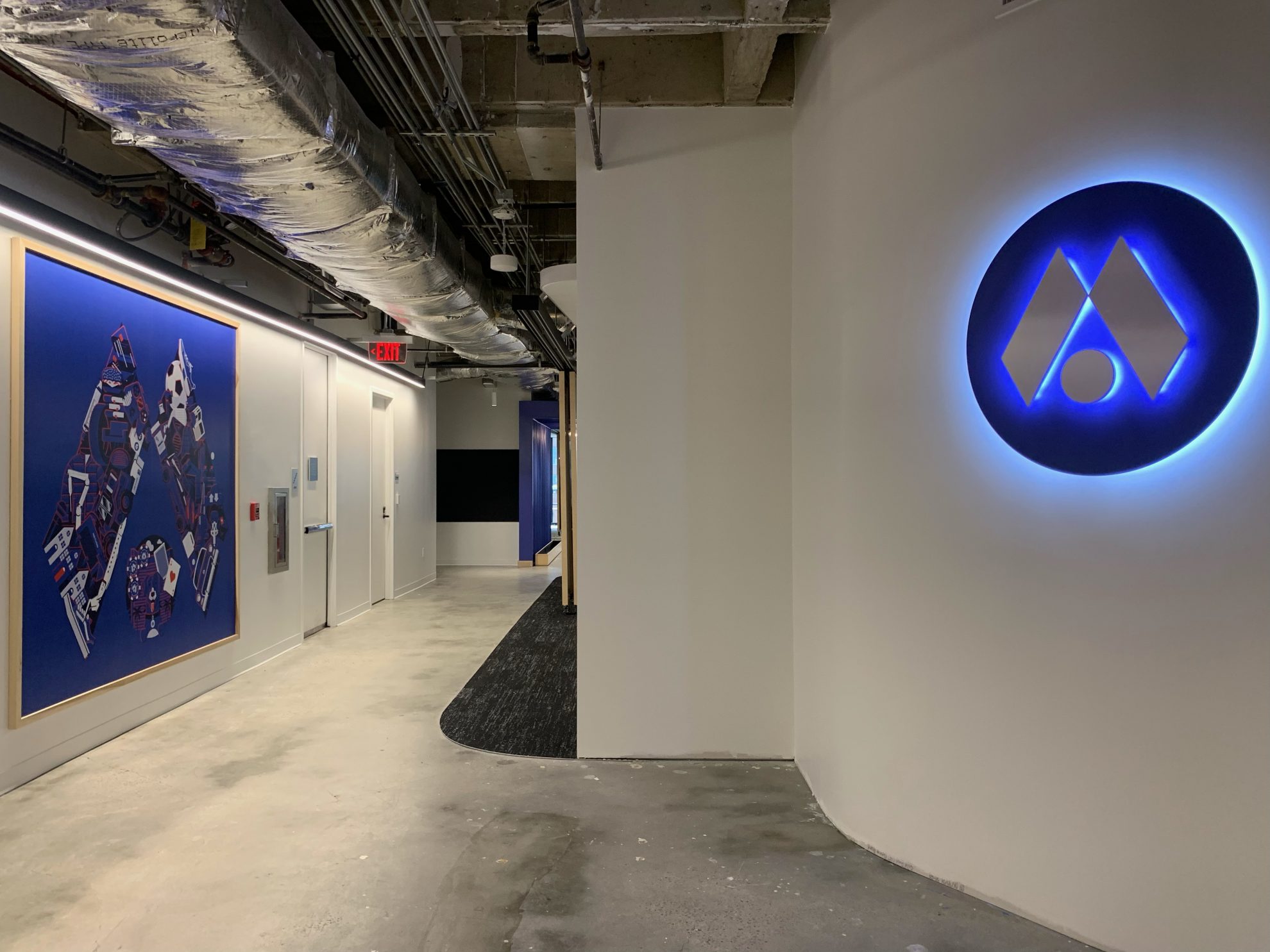
Heritage Signs & Displays' collaboration with Method (formerly Skookum) to rebrand their corporate headquarters. The project included dimensional lettering, wall displays, LED-lit signage, wall wraps, and frosted vinyl, creating an immersive and branded environment. Heritage worked closely with Method's team, ensuring accurate execution and timely delivery. The transformation was completed in August 2021, with Method's employees moving into the revamped space in September. The project reflects Heritage's commitment to quality and collaboration.