A Veteran Owned Business
A Veteran Owned Business
A Veteran Owned Business
An entrance has three jobs: help people recognize you, help them orient themselves, and suggest that the operation behind the glass is run well. Storefront graphics handle that first layer through window graphics, glass door lettering, privacy treatments, and other elements built for the threshold. The point is not to load every message onto the glass. The point is to give people exactly what they need at the door and let the interior carry the rest.
We design storefront graphics at Heritage Signs & Displays as one piece of a coordinated commercial interior branding project. Entrance glass may call for identification, visual awareness, privacy, or a mix of all three, and the answer changes depending on whether that door opens onto a downtown sidewalk, a parking lot, a shared lobby, or an interior corridor. Once someone steps inside, a lobby sign, dimensional feature, wall graphic, or display gives you far more room to speak. Storefront graphics stay the focus here, and their best role is usually to open an experience that keeps going past the handle.
Every project starts with a simple question: what should people recognize, understand, or feel the moment they arrive? We work with your stakeholders to turn those answers into an environmental graphic design plan that respects the building and the way your team actually uses it. One dedicated Project Manager stays with you through discovery, design, production, fabrication, and professional installation. That single point of contact protects the decisions you already made, cuts down on handoffs, and keeps the approved design intent intact when multiple branded elements have to work together.
Heritage opened in 1977 as a commercial printing company. Beginning in 2009, signs, interior graphics, workplace branding, and event environments became our defining work. We are award-winning, veteran-owned, family-led, and closing in on our 50th year. Those decades taught us something worth repeating: strong artwork alone does not produce a polished result. The design has to fit the space, the material has to fit the application, and the installation plan has to match what we actually find on site.
Storefront graphics are the bridge between the outside face of a property and the branded interior we are building within it. When we are already handling your interior signs and graphics, the same project can include specific non-illuminated exterior signs and graphics that build recognition before anyone reaches the entrance. Those pieces then hand off to entrance glass, lobby signs, wall graphics, and displays so the approach and the interior read as one deliberate experience instead of two unrelated purchases.
We serve organizations throughout Spartanburg SC and the Upstate, including Greer, Duncan, Boiling Springs, Moore, Inman, Woodruff, and neighboring communities. Our purpose is to honor God by serving clients and communities with excellence, and that shows up as clear communication, careful stewardship, and dependable follow-through on the projects we take on.
An entrance should establish who you are and help people walk in with confidence. It does not need to explain your culture, your history, your service lines, and your values, because there is very little room at the threshold and very little time while someone reaches for the door. The interior gives you more surface, more dwell time, and far better conditions for the parts of your story that deserve attention.
We plan storefront graphics around that division of labor. Window graphics or glass door lettering can deliver recognition while leaving useful views open. Frosted vinyl or a branded pattern can screen a conference room or a reception desk where separation matters, without shutting daylight out of the workplace. Inside, a lobby sign usually becomes the primary visual destination, while wall graphics, dimensional elements, and displays expand on the message.
Planning the door, windows, lobby, and interior walls at the same time also prevents the disconnected look that happens when each surface gets bought on its own. Deciding early what belongs at the threshold and what earns a stronger interior presentation gives you an arrival that feels intentional rather than crowded.
Spartanburg SC organizations usually call us when they need more than vinyl stuck on a window. They need help deciding what the entrance should say, how it should connect to the space inside, and how the approved design gets produced and installed on a building that is still open for business. Our One Dedicated Project Manager System keeps your relationship, your approved direction, and your project decisions connected from the first phone call to the final walkthrough.
Our environmental graphic designers work with whoever owns the brand, whether that is your in-house marketing team or an outside architect, interior designer, or branding agency. Your dedicated Project Manager then keeps design, production, fabrication, and our full-time professional installers working from the same site information and the same objectives.
We are veteran-owned and family-led. Spartanburg SC clients get field support right here in the Upstate, backed by production and project resources across the Carolinas and Mid-Atlantic. That combination handles substantial one-time projects, phased rollouts, and multi-location programs while you keep one accountable relationship with us.
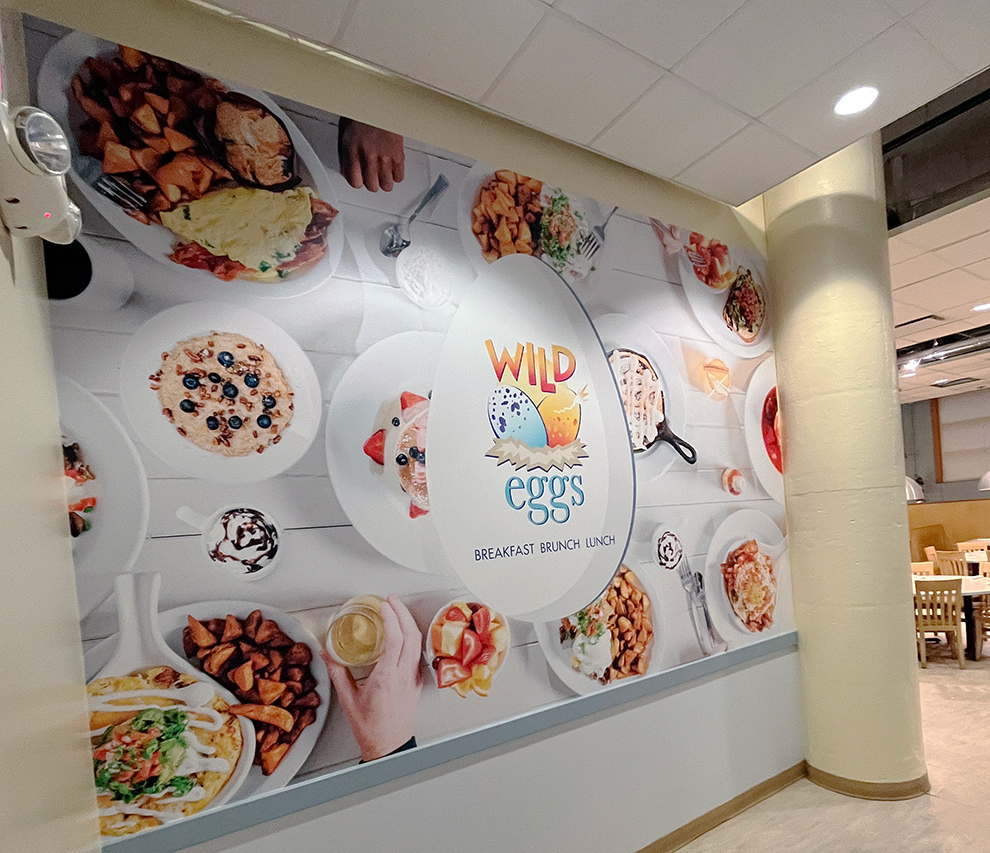

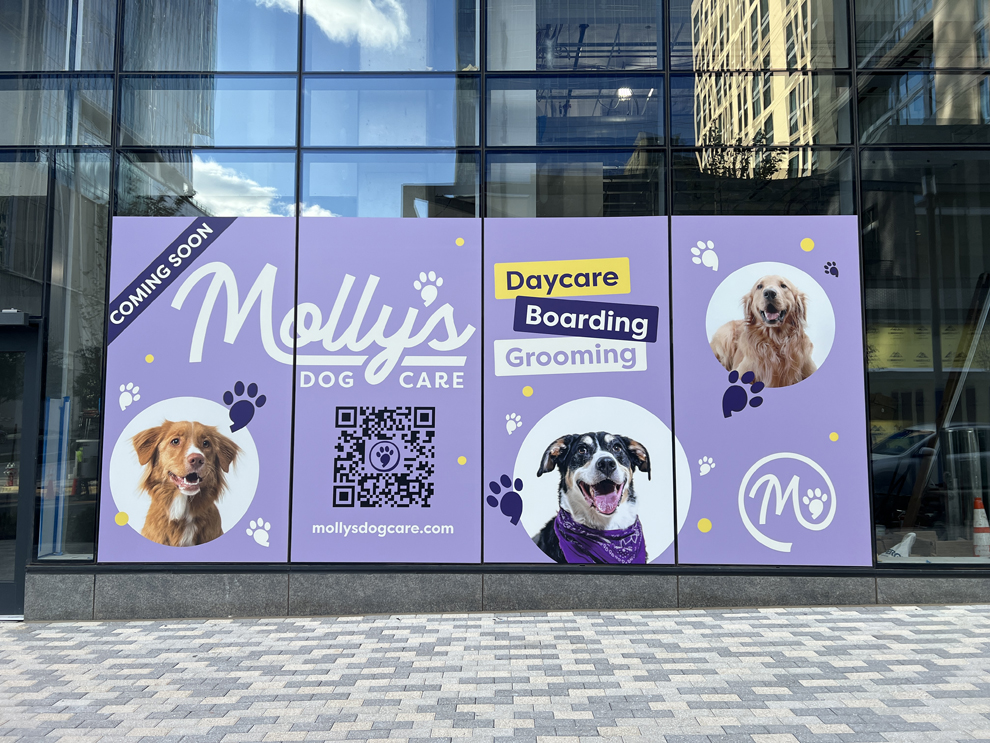
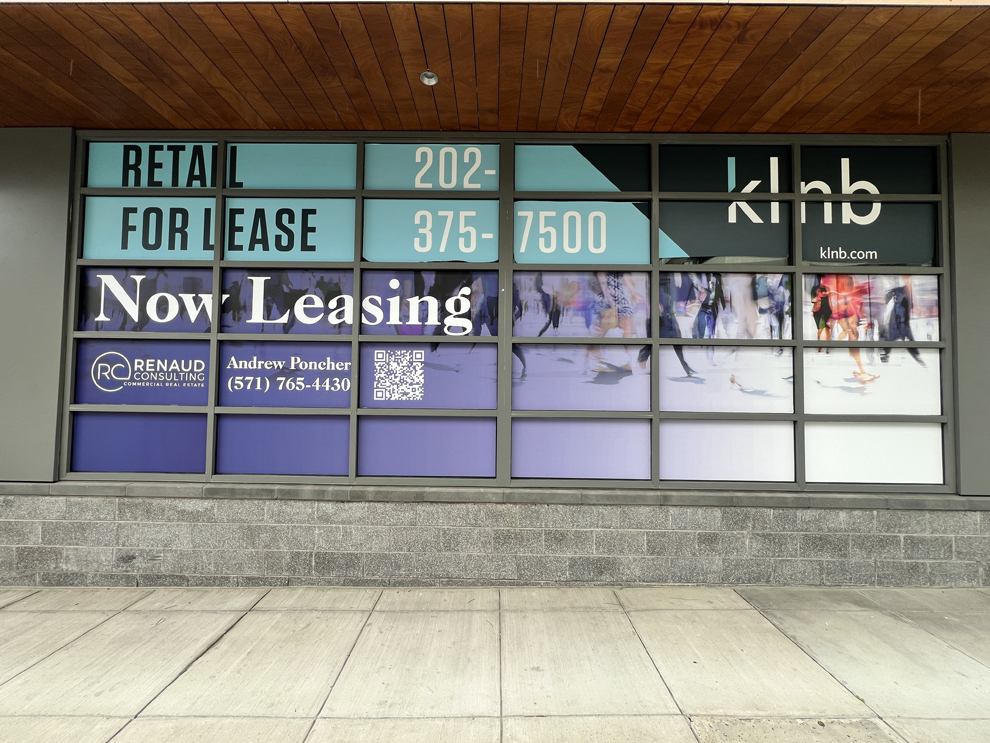
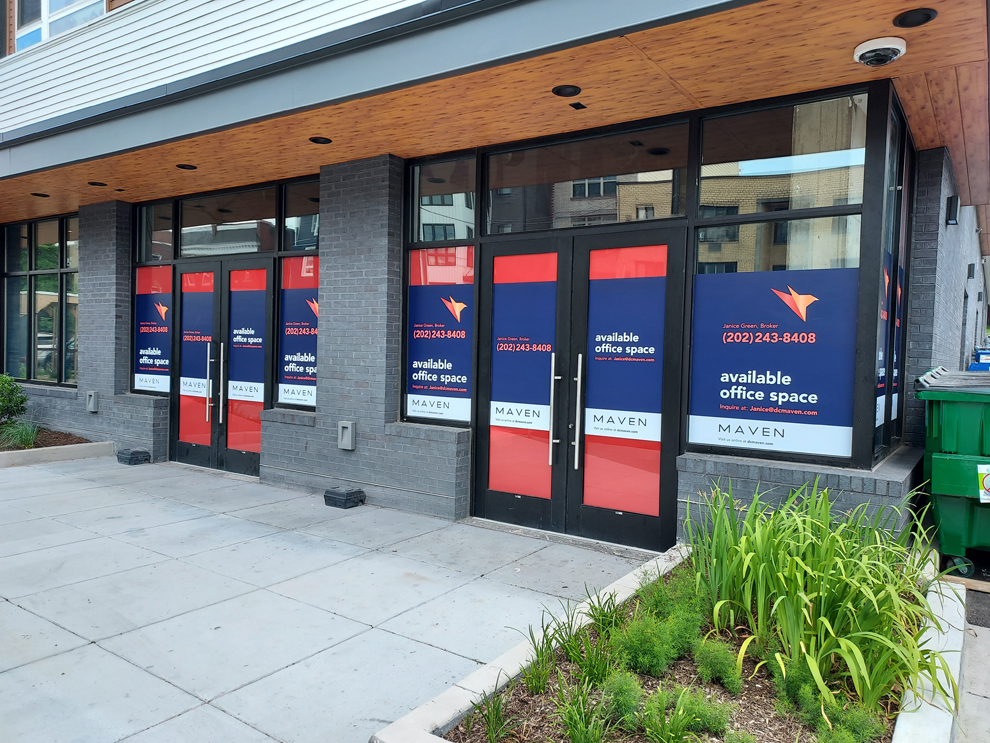
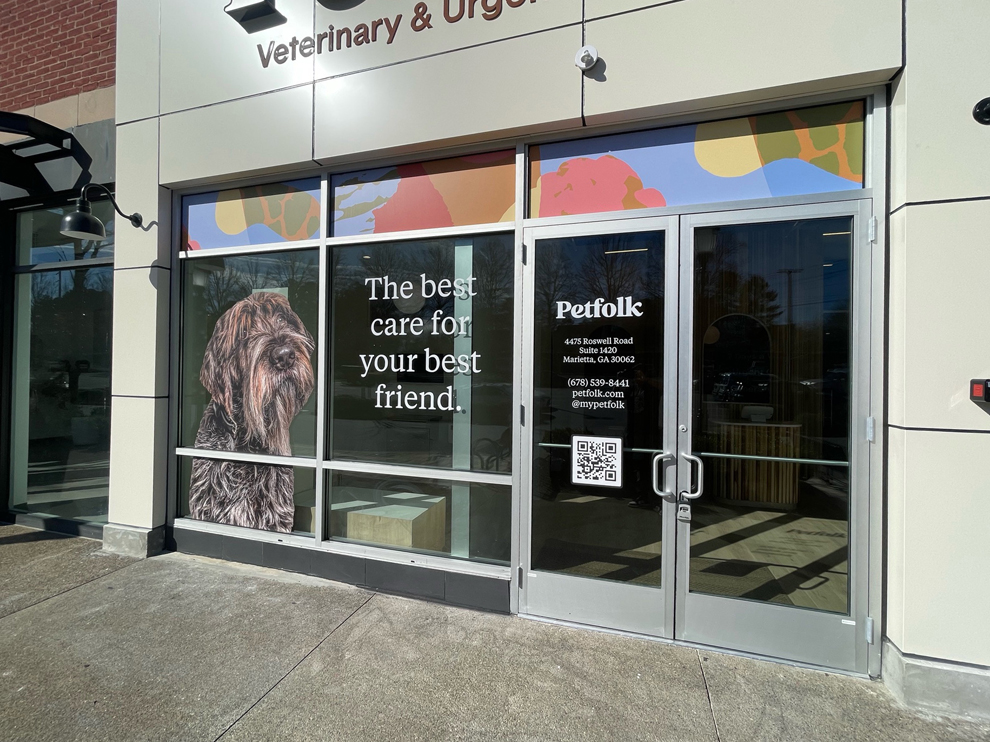
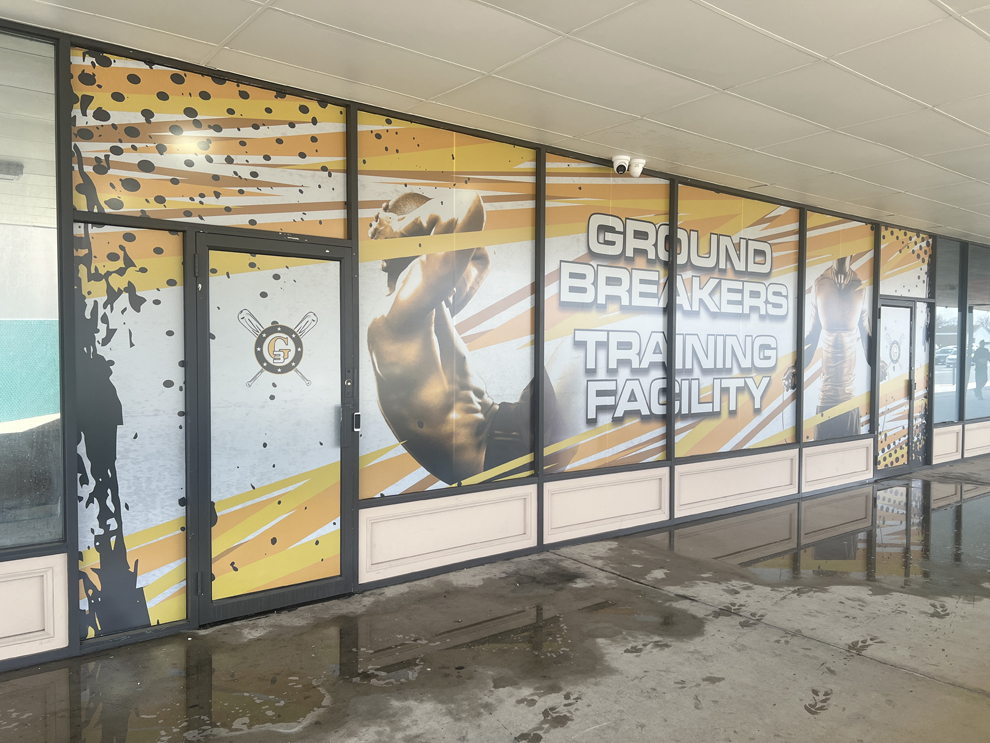
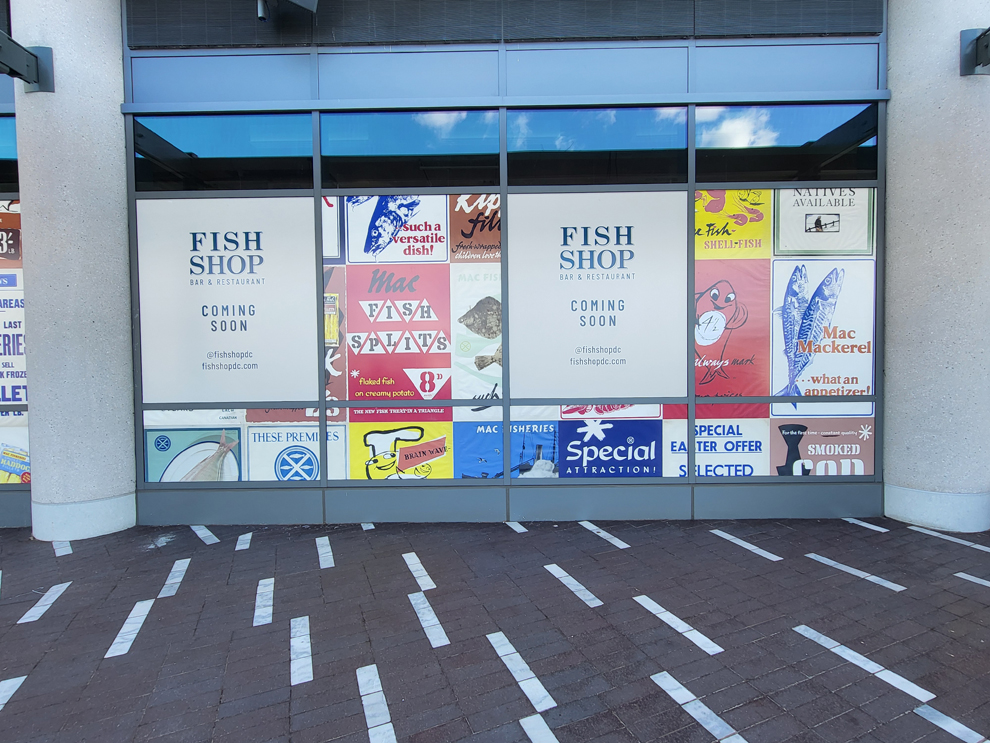
Window graphics identify your organization while putting entrance and interior glass to better use. We weigh coverage, visibility, and privacy against how the space is occupied, so the graphics build recognition at the door without closing off daylight or sightlines you actually want.
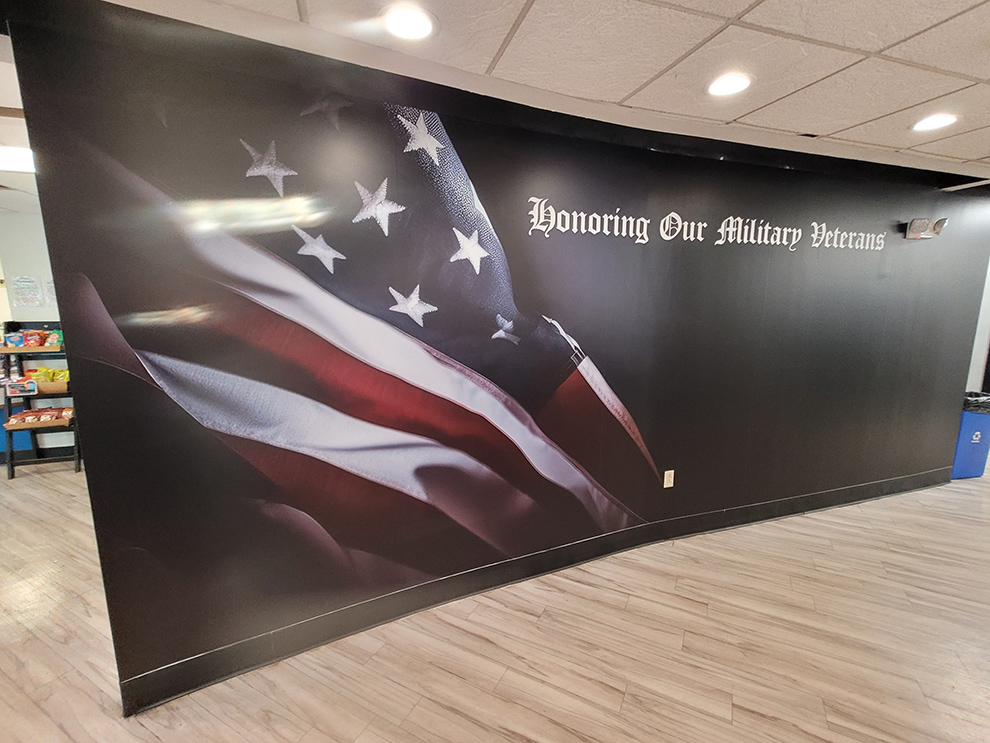
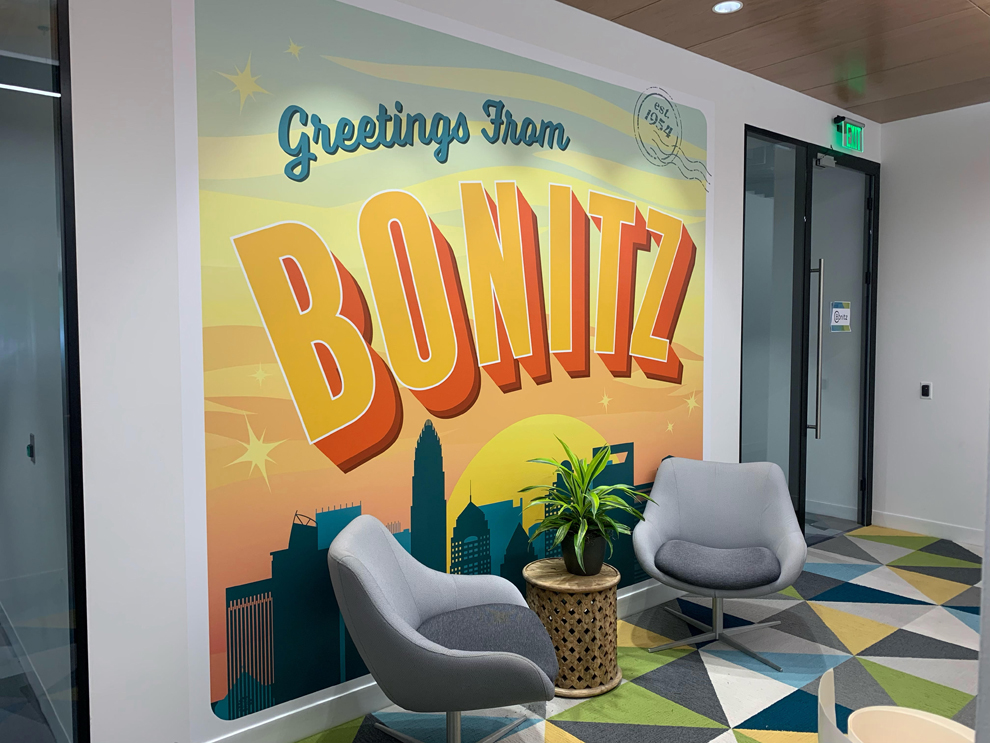
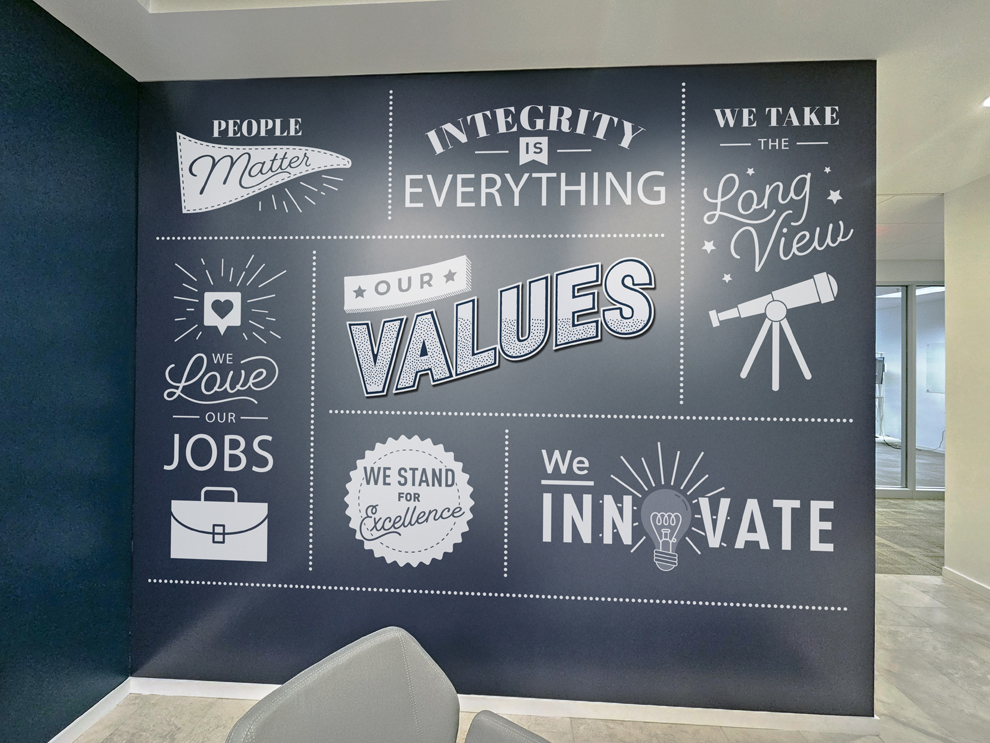
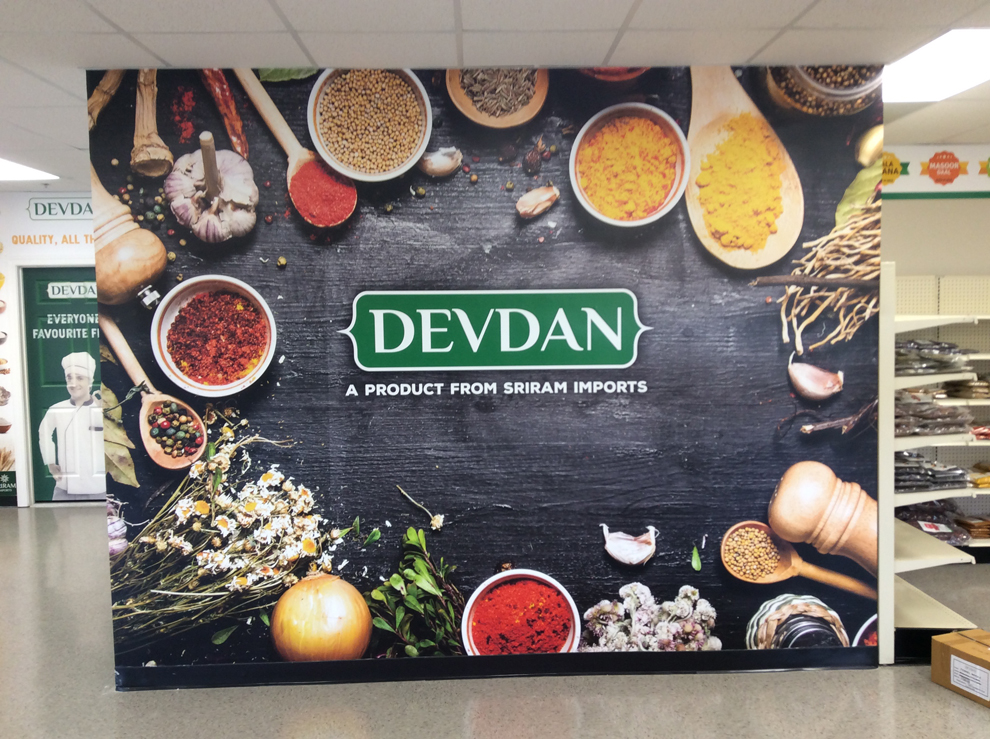
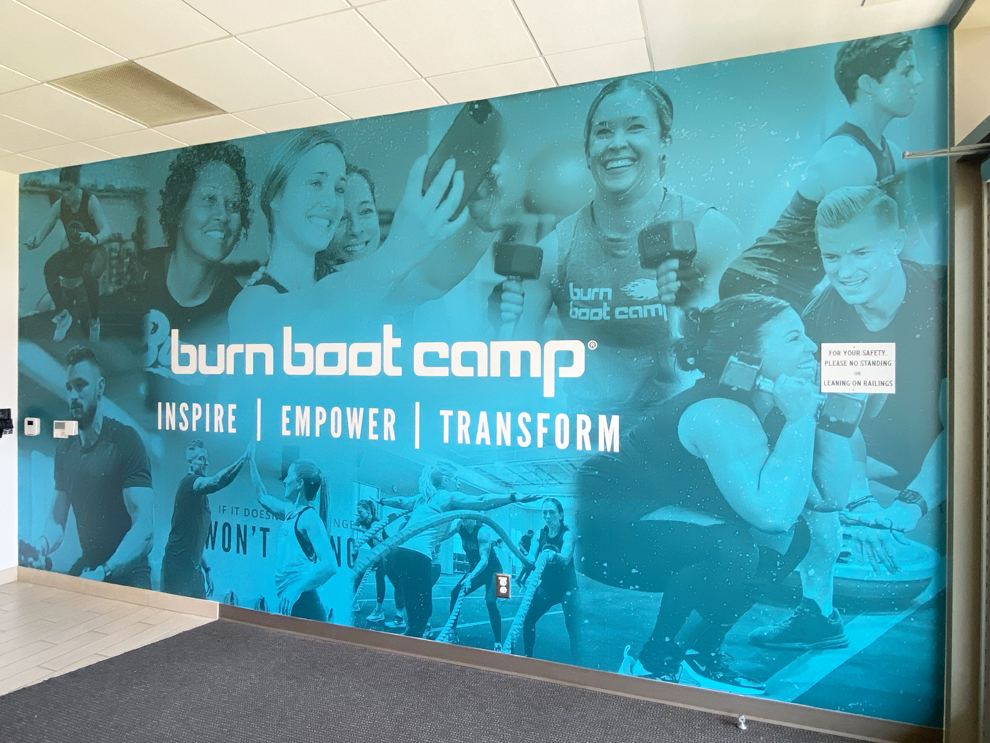
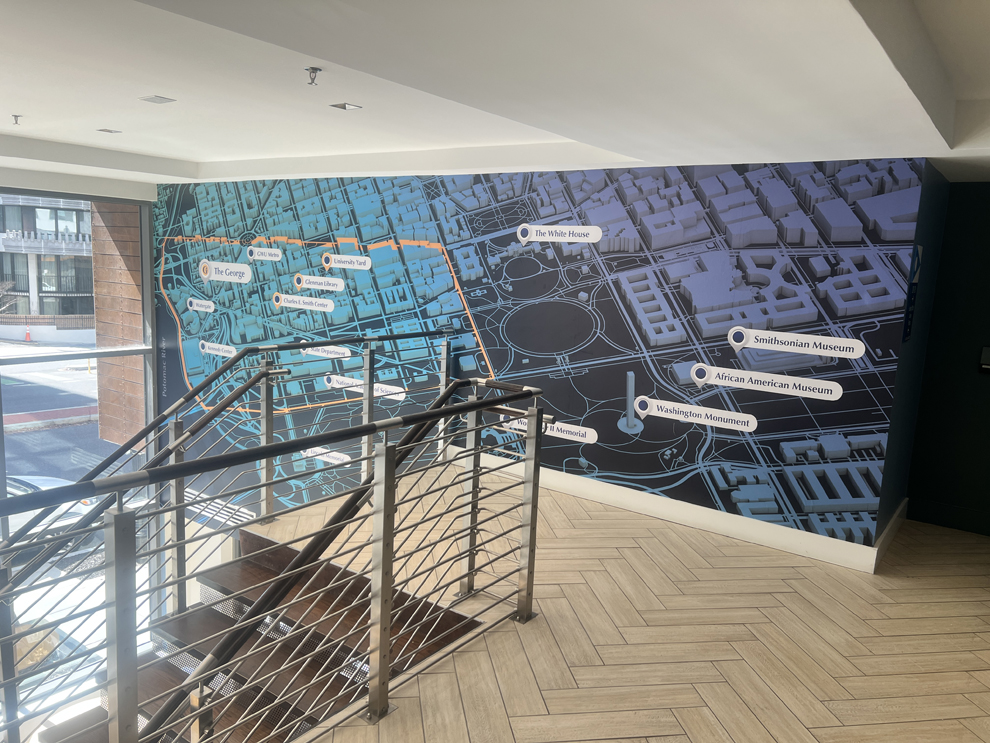
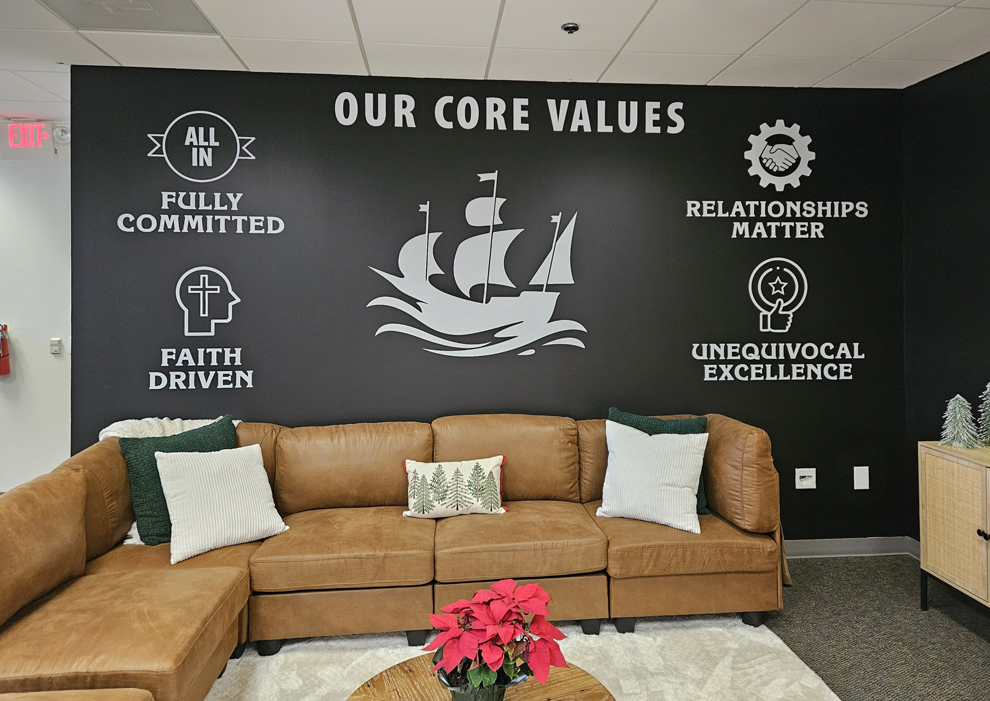
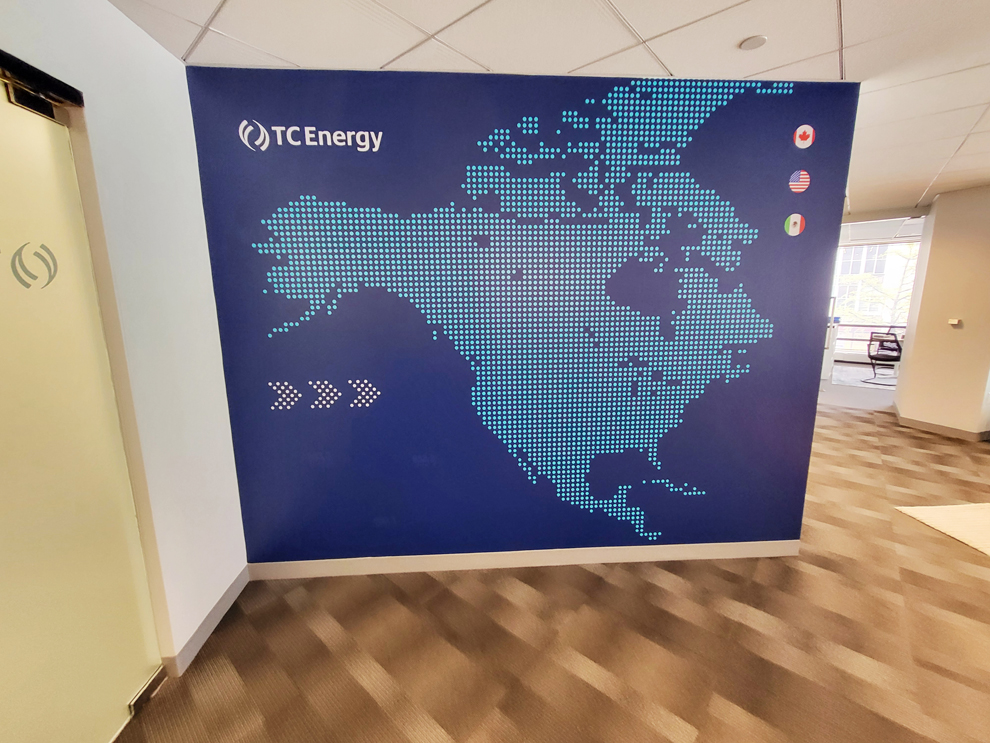
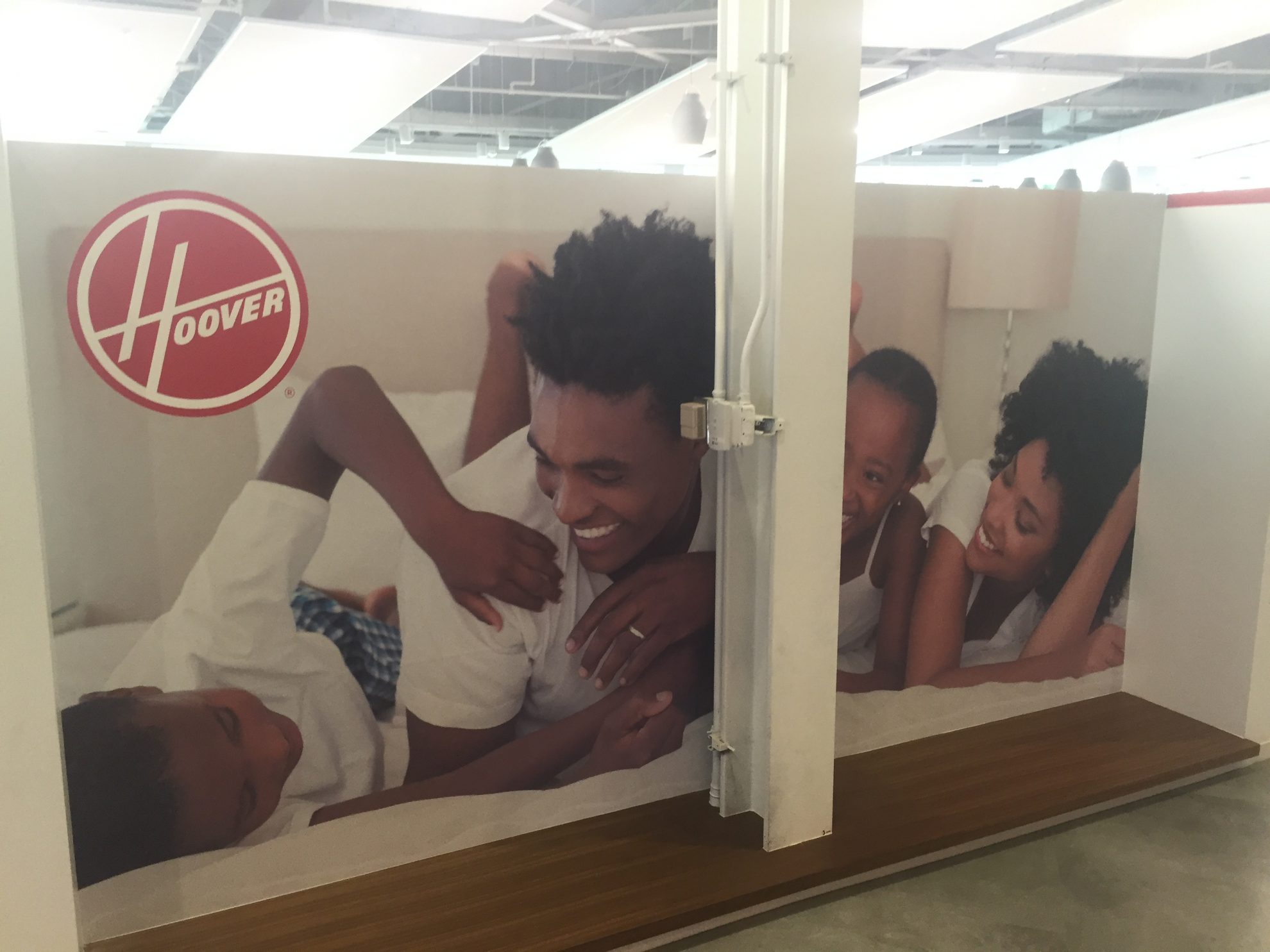
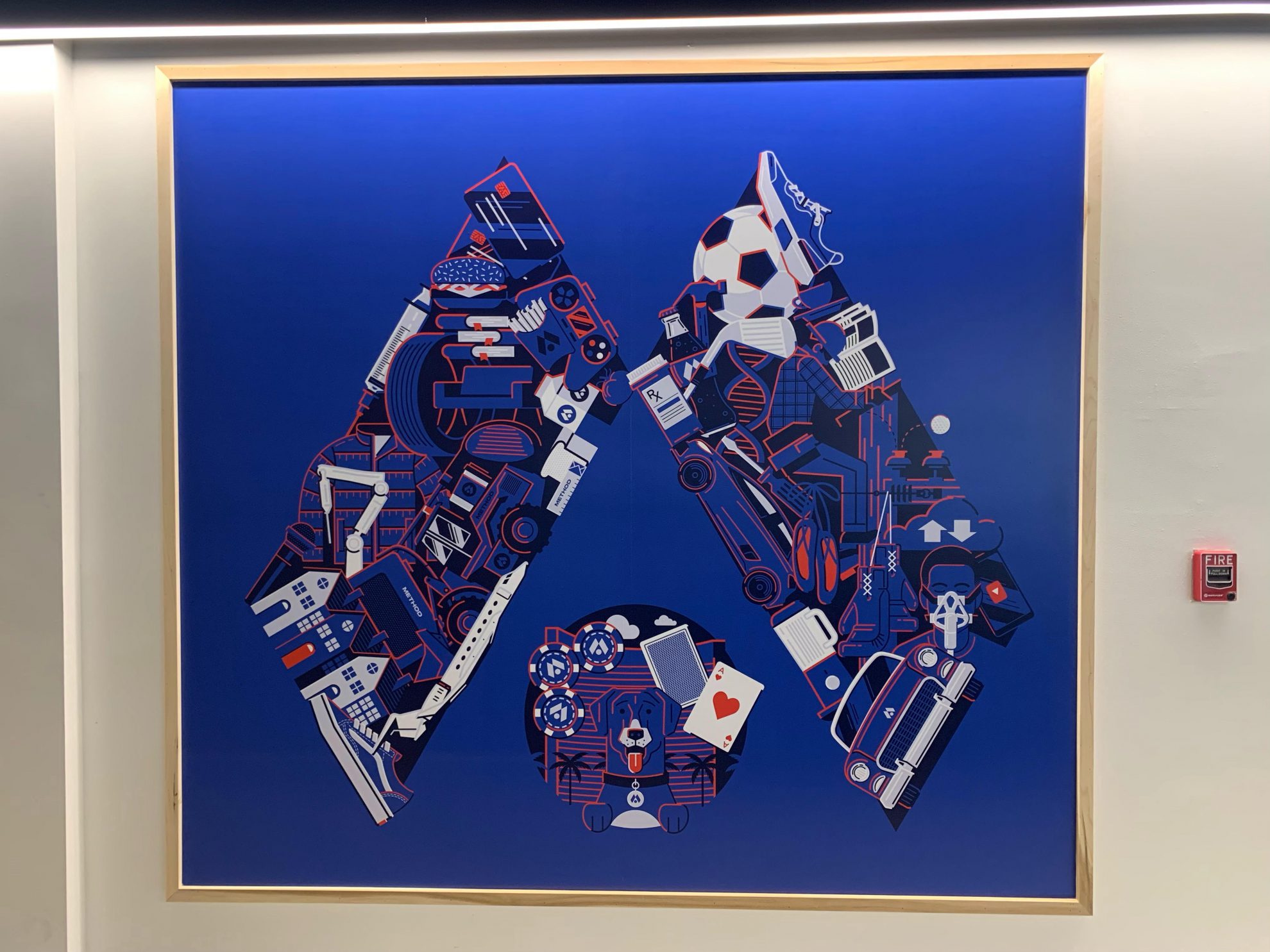
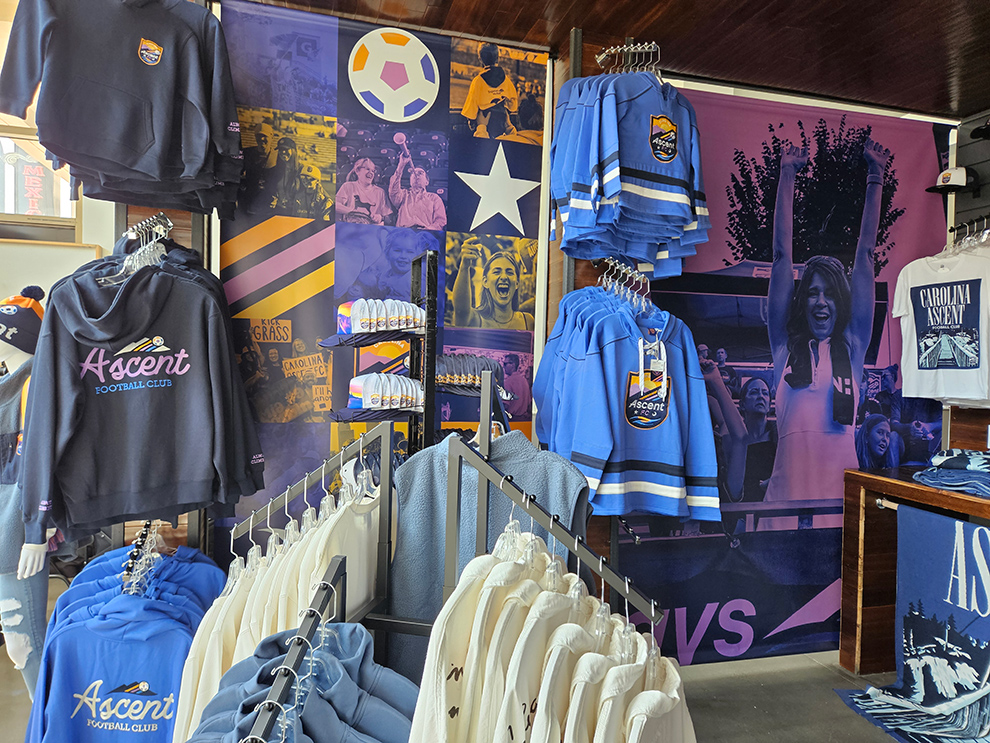
Wall wraps put large interior surfaces to work. Imagery, color fields, or messaging can carry the identity you established at the entrance into reception areas, corridors, training rooms, and anywhere else employees and visitors spend real time.
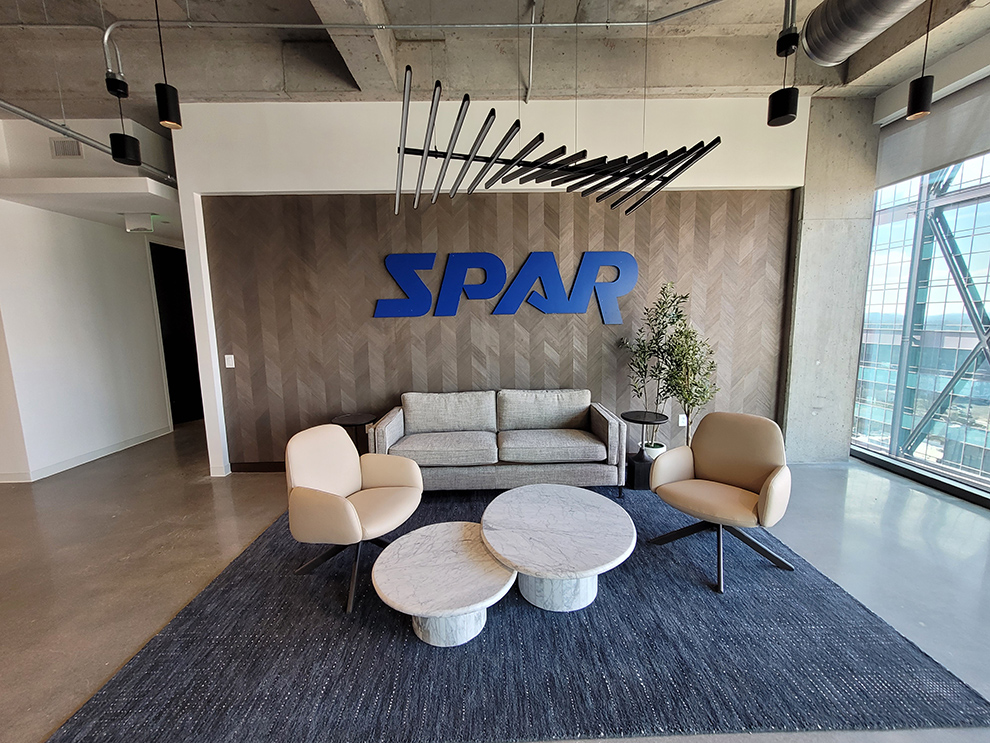
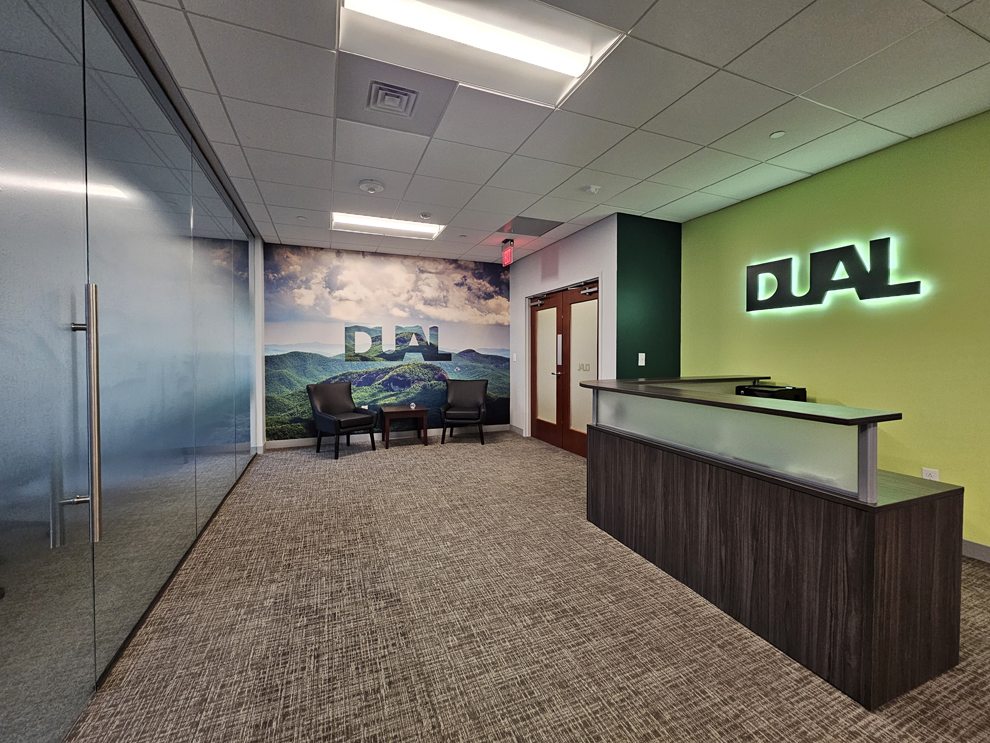
A lobby sign gives arriving visitors a clear destination once the entrance has made the introduction. We coordinate scale, materials, finish, and placement with the surrounding architecture so reception advances the experience instead of repeating what the glass already said.

Wall displays organize information that deserves more than one printed panel. Timelines, recognition programs, values, and company history can combine printed graphics with dimensional and mounted components, adding depth and giving people a structure they can read at their own pace.
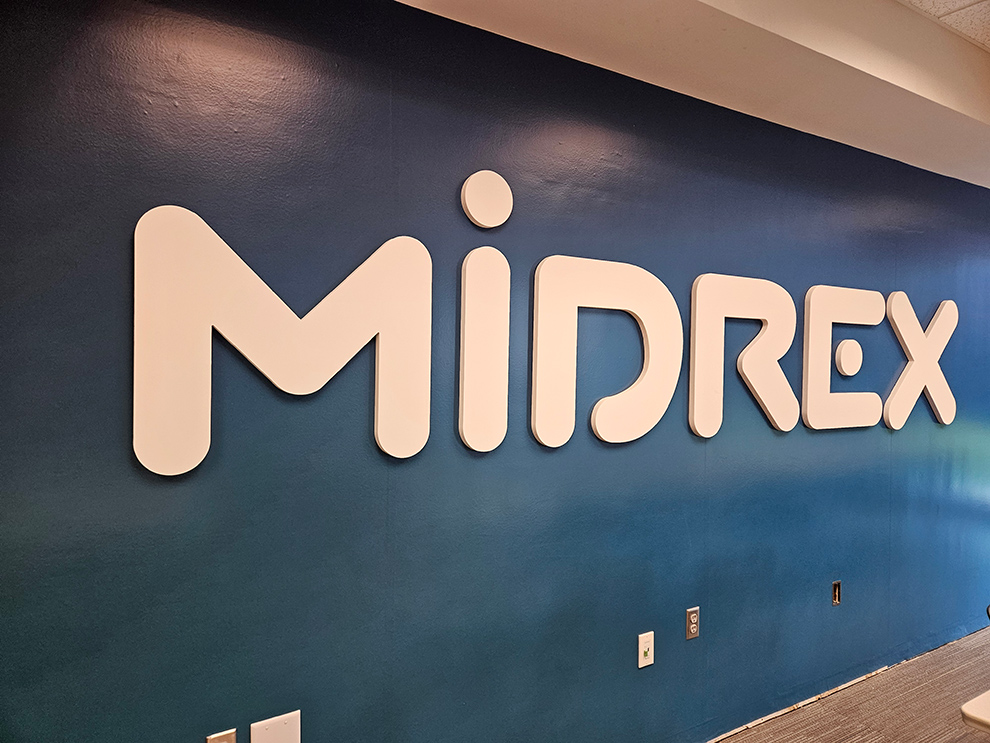
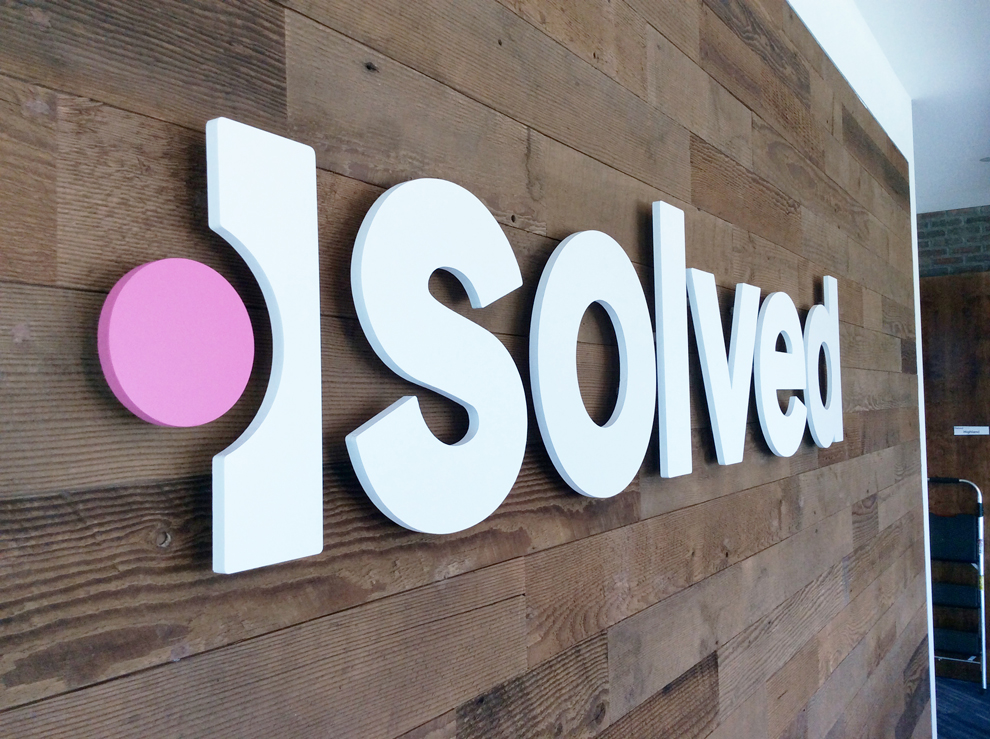
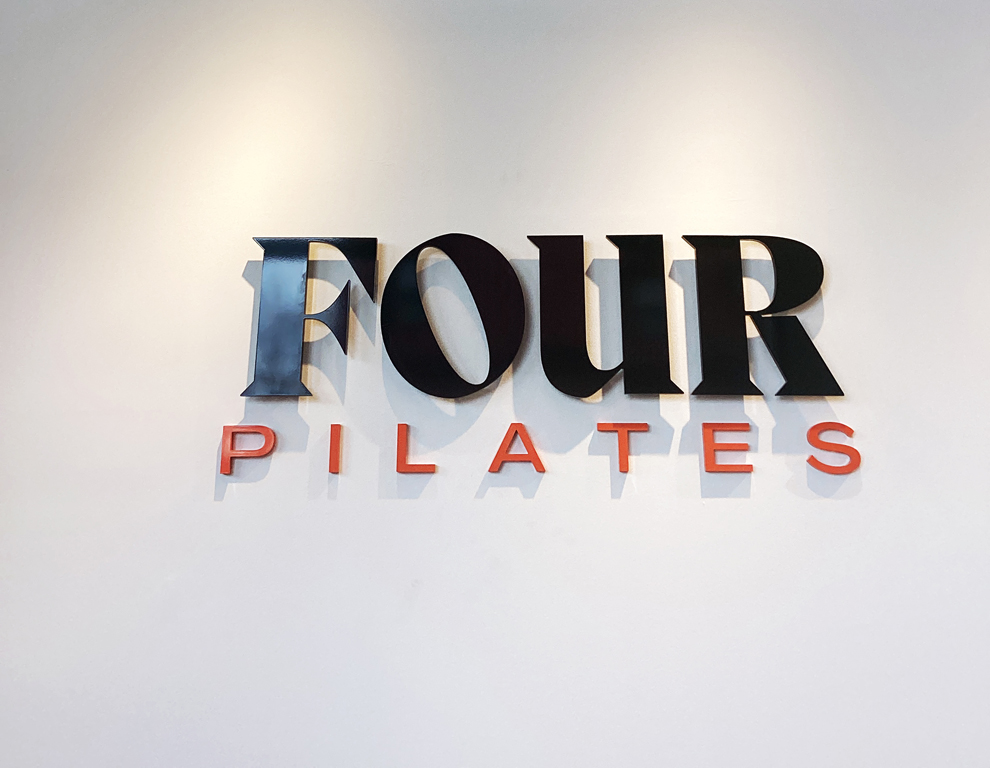
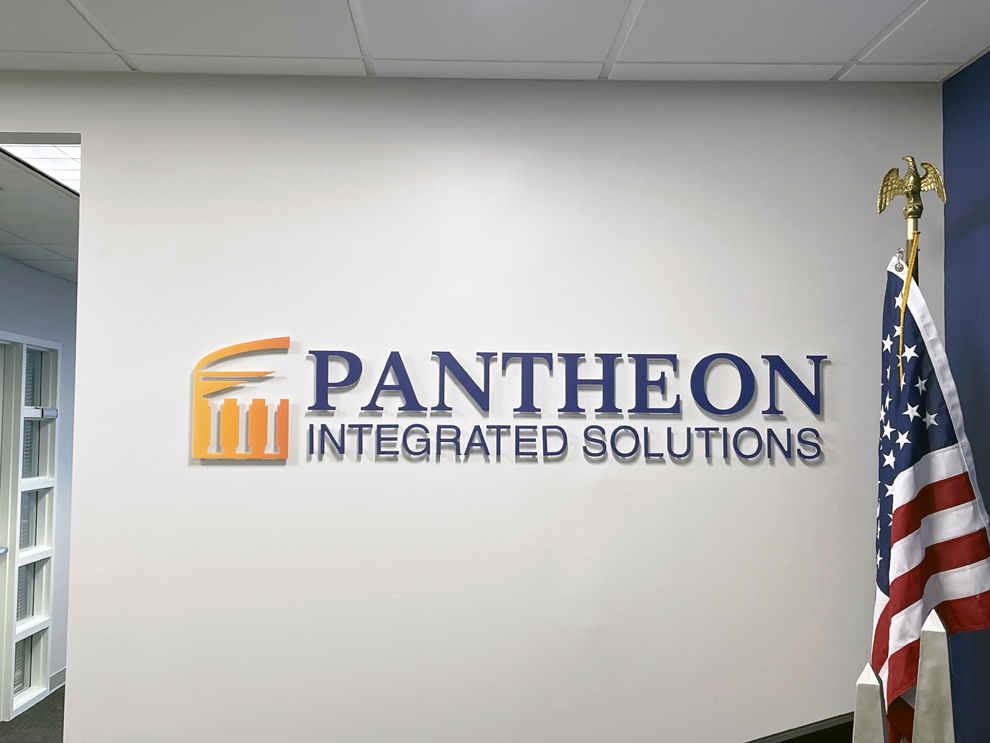
Dimensional letters and logos bring physical depth and architectural presence to reception walls, corridors, and feature areas. We plan letter style, mounting method, and spacing in relation to nearby graphics and lighting so your identity reads clearly without fighting the room.
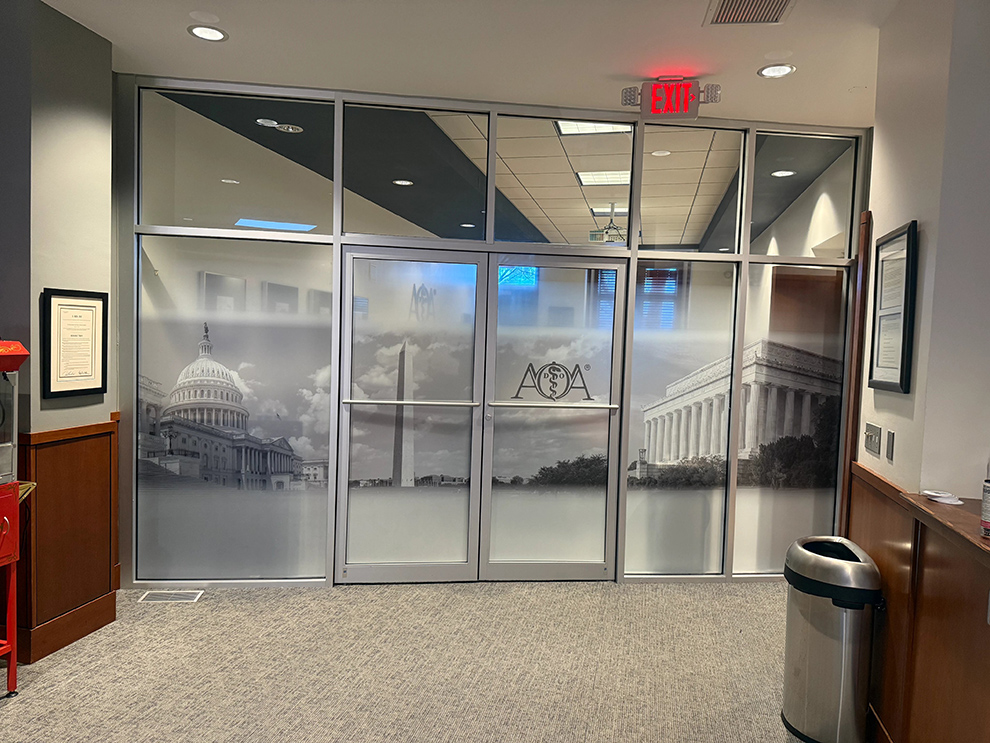
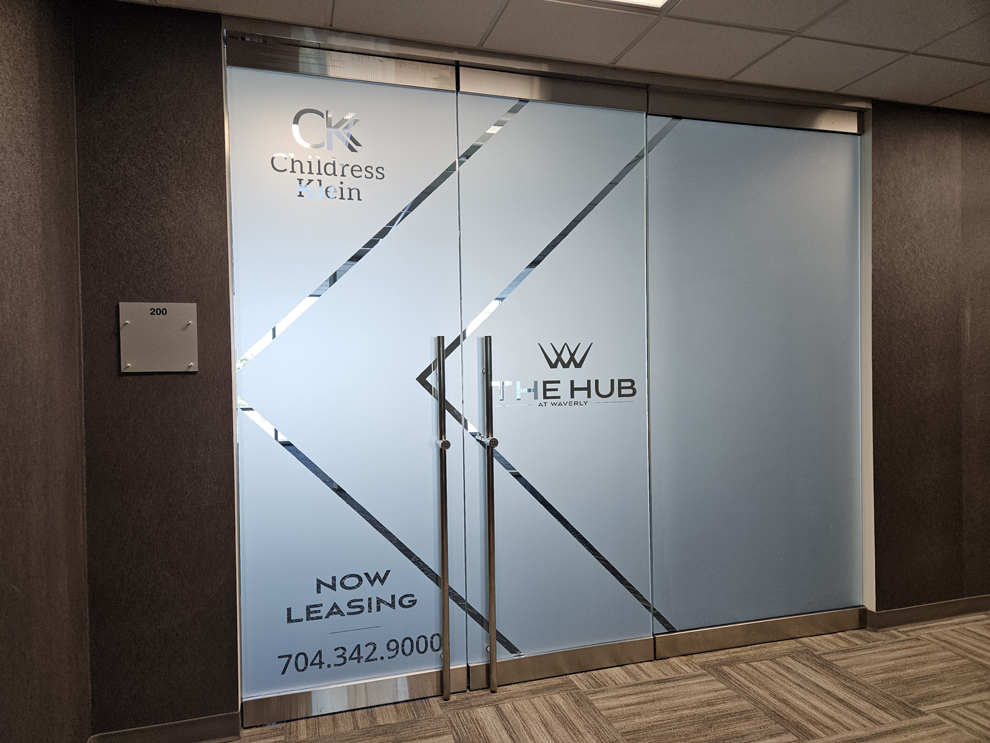
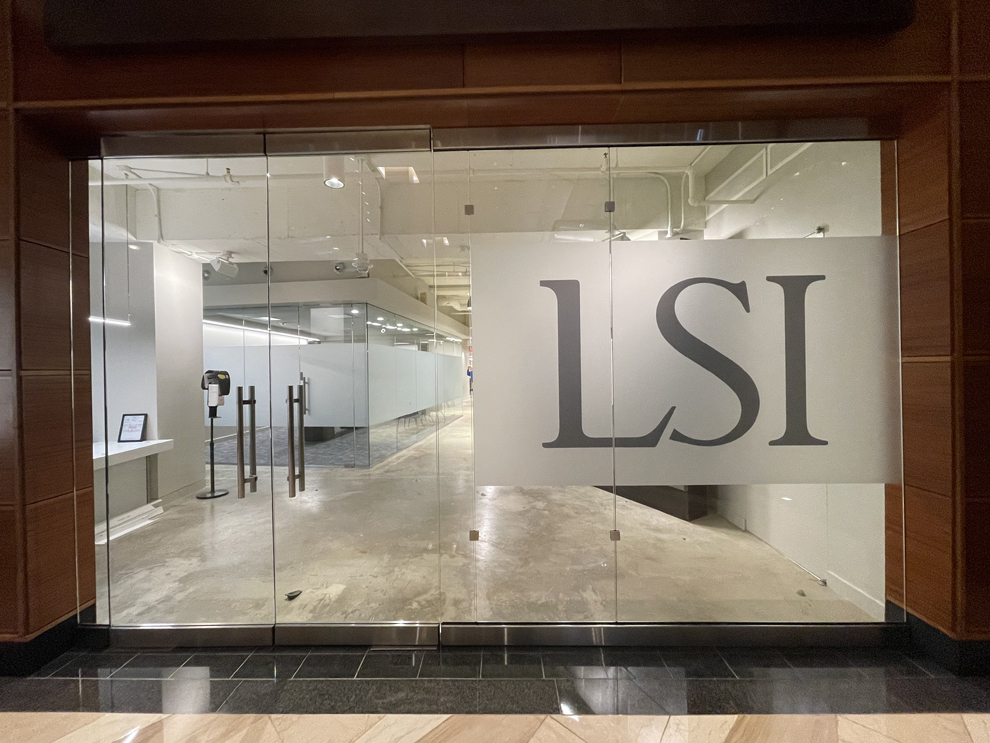
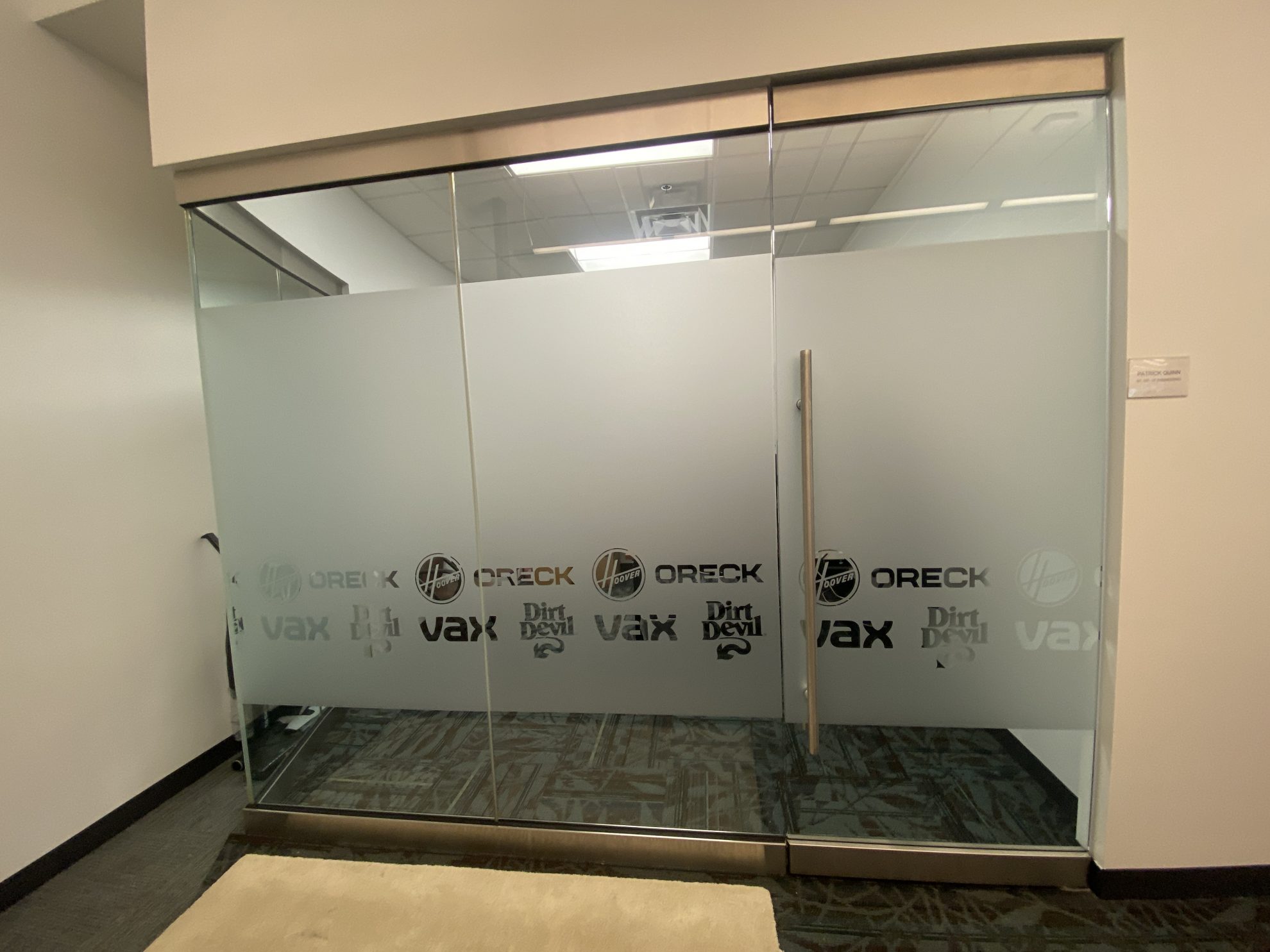
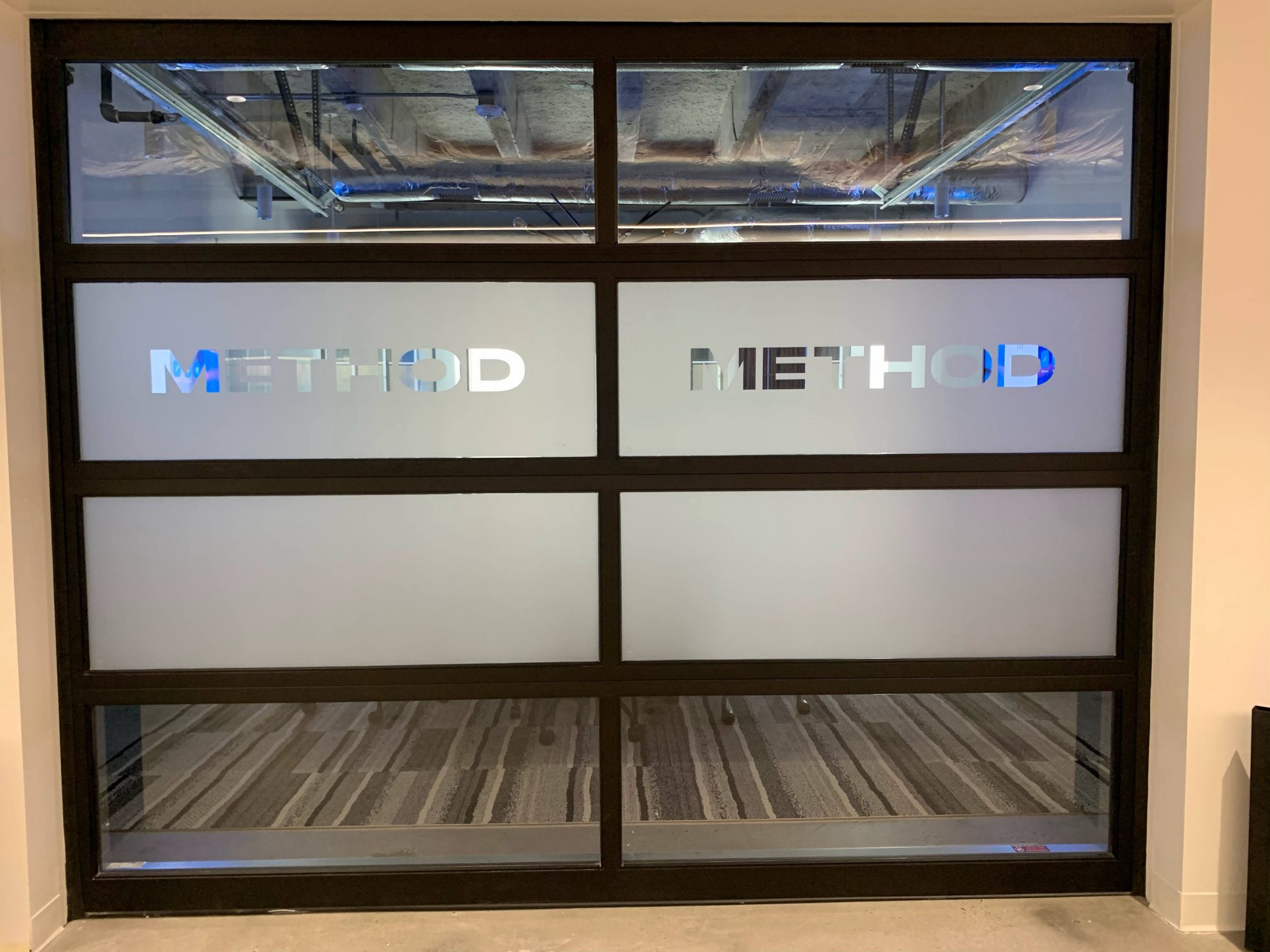
Frosted vinyl and etched-look privacy film soften direct sightlines into offices, conference rooms, and glass partitions while keeping natural light in place. Custom patterns or brand elements make the treatment look planned rather than tacked on to solve a screening problem.
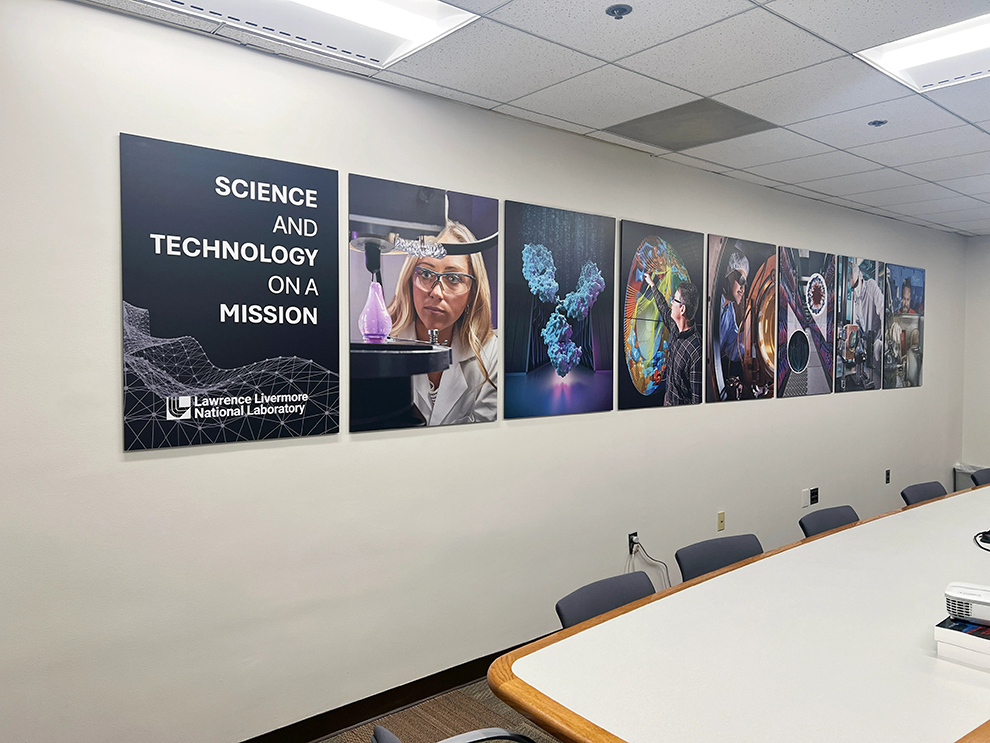
SEG fabric graphics use tensioned fabric in a slim frame for a clean edge and a current look. They fit interior locations where a prominent visual may need to change over time without rebuilding the display or disturbing the branded environment around it.
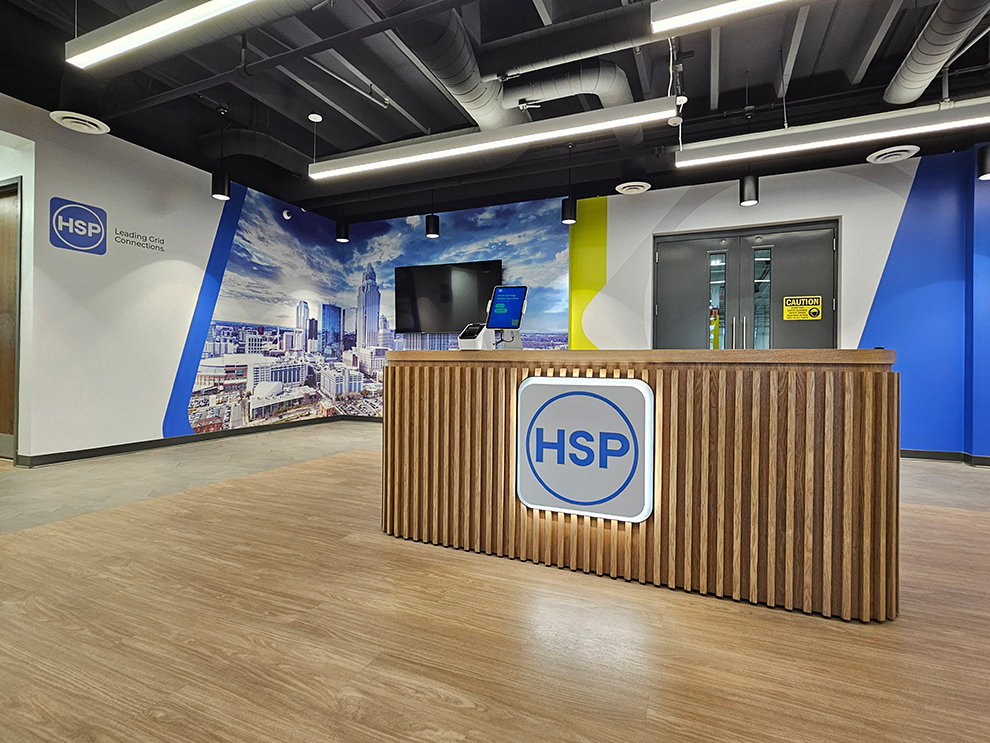
Backlit signs give a logo or key message extra presence in a lobby or customer-facing interior. We study the room, the nearby graphics, and the existing light levels so illumination reinforces the focal point instead of washing out everything around it.
If your Spartanburg or Upstate South Carolina organization is weighing storefront graphics as part of a broader workplace or commercial interior branding effort, we want to hear what the entrance and the interior need to do. Use the Get Started Now form to tell us the project address, your target completion date, the investment you have in mind, plus any photos, measurements, brand standards, or documentation you already have. A dedicated Project Manager will go through it, flag the next decisions to make, and line up the resources needed to move the approved direction forward.
Entrances around Spartanburg SC vary a great deal. A storefront near Morgan Square on a walkable downtown block, a suite in an East Main or Westgate office building, a medical office close to the Spartanburg Regional campus, and a distribution or manufacturing facility along the I-85 and I-26 corridors each bring different sightlines, glass conditions, parking approaches, and building standards. Those differences shape how much identification the door needs, where privacy belongs, and how the graphics should pull people inside.
We provide field support for Spartanburg SC and Upstate communities including Greer, Duncan, Lyman, Boiling Springs, Roebuck, Inman, and Chesnee. Our team members handle site surveys, field verification, installation planning, and professional installation, and everything they observe flows straight back to your dedicated Project Manager and to the teams responsible for environmental graphic design, production, and fabrication.
Organizations with more than one property keep the same Project Manager while we coordinate locations across the Carolinas and Mid-Atlantic. Brand standards and project knowledge stay consistent while each site gets adapted to its own architecture, access, and operating conditions.
Environmental graphic design decides what the entrance communicates and how that message continues past the door. For storefront work, we weigh what people should notice first, which views through the glass should stay open, where privacy is genuinely needed, and how the threshold relates to the first focal point inside.
Some clients come to us with complete brand standards and approved artwork. Others bring an objective, a few photos, and an idea that still needs shaping. We can develop the concept within our scope, or work alongside architects, interior designers, branding agencies, and property teams already involved. Scale, visibility, lighting, sightlines, surface conditions, and the relationship between the exterior approach and the interior destination all drive the design and material decisions.
The result has to be buildable, not theoretical. We develop environmental graphics that move cleanly into production, fabrication, and professional installation, whether that means a stronger arrival, a branded lobby, privacy graphics that preserve daylight, a history wall, a mission statement feature, or clearer direction through the building. We do not provide licensed architecture, engineering, general interior design, lighting design, or code consulting.
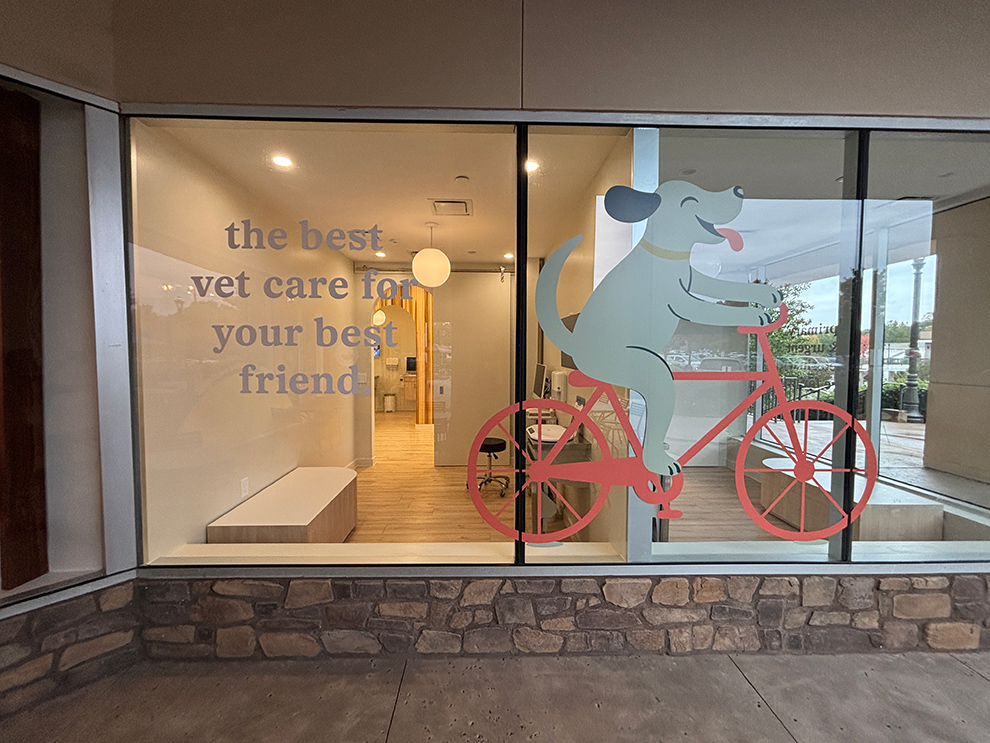
We produce and install specific non-illuminated exterior signs and graphics as part of coordinated storefront and workplace branding projects that also include interior work. That scope can cover exterior window graphics, exterior wall graphics or wraps, dimensional lettering, dimensional signs, custom sign panels, and related non-illuminated storefront elements. These pieces identify your organization before anyone reaches the door, then connect with entrance glass, privacy graphics, lobby signs, wall graphics, and displays so the exterior approach and the interior experience belong to the same project.
Printed exterior wall graphics receive protective film laminate as standard practice for added UV and weather protection. We also review surface condition, exposure, and attachment for the exterior components we accept.
We do not produce or install channel letters, monument signs, pylon signs, or illuminated exterior signs. We do not determine whether a sign permit is required, prepare or submit permit documents, communicate with permitting authorities, or pursue property approvals. The client, property owner or property manager, or general contractor is responsible for confirming and securing required sign permits and property approvals.
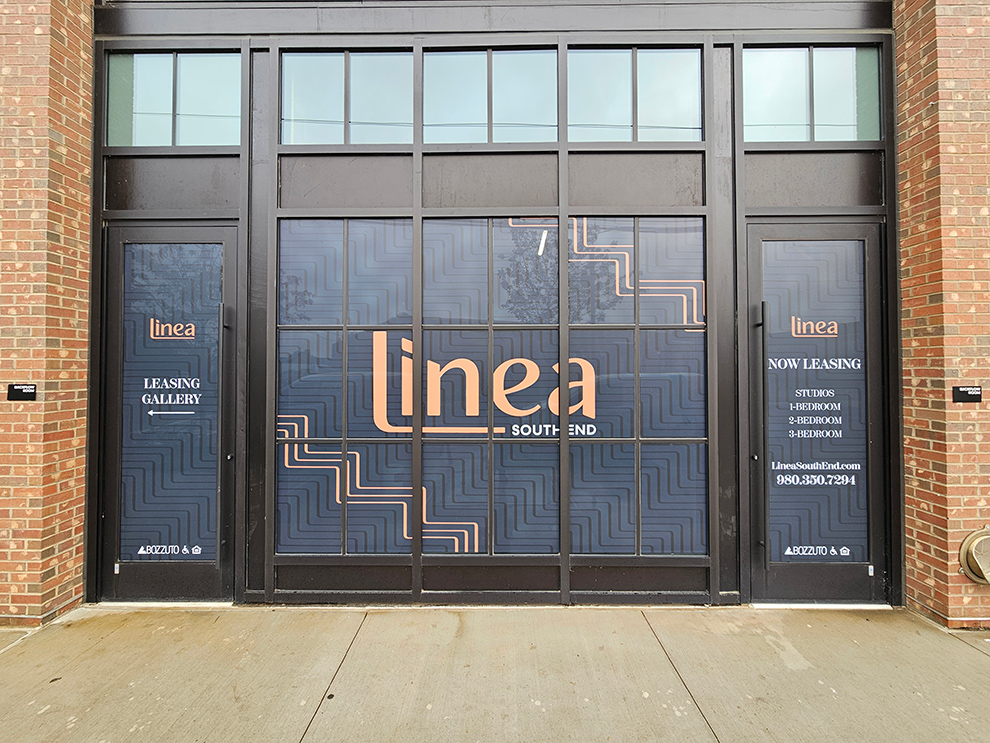
Every storefront graphics project we take on includes a site survey that ties your objectives to measurements, surfaces, access routes, and installation conditions. From there, your dedicated Project Manager keeps environmental graphic design, production, fabrication, and our full-time professional installers working from the same set of facts.
That shared project history is the practical advantage. Site information, approved design intent, material decisions, production requirements, access planning, scheduling, and installation details live in one place, which reduces handoffs and lets questions get answered before they turn into field problems. Our installers show up already familiar with the glass conditions, wall surfaces, ceiling heights, and building access noted during the survey.
That is a different experience from splitting surveys, design, production, and installation among separate vendors who each enter the work at a different stage. Our installers protect your property, work around business hours and building requirements when needed, communicate as conditions come to light, and deliver the approved graphics exactly as designed.
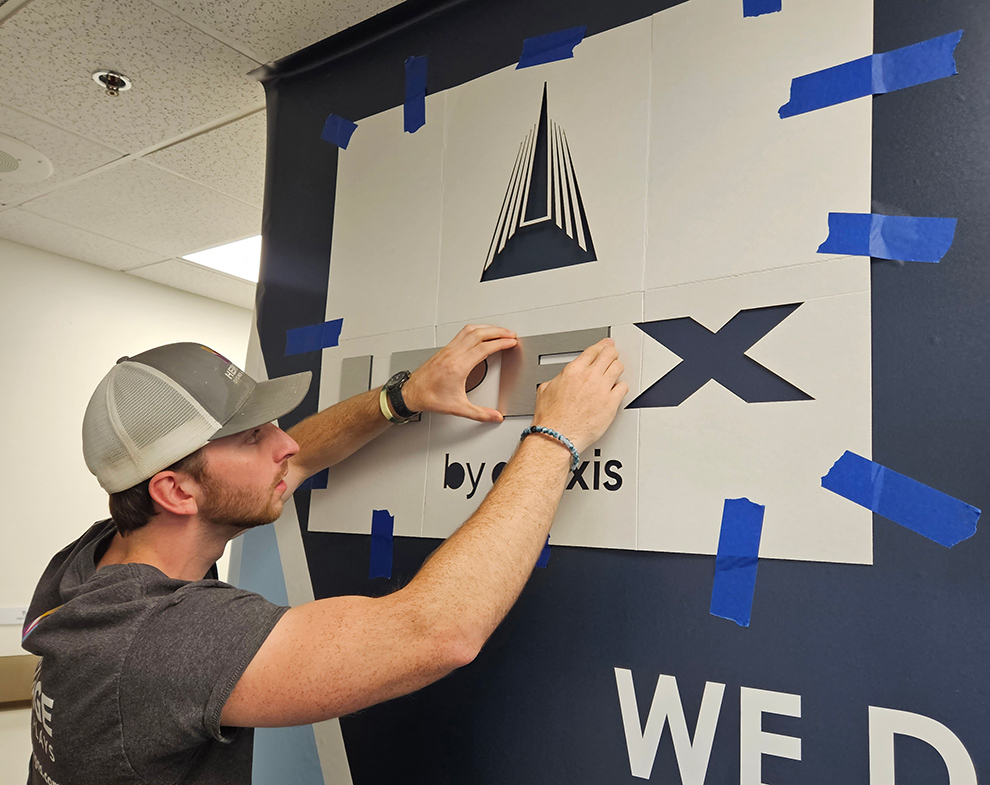
Adhesive wall graphics perform when the drywall behind them is sound and smooth, repairs are complete, primer and paint have been properly applied, and the finish paint is fully cured. Paint that feels dry is not necessarily cured. Roughly four weeks is a useful planning allowance for many paints, though the manufacturer's requirements and actual site conditions determine readiness. Some washable, scrubbable, stain-resistant, low-VOC, or zero-VOC coatings may call for cleaning, adhesion testing, or a different vinyl and adhesive approach.
An adhesion test tells us how the vinyl reacts to the painted surface in front of it. It says nothing about how firmly that paint and primer are gripping the drywall behind it. When paint lifts during a test, or during the normal repositioning that happens at installation, we stop work instead of compounding the problem. Repair, priming, repainting, and full cure are arranged and paid for by the client or the property owner.
Taking graphics down later is its own conversation. We work slowly and deliberately to keep avoidable damage to a minimum, but no installer can promise a damage-free removal. Paint, primer, or the drywall facing may come away with the vinyl, which is why restoration time and dollars belong in the plan from the beginning. "Removable" describes the adhesive system, not a guaranteed outcome. Handled with that expectation in place, wall graphics remain one of the most effective branding tools available.
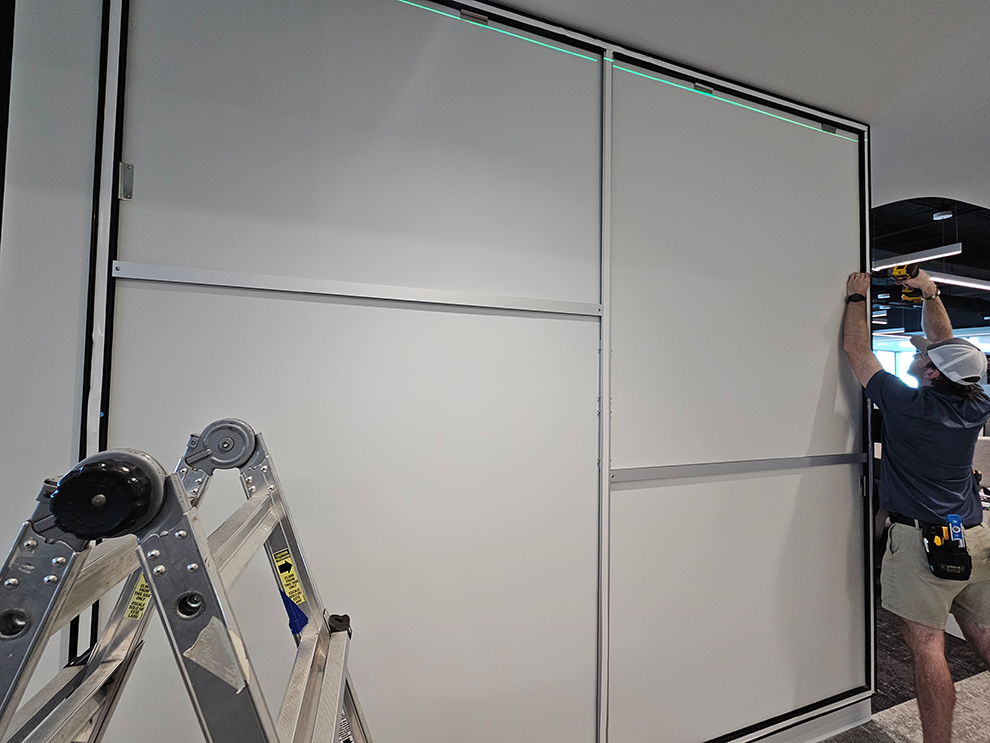
Good planning brings several decisions into alignment at once: what the organization wants visitors to feel at the door, who those visitors are, how far the scope reaches, whether the work happens in phases, when it needs to be finished, whether the site is ready, who signs off, and what the whole thing should cost. Photos, measurements, floor plans, artwork files, brand guidelines, and landlord requirements all feed those decisions. We use them to sort what is already locked in from what still needs to be verified in the field.
We're built for professionally managed projects that gain something from keeping environmental graphic design, production, fabrication, and installation under one roof. A large share of our production and installation projects land somewhere between $10,000 and more than $200,000. The right number follows the full scope of the work, not the cost of any one graphic.
A Spartanburg SC project might focus on a single high-impact entrance, run deep into a workplace interior, or grow into a phased rollout across several buildings. A single dedicated Project Manager keeps ownership, approvals, timing, and upcoming decisions clear while our team delivers the approved scope.
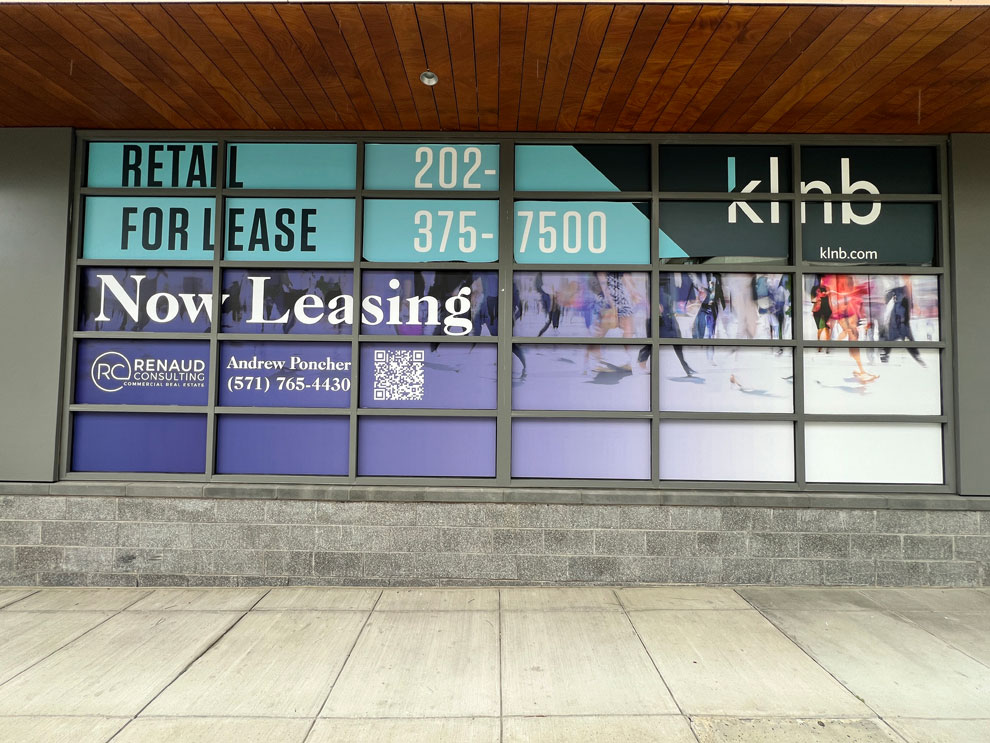
Storefront graphics put an organization's identity at the entrance and set up the handoff into the interior. On entrance glass and the surfaces around it, they can drive recognition, add privacy, make glass easier to see, and point people where to go. Inside a project we manage, they're coordinated with lobby signs, wall graphics, dimensional pieces, and the rest of the interior branding so arrival and interior read as one continuous experience.
Yes. Privacy almost never requires covering an entire window. Frosted vinyl, etched-look privacy film, branded patterns, or graphics set at seated eye level can break up direct sightlines while daylight and chosen views stay intact. Before recommending coverage, we look at who needs screening, which direction they're being viewed from, and at what height, because an identical pattern can behave very differently on an exterior storefront than it does on an interior glass partition.
Yes. Every storefront graphics project we take on includes a site survey that combines client discovery with field verification. We confirm measurements, glass and wall surfaces, mounting conditions, access, and anything else that might affect production or installation, and we clarify what you want the entrance and interior to accomplish. Everything we learn stays with your Project Manager and the design, production, fabrication, and installation teams.
Material choice follows the design, the site, and the job the finished piece has to do. Depending on the application, that may mean adhesive vinyl, cut vinyl lettering, perforated vinyl, frosted vinyl, acrylic, dimensional materials, or aluminum composite material (ACM). ACM delivers a durable metal look at a fraction of the weight of solid metal. We don't print on or cut solid aluminum or steel as a sign substrate.
Yes. We remove adhesive vinyl slowly and carefully to limit avoidable damage, but a damage-free result can't be guaranteed. Paint or primer can lift with the vinyl, and the drywall facing is sometimes affected.
Clients and property owners should set aside time and budget for possible repair, correct priming, repainting, and full cure before the wall is reused or new graphics go up.
Arranging and paying for that repair and restoration falls to the client or property owner. We don't perform or fund wall repair, priming, repainting, or restoration. "Removable" refers to the adhesive system and its intended use, not a guaranteed result. Our responsibility is careful removal, minimizing avoidable damage, and reporting what we find.
Perforated window graphics are printed on vinyl punctured with tiny openings that preserve a measured amount of see-through. How they perform depends heavily on the light levels on each side of the glass, so the artwork can read clearly from the sidewalk during the day while people inside keep their outward view. We always review the actual glass and its exposure before recommending this approach.
Yes, within a defined scope. We produce and install specific non-illuminated exterior signs and graphics when they're part of a coordinated storefront or workplace branding project that also includes interior work. That covers exterior window graphics, exterior wall graphics and wraps, dimensional lettering and signs, custom sign panels, and similar non-illuminated elements that link the exterior approach to the branded interior.
Printed exterior wall graphics get a protective film laminate as standard practice for added UV and weather resistance.
We don't produce or install channel letters, monument signs, pylon signs, or illuminated exterior signage. We also don't determine permit requirements, prepare or submit permit applications, or pursue property approvals. Confirming and securing required sign permits and landlord approvals is the responsibility of the client, the property owner or manager, or the general contractor.
Yes. We regularly build from existing brand standards, architectural drawings, approved concepts, and creative direction developed by others. Our job is to develop or refine the environmental graphics within our scope and carry the approved direction through production, fabrication, and professional installation. We don't provide licensed architecture, engineering, general commercial interior design, lighting design, or code consulting.
Painted walls need to be smooth, sound, properly repaired, primed, painted, and fully cured to the paint manufacturer's specifications. Roughly four weeks is a reasonable planning allowance for many paints, though real cure times vary. Washable, scrubbable, stain-resistant, low-VOC, zero-VOC, and other difficult coatings may call for cleaning, adhesion testing, or a vinyl and adhesive combination chosen for compatibility.
Adhesion testing shows how vinyl performs against the painted surface, but it can't verify how well that paint and primer are bonded to the drywall underneath. If paint peels or pulls during testing or during routine repositioning at installation, we stop rather than make the wall worse. The client or property owner handles and funds the repair, priming, repainting, and full cure before we reschedule the install.
Distraction markers are decorative or branded vinyl graphics applied to clear glass so the surface is easier to notice. They can be bands, dots, patterns, logos, or other visual elements, and they often add privacy or brand presence at the same time. We plan their height and appearance alongside the rest of the glass treatment. Applied vinyl does not establish building-code or safety-glazing compliance.
No single lifespan applies to every storefront graphic. Performance comes down to the material and adhesive, the surface, orientation and sun exposure, cleaning habits, physical contact, and how long the graphic is meant to stay up. We start with the service period you need and recommend a system suited to it instead of attaching one durability claim to every application.
Yes, when removal is part of a new production and installation project with us. If wall graphics are being replaced, we strongly recommend scheduling the removal well before the new installation date.
It comes down to timing. Until the old vinyl is off the wall, nobody knows what's underneath. We remove graphics slowly and carefully to limit avoidable damage, but paint may pull, older drywall damage may surface, or other restoration may be required. Removing early gives the client or property owner room to arrange and pay for repair, correct priming, and repainting.
The new finish paint then has to fully cure before we come back with the replacement graphics. Around four weeks is a sensible planning allowance for many paints, while the manufacturer's requirements and site conditions determine actual readiness. We don't offer graphics removal as a standalone service.
We provide field support across Spartanburg SC and the surrounding Upstate, then tie that support into broader Carolinas and Southeast resources as a project demands. Our team members meet clients at their facilities, run site surveys and field verification, help with installation planning, and professionally install the signs and graphics included in the project. What we learn on site flows straight back to your dedicated Project Manager and the environmental graphic design, production, and fabrication teams.
Yes. We coordinate storefront and interior branding programs across multiple client properties throughout the Carolinas and the Southeast. One dedicated Project Manager stays the constant point of contact while we schedule the right site surveys, production and fabrication resources, and professional installation at each address.
That continuity protects brand standards, approvals, communication history, and expectations so nothing restarts from zero at every property. At the same time, we don't force identical solutions onto buildings that aren't identical. Dimensions, architecture, glass conditions, access, and installation windows all shift from site to site while the approved brand direction holds steady.
We can handle a single high-visibility entrance, an entire workplace interior, phased improvements, or coordinated branding across a portfolio of locations. Many of our production and installation projects fall between $10,000 and more than $200,000, depending on scope, number of sites, fabrication, and installation requirements. The best fit is work that benefits from connected environmental graphic design, production, fabrication, and professional installation under one dedicated Project Manager.
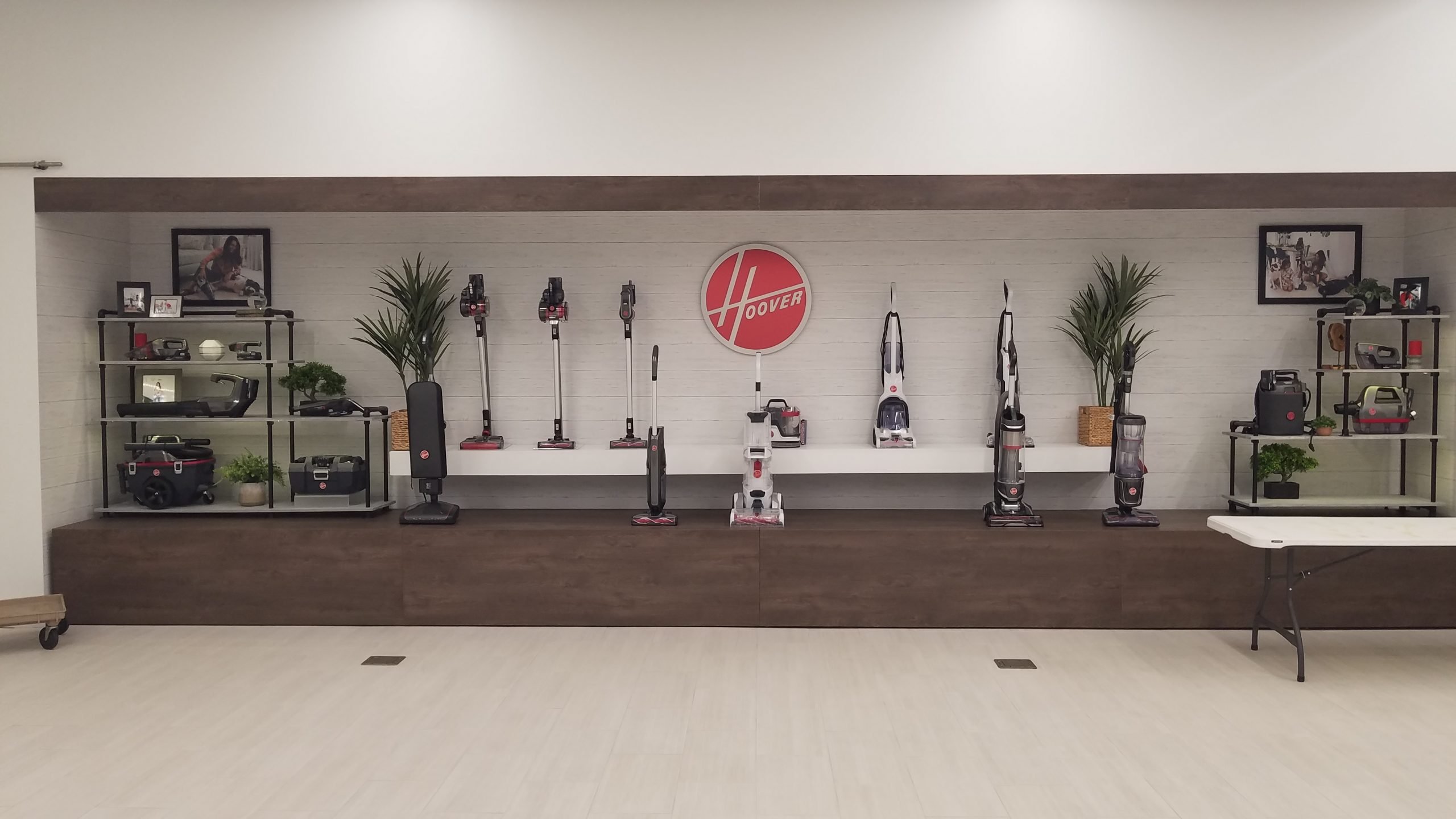
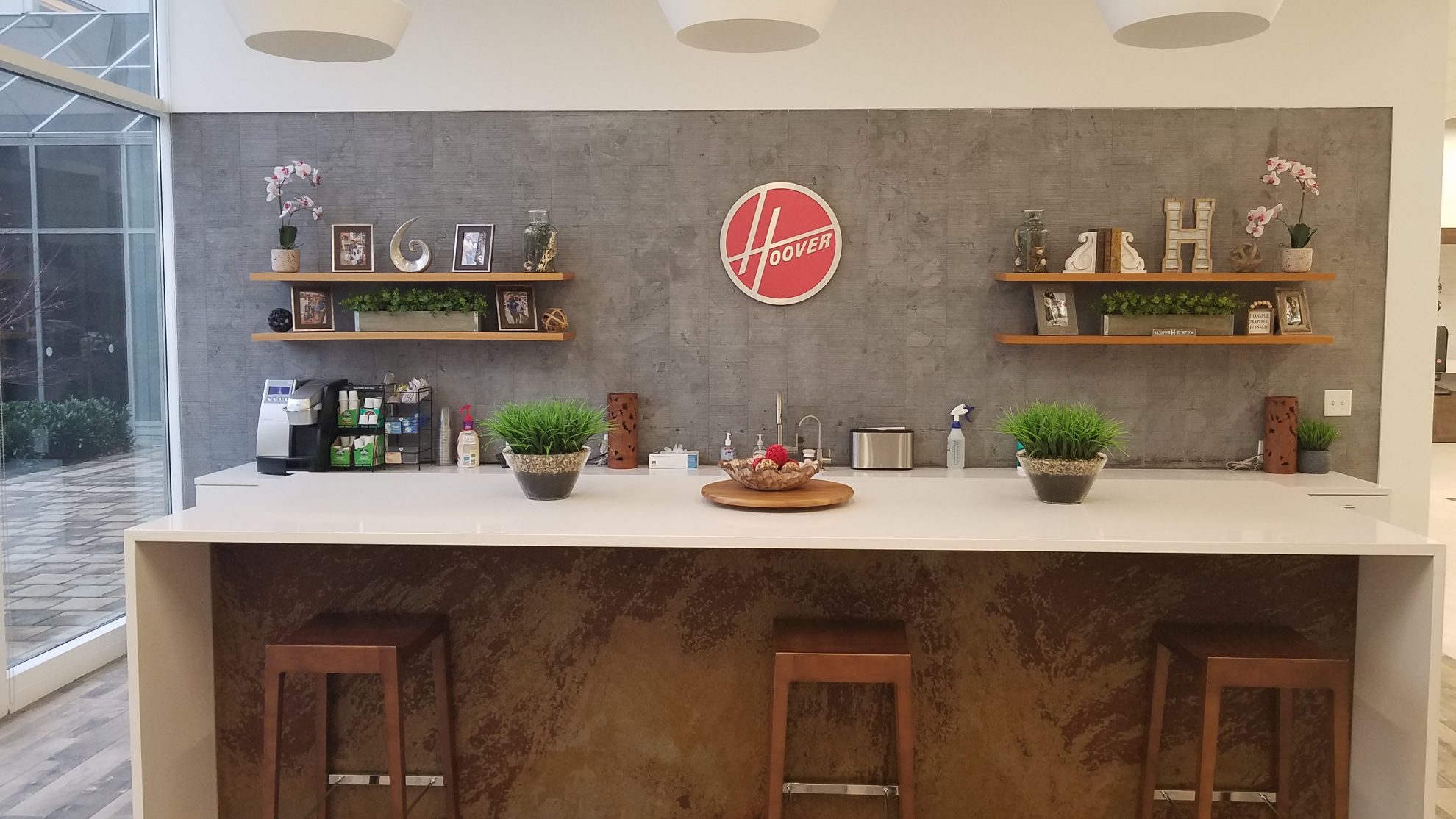
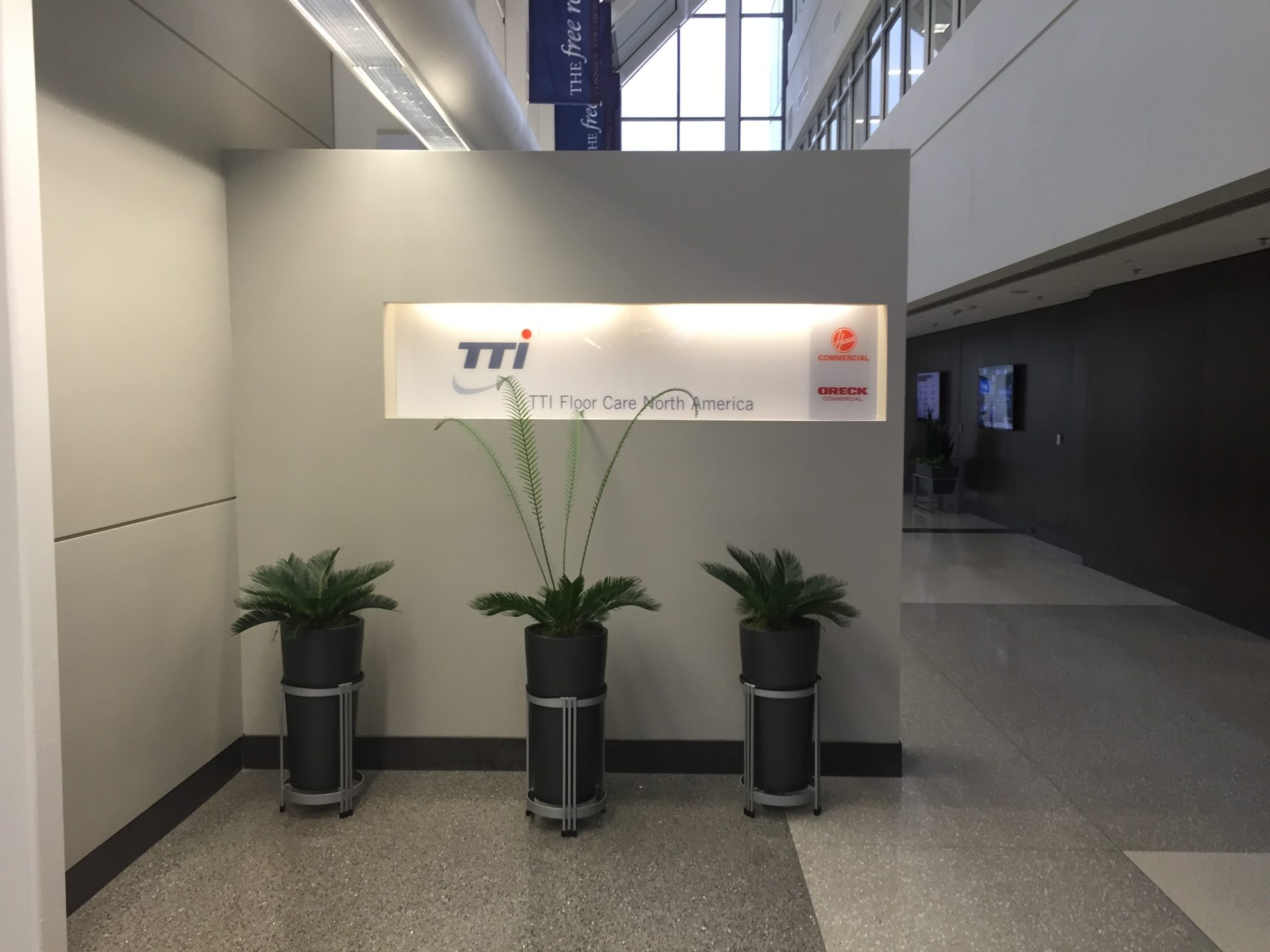
Heritage Signs & Displays collaborated with TTI Floor Care North America to enhance their corporate office. The project included custom frosted vinyl graphics, acrylic signs, dimensional lettering, and LED backlit signs, showcasing the brands Dirt Devil, Hoover, and Oreck. The signage improved office branding, privacy, and aesthetics. Heritage collaborated closely with TTI, ensuring efficient execution and high-quality results, creating an immersive and professional environment that reflects TTI's brand values.
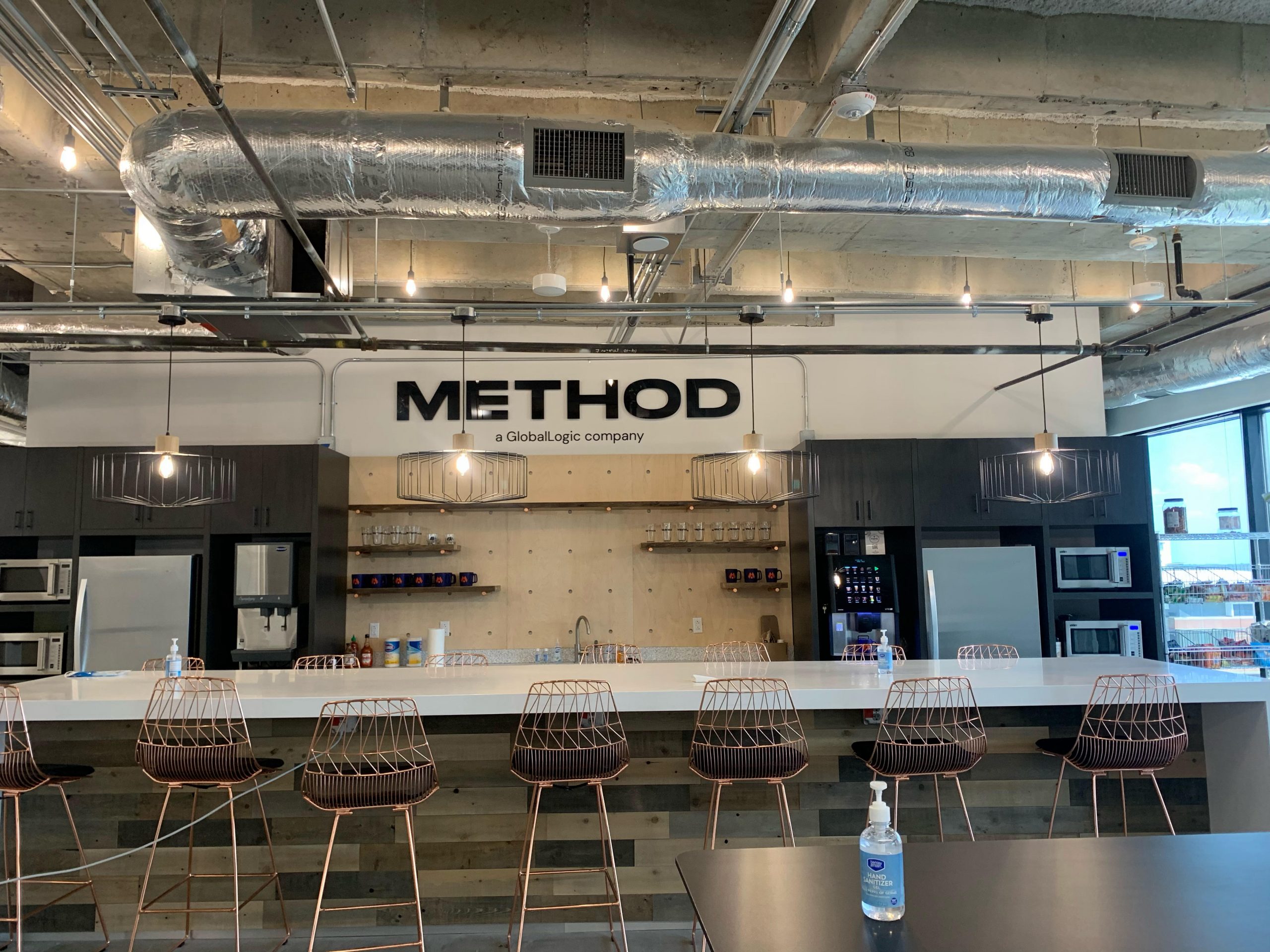
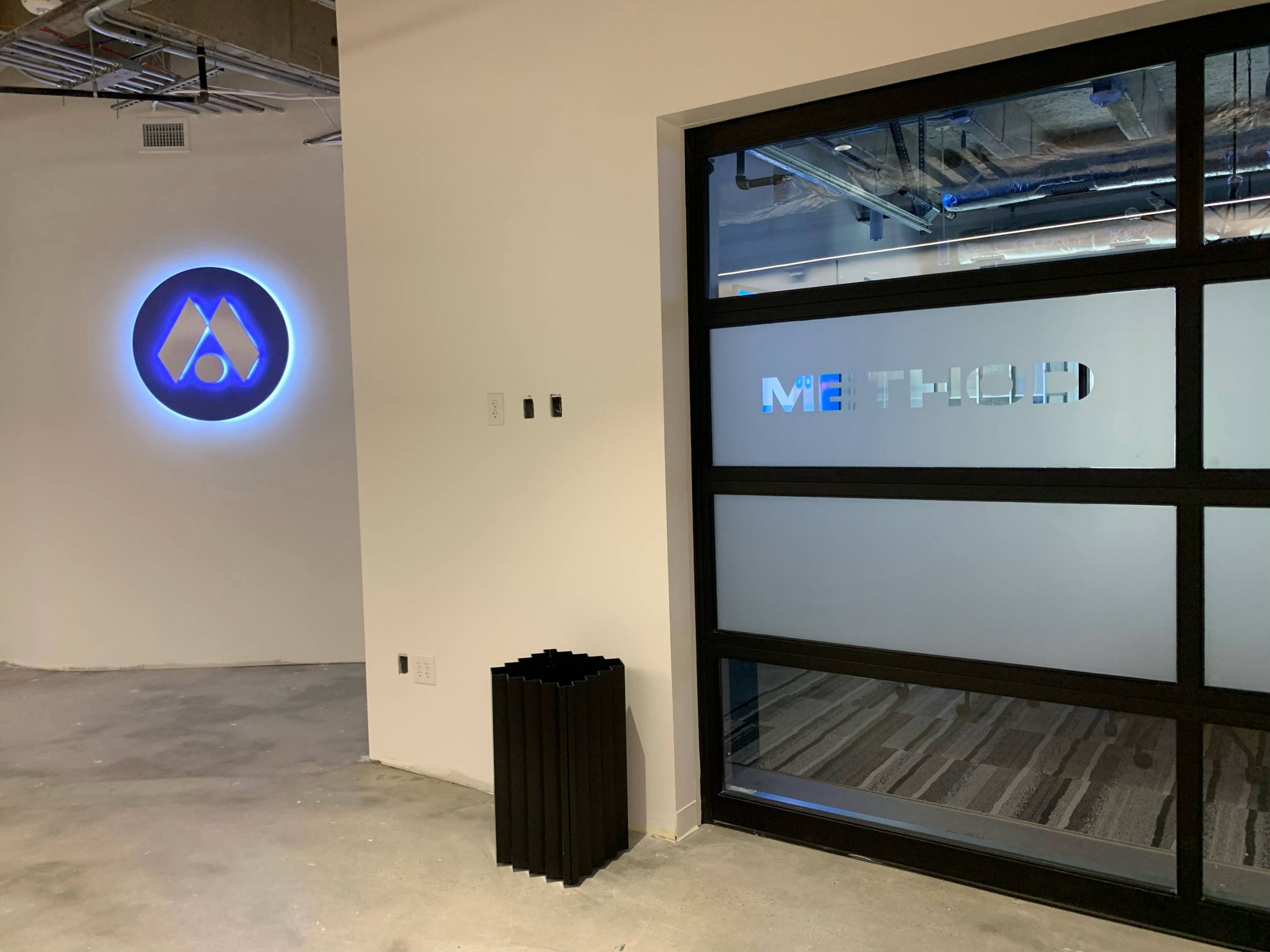
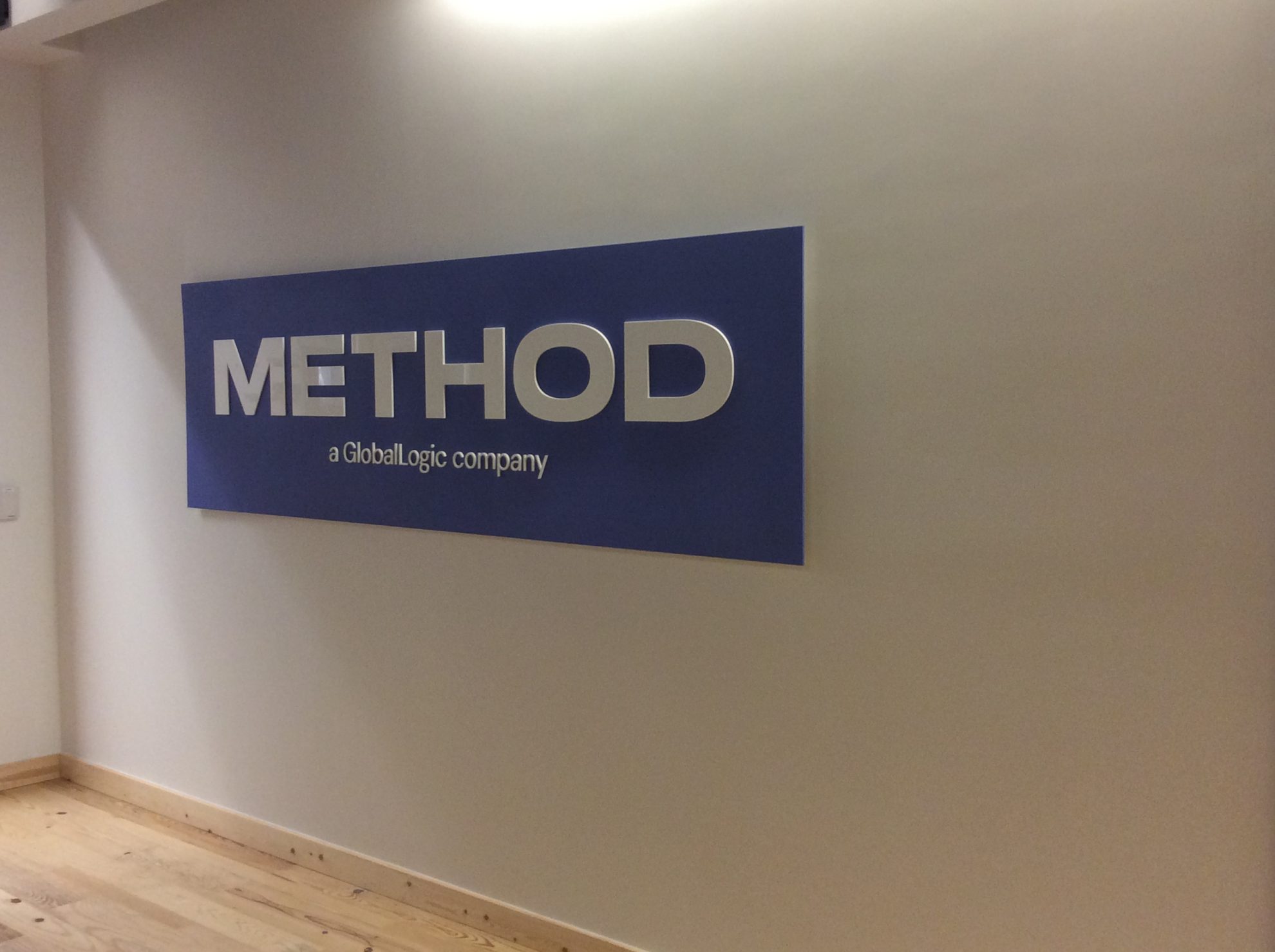
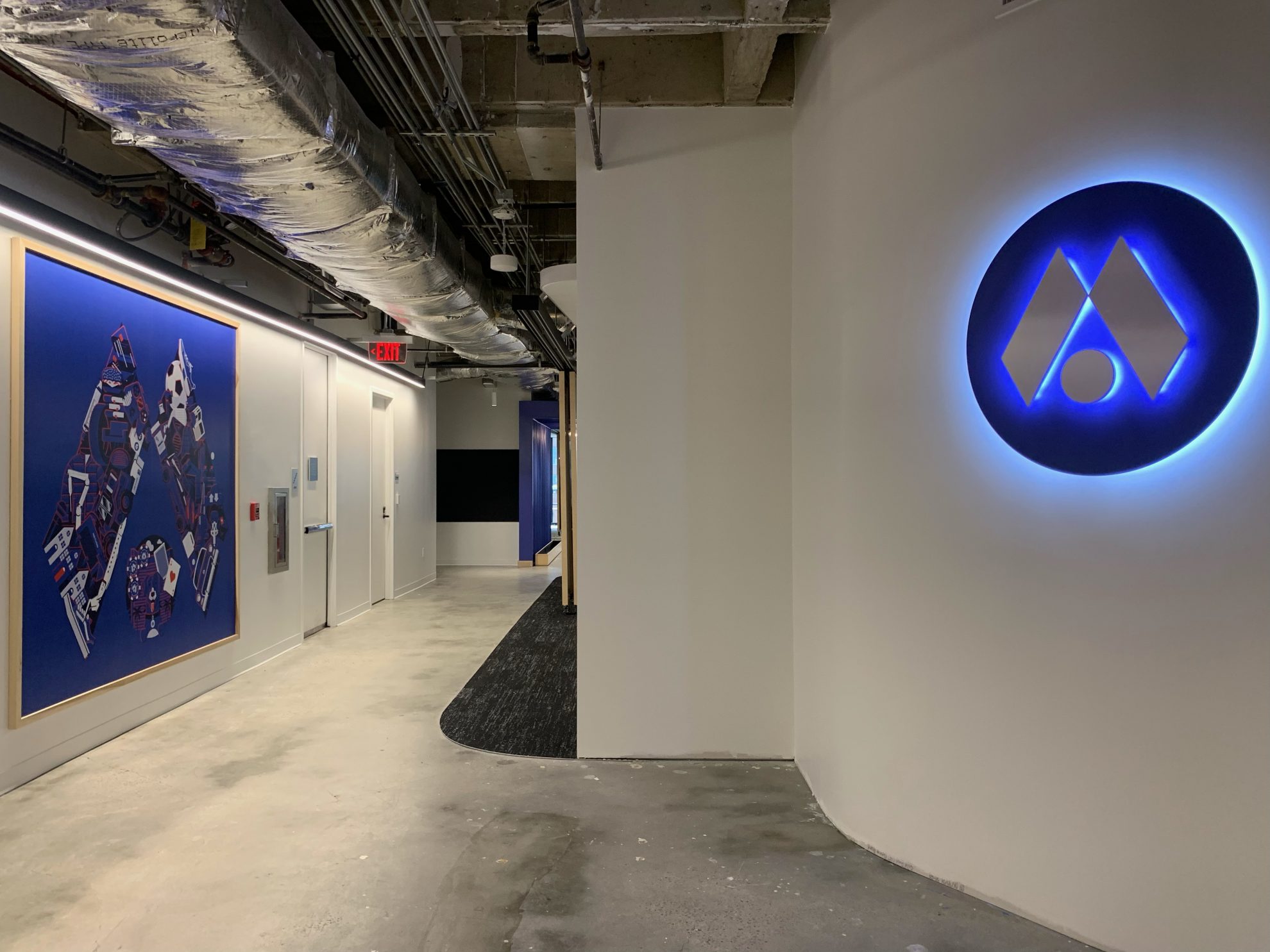
Heritage Signs & Displays' collaboration with Method (formerly Skookum) to rebrand their corporate headquarters. The project included dimensional lettering, wall displays, LED-lit signage, wall wraps, and frosted vinyl, creating an immersive and branded environment. Heritage worked closely with Method's team, ensuring accurate execution and timely delivery. The transformation was completed in August 2021, with Method's employees moving into the revamped space in September. The project reflects Heritage's commitment to quality and collaboration.