A Veteran Owned Business
A Veteran Owned Business
A Veteran Owned Business

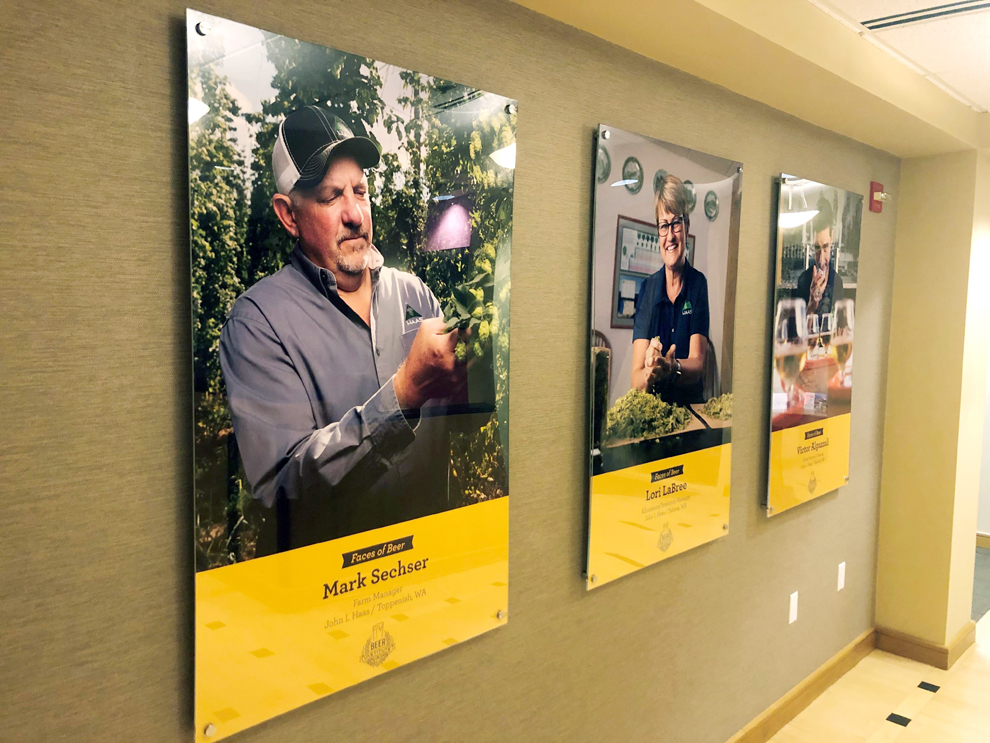
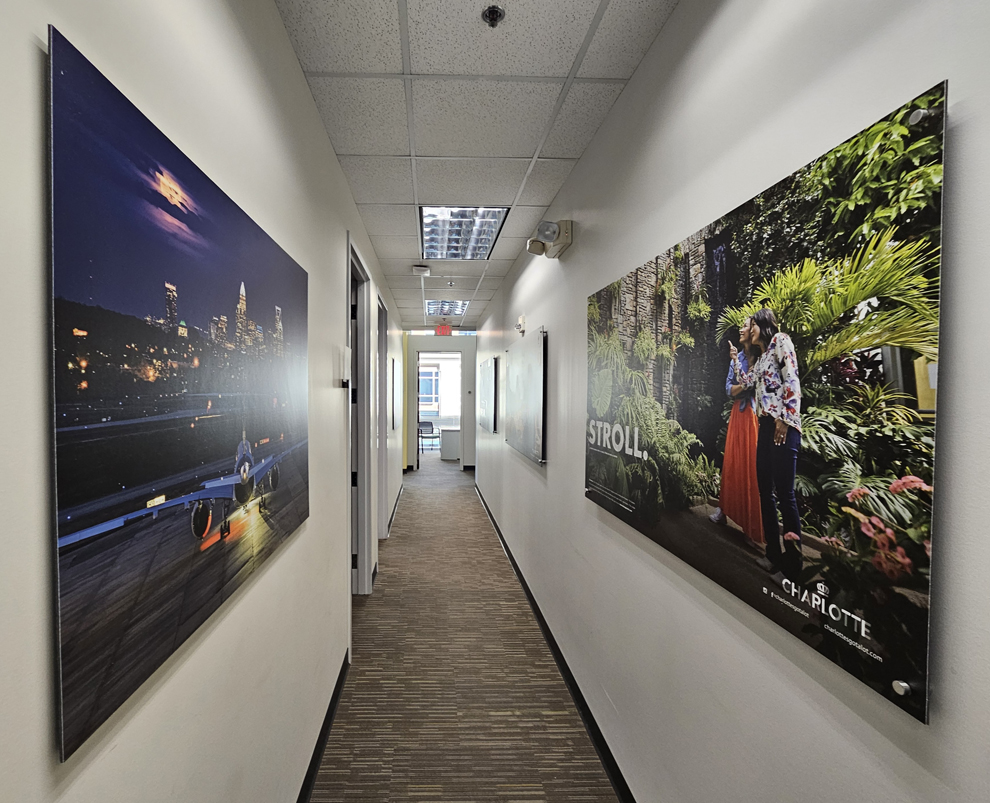
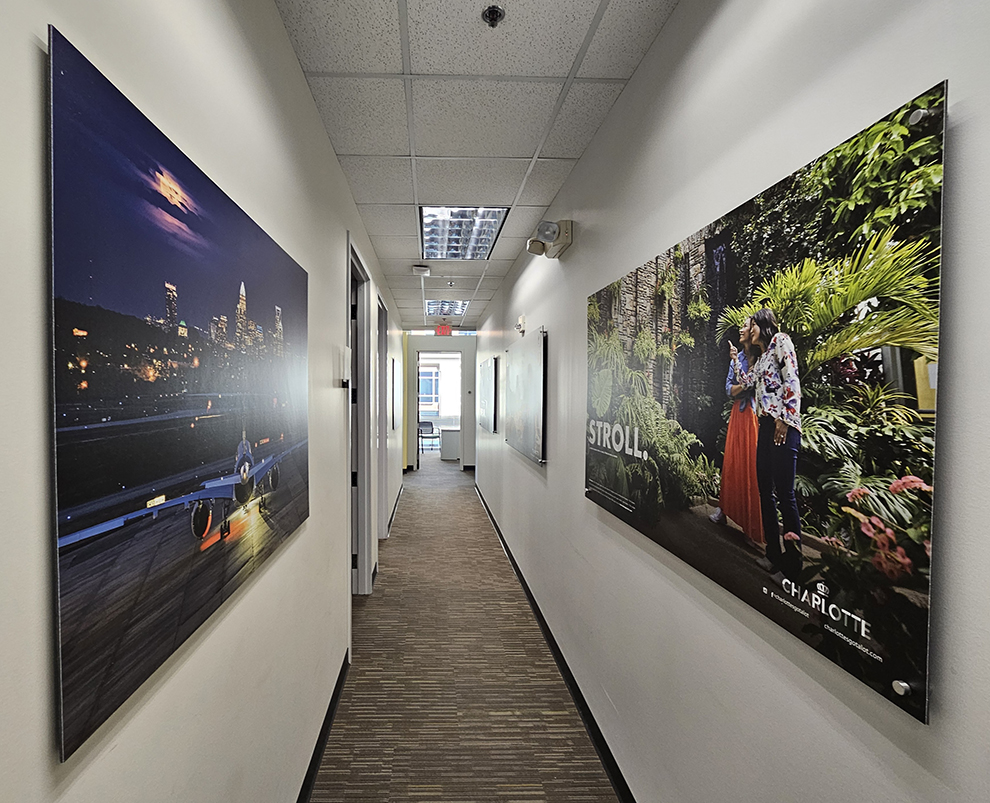
A well-designed interior sign does more than identify a room or display a logo. It influences how visitors perceive an organization and helps employees connect with the workplace around them. Standoff mounted signs create this effect by positioning a panel or dimensional element away from the wall with visible architectural hardware. The open space behind the face creates depth, controlled shadows, and a polished appearance that works well in lobbies, executive offices, conference areas, educational facilities, medical practices, and shared corporate spaces.
Heritage Signs & Displays has served businesses and institutions since 1977. As a veteran-owned, family-led company, Heritage provides Orlando, FL, organizations with a coordinated process that includes environmental graphic design, project management, fabrication, production, and professional installation. A dedicated project manager oversees the engagement from the initial consultation through the final walkthrough, helping preserve design accuracy and accountability at every stage.
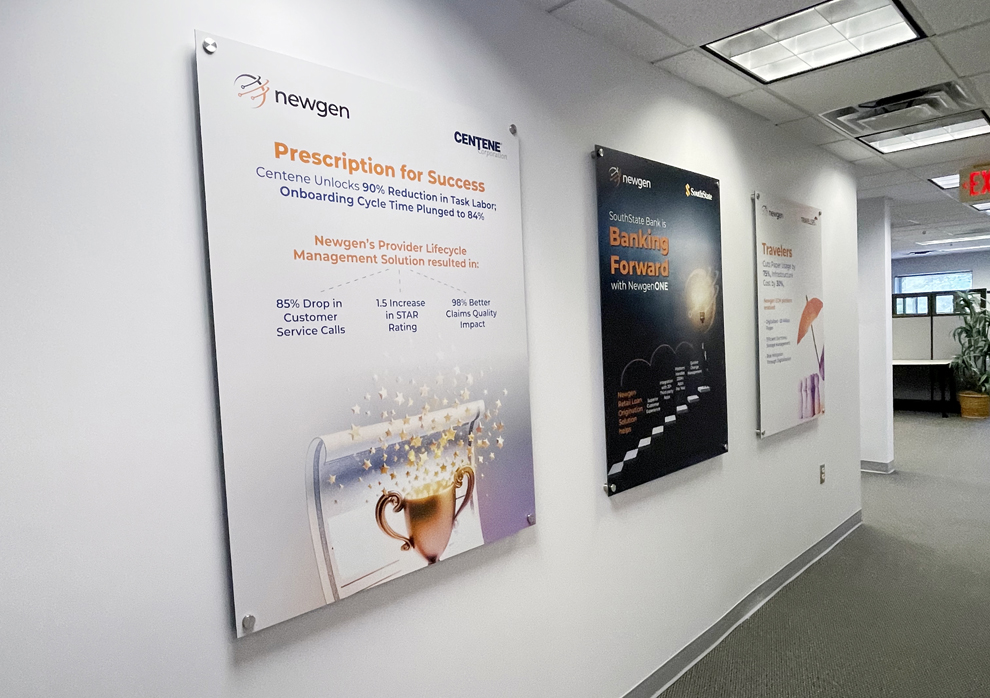
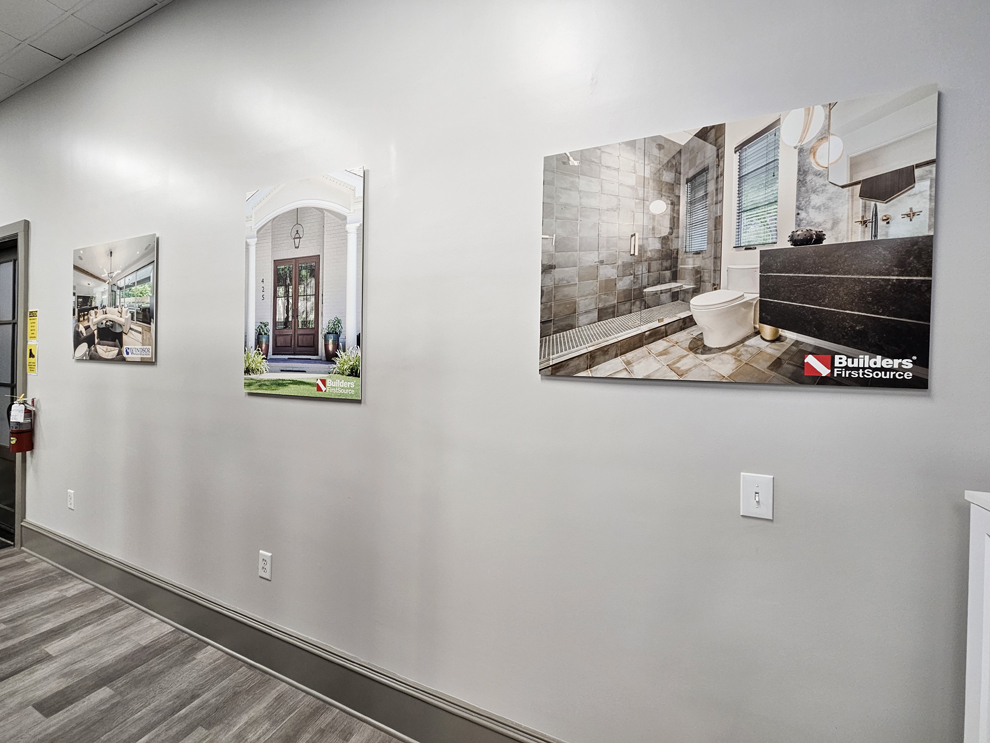
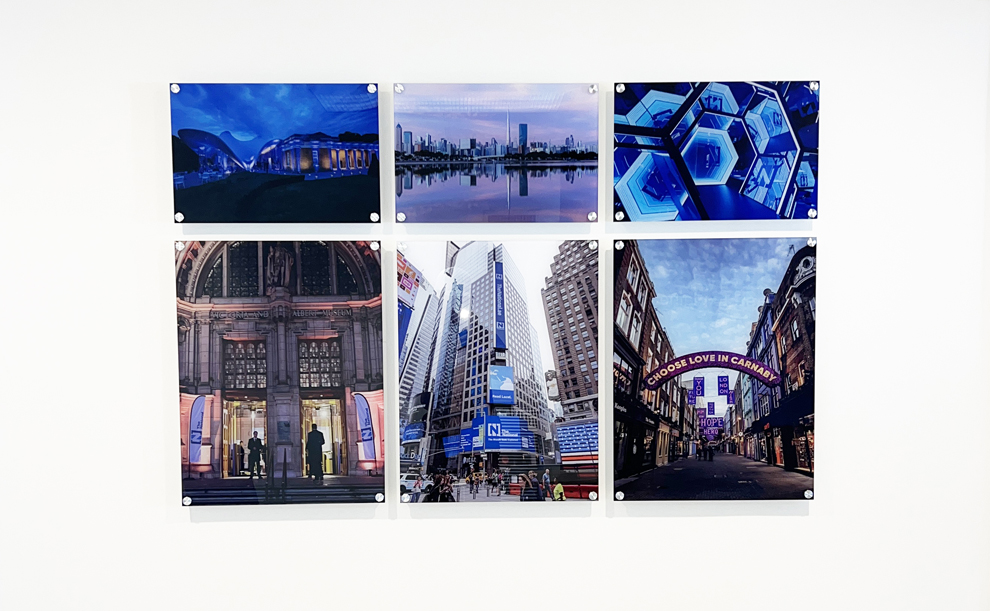
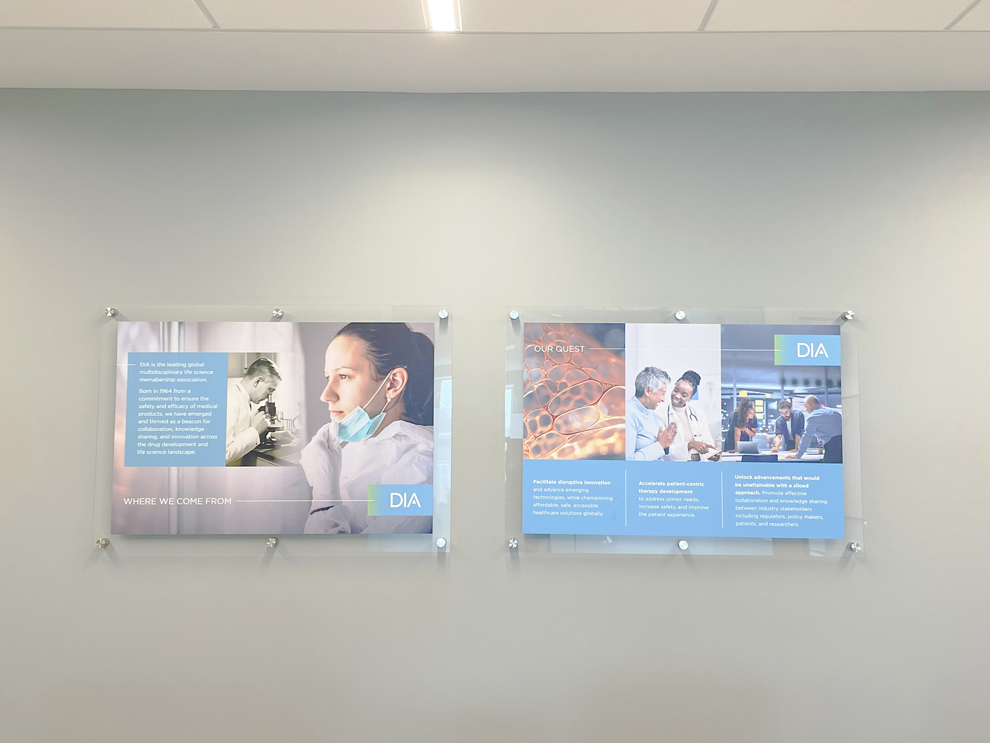
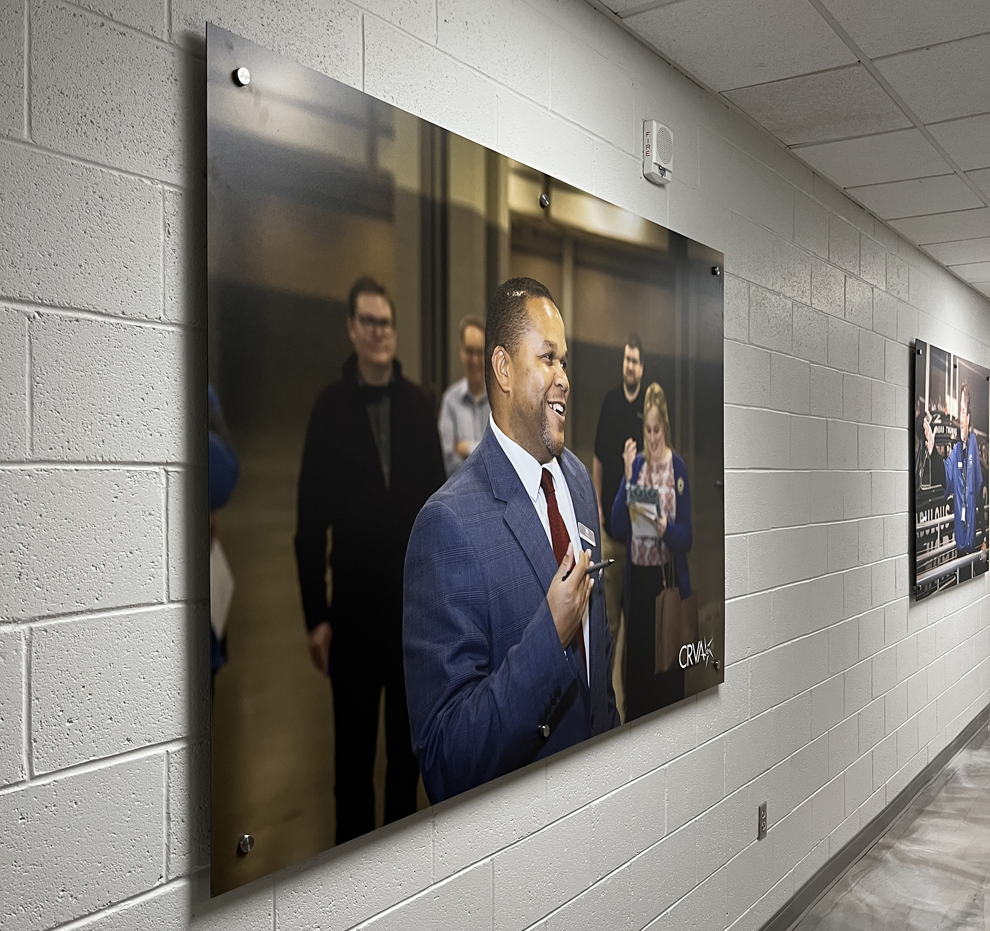
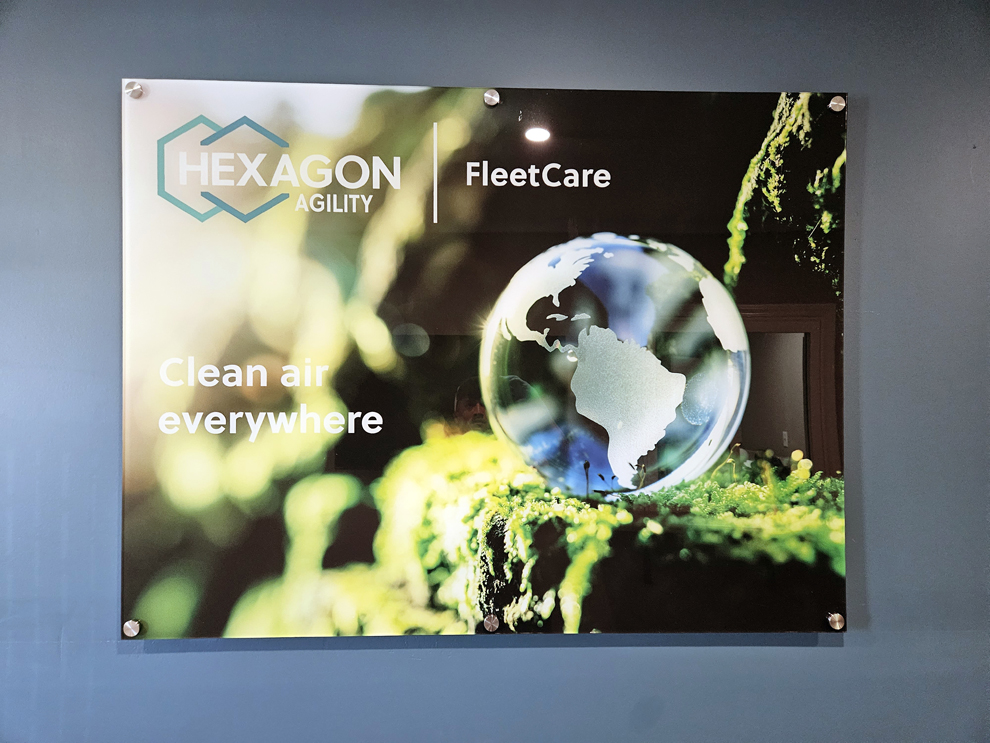
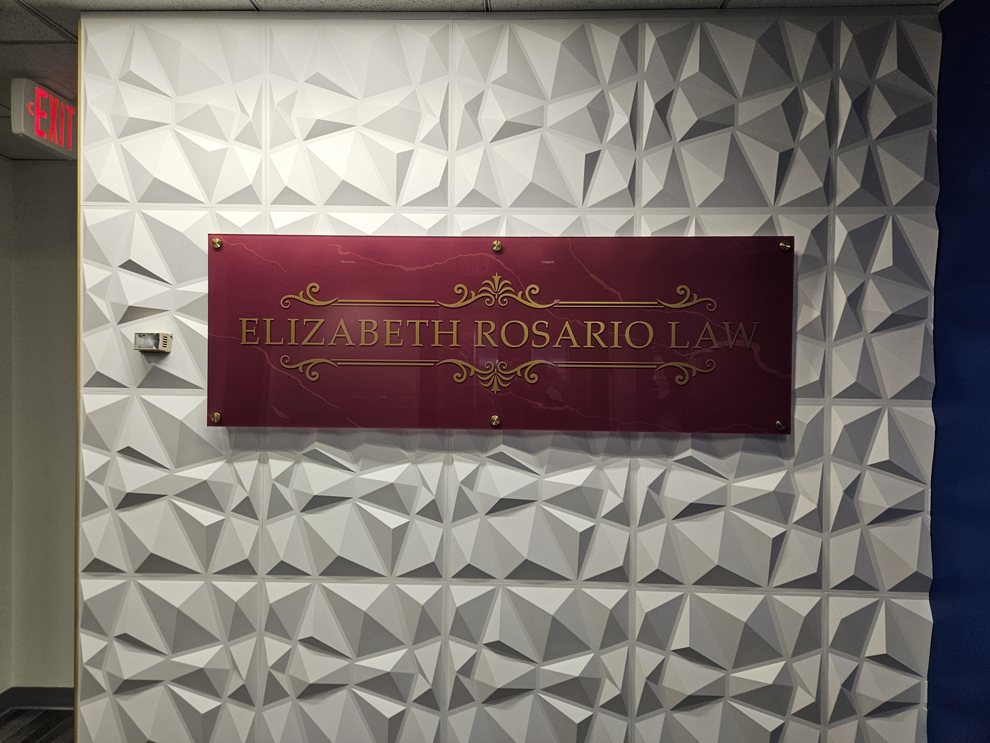
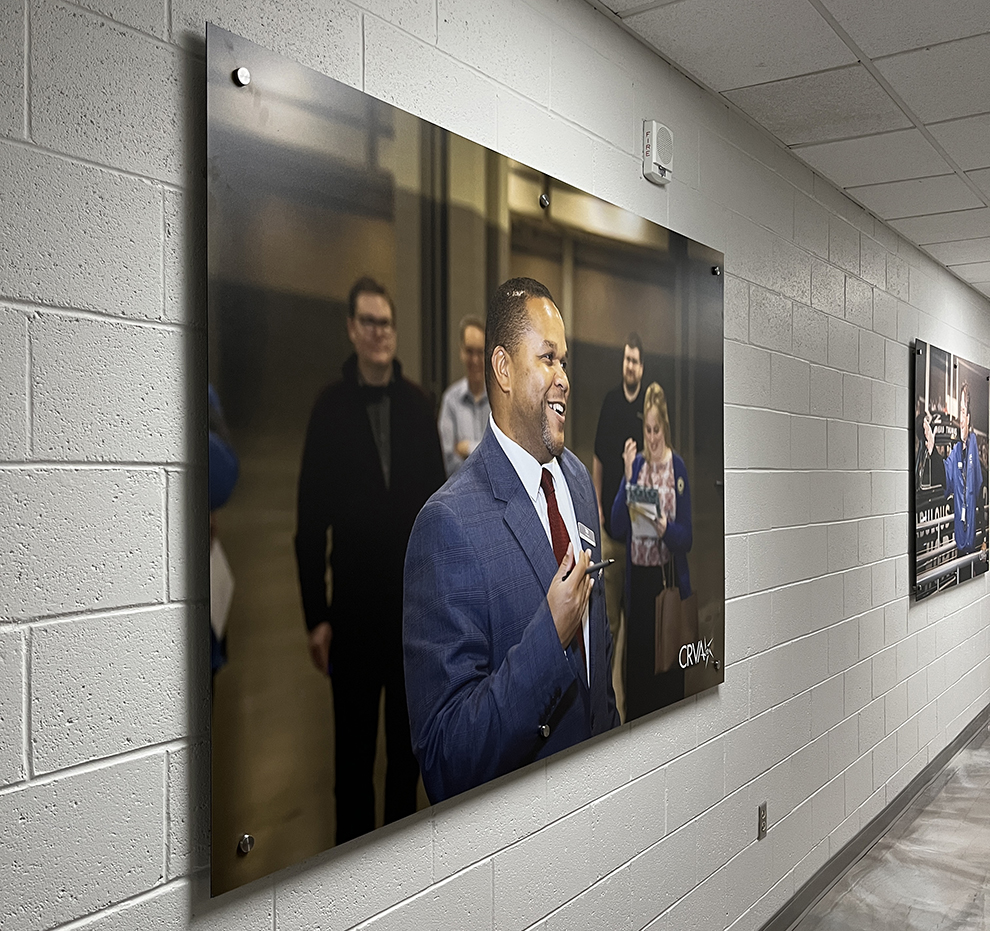
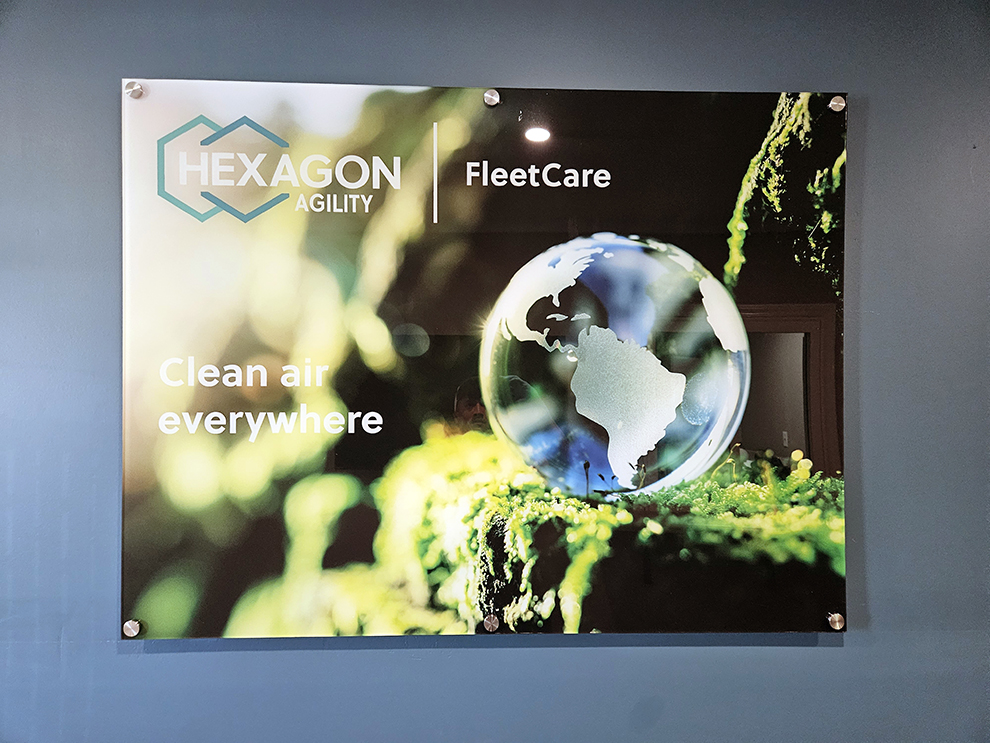
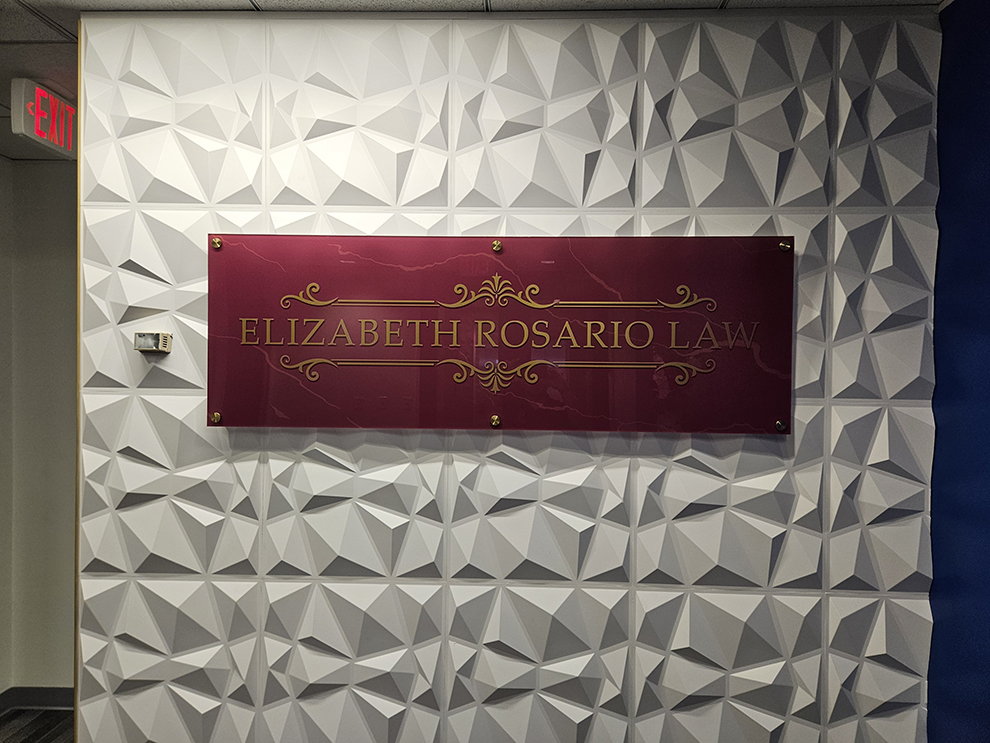
A standoff sign is defined by how it attaches to the wall, not by a specific face material. Acrylic, aluminum composite material, printed panels, routed components, dimensional lettering, and interchangeable inserts can all be mounted with standoff hardware. The visible barrels, caps, anchors, and fasteners become part of the finished design. Acrylic identifies what a sign can be made from, while standoff mounting describes how the sign is installed and projected from the surface.
True standoff installations require drilled mounting points and mechanical fasteners suited to the wall construction and panel weight. Adhesive by itself cannot create the same secure, projected installation. Since removing the sign will generally leave holes that need to be patched and refinished, standoff mounted signs should be treated as permanent or semi-permanent workplace features. Orlando organizations should select the location carefully before fabrication begins.
Building conditions can influence both the design and the schedule. Downtown Orlando offices and mixed-use properties may require certificates of insurance, visitor credentials, loading coordination, or reserved freight elevator access. Healthcare campuses, universities, convention facilities, and secured workplaces may add internal reviews before drilling is permitted. Installation in active environments may also require dust containment, surface protection, and work outside normal operating hours.
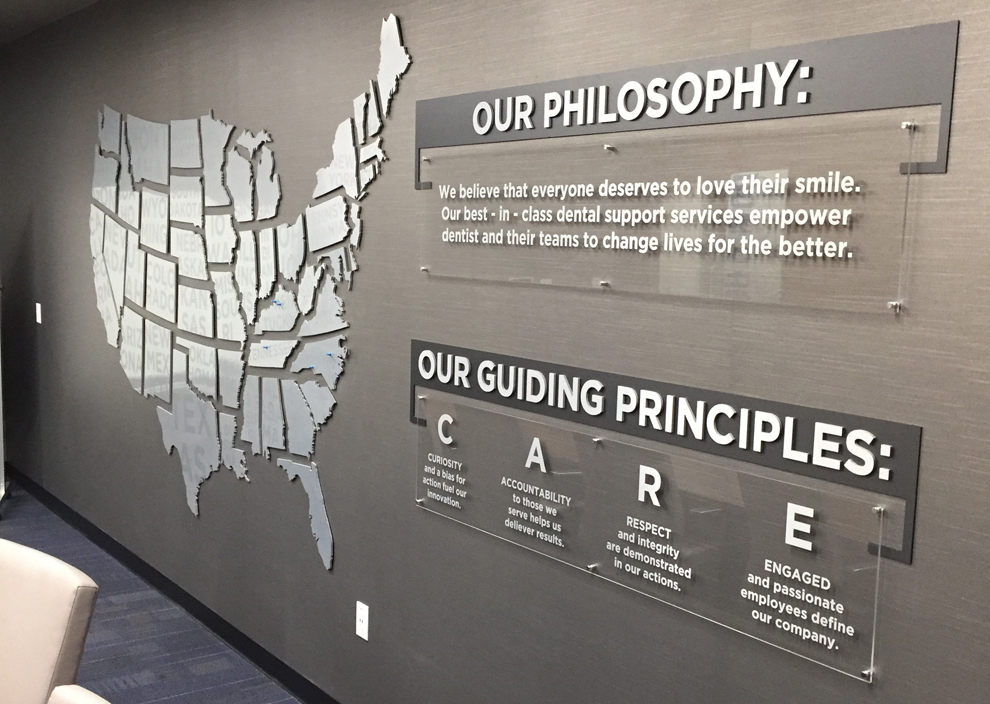
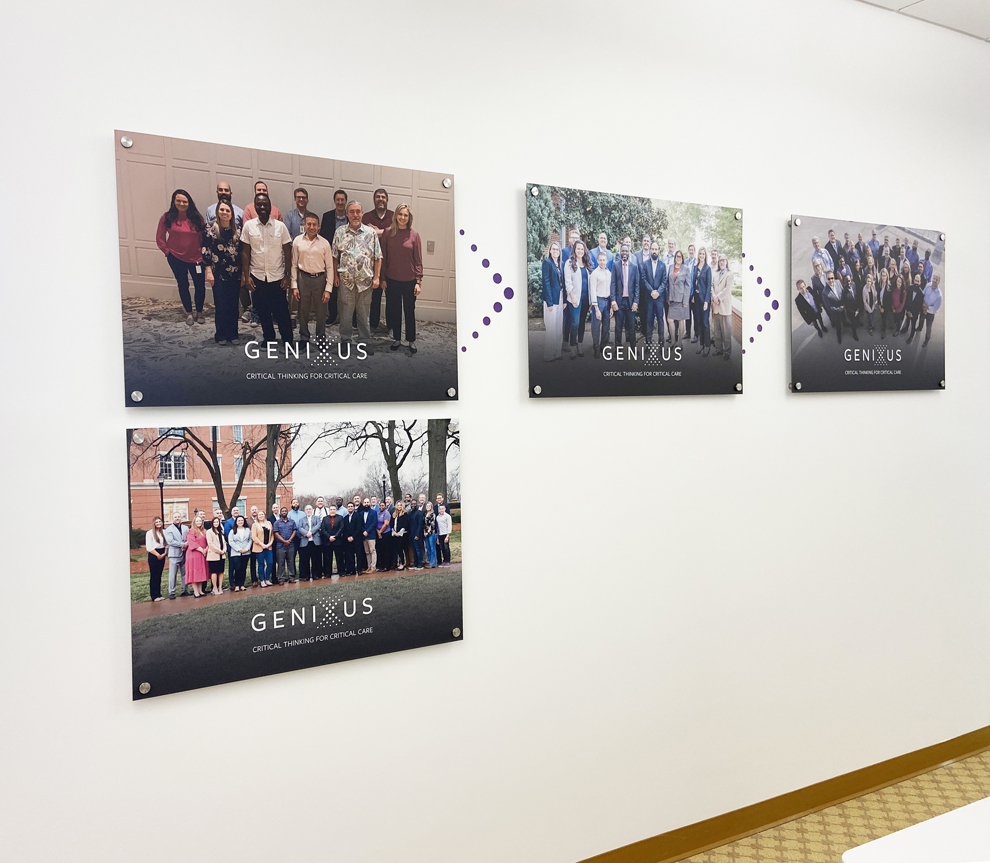
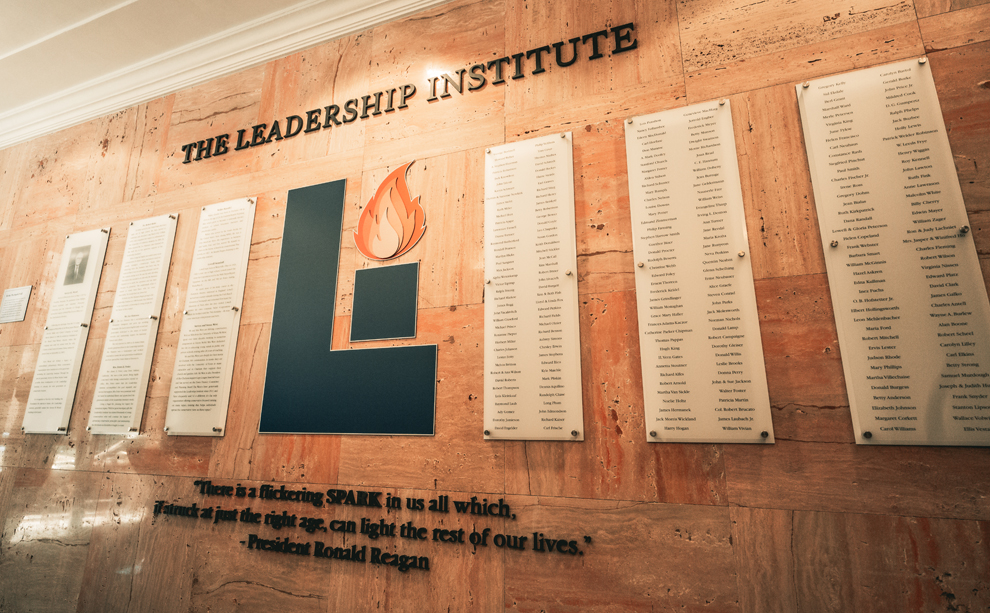
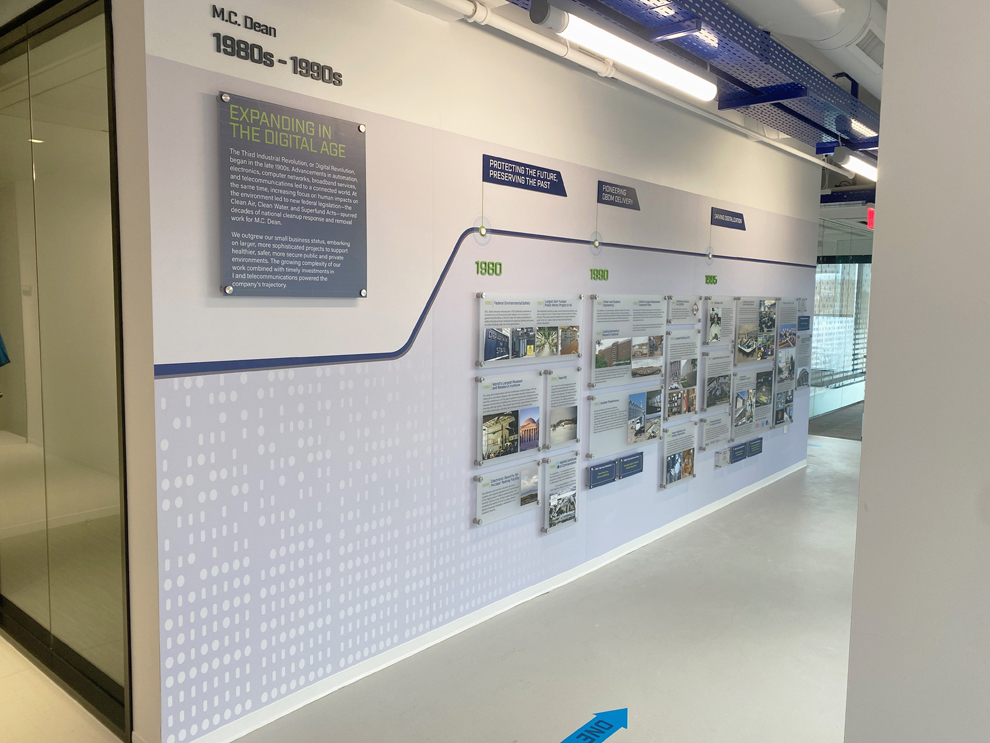
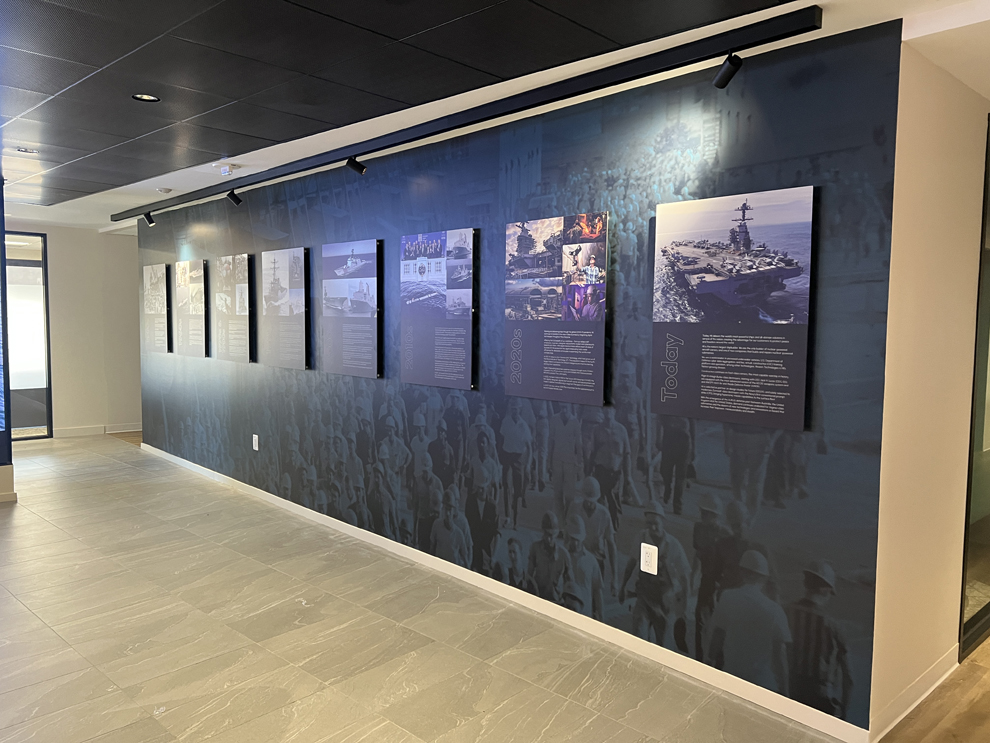
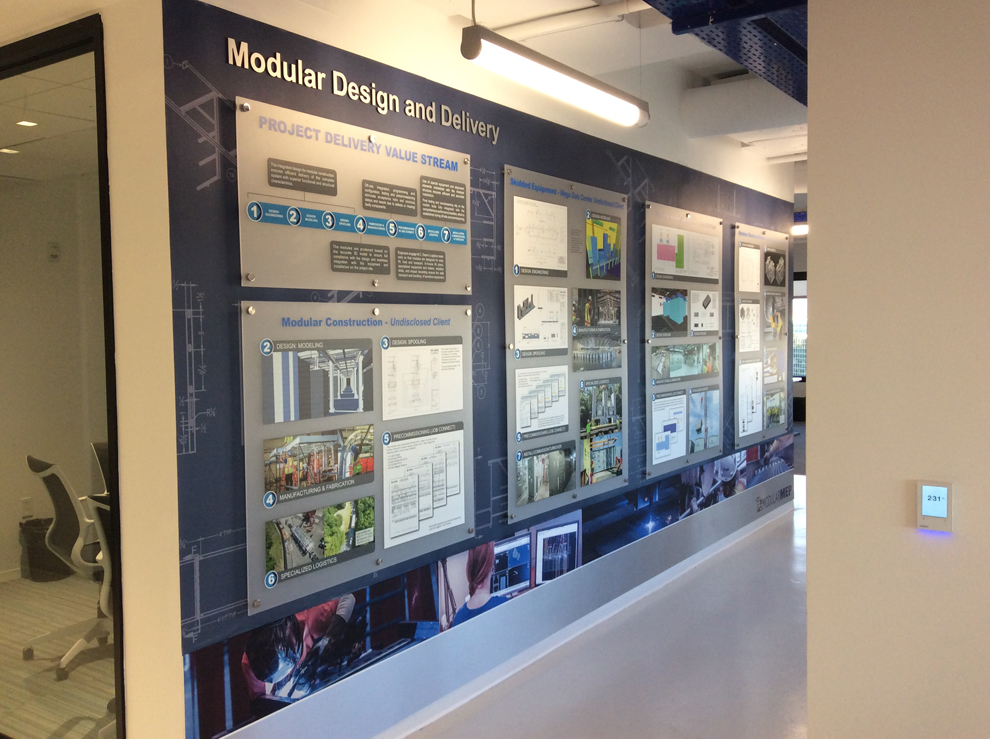
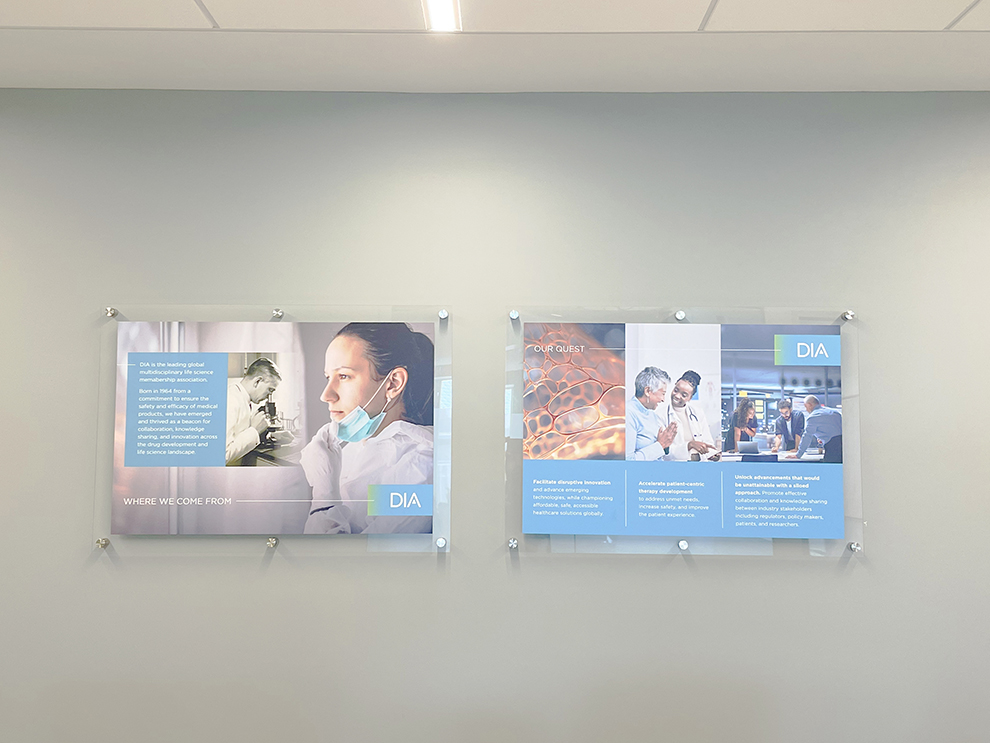
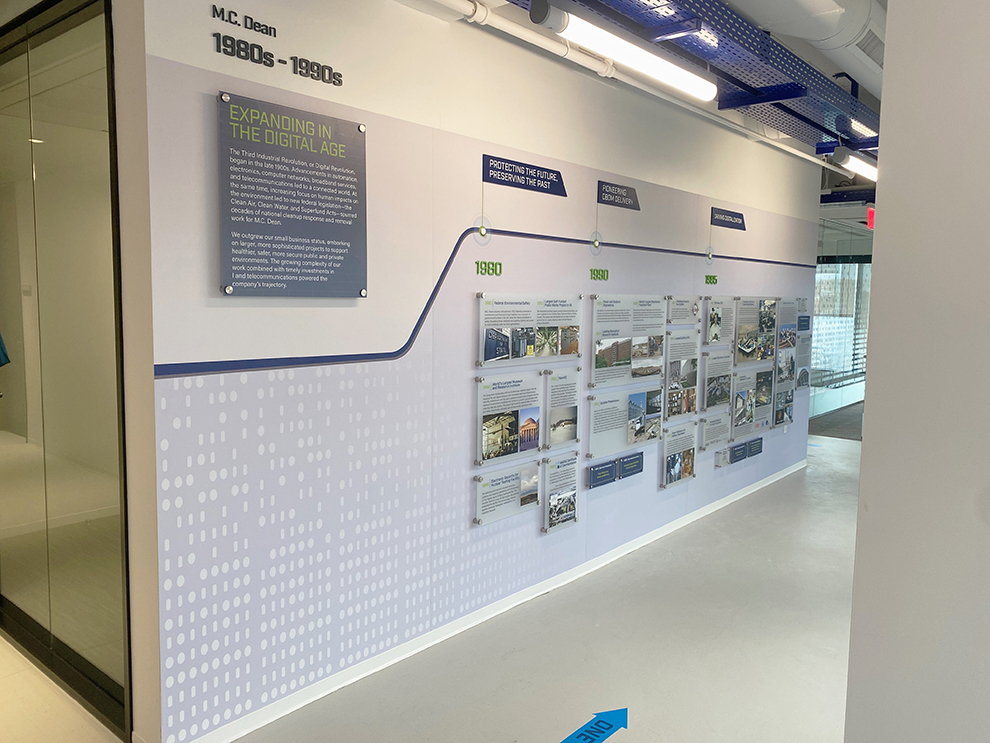
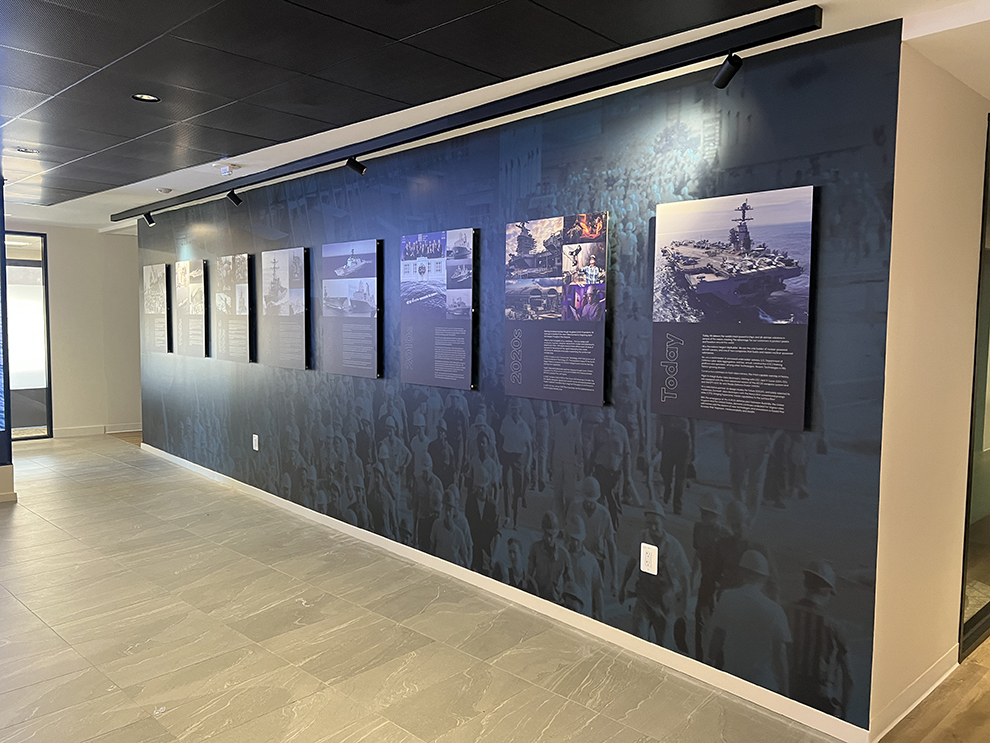
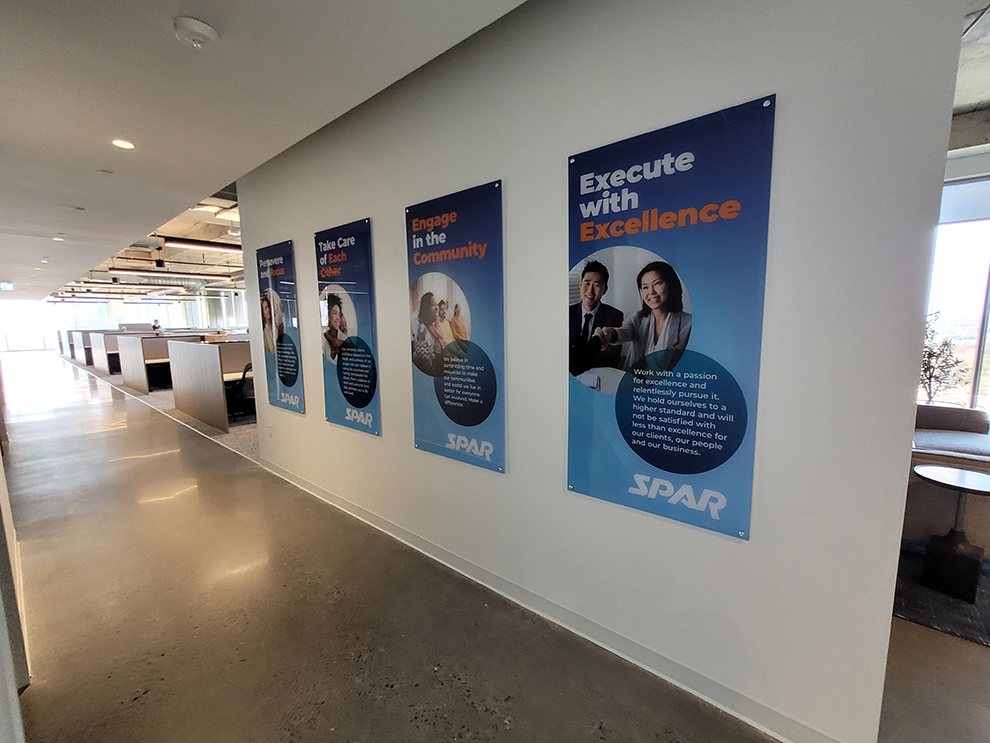
Standoff panels can be incorporated into larger mission, history, values, recognition, or storytelling displays. Those broad applications fall within the wider category of wall displays. This page focuses specifically on standoff construction, including panel projection, hardware placement, fabrication tolerances, and secure wall attachment. Some wall displays use other mounting methods, while many standoff signs function as independent identity or informational features.
Heritage strives to serve clients and communities with excellence while honoring God through its work. For Orlando, FL, clients, that commitment includes listening carefully, recommending solutions appropriate for the wall and environment, maintaining precise fabrication standards, respecting occupied facilities, and completing each installation with close attention to detail.
The defining feature of a standoff sign is the controlled distance between the sign face and the wall. Barrel length determines how far the panel projects, while the diameter and finish of the caps influence the visual character of the hardware. Balanced spacing helps the panel appear level, stable, and intentionally integrated with the surrounding architecture.
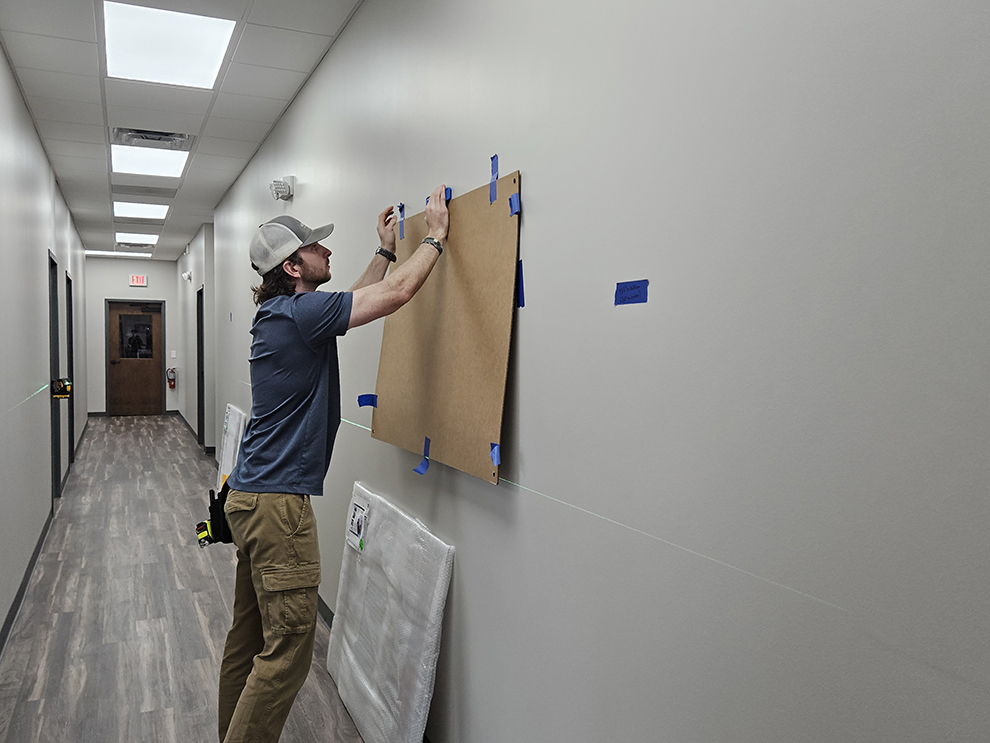
Accuracy is essential because the wall anchors, hardware, and panel holes must align correctly. Fabrication templates allow installers to transfer the approved mounting pattern to the wall. Even small discrepancies can create visible alignment problems, particularly with multi-panel arrangements, narrow reveals, or signs installed near architectural lines.
The wall substrate determines which anchors and fasteners are appropriate. Painted drywall, gypsum board over metal studs, concrete, masonry, plaster, wood paneling, tile, and glass each present different installation requirements. Installers must also consider concealed plumbing, electrical conduit, structural framing, and existing wall blocking before drilling begins.
Exterior applications require additional evaluation. Orlando’s strong sunlight, humidity, frequent rain, and seasonal storms can affect panel materials, fasteners, graphics, and finishes. Temperature changes may also cause materials to expand or contract. For these reasons, exterior standoff signs are reviewed individually rather than treated as a standard extension of interior signage.
Heritage incorporates field information into the design and production process. Wall dimensions, substrate details, viewing angles, lighting, surrounding finishes, and cleaning access can all influence panel size, mounting depth, material selection, and hardware placement. When these factors are addressed early, installation can proceed according to plan instead of becoming an exercise in field correction.
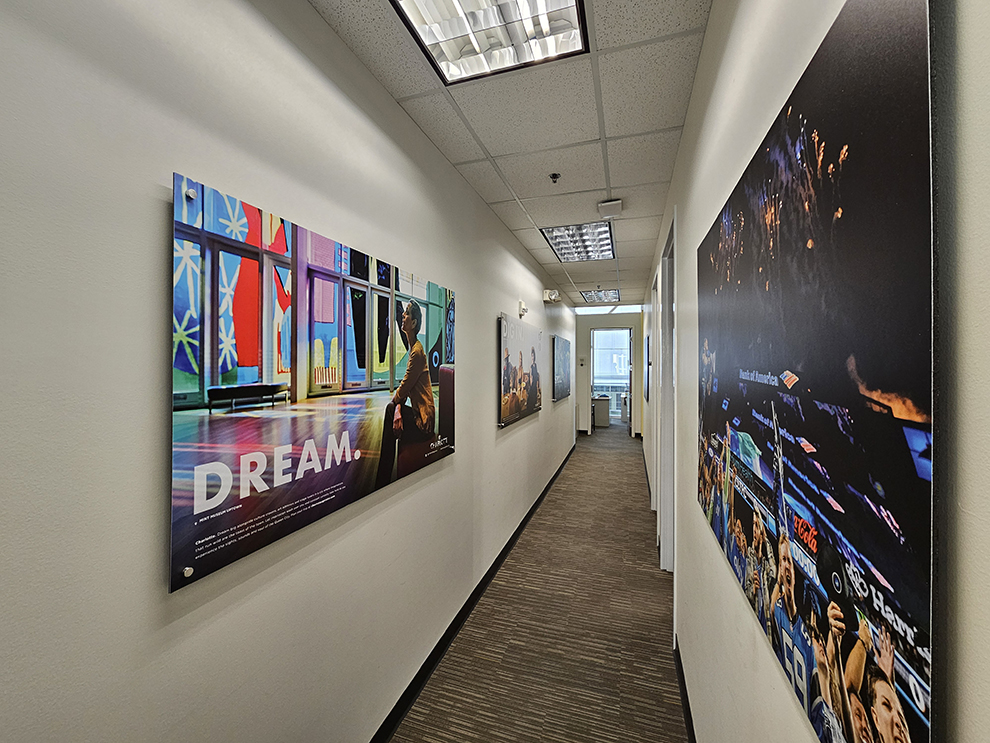
Standoff mounted signs are ideal for Orlando organizations seeking a refined interior feature that can remain in place for years. Heritage Signs & Displays supports corporate offices, healthcare providers, colleges and universities, financial institutions, hospitality groups, nonprofit organizations, ministries, manufacturers, and professional service firms throughout Central Florida.
Since 1977, Heritage has developed extensive experience with interior signs and workplace graphics. That experience informs decisions about scale, panel construction, typography, hardware finishes, mounting patterns, and architectural placement. The objective is not simply to manufacture an attractive panel. It is to create an installed feature that fits the wall, communicates clearly, and supports the organization’s brand.
Each project is coordinated by a dedicated project manager. This person monitors content approvals, brand requirements, proof revisions, material availability, property procedures, production schedules, and installation dates. Keeping these responsibilities within one managed process reduces the risk of inconsistent information passing between unrelated designers, fabricators, and installers.
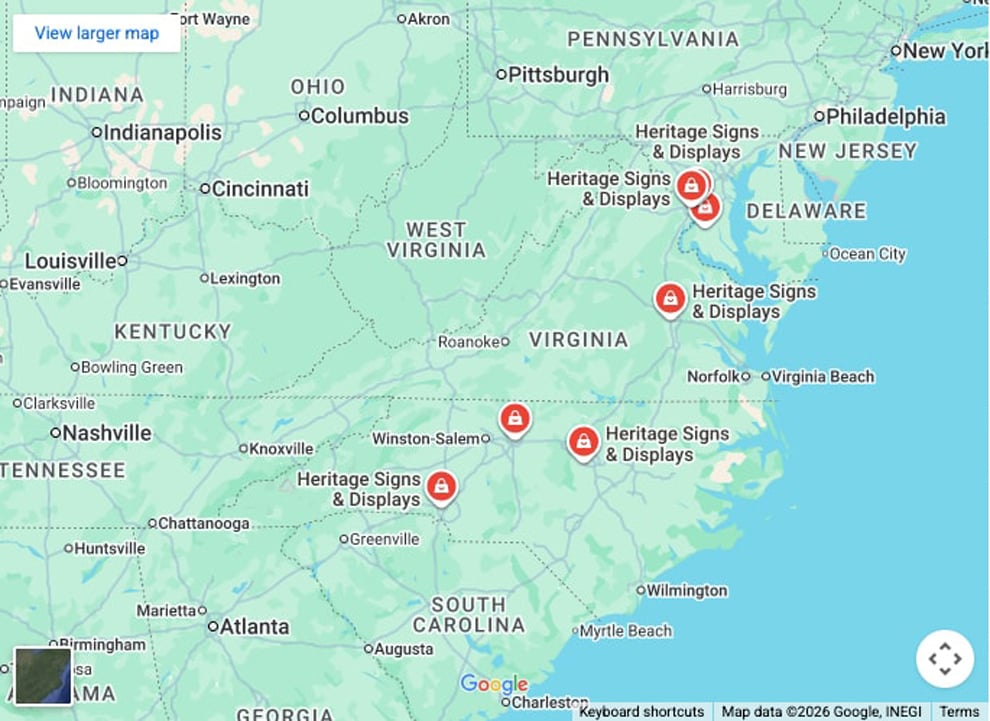
Heritage serves Orlando through coordinated project management, regional resources, and scheduled installation teams. This structure can also support clients with offices or facilities in multiple Central Florida markets. Whether the project involves one reception sign or a coordinated interior program, the same focus on communication, accuracy, and service applies.
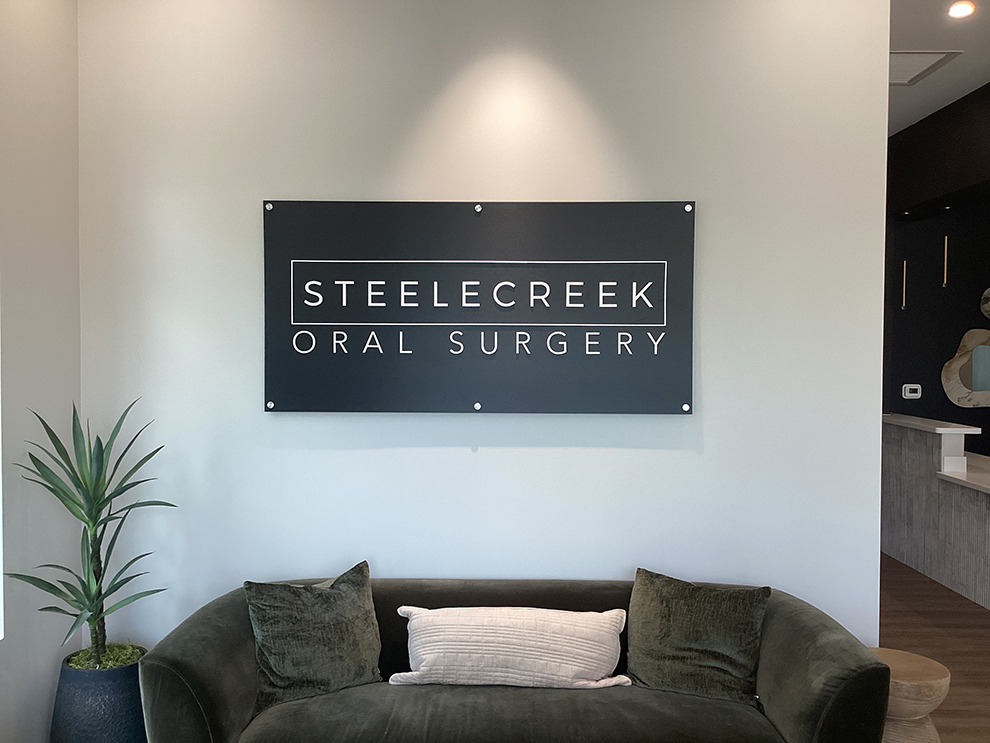
Standoff mounted signs often work alongside other interior graphics and architectural sign solutions. The following products can expand the visual program throughout an Orlando workplace.
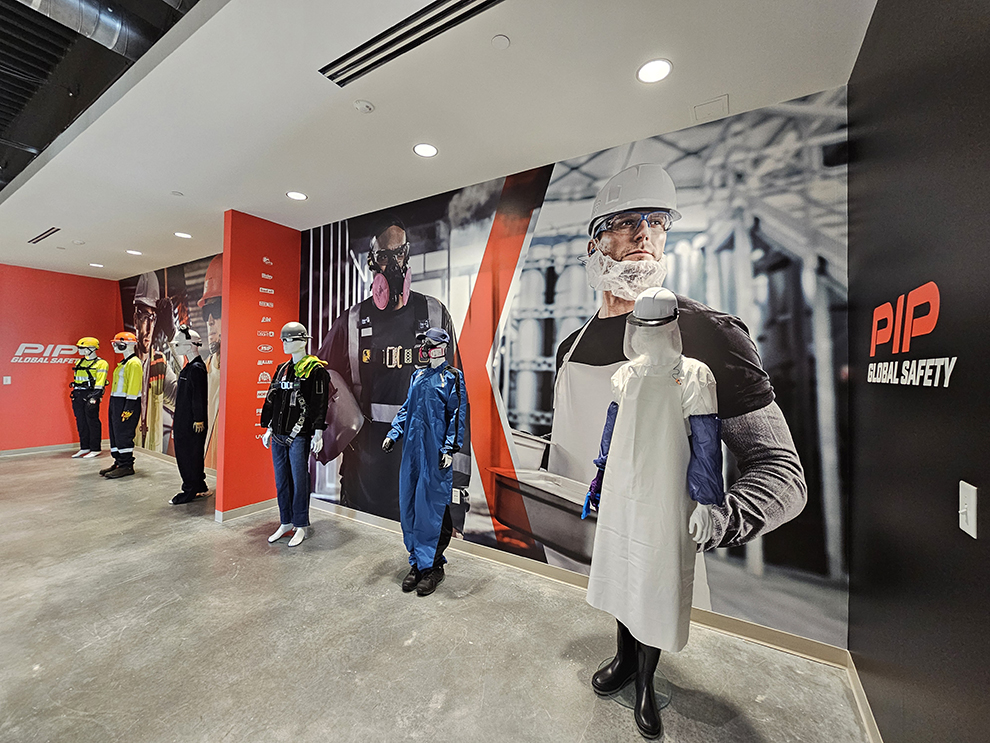
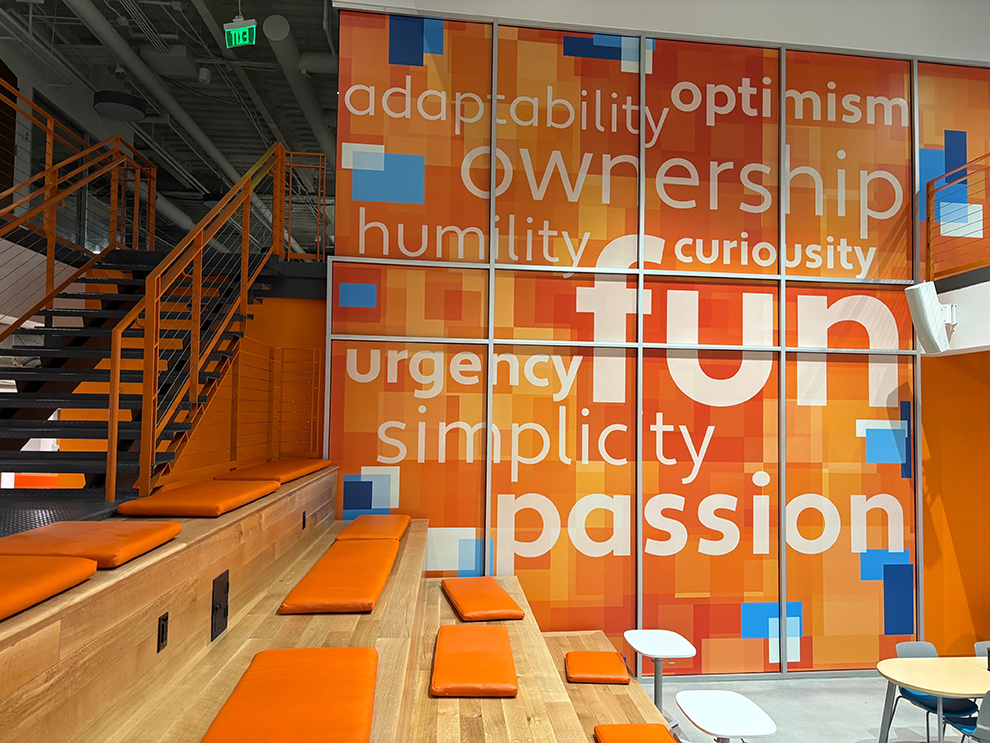
Wall wraps transform large surfaces with branded colors, photography, patterns, or messaging. They can provide a visual background for a projected panel or create an immersive feature elsewhere in the space.
Window graphics bring branding, decoration, privacy, or informational content to glass doors and partitions. They help connect open, daylight-filled interiors with wall-mounted signage.
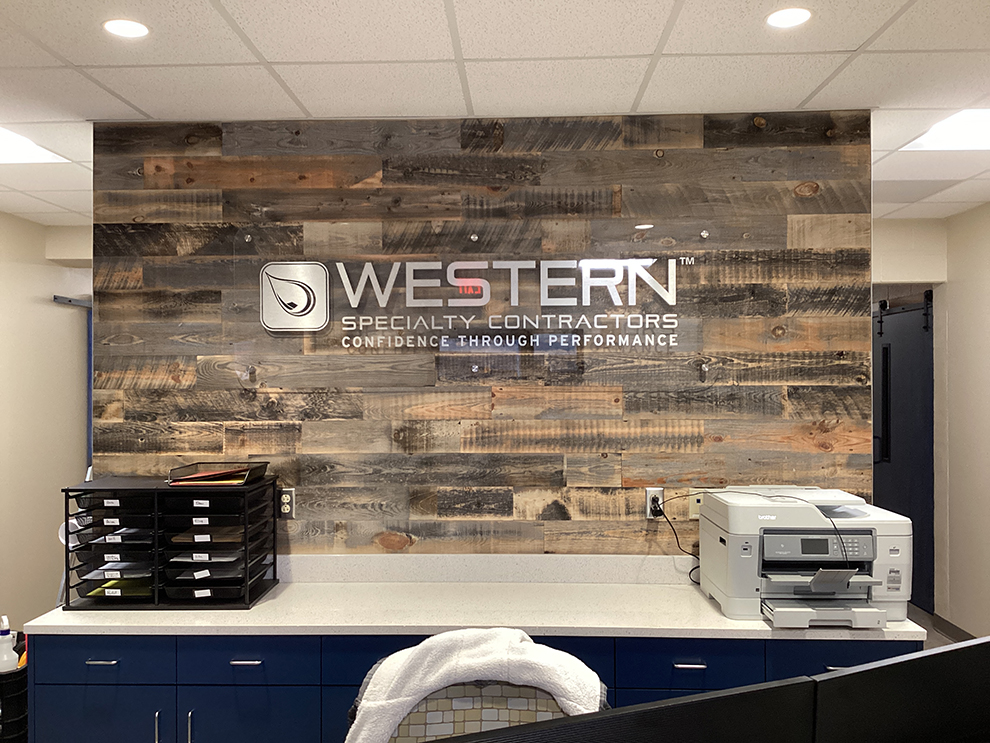
Lobby signs introduce an organization at the primary point of arrival. Standoff hardware can give a reception sign added projection and architectural depth when the surrounding design supports that approach.
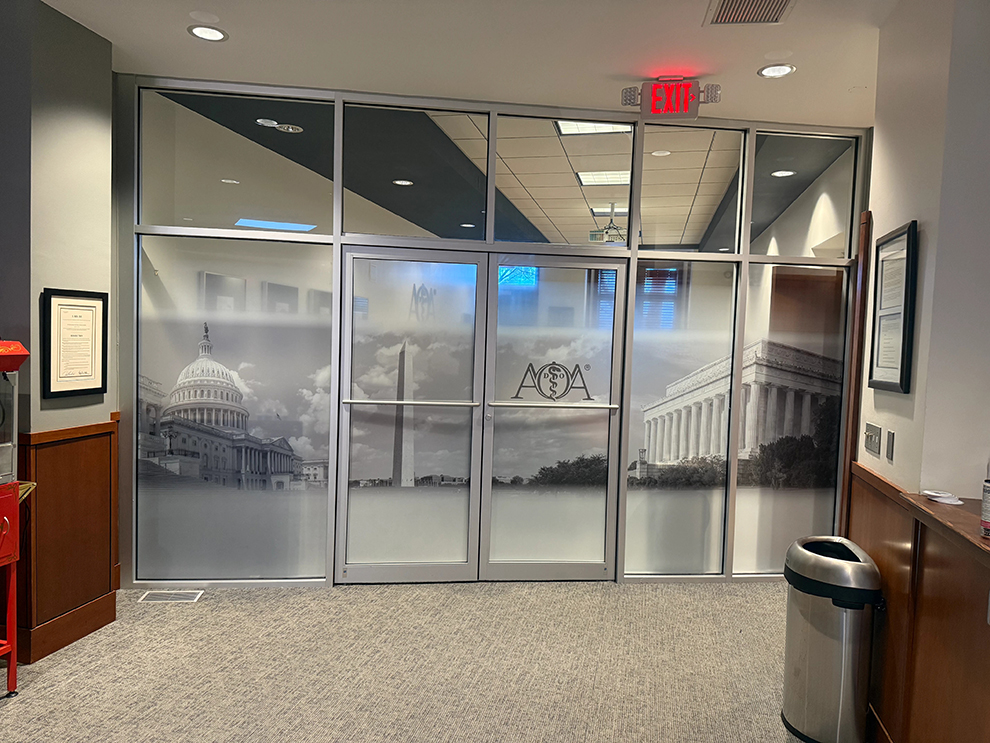
Frosted vinyl provides privacy for conference rooms, offices, and treatment areas while maintaining a clean, modern appearance. It can coordinate with standoff panels installed on nearby solid walls.
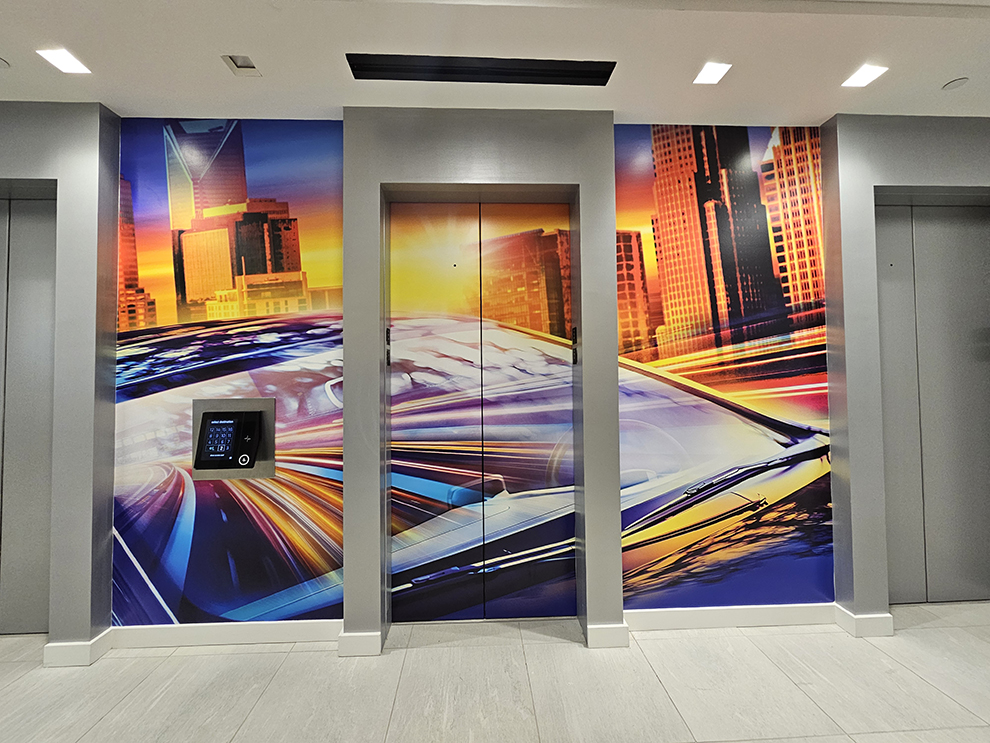
Elevator wraps place graphics in highly visible circulation areas without requiring drilled wall anchors. They are especially useful when permanent mounting is restricted or when a larger visual surface is needed.
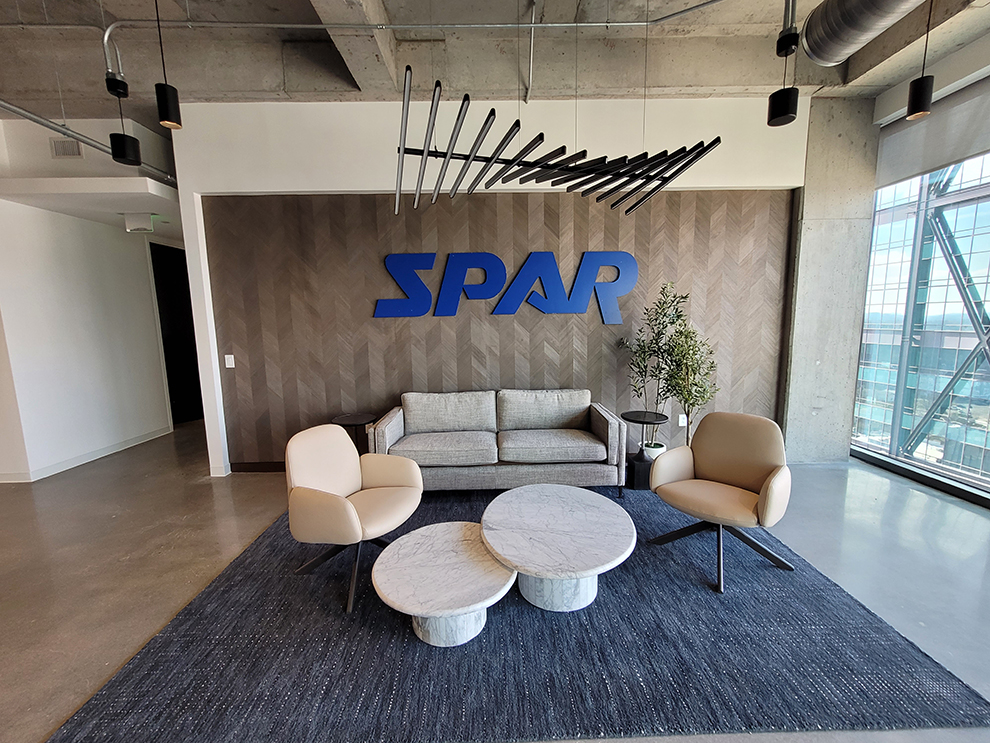
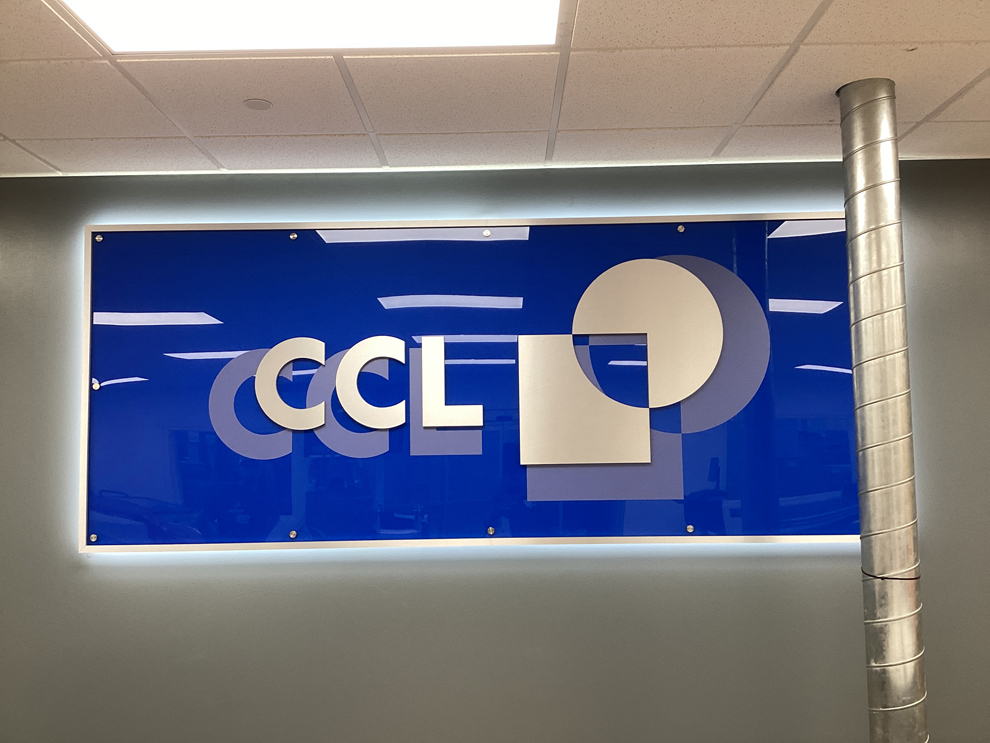
Dimensional letters are installed individually and can be combined with standoff panels to create layered logos, headings, names, or supporting messages.
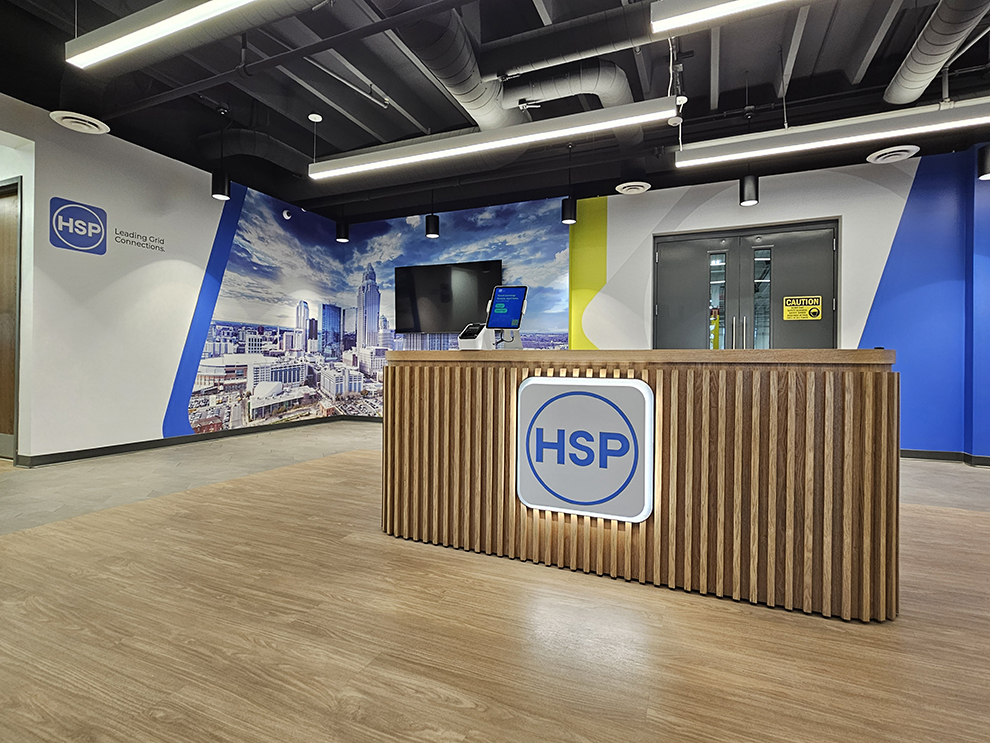
Acrylic signs may be clear, frosted, opaque, printed, layered, routed, or painted. Acrylic is a material choice, and it can be installed with standoffs or several other mounting systems.
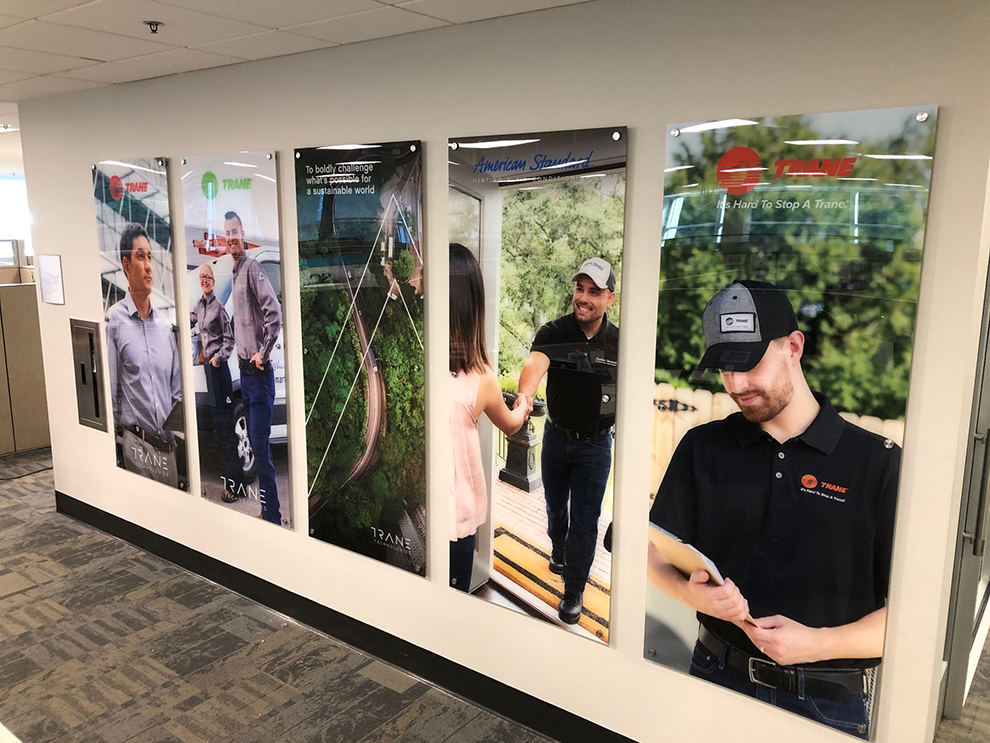
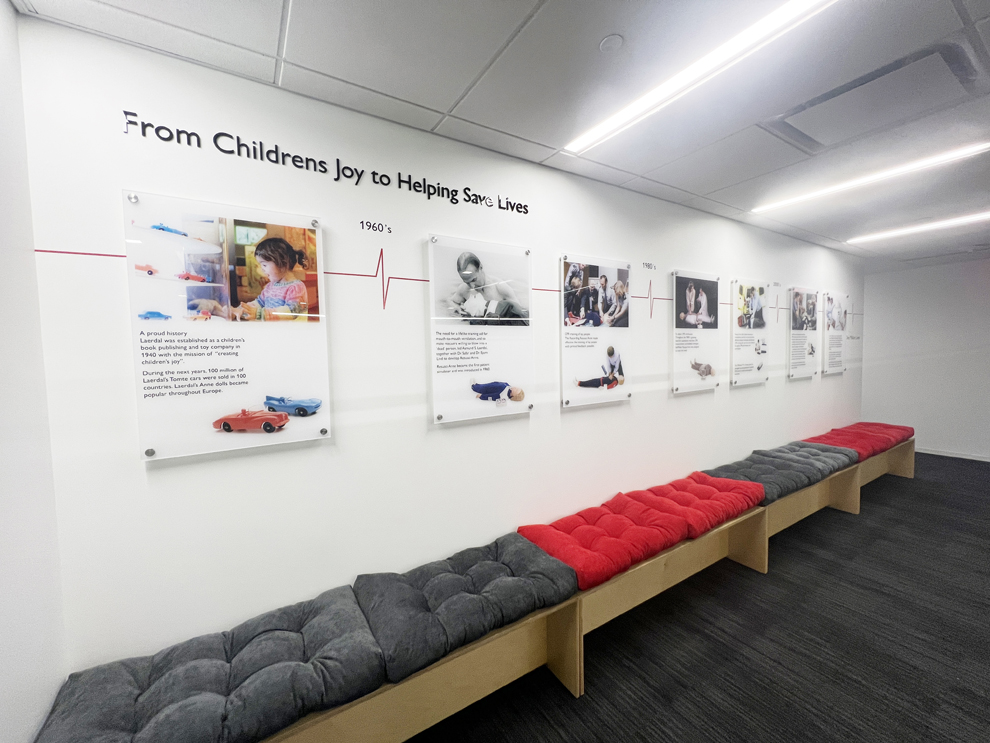
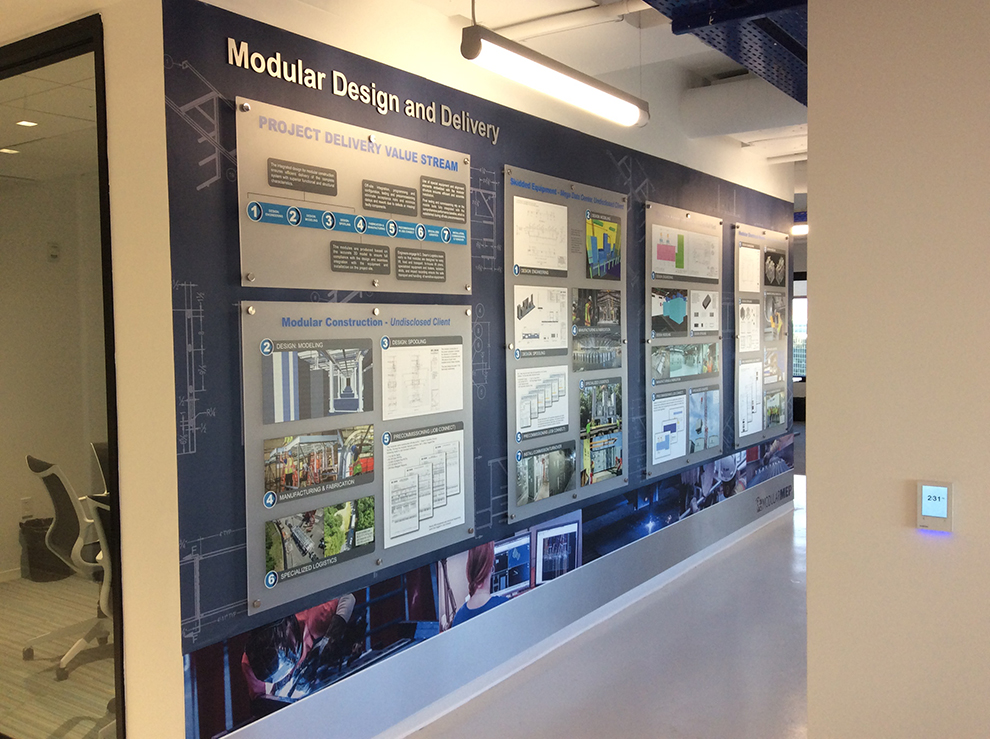
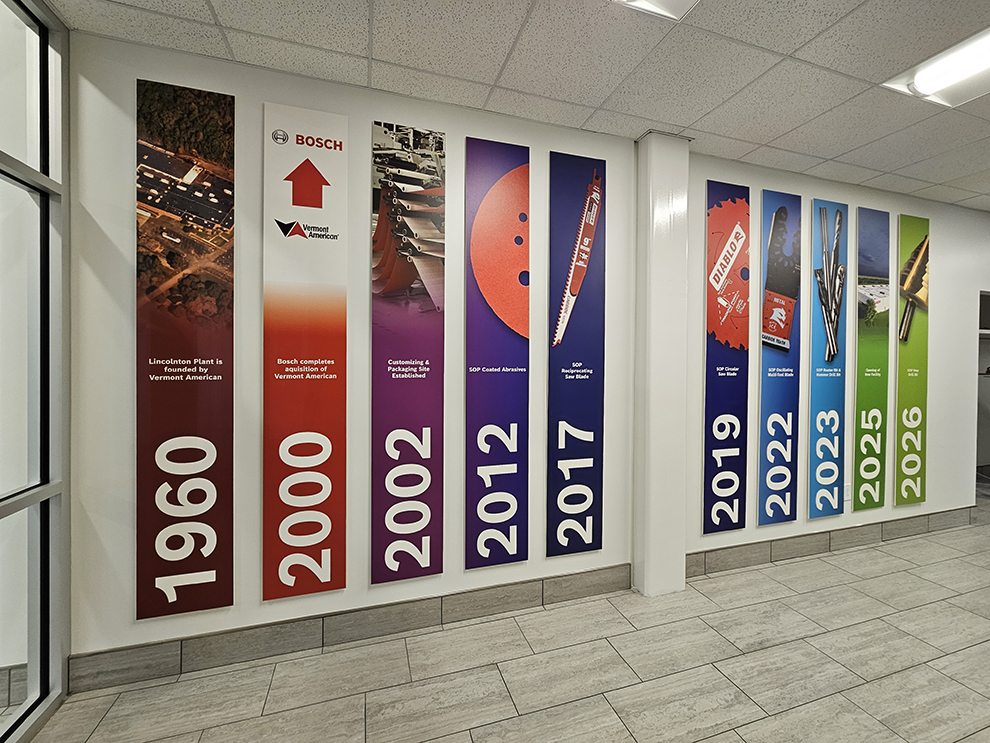
Wall displays organize broader content such as company history, donor recognition, employee achievements, core values, timelines, or community impact. Standoff panels can serve as one component within these larger installations.
If an important wall in your Orlando workplace needs a more polished presentation, Heritage Signs & Displays can help evaluate the opportunity. Get Started Now using our free and convenient form. Useful starting information includes the project address, desired completion date, intended audience, sign content, brand standards, wall photographs, approximate dimensions, access restrictions, and expectations for future content updates.
A dedicated Heritage project manager will review the initial information, identify any additional measurements or site details that may be needed, and outline the next steps for design, fabrication, and professional installation.
Heritage provides standoff sign project management and scheduled installation services throughout Orlando and surrounding Central Florida communities. Service areas may include Winter Park, Maitland, Altamonte Springs, Lake Mary, Sanford, Apopka, Winter Garden, Kissimmee, and other communities in Orange, Seminole, and Osceola counties. Installation dates are coordinated according to project requirements, crew availability, and building access.
Consider an organization with a headquarters in downtown Orlando, a satellite office in Lake Mary, and a client-facing facility in Winter Park. One Heritage project manager can maintain consistent specifications for panel materials, typography, colors, hardware finishes, and projection depth while adapting each sign to the available architecture.
Consistency does not require every sign to have identical dimensions. A narrow corridor, high-ceiling lobby, compact reception area, or brightly lit conference center may require different proportions. Wall construction and viewing distance may also affect panel size and hardware placement. Heritage documents the approved brand and production standards, then applies them appropriately at each location.
This approach gives organizations a recognizable visual identity without forcing the same physical solution into spaces with different architectural conditions. Visitors and employees experience a consistent brand, while each installation remains properly scaled for its setting.
Effective environmental graphic design begins with the audience and the intended message. Heritage designers consider what visitors, patients, employees, students, guests, or donors should notice first. The sign’s hierarchy is then organized around that priority, with secondary information positioned to support rather than compete with the primary message.
Placement should follow natural movement through the space. Entry doors, reception desks, seating areas, corridors, elevators, and common decision points all affect where a sign will be most visible. Typography, spacing, contrast, and overall scale are evaluated according to real viewing distances instead of relying only on how the design appears on a computer screen.
Material selection changes the character of the finished sign. Clear acrylic provides a different effect from opaque acrylic or ACM. Second-surface printing protects graphics behind a transparent face, while surface-applied graphics can offer a different texture and visual treatment. Matte finishes minimize reflections, while polished edges and glossy faces can create a more prominent presentation.
Panel thickness and weight influence the mounting plan. Signs that require regular content changes may benefit from replaceable inserts, modular panels, or accessible hardware. Brand colors should be reviewed during proofing and production so the installed graphics remain consistent with approved standards.
Hardware provides another design opportunity. Brushed stainless steel, polished chrome, black anodized finishes, and custom-painted caps can coordinate with nearby glass, stone, wood, metal, or painted drywall. The projection depth also affects the shadow behind the sign. Heritage reviews these details for both appearance and production feasibility before fabrication begins.
Many Orlando standoff sign installations take place in active offices, medical facilities, campuses, hotels, and commercial buildings. Property managers may request insurance documentation, security registration, supervised access, loading instructions, or freight elevator reservations. Some facilities limit drilling to evenings, weekends, or other periods when noise will not disrupt normal activity.
Reliable site information helps the installation team prepare properly. Wall elevations, photographs, measurements, substrate notes, and information about hidden utilities can inform the anchor and hardware plan. A site survey may be recommended when photographs cannot confirm wall conditions or when the project includes textured surfaces, tile, curves, glass, or several precisely aligned panels.
Installation planning also addresses how materials will enter and move through the building. Door dimensions, elevator capacity, corridor width, staging space, parking, and loading access can affect panel construction and scheduling. Floor protection, dust control, workspace barriers, and debris removal should be planned before drilling starts.
Heritage installs signs that are produced, fabricated, or procured through a Heritage-managed project. Installation-only service is not available for panels or hardware purchased from another supplier. The quality of a standoff installation depends on panel dimensions, hole locations, fabrication tolerances, mounting templates, hardware compatibility, and verified wall conditions. Keeping these factors within one process provides clear responsibility for the completed result.
Heritage is best suited for organizations that need a professionally managed signage project rather than an uninstalled product shipped in a box. Discovery, environmental graphic design, material selection, hardware planning, fabrication, production, and installation remain connected throughout the engagement.
Projects may include a single reception sign, a department directory, a donor recognition feature, a mission and values display, or a coordinated series of panels installed across multiple floors or facilities. The appropriate scope depends on the organization’s goals, site conditions, schedule, and brand requirements.
Heritage-managed projects in Orlando, FL, begin at an overall investment of $4,000. This minimum applies to the complete engagement rather than to each panel, cap, letter, or hardware component. Final pricing is influenced by sign dimensions, panel materials, hardware quantity and finish, graphic complexity, wall construction, number of locations, access requirements, and installation schedule.
Project pricing is prepared after Heritage understands the intended scope and relevant site conditions. Providing accurate photographs, dimensions, brand files, content, and building requirements early in the process can help define the project efficiently.
Heritage primarily focuses on interior workplace environments. Exterior standoff signs may be considered individually when the wall substrate, fasteners, finishes, weather exposure, and maintenance requirements make the application practical. Heritage does not specialize in channel letters, monument signs, pylon signs, or traditional exterior sign programs. The company also does not install signs manufactured by outside providers.
Yes. Standoff panels can present tenant directories, department names, floor listings, room identification, and selected directional information. Their permanent architectural appearance is especially appropriate for information that does not change frequently.
Successful wayfinding also depends on placement, viewing distance, mounting height, typography, contrast, and the decisions people need to make at each location. Directories that require regular updates should include removable inserts or modular sections. Those update requirements should be established before the panel dimensions and hardware pattern are finalized.
No. Heritage provides installation for signs produced, fabricated, or procured as part of a Heritage-managed project. Standoff installation requires precise coordination between the panel holes, hardware, anchors, templates, and wall conditions.
Installing an outside product would separate responsibility for fabrication from responsibility for the final result. Keeping design, production, and installation connected allows Heritage to maintain quality control throughout the project.
Panel size depends on the rigidity and weight of the selected material, the construction of the wall, anchor capacity, installation access, and the dimensions of doors, elevators, and corridors. Very large displays may need to be divided into several panels with carefully planned spacing.
Projection depth is determined by the standoff barrel length, panel thickness, cap diameter, viewing distance, and desired shadow. The correct depth should support the design without making the sign look disconnected from the wall or creating unnecessary cleaning and maintenance challenges.
Orlando organizations often want one accountable partner to coordinate design, fabrication, project management, and installation. Heritage Signs & Displays has served clients since 1977 as a veteran-owned, family-led company.
Each project is assigned to a dedicated project manager who coordinates approvals, production details, site requirements, and scheduling. This connected process helps protect the approved design and provides a clear point of responsibility from consultation through installation.
Routine care generally involves removing dust with a soft, nonabrasive cloth. Any cleaner should be appropriate for the panel material, printed graphics, and hardware finish. Abrasive pads, harsh chemicals, and excessive moisture should be avoided.
Ammonia-based products can damage many plastics, including some acrylic surfaces. Pressure should not be applied in a way that stresses the panel or mounting points. Signs installed high on a wall may require scheduled facility support or lift access, so cleaning should be considered during the design stage.
Yes. A genuine standoff installation requires drilled mounting points and mechanical anchors or fasteners selected for the wall substrate and panel load. Adhesive alone does not provide the same projected structure or long-term security.
The drilling pattern must correspond precisely with the fabricated panel and hardware layout. Proper alignment keeps the sign level, maintains even projection, and distributes the load appropriately.
The project manager documents approved specifications for materials, colors, typography, hardware finish, projection depth, and mounting height. These standards create a consistent visual foundation across multiple locations.
Each building is still evaluated individually. An office in downtown Orlando may have different wall construction, lighting, ceiling height, and viewing distances from a facility in Lake Mary or Kissimmee. Panel dimensions and layouts can be adjusted while preserving the same brand standards and overall appearance.
A site survey is useful when critical conditions cannot be confirmed through photographs, drawings, or client-provided measurements. It can document wall construction, surface texture, lighting, sightlines, access routes, architectural obstacles, and building procedures.
Large multi-panel displays, curved walls, tile surfaces, glass partitions, secured facilities, and installations requiring exact alignment benefit most from verified field information. Survey findings can influence anchor selection, panel divisions, template design, and installation scheduling.
Standoff mounted refers to the installation method. The sign face is held away from the wall using visible barrels, caps, fasteners, and anchors.
Acrylic refers to a material. An acrylic sign may be printed, painted, routed, layered, suspended, adhered, flush mounted, or installed with standoff hardware. Acrylic is commonly used for standoff signs, but ACM, composite panels, and other dimensional assemblies can also use the same mounting system.
Yes, if future updates are incorporated into the original design. Modular panel groups, replaceable inserts, reserved hardware locations, and consistent typography make it easier to add names or information without rebuilding the entire display.
Donor recognition, employee milestones, campaign progress, and award programs may change at different intervals. Planning for those changes early is generally more efficient and cost-effective than attempting to retrofit a fixed display later.
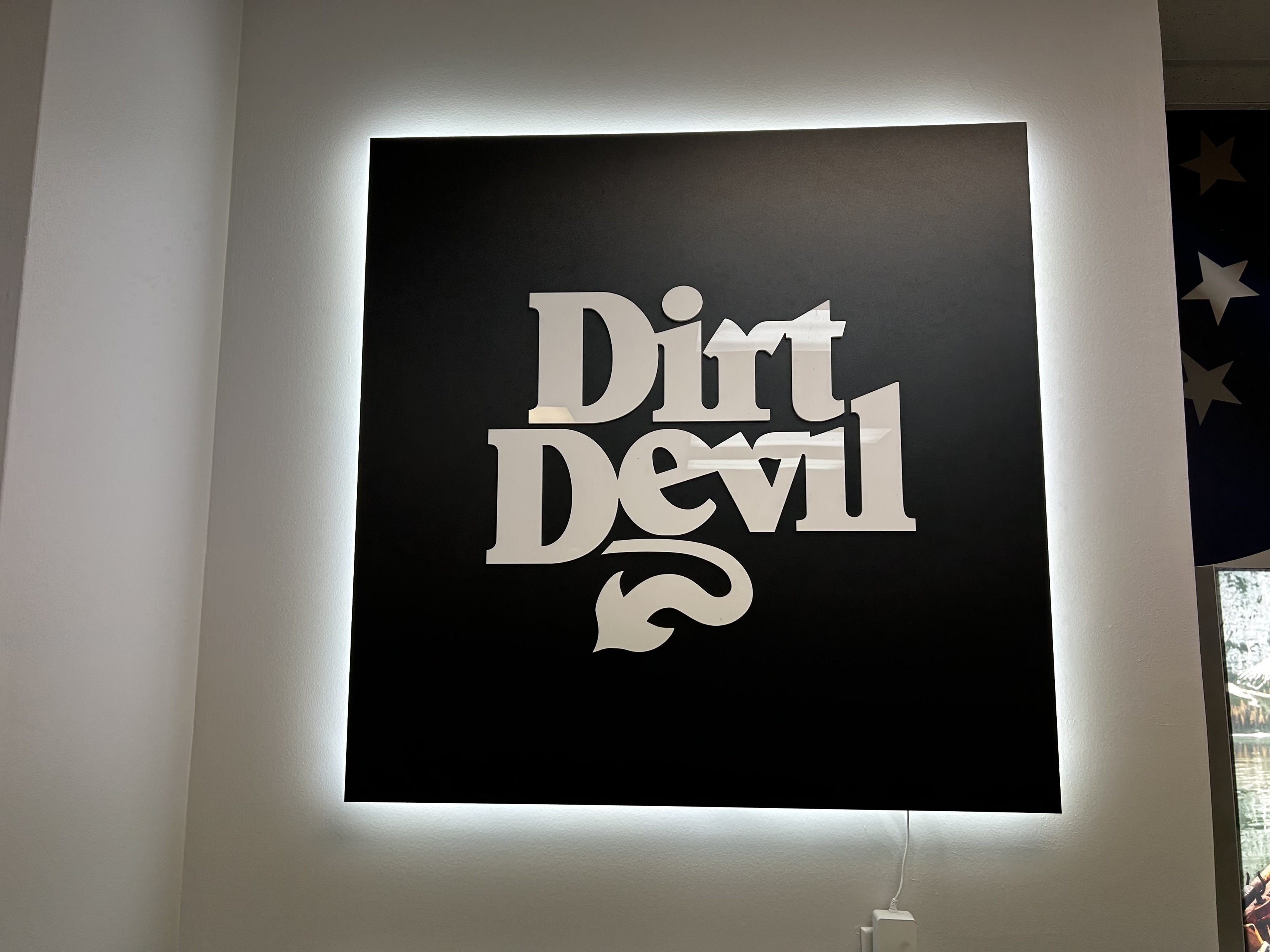
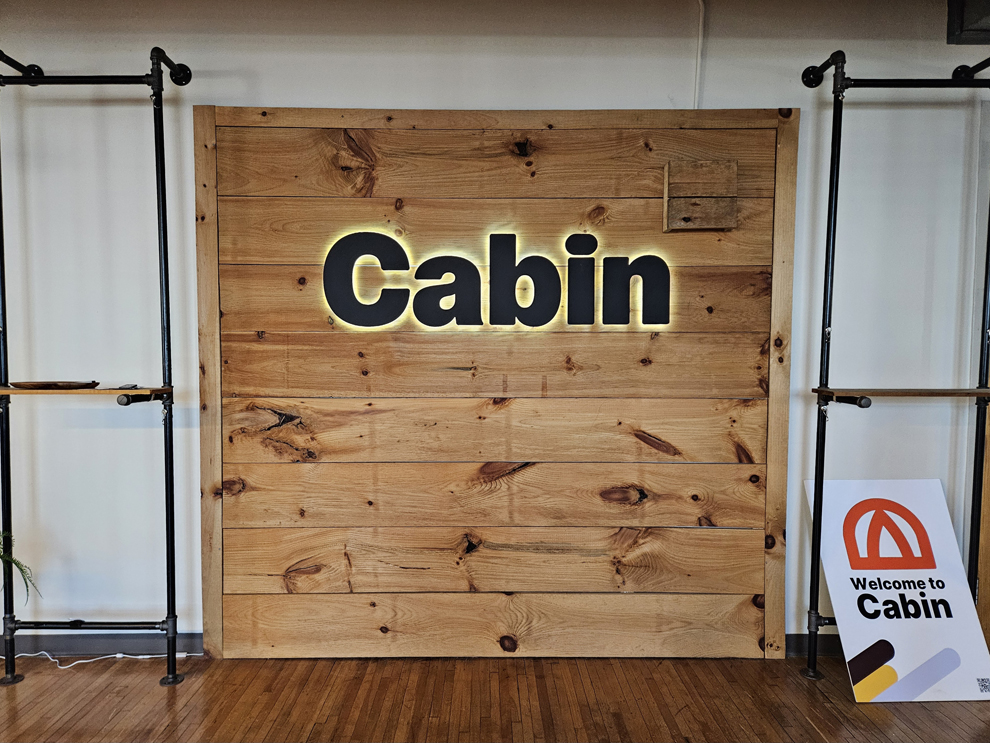
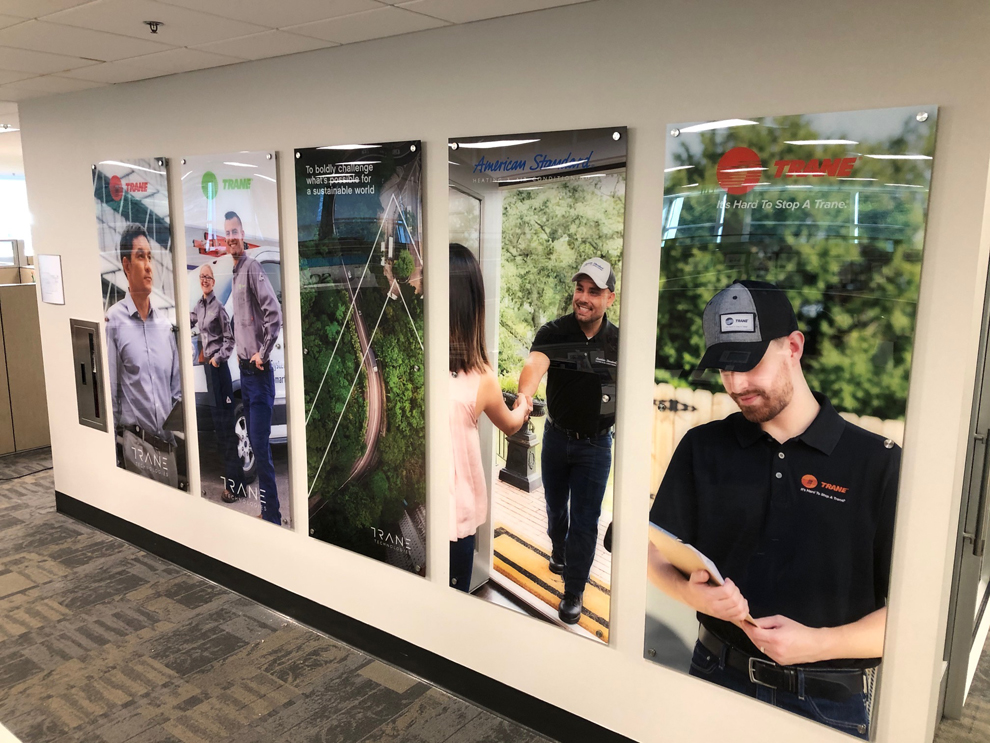
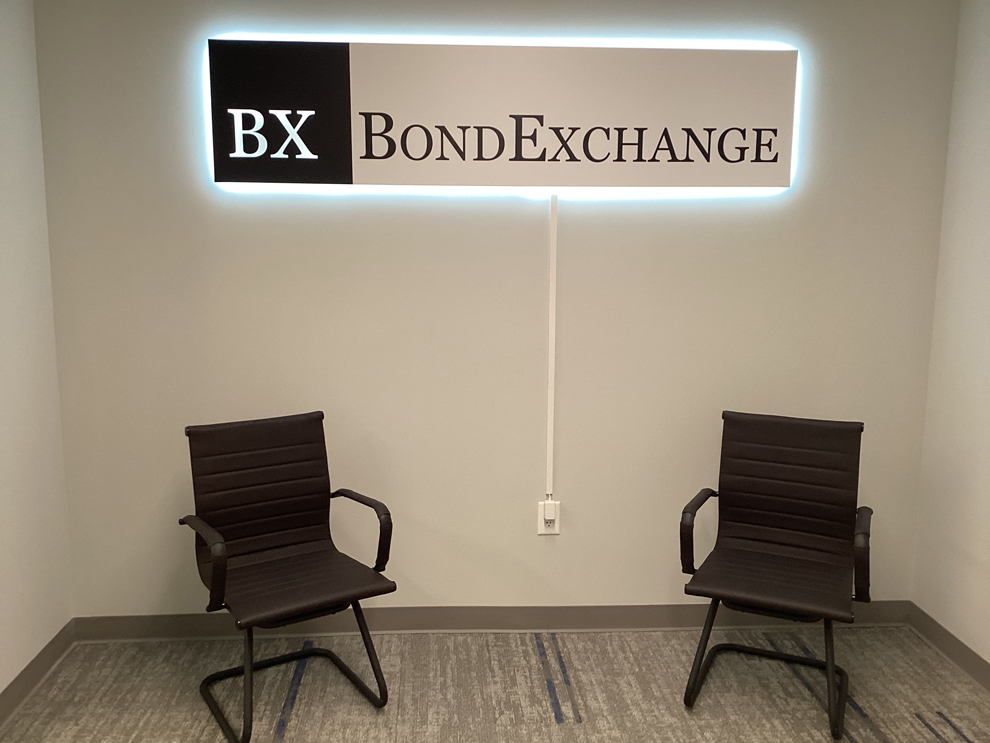
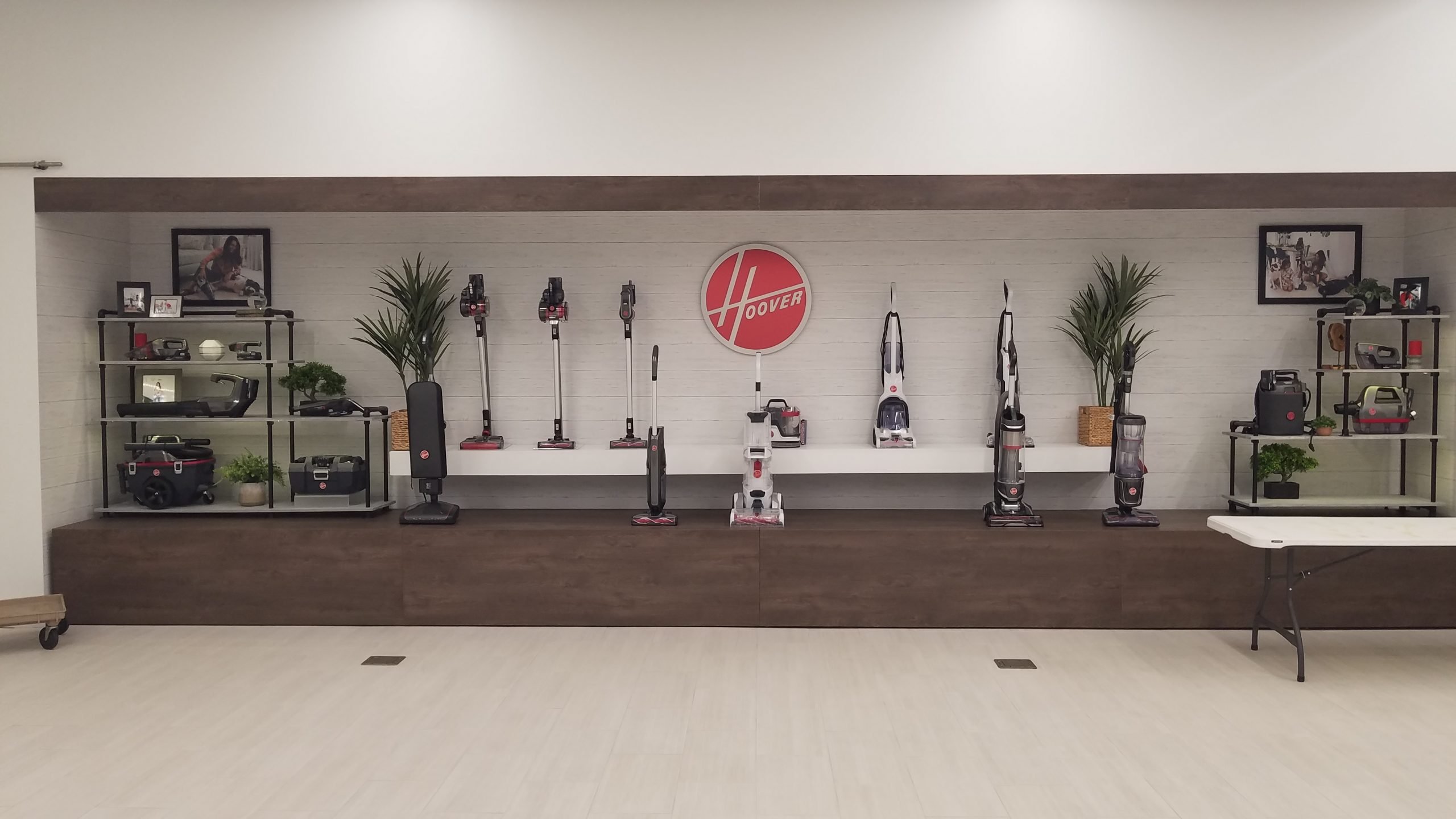
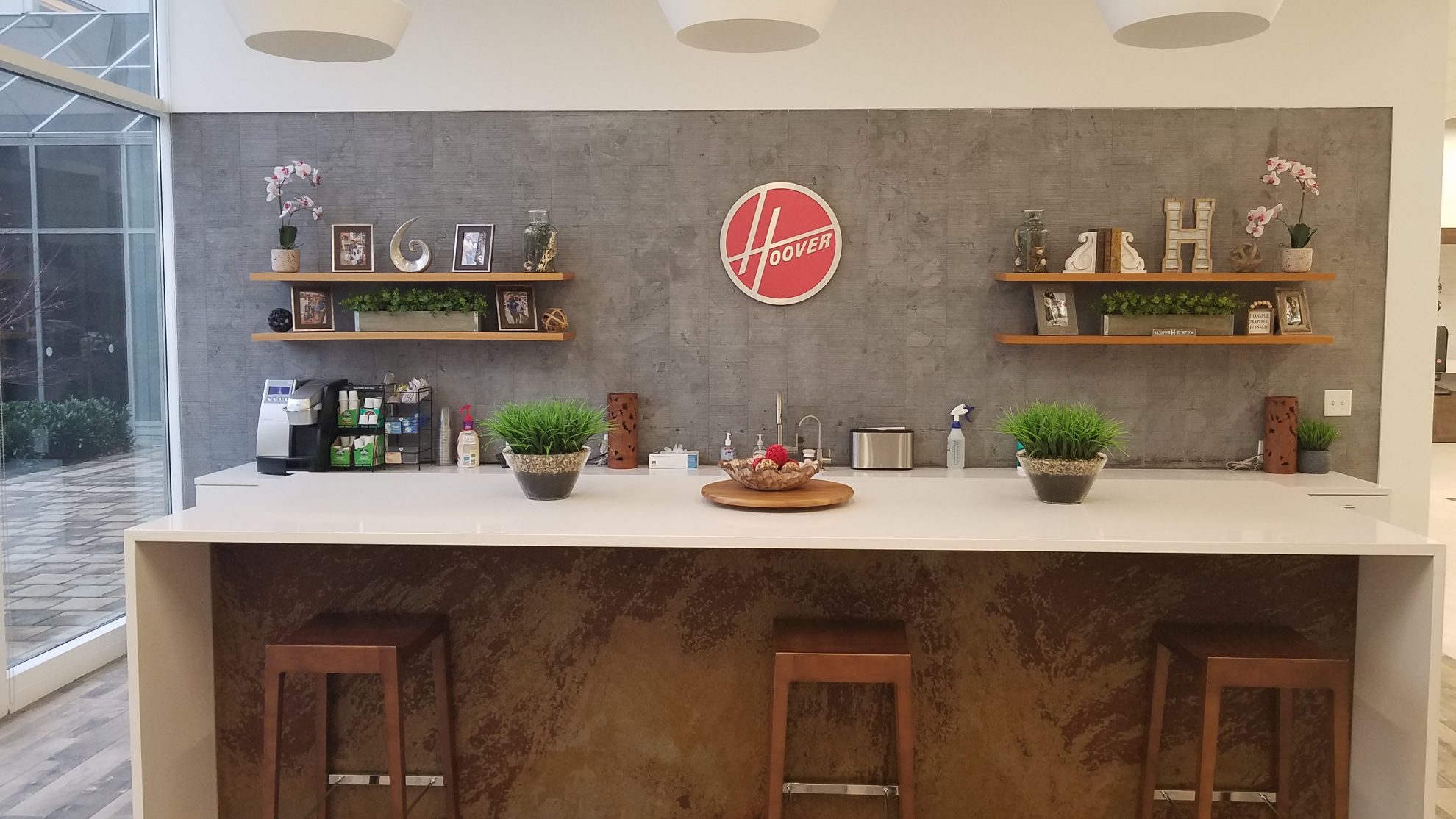
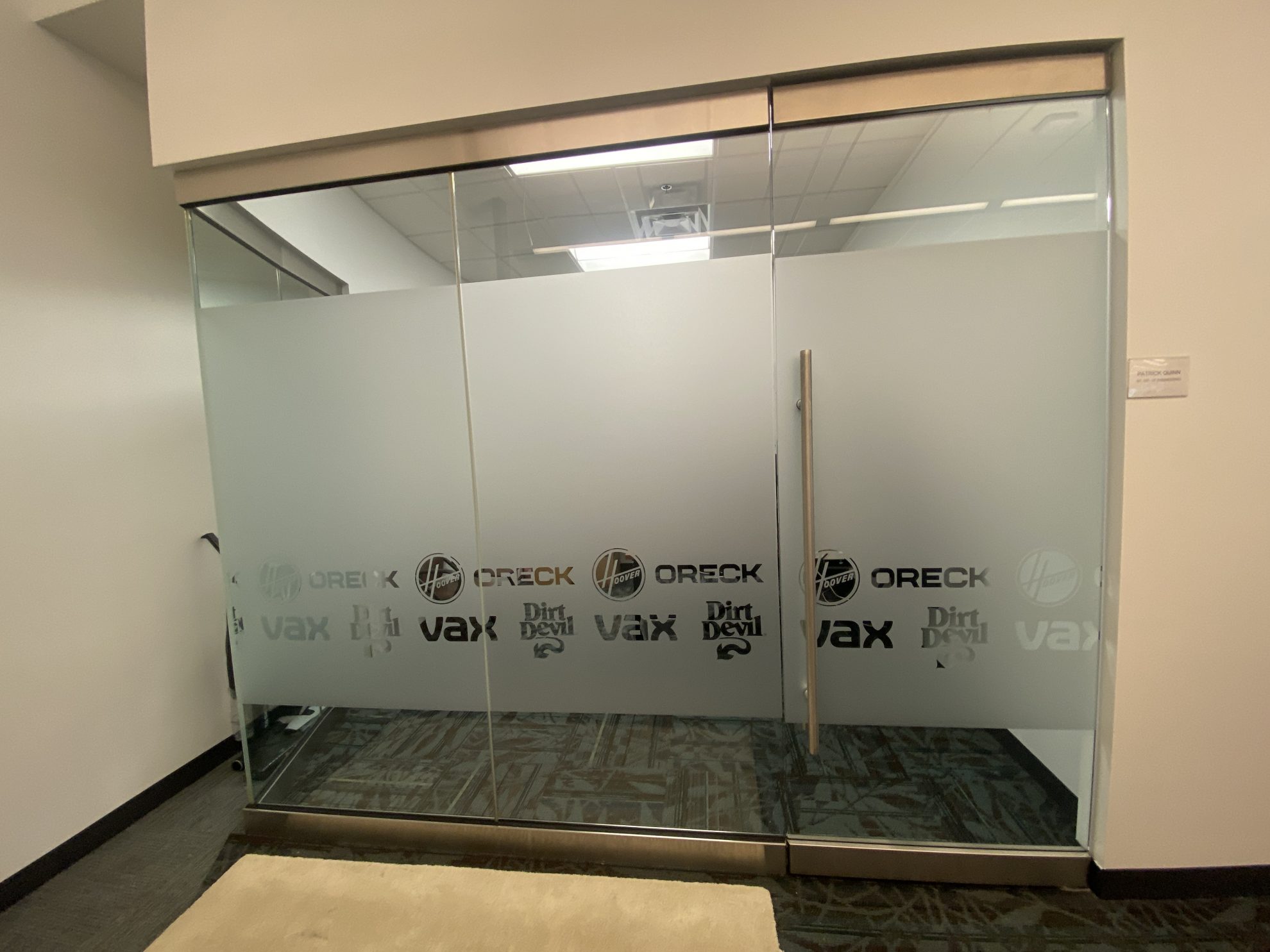
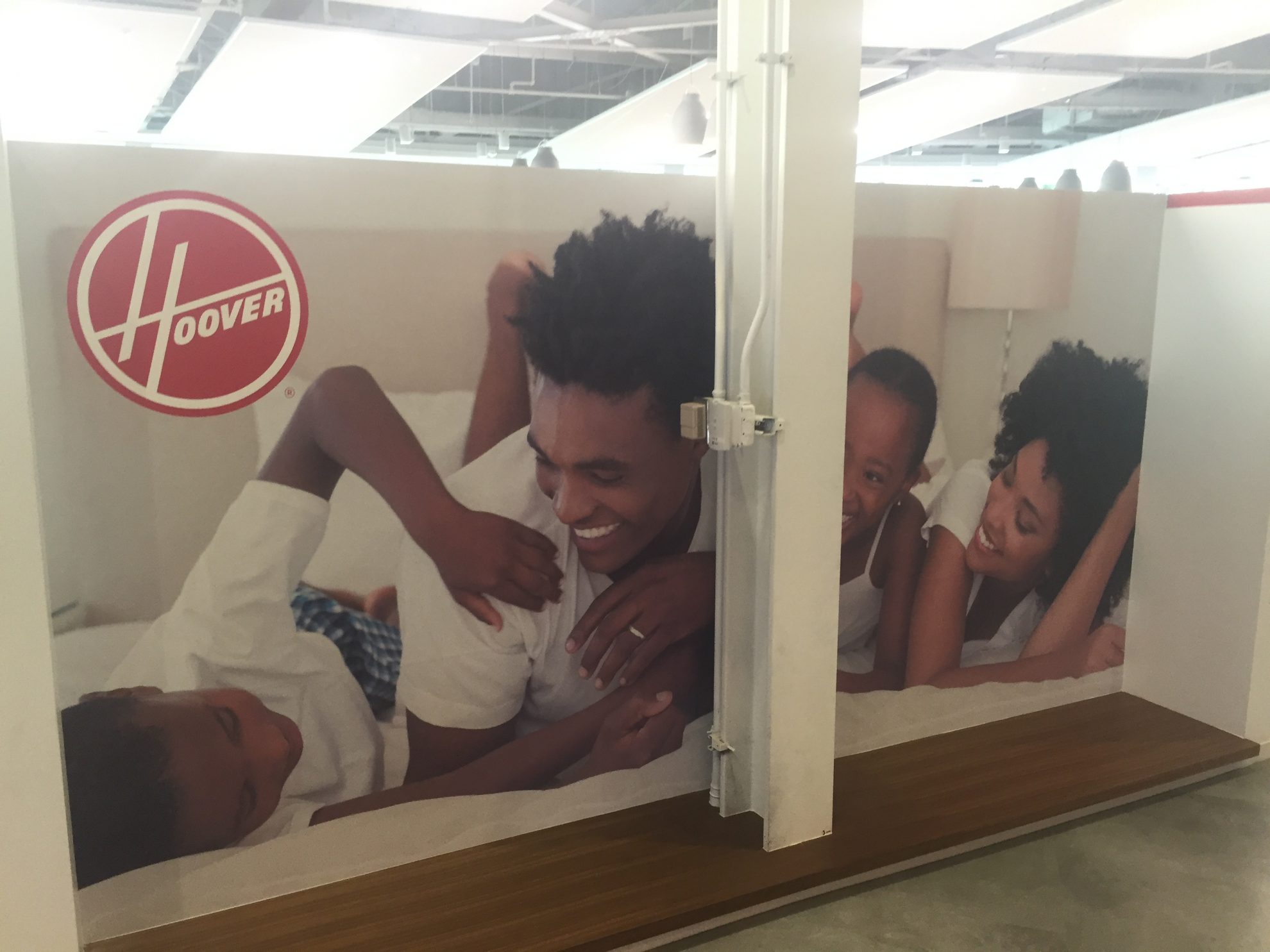
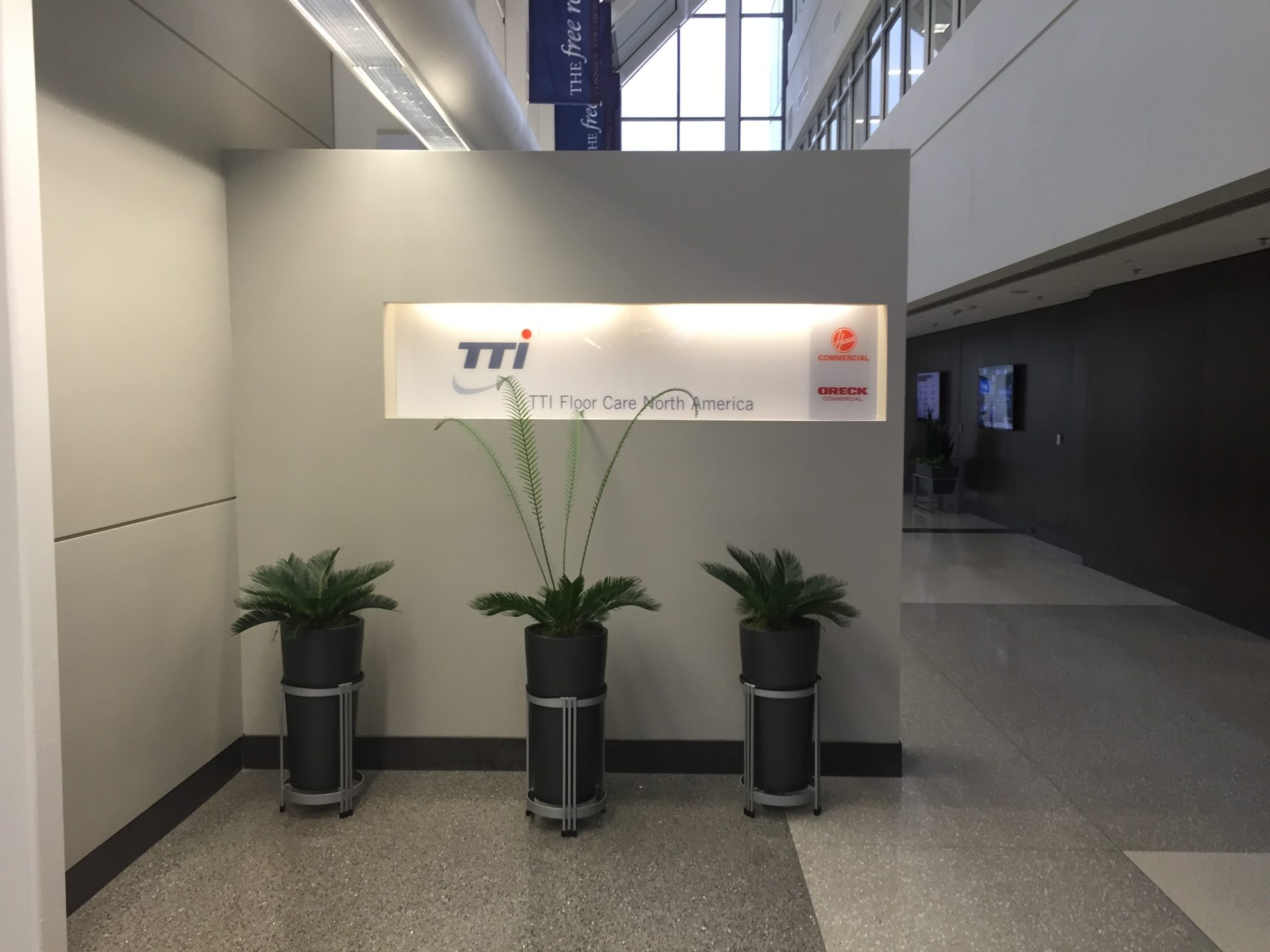
Heritage Signs & Displays collaborated with TTI Floor Care North America to enhance their corporate office. The project included custom frosted vinyl graphics, acrylic signs, dimensional lettering, and LED backlit signs, showcasing the brands Dirt Devil, Hoover, and Oreck. The signage improved office branding, privacy, and aesthetics. Heritage collaborated closely with TTI, ensuring efficient execution and high-quality results, creating an immersive and professional environment that reflects TTI's brand values.
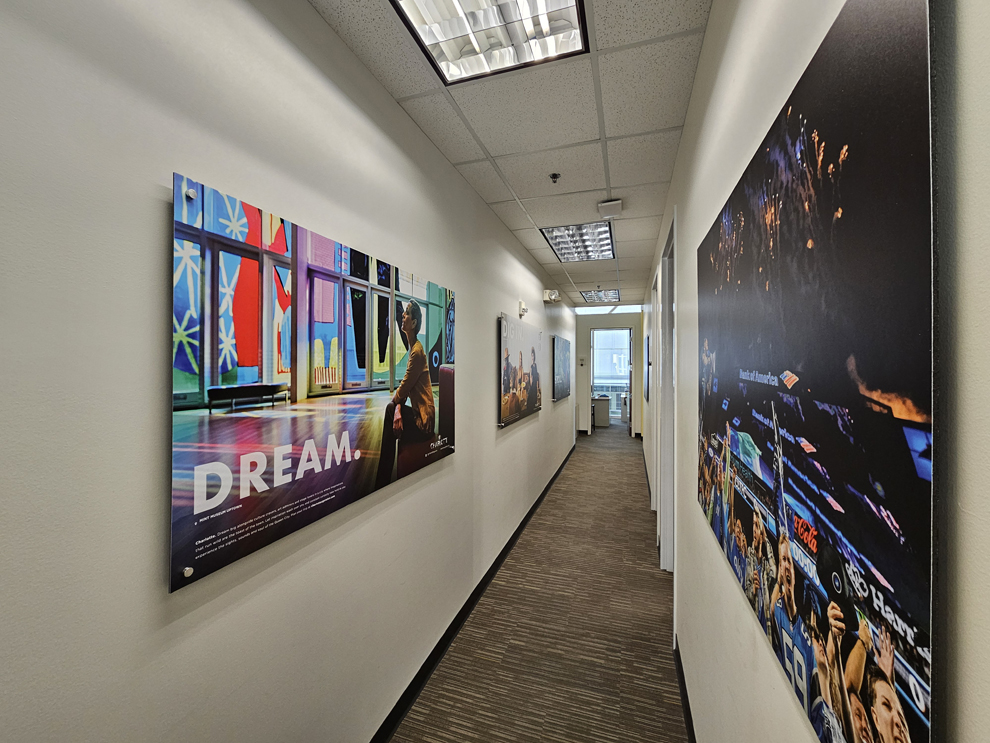
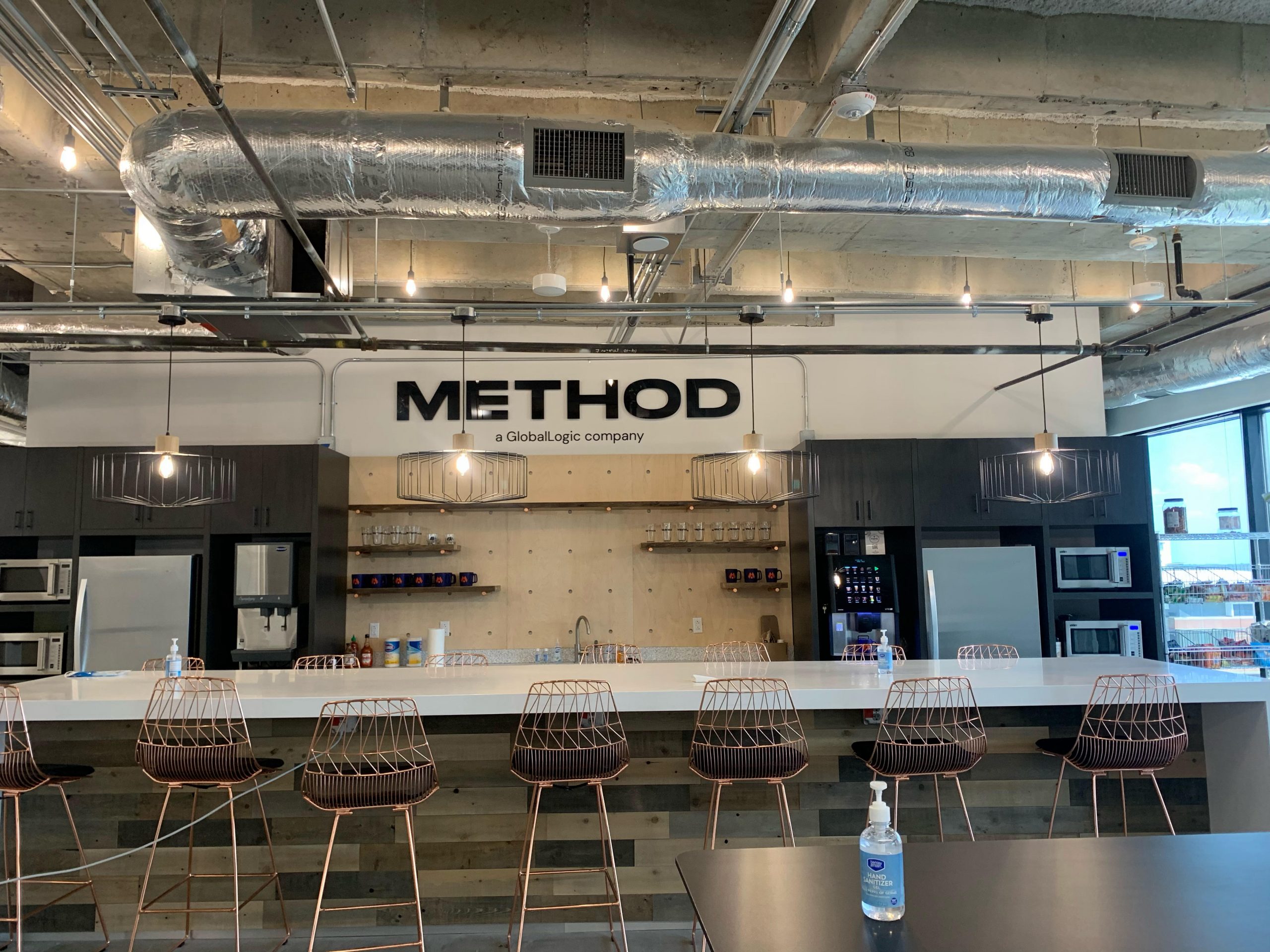
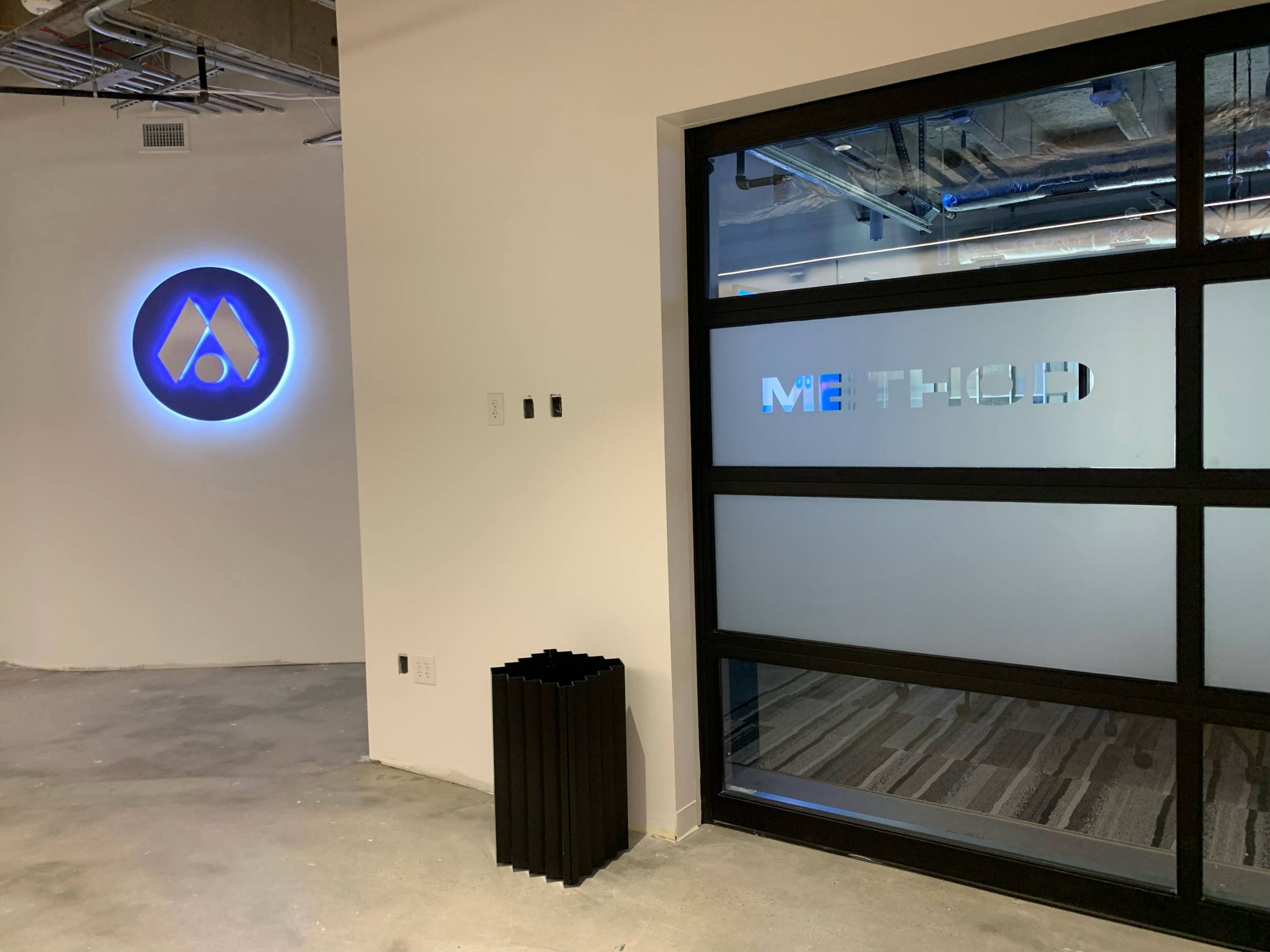
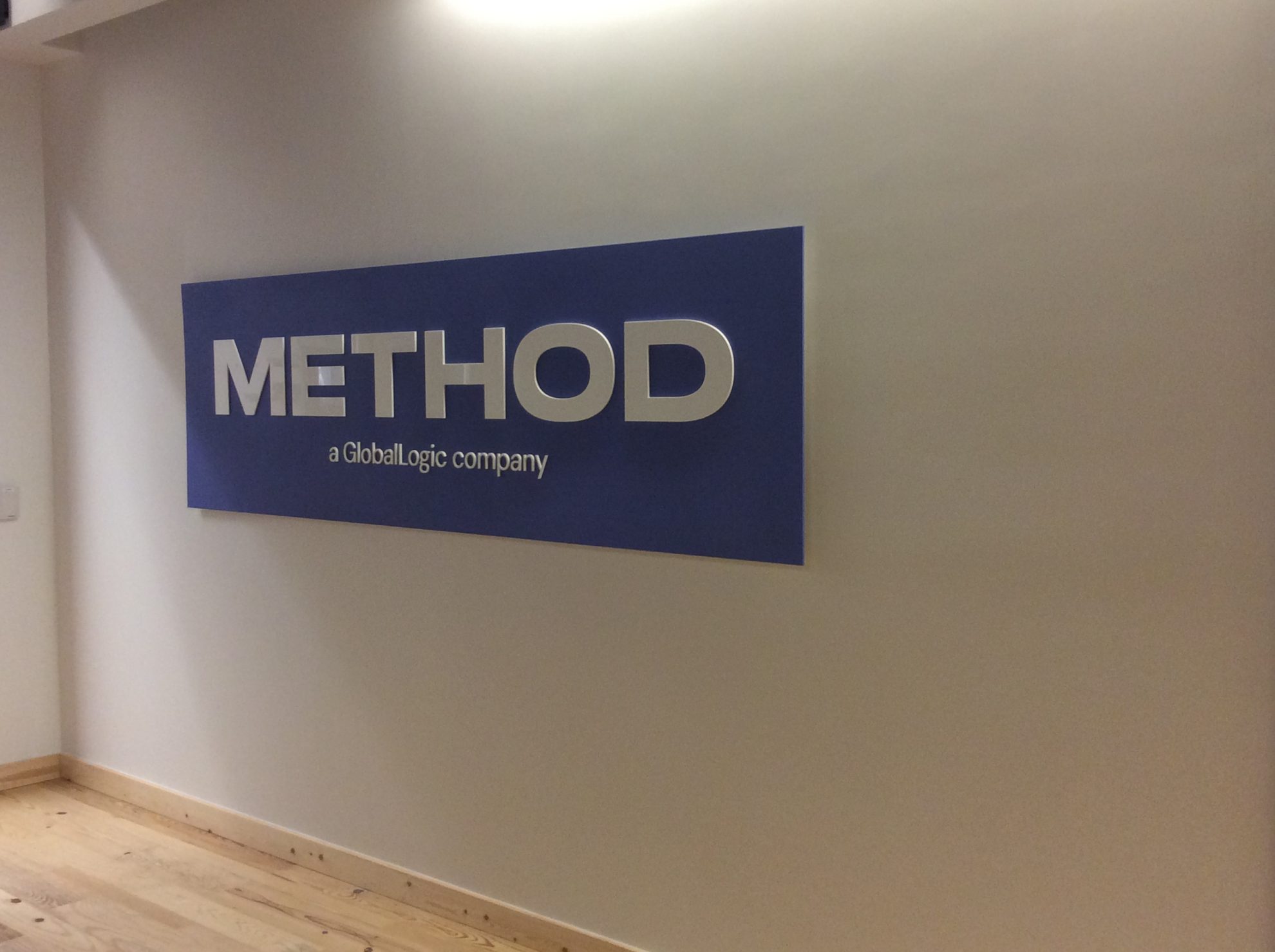
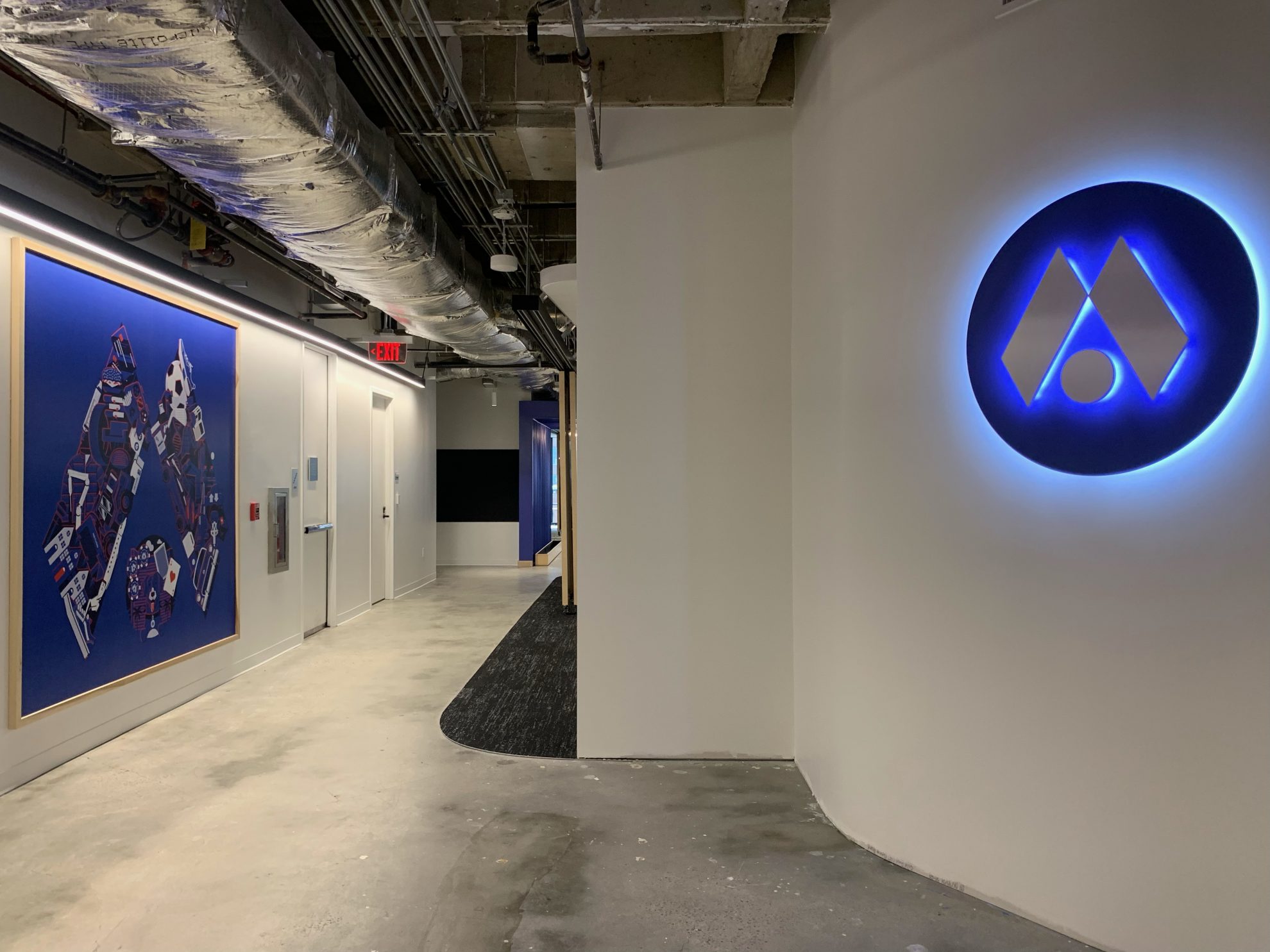
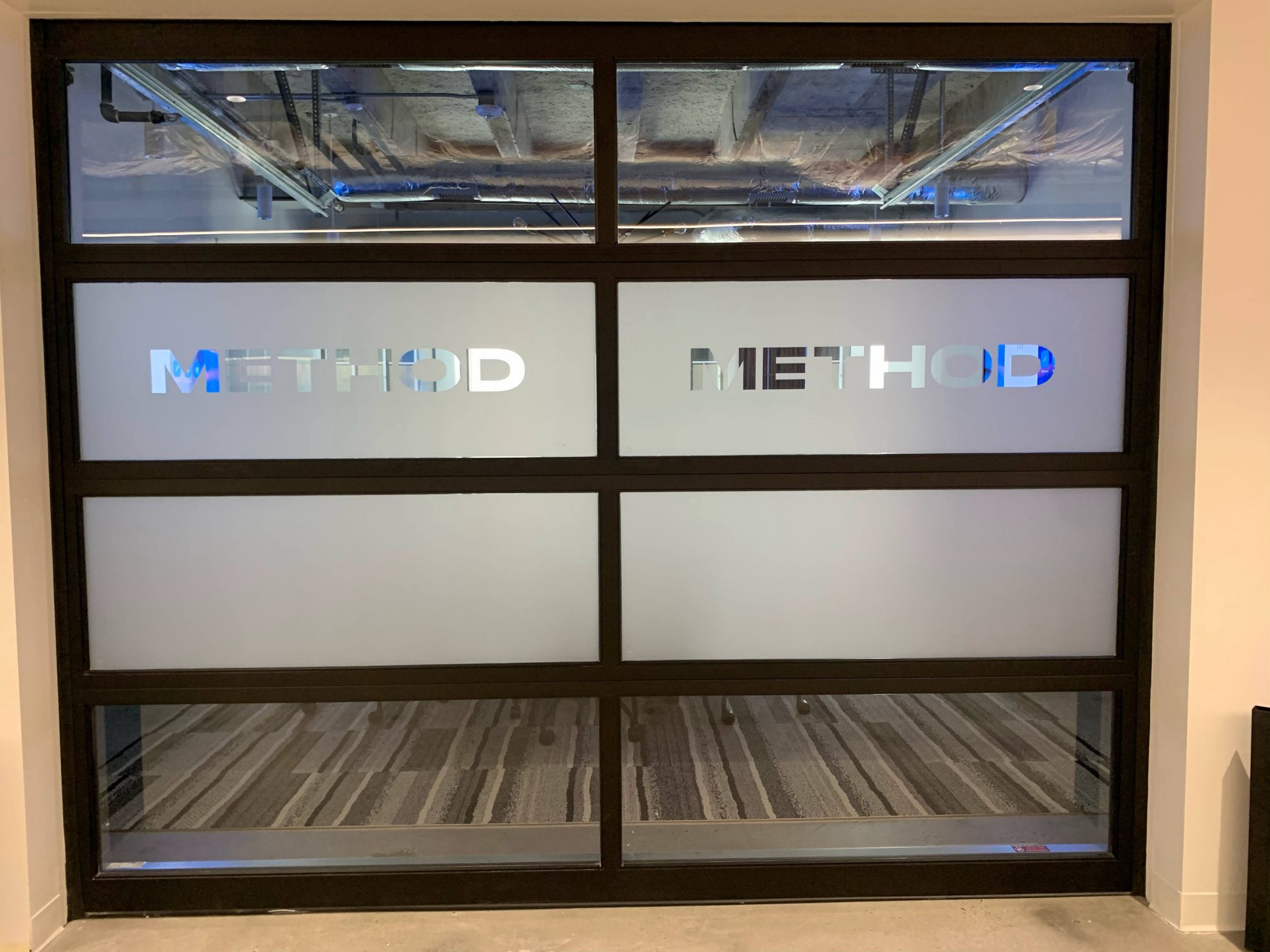
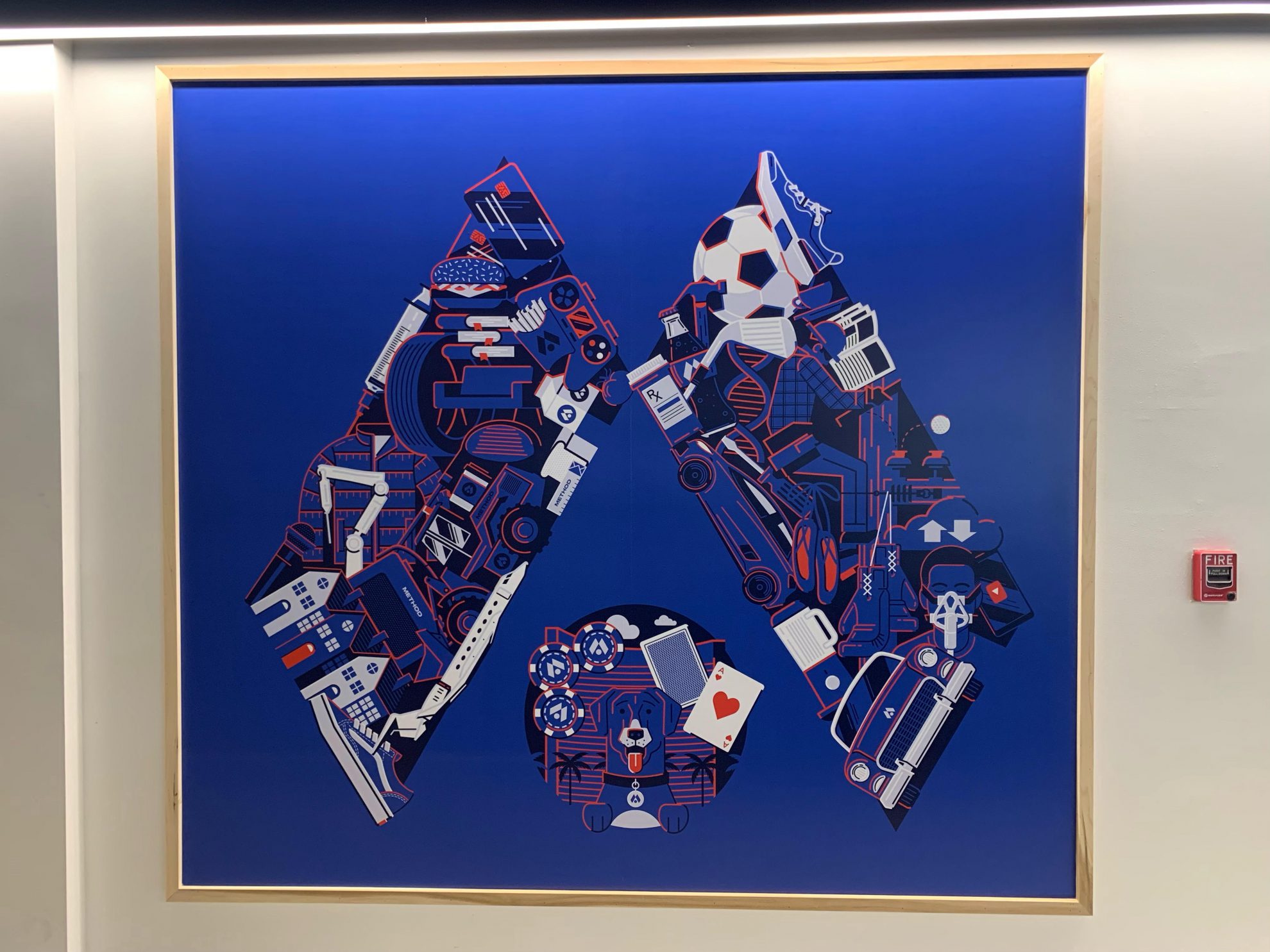
Heritage Signs & Displays' collaboration with Method (formerly Skookum) to rebrand their corporate headquarters. The project included dimensional lettering, wall displays, LED-lit signage, wall wraps, and frosted vinyl, creating an immersive and branded environment. Heritage worked closely with Method's team, ensuring accurate execution and timely delivery. The transformation was completed in August 2021, with Method's employees moving into the revamped space in September. The project reflects Heritage's commitment to quality and collaboration.