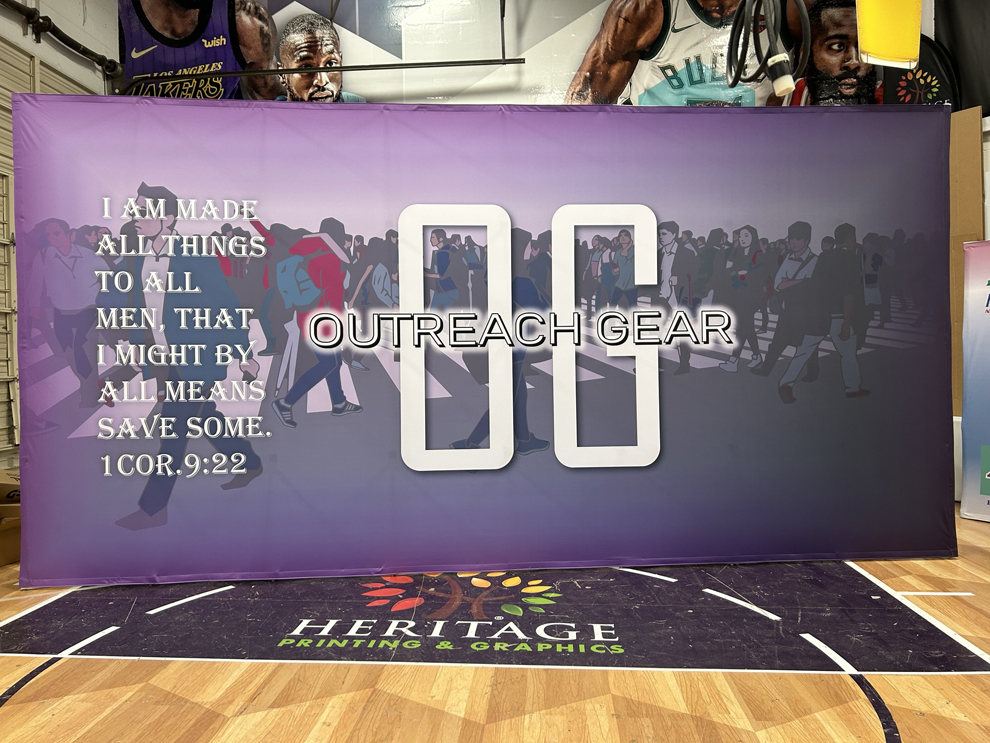
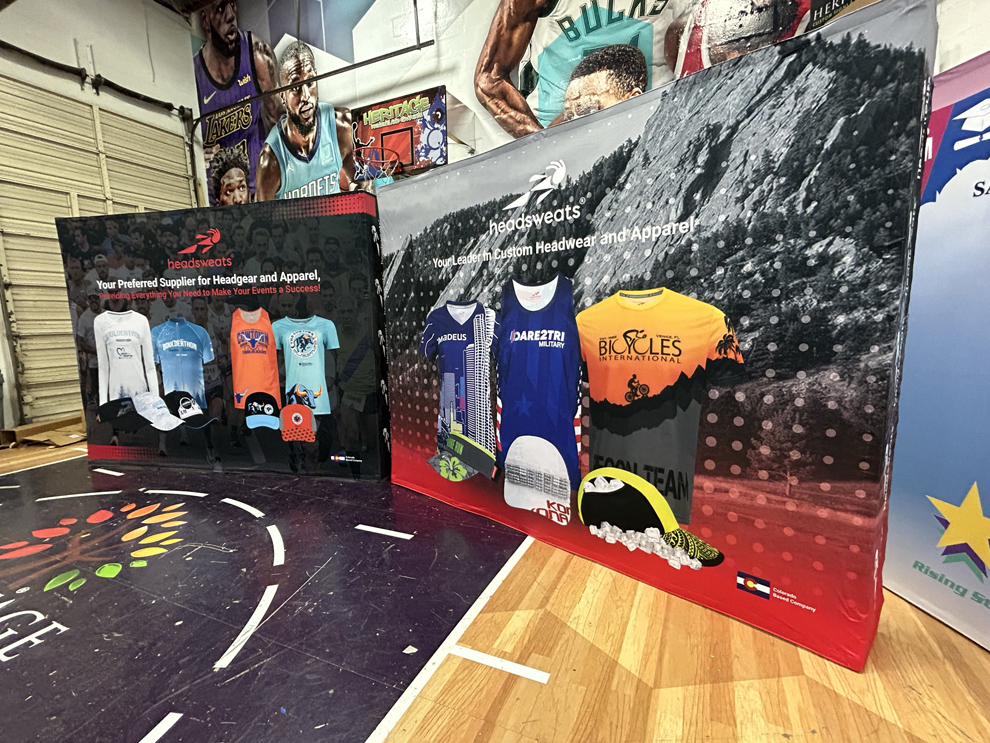
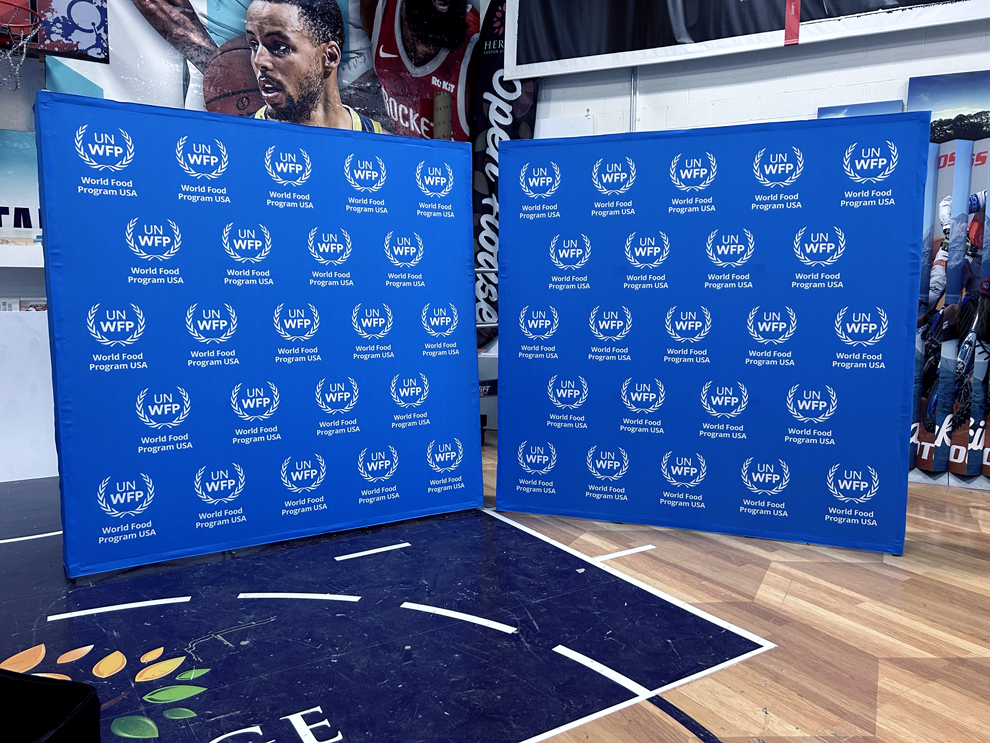
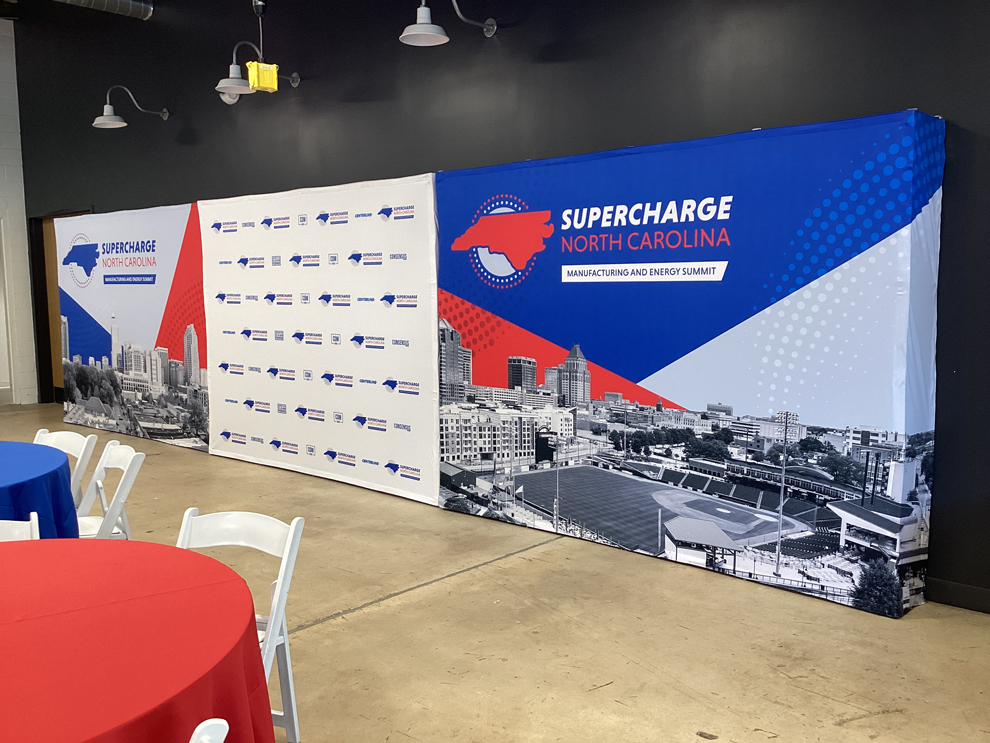
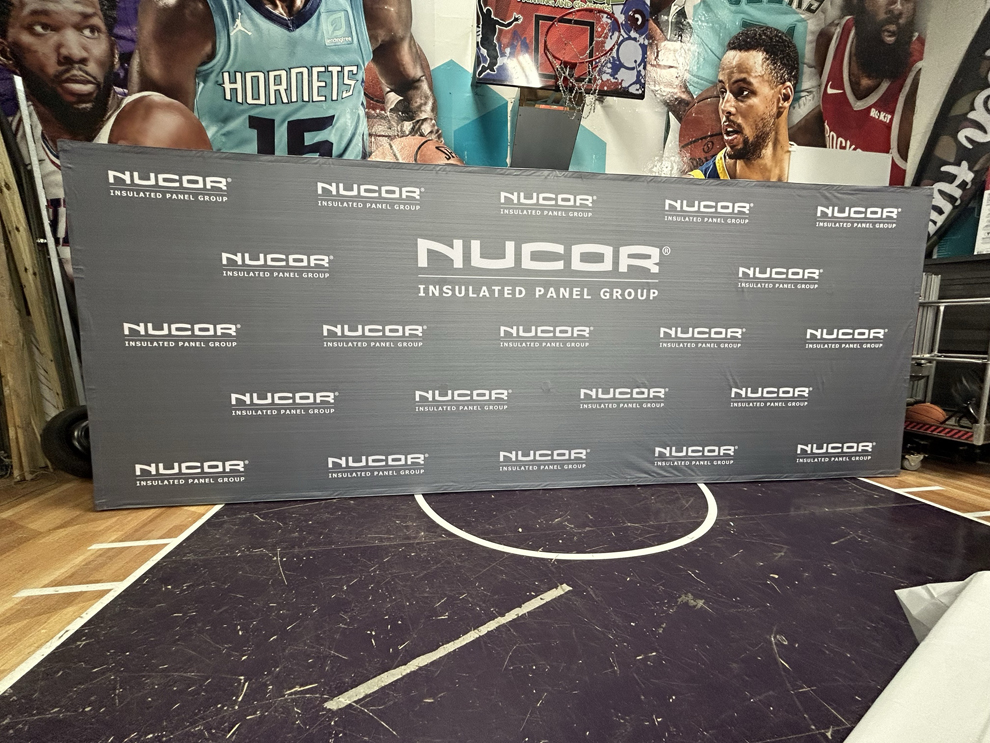
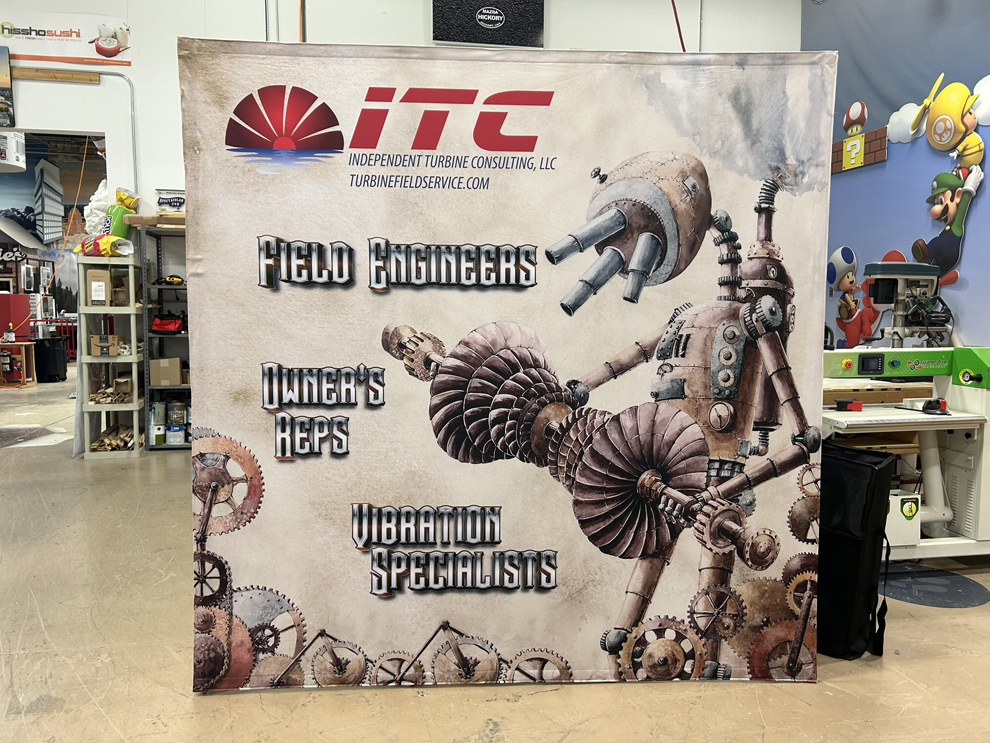
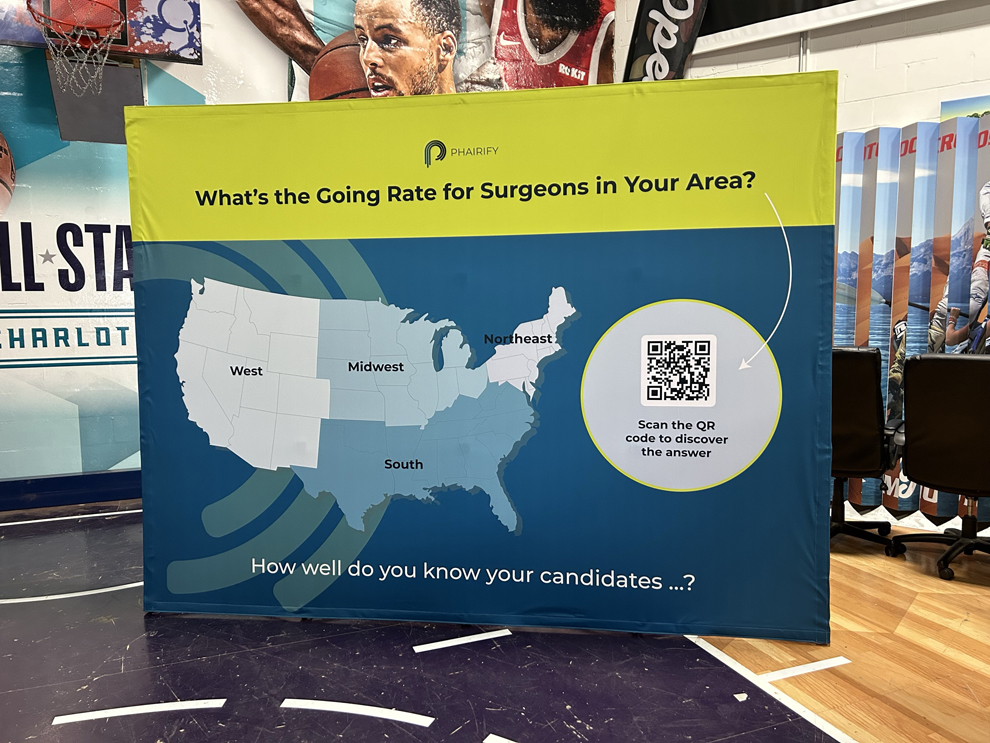
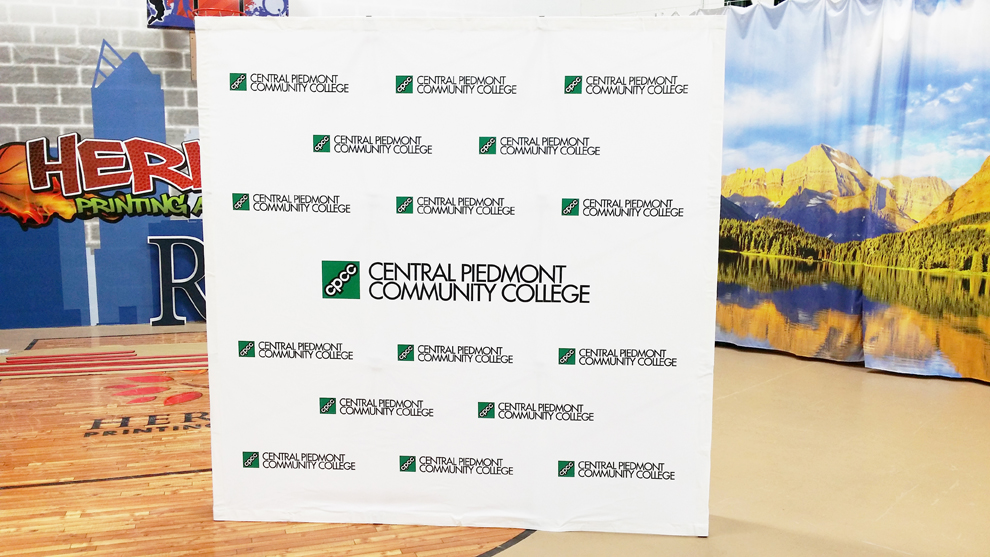
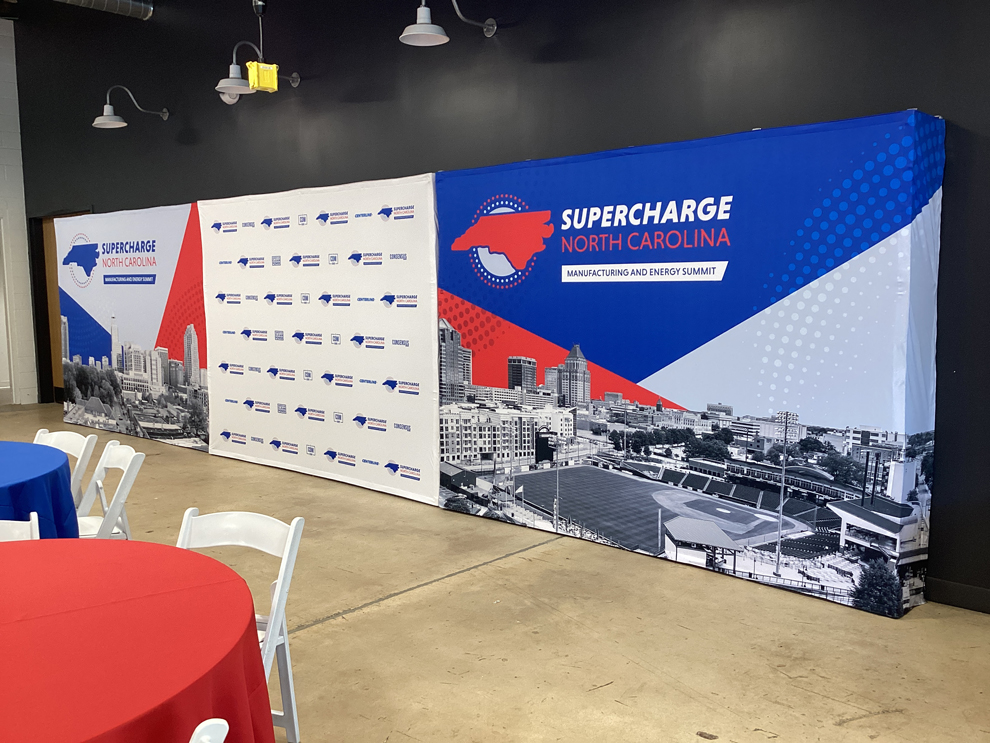
A portable fabric backdrop combines a printed fabric graphic with a supporting frame to create a broad background for presentations, photography, and event displays. It can help your team establish a recognizable setting without relying on permanent graphics at each venue.
For organizations planning events in Greensboro, NC, that flexibility can support corporate meetings, university programs, recruiting events, association conferences, and trade show exhibits. The same display may serve several programs when its dimensions, message, hardware, and condition remain appropriate.
A backdrop can frame a panel discussion, identify the organization behind a presentation, or provide sponsor recognition in photographs. Unlike a narrow supporting sign, it occupies much of the visual field behind people and activity, making composition and placement important.
Portability also requires planning. Compare the assembled footprint, packed dimensions, graphic attachment, and setup instructions before choosing a system. If the backdrop belongs to a larger event environment, consider how it will work with registration signs, directional graphics, exhibit components, and other displays.
Talk with Heritage about a coordinated event environment involving multiple signs, graphics, displays, and professional installation.
Get Started Now
Begin with the audience and the setting rather than selecting a frame solely by its advertised width. A background for seated interviews has different requirements from a trade show backwall viewed across an aisle.
Review viewing distance, available floor area, camera angles, travel frequency, storage space, and how often the message will change. Include the frame supports and space needed for assembly when evaluating fit. The printed graphic dimensions do not necessarily describe the complete operating footprint.
For recurring events, consider whether the design can remain useful without frequent revisions. A permanent date, venue name, or sponsor arrangement may limit reuse even when the hardware remains serviceable. If changing graphics is important, confirm replacement compatibility before purchasing.
A fabric backdrop is not a substitute for every display component. Detailed schedules belong on signs that visitors can approach, while booth structures, shelving, and integrated lighting may require a broader exhibit solution.
Tubular Frames With Tension Fabric Graphics
Some portable systems use tubular frame sections connected by push-button fittings. A fitted fabric graphic slides over the assembled structure and closes with a zipper, creating tension across the display surface.
Correct orientation matters for both the frame and graphic. Follow the instructions for the selected model, and do not assume that a graphic made for another frame will fit because the advertised dimensions appear similar.
Collapsible Pop-Up Frames
Other systems use a collapsible frame that expands and locks into position. Depending on the model, hook-and-loop attachment secures the fabric graphic to the frame.
Some configurations permit the front graphic to remain attached during collapse, while others require a different packing method. Interchangeable graphics, replacement availability, and storage procedures must be confirmed for the actual product.
Silicone-Edge Fabric Systems
Silicone-edge fabric graphics, often called SEG graphics, have a silicone strip sewn around the perimeter. That strip fits into a groove in a compatible frame.
This attachment method differs from a zippered fabric sleeve or hook-and-loop graphic. Select the graphic and hardware as a compatible system rather than treating fabric display components as interchangeable.
These descriptions explain common mechanisms. They do not establish which configurations are currently available through Heritage.
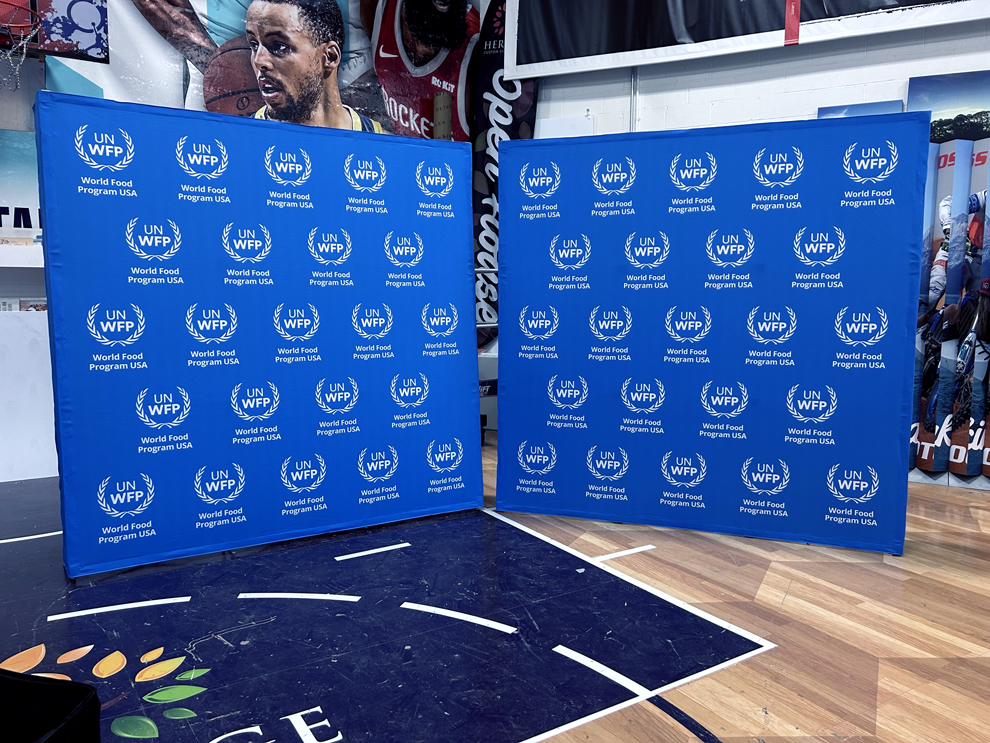
Heritage provides visual branding services spanning project management, design, production, and installation, supported by more than 40 years of experience and veteran-owned ownership. Those capabilities are relevant when a portable backdrop must coordinate with a broader workplace or event environment.
For a larger qualifying managed project, define the responsibilities before production begins. Design development, display coordination, delivery planning, stakeholder approvals, and professional installation apply only when included in the accepted scope.
A finished artwork file does not necessarily make a project self-directed. Your team may still need coordination across several display types, venue requirements, delivery destinations, or installation windows.
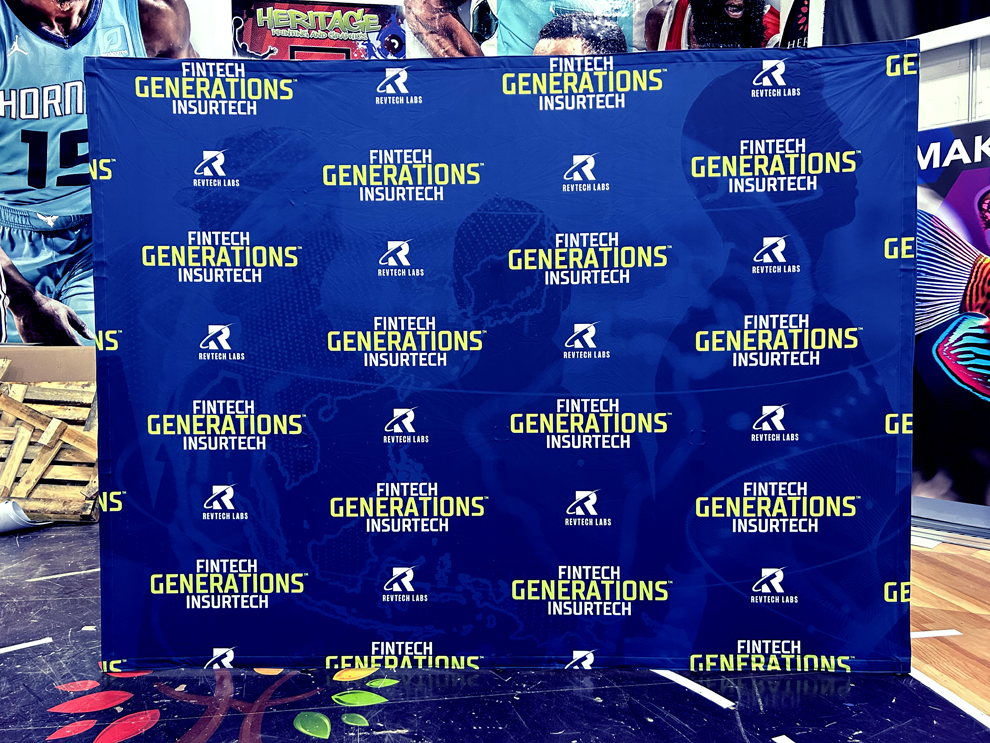
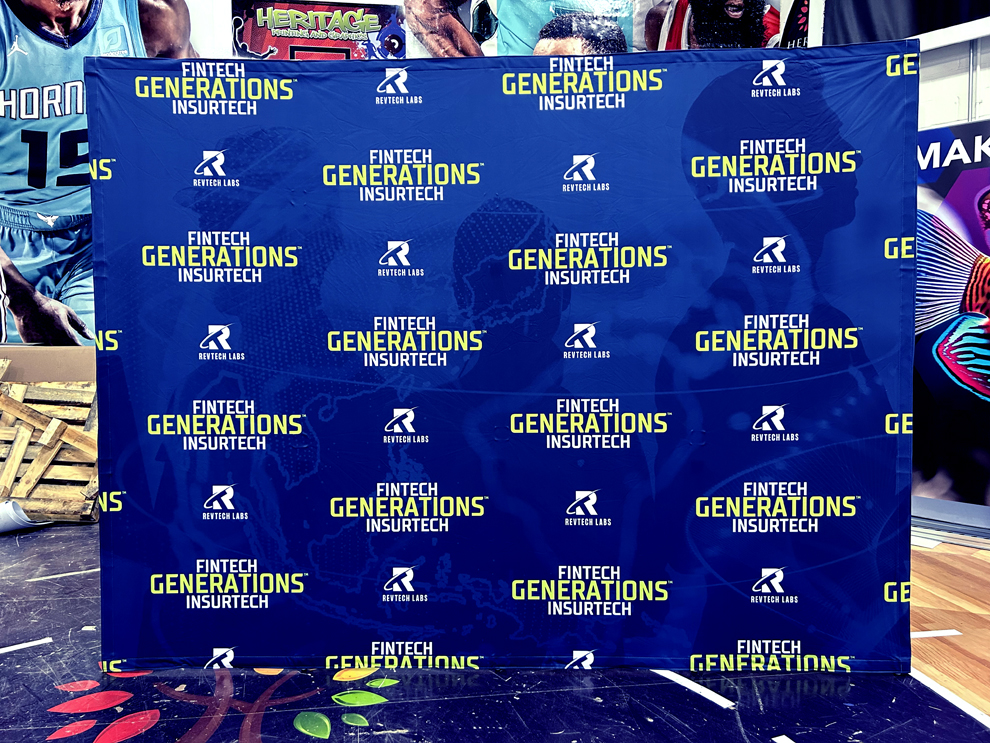
Explore a broader backdrop approach when the setting requires a larger focal area, specialized presentation treatment, or a format beyond a standard portable system.
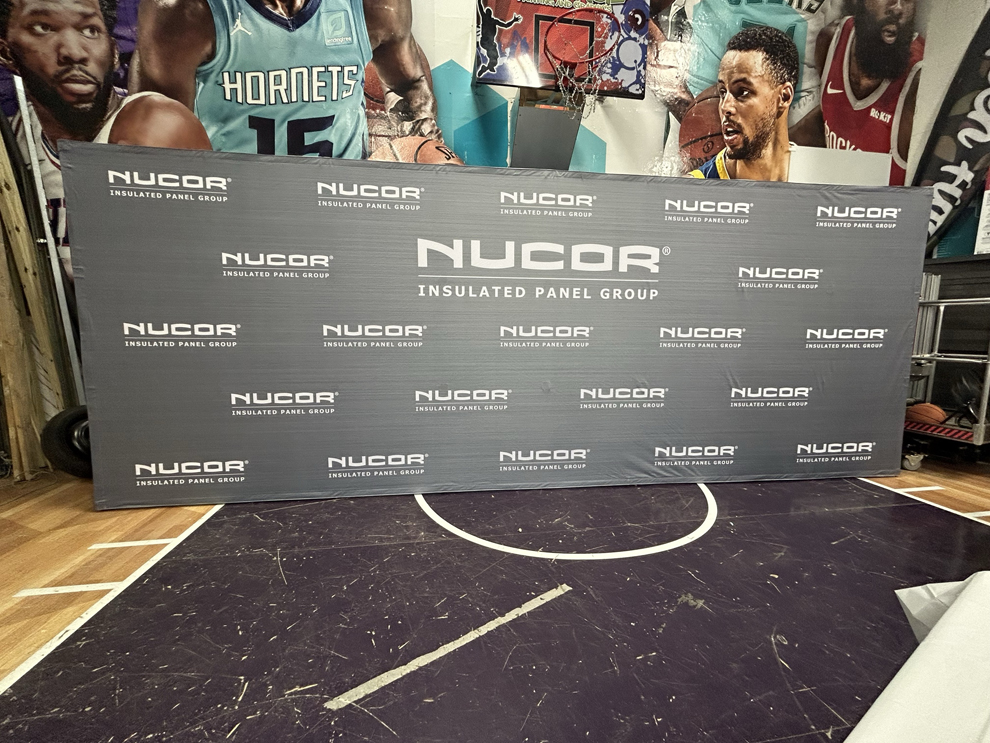
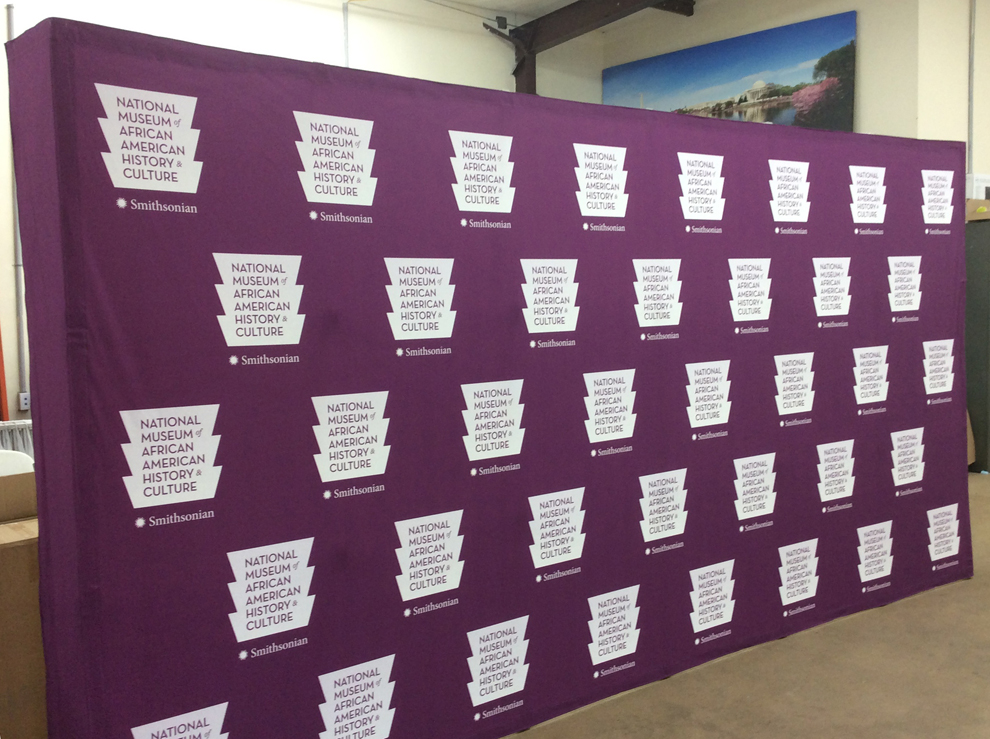
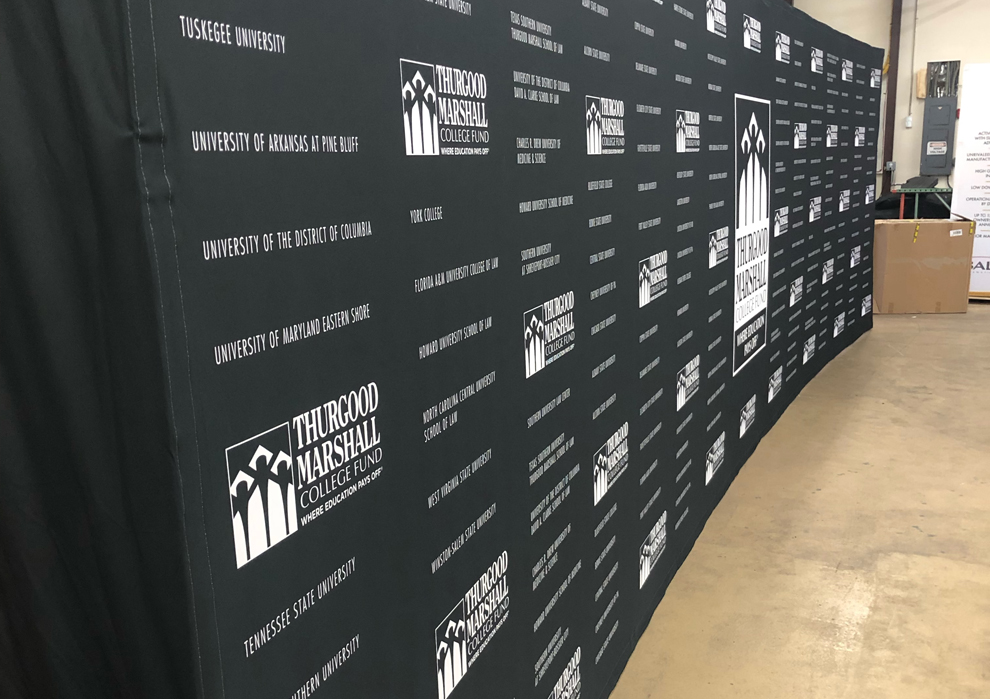
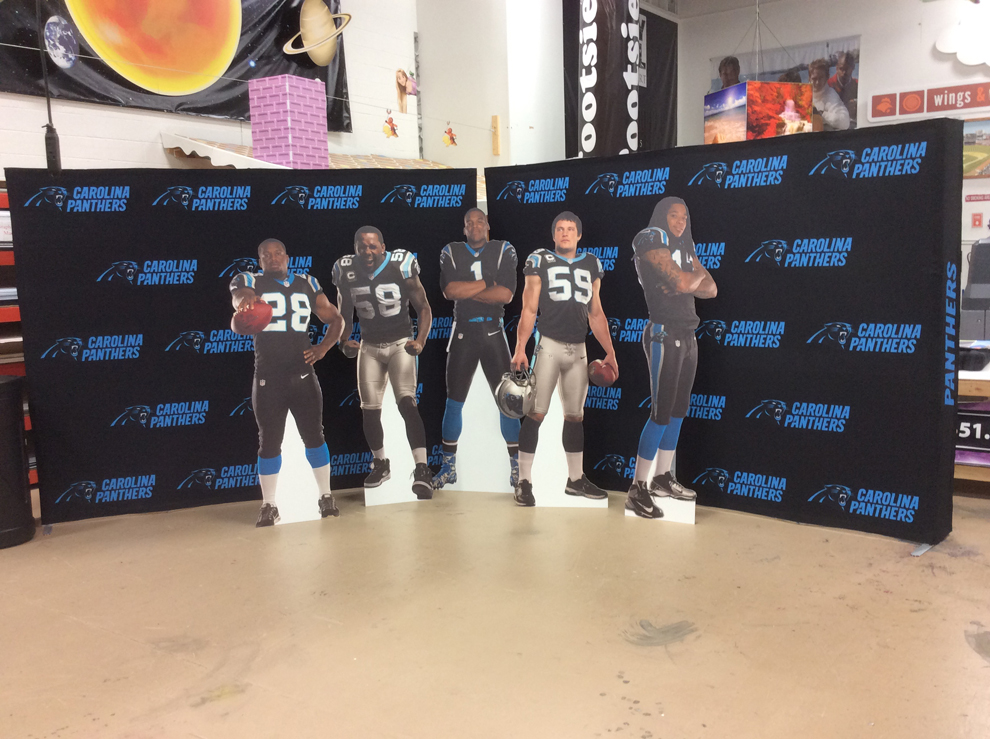
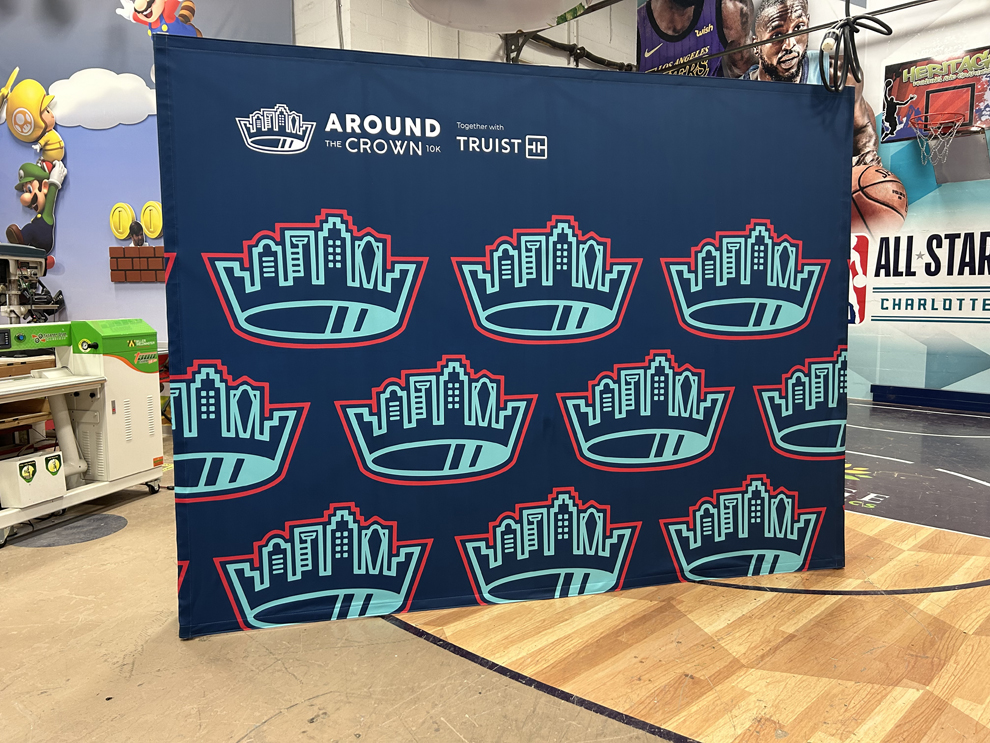
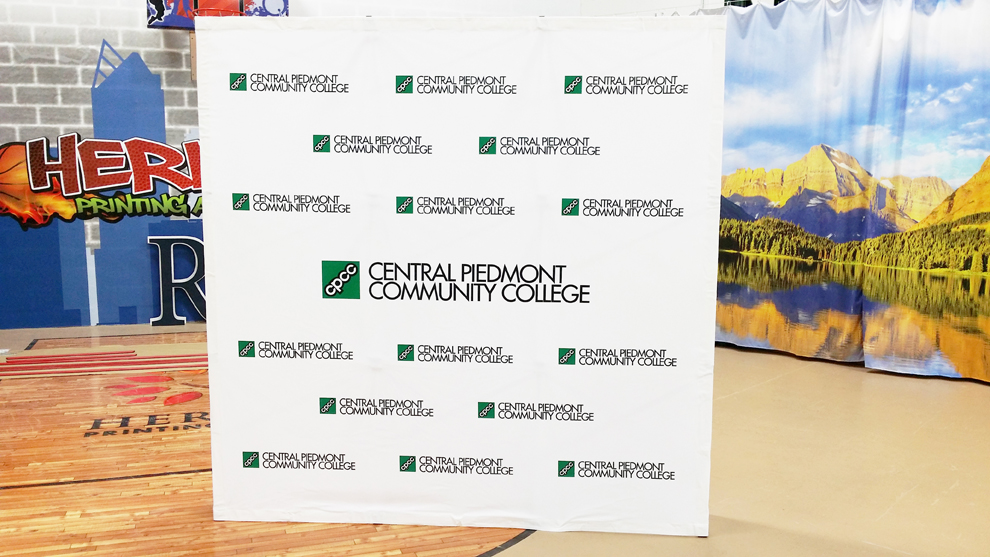
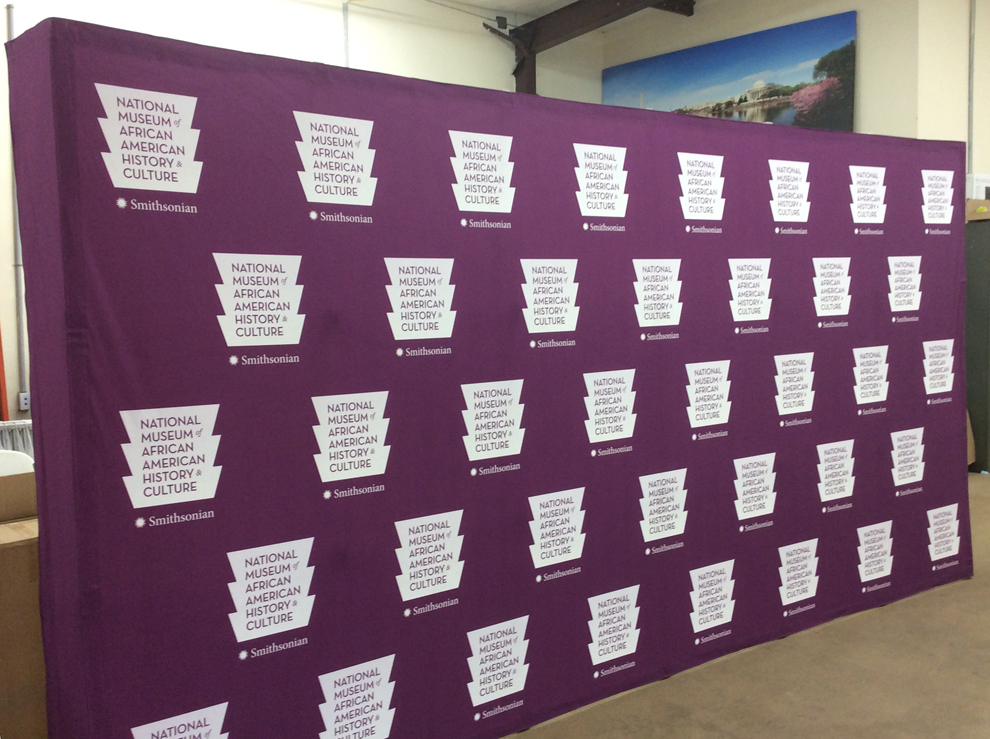
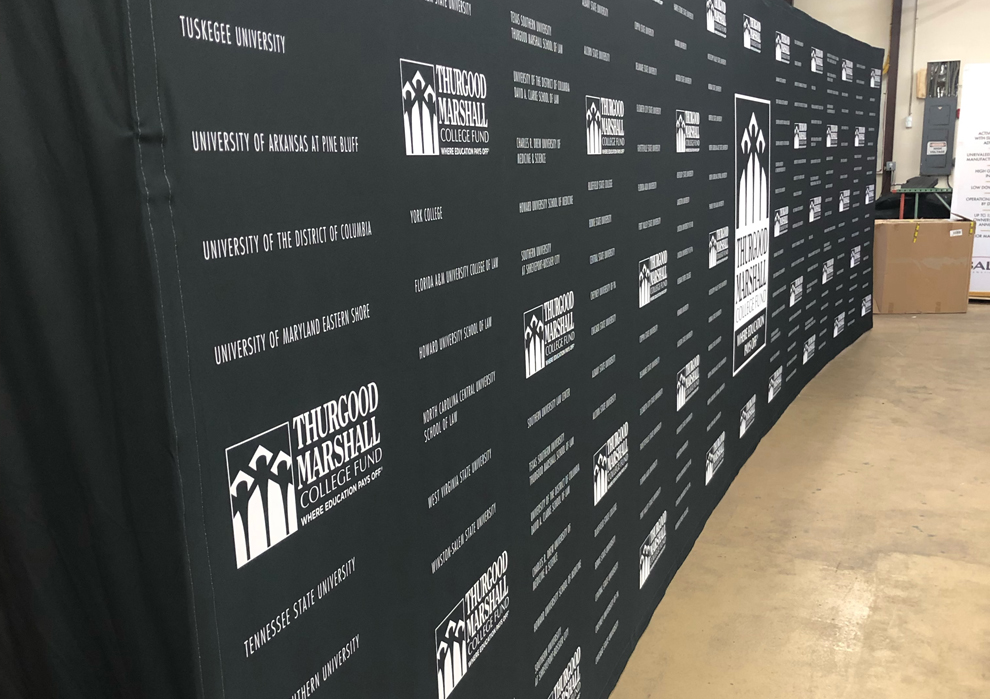
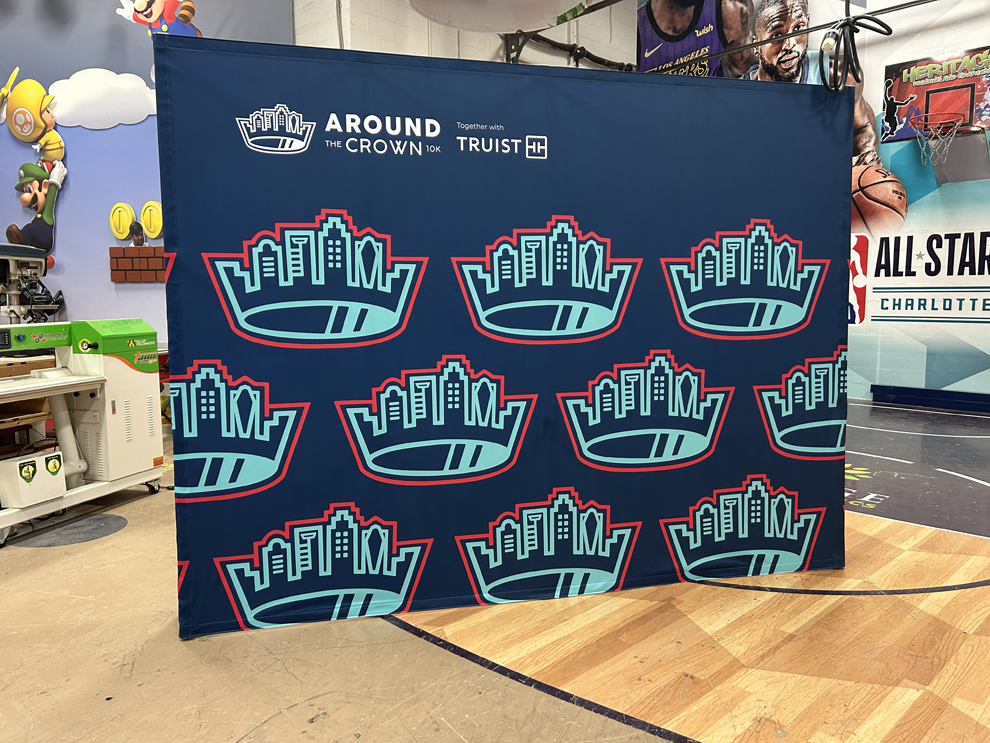
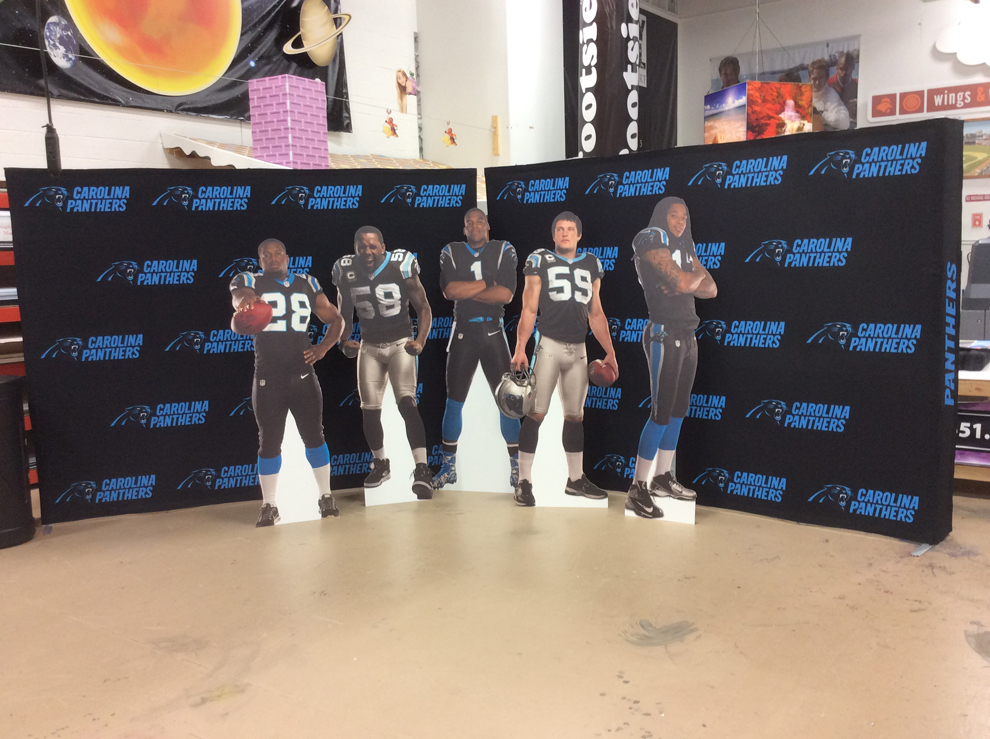
Use repeated organizational or sponsor marks when photography, interviews, and media visibility are the primary purpose of the background.
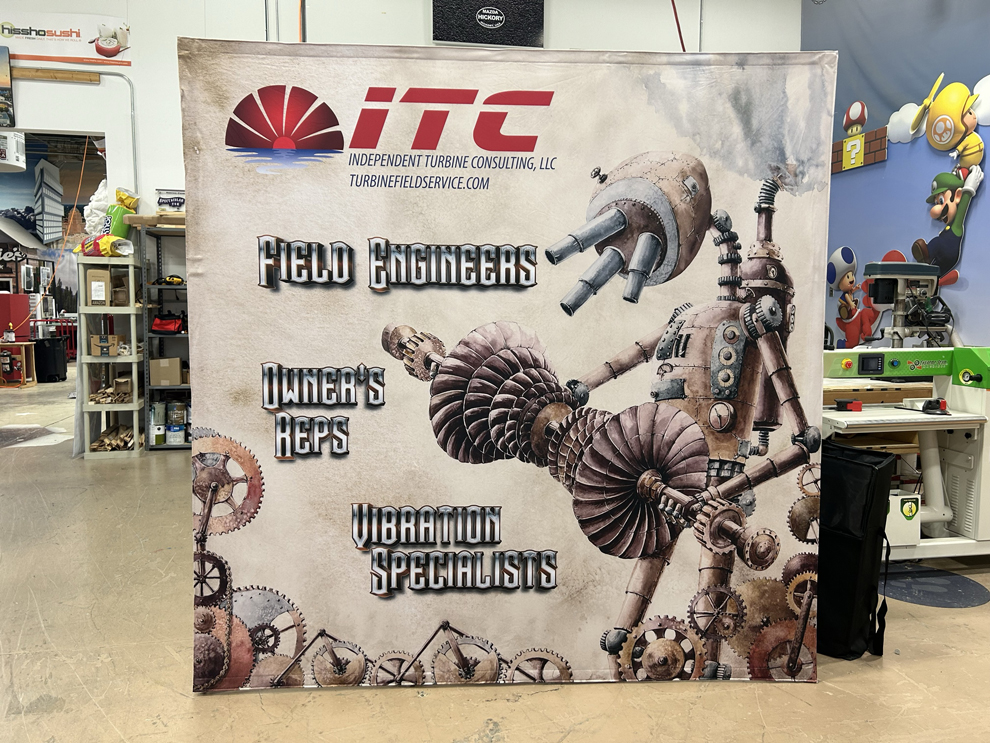
Consider a broader exhibit solution when your booth needs several coordinated components rather than one portable graphic surface.
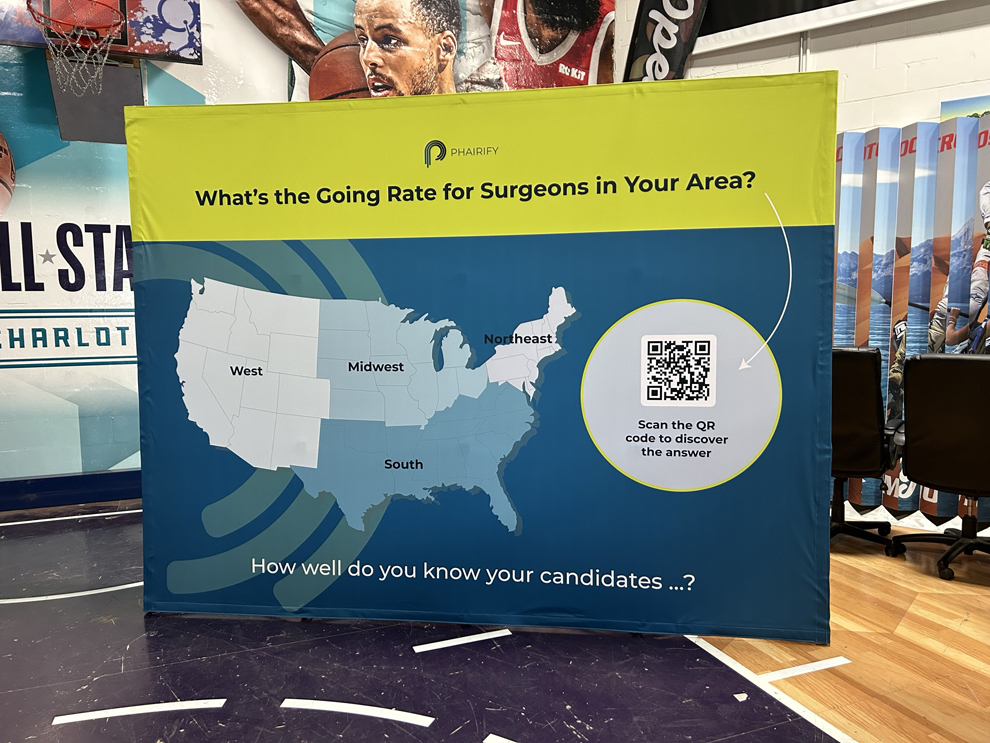
Place narrower vertical messages at registration, entrances, breakout rooms, or recruiting stations where each display needs to operate independently.
Choose compatible silicone-edge graphics and frames when the required appearance and attachment method call for an SEG system.
Evaluate modular frames when the project requires configurable exhibit architecture and integration with additional display components.
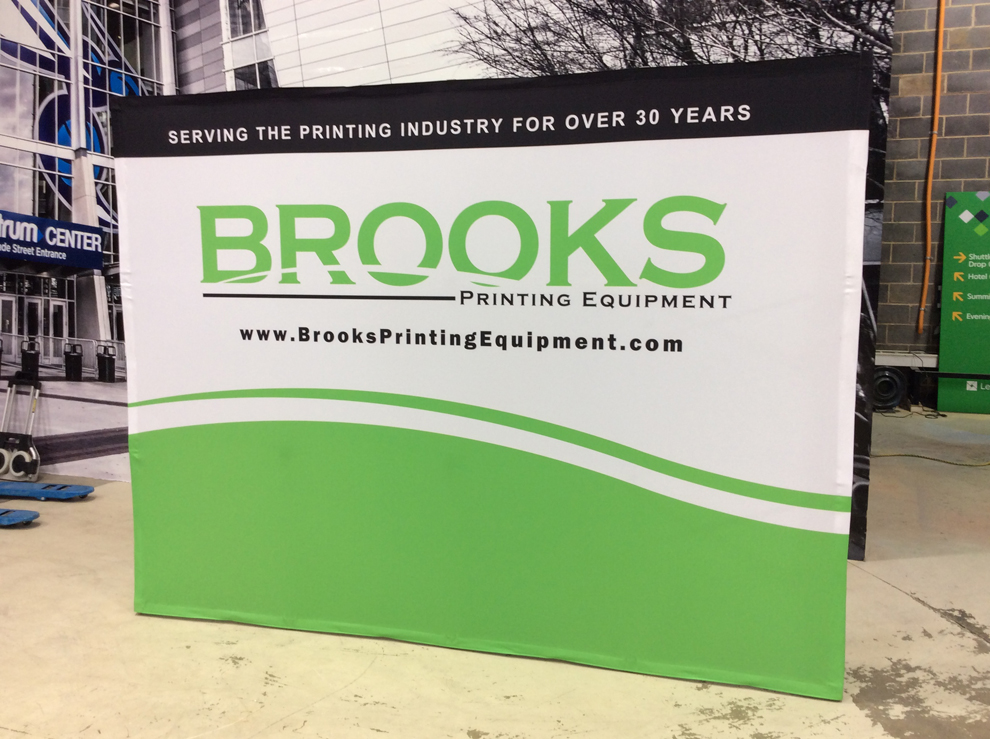
Consider vertical display structures when identification or sponsor messaging needs visibility above nearby activity.
Coordinate registration, wayfinding, sponsor information, and venue messaging so visitors can understand and navigate the event.
For a defined portable display, confirm the frame configuration, graphic specifications, included components, setup method, and delivery requirements. Keep complete print-ready artwork available for the verified purchasing process.
For broader coordination needs, share the Greensboro project location, event date, intended use, display scope, available artwork, and installation requirements. Include other participating locations and any venue restrictions so the managed-project requirements can be evaluated together.
Planning a Larger Event Branding Project? Get Started Now
For a program moving between Greensboro, High Point, and Winston-Salem, evaluate the requirements of each venue before standardizing the display. A backdrop that fits a spacious presentation area may need a different placement in a smaller meeting room or recruiting booth.
University programs, nonprofit gatherings, corporate presentations, and association events can share similar branding needs without sharing the same room conditions. Record ceiling clearance, audience position, access routes, delivery arrangements, and any venue documentation requirements that affect the selected display.
Local project support must be confirmed for the actual location and scope. A Greensboro event does not automatically include Heritage delivery, a site survey, or professional installation, and a self-directed product purchase remains separate from managed services.
Place essential information where it will remain visible when the backdrop is in use. Speakers, panelists, tables, podiums, and equipment can obscure much of the lower or central graphic area.
Test the composition against the expected camera framing rather than reviewing only the full artwork. A logo near the outer edge may appear in a wide stage photograph but disappear from a tighter interview shot.
Use concise headlines, appropriately scaled logos, and imagery that remains understandable at the intended viewing distance. Give sponsor marks enough separation to remain distinguishable, and avoid dense patterns that compete with faces or presentation content.
For self-directed purchasing, prepare complete print-ready artwork using the requirements for the exact configuration. Do not reuse a template from a different frame without confirming dimensions, bleed, safe areas, and attachment-related allowances.
Pantone Matching System references communicate brand color targets, but they do not guarantee identical physical results across every printer, ink, fabric, and finishing process. Different production combinations can reproduce different ranges of color.
An electronic proof helps review content, placement, and layout. It does not establish the final physical color, and neither a monitor nor a phone should serve as the controlling physical reference.
If physical color evaluation is required, raise that requirement before approving production. Availability, cost, scheduling, and approval terms for a Physical Production Color Proof must be confirmed within the qualifying managed-project scope. Do not assume that this service accompanies a standalone product order.

Follow the assembly sequence supplied for the actual backdrop. Check frame connections, locking points, graphic orientation, and support placement before positioning the finished display for visitors or cameras.
For transport, separate or protect components so hardware does not snag or abrade the fabric. Use the designated carrying solution when supplied, and follow the manufacturer’s instructions for folding, rolling, or leaving graphics attached.
Inspect the frame, attachment points, and printed surface before each event. Allow time to identify missing parts, damaged fittings, or a graphic that no longer presents correctly.
Follow product-specific care instructions rather than assuming every printed fabric can be washed, steamed, or treated with the same cleaner. Confirm that the graphic is ready for storage before packing it away.
For a Defined, Self-Directed Product Purchase
A self-directed purchase is appropriate when your team has selected the exact standardized configuration, prepared complete print-ready artwork, and accepted responsibility for deployment.
The intended Online Store path does not include Heritage design or layout development, direct product selection or project coordination, a Physical Production Color Proof, a Heritage site survey, or Heritage professional installation. Product contents, accessories, artwork requirements, production information, and shipping terms must be established by the actual listing.
Confirm that the selected product is currently offered through an approved ordering destination before proceeding.
For a Larger Qualifying Managed Project
Request managed-project review when the backdrop belongs to a broader event or workplace environment requiring development or coordination. Relevant needs may include several display types, multiple locations, delivery planning, site conditions, design support, or professional installation.
These services are not automatic inclusions. The accepted scope should identify responsibilities, approval requirements, and the work Heritage will perform.
A site survey relates to the installed managed-project scope, not automatically to a standalone portable backdrop. Where Heritage professional installation is included, confirm the survey and site-planning requirements before committing to the execution schedule.
Managed-project review is appropriate when the backdrop is part of a broader solution requiring design development, several displays, delivery coordination, site planning, or installation. Complete artwork does not remove those operational needs. Services apply only when included in the accepted scope.
A fabric backdrop system combines a printed fabric graphic with compatible supporting hardware. The exact purchase may include different frame components, feet, cases, or accessories, so review the product listing rather than assuming a standard package. Confirm whether the item is a complete system or a graphic-only replacement.
Choose a fabric backdrop when the primary need is a broad portable background behind people or activity. A retractable banner generally serves a narrower vertical message and stores its graphic in a base. SEG graphics use a sewn silicone edge fitted into a compatible frame groove, so the required hardware and presentation should guide that choice.
A standalone self-directed order requires complete print-ready artwork for the selected configuration. It does not include Heritage design development, direct product selection or coordination, a Physical Production Color Proof, a site survey, or professional installation. Confirm the current product requirements and approved ordering destination before purchasing.
No. A standalone portable display intended for client deployment does not automatically require a Heritage site survey. For a larger project that includes Heritage professional installation, the survey applies to the installed scope, and backdrop placement may be coordinated when included in that scope.
Follow the instructions for the exact system because tubular and collapsible frames use different assembly and attachment methods. Protect the fabric from hardware during packing, inspect connections before reuse, and follow the specified cleaning and storage procedures. Do not assume one product’s care instructions apply to another.
Replacement depends on the frame and graphic system. Confirm that compatible replacements are available before selecting a display for changing campaigns or sponsor programs. Matching width and height alone does not establish compatibility.
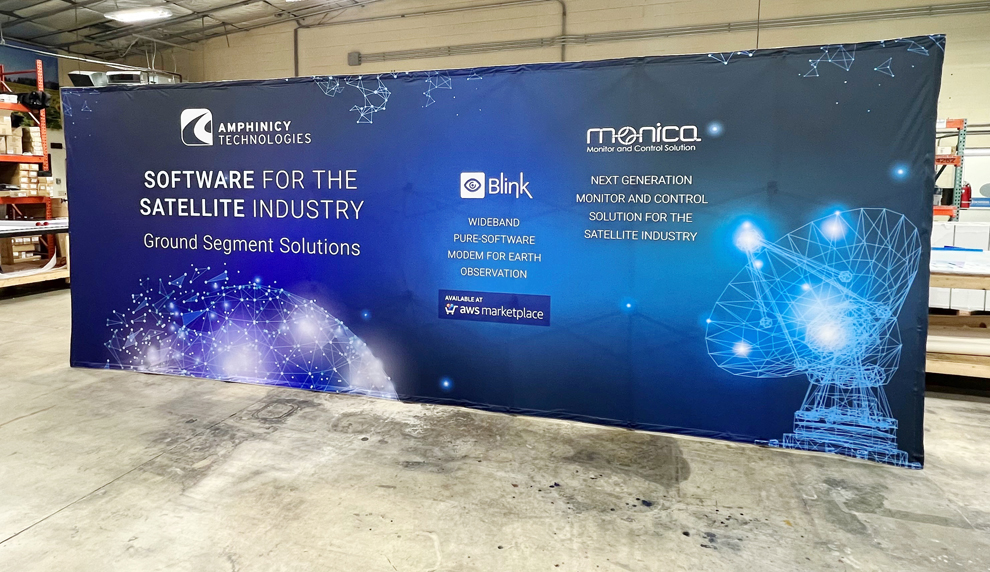
Plan around the areas people, furniture, and equipment will block. Review both wide and close camera views, and keep essential branding visible in the intended composition. A repeated-logo treatment may suit photography, while a stage or trade show background may benefit from a simpler headline and brand arrangement.
No. An electronic proof is useful for artwork review but is not a physical color standard. Pantone Matching System references are production targets, with results affected by the printing process and material. Confirm whether a Physical Production Color Proof can be included in a qualifying managed project, including its cost, schedule, and approval terms.
Provide the event date, each delivery destination, display quantities, available artwork, approval contacts, and setup responsibilities. Include venue access conditions and any installation needs for each location. Production, shipping, managed services, and local field support require confirmation before your team relies on a proposed schedule.
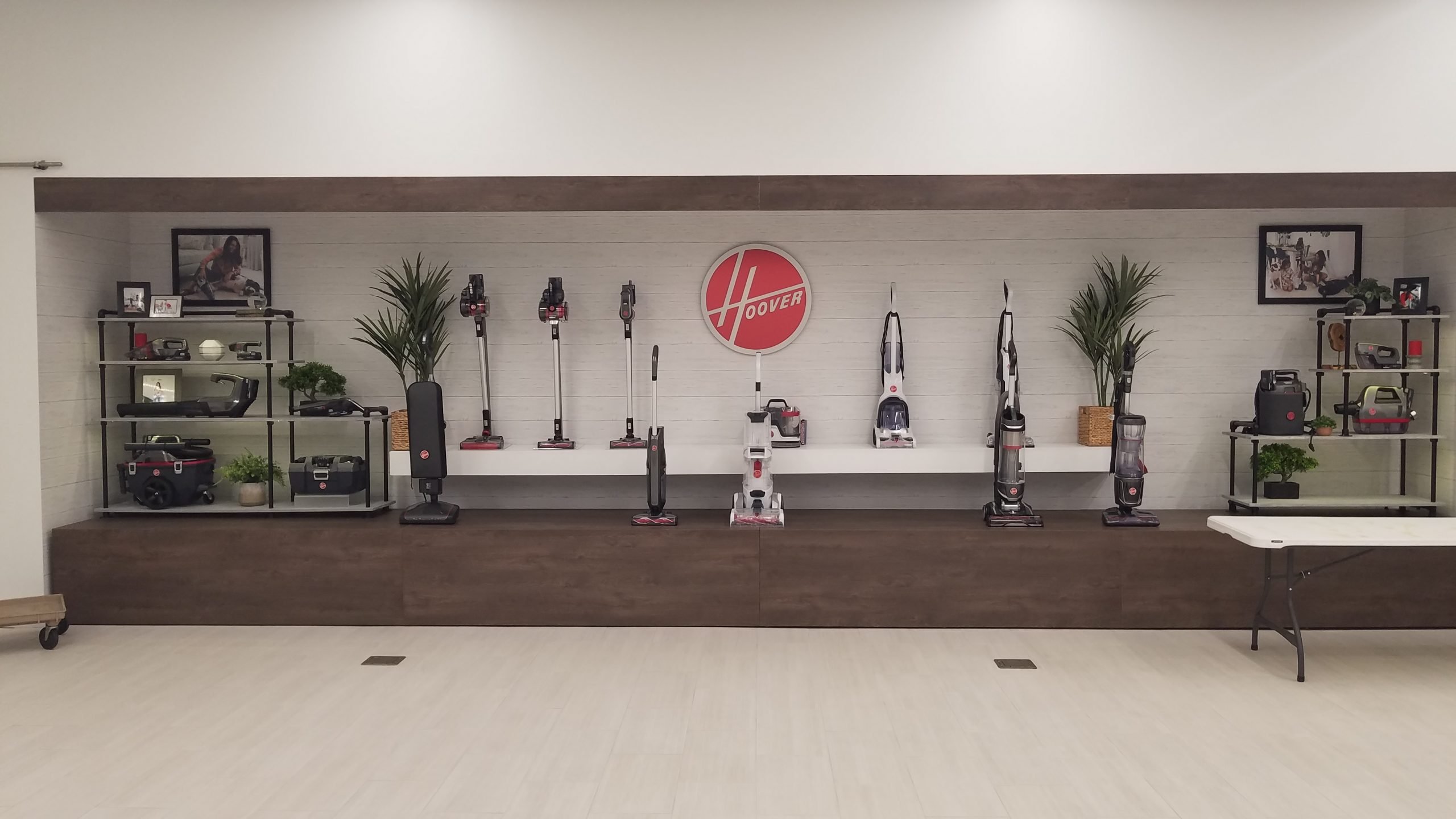
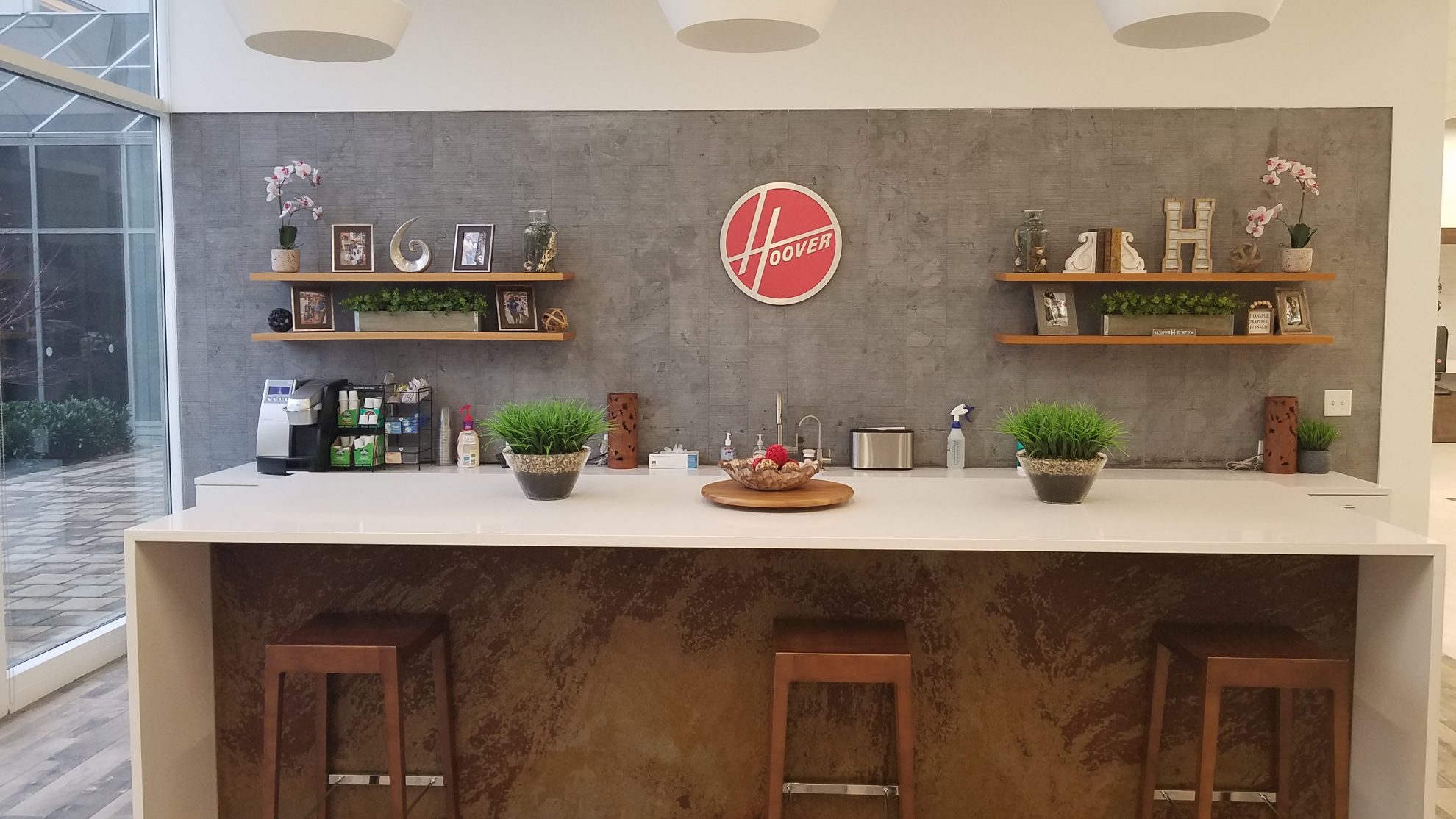
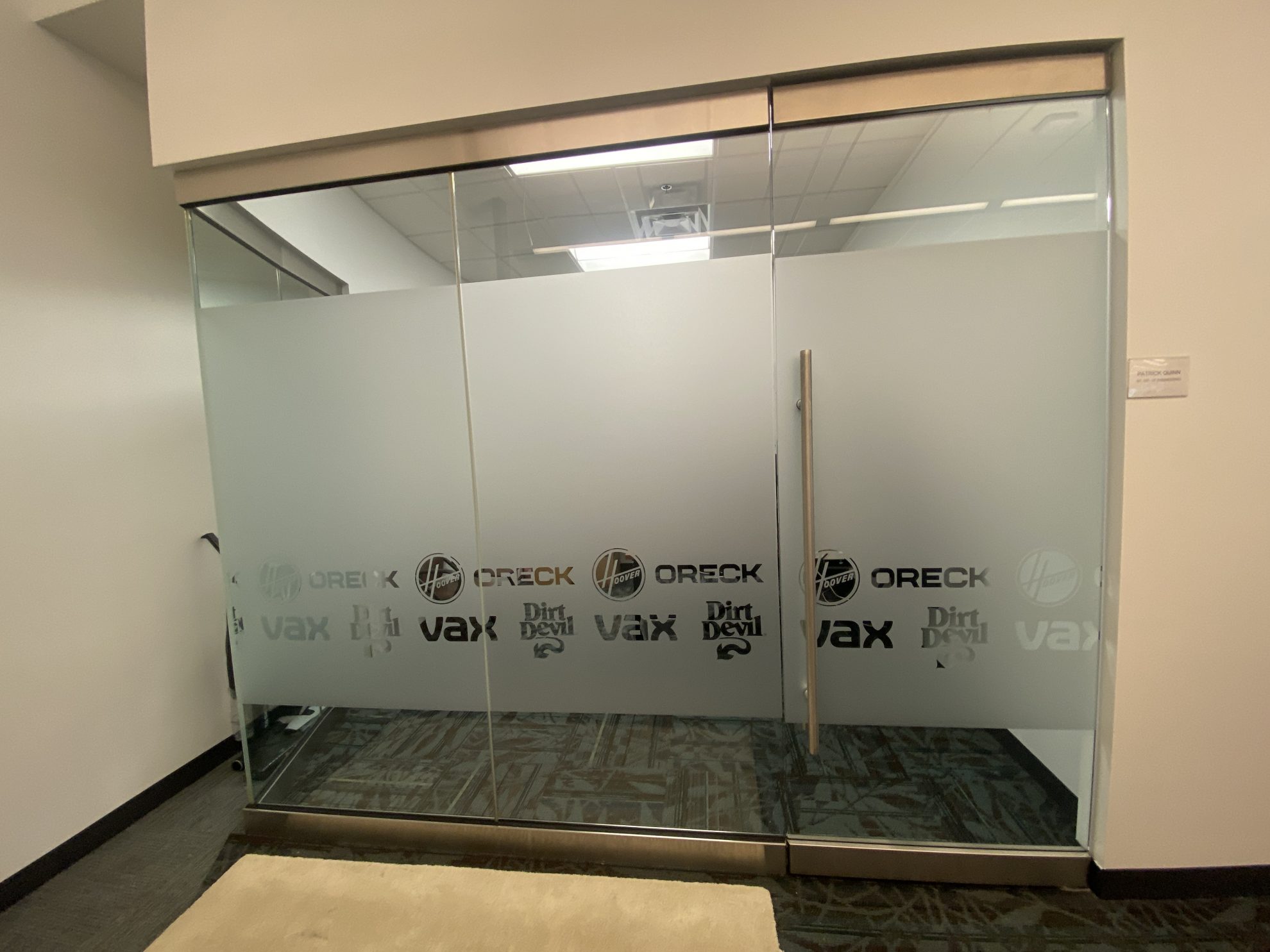
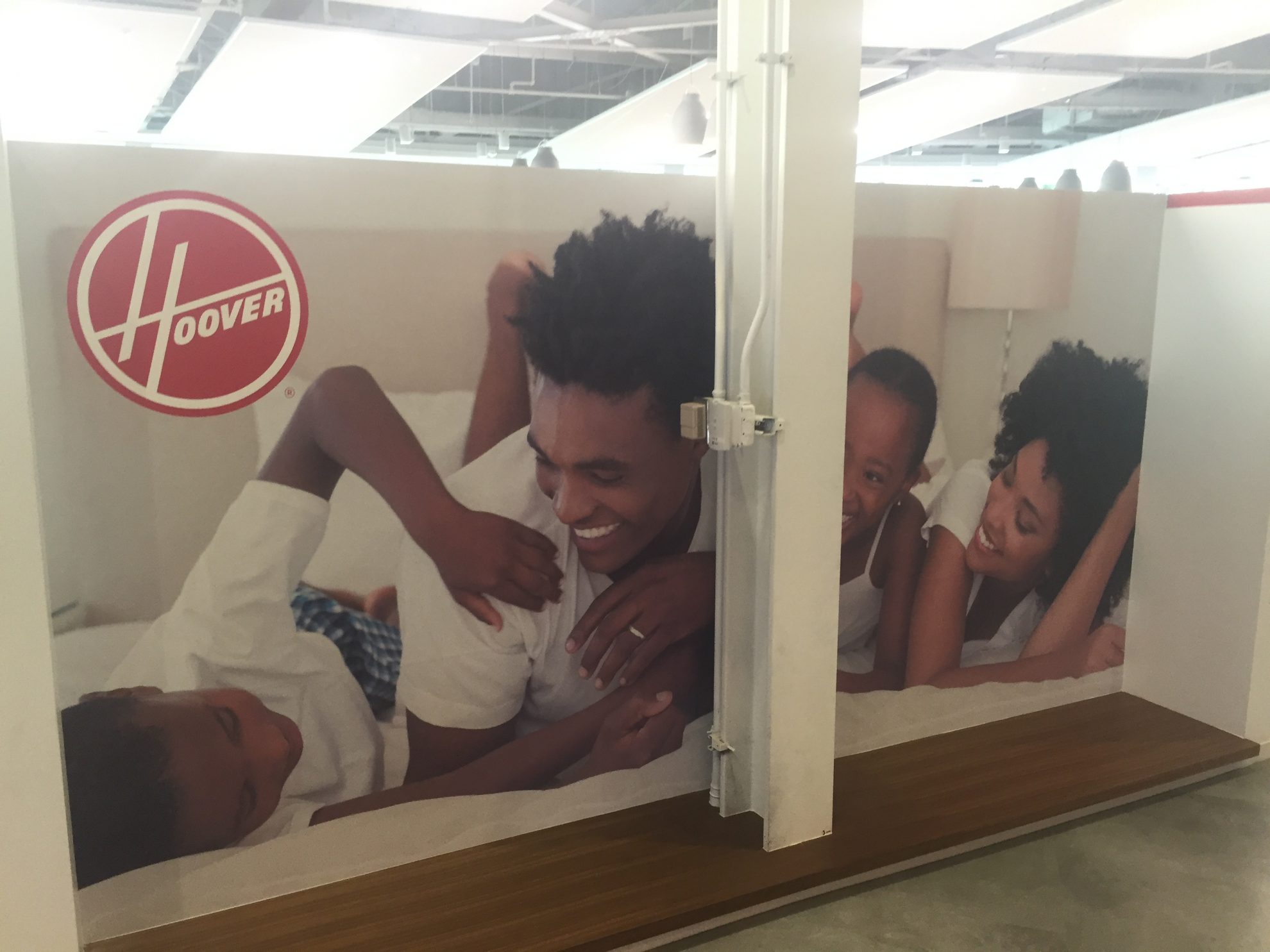
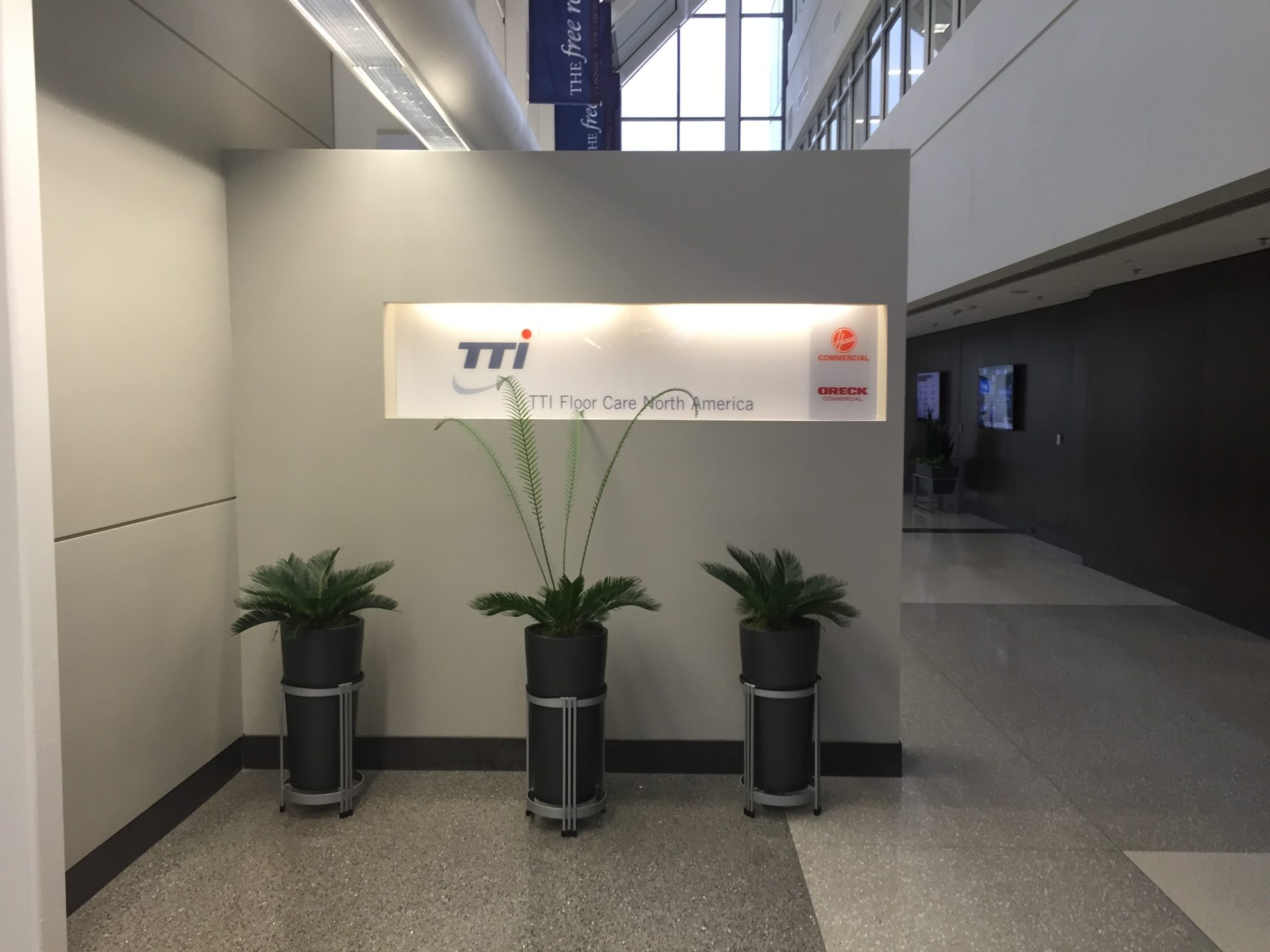
Heritage Signs & Displays collaborated with TTI Floor Care North America to enhance their corporate office. The project included custom frosted vinyl graphics, acrylic signs, dimensional lettering, and LED backlit signs, showcasing the brands Dirt Devil, Hoover, and Oreck. The signage improved office branding, privacy, and aesthetics. Heritage collaborated closely with TTI, ensuring efficient execution and high-quality results, creating an immersive and professional environment that reflects TTI's brand values.
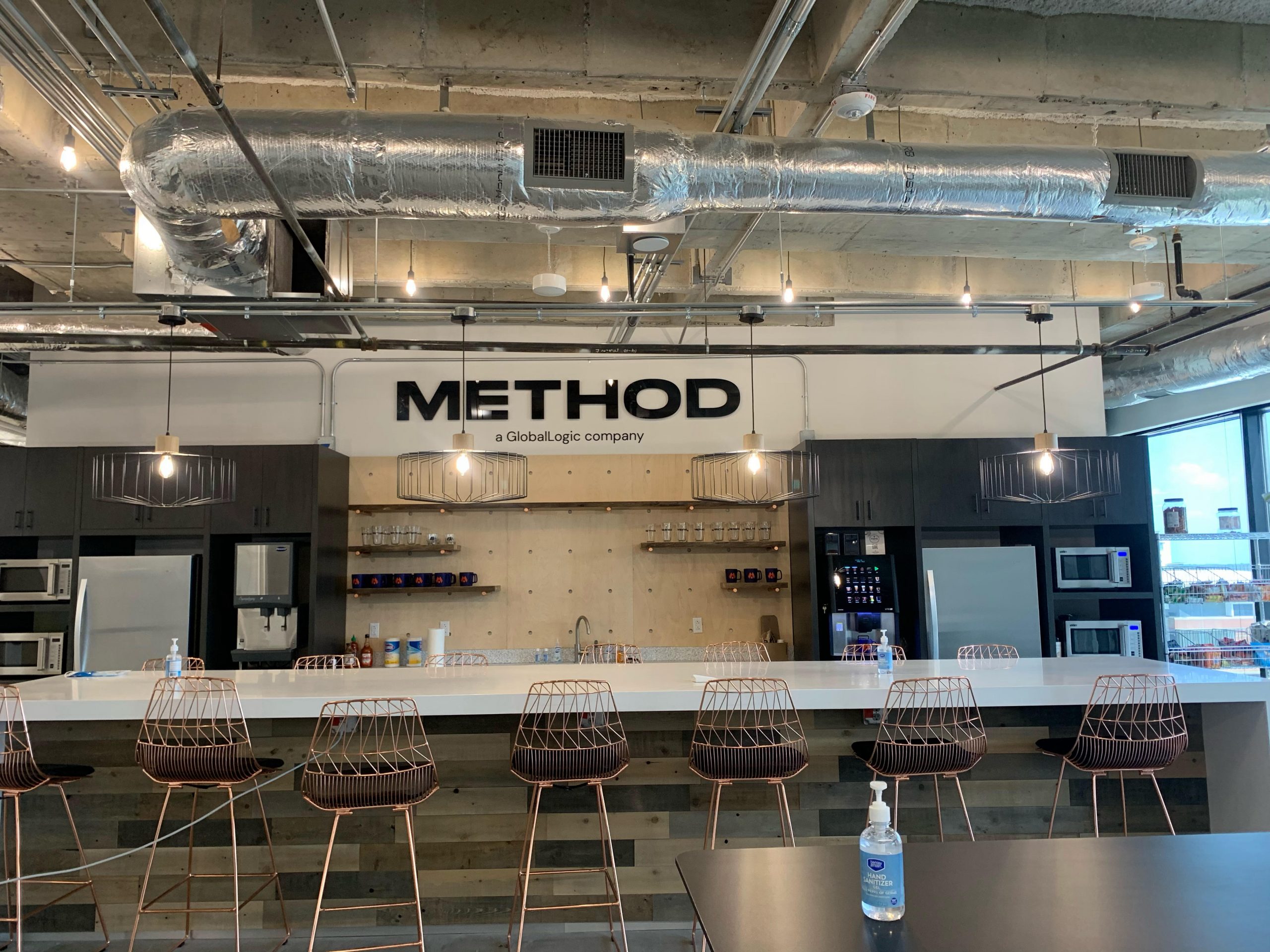
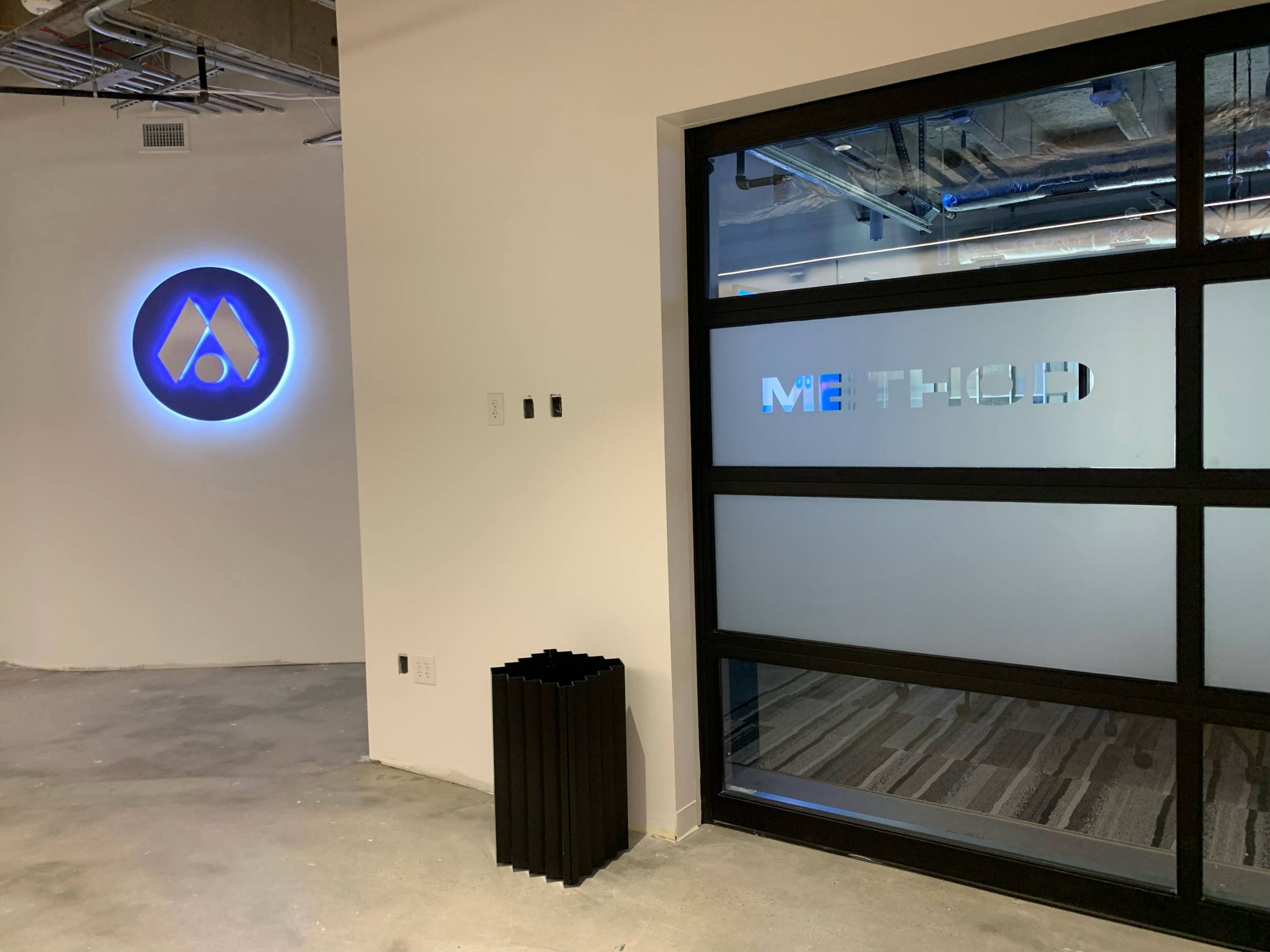
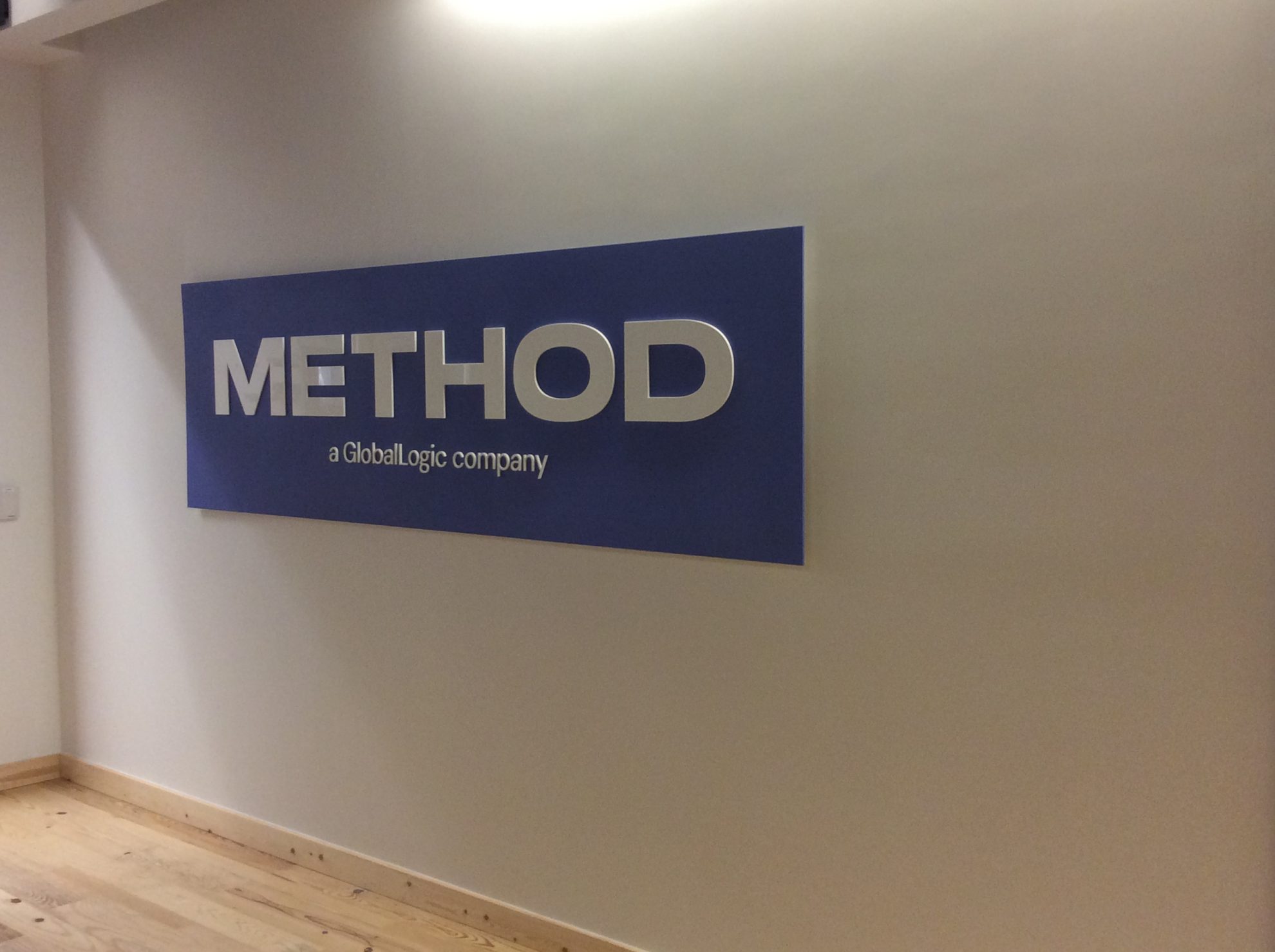
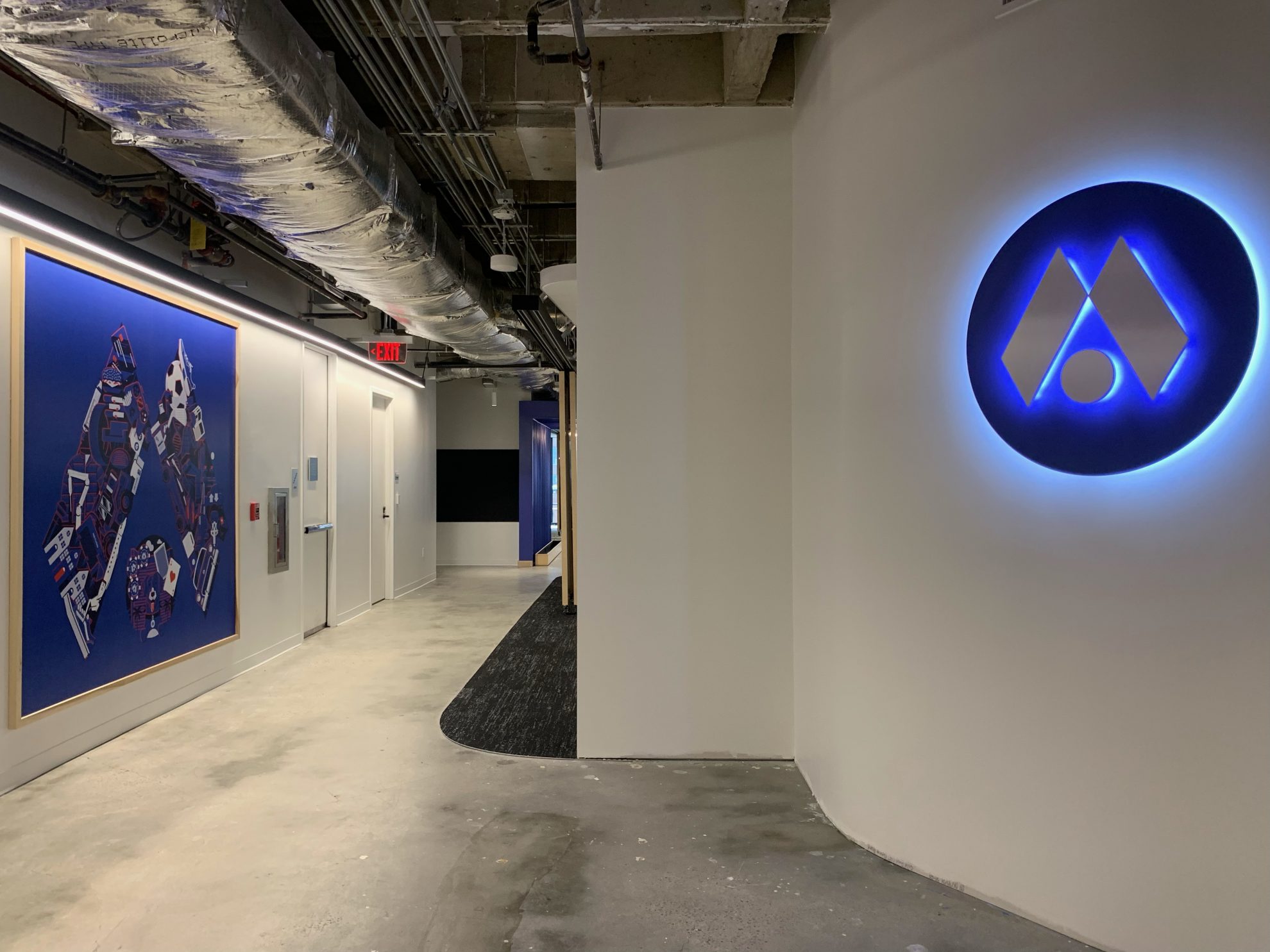
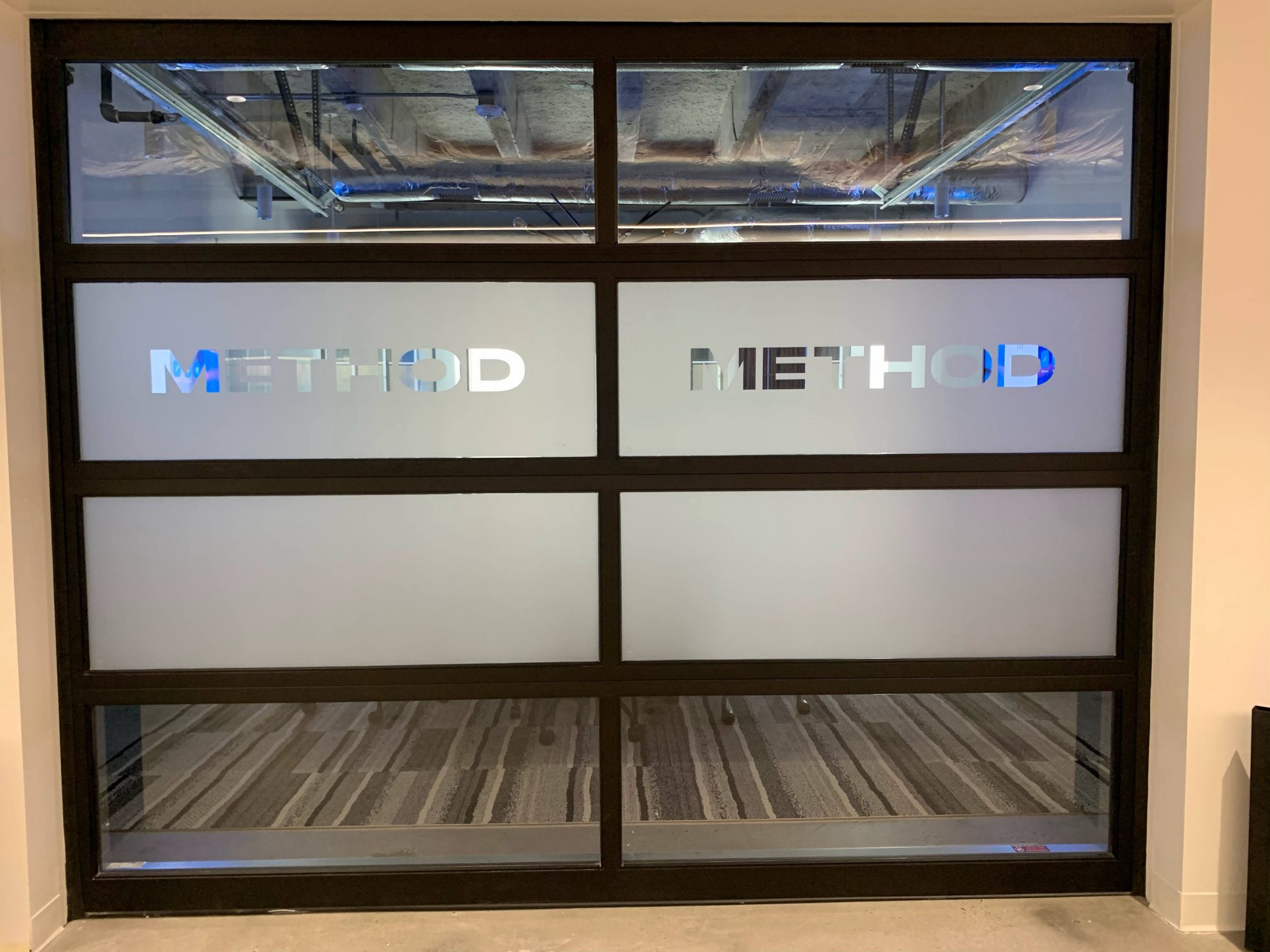
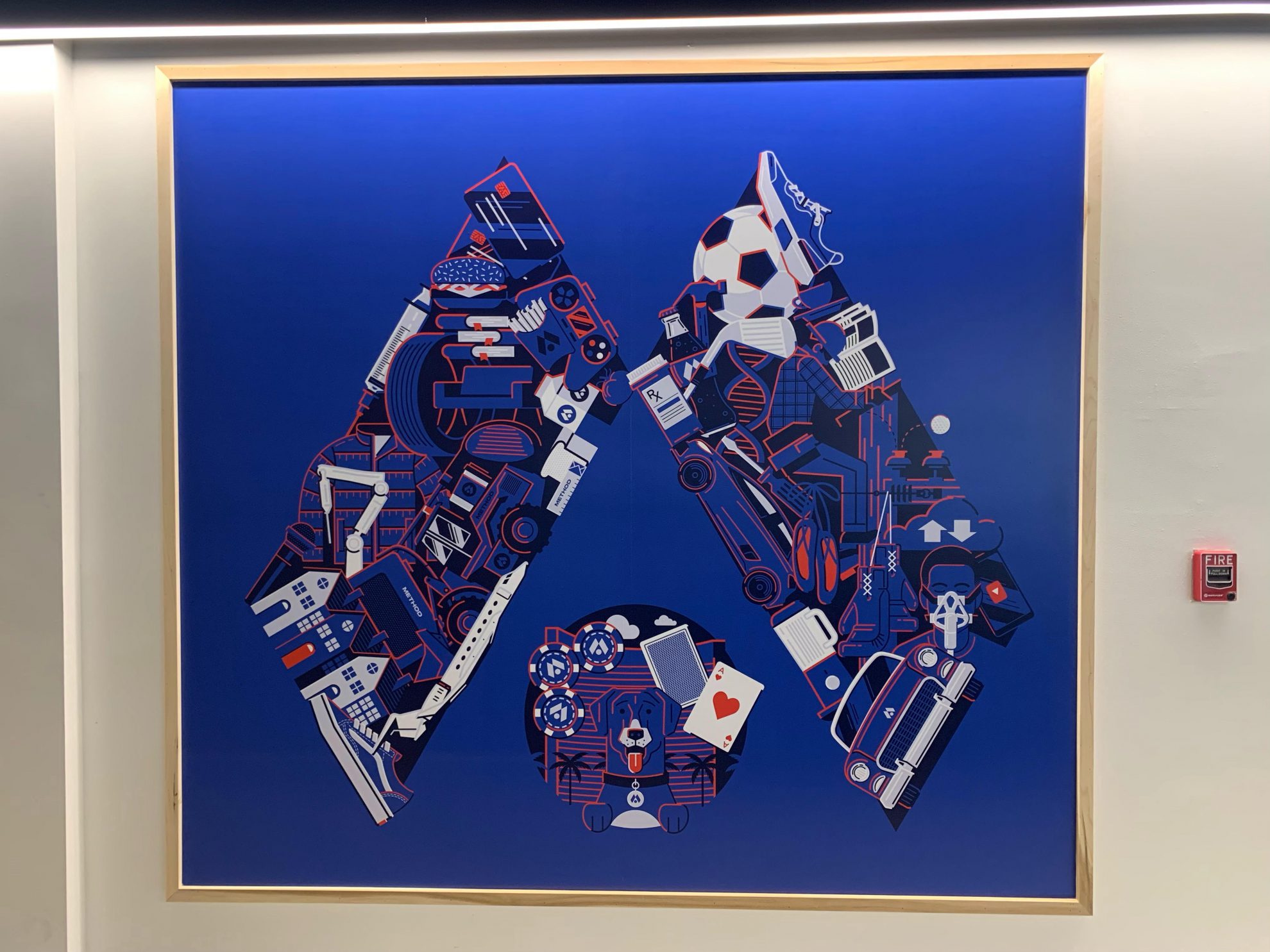
Heritage Signs & Displays' collaboration with Method (formerly Skookum) to rebrand their corporate headquarters. The project included dimensional lettering, wall displays, LED-lit signage, wall wraps, and frosted vinyl, creating an immersive and branded environment. Heritage worked closely with Method's team, ensuring accurate execution and timely delivery. The transformation was completed in August 2021, with Method's employees moving into the revamped space in September. The project reflects Heritage's commitment to quality and collaboration.