An effective workplace should make it easy for people to recognize the organization, understand important messages, and navigate the space. Commercial Interior Graphics help Greensboro organizations create that clarity across reception areas, hallways, conference rooms, glass offices, collaborative spaces, and other interior environments.
Office renovations, relocations, expansions, rebrands, and headquarters updates often bring together stakeholders with different objectives. Marketing teams may want greater brand visibility. Human resources may prioritize company culture and employee recognition. Facilities teams may need clearer identification and navigation. Leadership may want the entrance and lobby to communicate a stronger sense of purpose. Addressing these requests separately can produce an interior that feels inconsistent, even when each individual feature is well designed.
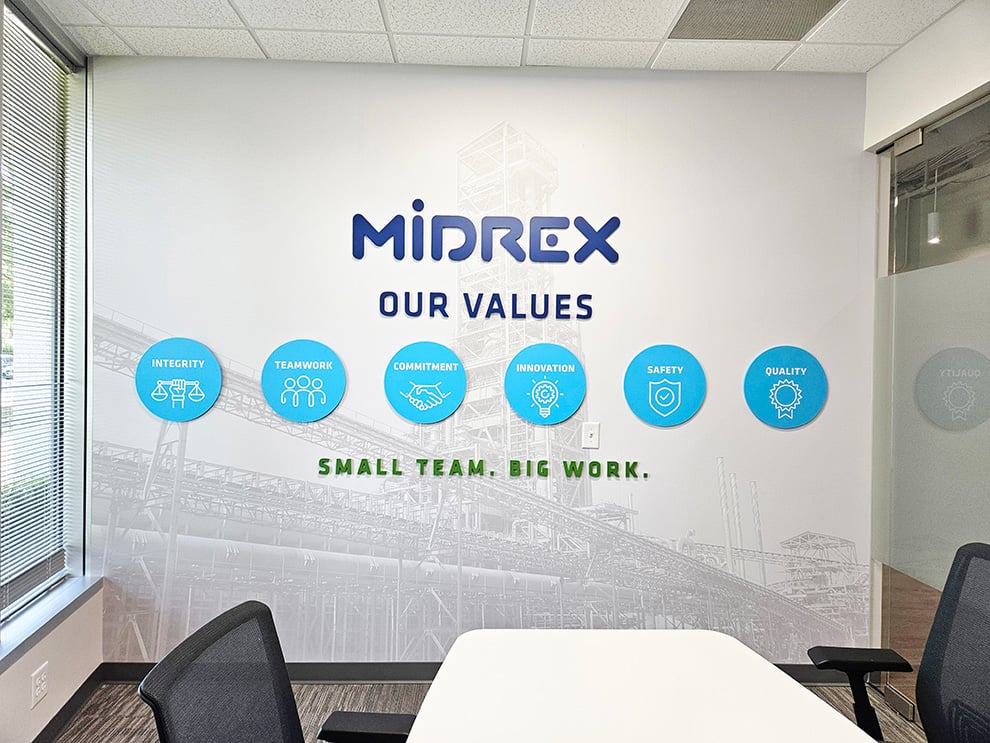
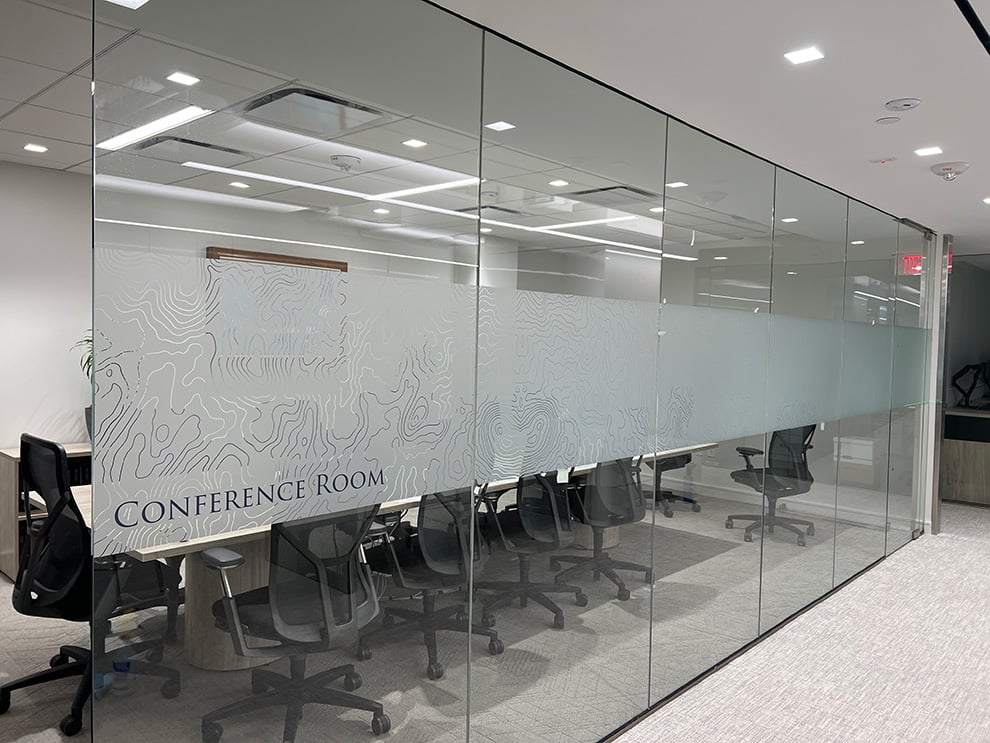
A coordinated graphics program connects these needs through a unified visual strategy. Wall graphics, dimensional lettering, privacy film, informational displays, and directional signs are planned according to the role each element should perform. A lobby logo can introduce the brand. A timeline or culture wall can communicate organizational history and values. Frosted vinyl can provide conference room privacy while reinforcing the visual identity. Recognition displays can highlight employees, donors, achievements, or milestones. Wayfinding elements can help visitors reach their destinations without confusion.
The goal is not to cover every wall or glass surface. It is to create a clear hierarchy of information. Visitors should quickly identify the organization and understand where to go. Employees should experience an environment that feels purposeful and connected. Permanent brand features should be distinguished from content that requires regular updates. Messages should also be sized and positioned for the appropriate audience and viewing distance.
Heritage Signs & Displays is a project-focused sign company providing turnkey workplace branding and event solutions. Commercial Interior Graphics projects may involve discovery, environmental graphic design, a dedicated Project Manager, production, fabrication, and professional installation. Coordinating these services early helps ensure that concepts remain compatible with the architecture, mounting surfaces, production requirements, site conditions, and installation schedule.
Greensboro organizations do not need to begin with a complete product list. The process can start with the desired outcome. A company may want a more memorable reception area, improved privacy for glass offices, a culture-centered workplace update, an expandable recognition system, or greater consistency after moving into a new facility. Heritage helps translate those goals into a practical plan shaped by communication priorities, stakeholder input, site conditions, and budget.
The result is an interior where every feature has a defined purpose. Brand identity supports navigation rather than competing with it. Recognition receives intentional placement. Privacy graphics contribute more than simple visual coverage. Wall graphics, displays, dimensional elements, and informational signs work together to create a cohesive workplace experience.
A comprehensive Commercial Interior Graphics program is useful when multiple spaces, audiences, messages, and stakeholders must be considered together. One project might include a branded lobby, conference rooms requiring privacy, corridors featuring company values, and employee areas celebrating accomplishments. Planning the larger program first establishes visual priorities before individual elements enter design and production.
This approach is particularly valuable during an organizational transition. A new Greensboro office, renovation, merger, expansion, or rebrand can generate numerous requests within a short period. Without a shared strategy, those decisions may use conflicting visual styles, compete for attention, or create avoidable installation challenges.
Not every project requires a complete interior graphics program. A wall wrap may be sufficient for one prominent storytelling area. Window graphics may address a specific branding or visibility need. A dimensional lobby sign may provide the stronger entrance experience an organization wants. Heritage helps clients determine whether their goals call for one targeted feature or a coordinated collection of interior elements.
Successful Commercial Interior Graphics require consistent management from initial planning through final installation. Heritage supports that continuity through its One Dedicated Project Manager System. Clients have a central point of contact who maintains familiarity with the project, tracks approvals, organizes site information, and coordinates upcoming steps.
This structure becomes especially important when leadership, marketing, human resources, facilities teams, property managers, designers, and contractors are involved. A dedicated Project Manager reduces unnecessary handoffs and keeps production decisions aligned with approved objectives. It also provides greater accountability across design, fabrication, scheduling, and installation.
Heritage began as a printing company in 1977. Signs, workplace branding, and interior graphics became a central area of focus in 2009. This experience supports a practical approach to visual communication. Designs must function within the actual space. Materials must suit the intended surface and use. Fabricated features must account for mounting requirements. Installation must preserve the quality and purpose of the completed environment.
Heritage seeks to honor God by serving clients and communities with excellence. That commitment is reflected in attentive communication, organized project coordination, and responsibility for the managed scope.
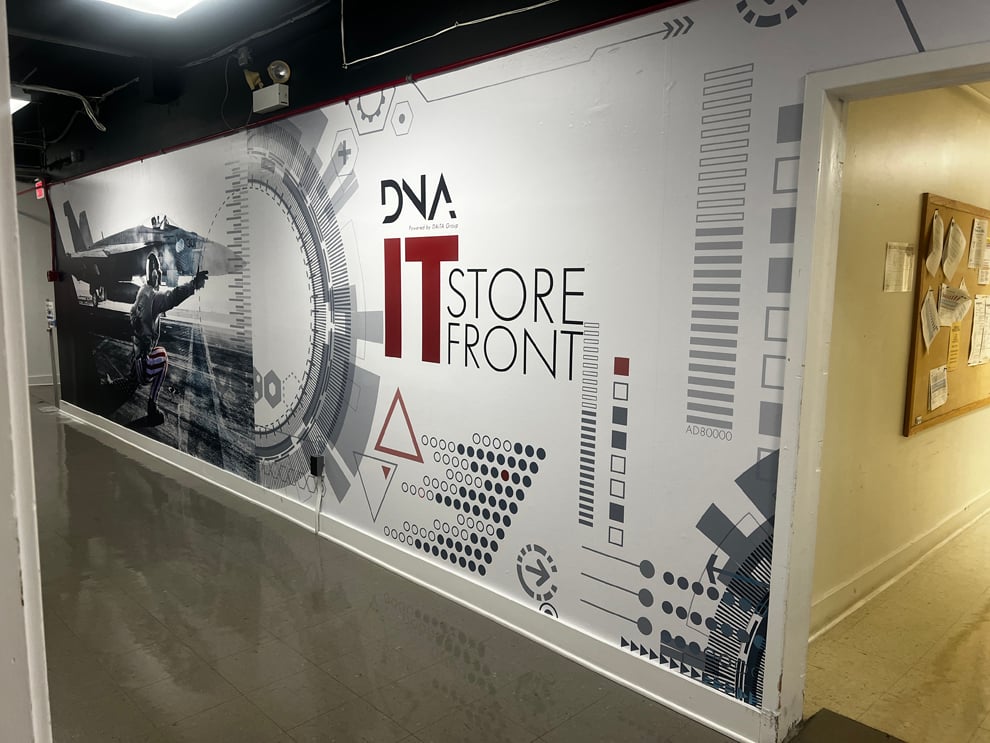
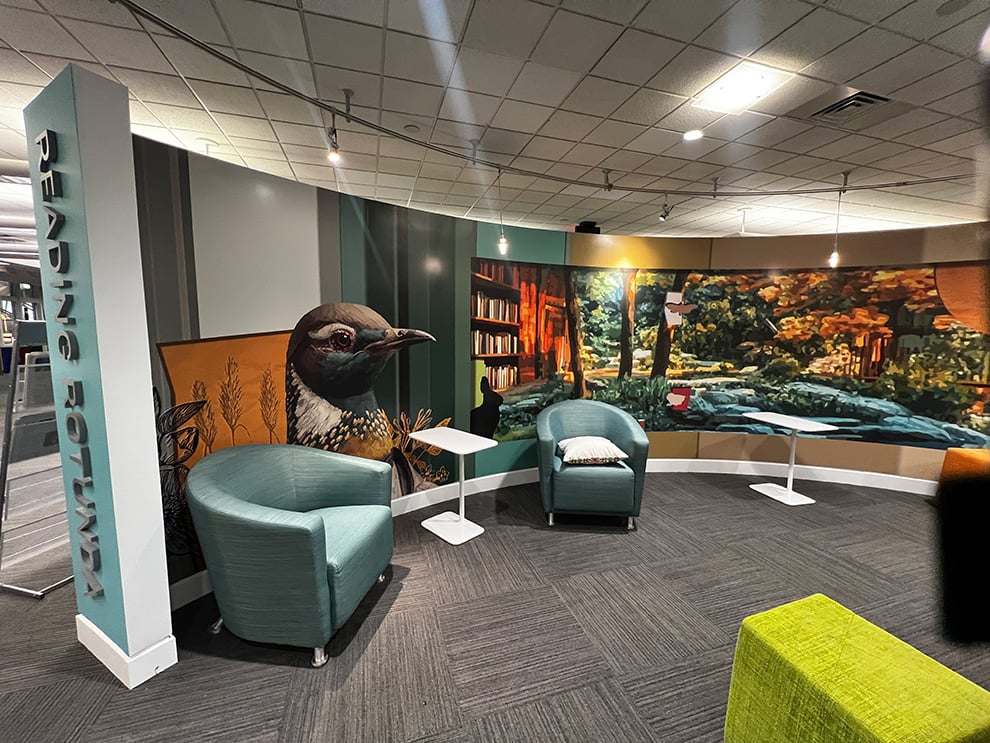
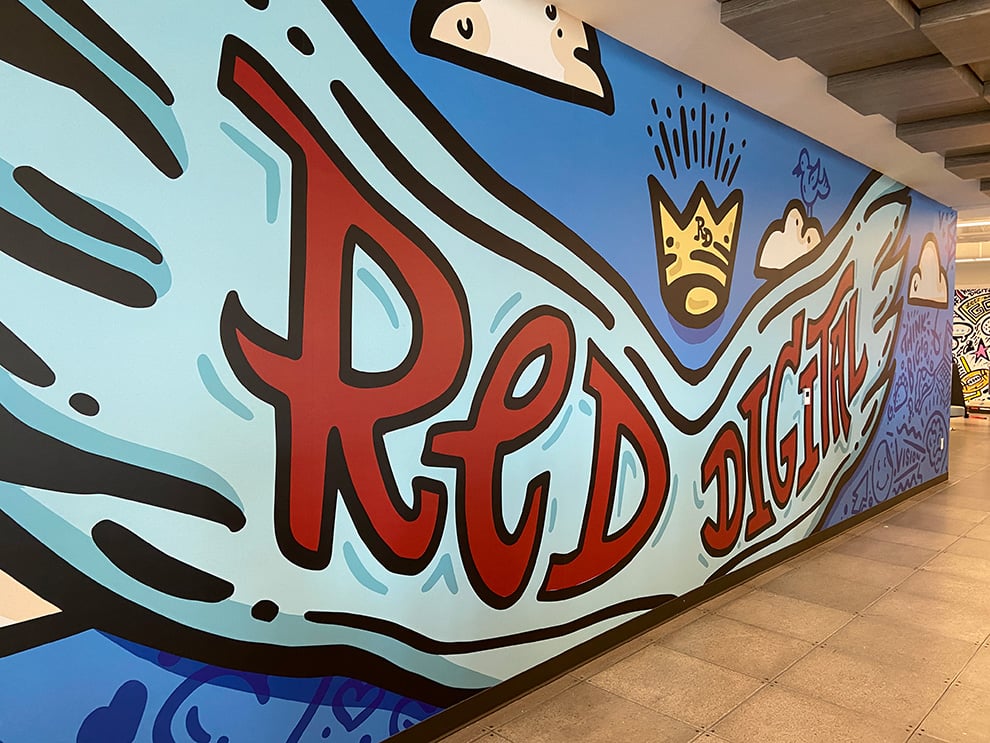
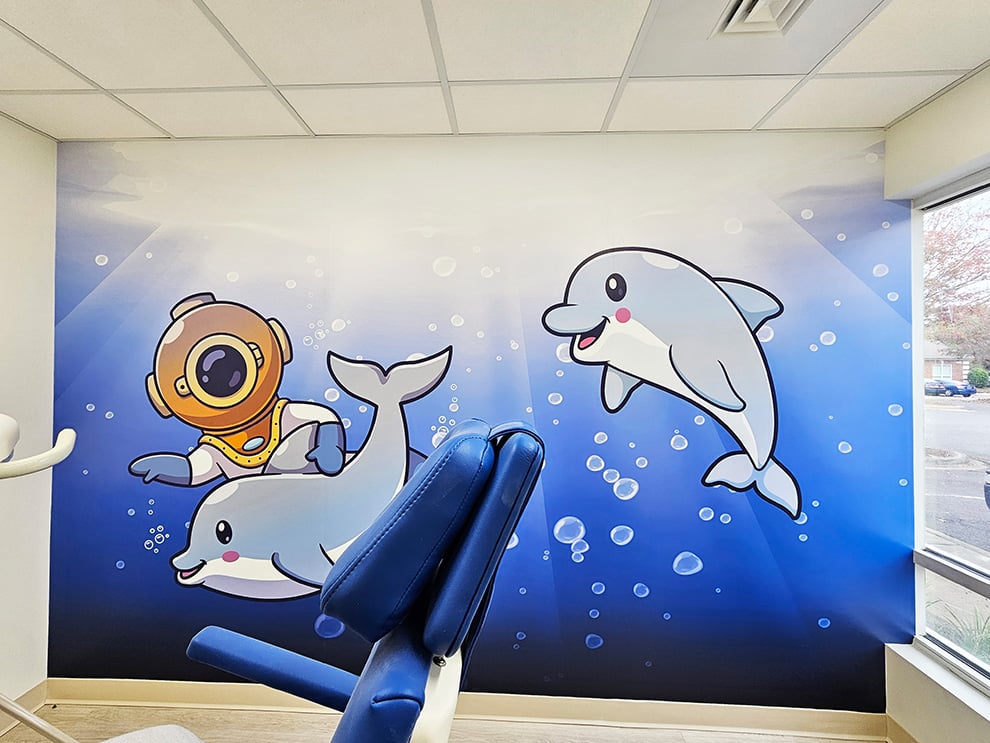
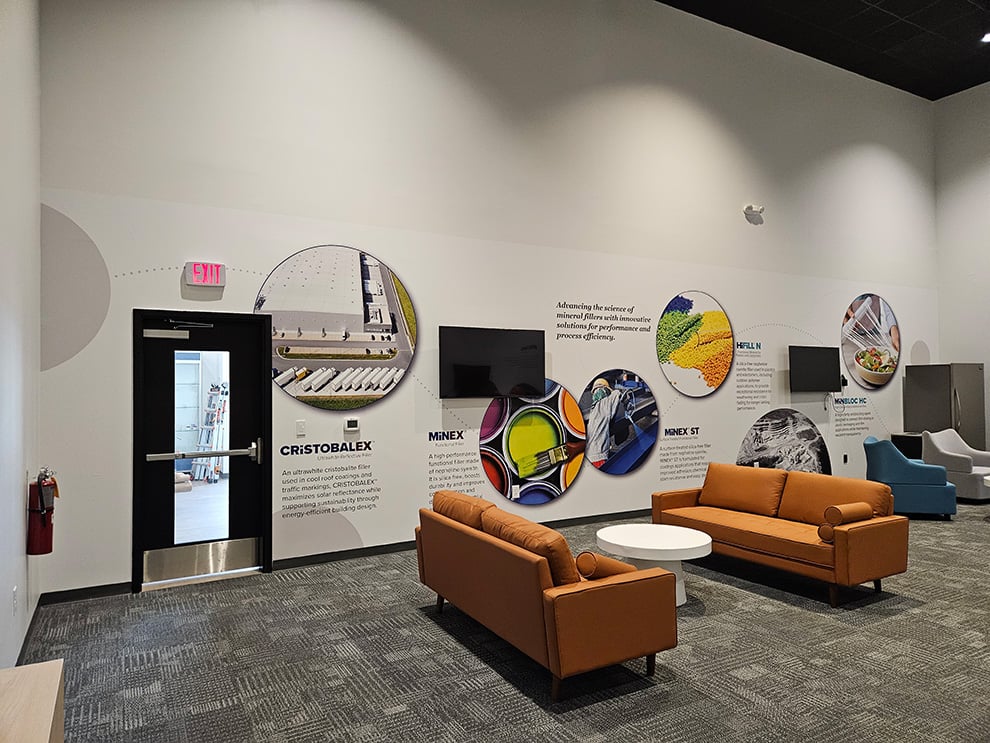
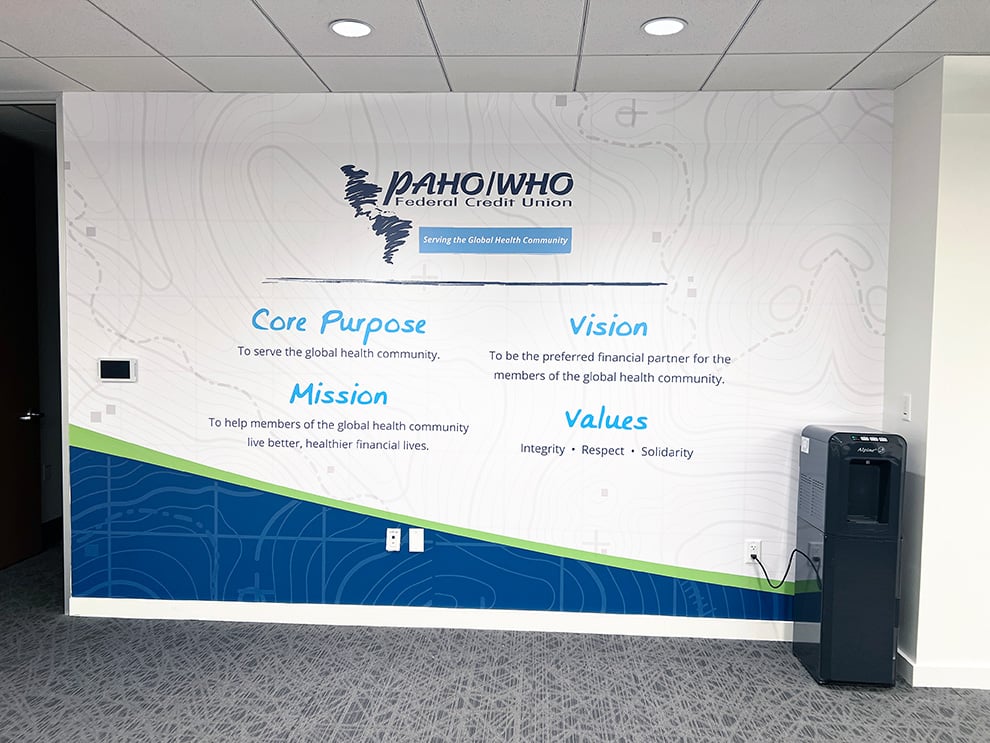
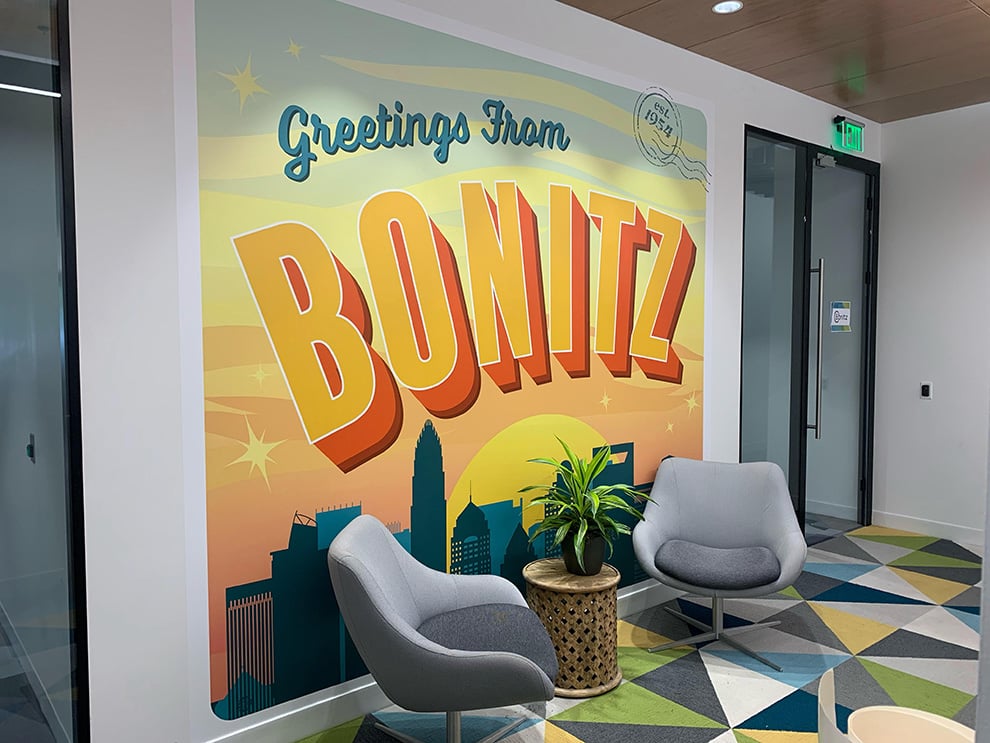
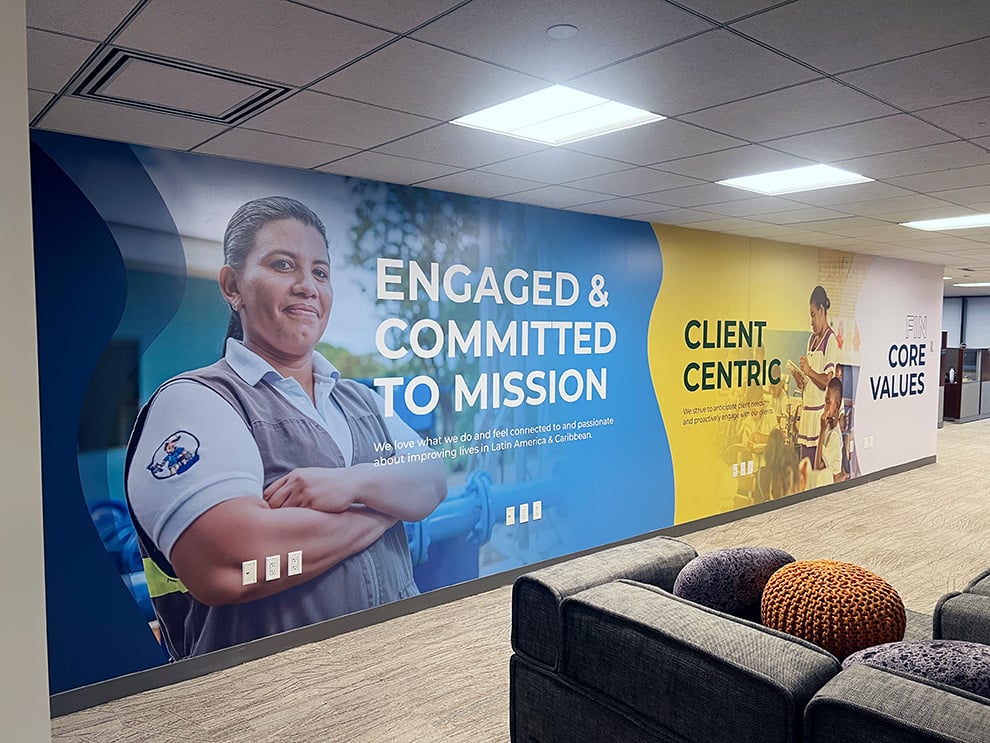
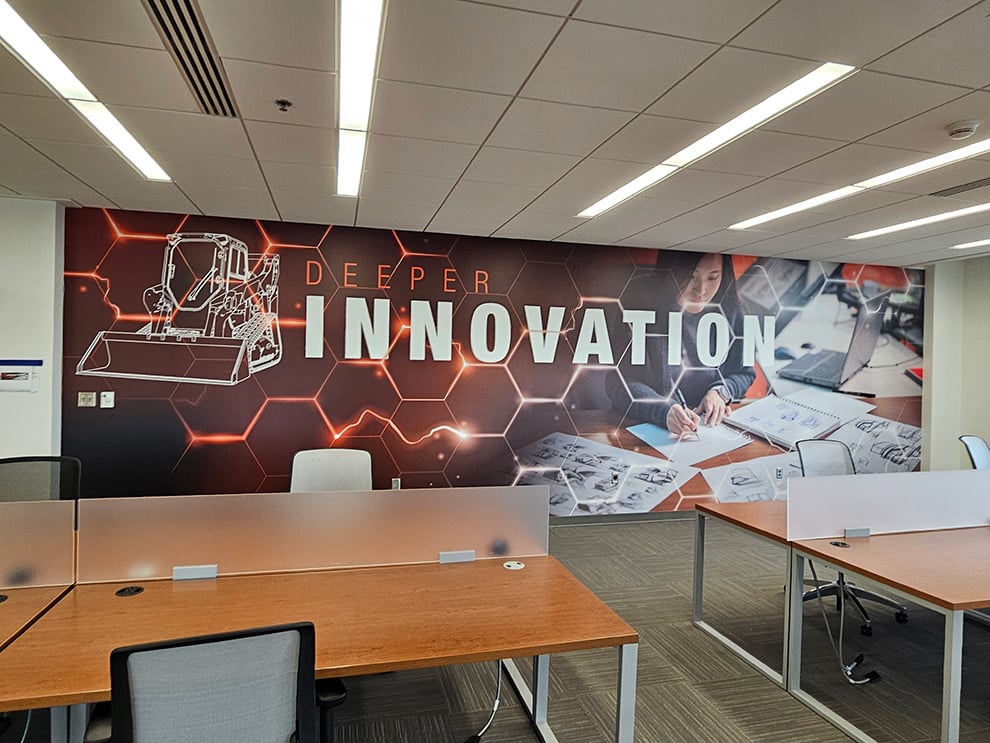
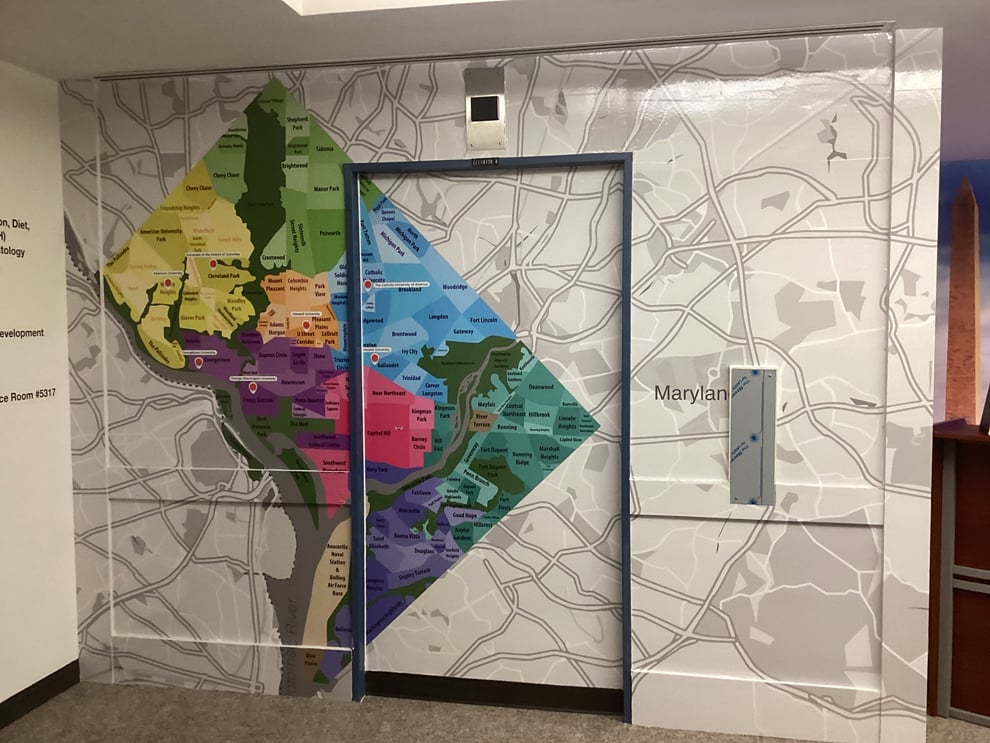
Wall wraps can transform large interior surfaces into murals, culture walls, historical timelines, recognition features, or immersive brand experiences. Within a broader graphics program, they often carry the main visual story while nearby signs and displays present supporting details.
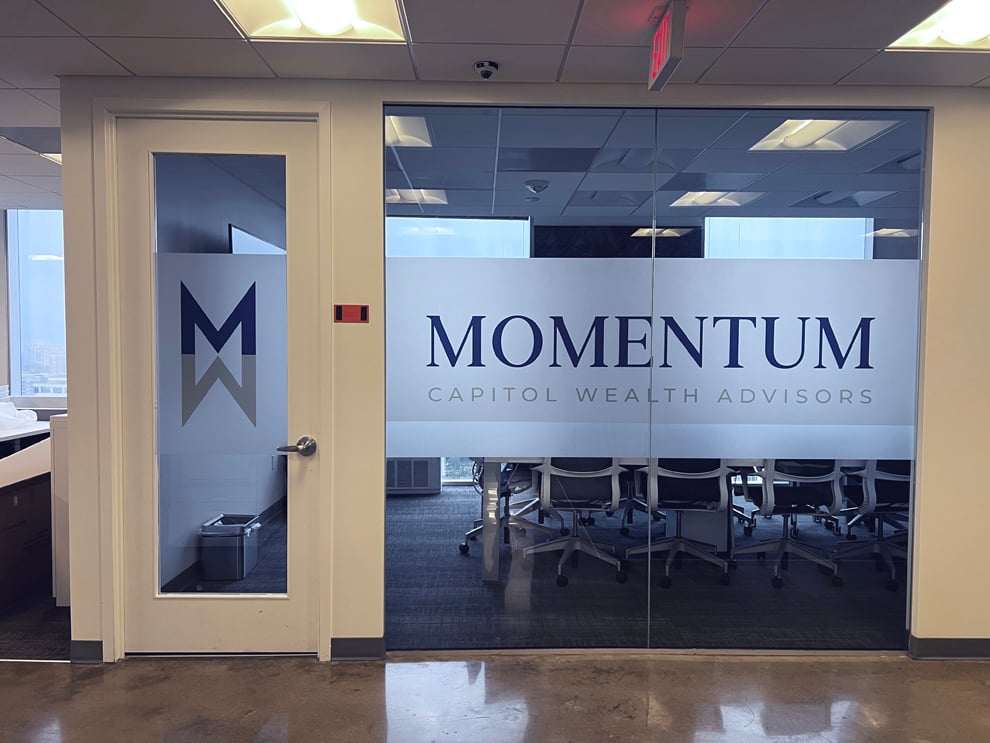
Window graphics add logos, identification, decorative patterns, campaign messaging, or visual definition to glass. They can connect entrances, conference rooms, office fronts, and interior partitions to the workplace’s overall brand system.
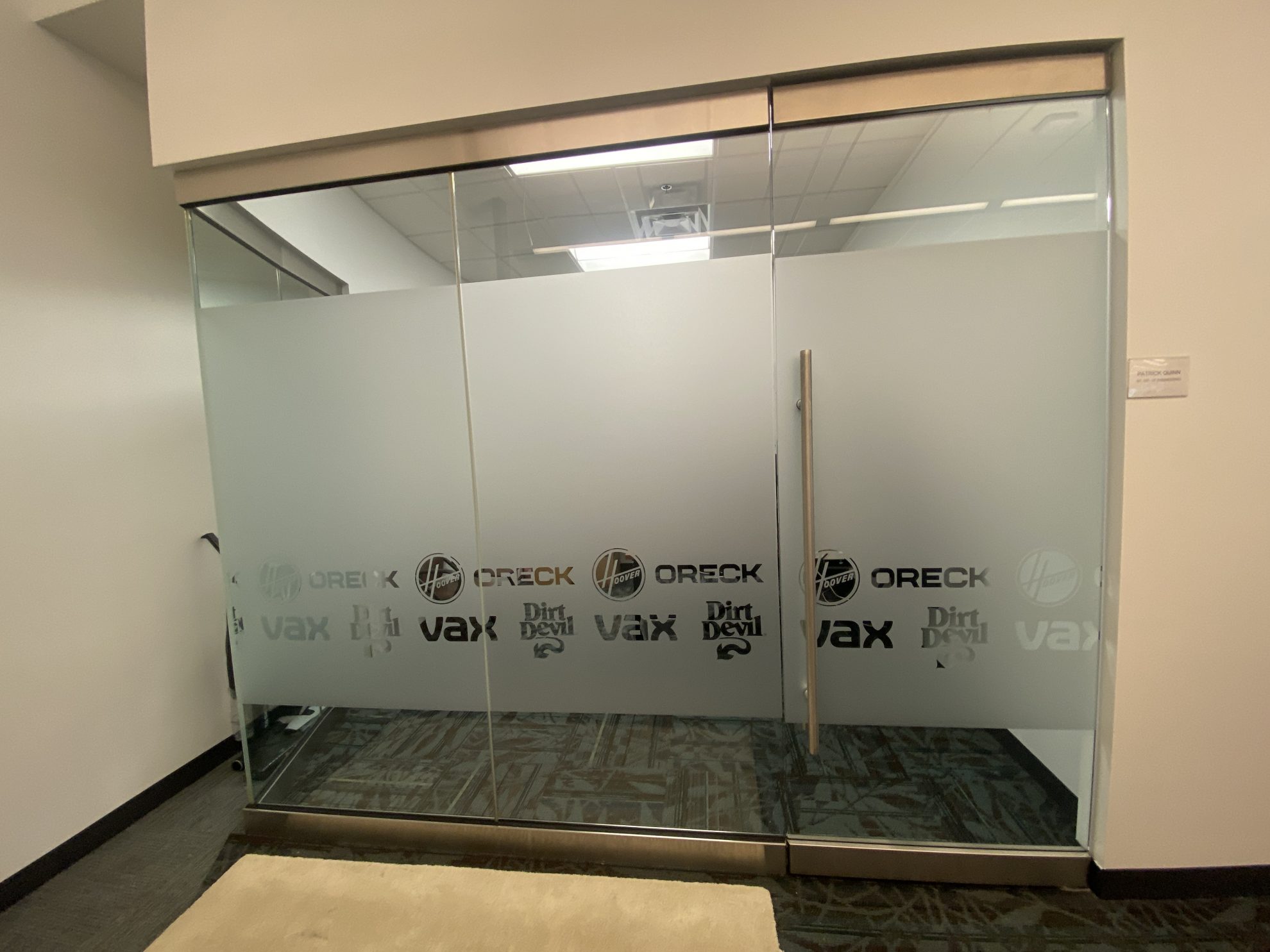
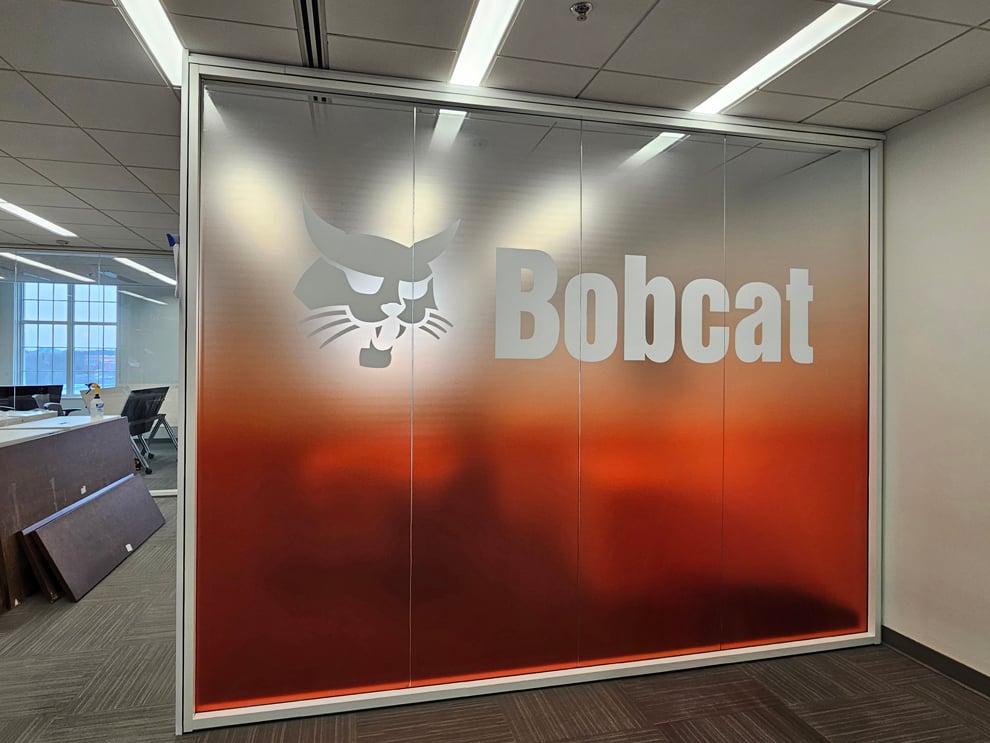
Frosted vinyl and privacy film reduce selected visibility through glass while maintaining a professional appearance. Custom patterns, logos, and branded treatments can help privacy features complement surrounding walls, signs, and displays.
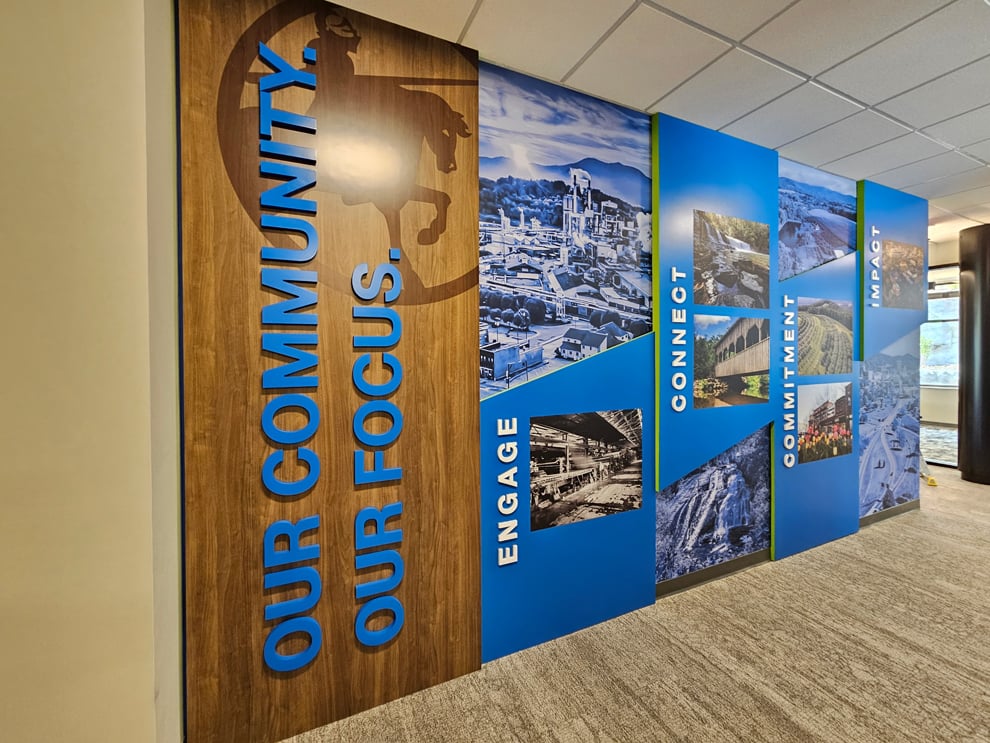
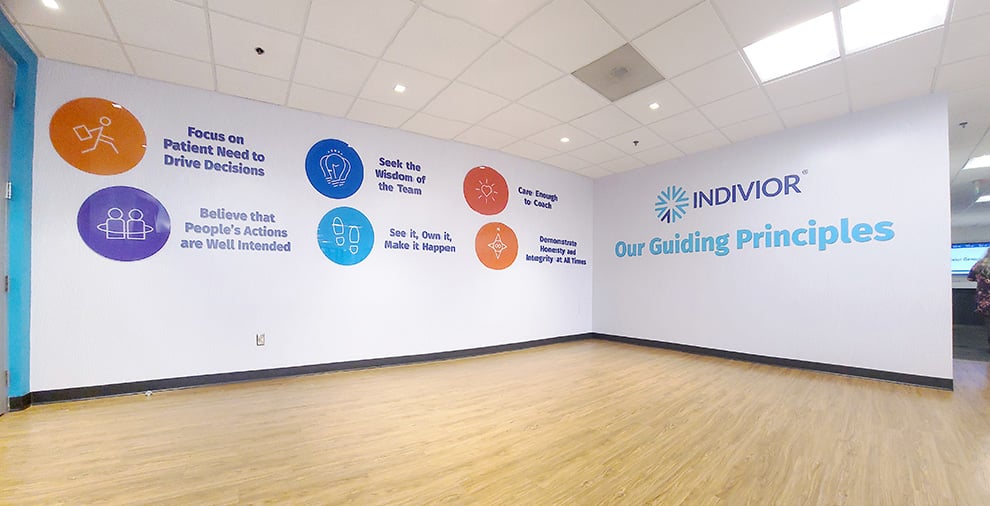
Wall displays organize photographs, company history, mission statements, values, recognition content, and other information intended for extended viewing. They can provide greater storytelling depth than a single sign or graphic.
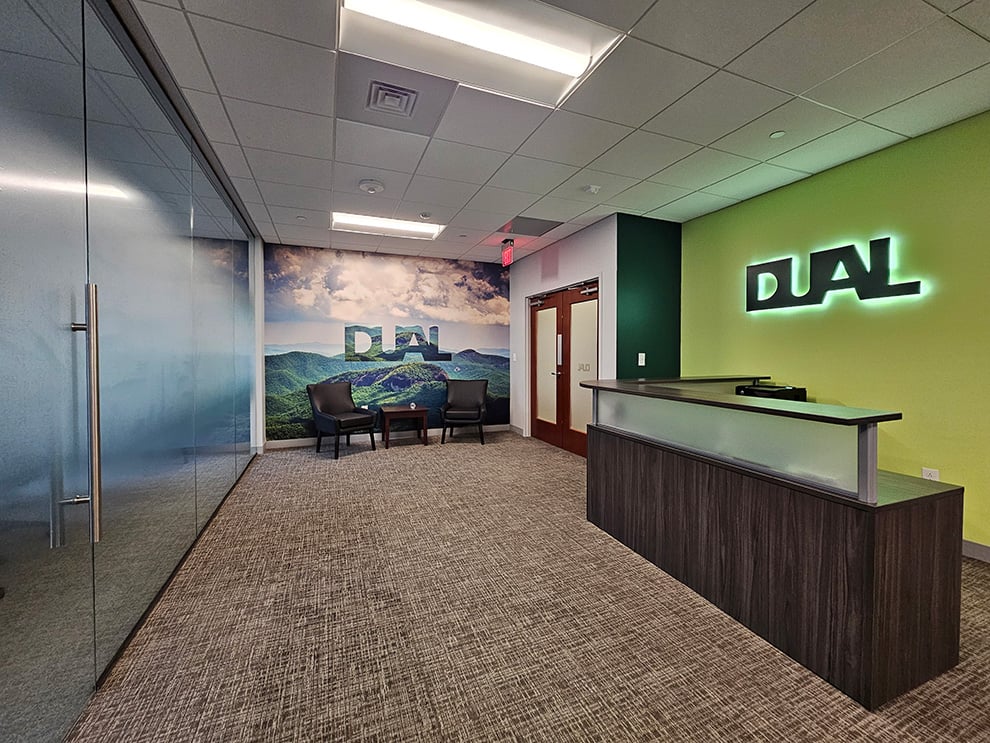
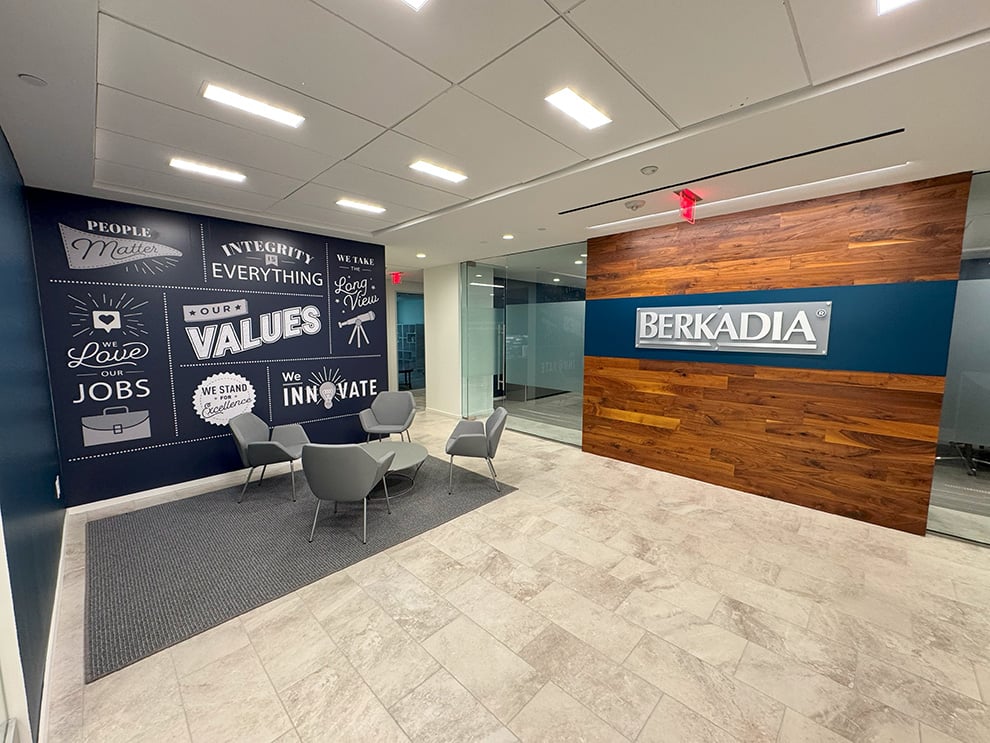
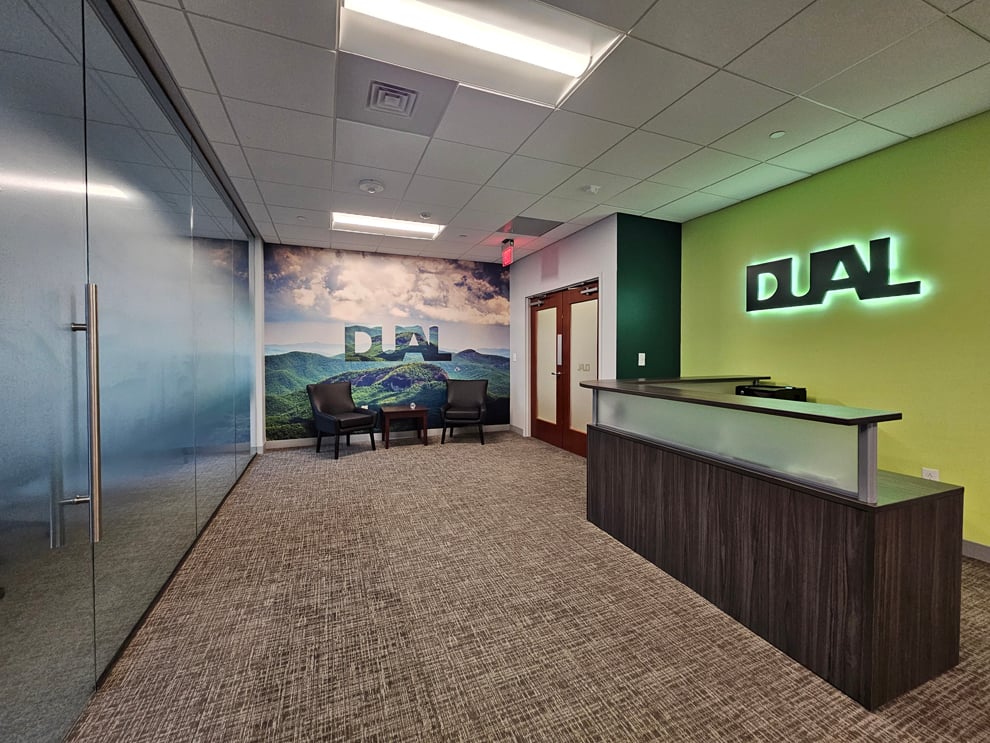
Dimensional letters give company names, logos, statements, and department identifiers a physical presence. They are especially effective in reception areas and other locations where the brand needs a permanent focal point.
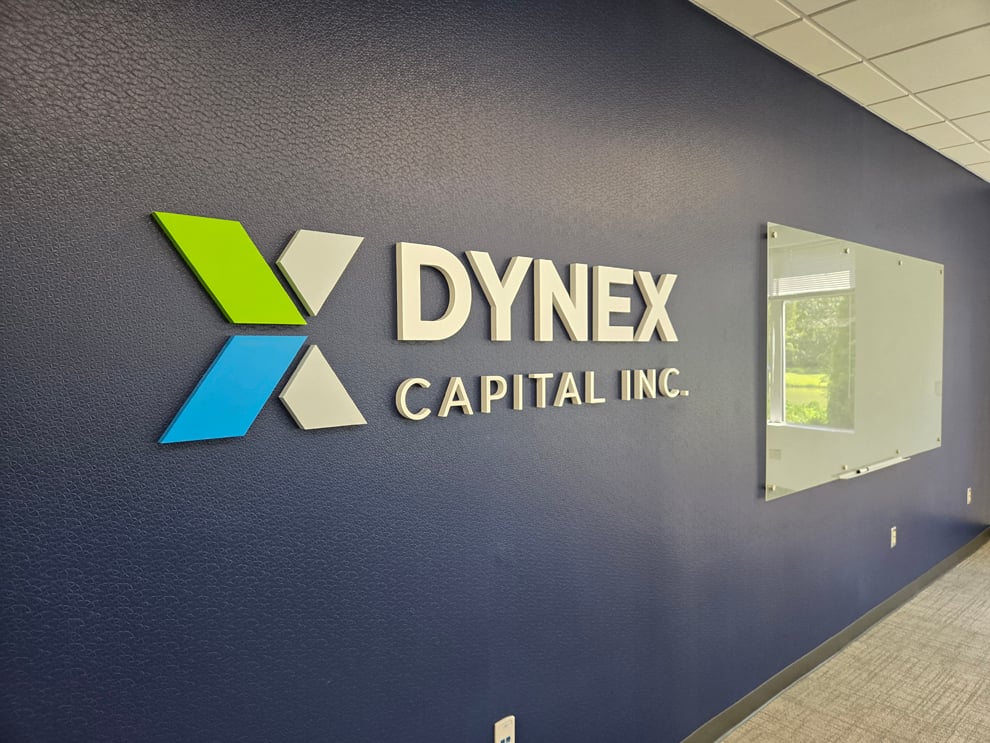
Lobby signs establish identity at primary entrances and reception areas. When included in a coordinated program, the lobby sign can set the visual standard for graphics and signs throughout the rest of the workplace.
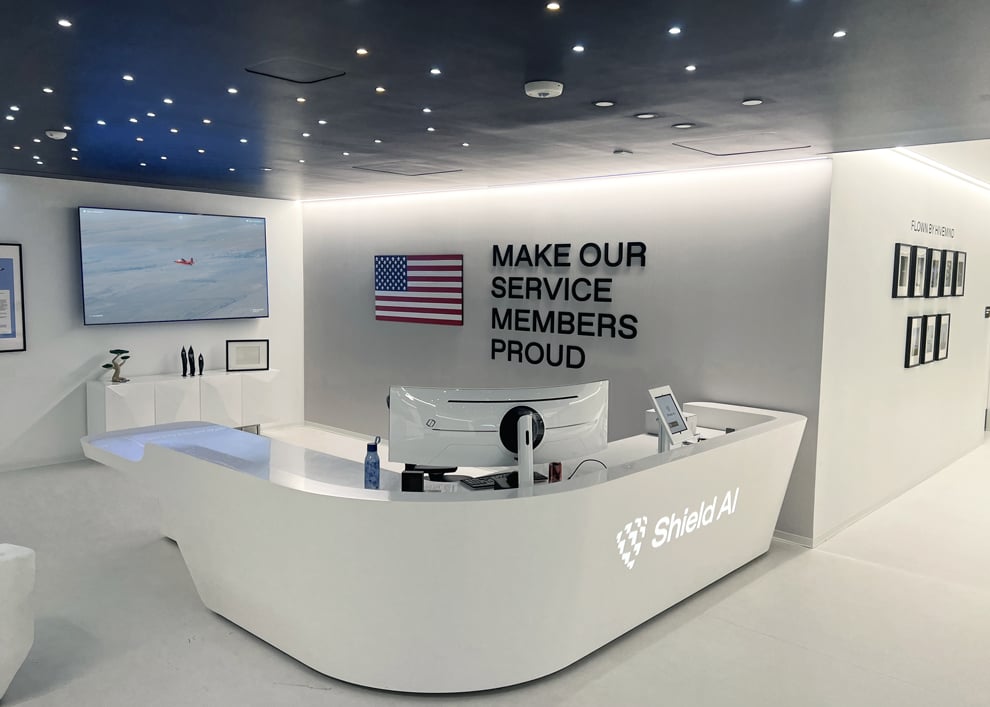
Wayfinding signs help employees and visitors locate departments, meeting rooms, shared facilities, and other destinations. They support practical movement while allowing surrounding features to focus on culture, recognition, and brand identity.
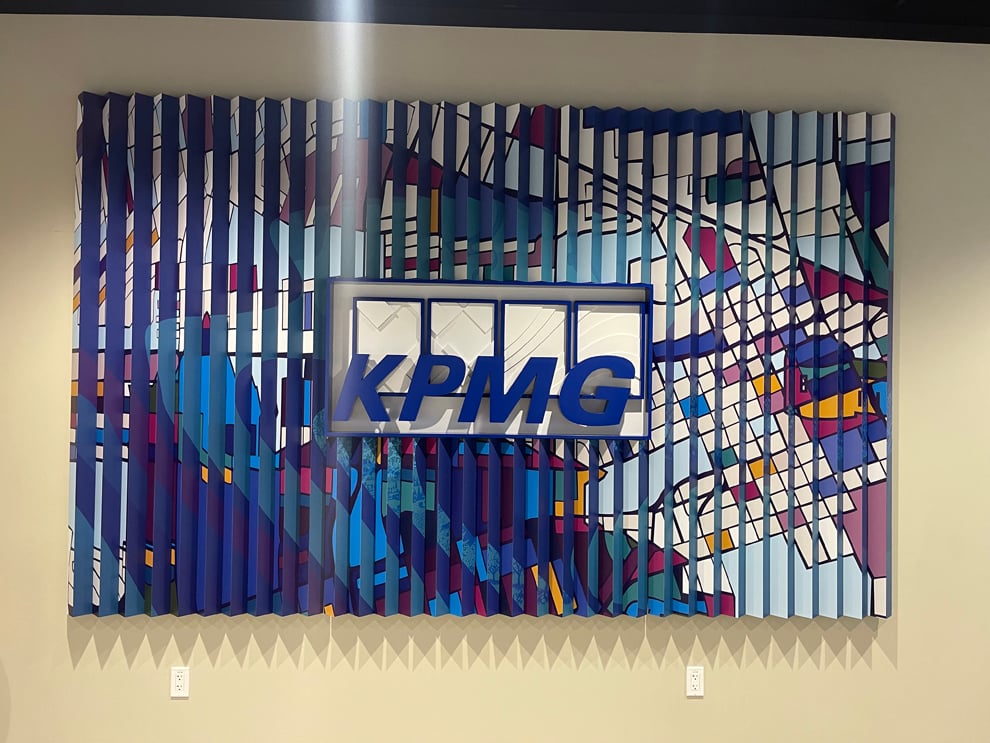
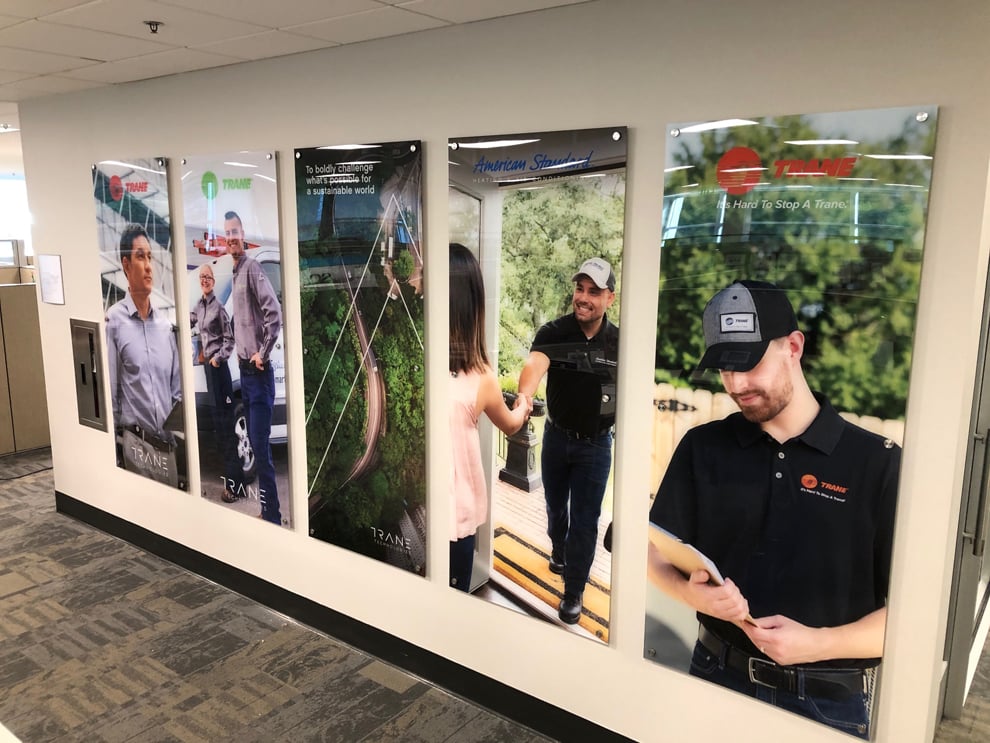
Acrylic signs offer a polished option for identification, recognition, directories, informational panels, and branded displays. Their structured appearance pairs well with printed graphics and dimensional components.
Begin with the result you want your workplace to achieve. Share the Greensboro, NC project location, preferred completion date, anticipated investment, photographs, floor plans, brand standards, reference materials, and known stakeholders when available. You do not need to choose every sign, graphic, display, or privacy treatment before starting the conversation.
Use Get Started Now to connect with Heritage Signs & Displays. The next step is a focused project discussion covering communication goals, site information, scope, coordination needs, and the most practical approach to creating a cohesive Commercial Interior Graphics program.
Every workplace feature should have a specific communication function. Visitors should be able to distinguish brand identification from wayfinding, culture messaging from operational information, and privacy graphics from recognition displays. Commercial Interior Graphics provide a framework for establishing these distinctions.
Identity features generally belong at entrances, reception desks, and prominent focal points. Storytelling content may require larger walls, photographs, timelines, or layered displays that encourage people to stop and explore. Privacy treatments should appear on glass where visibility needs to be controlled. Recognition systems may need modular or changeable components that allow new names and accomplishments to be added. Directional information should remain visible and readable without being overwhelmed by decorative branding.
Audience, architecture, sightlines, viewing distance, permanence, and update frequency should shape every decision. Content intended for employees in a break room may require a different presentation than a visitor-facing statement in the lobby. Information that changes every quarter should not be fabricated like a permanent logo installation.
A successful program uses the right combination of features rather than attempting to include every available product.
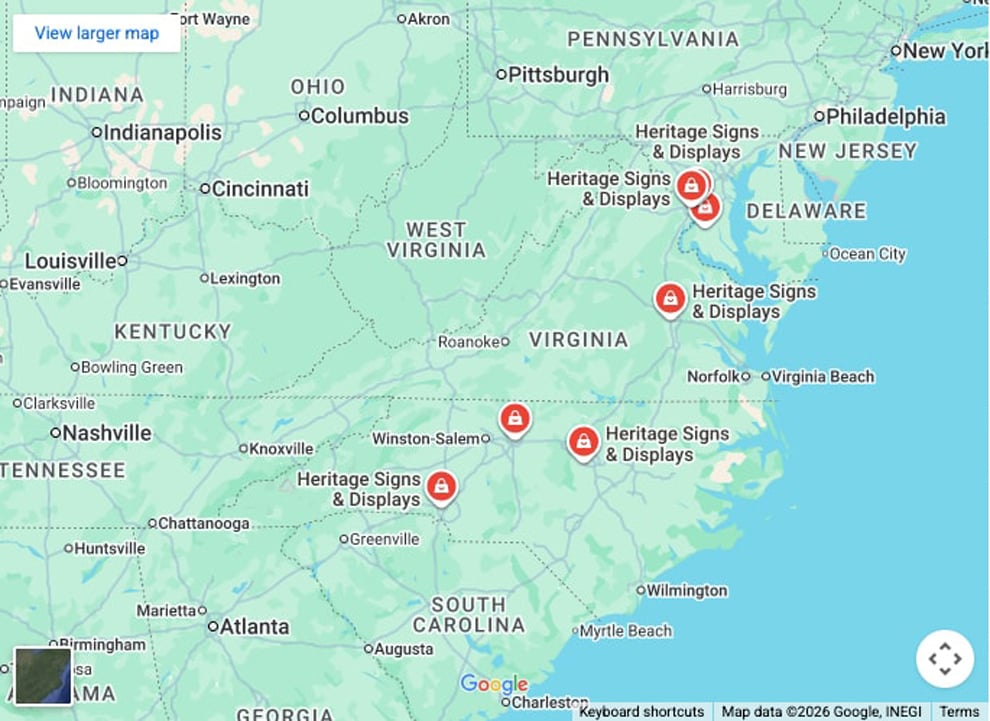
Heritage supports Greensboro, NC organizations through a managed process based on discovery and verified project information. This page does not claim the existence of an unverified Greensboro office, showroom, production facility, or permanently assigned local installation team.
Planning for Greensboro workplace projects may include consultations, site survey coordination, field verification, environmental graphic design, production, fabrication, installation planning, and communication with client stakeholders. The appropriate process depends on the confirmed location, project scope, access requirements, schedule, and services requested.
Greensboro is an important part of the Piedmont Triad business community. Organizations throughout the region may operate corporate offices, educational facilities, healthcare environments, manufacturing locations, nonprofit workplaces, and event spaces across several markets. A coordinated graphics program can help maintain brand consistency between locations without forcing every facility to use identical materials or layouts.
Each location has different architecture, traffic patterns, employee needs, visitor expectations, and available surfaces. Heritage can coordinate managed projects across the Carolinas and the Mid-Atlantic while adapting the final solution to the conditions of each confirmed site.
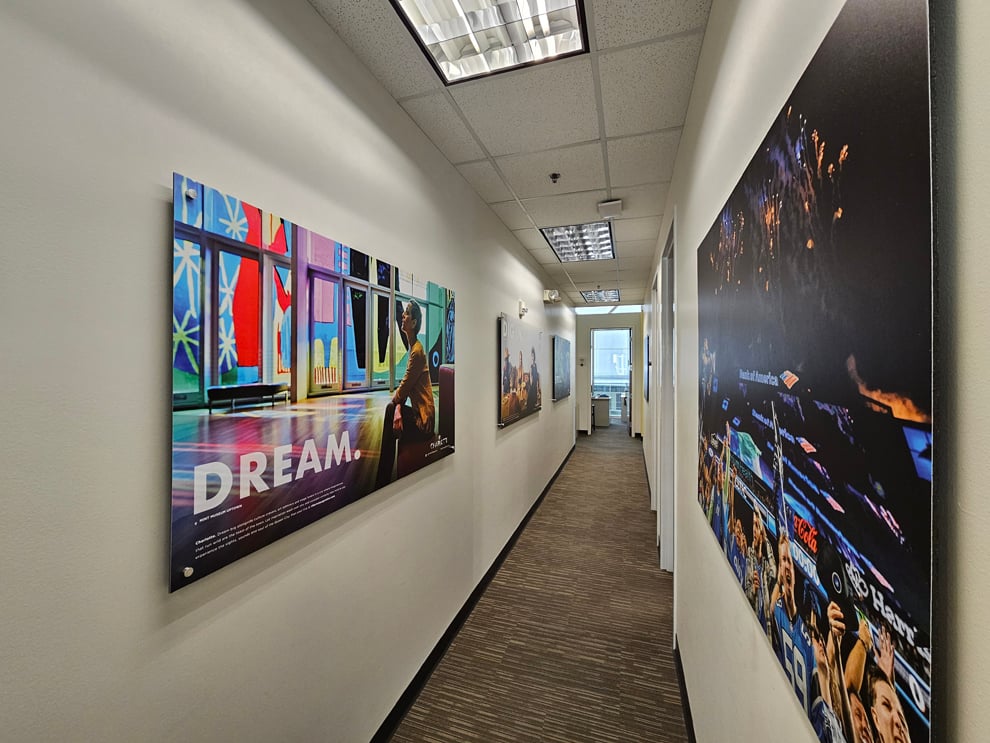
Environmental graphic design determines what people should notice, understand, remember, and navigate within a physical environment. It translates organizational objectives into visual features that strengthen arrival experiences, express culture, provide recognition, manage privacy, and support movement.
A Greensboro workplace project may begin with an experience the organization wants to create rather than a particular product. The client may want visitors to understand the company immediately upon entering. Leadership may want employees to engage more meaningfully with the mission and core values. A growing organization may require department identification and better directional guidance. A recognition display may need to celebrate current accomplishments while allowing space for future additions.
Heritage can develop environmental graphic design concepts or collaborate with architects, interior designers, branding agencies, environmental graphic designers, workplace consultants, and client representatives. Its role is to help convert approved ideas into practical, producible, and installable physical features.
Scale, hierarchy, sightlines, color, materials, fabrication methods, mounting systems, and placement all affect the outcome. These considerations determine whether a feature is legible, durable, properly emphasized, and visually compatible with the surrounding interior. Heritage does not provide architecture, commercial interior design, engineering, lighting design, code consulting, or ADA consulting.
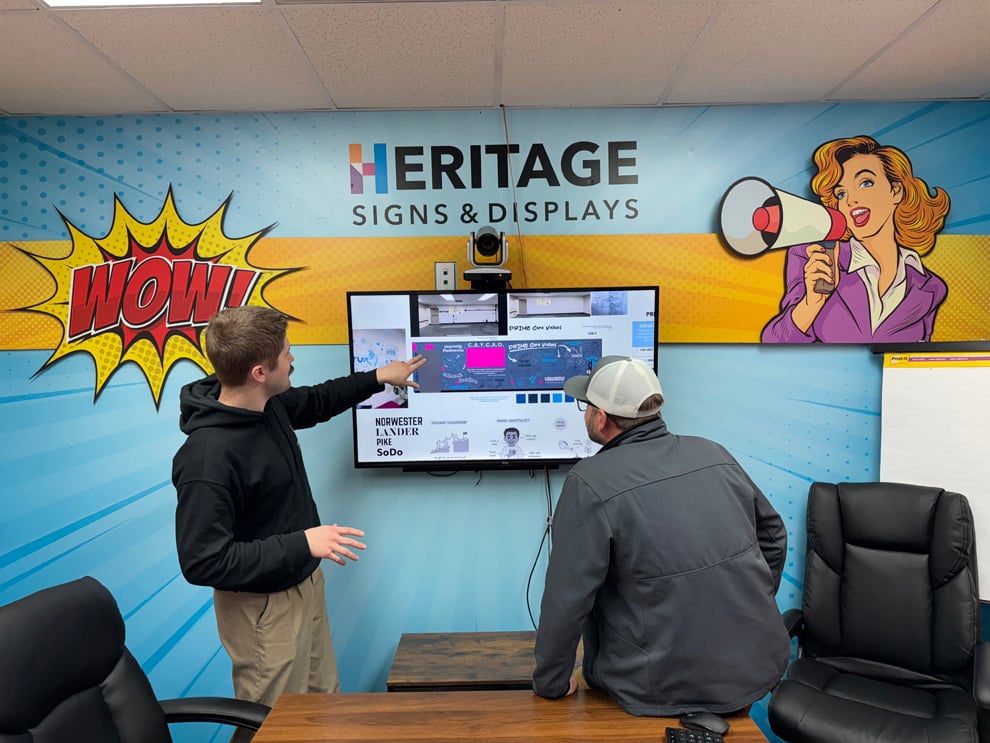
Professional installation turns approved designs and fabricated components into a completed workplace environment. Heritage installers receive relevant project information gathered during discovery, design coordination, field verification, production, and fabrication. This continuity supports proper placement, secure mounting, accurate alignment, clean finishing, and careful protection of the property.
A Heritage site survey is required when professional installation is included. The survey combines client discovery with technical and field verification. It involves more than collecting dimensions. Installers and project teams may need to consider wall construction, glass conditions, finished surfaces, access routes, mounting locations, building operating hours, and installation sequencing.
Installation in an occupied Greensboro workplace also requires coordination with the appropriate stakeholders. Heritage plans around approved work areas, access restrictions, operating schedules, and other practical site concerns. The objective is to complete the managed installation efficiently while respecting employees, visitors, and the property.
When actual site conditions differ substantially from the documented project information, Heritage communicates the issue and determines the appropriate next step. Installation is not forced when doing so could damage the property or compromise the intended result.
Heritage does not offer installation-only services for signs or graphics supplied by customers. Installation is limited to elements Heritage produces, fabricates, procures, or manages so that responsibility for the completed project remains clearly defined.
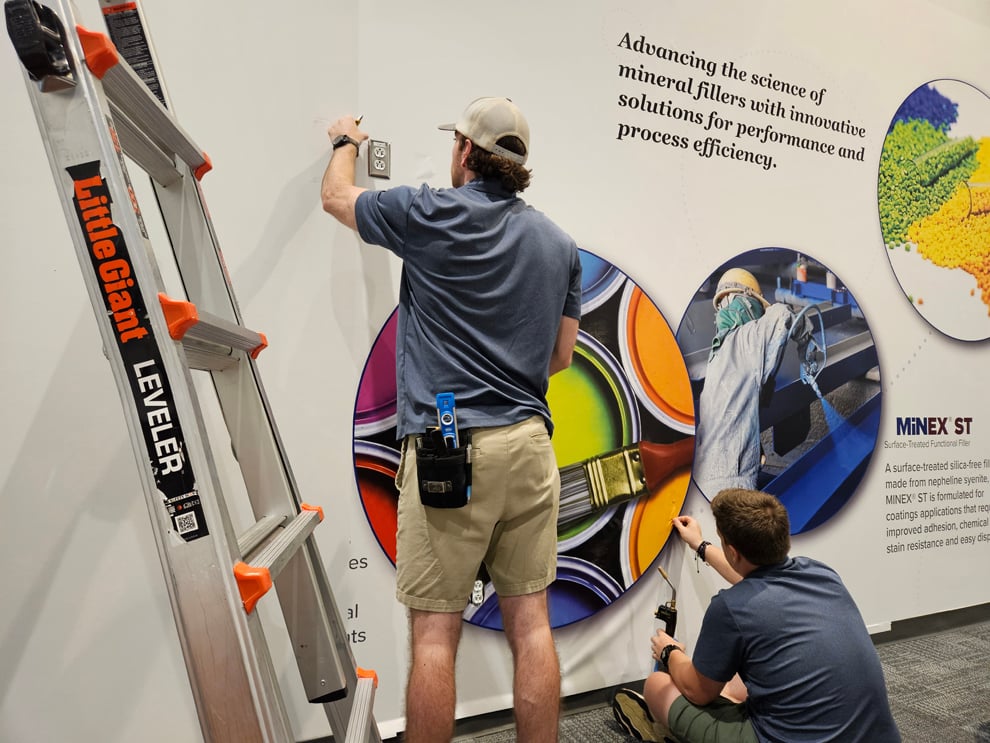
Planning should begin with the desired outcome, target audience, project scope, stakeholder approval process, schedule, phasing, site conditions, anticipated investment, and outstanding information. Floor plans, photographs, brand guidelines, artwork, existing drawings, and reference materials are valuable, but they support the planning process rather than replace it.
Many Heritage projects that include production and professional installation range from $10,000 to more than $200,000. Actual investment depends on the number of spaces involved, design requirements, material selections, fabrication complexity, site access, installation conditions, schedule, and level of project coordination.
Walls must be properly prepared when adhesive graphics are included. Drywall should be sound, smooth, clean, dry, repaired, primed, and painted correctly. The finish paint must cure completely before vinyl is applied. Approximately four weeks can be useful general guidance for many paints, but the paint manufacturer’s specifications and actual site conditions determine readiness.
Paint can release gases during curing. Applying vinyl too soon may contribute to bubbling, blistering, lifting, or premature adhesion failure, although these problems can have other causes. Surface testing cannot confirm the hidden bond between drywall, primer, and paint. Normal positioning or lifting during installation may expose an existing weakness.
If paint or primer separates from the wall, Heritage stops work and the Project Manager reports the condition. The client or property owner is responsible for arranging and paying for repairs, priming, repainting, and adequate curing before installation resumes. Heritage does not perform or fund wall restoration. Future graphic removal is a separate process, and damage-free removal cannot be guaranteed.
Commercial Interior Graphics are coordinated branding and communication features designed to work together throughout a workplace. They may include wall graphics, window graphics, privacy treatments, dimensional letters, lobby signs, recognition displays, wayfinding signs, photographs, illuminated elements, and changeable informational components.
A coordinated program assigns a clear purpose to every element. It helps prevent brand identity, storytelling, recognition, privacy, and directional information from competing for attention. It also gives stakeholders a consistent framework for evaluating hierarchy, appearance, scope, and installation requirements.
Wall wraps focus on large-scale coverage and visual transformation of wall surfaces. They are frequently used for murals, timelines, culture walls, historical displays, and recognition features. A wall wrap can be one part of a Commercial Interior Graphics program, while the broader program determines how it relates to signs, glass graphics, displays, privacy features, and wayfinding.
Adhesive vinyl graphics are applied to compatible walls, windows, doors, floors, elevators, displays, and other surfaces. Commercial Interior Graphics refer to the larger communication system. Adhesive vinyl may be included alongside fabricated signs, dimensional letters, display panels, and other branded features.
A program may include lobby identity features, wall displays, window graphics, frosted vinyl, dimensional logos, employee recognition systems, directional signs, photographs, illuminated signs, acrylic panels, standoff-mounted displays, and changeable information areas. The selection should be based on the communication role each feature needs to perform.
Environmental graphic design evaluates the audience, viewing distance, hierarchy, sightlines, architecture, permanence, update requirements, and relationship between nearby elements. These factors help determine whether content should become a focal sign, wall display, privacy treatment, directional feature, or another type of installation.
Yes. Heritage requires a site survey when professional installation is part of the project. The survey combines project discovery with technical verification of conditions that may affect production, fabrication, mounting, placement, access, and installation.
Heritage assigns one dedicated Project Manager to the managed project. This person helps maintain continuity across planning discussions, approvals, field information, scheduling, production, fabrication, and installation.
Heritage professional installers install elements that Heritage produces, fabricates, procures, or manages. Heritage does not provide installation-only service for customer-supplied signs or graphics because accountability depends on managing the complete installed scope.
Yes. Heritage can create environmental graphic design concepts or work with architects, interior designers, branding agencies, environmental graphic designers, workplace consultants, and client stakeholders. Heritage does not provide architecture, commercial interior design, engineering, lighting design, code consulting, or ADA consulting.
Yes. Frosted vinyl, privacy vinyl, and privacy film can be incorporated when the organization needs to manage visibility through conference room glass, office fronts, interior partitions, or other glass surfaces. These treatments can also carry patterns, branding, or visual themes used elsewhere in the workplace.
Certain wet-installed privacy materials may initially look hazy, cloudy, streaked, or uneven. Small moisture pockets may also remain visible while the material dries. Depending on the product, temperature, humidity, and site conditions, drying can take several days or weeks. This condition does not apply to every privacy film or window graphic.
Drywall should be stable, smooth, clean, dry, repaired, properly primed, and covered with fully cured paint. If paint or primer lifts during testing or installation, Heritage stops work to prevent further damage. The client or property owner is responsible for repairs, repainting, and the required curing period.
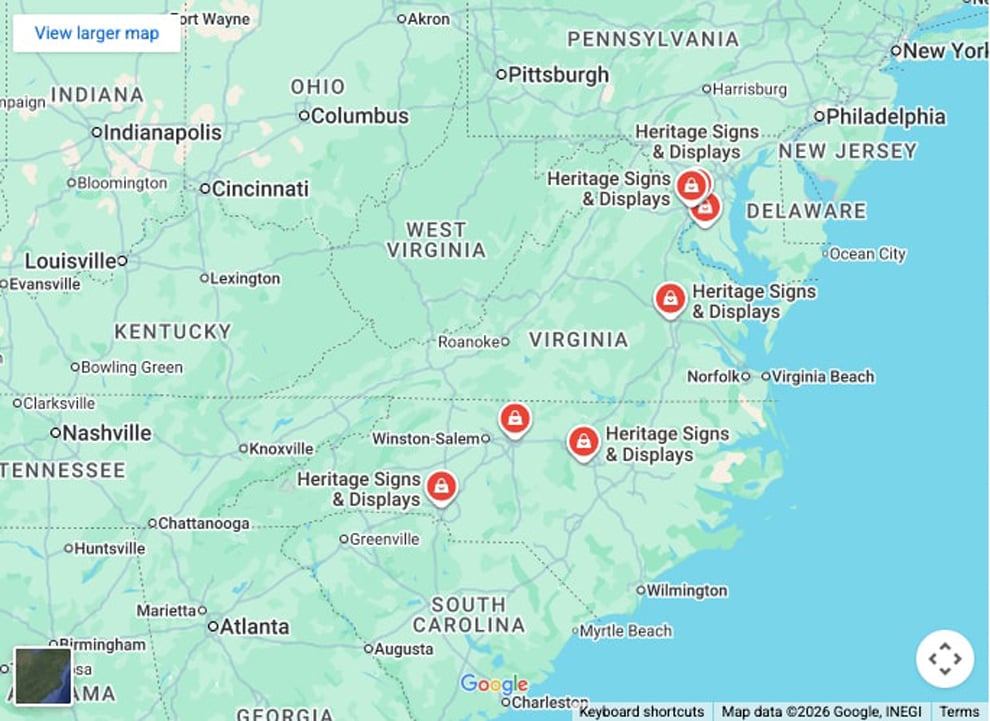
Yes. Heritage can manage projects across the Carolinas and the Mid-Atlantic. Maintaining brand consistency does not mean every office must use the same graphics, materials, or layouts. Each solution can respond to the architecture, audience, communication objectives, and conditions of its location.
Heritage can discuss Commercial Interior Graphics projects in Greensboro and coordinate an appropriate process based on the verified location, scope, schedule, site information, and requested services. This page does not claim an unverified Greensboro office, showroom, production facility, or dedicated local installation team.
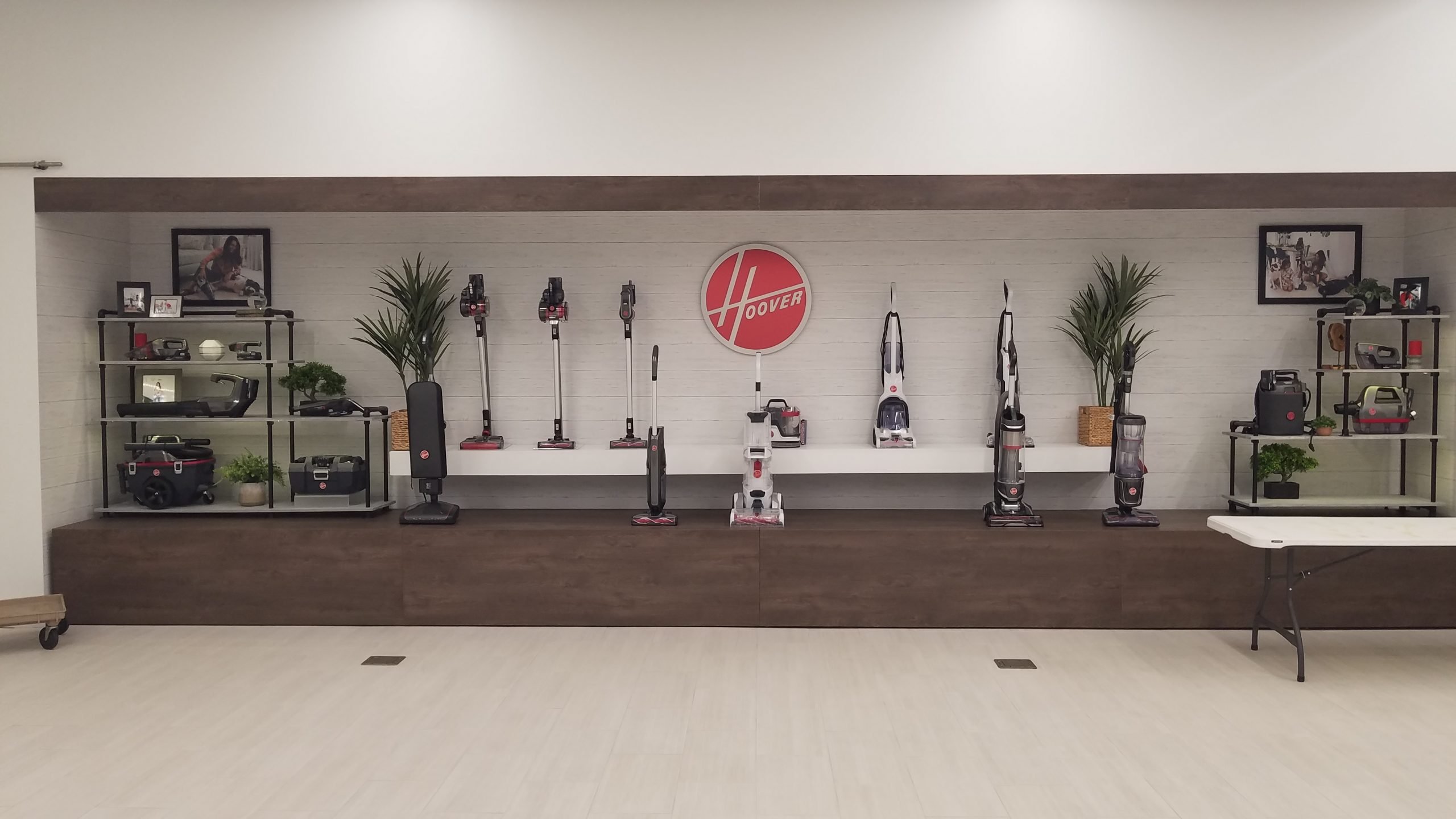
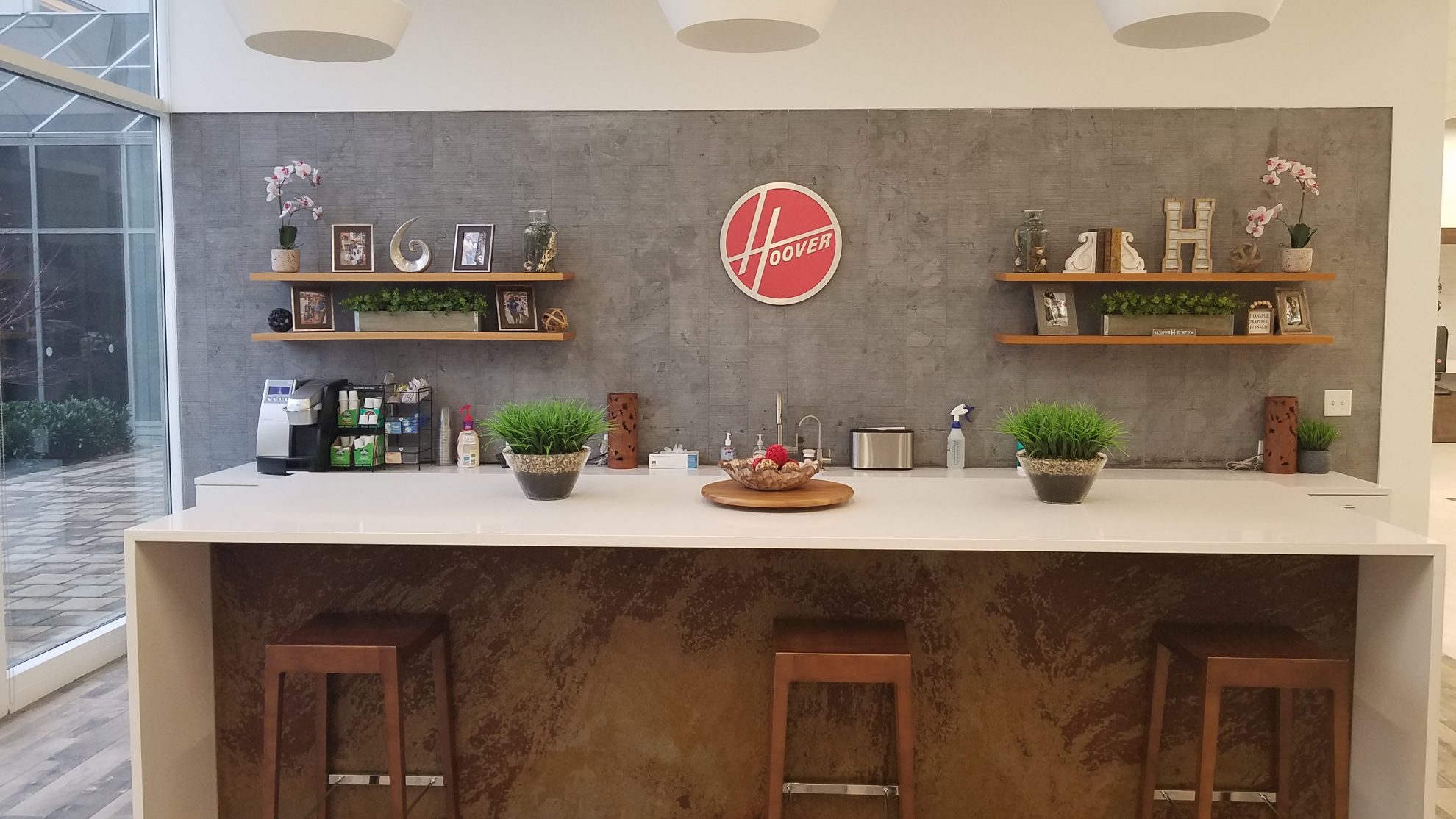
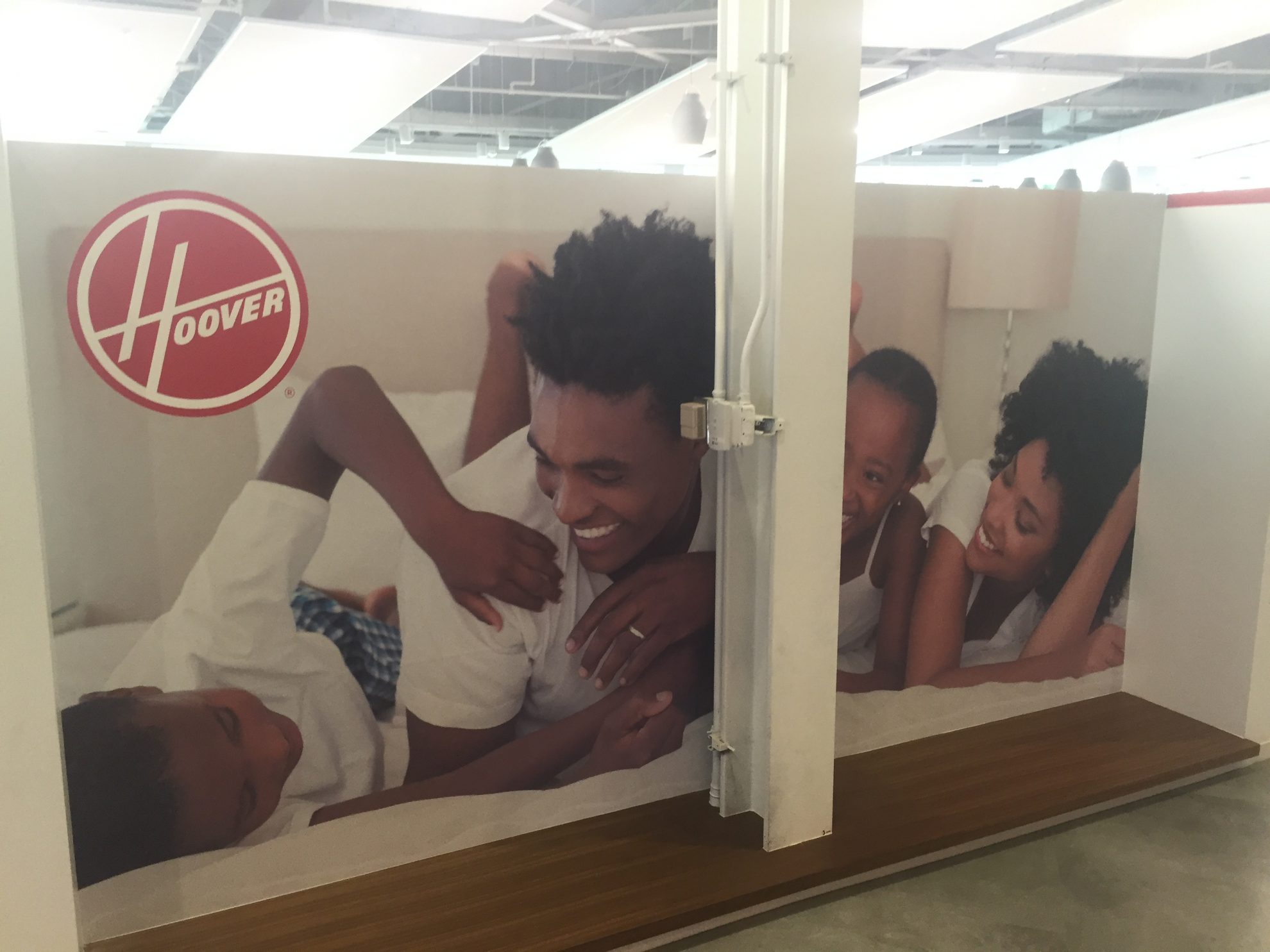
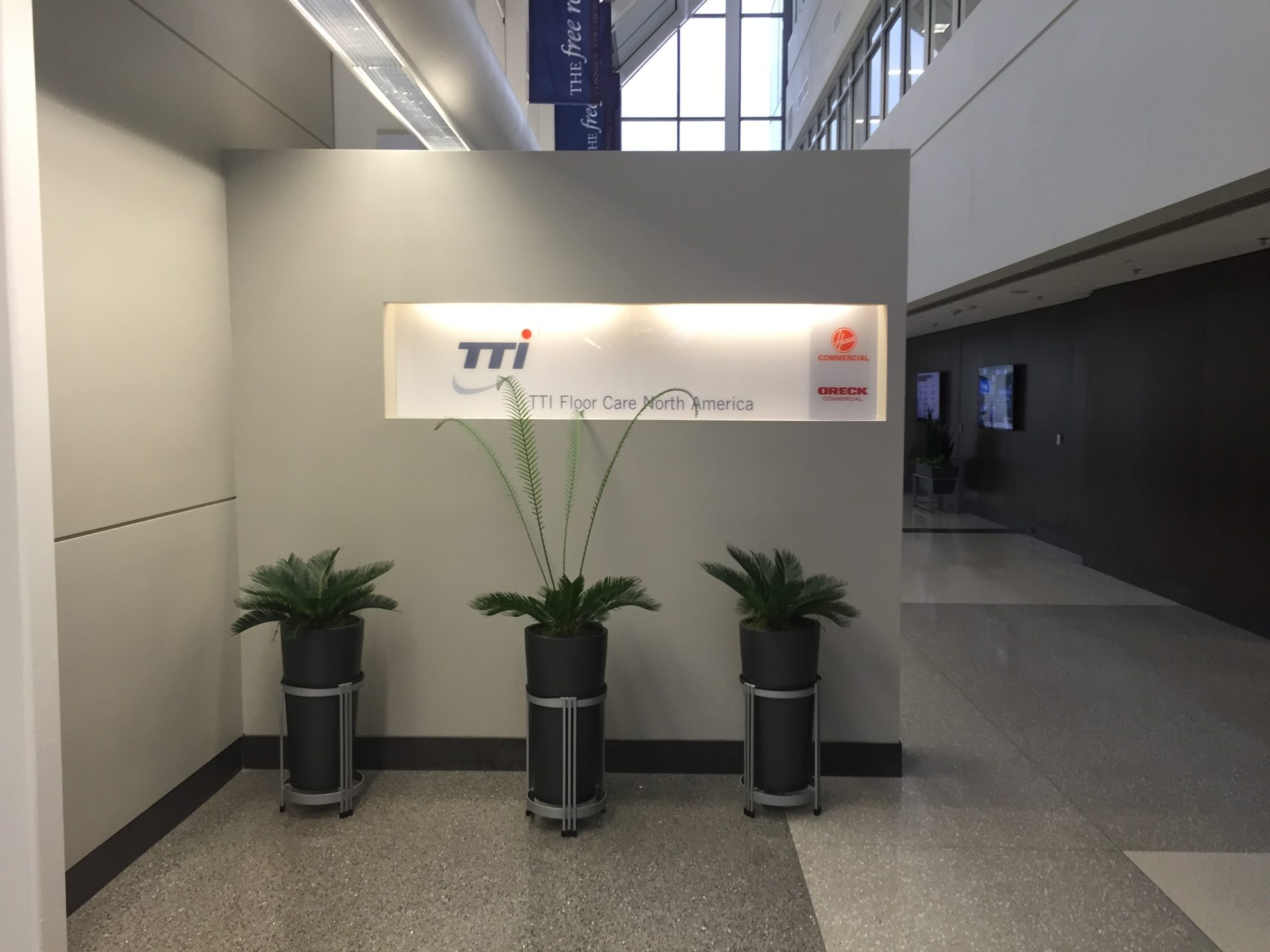
Heritage Signs & Displays collaborated with TTI Floor Care North America to enhance their corporate office. The project included custom frosted vinyl graphics, acrylic signs, dimensional lettering, and LED backlit signs, showcasing the brands Dirt Devil, Hoover, and Oreck. The signage improved office branding, privacy, and aesthetics. Heritage collaborated closely with TTI, ensuring efficient execution and high-quality results, creating an immersive and professional environment that reflects TTI's brand values.
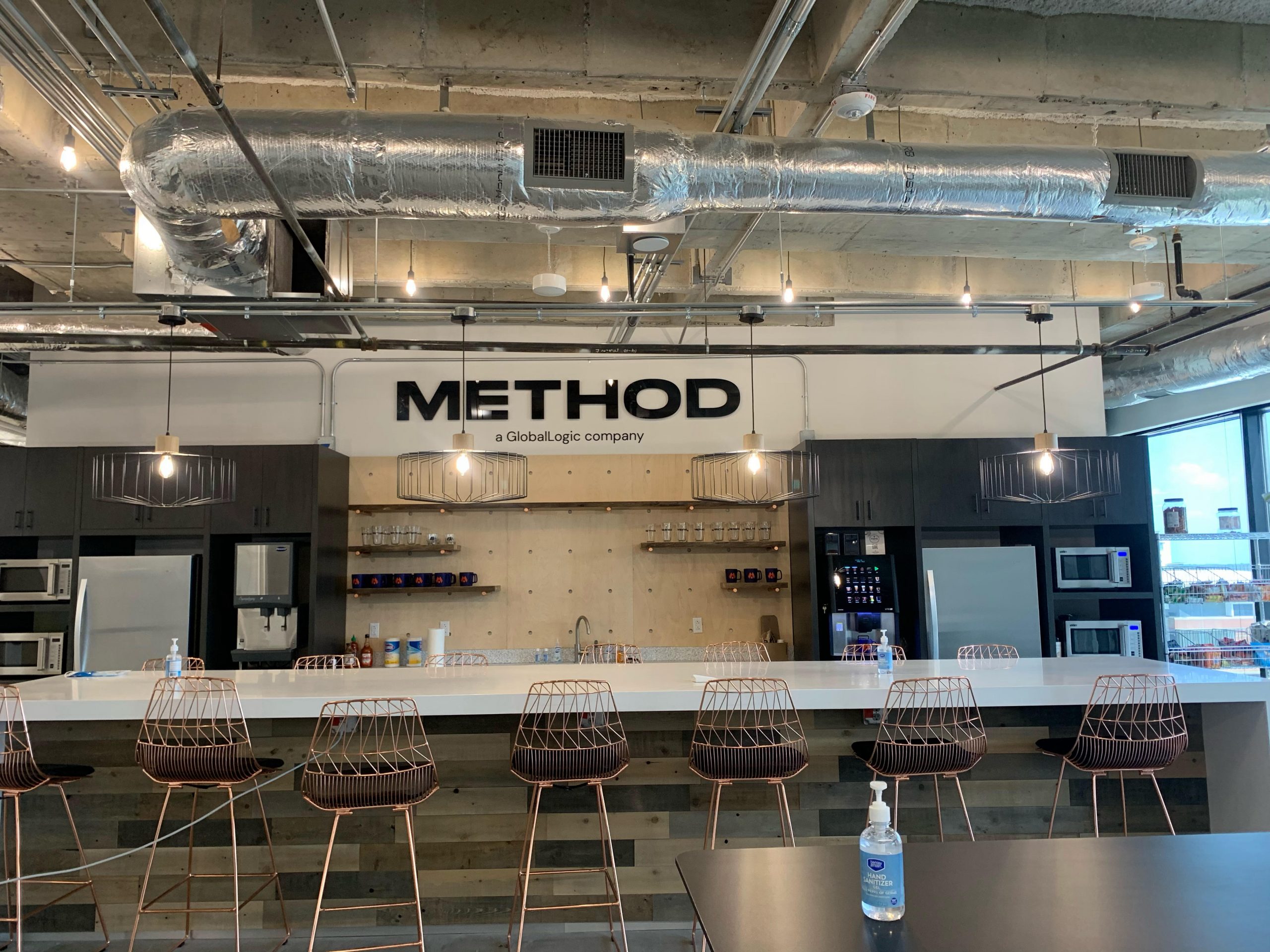
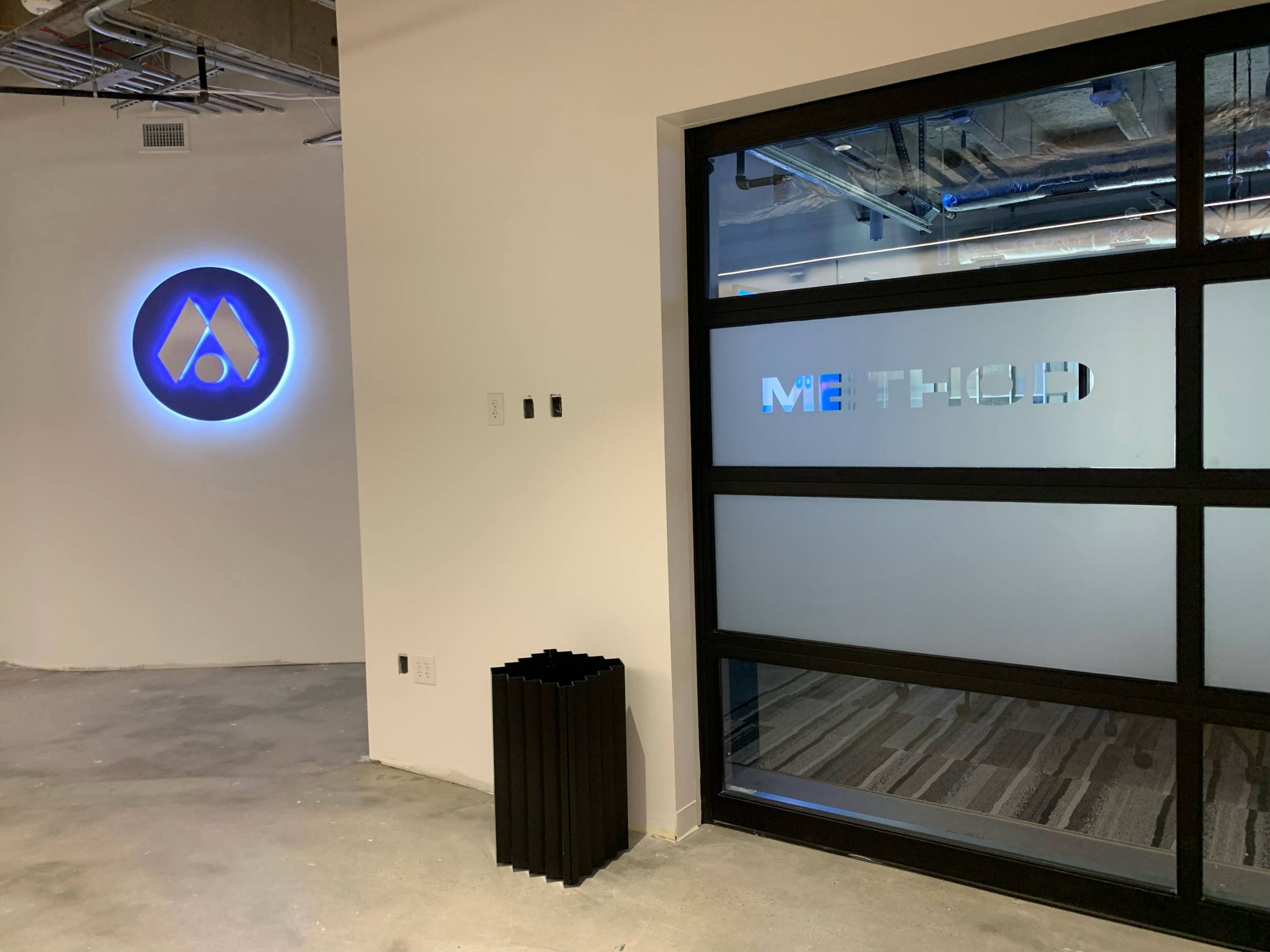
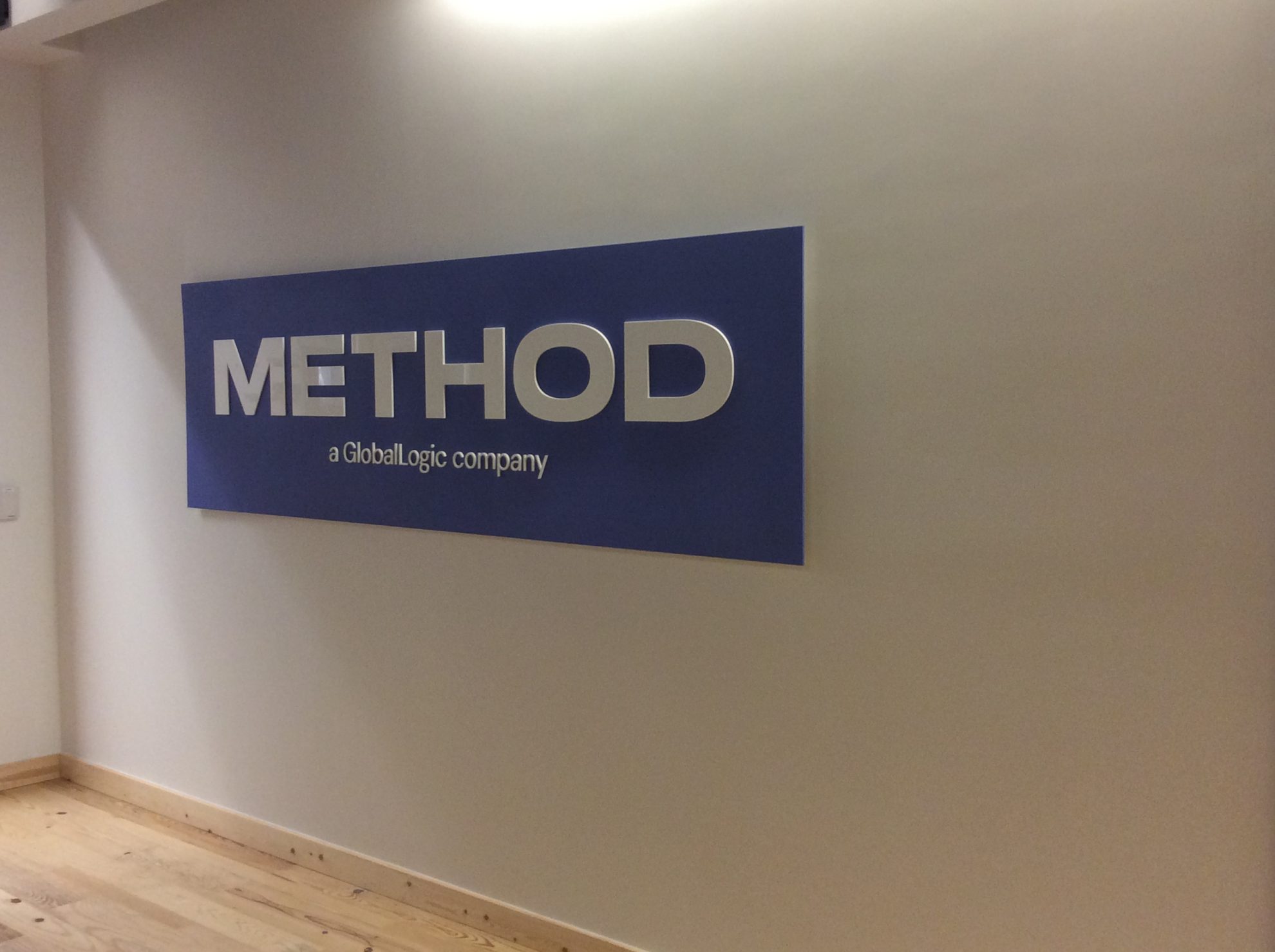
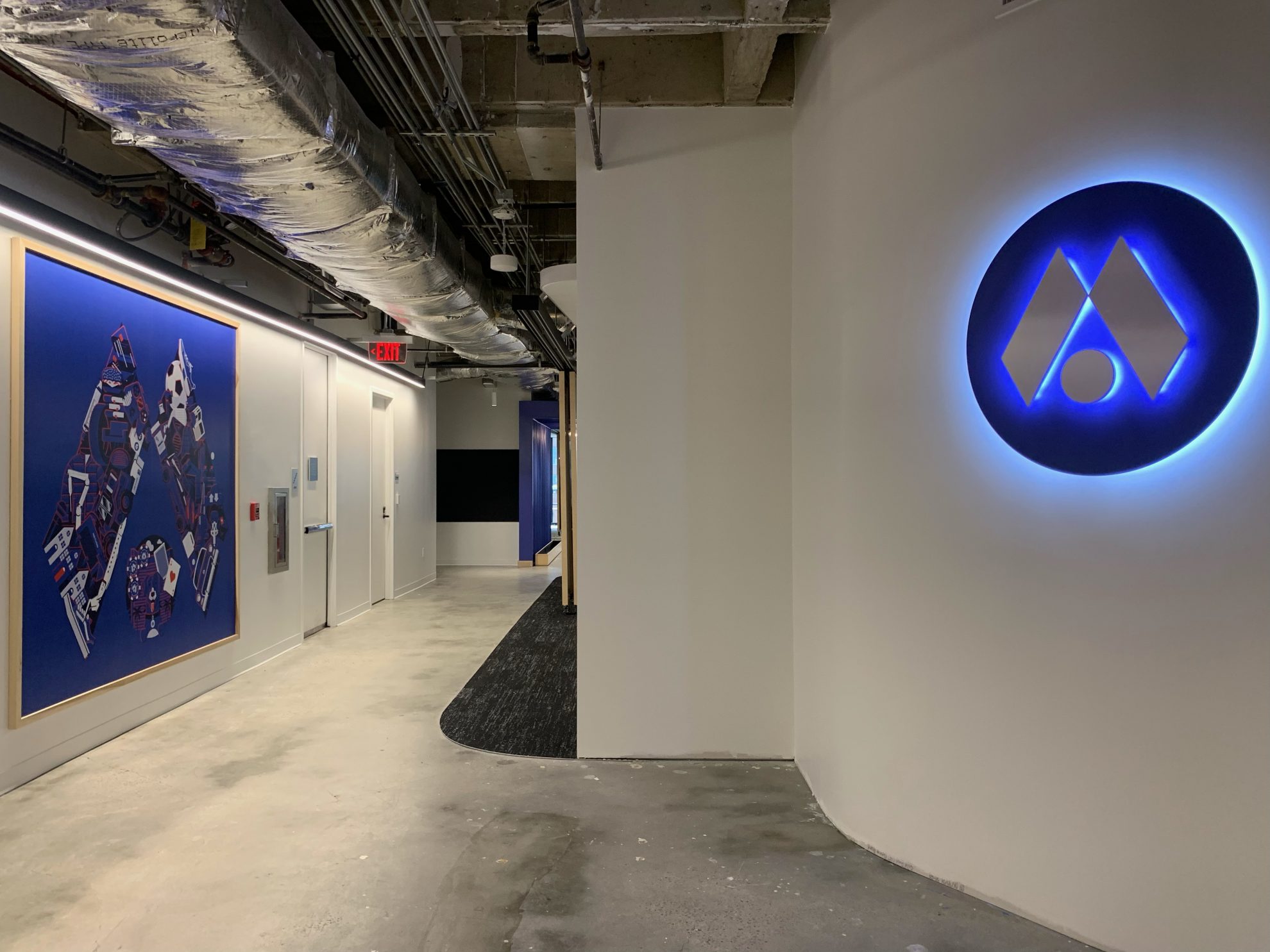
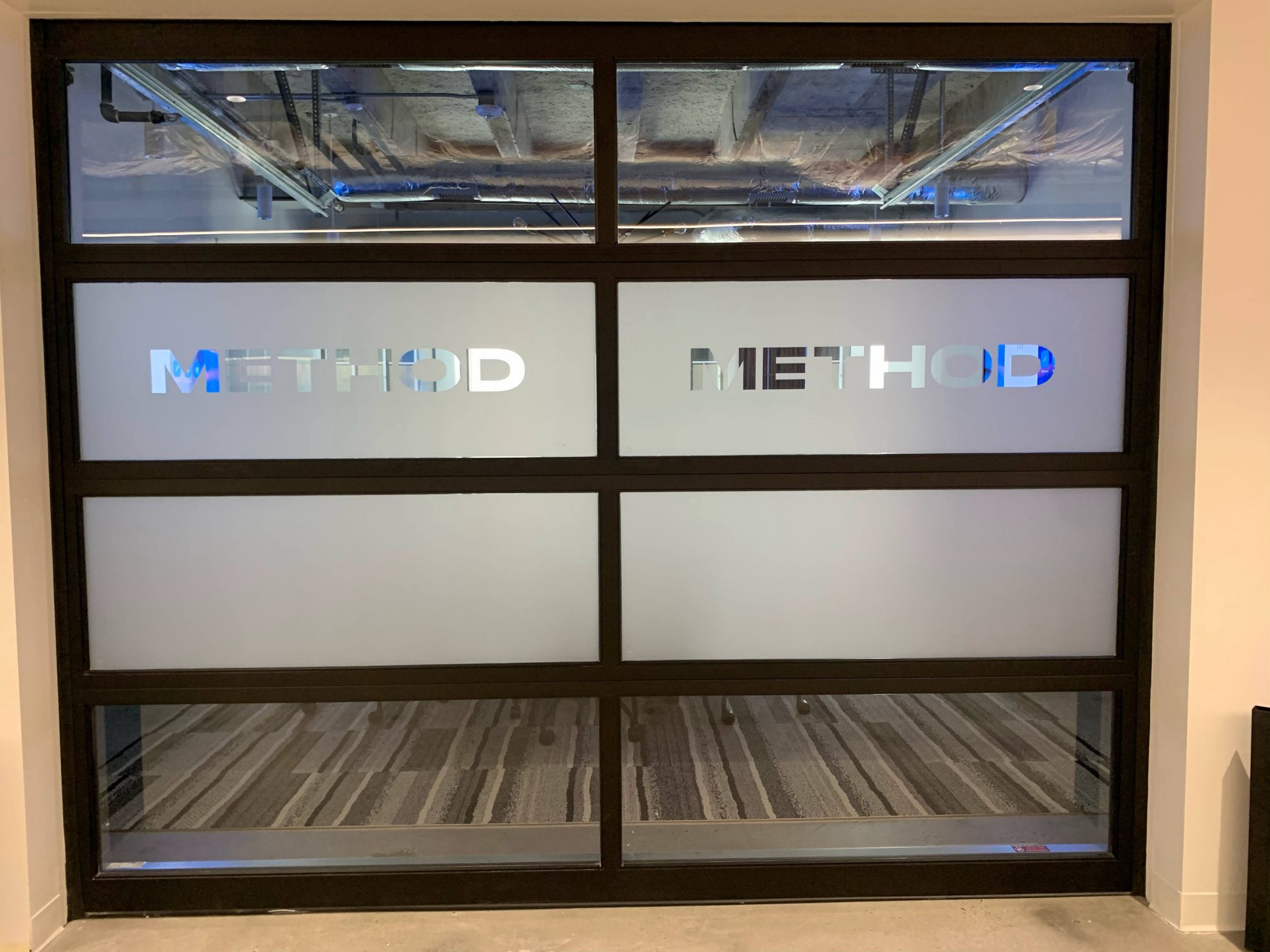
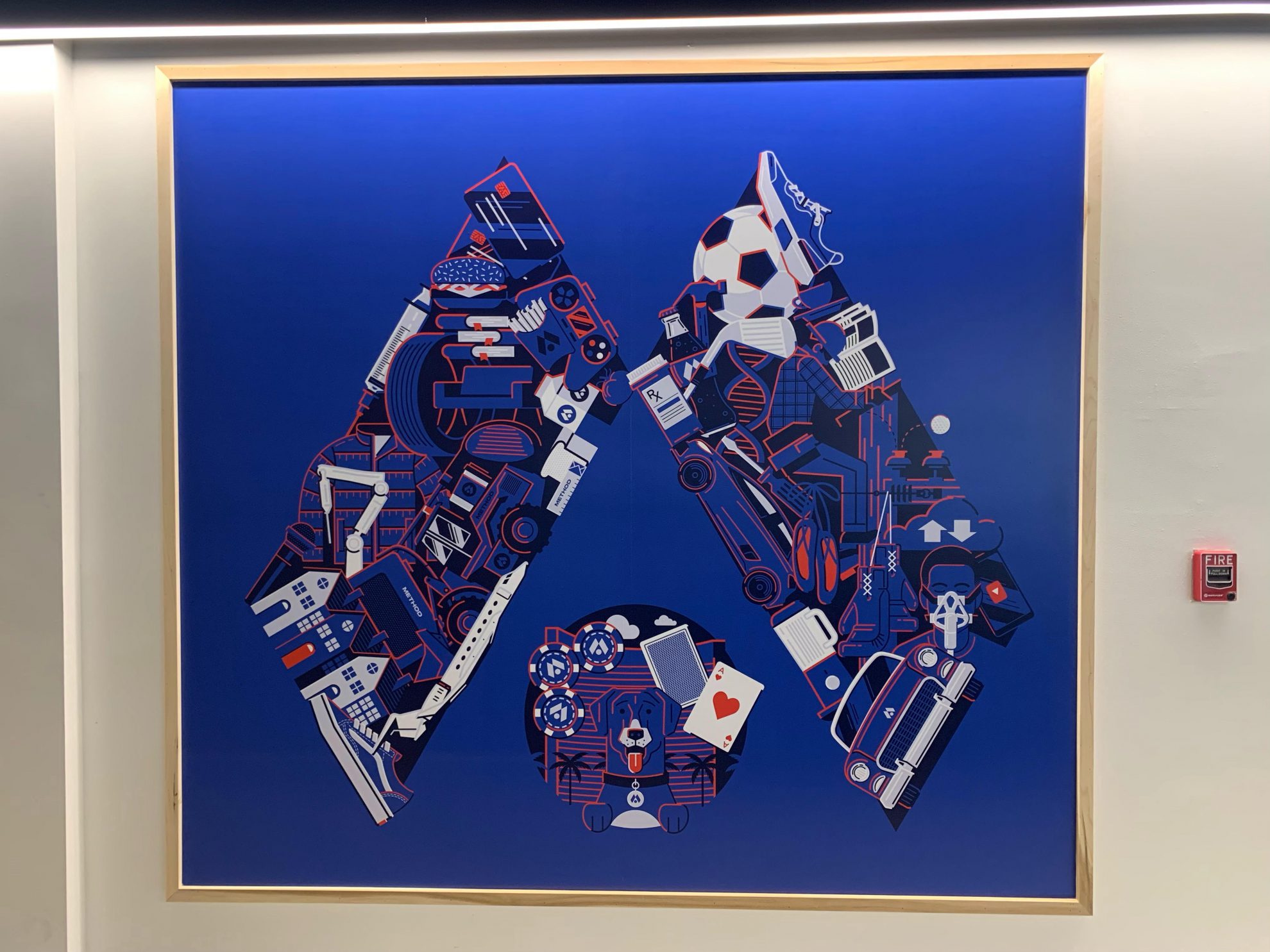
Heritage Signs & Displays' collaboration with Method (formerly Skookum) to rebrand their corporate headquarters. The project included dimensional lettering, wall displays, LED-lit signage, wall wraps, and frosted vinyl, creating an immersive and branded environment. Heritage worked closely with Method's team, ensuring accurate execution and timely delivery. The transformation was completed in August 2021, with Method's employees moving into the revamped space in September. The project reflects Heritage's commitment to quality and collaboration.