Very few Winston-Salem organizations are short on wall space. What they are short on is surfaces that actually do something. Adhesive vinyl graphics change that by turning painted drywall, interior glass, doors, approved floor areas, elevator panels, and casework into working parts of a space that deliver privacy, wayfinding, brand identity, or a specific message. The material question comes later. The first question is what that surface should accomplish for the people who walk past it every day.
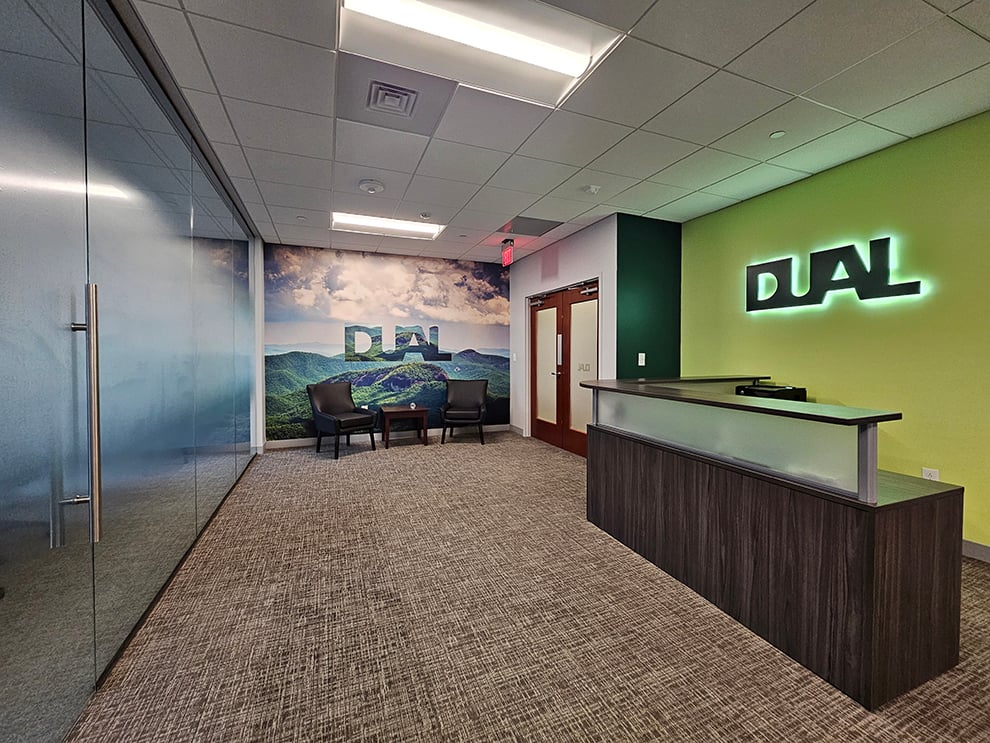
Heritage Signs & Displays is a veteran-owned, family-led company that designs, produces, and installs adhesive vinyl for offices, institutions, and event environments throughout Winston-Salem and the Piedmont Triad. The scope might be a single huddle room or an entire renovated floor. Frosted vinyl and privacy film can screen sightlines into glass-fronted offices while daylight still reaches interior desks. Cut vinyl lettering can identify a department, a suite number, or a named gift. Window graphics can give an entrance more presence from the sidewalk. Floor and elevator graphics can place direction, recognition, or campaign messaging exactly where people already walk. When a wall is meant to carry the entire visual experience through full coverage, mural-scale imagery, or storytelling, Wall Wraps is the large-format application inside the same adhesive vinyl family.
Good outcomes start with intent, not with a product sheet. Our environmental graphic designers ask what employees, patients, students, visitors, or attendees should notice, understand, or do, then reverse-engineer the scale, coverage height, viewing distance, privacy level, and relationship to nearby signage. Clear glass frequently benefits from distraction markers, which are branded or decorative vinyl elements applied to make a transparent panel easier to perceive. They can carry brand identity while making the glass more noticeable, though we do not present applied vinyl as evidence of building-code or safety-glazing compliance.
Projects here often carry more approvals than the artwork suggests. Healthcare systems, manufacturers, financial offices, nonprofits, and university departments around the Innovation Quarter, Salem Parkway, and the Stratford Road corridor typically need internal leadership, facilities, and building management aligned on what goes up and when. One dedicated Project Manager keeps approved direction, site data, production requirements, scheduling, and installation planning in a single place, so nobody has to repeat the same information to three different vendors. The required site survey adds firsthand knowledge of the building before anything is finalized for production.
That continuity earns its keep when several surfaces share one deadline, or when a suite has to stay occupied while installers work. Instead of handling a privacy film, a corridor graphic, and an elevator application as three unrelated orders, we sequence them toward one objective while keeping material and installation choices specific to each surface.
Winston-Salem clients are supported by Heritage field and installation teams serving the Mid-Atlantic and Southeast, with production and fabrication support from our Waldorf, Maryland facility. Discovery, field verification, installation planning, and professional installation run as one accountable process rather than a chain of handoffs. Heritage was founded in 1977, and that operating discipline applies to every project we accept.
Adhesive vinyl is not one product. It is a family of engineered systems that behave differently depending on where they land. The right specification follows the substrate, the intended look, the service period, exposure, traffic, cleaning routine, and what the client expects to happen when the graphic eventually comes down.
Painted walls raise their own set of questions: wall condition, texture, primer, paint chemistry, cure status, and the strength of the bond hiding under the visible finish. Glass brings different variables, including desired privacy level, preserved views, daylight transmission, low-e or applied coatings, viewing direction, and whether the material is installed wet or dry. Floors demand materials and protective systems rated for that specific flooring and the volume of foot traffic it absorbs. Elevator work has to account for moving panels, seams, edges, clearances, cleaning chemicals, and constant physical contact.
We use those distinctions to narrow the specification rather than treating every application as a generic decal. In practice, two graphics inside the same branded program can legitimately call for different vinyl systems or installation methods even when the artwork and color standards match exactly.
A finished vinyl graphic looks simple. Getting there depends on accurate dimensions, verified surface condition, correct material selection, production accuracy, building access, scheduling, and installation technique all lining up. Heritage takes most of that coordination off the client's desk by keeping the people and the information connected inside one accountable structure.
Our One Dedicated Project Manager System links environmental graphic design, field knowledge, production, fabrication, scheduling, and full-time Heritage installers through shared project history. Nothing gets re-explained when work moves from approval into production, or from production into the field. For Winston-Salem teams juggling multiple stakeholders, leased-property requirements, and narrow access windows, that single point of contact is frequently what separates a clean install from a stalled one.
When a requested date is genuinely achievable, we plan toward it on purpose. When it is not, the Project Manager says so early and builds the strongest workable alternative with the client, which might mean phasing the scope, reordering the sequence, adjusting an application, substituting a material, or completing the highest-priority areas first.
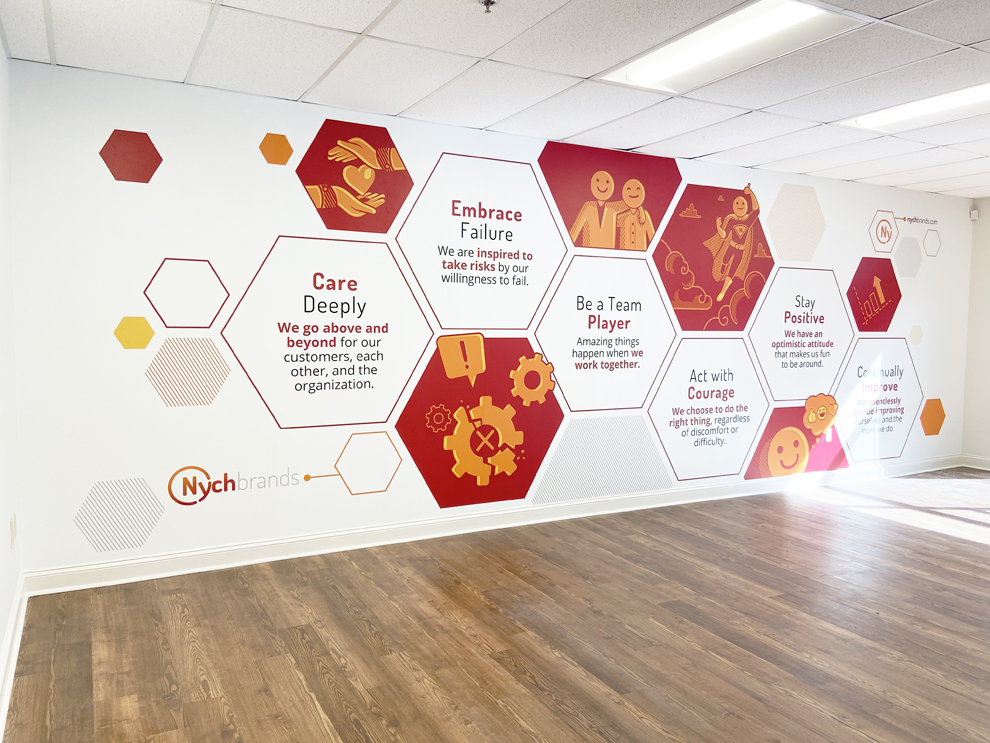
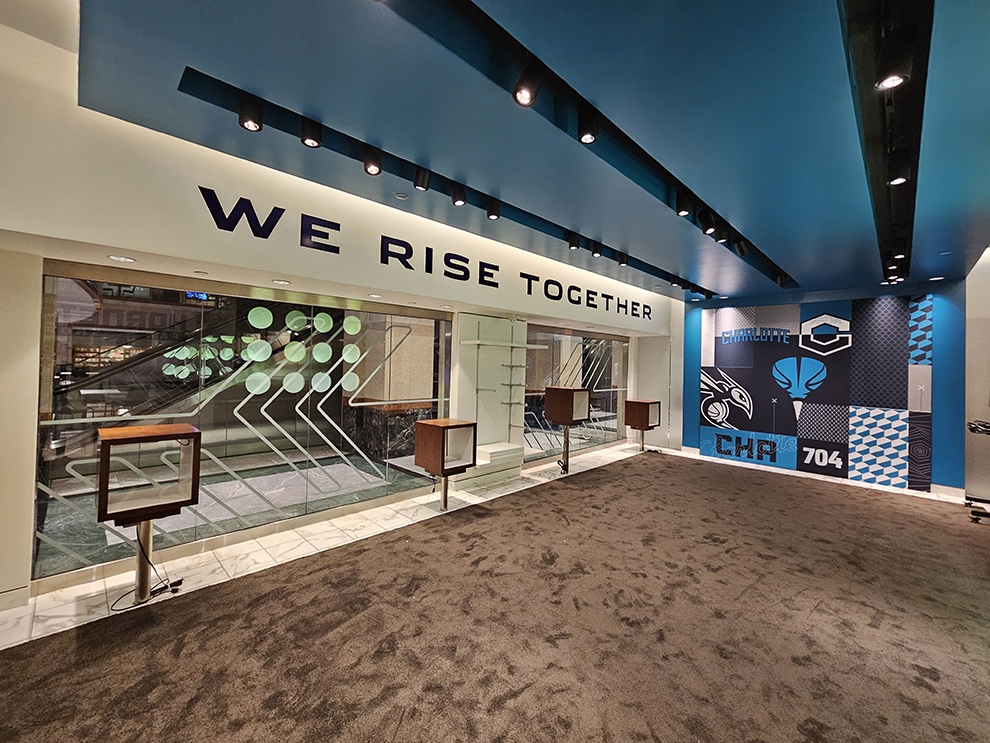
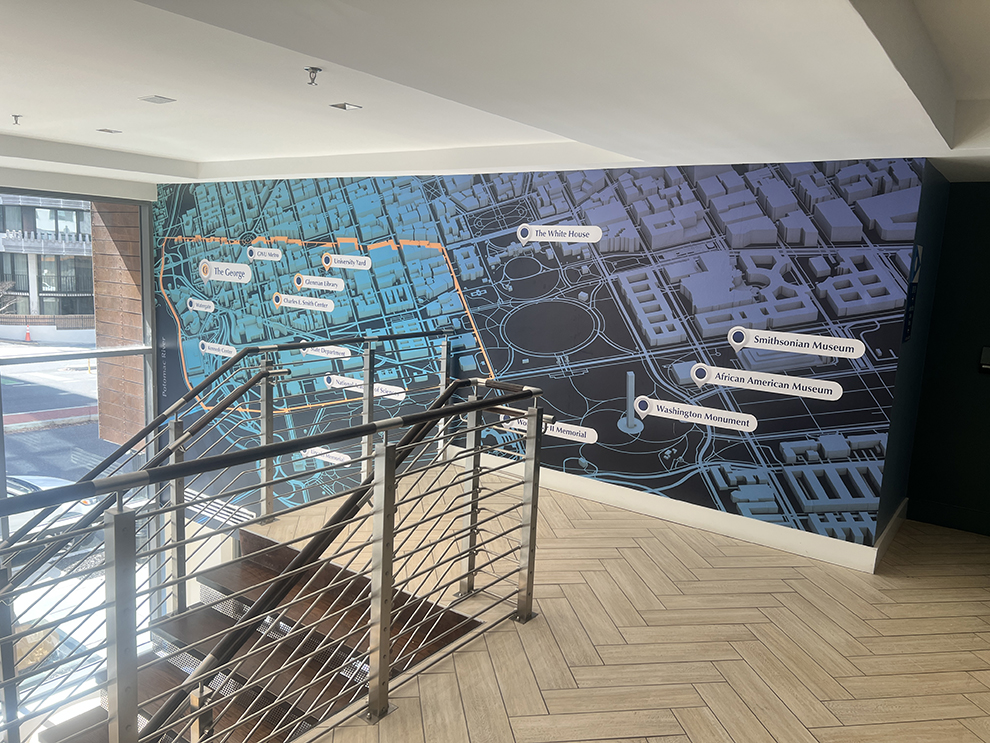
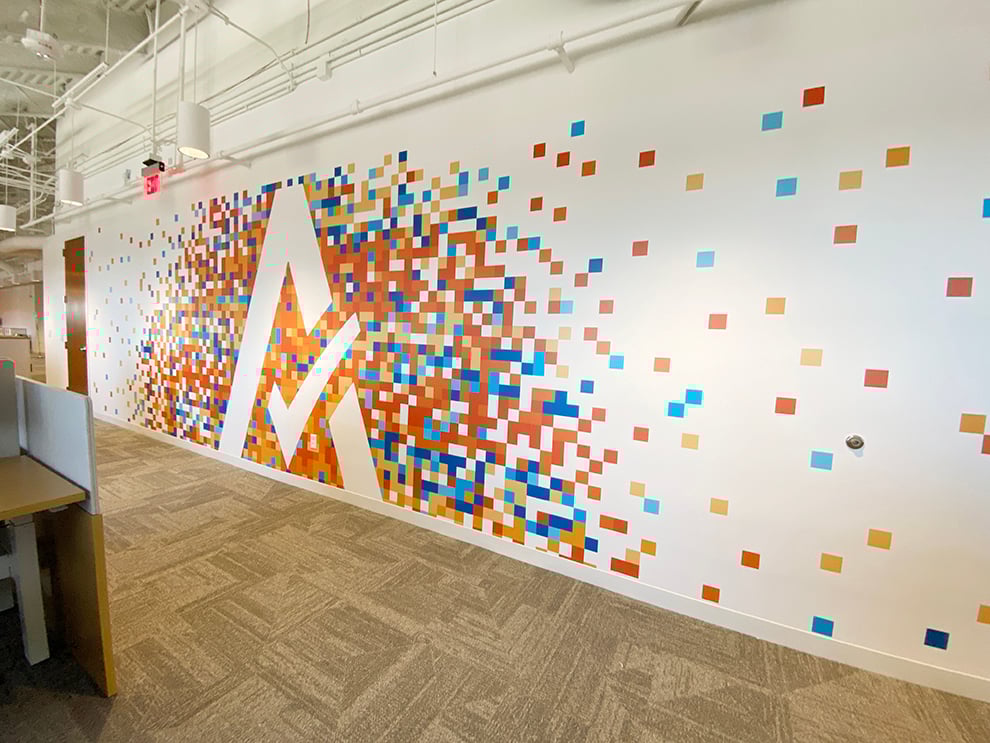
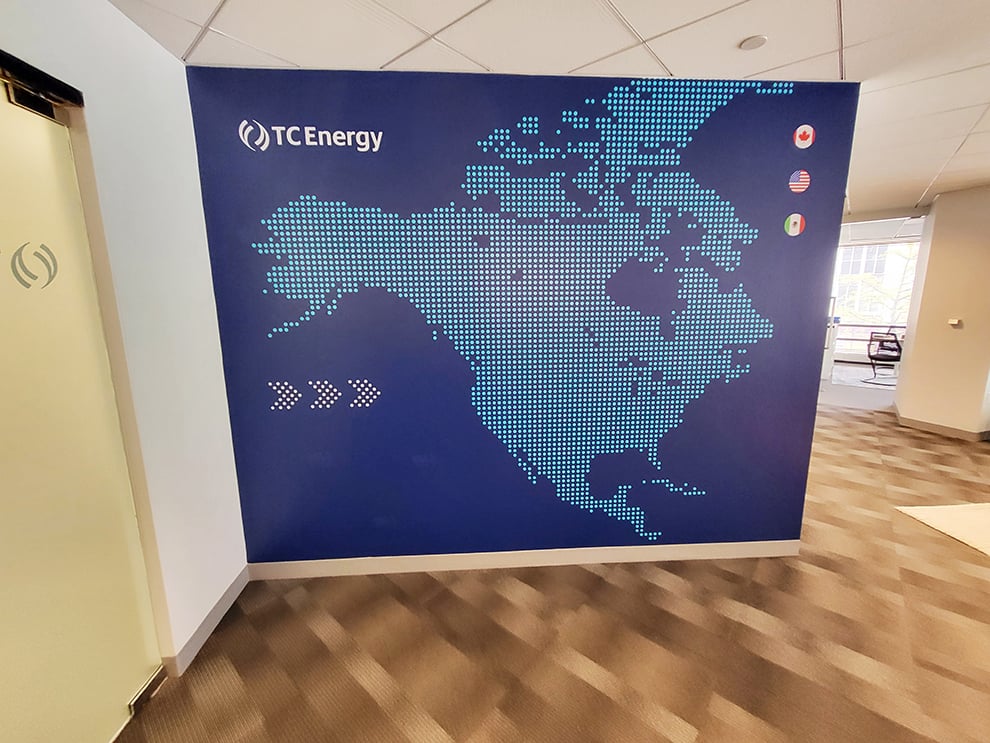
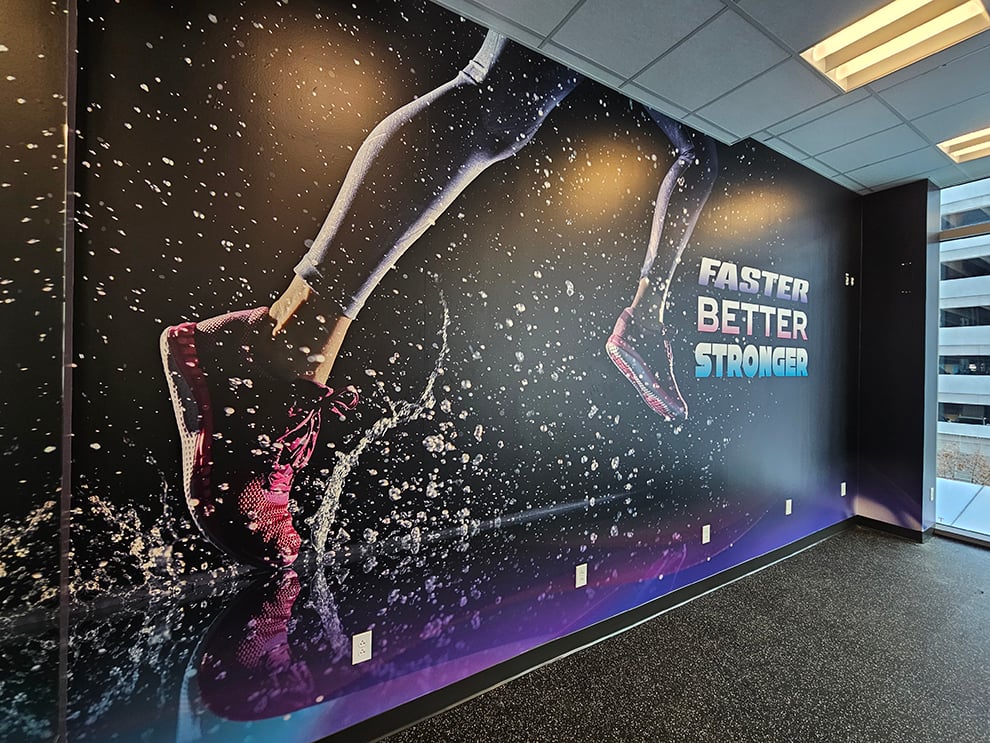
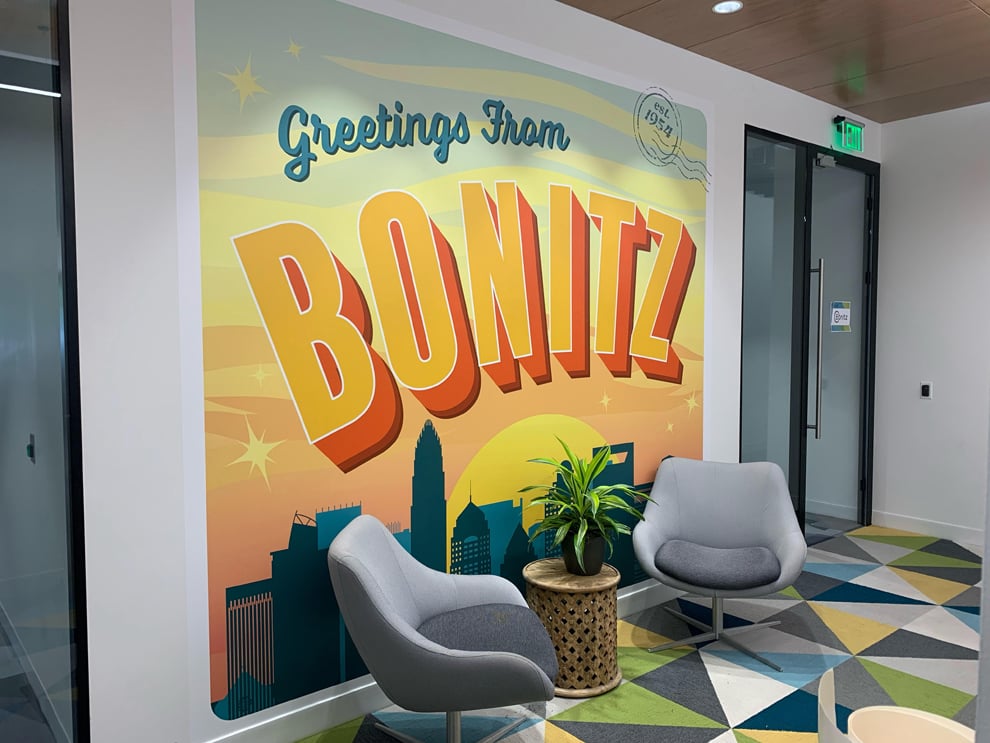
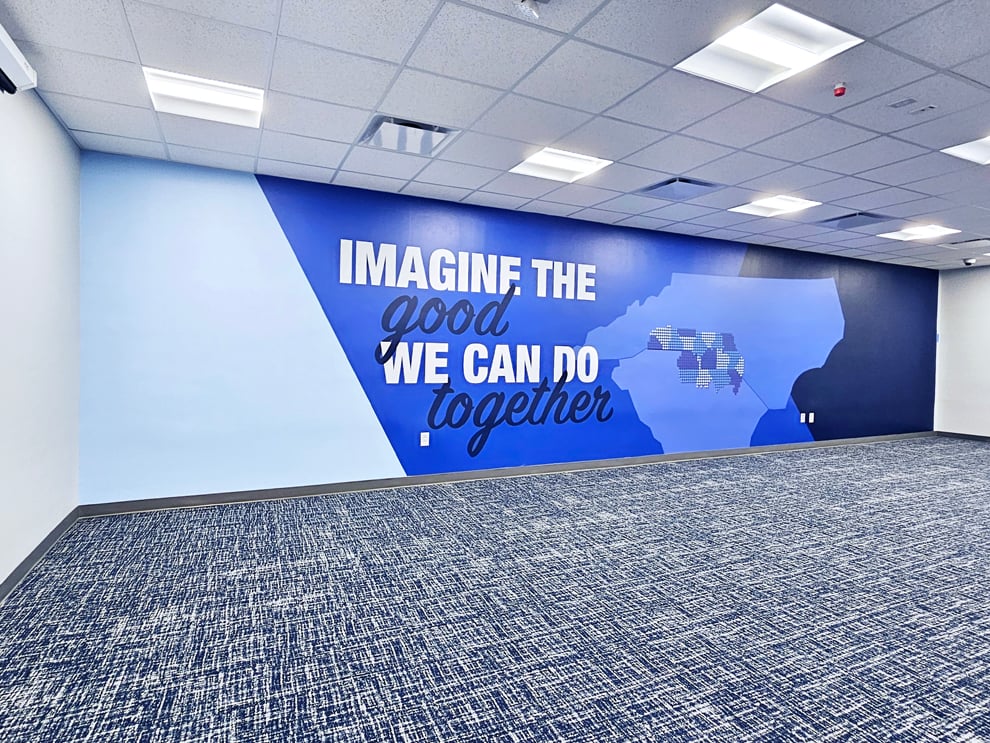
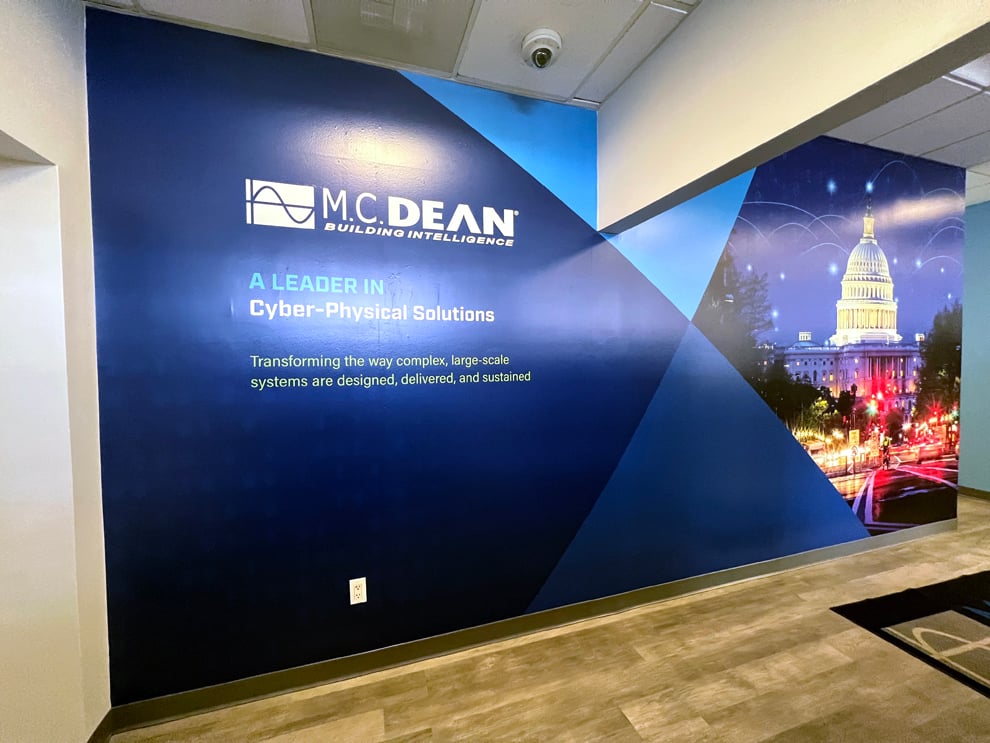
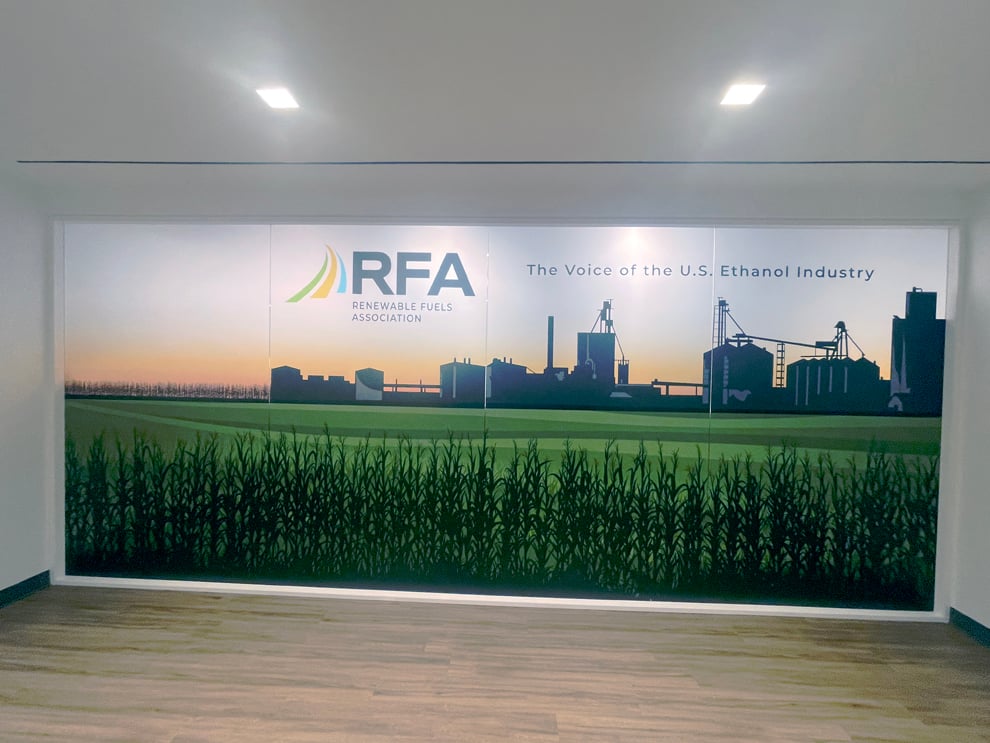
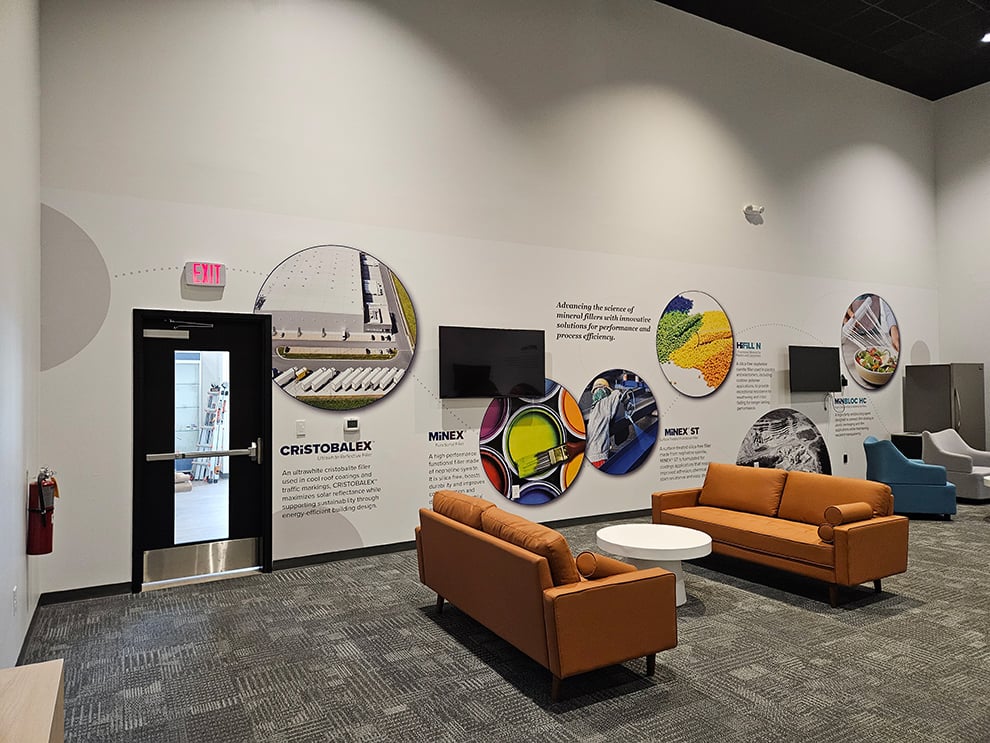
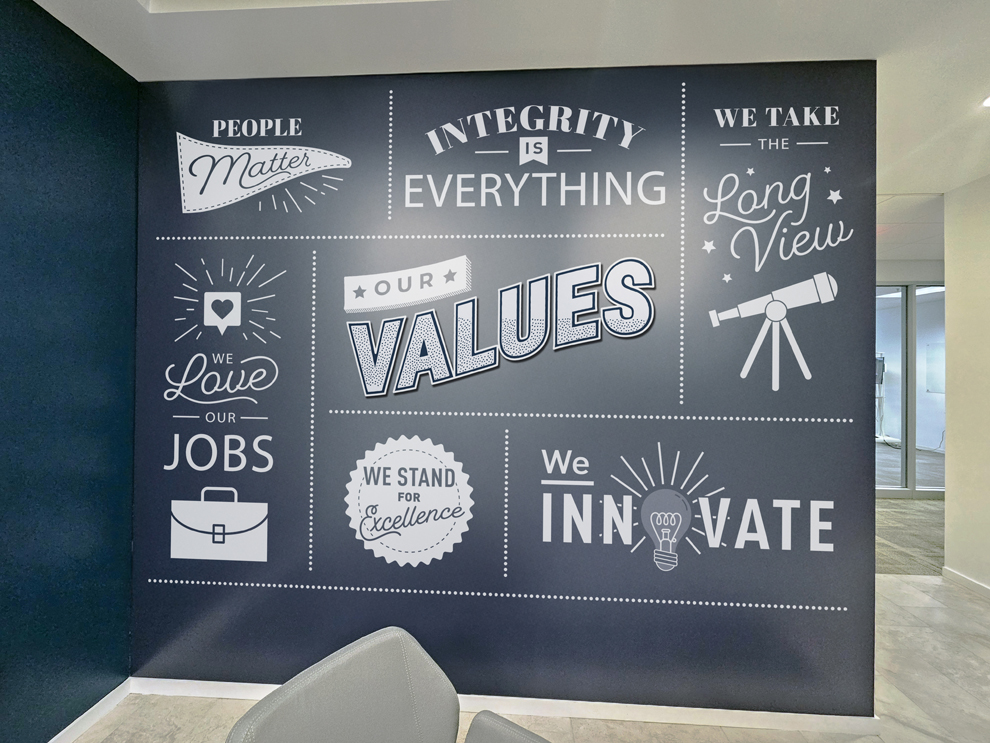
Wall Wraps make sense when a wall should become the main visual event through large imagery, timelines, culture content, donor recognition, or narrative. Panel layout, seam placement, image resolution at actual viewing distance, and wall condition drive the plan far more than the overall square footage does.
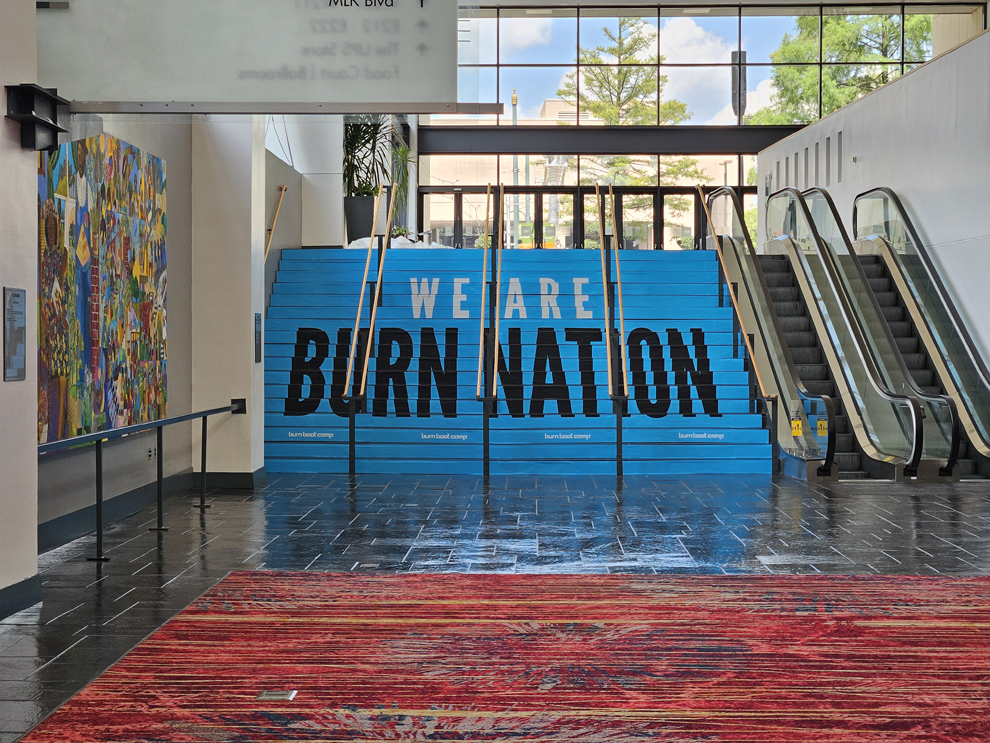
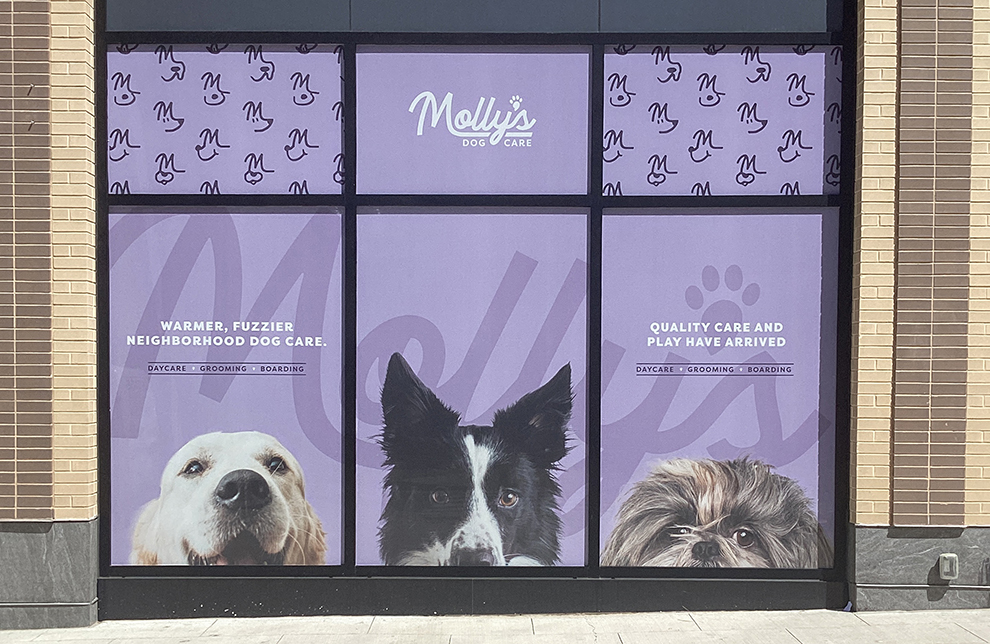
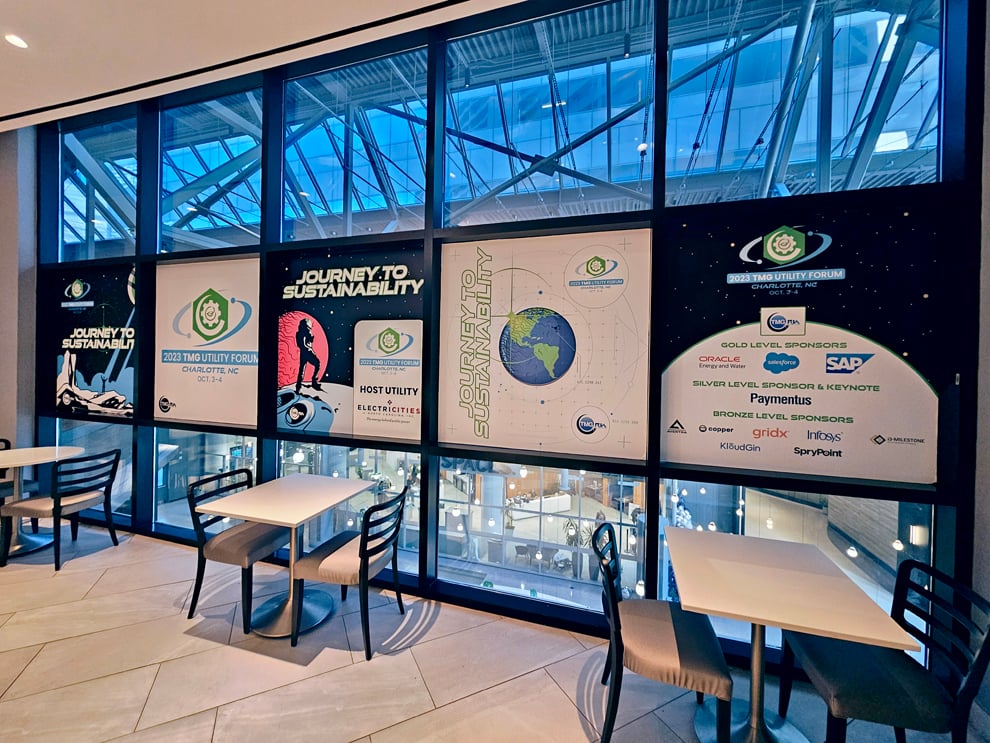
Window Graphics give glass a defined role in identity, messaging, visibility, and controlled views. Coverage percentage, viewing direction, interior and exterior lighting, glass condition, and material selection determine whether the result reads clearly from both sides.
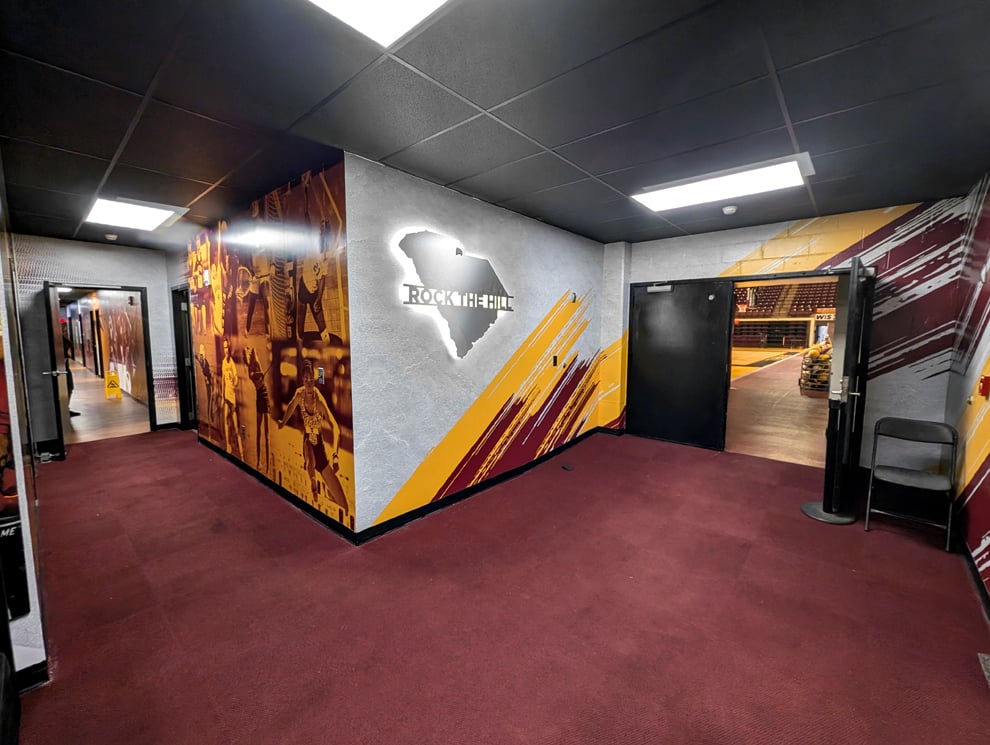
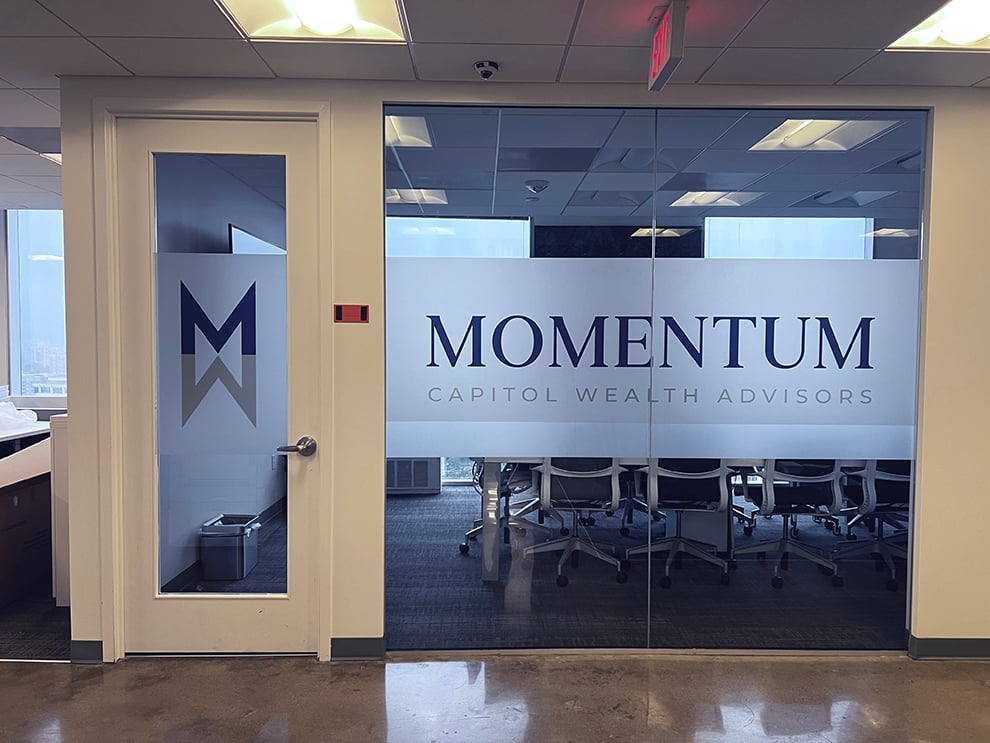
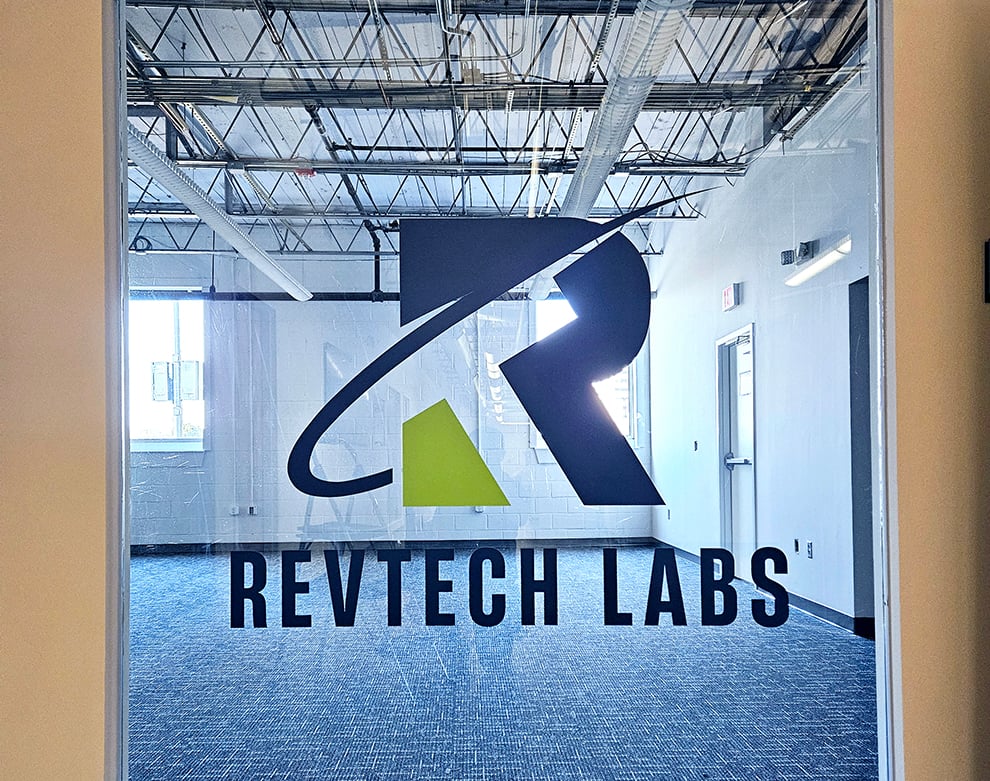
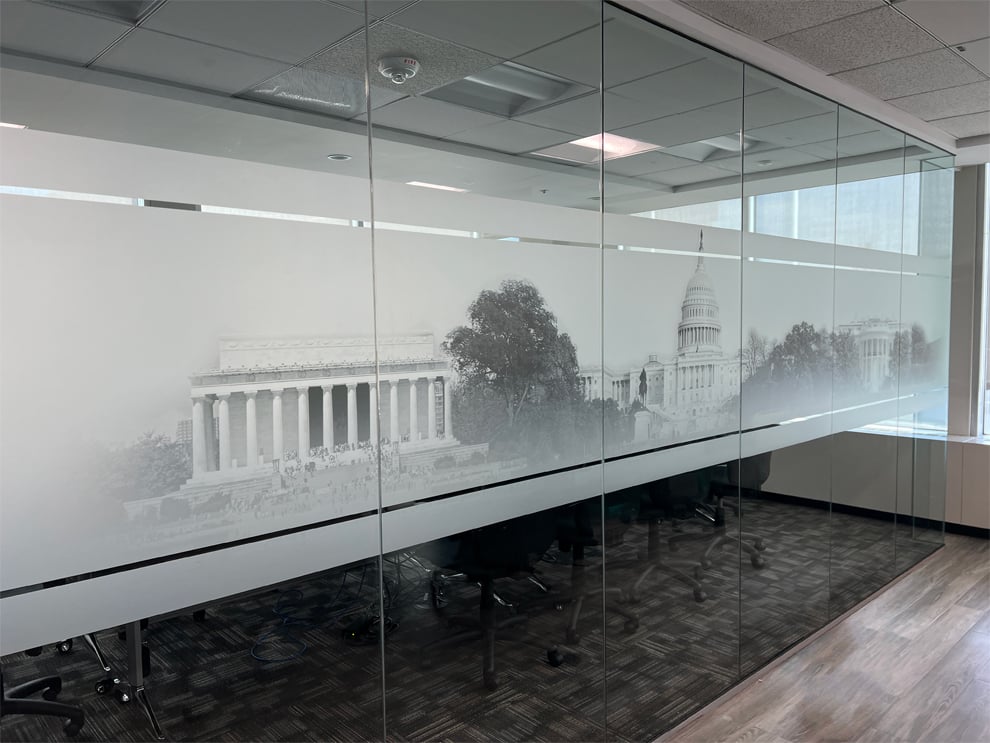
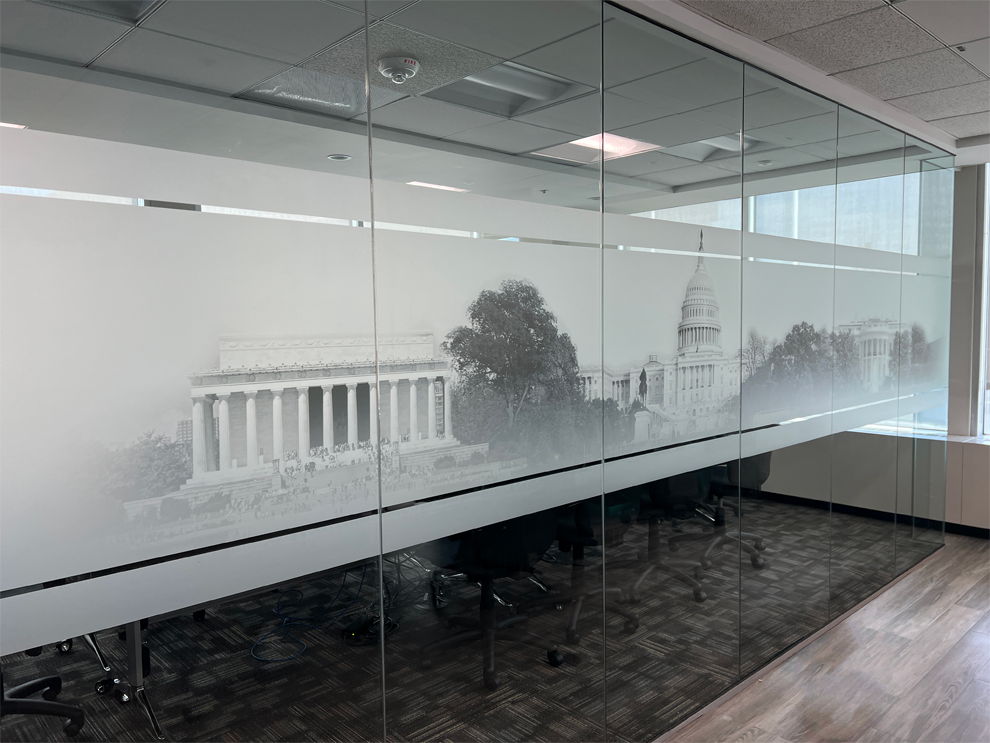
Frosted vinyl and privacy film fit offices that need visual separation without giving up daylight. Seated and standing sightlines, band height, pattern density, cleaning routines, and whether the product installs wet or dry all shape the specification.
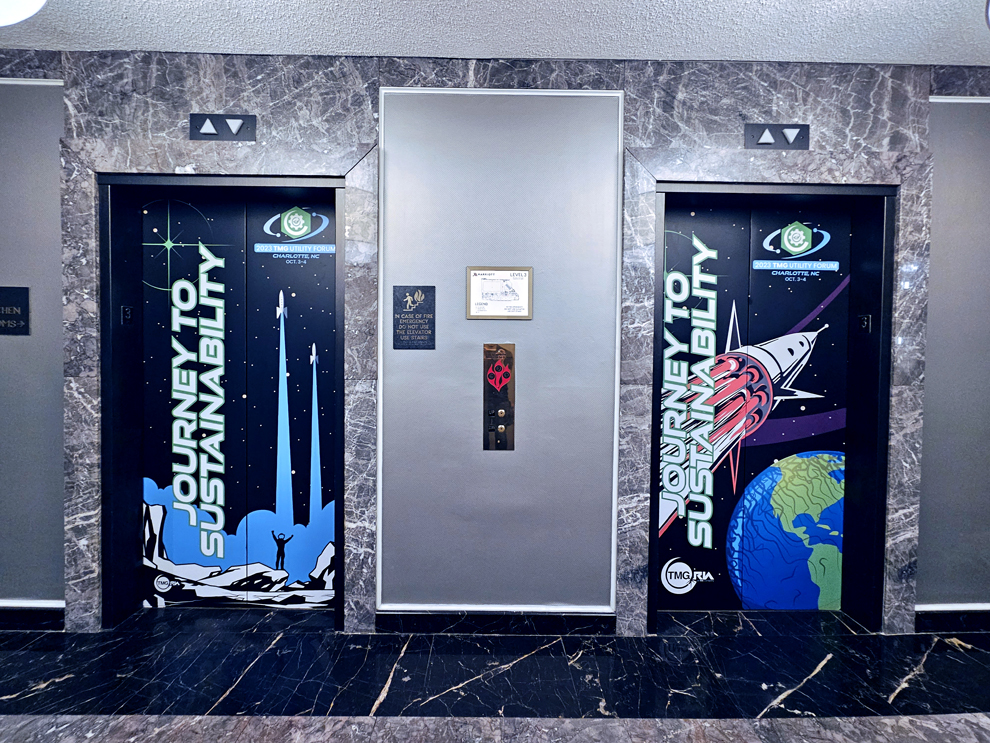
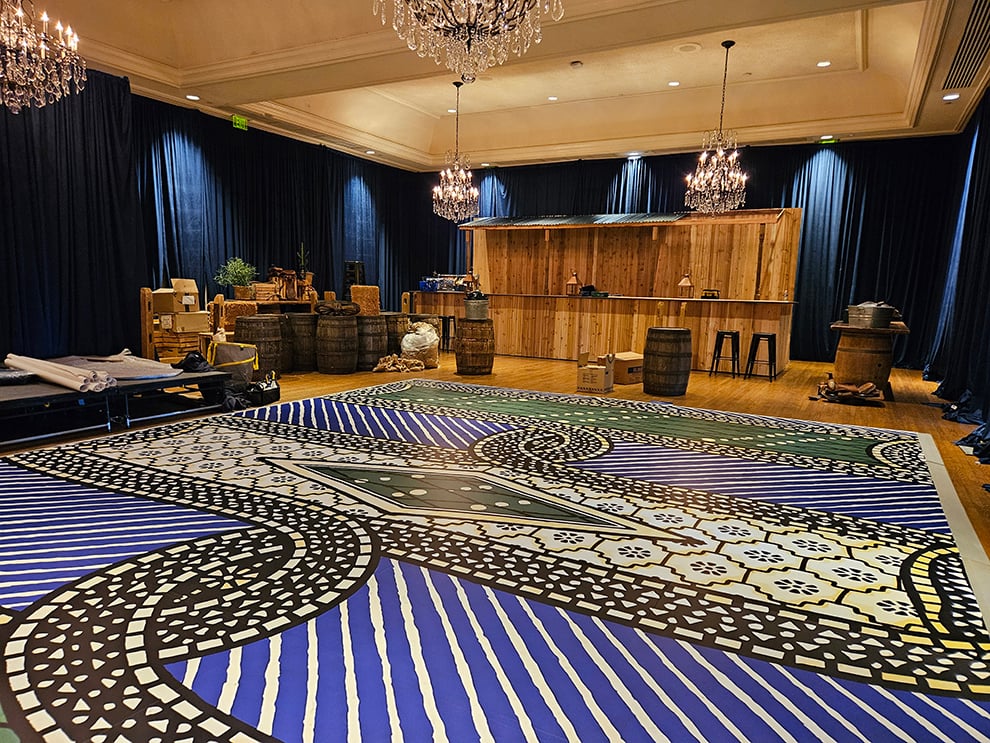
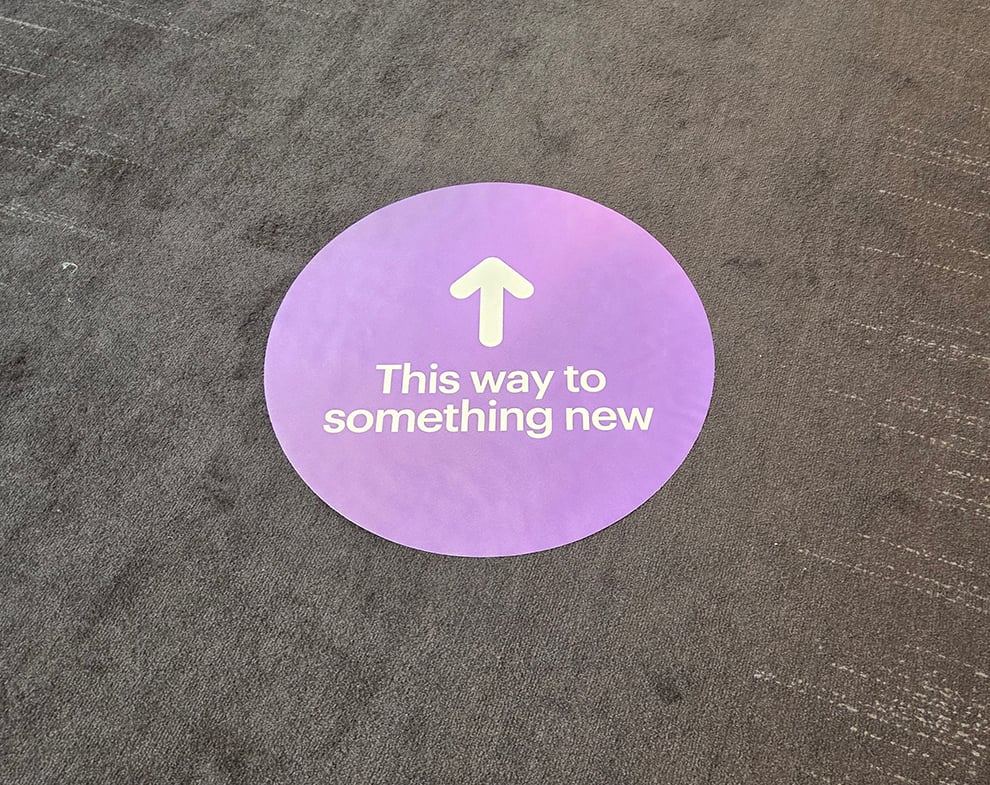
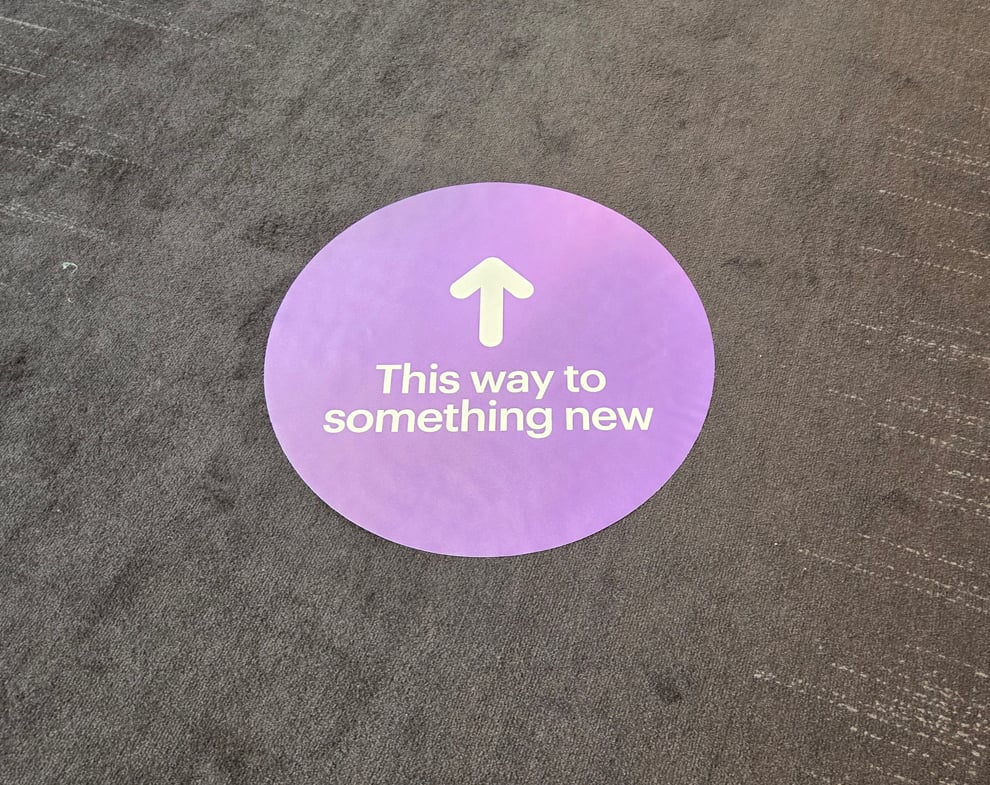
Floor Graphics put direction, recognition, sponsor identity, or event messaging directly in the path of travel. Flooring type, slip characteristics, traffic volume, cleaning equipment, protective laminate, and expected service period decide whether a floor application is appropriate at all.
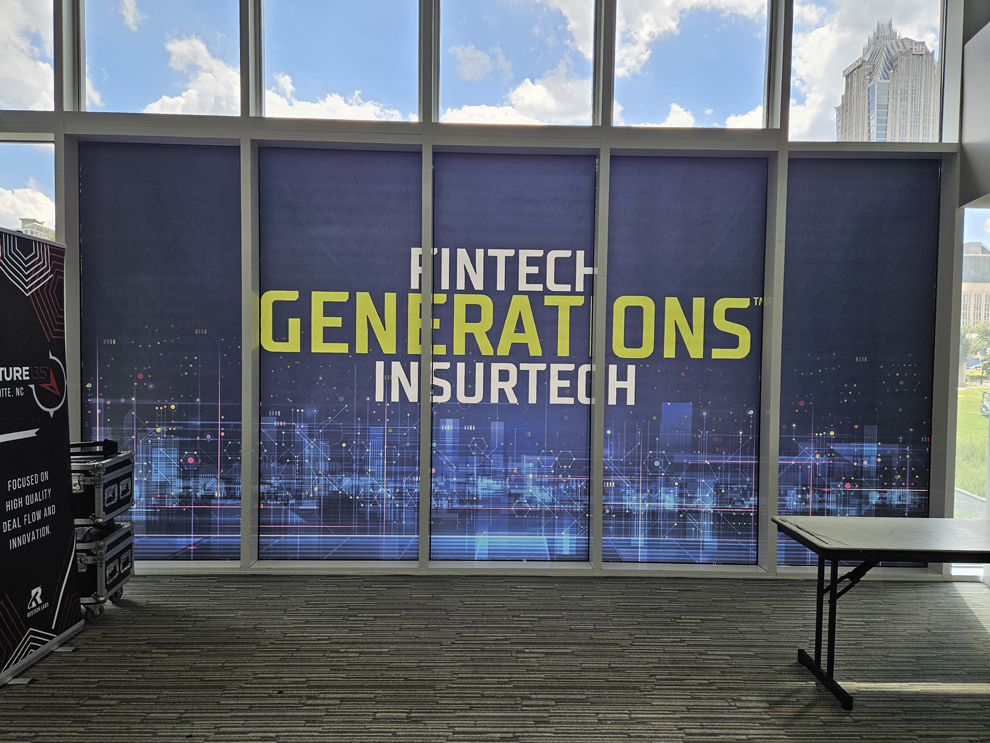
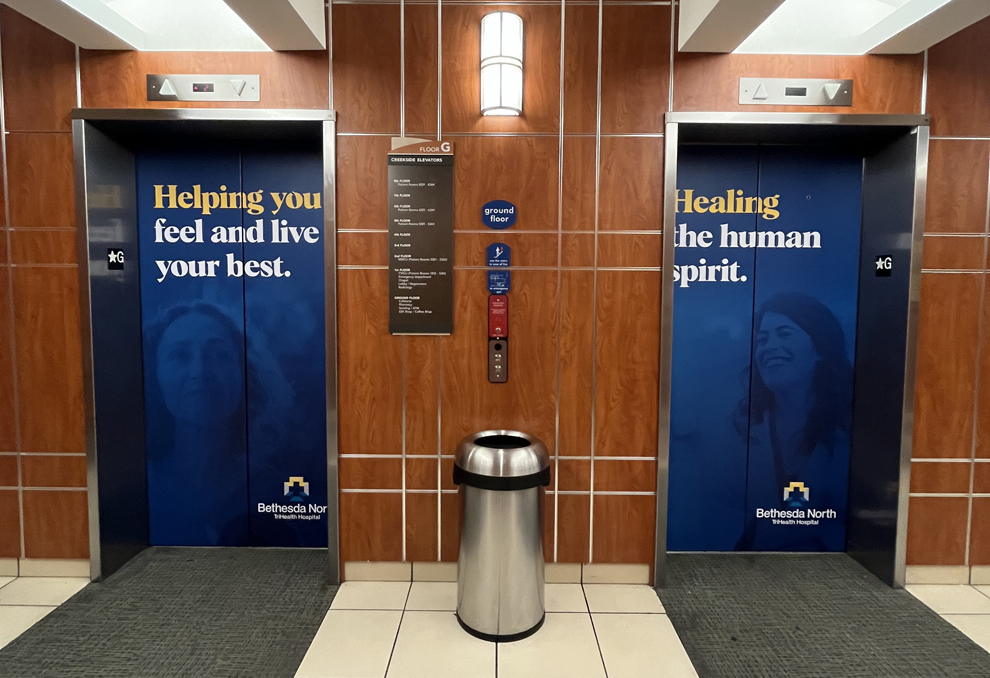
Elevator Wraps turn doors, selected cab surfaces, and adjacent transition walls into branded touchpoints inside high-frequency circulation zones. Door movement, panel gaps, edge treatment, clearances, cleaning chemicals, and scheduled car downtime govern both the design and the install window.
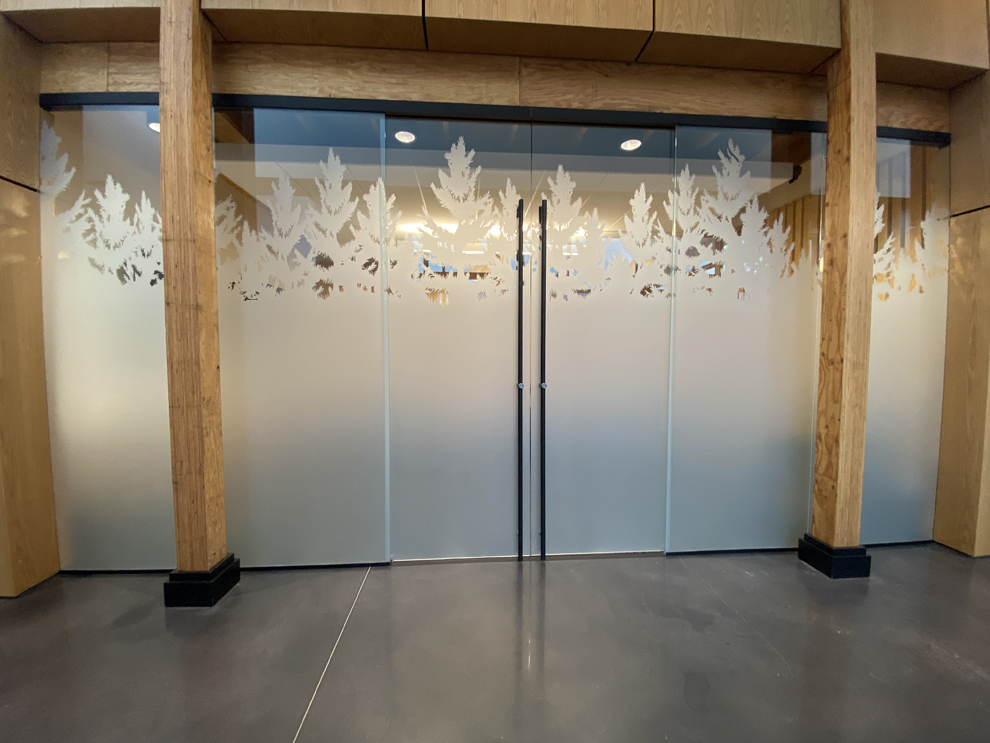
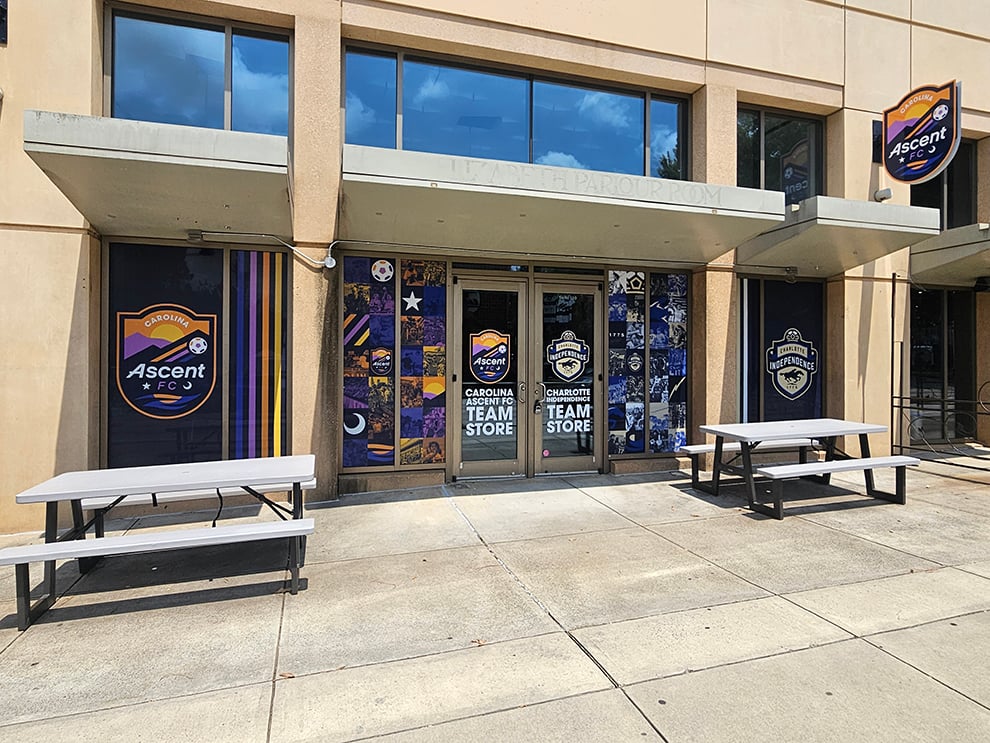
Storefront Graphics work better when entrance glass, doors, and exterior-facing surfaces need to function as one arrival experience. Property approvals, City of Winston-Salem sign permitting, exposure, viewing distance from the parking area or sidewalk, and coordination with interior graphics all factor in.
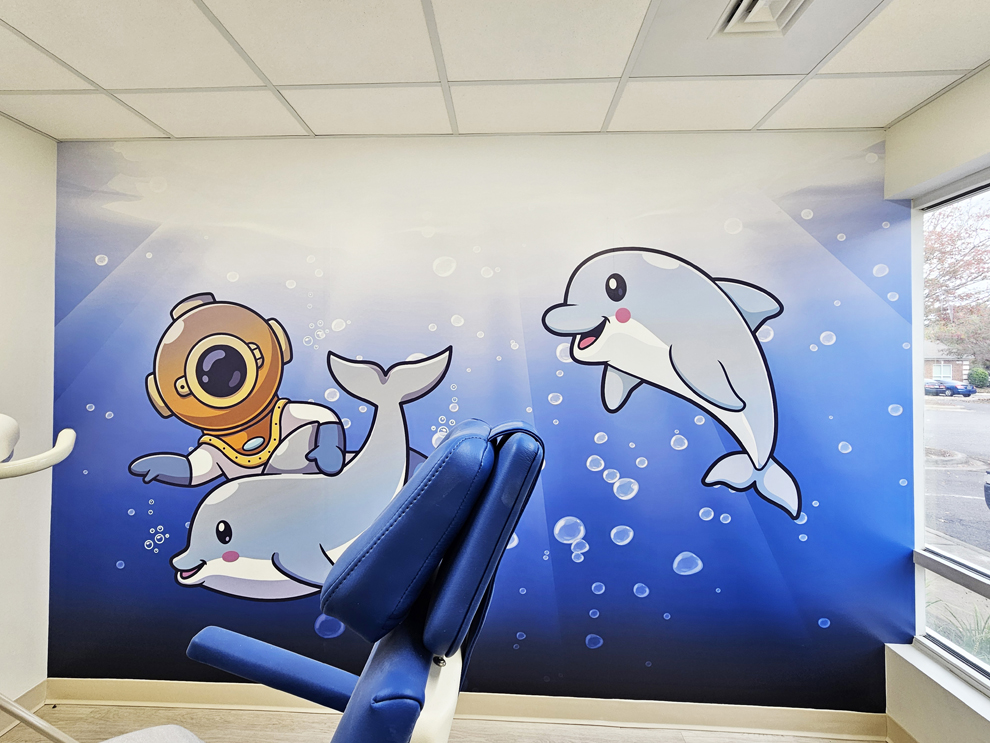
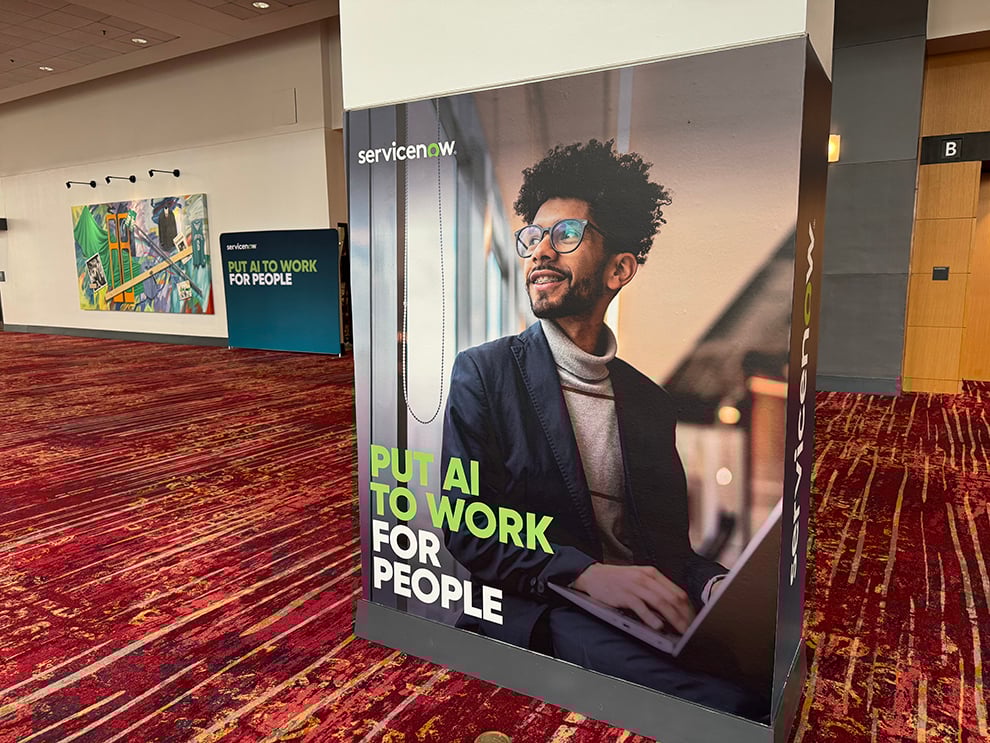
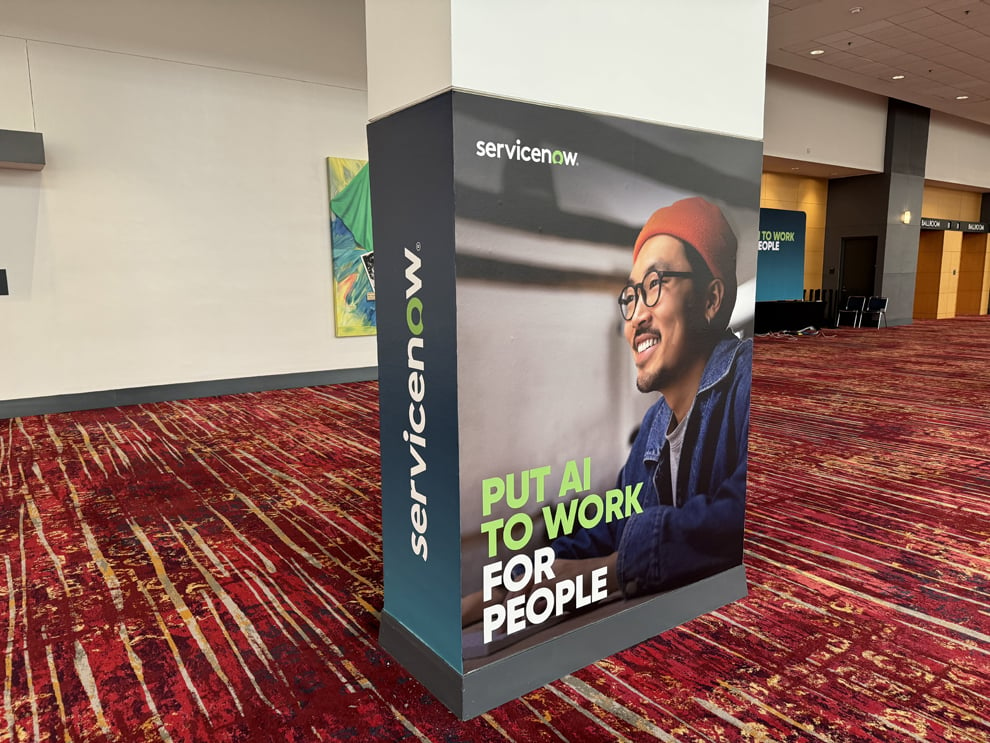
Event Signs & Graphics place temporary vinyl inside a broader branded program that may include directional signs, sponsor recognition, and portable displays. Venue rules at spaces like the Benton Convention Center, load-in and load-out windows, permitted surfaces, and removal expectations define what can go up and how long it stays.
Tell us what the graphics need to accomplish and when they need to be finished. Use Get Started Now to share the Winston-Salem project address, the target date, the anticipated overall investment, photographs, approximate dimensions, artwork or brand standards, how long the graphics need to serve, and any building or access requirements you already know about. If the work supports a grand opening, an event, an office move, an executive visit, or another fixed date, flag it right away. You do not need to have every material or field question answered first. One dedicated Project Manager will review the request, evaluate fit and timing, and lay out the next steps.
Winston-Salem clients get people who come to the building, walk the space, and measure the actual surfaces. Discovery conversations happen at the client facility. Site surveys, field verification, installation planning, professional installation, and follow-through all connect back to the same project record.
That matters because adhesive graphics have to live with real conditions: orange-peel texture on a renovated suite near the Innovation Quarter, glass partitions in a leased office off Hanes Mall Boulevard, freight elevator reservations, badge and escort procedures, and after-hours work restrictions in occupied buildings. A site survey lets us confirm dimensions, verify access, and understand how people actually move through the space before production is locked, so the plan reflects the property instead of an assumption pulled off a floor plan.
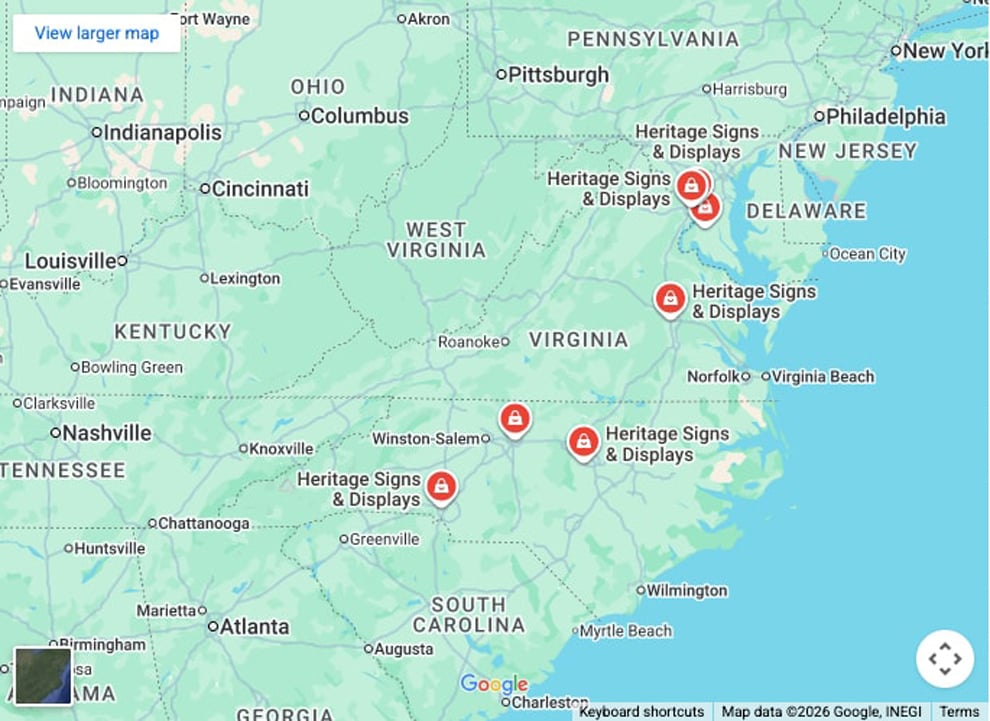
Larger production and fabrication work is supported by the Heritage facility in Waldorf, Maryland, which is staffed by production personnel only and is not a sales office or showroom. Organizations with locations in Winston-Salem, Kernersville, Clemmons, Greensboro, and High Point can keep one dedicated Project Manager while the graphics get adapted to each individual property.
Environmental graphic design starts with what people should notice, understand, or do, then works outward. A conference room may need visual separation without feeling sealed off. A corridor may need clearer direction for visitors arriving unescorted. A reception wall may need to state who the organization is before anyone speaks. A quarterly campaign may need eight weeks of visibility and a clean exit afterward.
Some Winston-Salem clients arrive with approved artwork and complete brand standards and simply need the graphics engineered for real surfaces. Others want us to develop the approach alongside internal stakeholders in marketing, facilities, human resources, and leadership. We also work regularly with architects, interior designers, branding agencies, environmental graphic designers, and experiential design firms who already own the creative direction.
Then design meets physics. Scale, image resolution, sightlines from both seated and standing positions, coverage height, cut and panel layout, transitions between surfaces, and installation constraints all get resolved before production is finalized. Our scope covers environmental graphic design and the branded physical elements we produce and install. It does not include licensed architecture, engineering, or code consulting.
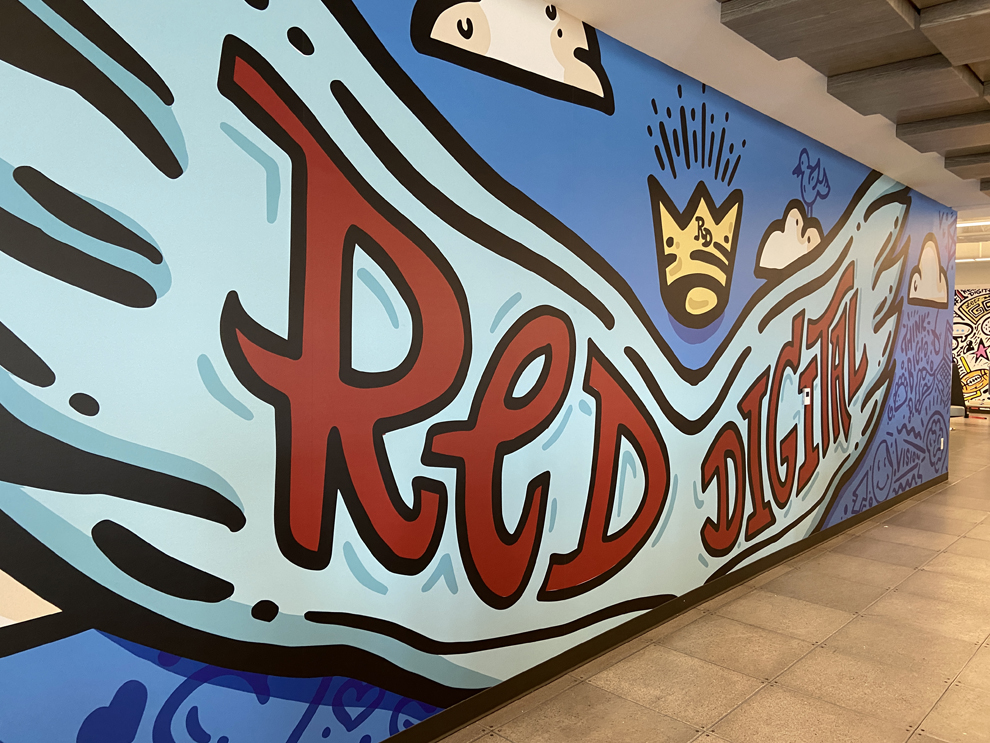
Every Heritage adhesive vinyl project that includes professional installation begins with a site survey, and that survey does double duty. It is client discovery, covering goals, audience, priorities, and how the space actually gets used. It is also a hands-on look at the building itself: measurements, substrate condition, graphics already in place, how crews get in and out, whether an elevator or loading dock is available, and the real working conditions our installers will face once they arrive.
A single dedicated Project Manager carries every one of those findings forward into production, so our full-time Heritage installers show up already knowing the approved design, the specified material, the installation sequence, and the property rules in effect at that address.
On site, quality shows up in the details people notice for years afterward: precise placement, level alignment, tight registration between panels, clean seams and edges, protected adjacent finishes, and a work area left tidy at the end of every shift. Each substrate demands its own technique, and we settle those calls before the crew loads the van instead of improvising in a hallway. If the conditions we find differ meaningfully from what was documented, the installer stops, reports what changed, and the Project Manager decides the next step rather than forcing material onto a surface that will not hold it.
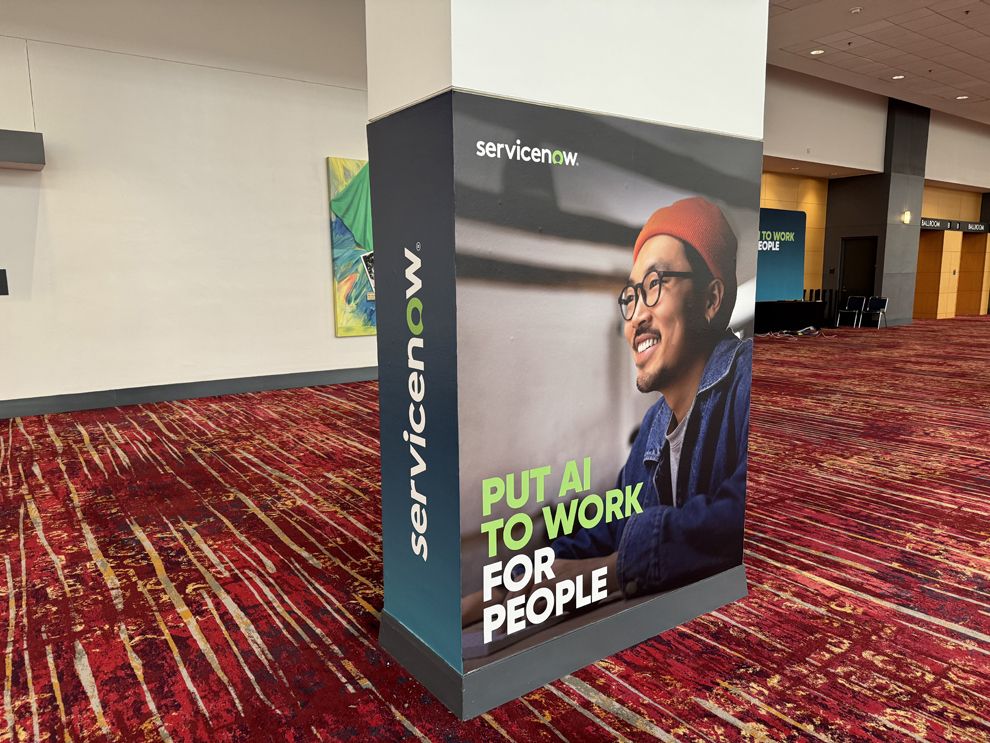
Drywall has to be sound, smooth, clean, dry, and properly patched, with primer and paint applied the right way. After that, the finish coat has to cure completely, which is a very different thing from dry to the touch.
Paint that is still curing can continue to outgas, releasing vapors that get trapped beneath vinyl applied too soon. That trapped gas contributes to bubbles, blisters, lifting, and early adhesion failure. Outgassing is not the only culprit either, since moisture, surface contamination, weak paint bonding, and substrate condition all play a part. Roughly four weeks is a workable planning figure for many paints, though the manufacturer's cure requirements and actual site conditions decide when a wall is truly ready.
Adhesion testing tells us how a vinyl behaves against the visible paint layer, and repositioning during a normal installation can reveal a weak bond underneath, but neither one confirms the hidden bond between paint, primer, and drywall. The moment paint or primer starts to release, we stop instead of compounding the damage. The client or property owner arranges and funds the repair, priming, repainting, and full cure, and we come back once the wall is ready. Handled this way, painted walls remain a reliable surface for adhesive vinyl.
Planning is where a desired outcome becomes a workable path to production and installation. We work through the goal, the audience, the scope, the priorities, any phasing, the target date, site readiness, stakeholder approvals, surface conditions, and the anticipated overall project investment together, then pinpoint which decisions are still open.
Scale and timing get evaluated side by side. Many of our projects that include production and professional installation land between $10,000 and more than $200,000. When a date is already locked, the Project Manager reviews approvals, material lead times, building access, site readiness, and available production and installation capacity before we commit to a schedule.
Budget is part of project fit as well. To protect the responsiveness and coordinated support our clients count on, we are accepting new workplace interior and event environment projects in Winston-Salem and across the Piedmont Triad with an anticipated overall project investment starting at $6,000, a figure that reflects the full managed scope rather than a single graphic.
Select exterior-facing window and wall applications are possible when the substrate, exposure, and access allow for it. We assess physical suitability, while sign permits and property approvals stay with the client, the property owner or manager, or the general contractor.
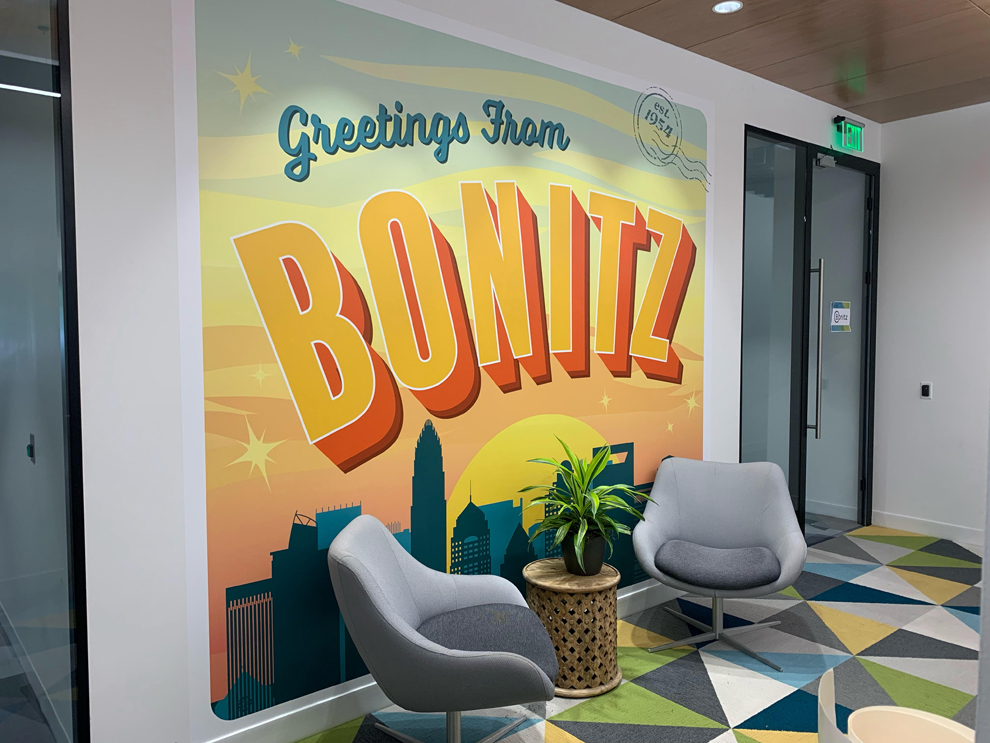
Properly prepared painted walls, interior and exterior-facing glass, glass and solid doors, select floors, elevator doors and panels, and many display or casework surfaces are all candidates. We judge suitability one surface at a time. Texture, paint condition and cure, glass coatings, moisture, movement, traffic volume, cleaning chemicals, sun exposure, and the intended service period all shape whether a given vinyl and adhesive system belongs in that specific spot.
Many frosted, decorative, and privacy products for glass are positioned using a wet application method. Even after the installer squeegees out as much solution as possible, a little moisture can remain between the glass and the film, creating temporary haze, cloudiness, streaking, or small moisture pockets that disappear as the installation dries.
Dry-out time varies with the product, the glass, temperature, humidity, sunlight, and site conditions, and it can run anywhere from several days to several weeks. If you have a board meeting, ribbon cutting, photo shoot, or client presentation on the calendar, tell us during planning so we can schedule installation around it. Wet application is not used on every window graphic.
Because paint that feels dry is often still curing. During that window it can outgas, releasing vapors that get trapped under vinyl installed too early and lead to bubbles, blisters, lifting, or premature adhesion failure.
We schedule installation around the paint manufacturer's cure requirements rather than the moment a wall feels dry to the hand. Roughly four weeks is a useful planning figure for many paints, but the paint and primer system, application method, temperature, humidity, wall prep, and site conditions all move that timeline. If your painting schedule is still being set, the Project Manager can help sequence painting and installation so the cure period never becomes a last-minute scramble.
No. We do not offer installation-only service for customer-supplied signs or graphics. Installation quality is largely determined by decisions made well upstream, including field measurements, material selection, production accuracy, and fit. Keeping those steps inside our engagement lets us stay accountable for the schedule, the installation, and the finished result, including reprinting material if something needs to be corrected.
Because production should be built around the actual property, not around assumptions. The site survey gives us firsthand knowledge of dimensions, substrates, existing graphics, access routes, elevator availability, work-hour restrictions, and other field conditions, while also clarifying what you want the graphics to do. Those findings stay with one dedicated Project Manager and follow the job through production to the installers who finish it.
Yes. Frosted vinyl and privacy film soften visual detail while letting daylight keep moving through the glass, which is exactly why they are so common in glass-fronted offices and meeting rooms. Full coverage is rarely needed. Bands, gradients, patterns, or branded elements can sit at the heights where seated and standing sightlines actually need protection, leaving the rest of the glass clear.
Service life depends on the material and adhesive system, the substrate, sunlight, moisture, foot traffic, cleaning practices, physical contact, and the quality of the installation. Privacy film on interior glass, a floor graphic in a busy lobby, an elevator wrap, and an exterior-facing window graphic are not living the same life.
We start with how long the application needs to perform and specify accordingly. Most printed interior wall graphics are unlaminated. We add protective laminate selectively, when abrasion, frequent cleaning, contact, or floor traffic call for it, and printed exterior wall graphics get protective film laminate as standard practice for UV and weather protection.
The installer stops. Adhesive vinyl is sometimes lifted and repositioned during a normal installation to land the alignment correctly, and if the paint and primer are not securely bonded to the drywall, that routine move can peel paint off the wall. We will not keep going and make the problem worse.
The Project Manager documents what was found and walks the client or property representative through it so repairs can be arranged. The client or property owner is responsible for arranging and paying for the repair, priming, repainting, and full cure, and we return once the wall is ready. Because that cycle eats up time, walls should be evaluated early whenever the graphics support a fixed date.
For new workplace interior and event environment projects in Winston-Salem and the surrounding Triad, plan on an anticipated overall project investment starting at $6,000. That number covers the complete Heritage-managed scope, including environmental graphic design, production, fabrication, and professional installation, not the price of a single graphic.
The threshold is a starting point for project fit, not a typical project size. Many of our projects involving production and professional installation range from $10,000 to more than $200,000, and the real investment shifts with scope, materials, surfaces, site conditions, access, and installation requirements. Sharing your goals, location, timing, and anticipated investment through Get Started Now lets us evaluate fit and recommend a sensible next step.
Yes, and the sooner the better. Winston-Salem teams are handed an opening, a leadership visit, an office move, or an event date with far less lead time than the scope deserves all the time. We start by separating what absolutely must be ready by the deadline from what can follow later, then review approvals, materials, access, site readiness, and available production and installation capacity.
One dedicated Project Manager coordinates design, production, fabrication, scheduling, and professional installation so every remaining day gets used deliberately. If the full original scope cannot be completed responsibly by the date, the alternative might be phasing the work, reordering the sequence, adjusting an application or material, or finishing the most visible areas first. We would rather help you build a plan that holds up than agree to a date we cannot responsibly meet.
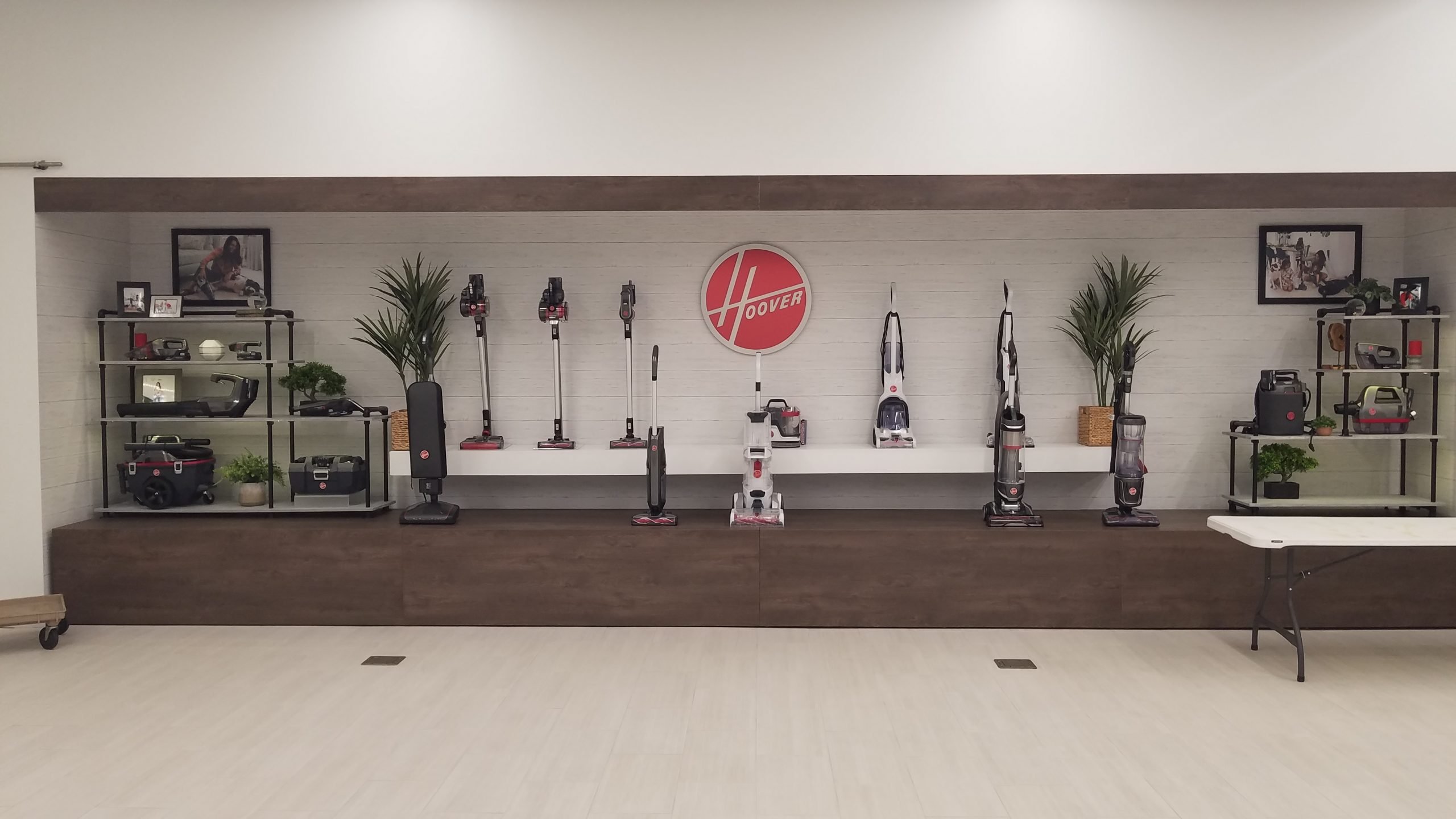
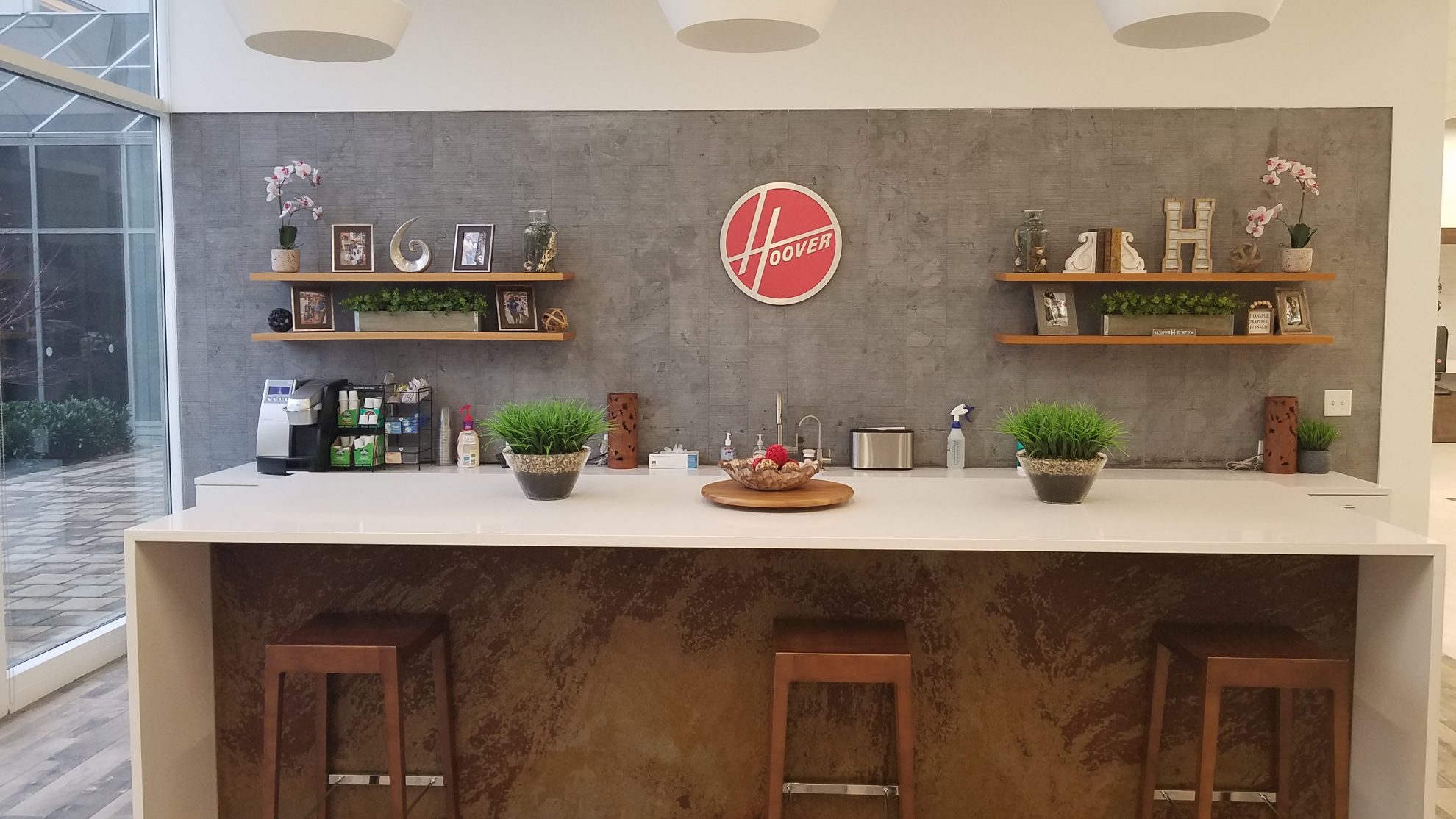
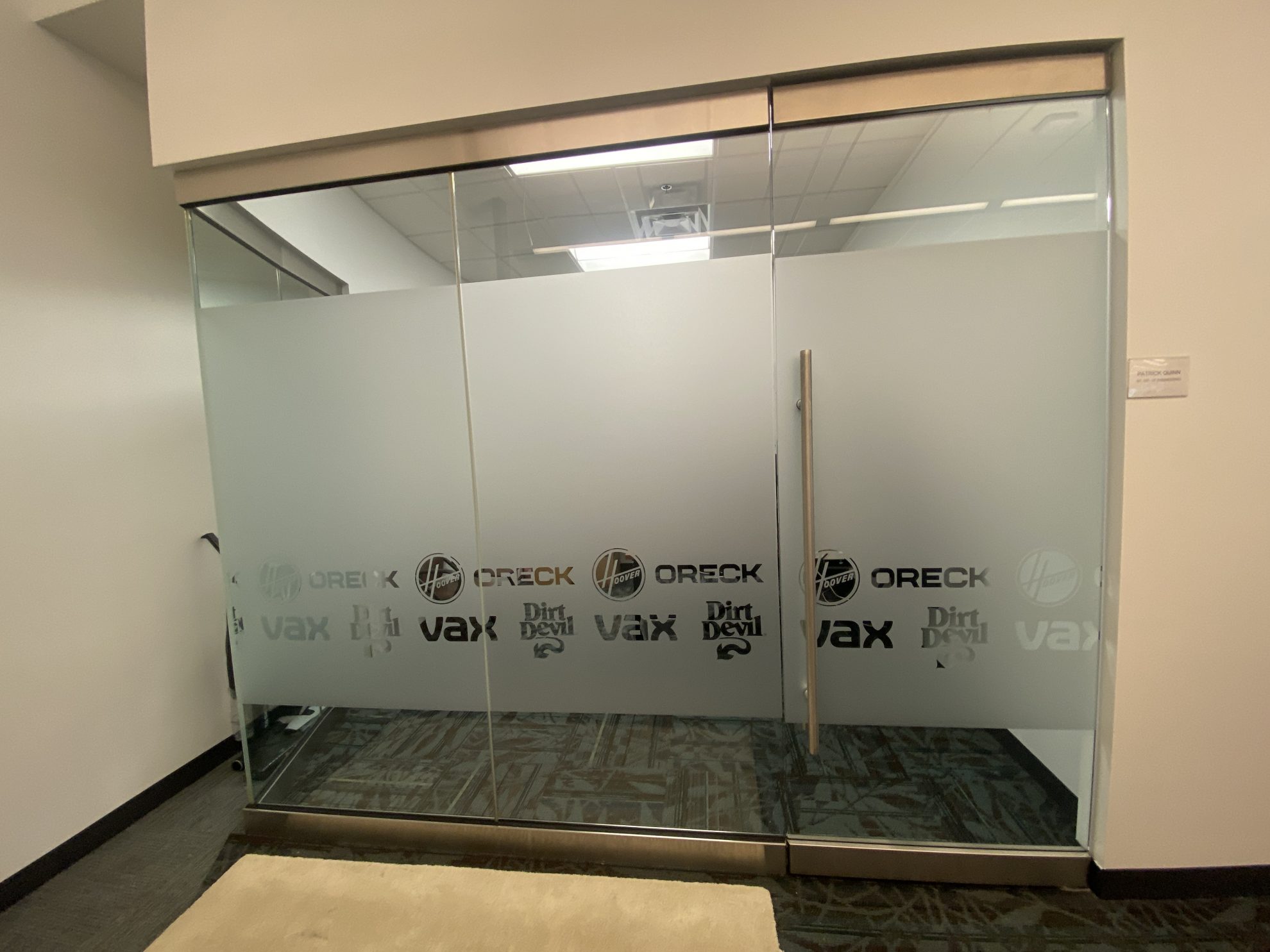
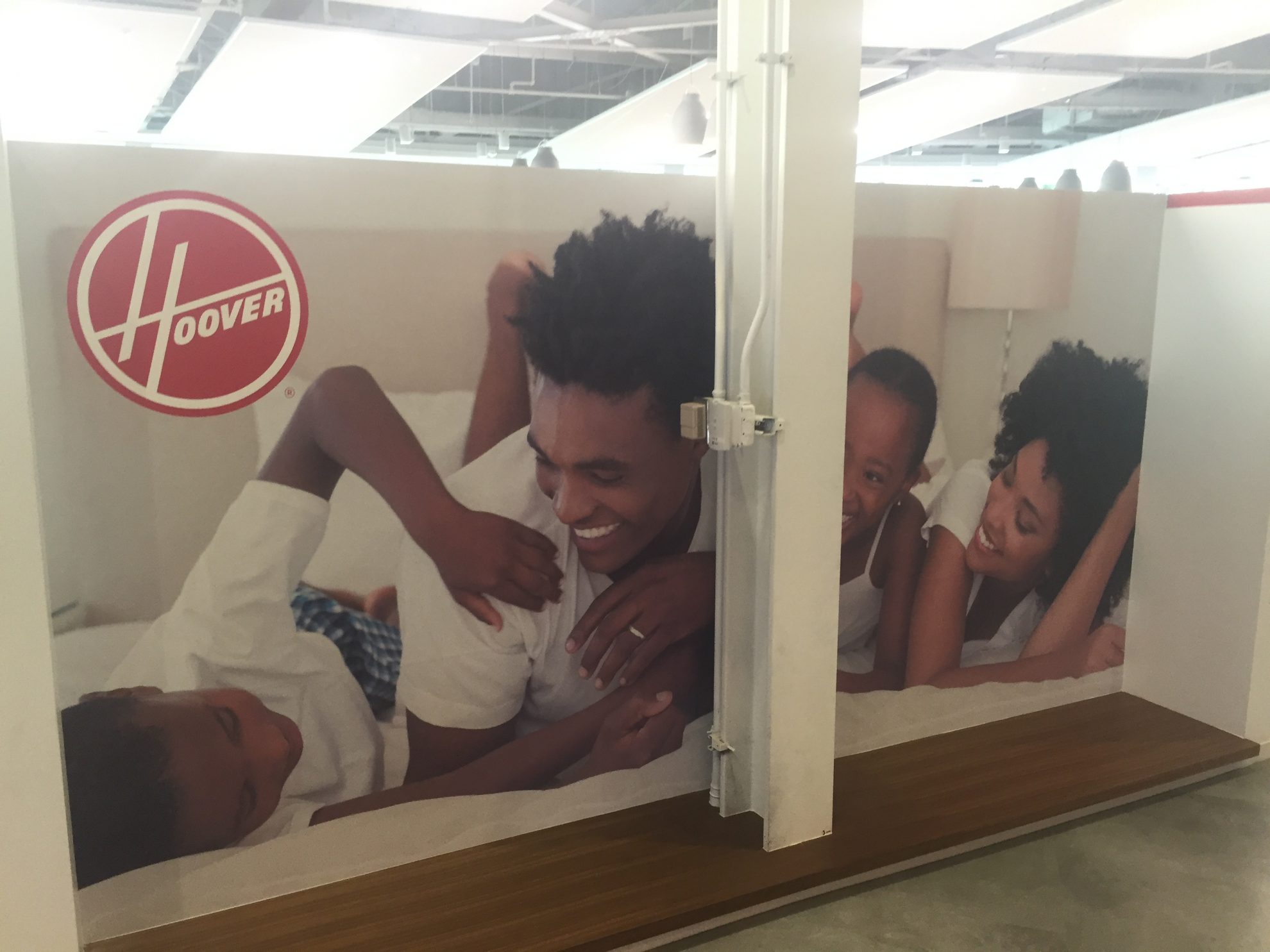
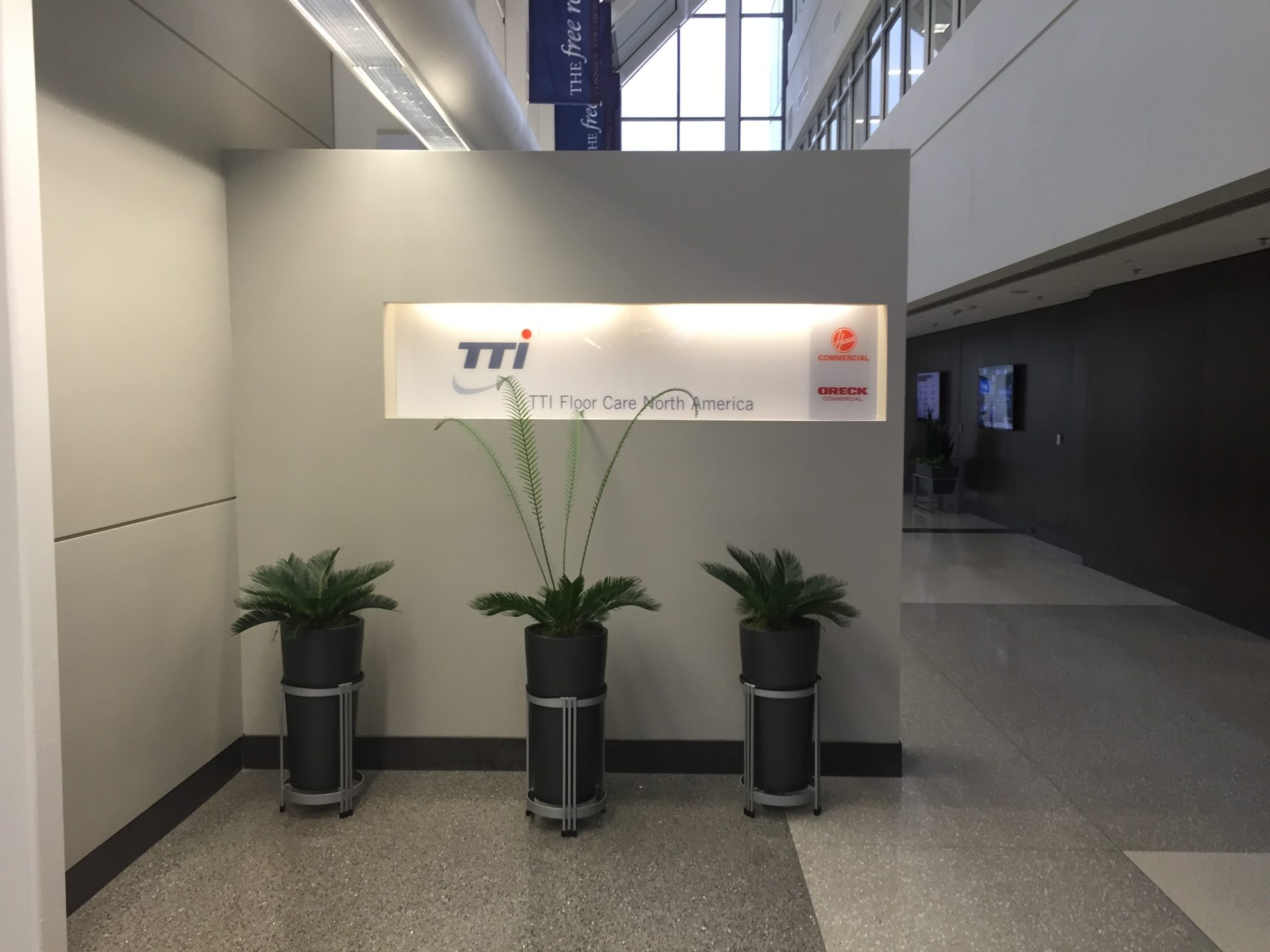
Heritage Signs & Displays collaborated with TTI Floor Care North America to enhance their corporate office. The project included custom frosted vinyl graphics, acrylic signs, dimensional lettering, and LED backlit signs, showcasing the brands Dirt Devil, Hoover, and Oreck. The signage improved office branding, privacy, and aesthetics. Heritage collaborated closely with TTI, ensuring efficient execution and high-quality results, creating an immersive and professional environment that reflects TTI's brand values.
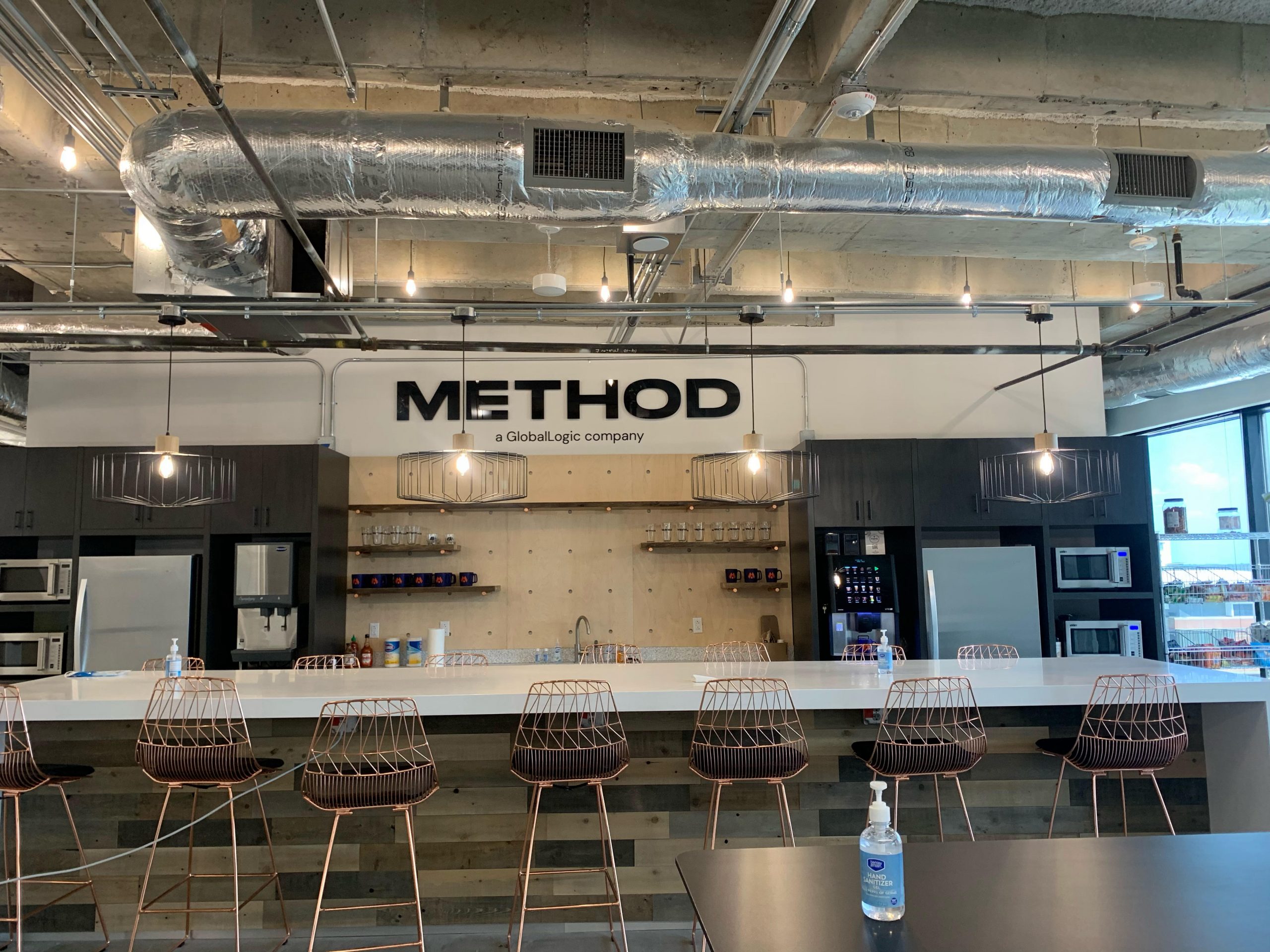
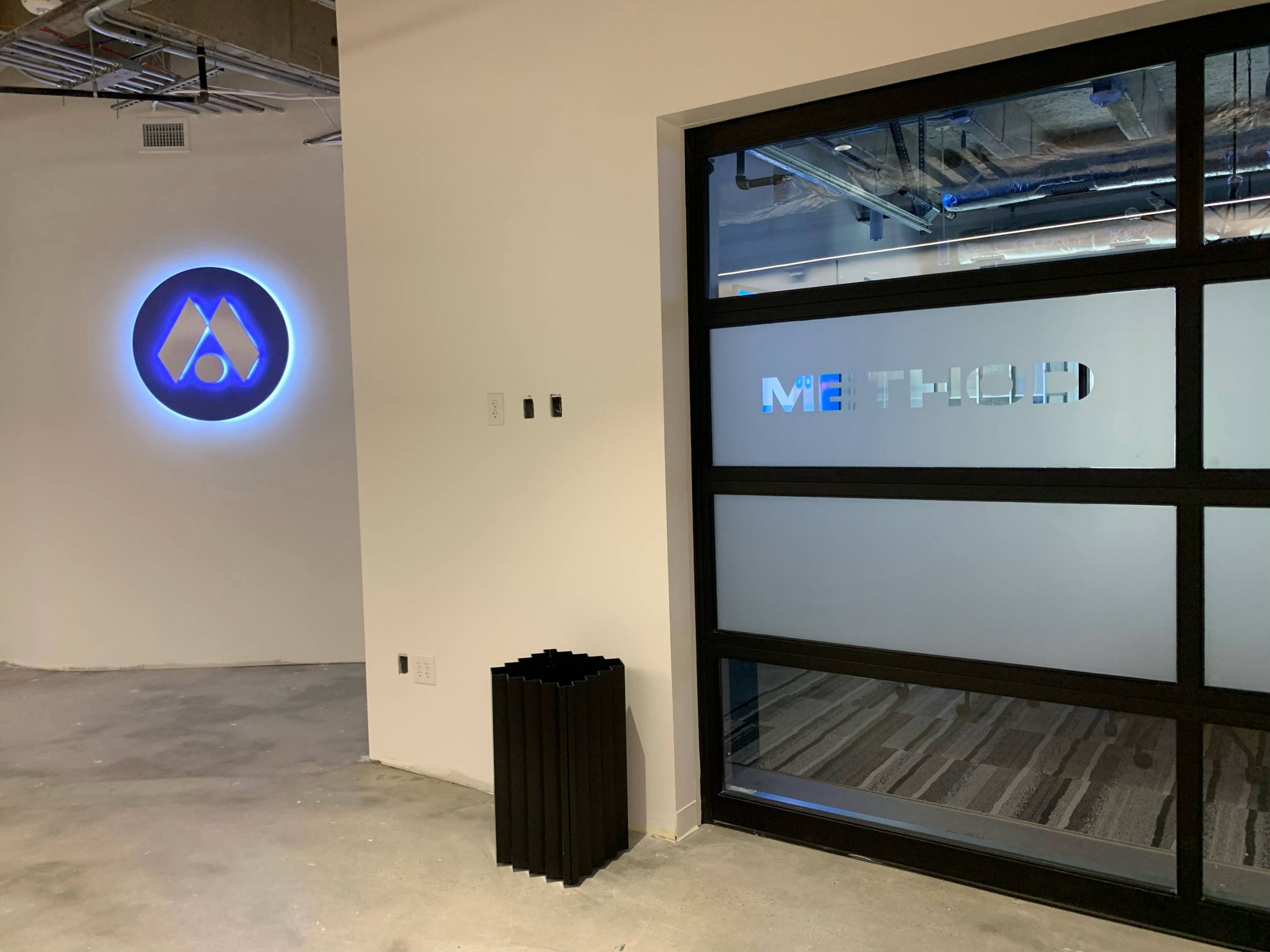
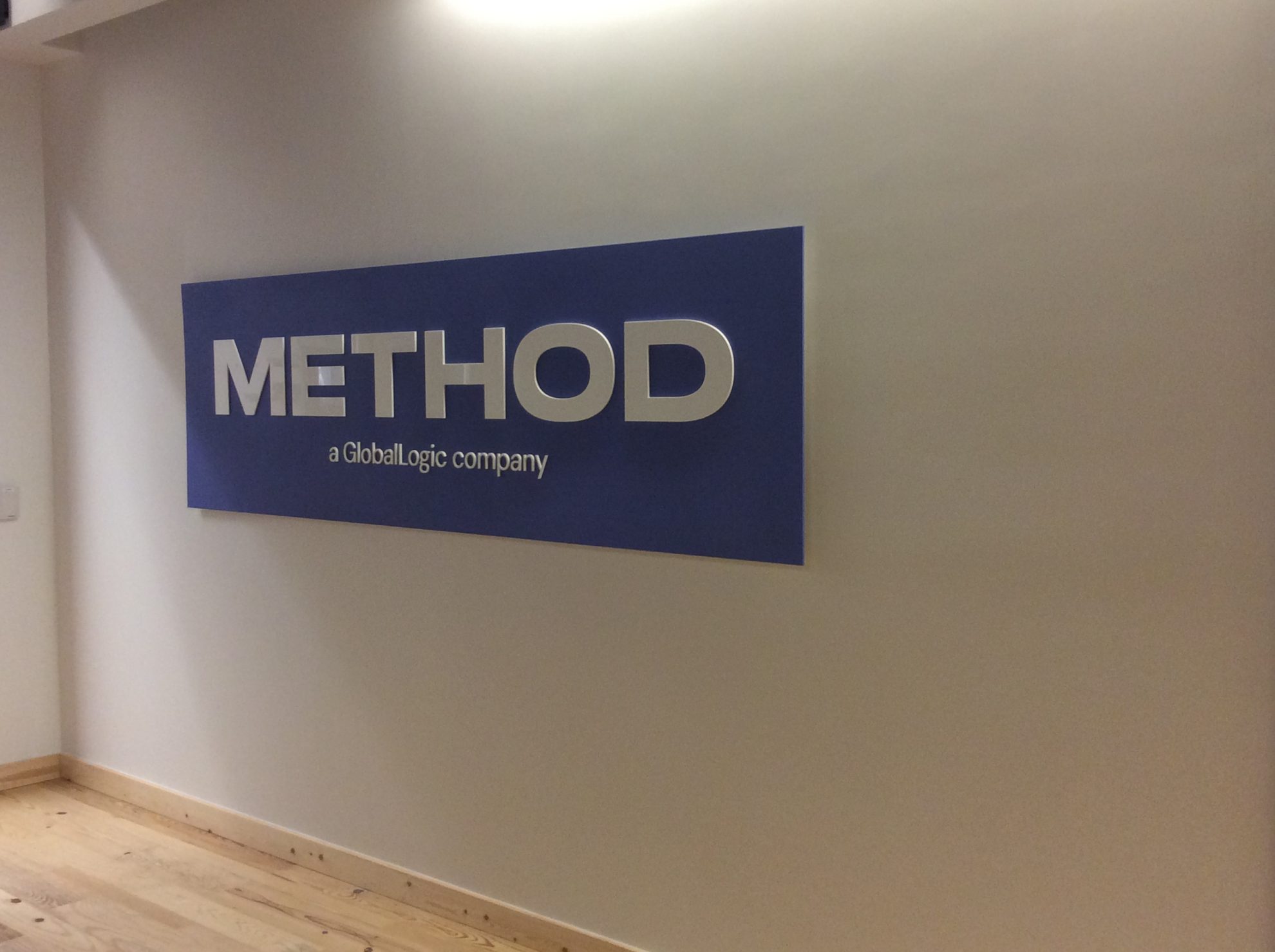
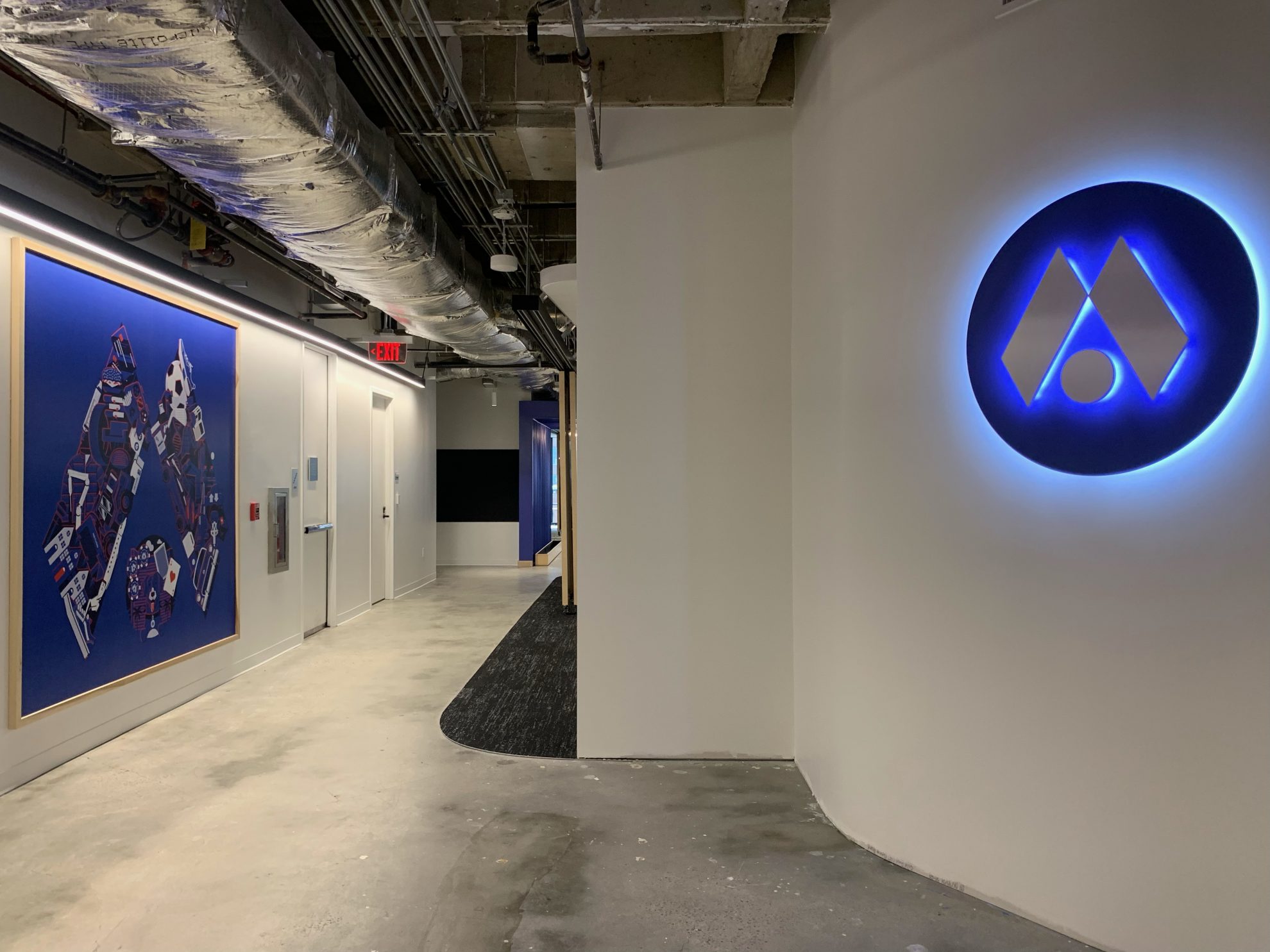
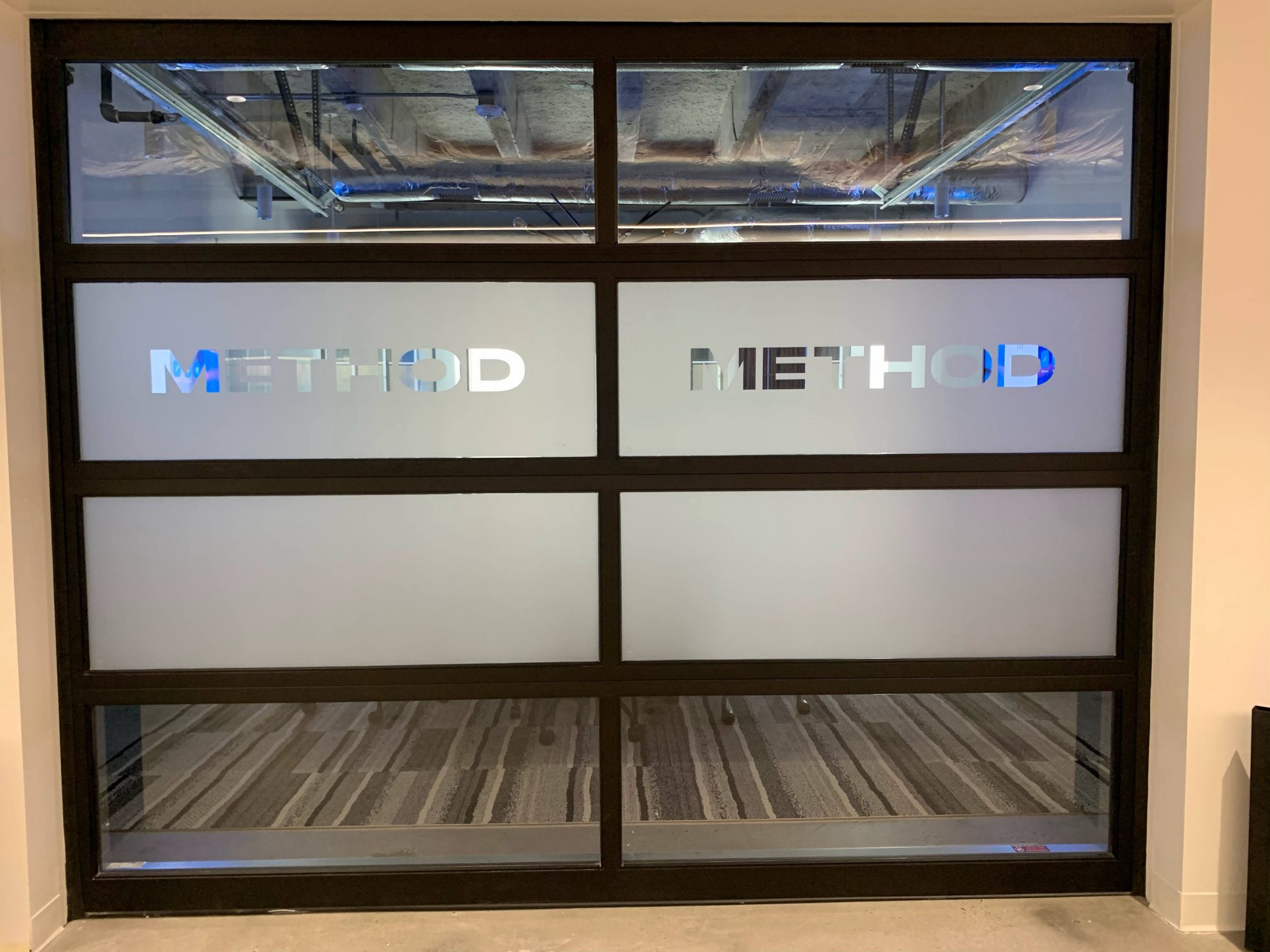
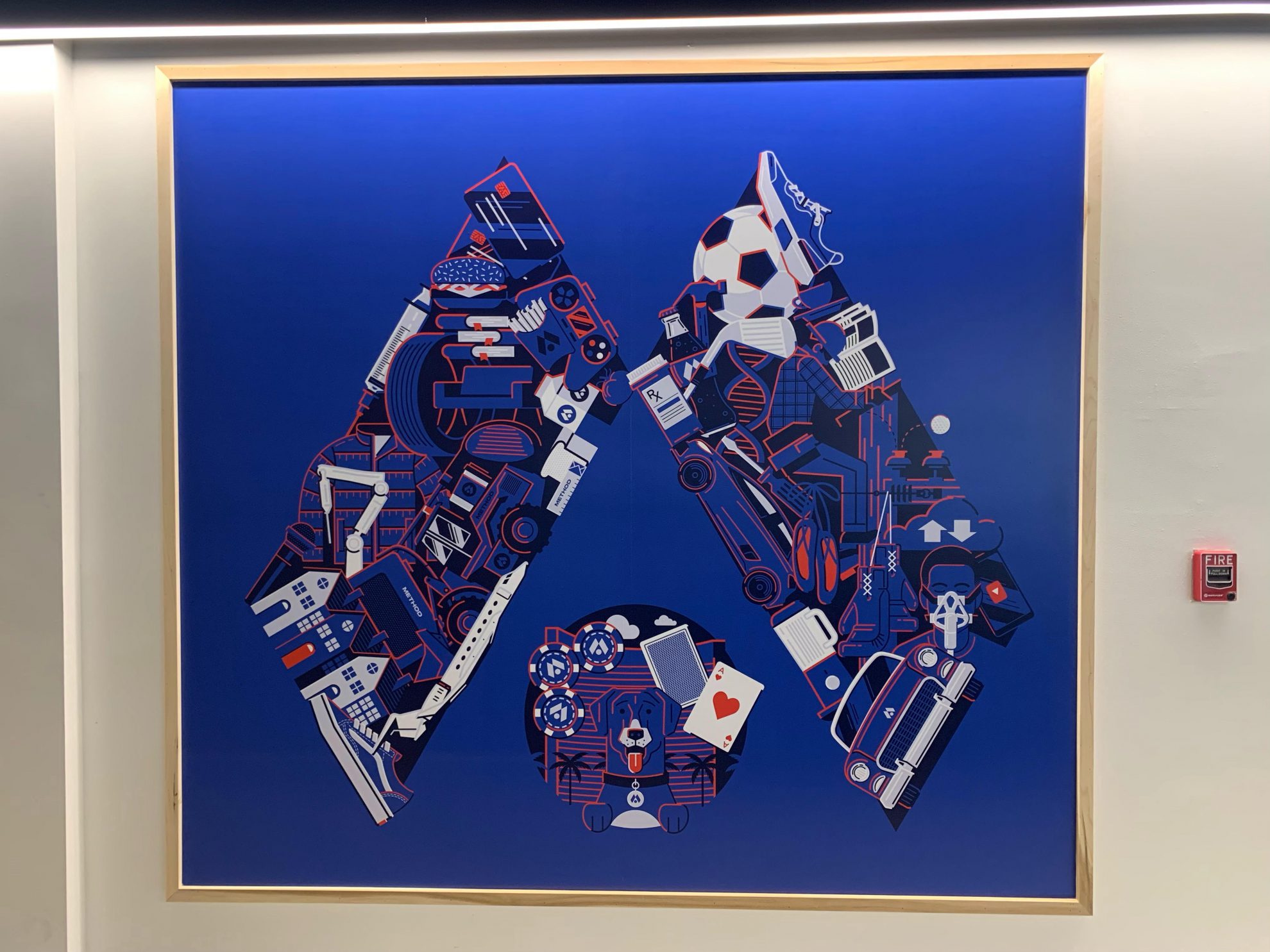
Heritage Signs & Displays' collaboration with Method (formerly Skookum) to rebrand their corporate headquarters. The project included dimensional lettering, wall displays, LED-lit signage, wall wraps, and frosted vinyl, creating an immersive and branded environment. Heritage worked closely with Method's team, ensuring accurate execution and timely delivery. The transformation was completed in August 2021, with Method's employees moving into the revamped space in September. The project reflects Heritage's commitment to quality and collaboration.